Essay from Zamira Moldiyeva Bahodirovna

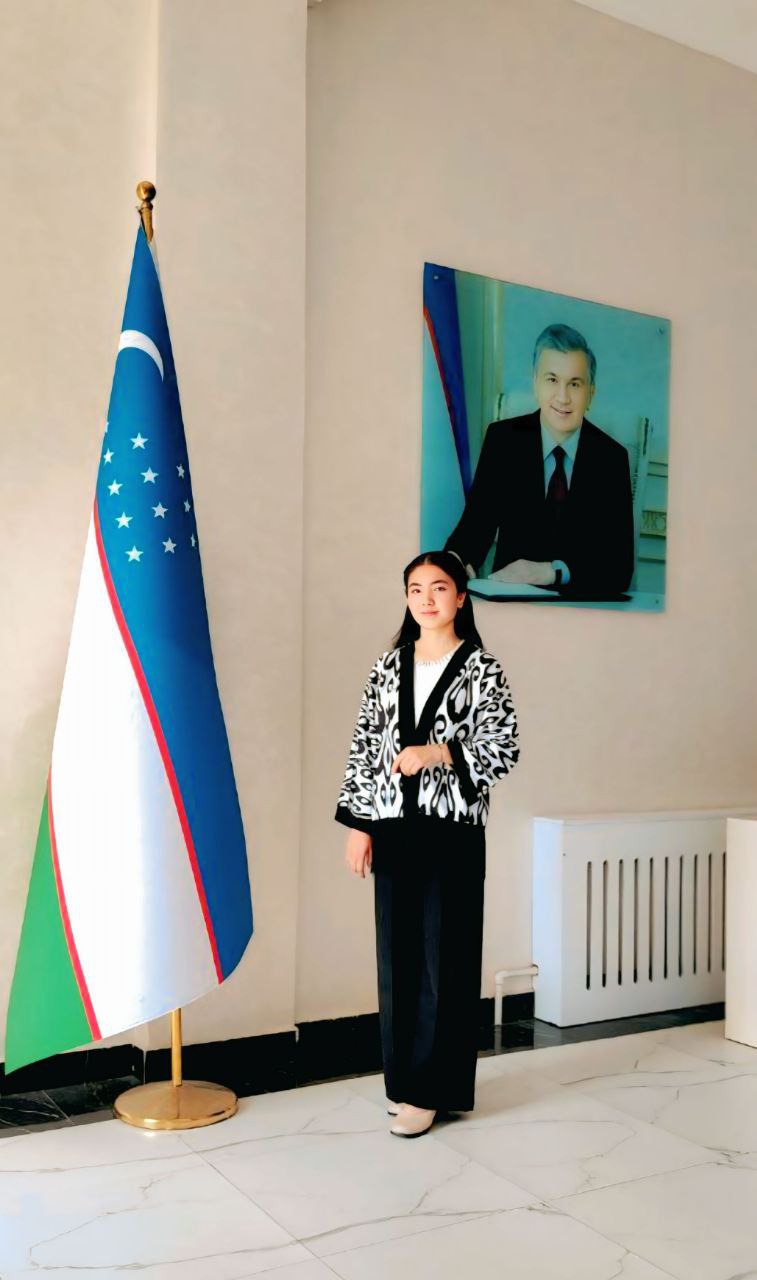
Young Central Asian woman with long dark hair, a white blouse, and a black and white patterned sweater and a long black skirt. She's standing in front of a photo of a man in a suit and near a flag.

The Advantages of Having a Hobby

Zamira Moldiyeva Bahodirovna,

Student of English filology faculty, UZSWLU.

Email: zamiramoldiyeva219@gmail.com

Scientific advisor: Zulxumor Bannopova

Abstract: Engaging in hobbies — leisure activities pursued for pleasure rather than for work or obligation — offers significant benefits for mental and physical health, cognitive functioning, emotional well-being, and social connectedness. Empirical research indicates that regular involvement in hobbies reduces stress, anxiety and depression, improves mood and overall life satisfaction, promotes resilience, and enhances social support and community belonging. Additionally, hobbies can contribute to improved cognitive performance and long-term health outcomes. This article reviews key findings from recent studies to outline the multiple advantages of having a hobby and argues that hobbies play a crucial role in holistic personal development.

Keywords: hobby, leisure activities, mental health, stress reduction, well-being, social support, cognitive function

Introduction

In the fast-paced, stress-prone context of modern life, people increasingly seek ways to preserve mental balance, reduce anxiety, and maintain a sense of meaning and satisfaction. One of the simplest — yet most powerful — ways to achieve this is through having hobbies. A hobby is a regular, voluntary activity pursued for enjoyment, relaxation, creativity or social connection, rather than for material gain. As shown by recent research, hobbies serve as more than just pastimes; they are vital tools for mental health, emotional regulation, social bonding, and long-term well-being. This paper examines existing empirical evidence to highlight the advantages of having a hobby, focusing on mental health, stress reduction, social and community benefits, and cognitive and health-related advantages.

Discussion

1. Mental Health, Stress Reduction and Emotional Well-being

Multiple studies link hobby engagement to improved mental health and lower stress levels. For example, a recent review of empirical studies concluded that participating in hobbies is associated with lower levels of depression, anxiety, and stress, and with greater life satisfaction and quality of life. 

Leisure activities — whether creative (art, music), physical (sports, gardening), or social (clubs, group activities) — provide a “break” from daily pressures. According to an article from UCLA Health, hobbies help boost mental well-being, support cognitive function, and may reduce risks of chronic disease. 

A study of students in China using a daily-diary method found that on days when students engaged in leisure activities, they reported more positive emotions, even in the context of academic stress. 

Thus, hobbies act as an effective buffer against stress, contribute to emotional regulation, and help maintain mental health in periods of high demand.

2. Social Connection and Sense of Belonging

Hobbies often foster social interaction and build community, which in turn enhances a person’s sense of belonging, support network, and social well-being. A recent review on hobbies and well-being found that social interaction and community belonging are among the main benefits of hobby participation. 

Engaging in group hobbies (sports clubs, music groups, art classes, social clubs) or hobbies shared with others helps individuals build friendships, share experiences, and support one another — which is particularly valuable in reducing loneliness and improving social support. 

Such social benefits can also increase life satisfaction, improve resilience, and provide emotional support in challenging times.

3. Cognitive Function, Creativity, and Personal Growth

Some hobbies — especially those that are mentally stimulating (e.g. painting, writing, learning music, puzzles) — support cognitive functioning, creativity, and lifelong learning. According to UCLA Health, hobbies may help improve cognitive function and offer protective effects against cognitive decline.

Moreover, engaging in hobbies can foster a state of “flow” — deep immersion in an activity, associated with intrinsic motivation, enhanced focus, and satisfaction. 

Such flow experiences can enhance self-esteem, sense of achievement, and personal growth over time, supporting mental resilience and capacity to deal with stress.

4. Physical Health and Long-Term Well-being

Many hobbies — particularly physical or outdoor activities like sports, gardening, walking, dancing — contribute to physical health: improving cardiovascular health, reducing stress-related hormones, improving energy levels, and supporting overall well-being. 

In addition, by reducing chronic stress and promoting relaxation, hobbies may help lower risks associated with long-term stress exposure, such as heart disease or other stress-related illnesses. 

Thus, hobbies support both mental and physical health — an important combination for holistic personal wellness.

Conclusion

Having a hobby is more than a pastime: it is a key to better mental health, emotional balance, social connection, personal growth, and long-term well-being. Research strongly supports that regular engagement in hobbies reduces stress, anxiety, and depression; boosts mood, life satisfaction, and resilience; fosters social support networks; enhances cognitive functioning and creativity; and improves physical health outcomes. Given these wide-ranging benefits, individuals — especially students and people under stress — should be encouraged to identify and maintain hobbies that resonate with their interests. For societies and educational institutions, promoting access to recreational and creative activities can contribute to population-level mental and physical health, better social cohesion, and improved quality of life.

References:

1.Cleary, M. et al. (2025). Exploring the Impact of Hobbies on Mental Health and Well-Being: A Scoping Review. (Review of 11 studies). 

2.Zhang, J., & Zheng, Y. (2017). How do academic stress and leisure activities influence college students’ emotional well-being? A daily diary investigation. Journal of Adolescence. 

3.Pressman, S. D., et al. (2009). Association of Enjoyable Leisure Activities With Psychological and Physical Well-Being. Psychosomatic Medicine. 

4.UCLA Health. (2025, May 15). 3 Proven Health Benefits of Having a Hobby. 5.Lagunes-Córdoba, E., et al. (2022). A better way of life: The role of leisure activities on self-perceived health, perceived stress, confidence in stress management, and social support. Frontiers in Psychiatry.
Poetry from Duane Vorhees

LENSES 

I was one with those voyeur stars; 

I had eyes and thought I could see 

through the hollow invisible NotSaids 

that keep the planet orderly. 

But “Orbit’s disjointed!” they say. 

I need a new optometrist 

“Magnifiers assemble the blaze! 

the noose rope already twists!

and our sky’s unconstellationed! 

we’re free to do within our chains! 

and we hold too fast to conditions! 

we must more dearly count the change!” 

So, should I rage 

or should I grieve 

in my omniscient grave? 

MOSQATHEDRAL 

(Roma/Mecca amalgaMates) 

You bachelors and spinsters: 

this Our, O disjoin us not, 

identitied opposites. 

Our Sames mediate Others. 

This Feast of the Unity 

of Captive Diversity. 

Summers harmonize winters. 

THOUGHT AND ACTION: 

the rise of Brit lit 

Pious poets would drink quicksilver despair: 

since Creation beggared imagination, 

they resignedly would abandon their craft. 

But secular old Petrarchus schooled Spencer, 

and Shakespeare knew, even while still in Avon, 

that, to surpass, he must teach his verse to act. 

JUST ONE = EITHER ONE

Impossibility:

like “a dove

can’t be,” disproved by just one sky.

Permanent is not eternal.

Now is not forever.

To circumstance adjust

frost, flood, dust,

Comdition isn’t definition.

Energy matters / matter energizes.

Conception itself conceives.

Is always was.

Life lives with no conception.

Posit amy sky

to prove

the dove’s

possibility

–or the crow’s

LAWS ARE THE CUCKOLDS, ALAS

1.

Laws

are to

lobbyists

as cuckolds 

to coquettes:

Effort and

ingredients

define all effects.

Law 

resembles

justice,

as cuckold

seems husband,

But

greatest counterfeit

can’t equal

or intend.

2.

Seduction

begins as a quest

abetted by a con

leading to conquest

3.

Experience

inverts

education:

The final test’s 

done first,

then the lessons.

4.

justice

stiffens into lawform

melts in passion’s heat

dissipates

back

into myst  ery

just/ice

Essay from Jernail S. Anand

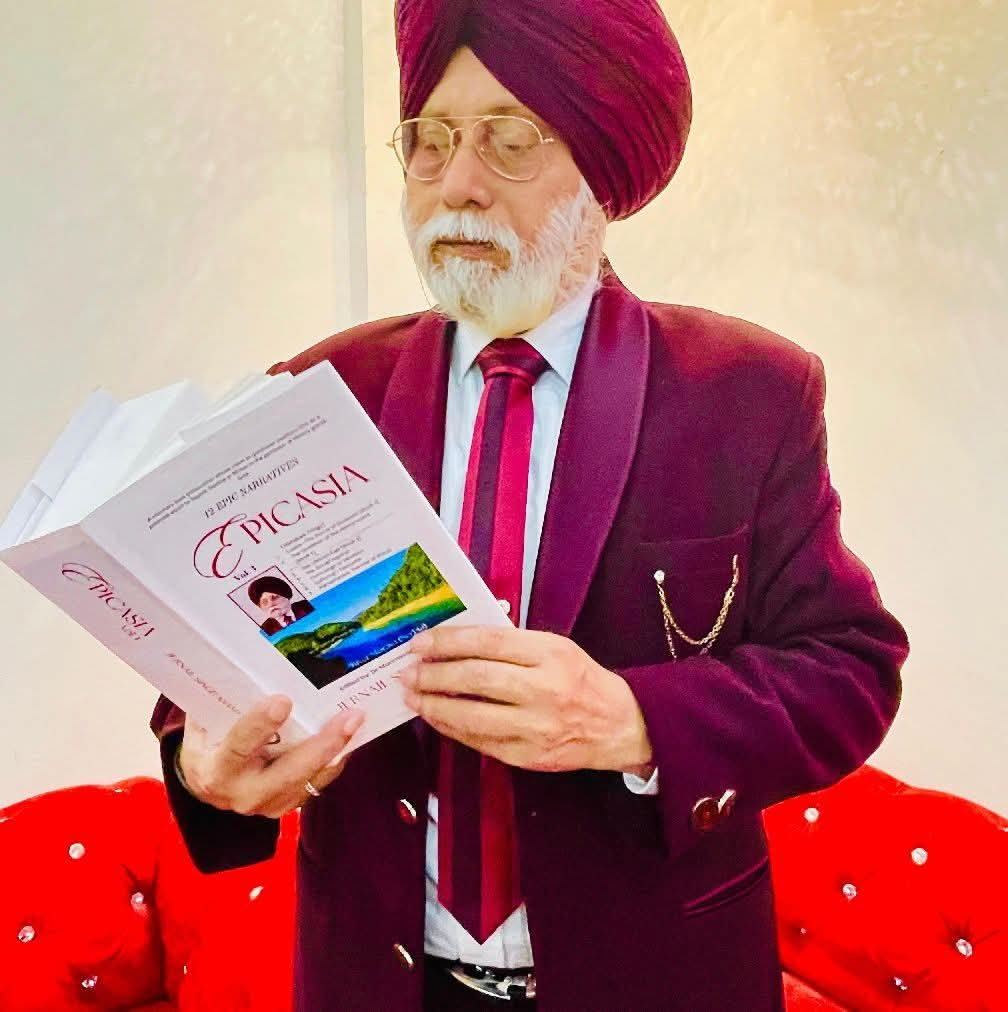
Older South Asian man with a white beard and mustache and pink/magenta turban and coat and tie reading his own long book.


    YOUR SINS WILL FIND YOU OUT

                                    Dr Jernail S. Anand

The forces of nemesis, and the furies, are moving around, looking for moral blemishes, and they spare neither the individual nor the society. -Anand

Bible says: Your sins will find your out. I think it applies to men as individuals, and the society as a whole.

As civilized human beings, we have set up courts to ensure justice to the aggrieved, and punishment to the aggressors who violate the laws of the country. Jails are overflowing with criminals undergoing sentences. Justice, it is said,  is often delayed, and sometimes,  entirely miscarried. Of late, justice eludes people due to interventions from the above, and what we come across is a jumbled face of a society which cannot recognize itself.

However, when it comes to the divine court, there are no chances of justice going astray. It may appear to be delayed, but it is definitely delivered.  While human courts take cognizance of the crimes which are reported, the supreme court of gods has a sprawling campus, and it works suo moto, and does not like excess of any kind. They carry all the data of these people with them and sometimes they punish them there and then, but most of the times, they wait for the appropriate moment.  But one thing can be said with conviction. No advocate, however pricey, can waylay the this court. No crooked wisdom can delay justice. The system is entirely blameless. Angels carry data which is up to date, and they act unbiased like machines which are innocent by all means, if there is any one to blame, it is man who operates them.

As in human courts,  parameters regarding crime and their punishment exist in divine courts also. They fix the crime of the person, and then, award him the punishment he deserves. Only this roster is not made public. As generally believed, our judgement proceedings do not start after our death. Operation scan is going on all the time. We are under the gaze of the angels. While human laws get into action when some crime has been committed, the divine court takes cognizance

of what you think, what you feel, and then, finally, what you act.

Societies are Judged as a whole

It is all about your ‘Karma’. Lord Krishna was right when he laid stress on human action which is finally considered by gods and on the basis of which, you are granted heaven or hell. Gurbani also talks of life as a ‘karma Sandra khet’ i.e. a field where your actions matter. Lord Krishna tells Arjuna that men have the power over their action only. Not on the reverberations of that act. In fact, here the Newton’s third law of an action having an equal and opposite reaction also comes into the dock, because, that may be true in a physical world, but in the metaphysical world, you don’t know what will happen to your action and how gods will react to it.

Moreover, there are thousand wrong passions doing the rounds of our blood, a thousand things which we cannot do, because of fear of the law, we are always mentally busy with things which civil society does not allow, how does that impact our score in life? There are so many people who are doing wrong things, yet they are not detected, because they are not visible to the law. How are they to be accounted for?

No doubt, we matter to the cosmos as individuals. We have a dedicated account with gods. The reason is our birth is individualized. Even in our death, we die individuals, though it may be a collective grave, as the drowning of a Titanic. But, in addition to being an individual, we are part of a society.

Unified View of Society

Who is there that takes a unified view of the people as a whole?  Gods who are on mision spy, take stock of the way people behave, and then take decisions about their collective destiny.  I can elaborate it by quoting the example of Guru Nanak Dev Ji’s great writing ‘Babarwani’ in which he says that the tyrannical acts which Babur inflicted on the people of Hindustan could have been averted if the people had been wiser. Guru sahib  says ‘Aape dos n deyee karta, Jam kar Mughal chadaya’ ie. the Mughal aggressed upon the people like a Yama,  all because of their wrong deeds.

Thus, when a society fails in its morals, when people as a whole become corrupt, when people stop taking interest in good, when good deeds go unrewarded, and the murders, rapes, and evil mongers  take the main space, when the society is ruled by the corrupt, and when the poor are pushed to the edge, the society as a whole is ripe for divine retribution.

The forces of the nemesis, and the furies, are moving around, looking for moral blemishes, and they spare neither individual nor the society.  A layman once stopped an angel in a dream and asked, what is the punishment for people who do not stand for their rights? Pat came the reply. “Hitler. Nero. Mussolini…and….” when the angel was going to name a few more people, the man woke up from his sleep, sweating.

Dr. Jernail Singh Anand, with an opus of 190  books, is Laureate of the Seneca, Charter of Morava, Franz Kafka and Maxim Gorky awards.  His name adorns the Poets’ Rock in Serbia. Anand is a towering literary figure whose work embodies a rare fusion of creativity, intellect, and moral vision who heads the International Academy of Ethics. 

Poetry from Lan Qyqualla

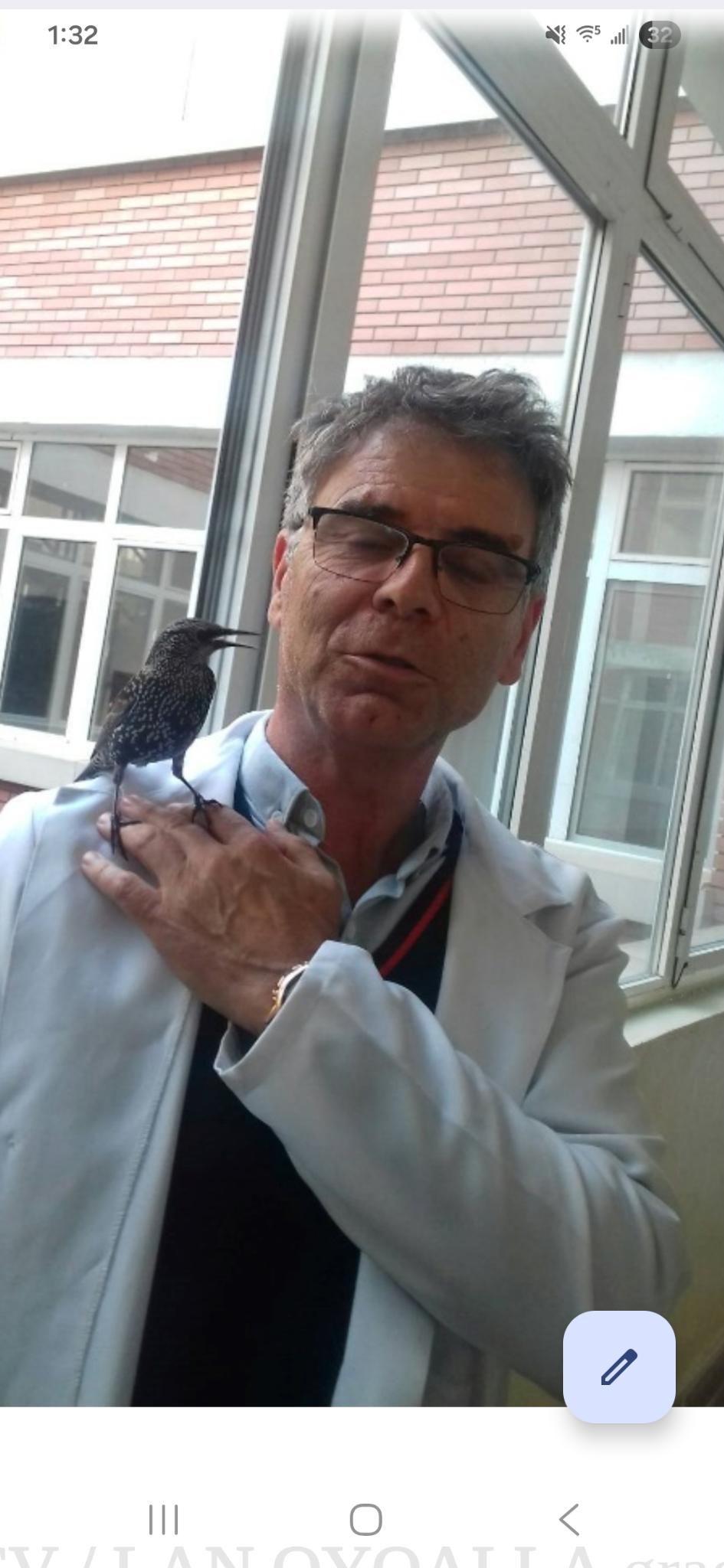
Middle aged Eastern European man with glasses and a white lab coat near a small black bird with long legs and a beak. He's inside near a window with a brick building outside.

AUTUMN LOVE IN PRISTINA

We met in the fall,in the amphitheater you tweet

The streets of Pristina,

in the cold night,

Shoot me like a mountain fairy.

the stars were aligned

That summer evening in your tear,

we were both lost in the untouched oasis

and the lips stopped at the sounds FlokArtë.

Why did we travel, tell me whyin the cold winter and snow,

the beaming sun gave us a gift,you ray of sunshine lit me siashra.

Why did we run to the meadows, why

in the early spring fragrance of love

we pray to the flowers of the green field,

Embraced we felt exotic intoxication.

VALENTINE’S DAY 

Lora

Embroidered Valentine’s Day

on the map of love

Egnatia-Naisus street

and in passing I also took

the honey flavor

from the hot ashes

of the estinguished fire.Lora

like a blonde ladybug in the meteorite

nobody whispers

on the map of love

and the star twister out of exhausted longing

in the timeless feeling

brought the freshness of age

the kiss of the mountain like Hera from Olympus

departed in the endless today

Night.

Lora

Frozen in heat

slightly heated to the bosom of love

“I’m very cold

Lan takes me with him

tonight

I do not want flowers

a white rose

to have for Valentine’s Day!

DON’T FALL IN LOVE WITH LORA 

Do not fall in love with Lora, my friend,

for she has left her heart in pledge with mine.

It beats within my chest like a wave,

Like the echo of a song across the mountain line.

You may kiss her lips,you may call her yours,

but her eyes are skies without a sun,a night without a moon,

A cloud without rain,

a flame without ember burning, yet hidden in a cold bosom.

You may hold her close,

you may call her your own,

but her love she left to me in pledge,

Through ages and through time unknown.

So fall not for her gaze, young man

she is the dream of a silent yearning.

You will have a love without hope,

for her heart remains my pledge,

forever turning.

LAN QYQALLA graduated from the Faculty of Philology in the branch of Albanian language and literature in Prishtina, from Republika of Kosovo. He is a professor of the Albanian language in the Gymnasium. Lani is the Editor-in Chief of the international cultural and artistic magazine ORFEU, which is published in many languages in Pristina, the capital of Kosovo. He is also the editor of the cultural show ORFEU on TV Jupiteri7 channel on YouTube. He wrote poems, stories, drama, novels in Pristina. He has written in many newspapers, portals, Radio, TV, and Magazines in the Albanian language and in English, bangu, Romanian, Francophone, Turkish, Arabic, Italian, Greek, Swedish, Hindu, Spanish, Korean etc. 

Poetry from Taylor Dibbert

Big and Small

There were 

Big and small moments

When he told her

That he was sorry

That she felt that way

He should have just said

That he was sorry.

Taylor Dibbert is a poet in Washington, DC. He’s author of, most recently, “On the Rocks.”

Poetry from Graciela Noemi Villaverde

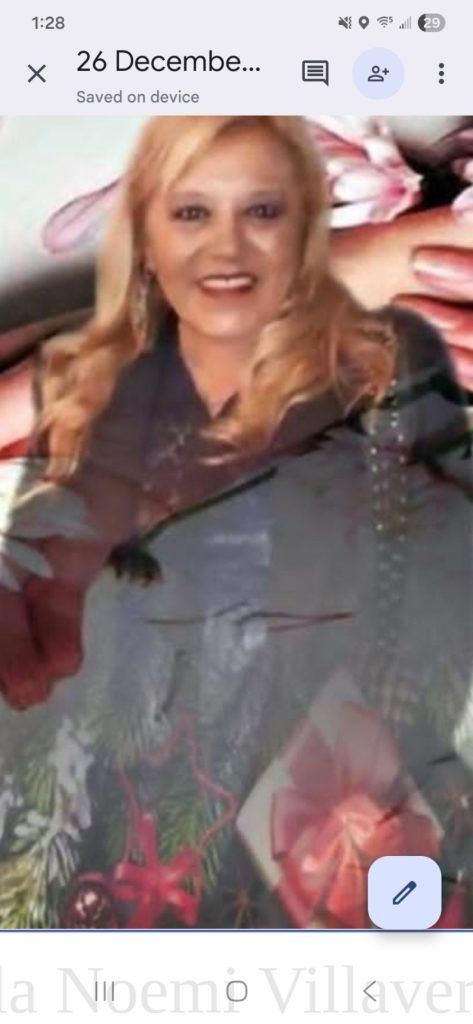
Middle aged Latina woman with mid-length curly light brown hair and a black jacket.

Summer Solstice, My Birthday 

Today the sun stands like a giant 

beacon in the center of the sky—it 

doesn’t walk, it doesn’t bend, it 

simply is: the heart of all that breathes. 

I was born in that instant 

when its light becomes taut and 

ready to unleash the longest day 

like an unwrapped gift. 

My body is a field of wheat 

germinating in the warmth of its gaze, 

each hair a stalk seeking the blue fire of the sky. 

I am not just another day among days: 

I am the whisper of the sun when it realizes 

it has arrived home, the space 

where time stops to take a sip of solar honey. 

The air fills with tiny shadows, like 

letters in a letter the sun writes to the earth—

and I am the last word,

the one not read but felt on the skin, 

like a warm kiss that doesn’t fade. 

My lungs are windows open to the light, 

each breath a thread harvesting the entire day, 

weaving it into the fabric of my being. 

Today the world doesn’t revolve around the sun: 

it revolves around this instant in which 

I am the point where the sun meets itself, 

where summer becomes a heartbeat, 

where birth is the reflection of all that shines. 

December 21st, my birthday

GRACIELA NOEMI VILLAVERDE is a writer and poet from Concepción del Uruguay (Entre Rios) Argentina, based in Buenos Aires She graduated in letters and is the author of seven books of poetry, awarded several times worldwide. She works as the World Manager of Educational and Social Projects of the Hispanic World Union of Writers and is the UHE World Honorary President of the same institution’s Activa de la Sade, Argentine Society of Writers. She is the Commissioner of Honor in the executive cabinet in the Educational and Social Relations Division of the UNACCC South America – Argentina Chapter.

Short story from O’rinboyeva Zarina

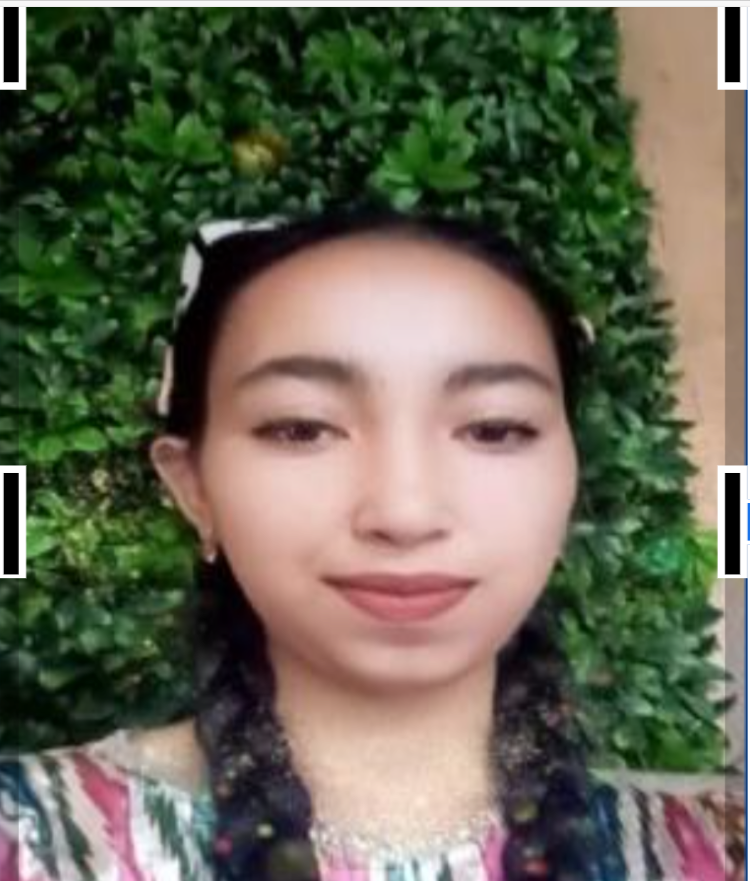
Young Central Asian woman with two long braids of dark hair and a pink and black and white top standing in front of a green bush.

One Day of Rain

“Are you ready? So… will it really happen today?” said the children, about 12 years old, as they stared up the sky. They were waiting for the rain. They lived on the planet Venus, where it rains only once every ten years. During the rest of the time, the temperature stays around +190 ° to 200 °. Because of this, the children had only seen the rain once in their lives – but they could not remember it, since they were only two years old at the time.

   “If it rains only once in ten years, does that mean there is no water? Won’t there be drought everywhere?” someone might ask. The answer is no – there is no drought because people get water from underground sources. 

Among the children there was a girl named Narya who was different from others. She had moved from Earth to Venus with her parents when she was eight years old. That’s why she was not like the rest of them. While the other kids played noisily, she would sit aside, lost in thought, Deep down she wanted to play with them too, but they never let her join they kept excluding her and treating her unfairly and treating her unfairly. Even now, they had set a trap for her. They locked the poor girl inside a dark, abandoned warehouse.

 “Something fell on me – this must be the rain!” said a girl named Nasha. “It fell on me too!” shouted another. “Me too!” the children cried excitedly.

Suddenly, the sky opened up and heavy rain began to pour. The children ran to the garden and happily played under the rain. It lasted only 60 minutes, and after it stopped, they suddenly remembered Narya. They rushed back and opened the warehouse door. Narya was lying unconscious on the ground. They quickly brought her outside, sprinkled water on her face, and helped her regain consciousness. Then they tearfully apologized her.

The poor girl said she wasn’t angry at them: she only wished she could have seen the rain like everyone else. As she said this, she broke into tears. Just then, rain suddenly began to fall again – and this time it didn’t stop for two whole days…

O’rinboyeva Zarina is a 14-year- old student in the 8th grade school No.43 in Oqdaryo district, Samarkand region. She is the winner of 3rd place in the “Bizning faxrimiz” TV program. Two short stories published in the district newspaper. Two short stories published in the American journal Synchronized Chaos. Holder of six international certificates. Recipient of the “Millat Umidi” badge of creative achievements. Winner of numerous republican-level competitions and projects.