Christopher Bernard reviews Territory of Dawn: The Selected Poems of Eunice Odio

Celestial Objects

Eunice Odio

Eunice Odio


Territory of Dawn: The Selected Poems of Eunice Odio

Translated by Keith Ekiss, Sonia P. Ticas and Mauricio Espinoza

The Bitter Oleander Press

$20.00


A review by Christopher Bernard


It has often been said that modern man is in need of a new religion, of a new God, that the old religions and old gods, apparently resurgent throughout the world, are in fact in a battle to the death with a vision of the universe offered by modern science that differs so greatly from that of the Great Axial age from which most of the world’s great religions emerged that they cannot hope to remain relevant for long.

Either they will die, or they will destroy the scientific vision of the world, and by so doing, since they will find themselves unable to renounce the instruments of power science has made possible (though, to be consistent, they should renounce both subatomic theory and nuclear bombs, the theory of evolution and the internet, climatology and drones – but when has a fear of logical inconsistency ever stopped a martinet more powerful than a schoolmaster?), they will destroy the world, or, if not the world, civilization, and thus bring the human experiment to a spectacular end, to say nothing of the Final Judgment that a number of religions have long portended.

There is another way to our own suicide, and that is through a form of radical secularism fomented by the scientific worldview itself, a view purportedly hostile to religion of all kinds—seeing religion as irrational, intellectually presumptuous, morally hollow, hostile to knowledge, reason, and humanity—and yet which turns out to be itself irrational, cruel, presumptuous, hostile to reason, humanity, and even science.

Continue reading

Poetry from Michael Robinson

Conversations

For Angie

When I was little, I would talk to God

Waiting for his response.

“God is listening!” said my foster mother.


I wanted to live with God,

Just like the black women would say—

To go home to Jesus.


Wondering if black boys could go to Jesus,

Or did we just go to jail,

Or just lay in the gutter alone.


When the Doors Close

In the darkness of the night,

I seek the light of the moon,

Coming to greet my soul.

In the darkness of the night,

I pray that God will hear my heart,

In the darkness of the night.

In the darkness I smell the candle burning,

I’m safe with the burning candle in the darkness of the night.

Continue reading

Poetry from J. K. Durick

Convenience stores

Convenience stores must be easy, out there alone, late;

around here two or three get held up each week, as if

there were a quota on them. It’s easy to picture, the lone

clerk dozing a bit by the register when the guy comes in,

the only person in the store, brandishes a weapon, they

always say brandish for these guys, either a gun or knife

or what looks like a weapon, and the minimum wage night

clerk always turns over the cash, an undetermined amount

they always say, and then he’s gone back out into the night,

so often around here the bandit leaves the scene on foot, as

if familiar with his or her surroundings, some local talent

perhaps; then on the evening news they will show pictures of

the thief, caught on the convenience store’s security camera

and we are told to call the police if we recognize this person,

a person who someone will know, a person who, more often

than not is caught. It’s as if convenience stores have become

the stage, the backdrop for this predictable play, this tired story

about our world, a dark lonely place where it seems as if we

either tend the till or come in from the night brandishing or

pretending to brandish a weapon, then leave with a hard to

determine amount of money, leaving behind each time just

enough of ourselves that we get our picture on TV and finally

someone recognizes for what we are and calls it in.

Continue reading

Poetry from Benjamin Blake


benjaminblake

Alis Volat Propriis 

Wandering the desolate Oregon coast

Salt-swept rocks shrouded in ocean mist

Something flutters in the pines positioned on the cliff-face

And somewhere not too close

A dog barks, ceaseless and urgent

Joined by the cries of plaintive gulls

I always dreamt of shipwrecks

And lamp-lit smugglers’ coves

Of sun-bleached bone

And sand-worn bottles

Their messages long lost at sea

So it is here that I’ll sojourn

Lay down with someone else’s wife

This old body needs its rest

And it’s time we moved on from writing letters

At least for a little while

Sophie, for the sake of Conversation


Alone again in autumn

The leaves drift down from the trees

Dew drops accurately reflect isolation

Newly departed from a passing bus

She’s standing on the roadside

Clad in a plaid jacket and over-sized white headphones

And I could have been hit by it

By the way I’m feeling

If only I could

Catch more than inquisitive looks

From such a pretty face

I’m fumbling in the outfield

From the prettiest face

Tripped and fallen again

Why am I still writing these stupid songs?

A whimsical by-product of delusion

Continue reading

Poetry from John Grochalski

marin says


marin says,

like what am i supposed to do?

like i’m just

supposed to take it

and they know that

i mean

i’m their waitress


marin says,

they knows this

but they still try to bait me

like they ask me

if i voted for trump

because i’m latina

one of them keeps asking me

what i think about his policies


what am i going to say?


like

i think trump is a sexist, racist ass

but i need your tip money

even though i know the whole group

gives rachel more money

when she waits on them


marin says,

the one in the make america great again hat

he’s always talking about

all the great things trump

has done already for america

like they say to me

even though i’m mexican

i was born here

so i should be cool with the government

kicking the illegals out


i’m not even mexican

i’ve never even been to mexico


marin says,

i want to like tell them all off

show them a map of south america or something

show them what chile looks like

but the little bit of money

that they do give me

i actually use

for like college

for like my rent


it’s just frustrating sometimes


marin says,

the job is all right otherwise

families with loud, messy kids tip well

you get college kids in

people my age

but they just sit around drinking coffee

and playing on their phones

sometimes they forget to leave anything


but i like them

better than the people who come in

on my morning shift


at least we don’t always have to talk politics


marin says

on the days those people don’t come in

it’s pretty okay working

at donnie’s

like i can almost forget that trump

is the president

or like my feet are sore

or that i’ll be smelling like bacon all afternoon


and how when the shift ends

i only have an hour to race over to manhattan


or i’ll be late

for my calculus class

or sometimes my biology 101

Continue reading

Poetry from J.D. DeHart

Caught
 
An old man goes up
and down the street,
casting his lure onto
the pavement, the rod
and reel angling
back and forth
It’s like muscle memory
or a nostalgic form
of motion contemplation
He smiles at me when I
ask if he has caught
anything yet.

Continue reading

Synchronized Chaos March 2017: We’re Going on An Odyssey!


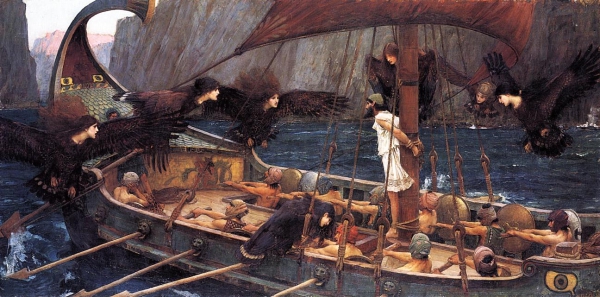
'Odysseus and the Sirens' by Waterhouse

‘Odysseus and the Sirens’ by Waterhouse, 1891

Welcome, readers, to Synchronized Chaos Magazine’s March issue. Bon voyage and grab your hats, this month we’re setting sail and heading off on a journey!

Two of our submissions mention Greek mythology and drama directly (Vijay Nair’s poetry, which celebrates the beauty of love through a comparison to the story of Leda the swan, and Christopher Bernard’s review of the performance of Antigona at San Francisco’s Z Space, retelling the classical tragedy through flamenco dance).

So, in the spirit of the Odyssey, we’re wandering through different ‘islands’ of themes and topics, keeping in mind our loyal and brave Penelopes and Telemachuses who are keeping the candles burning for us at home.

Some places we stop are quite enjoyable, and we can spend a good deal of time on these idylls, as Odysseus spends seven years under the spell of the nymph Calypso.

Carol Smallwood describes the renewal of the world that comes with the American Midwest in an excerpt from her novel In Hubble’s Shadow. 

Stella Pfahler contributes poetry of love and country roads, but a current of danger underlies her thoughtful and precise words. Her speaker envisions her travel companion paralyzed, rendered immortal and forever hers by a lightning strike.  Similarly, Calypso employed magic to trap Odysseus, keeping her lover at her side until he finally awakened and remembered his home and family. Sometimes a place can be wonderful, but not quite home.

Other idylls can simply be draining and unimaginative, such as Doug Hawley’s teaching position in the ironically named small town of Manhattan, Kansas.

Like the coral reef with the enticing Sirens, some places we visit sound lovely at first, but are nothing but dangerous temptations, destructive when fully considered.

J.D. DeHart offers us poetry of disillusionment, where people and situations, including his speakers themselves, aren’t all that he expected of them.

Tony Nightwalker LeTigre’s poetry warns against assuming that our societies have done enough to care for the poor just because we have created some organizations with noble mission statements. Also, he looks at, but ultimately rejects, the allure of a life spent in addiction, which would allow him to temporarily escape harsh realities but leave him less able to create change.

And J.J. Campbell’s pieces reflect loss and longing, disillusionment and rejection – normal feelings after an encounter crashing your flimsy boat against the rough rocks of the island of the Sirens.

Great dangers can threaten us, as the giant Cyclops menaced Odysseus and his men. But, as he did, we can sometimes escape through our cunning, resilience and wit.

In the review of the American Conservatory Theater’s production of Ursula Raini Sarma’s dramatic adaptation of Khaled Hosseini’s novel A Thousand Splendid Suns by yours truly, we see two women trapped in a violent, restrictive situation who ultimately overcome through courage, endurance and family love.

Returning poet Michael Robinson evokes the images of family and sensual love that allow him to navigate and survive youth under the constant threat of random, senseless violence.

Other times, the dangers prove too powerful for us, especially when they arise out of our own natures and our own pasts. Mike Zone’s short sci fi/fantasy/horror story Life-Hack presents a woman tracked down at long last and tormented by the son she abandoned. She likely wished she could have escaped to the Land of the Lotus-Eaters, where, like Odysseus’ crew, she could have lost her memory and identity.

Sometimes we encounter circumstances that change who we are, that cause us to reinterpret ourselves, as enchantress Circe changes Odysseus’ men into pigs.

Federico Wardal invents a character for the stage that allows him to express the nuances of his craft while playing classical and modern dramatic characters, as well as speak up for human rights through theater of his own making. Interestingly, he specifically credits the ancient Greeks with the majority of his inspiration and the basis for his style.

Joan Beebe reminds adults that we can still enjoy the breaks from reality and the world-expanding and enhancing effects of imagination.

Sometimes, we get in trouble because we are too bold and we overstep the bounds people have set to protect us. Wind god Aeolus tries to help Odysseus by capturing all the air currents that might set his ship off course into a bag, but when he is nearly home, the crew opens the bag in search of treasure, unleashing all the bad winds.

Dan Morey’s story illustrates the drama his elderly Mom creates in Rome when she attempts to evade the Swiss guards protecting the Vatican so she can make an unscheduled visit to a garden. However, he is more fortunate than Odysseus and, through humor and gentleness, he is able to defuse the situation.

Nancy Schluntz’ poetry conveys an environmental message in its talk of earthquakes and cataclysms, warning us to live sustainably within the natural world. As when Odysseus’ men disregard the admonitions of the sun god Helios and eat his cattle, incurring his wrath and their destruction, sometimes we should heed warnings.

Sometimes, we are blessed to find those who come to the aid of lost travelers. The Phaeacians finally help Odysseus find his way home, following the ancient code of hospitality.

Mahbub, a poet from Bangladesh, encourages compassion for the world’s Syrian refugees in a set of poetry that also celebrates faith, family, community and romantic love.

Donal Mahoney contributes an essay about his Irish parents, in time for St. Patrick’s Day. Ironically, he remembers that he himself is the child of illegal immigrants, headed to the USA for safety and better economic opportunities.

In Elizabeth Hughes’ monthly Book Periscope column, we follow the journey of Thomas Montasser’s protagonist, who finds a welcoming home in a small town bookstore in A Very Special Year. And the life story of Anlor Davin, who, as she relates in her memoir Being Seen, leaves her provincial French homeland and journeys across the US, finally finding home in Zen meditation and accepting her uniqueness. And, finally, we uncover the secrets hidden in a lovely beach resort in Mary Kay Andrews’ The Weekenders. 

Wishing you all safe travels, friendly winds and a gentle landing as you read. Enjoy!