Announcing the 2016 International Nature Writing Contest, sponsored by authors Rui Carvalho, Sara Rodriguez Arias, and Janine Canan and by Synchronized Chaos Magazine.
http://talesforlove.blogs.sapo.pt/
We are searching for a new Lord Byron, who can go forth, creating poetry to praise nature and those who love her.
Beauty of nature is one of the nights imperishable, one of the endless days, with horizons made of sands on the shore.
The forest can be seen as a hospitable home, inhabited by humble virtues.
But, for those whom poetry doesn’t love, it matters not.
And this is why we seek high-quality poetry; poetry that expresses feelings with the strength of the undying masterpiece. No injury can befall that timeless poetry, made with the most pure water of the creativity’s fountain.
Please help support the nonprofit project we have chosen as a beneficiary of this contest, an organic orchard in Albanil, Portugal, in buying a rainwater capture tank to irrigate sustainably without using power.
Welcome, readers, to December’s issue of Synchronized Chaos Magazine. This time we explore ideas related to loss and restoration.
How do we cope when something goes missing? Is it really different when we have lost a small object versus something larger, such as our personal or cultural identity, our sustenance, or the values through which we order and find meaning in life? How do we find what we seek, and what happens when we realize that what we need cannot be simply found and restored, but must be created from scratch?
Michael Robinson’s poem also looks into his past, describing the rough, violent, but diverse and vibrant neighborhood where he grew up. His piece compares the metaphorical prison of inner city poverty and the lack of safety and job opportunities, and his subsequent confinement in a mental hospital.
The tension between popular success, ordinary survival and true innovation is a common plague in the life of many artists. Although Marrotti’s speaker does not seem to suffer to the extent of Michael Robinson, even at the impoverished beginning of his career, he leaves readers wondering if there can be a middle ground where artists can feed themselves as well as our imaginations. After all, in Santellano’s piece Dante’s World, the home fires need tending, just as much as life’s meaning needs to be understood.
Donal Mahoney’s essay describes a community where people make efforts to carry each other through tough times. Even when they only have so much to eat themselves, they ‘add water to the beans’ to stretch their resources to accommodate whoever is struggling.
Neil Ellman contributes another set of ekphrastic poetry, where his free verse accompanies modern art pieces, transliterating its colorful images into words. The Modernist era in Western art and thought involved much exploration of loss, grief, personal and national identity, mechanization, and finding meaning in a world lost and disconnected from its traditional sources.
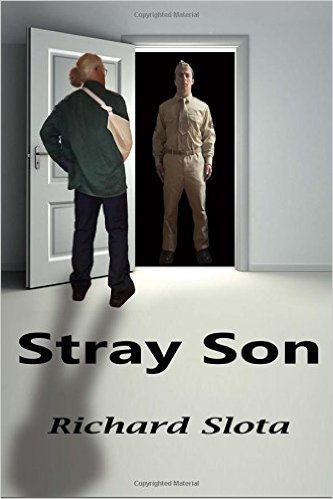
Richard Slota’s historical novel Stray Son, as reviewed by Cristina Deptula, points to the value of identifying and separating one’s self from the unhealthy influences of one’s past. To properly grieve the losses of his parents and the happy family and childhood that he wished for his whole life, protagonist Patrick Yaworsky feels he must start by understanding why his parents abused him. That way he can externalize what happened as a product of his parents’ own troubled upbringing and time periods, rather than internalizing it as something that he deserved or brought on himself. This represents a healthy dissociation for him, and a way to free himself from the pain of past losses and restore health and stability to at least his own nuclear family.
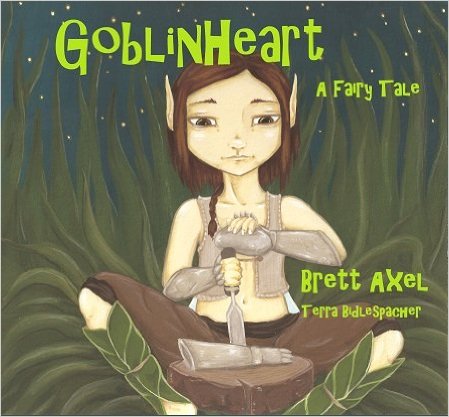
Cristina Deptula also reviews Phyllis Grilikes’ Autism’s Stepchild, the story of the author’s friendship with a woman whose daughter has a condition which we would today recognize as autism. The book shares their journey towards understanding Jean and accepting her the way she is while helping her learn to communicate more effectively and encouraging her to develop her interests and talents. Also, she reviews Brett Matthew Axel’s children’s fairy tale Goblinheart, which shows the beauty of being free to live an authentic life within a community who accepts you.
We at Synchronized Chaos Magazine wish all of you health, nurturance, freedom, a stable sense of identity, and food for your table and your mind. And a very pleasant holiday season, as the solstice brings us from one end of the year to another, as Persephone revisits the underworld for another six months with its fabled pomegranates.
Photo by Marina Shemesh, available here: http://www.publicdomainpictures.net/view-image.php?image=55356&picture=pomegranate
Brett Matthew Axel’s Goblinheart shares the story of a young creature who grows fairy wings, yet truly feels they are a goblin with claws. Julep’s forest dwelling tribe allows Julep to live openly as a goblin and do a goblin job tending to tree roots and even make claws. Julep later pays it forward by helping a goblin from another tribe who considers themselves to be a fairy and wants to live openly.
The book presents a message of acceptance and honesty with self and others. Goblinheart has a message relevant to transgender concerns, but the story could encompass so much more, as many of us are much more complex than what we look like on the outside.
Enjoyable book with intricate illustrations and a coherent story. Fun to read and just enough words to tell the tale of Julep!
In the beginning Donald remodeled the heavens and the earth. And the heavens were sublimely beautiful and the earth was a pleasing place, but Donald was without form and void, and he hovered like a shapeless cloud over the deep.
And Donald said, Let there be Darkness. And there was darkness.
And Donald saw the darkness, that it was bad, real bad, and Donald divided the darkness from the light.
And he called the darkness day and the light he called the night. And evening and midnight were the first day.
And Donald said let there be a really classy casino town on an island, like Atlantic City, but one that doesn’t go bankrupt this time, in the midst of the waters, and let it divide the waters from the waters, you know like a martini before you shake it.
And Donald made the really classy casino island town and divided the waters which were under the island from those which were above, where Donald of course would be living in the penthouse.
And he called the really classy casino island Heaven. And evening and midnight were the second day.
And Donald said, Let all of the waters that were under the casino island be gathered together into one place: it will make Mar-a-Lago the coolest resort ever.
And Donald called the dry land Trumplandia and the gathering together of the waters he called the Largest Swimming Pool in Florida.
The beach stretched out further than usually sea-bound feet could comfortably wander, all elastic-quicksand and sucking at soles and souls. Water lapped at the mermaid’s toes, and it was all the colder for the toes not being a tail, not glittering with scales as one would expect.
As she walked, she imagined each toe to be a tiny tail, shifting and blurring until wispy fin ends replaced the toenails. When her big toe-tail hit something solid, she thought she’d turned the beach to stone with her dreaming, but as her eyes focused she found a treasure underfoot.
It was a smooth, milky-white piece of sea-glass, and she bent to pick it up, flicking off the wet sand and tracing its edges with her finger. There was one tiny chip where she could see the lost clarity of the glass, and it sparkled as she turned it over and over in her hand. The glass was shaped like a shark’s tooth, jagged and curved, though its sharpness had been lost in the tide.
Richard Slota’s Stray Son is a rough edged, tough minded historical family drama.
The book presents a grand tour of midwestern America in the 1940s, showing off our manufacturing and farming heartland. We learn about the thrill of driving a vintage automobile and of the work that went into maintaining the planes that helped us win the Second World War. My parents were nostalgic about Route 66 after browsing the novel!
The novel’s action kicks off when main character Patrick Yaworsky, a middle aged man who is estranged from his extended family and dissatisfied with his job and life, discovers the young ghost of his deceased father. He and his dad take his wife and two children from Southern California to Sioux City, Iowa to attend the father’s funeral. His deceased father takes everyone on a journey in time back to when he served in the Marines. While Stray Son has plenty of endearing, helpful side characters and interesting vintage Americana, it never lapses into uncritical nostalgia. The family’s adopted black son Mike faces prejudice in 1942 that reminds us of social progress that we have made in some ways, and we see through the radio news and the father’s conversation that people in that age lived with a very real fear that Hitler was going to win the war.