Blackmail and Other Stage Plays is a compilation of seven plays that would be perfect for small town and city theaters. Each one is written with clear, concise and captivating dialogue and they all capture the interest of the readers. I hope to see them produced and acted out on stage some day. I highly recommend this book and rate it 5 out of 5 stars and 2 thumbs up.
Travelers With No Ticket Home: Poems by Mary Mackey
Travelers With No Ticket Home is a collection of deep and beautiful poetry. The poems flow from page to page. Some of my favorites are the “Kama Sutra of Kindness” poems beginning on page 64, “To My Mother On Her Second Non-Birthday” on page 59, “Under a Yellow Porch Light” on page 57, “Dreaming of the Dead We Have Loved” on page 56. This book is must-have for all poetry lovers. If you aren’t into poetry, give this book a try, it will make a poetry lover out of you. I highly recommend this book and give it 5 out of 5 starts and 2 thumbs up.
I went to China partly to try and get away from everything and find time to write, but when I got there I found I was so lonely that I couldn’t. I stopped going to class and spent my days wandering the streets of Chengdu, looking for something interesting—coffee shops, pool halls, temples. Not writing a word, hostile to everyone I met.
In April, I signed up to go on a school trip to tour Hangzhou and Suzhou, two reputedly beautiful cities in the east of China.
I was nineteen and in love for the first time, really, with a girl I left back in Colorado, Anne. Before I left, I sent her an email telling her everything I felt. On the train to Suzhou, after everyone in our group was asleep, I spent a long time with a flashlight, trying to write love letters to her and crumpling them up.
On the trip, I was invited by two Russian classmates to leave before everyone returned to Chengdu to travel on to Shanghai. It sounded like an adventure, and I thought it would be stupid to refuse.
So with two Russians I barely knew, I fled a bus into the pouring rain and hailed a taxi that would drive us through the afternoon traffic of Hangzhou—with scattered glimpses of the city, which really was quite beautiful, in the rain at least—to take us to a train to Shanghai.
The Russians were called Natasha and Ivan. Natasha was self-conscious of her English, I think, and she was quiet with me for a long time; but she and Ivan periodically broke into bouts of musical Russian together.
Ivan wanted to see some of my fiction, so I brought it up on my phone while we were on the train. He read through it carefully.
“But why did the man give the diary back at the end? And what is this ‘Grand Pavilion’? What country is this meant to be set in?”
He was supposed to meet up with a girl he had met when he was in Shanghai before. Ivan was twenty-five—to me, a paragon of weary experience—but his eyes lit up when he spoke of her.
It was a speed train, and looking out the window made me feel nauseous.
“Natasha.” I was unable to pronounce her name, but I did my best. “If you tell someone that you love them, and they say that they love you back, but then later on say that they were drunk, and apologize—what does that mean?” I’d been checking email feverishly while we were on the trip.
She was reading a magazine in Chinese, which amazed me. “I don’t know… why are you asking me this? Who said this to you?”
I saw that I had piqued Ivan’s interest, and it was important to me that he think I was capable of being tough.
“Nothing. I’ll tell you later.”
It was already dark when we arrived in Shanghai. We had stayed up all night the night before, and we were tired. We checked into our hotel and tried to find a bar that Ivan had been to before, but it had been closed for a while. We walked back to our hotel, where there were two double beds. Ivan talked his way into sharing one of them with Natasha, and I lay in the other, straining for the sound of any fooling around between the two of them before I fell asleep.
I did not sleep well. I kept thinking about Anne, but especially about the email I had sent to her and her email back and what she really felt. Just as it was getting light, I got a horrible cramp in my leg. I rolled out of my bed and onto the floor. I actually cried out with pain. I was in between the beds, on the side closer to Natasha, and I was so close that I wished I could just pull myself up there. Natasha woke up halfway, turned over, and met my eyes for a second. I think I apologized. She didn’t say anything, but rolled over, leaving me in my agony.
I decided to give up on sleep and take a walk outside, in the direction we had gone the night before. There was a long raised promenade along the other side of the street that I hadn’t given much notice to.
I climbed the stairs and found myself looking out over a river with all the financial towers of Shanghai on the other side. I stood there, looking across the river at Shanghai through the morning haze, unable to believe it. I thought about writing a novel set in Shanghai, and about the Cultural Revolution, and all kinds of other things. I bought a Coke and wandered way down the promenade. There were runners and couples holding hands and kids playing around on skateboards. Eventually, the promenade ended, and stairs led back down to the street. I threw away my Coke and started back to the hotel.
They were still asleep, so I sat in bed and read for a while. Ivan got up to take a shower. Natasha started to check emails.
She saw that I was awake. “Ed, who were you talking about on the train?”
I had just started to explain when Ivan came out of the shower. “Man, get ready,” he said. “We only have one night here, we can’t waste any time.”
Walking down the waterfront of Shanghai was the first time I can remember feeling inadequate in the way that I dressed. Walking along the river, you are flanked by European colonial buildings on one side and the financial skyscrapers on the other. I felt like I was a part of something historical and eternal. Walking with these two Muscovites, I felt like the poor bumpkin, seeing the big city for the first time. Ivan convinced me to buy new shoes. I threw my old ones in the trash.
That night, Ivan went to meet up with the girl that he knew, and Natasha and I got dinner together by ourselves. As technically I had broken up with Anne, I wanted to see this as a date, but my hopes pretty much crumbled through the night.
“I have to hook up with as many girls as I can while I’m in China,” I told Natasha when we were outside.
“What? Why?”
“Because she’s going to, while I’m away.”
We were walking along quiet, European-style streets. Shanghai and Chengdu were worlds apart.
“I know it doesn’t make sense. She likes to party a lot. I never liked to party that much before I knew her.”
“Ed, it’s not a competition,” she said. “These are real feelings. You can’t try and live up to someone else’s expectations.”
“But I have to. I love her.”
We met up with Ivan again and we all took the elevator up ninety floors to the bar at the Hyatt and drank cognac looking out over the lights of the city. I felt like an Egyptian king. We took the ferry back across the river and sat at a bar with a good view of the skyscrapers on the other side.
Ivan had led me to believe that we would be getting drunk at bars like these, but when we looked at the menu we both ordered one bottle of the cheapest beer and retreated back outside to the patio. We spent a long time taking in the view. Ivan said that there was nothing spiritual about Chengdu—it was all grey skyscrapers and noise and litter. In Shanghai, the streets were more spacious—there was room to breathe and think.
I thought about a temple I had visited in Chengdu early one Sunday morning, and how the streets came alive in the evenings when everyone came out to eat. But I thought he had a point—in Chengdu the good parts were hard to find. They seemed to be hidden among blocks and blocks of concrete. In Shanghai they were on display, panoramic.
I woke up early again the next morning, and daydreamed about coming back to Shanghai, about reuniting with Anne and convincing her to move out here, and living in an apartment and starting to write a book. I felt optimistic.
In the morning, we had to pack our things quickly and rush to get on the train back to Chengdu. All of us slept the whole way back on the train.
I had to go back to Shanghai at the end of May to submit some paperwork for my visa. In the meantime, things with Anne picked up and then cooled off again. I had a picture of Shanghai’s skyline up in my room in Chengdu.
I dropped my passport off at the office and then I had a few days to myself. I bought another Coke and wandered down to where the boardwalk ended.
That night, I got dressed up and went out to find a club that Ivan had told me about. I had very poor directions. I took a taxi to the block I thought it was on, expecting there to be people milling around outside. Instead, the streets were empty. The taxi driver dropped me off with a shrug, but I was wearing my new shoes, and some nice jeans I had bought, and I was determined. I started to zigzag through the streets in the direction I thought it might be.
I wandered for hours. When at last I found the club, it was in the middle of a park, overlooking a man-made lake. It was black and cubic, like the monolith from 2001: A Space Odyssey.
I went inside and looked around for the dance floor. The club was like a maze, all glass and pulsating with colors. I wove my way through tables with glass ice buckets and bottles with brands I recognized from rap songs. I went up a flight of stairs and found the bathroom. The bathroom was like the rest of the club, only eerily quiet. The upstairs was the same as the downstairs; I passed through people sitting and drinking without them noticing me. I went back downstairs, but I wasn’t sure if I had taken the same flight of stairs as before. Eventually I knew I was back at the entrance from the cool air.
I walked outside and into the man-made park. It wasn’t lit up at all; the lake and the trees were dark. I started to make my way towards the line of taxis at the edge of the park. I passed someone vomiting onto the ground.
On the way back to my hostel, the taxi drove through another neighborhood where there were people out. There was another club down the street named “Party Time.” It was lit up garishly in neon, and I could hear music coming from upstairs.
I asked the taxi driver to stop, and I paid him and got out. I peered in through the entrance of “Party Time.” There were concrete steps leading upstairs and it smelled dank. On an old couch with its cushions missing, sat two kids about my age who eyed me as I passed. They said something to each other in Chinese I didn’t understand.
I walked through a sad security checkpoint and into the main room. It was loud and bright. A few people were dancing in a small area of the club. At the bar stood six or seven women, not wearing much. They stood facing outwards, a few of them swaying softly from side to side.
A large, gruff, pot-bellied man was sitting down in a chair against the wall. He stood up and approached me warily.
“What are you doing here?” he said in English.
“I can speak Chinese,” I said.
He turned to his companion and laughed. “He’s a student,” he said.
His friend indicated the girls and said something back to the first.
The first man eyed me carefully. “He seems like a good person,” he said.
Leaving the club, or the brothel, I noticed that it had started to rain. I noticed that a smell of perfume clung to me. I walked around for a long time, leaving the street with the clubs, not thinking about where I was going, until I found a taxi to take me back to my hostel. I had deliberately chosen the one closest to the river this time. I passed by the doorway and walked down the well-lit streets, cobbled alleyways, street food peddlers with steaming carts, all reflecting in the rain. I climbed the steps and looked out over the river. I thought about what Ivan had said about Shanghai being spiritual. I walked down the street all the way to the end, paying no attention to the few people that were still there—lovers, people selling souvenirs.
On the way back to the hostel, I bought a plate of noodles from one of the stands. I stood in the steam and chatted to the man who sold them to me. He was cheerful. A platoon of workmen ambled down the street underneath umbrellas.
I got back to the hostel and sat in the common room, eating my plate of noodles. The nightwatchman was dozing in a chair, and everything was quiet. I thought about Anne. I wondered how I would explain this to her.
Potential is life; and life is potential; since potential is the
ability to be and to do. Life is itself a collection of cells, after
all, the cell is the basic structural and functional unit of life. A
cell is that device that converts (inherent) chemical energy into
electric charge – even the biological cell generates charges:
phosphates, in ATP and DNA, for example.
The fuel cell, like solar energy from the Sun, itself a mega cell, is
the future – at least for transportation. Therefore the cell, like
each of us, has potential: The potential of a cell, a battery, is a
measure of the (electromotive) force acting across its terminals; it
is the force experienced by a unit charge as it moves from one pole to
the other.
The cell, like everything else with potential, has assets, raw
materials, and liabilities, wastes. For non-rechargeable cells, the
waste clogs the system, hinders the reactions, stops power generation,
stops productivity- and usefulness; now you know why your wall clock
or torch battery leaks water in the long run. For rechargeable cells,
passing current in the reverse direction undoes the hindrance of
productivity by forcing precipitates back into solution, liabilities
back into assets.
At this juncture, I consider it rather repetitive to again say every
business has potential, and rather instructive that I say that, like
every cell, each business has assets and liabilities, and that
businesses run down when liabilities clog the system, when the point
of rechargeability is crossed. And rather than agitate words and prove
theorems like I did in The Profit PERCENT, I shall simply share a
common scenario and hope you sift the grain from the chaff:
Mr. A started a business and in a short while, he hit the jackpot. What
should he do with the proceeds? Most people would agree that that
money ought to be spent; the dichotomy is invariably in how! (Yes, a
few people would advocate saving and seeing how the business next
fared.)
Of those in support of spending, some would suggest he pay himself for
his time and effort and sacrifice, that he share his good fortune with
family and friends, that he spread the wealth, that he buy an
automobile to feel among…, maybe even marry (another) wife, or build
(another) house.
Some would suggest that he reinvest the money, that he put it back
into the business.
I would not suggest any of the aforementioned options, however, and this is why:
Common sense suggests that Mr. A not spend the money needlessly. Need I
say more? What happens if the market crashes? What happens to having a
little savings, a little backup? As Jesus said, a wise man builds on
a rock in anticipation of the storm; a wise man keeps money in fishes’
mouths.
In modern times, markets are ever dynamic, a factor that continues to
produce Recession after Recession. That the market is profitable today
does not speak for tomorrow: anything can happen; the future is not
written in stone.
If Mr. A invests his profit in his business, he will increase his
stock, but not likely his carrying capacity. This of course will
affect his business. Cramming goods affects presentation, appeal,
marketability, as well as shelf life and durability.
But whether or not that happens, this is sure to: More people will
flock into Mr. A’s business. (Who doesn’t like a profitable business?)
Consequently there will be a glut: supply increases, prices fall, and
profits crash, just when Mr. A has increased stock! Lóbátán!
Hence, there is no doubt that Mr. A must keep his money. But how? In
hand, in banks, or in something else?
As a bird in hand is worth more than two in the bush, is cash in hand
worth more than bonds and cheques, bank drafts and promissory notes,
in emergency and especially in robbery? (The latter case however may
be one reason to be cashless.) On the other hand, while cash in banks
is safe, it does not appreciate as such, and can easily be trapped.
Ever queued at a bank or an ATM point?
In essence, Mr. A should keep his profits in a venture that is secure,
that appreciates over time, that can be easily converted into cash or
used as collateral. And that, more importantly, can be useful to him
(and his business) in the future.
A car is what everyone thinks of first. The first “asset” Father had
was a car, for which he paid dearly in envy and rents – and, of
course, cars depreciate. (And just before you laugh, please be
reminded that he remains the best businessman I know.) He subsequently
kept me off his cars, the best thing he did for me besides education.
(Now you may laugh: at moi.) The rest is history, story for another
day… Maybe in the next article in this series, The POTENTIAL VI: The
Way You Eat Your Mango.
That said, the only venture that comes to mind is LAND. And that to me
is the ultimate asset…
Yes, that business can yet be salvaged if you will treat it as a
rechargeable battery, pass life into it and see it revive: Break
forth, stay within limits, mind your own business, and stay true to
purpose. If you will build assets and part with liabilities, and see
your business thrive.
Catch my drift?… Assets; not liabilities, not luxuries, not cars.
And you may even buy for two; you and me nooni, I need it just as much
as you do.
Why land? It secures the future. It makes for a good collateral. It
appreciates over time. It is not commonplace, not replaceable, not
destructible. It is the future.
Of course, there are rules pertaining to where and how – and where NOT
– perhaps in a future article (if) prompted by popular demand.
However, suffice it to say at this time that one must get his
documentations right, and NEVER forget to hire a good lawyer – his
commission will never kill, it merely makes you stronger.
For legal aid, contact me; I happen to know just the lawyer for you.
#Youths, Save Nigeria. Start businesses. Acquire assets (and no forget
me o). It’s our turn!
As we begin to move with the push and pull of life, we often first observe what’s happening. This process doesn’t have to be passive, and can involve great concentration. A speaker in Jim Davis’ first set of poems cleans and denudes his mental environment to have space to listen to the world around him, and later finds himself asserting his existence through quiet thought. Other poetic work, from Jim Davis and Tony Longshanks le Tigre, involves small intellectual vignettes where the writers have noticed and meditated upon aspects of our existence.
Seeing and considering what is actually going on in front of us is important. Virginie Colline, in her short poem, suggests the danger of getting so caught up in one’s imagination that one does not pay attention to reality. Memorialized in her poetic subject’s tattoo, Ophelia and Hamlet both met tragic ends. Sometimes we need to follow whatever music is playing in our lives, even if we would prefer a different tune.
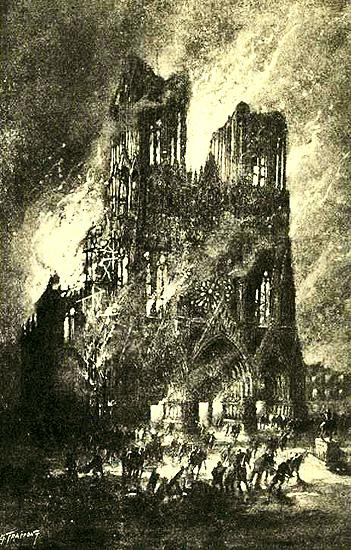
Thoughtful observation, although a crucial first step to understanding life, is often not enough to forestall chaos and brutality. In a dramatic sketch, Christopher Bernard laments that even the intellectual and philosophical achievements of Europe, the heights of their creative imaginations, could not prevent them from descending into the depths of World War I.
Sometimes we can even anticipate life’s larger twists and turns. As Oakland astronomer Gerard McKeegan’s recent lecture, reviewed by Cristina Deptula, demonstrates, we are starting to be able to find and deflect asteroids headed for our planet. Through diligent research and its application, researchers hope we may delay the end of life as we know it.
Societies, as well as individuals, can choose steps that protect and affirm their members and allow everyone to move forward towards positive goals. As Mary Mackey discusses in her interview with our staff concerning her new poetry collection Travelers with No Ticket Home, Brazil is a beautiful country facing significant challenges, but where the standard of living has steadily improved in recent years. Linda Baron-Katz’ memoir Surviving Mental Illness: My Story, reviewed by Holly Sisson,reflects the moral and psychological support she at last received from her traditional Jewish faith and community as she obtained a diagnosis and treatment. Joe Klingler, in an interview with our staff, brings home the point that the technologies he describes in his suspense novels RATS and Mash Up can be developed for war and destruction or the betterment of civilization. Our music sharing, smartphones and computers can separate or connect us, depending on how we choose to use them.
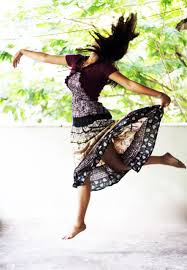
Finding ways to follow the dance, wherever it leads, can help us to stay on our feet. In Christian Sorensen’s final poem, “My Imperfect Car” he affirms his acceptance and even affection for his old and somewhat broken vehicle. In Elsie Augustave’s novel The Roving Tree, reviewed by Leah Dearborn, the lead character Iris follows her heart and travels to Zaire, where she is able to learn more about her heritage. Although her experience there is complex and not totally positive, she makes strides towards creating a life that makes sense for her.
We hope that these submissions will inspire you to leave your seat and join the dance! Whether you are experiencing a ballet, a tango, a foxtrot, a square dance, a jive or a rumba, you have steps and turns to add to the scene.
** Announcement: Thursday July 10th will be our next reception event, from 6-9 pm at Berkeley Espresso (corner of Haste and Shattuck, near BART). Feel free to come and chat with other creative types, bring work to share or books to sell, or just bring yourself. RSVP encouraged but not required. Here’s the invite page: https://www.facebook.com/events/578554668926919/
Rheims Cathedral, burning during the early days of World War I (G. Fraipont, 1915)
The Beast and Mr. James (an excerpt)
A play about Henry James and World War I, by Christopher Bernard
Act 2: 1914
London. Evening. A lobby in Covent Garden with stairs sweeping upward in the background; “Libiamo” from Verdi’s La Traviata is playing in the background.
HENRY JAMES is anxiously pacing the lobby, occasionally chewing a thumbnail. His hat and cane lie on a nearby lobby bench. He is dressed, with subdued elegance, for the opera – dark suit, light vest, elegant cravat, patent leather shoes, etc.
The music fades a little; a box door has closed.
HENRY JAMES (to himself): What did dear, kind Edith call me? A nervous nelly, with the imagination of disaster. Oh fie! I’m as nervous as a young cat. The worst can’t possibly be upon us – not now. They must settle something between them. They can’t be so mad as not to. They must see the stakes. Our countries are no longer run by lunatics and the brain-dead spawn of in-bred families. Common sense must have come to count for something in this bloody epoch.
USHER enters.
USHER (with a deeply reproving look; very loudly): Please, sir, be quiet so that the members of the audience can enjoy the music! Thank you, sir!
He leaves with a departing scowl at HENRY JAMES, who glares after him.
BURGESS, JAMES’s valet, dressed in outdoor ware, enters, carrying a newspaper.
HENRY JAMES (with a flushed hope, takes the paper; in a loud whisper): Thank you, Burgess, forgive me for driving you out in the middle of the night, but I just could not … (At sight of the front page, he lets out a cry, almost a shout.) No! … The Kaiser, that … no, no! …
He reads the column with moments when he pauses and stares over the top of the paper in despair, as the music continues in the background.
HENRY JAMES (with no attempt to be quiet): He’s mad! They are allmad!
He then takes his hat and cane and leaves hurriedly, with a gesture to BURGESS to follow, as the USHER re-enters, looking like thunder at them as they depart. “Libiamo” swells to a climax and ends, with wild applause.