From a difficult time, strong people come out.
Strong people create a good time and from a good time, fools come out.

From a difficult time, strong people come out.
Strong people create a good time and from a good time, fools come out.
Visions Fill the Eyes of a Defeated Basketball in a Show Room: A symphonic tone poem in three
Part disharmony revisited
1-Visions fill the eyes
So close to the desired end, earthly paradise is summarily
replaced by fevered heat dreams that rise from super-highways
borne on gasoline vapor locks instead of air, assuming
a nebulous form that coalesces Into something like a white
stretch limo parked in outside the showing room, outside an arena,
the pictured windows smeared with oil rich smoke and volcanic dust,
acid rains etch furrows in like burst veins on a hot, slick surface,
leaving behind moist dots of clotted rain that simmer and boil
on the superheated surface causing eruptions, explosions destroying
the tiny worlds contained therein, alien civilizations formerly entombed
by glass, released now, expanding into lost galaxies of where all
the hidden stars reside, marbleized and frozen in sidereal motion.
2- Of a defeated basketball team
Denied the basket and the ball, wordlessly they congregate at center court,
hours after the outcome, the arena emptied, shut in, lights blackened,
each man mimes his movements in the game they are forced to play,
scattered across the hardwood, twelve separate paths to the goal silently
blocked in total darkness as they describe perfect arcs to the hoop,
no longer one on one, they are blank, mirthless shadows within shadows,
silhouettes cut from darkness, pasted on a field of black, rising to the occasion,
spurred on by the wordless cheers of the dissipated crowd, a white noise
that rises and clings to the unseen rafters overhead like smoke, a second skin
or is it a flock of black birds descending in tight circles, drawn downward by
a primal need for revenge?
3- In the show room
Or in the junkyard of Petaluma or wherever the detritus of civilization collects,
wherever the dead, exploded television sets collect, their screens empty,
glass fissured and scorched by internal combustion parts, components in ruin,
disconnected wireless radio messages contained no longer residing inside
cracked stereophonic speakers, finally released like the hotwired audio machines
welded to the generator that exploded expelling Compact Discs, VCR tapes
and cassettes, dad’s, vinyl records that melted like blackened eyes over
the metal husks of rusted, ruined cars, on the tanks of discarded toilets,
in which all the filthy rain that falls, collects, spreading tiny rainbows of oil
and gasoline on the porcelain skies, while rain drops fill to different levels.
A trained ear can make out the separate discordant notes each drop makes,
together, collectively, these notes become a kind of symphony.
Athanasius Kircher Seated on a Crocodile Composing
His Encyclopedic Works
Kircher, the man, is a living specimen in
a divine cabinet of curiosities. Runic scripts
evolve from his fingertips, his quilled pens;
all the mysteries of ancient tongues are
supposed to be revealed with.
This man, part-magus, part-monk, writes on,
his creations legion: solar clocks
from magic seeds; rune stones and
monkey dust curatives and salves for
all that ails, inventions and novelties
such as vomiting statues and pianoforte-like
instruments using living cats to produce
torturous sounds supposed to be like music,
like spy portals in revolving carved heads,
sound amplifiers in other busts, altered to
allow listeners to overhear conversations
in remote locations; owner of Egyptian relics
actually, made in Rome, misdated by
a millennium ; practical theories of convection
formulated by firsthand viewing volcanoes
from within, a research only a holy fool
could survive, whole volumes of inscribed
work, catalogues of presumed fact, completely
borrowed, wholesale copied from other scholar’s
work, most, if not all of his own, disproved even
as he wrote on. This man in his element,
endless amazed as he was amazing, surrounded
by angels, sun gods and goddesses, half-dragons
and half-snakes, a man so self-possessed
only death could save him from himself.
A Night of Serious Drinking as “Vertigo”
after reading Quan Barry
All the imbibers, the refugees are emancipated from
The Complete Works of Vincent van Gogh:
The Absinthe drinkers, potato eaters, self-portraits
with and without ears,
All the close, musty rooms without adequate heat,
poorly drawn fires, smoke filtering from long,
clay pipes, loosely rolled tobacco and the tightly packed,
Exhaustion apparent in all the worn faces, the downtrodden
and the bedeviled, the unforgiving and the damned
pounding down their
Libation of choice on a night of serious drinking: the green
fairy, essence of wormwood, conveyances of
deep dreaming while awake, mortal stasis while
breathing, metempsychosis in a bell shaped glass;
Once paralysis is made liquid, bodily functions require
a superhuman exercise of the will simply to consider
locomotion;
Standing upright becomes the purest form of vertigo there is.
The Ceremony
Everyone is applauding long before
anyone has seen the bride or the groom
as if directed by the archdeacon
of antiquities, crew chief of the burnishers
of pews, rows, and rows of them so bright
and slick, they repel the occasional rain
that falls through the place where a steeple
would have been before the church was converted
by Navaho warriors to a hogan to let the Great
Spirit in, to allow the smoke of healing fires
Escape. Here on the edge of the Southwestern
Desert, as arid as Martian wastelands, interplanetary
penance portals, lost seekers are referred to after all
the earthbound sanctuaries, sainted places, have
been exhausted, all the sacred temples, burial
mounds, caves of redemption, warehouses for icons
played out by the faithful, standing in ragged lines
to touch the worn wooden effigy of Our Savior
of the Souls, Our Lady of Pent-up Frustrations,
Our Burial Mound of Reclining Statuary, Our
Souvenir Stand of Holiest Waters, confections
blessed by on-premises priests, blood from
the stigmata of virginal suicides, made in China
facsimile glow-in-the-dark missions, Christmas
tree ornaments, the wounding lance of the unhealing
seekers after holy grails on display, not available
for any price yet, not even what was yielded from
the passing of the offertory trays, bequests left
by patrons of the sacred arts, tax exempt foundations
exploring the possibilities of unified field theories
involving Native American Folklore and Medieval
Christian Idol Worship, they who clear the center
aisles for easy passage from one state of being to
the next, they who scatter dried herbs and scented
liquids, part aphrodisiac, part aromatic, part soporific,
specifically made for vision inducing hallucinogens
so that when the high priest looks up to view the anointed,
it is unclear exactly what he sees, what he should say,
how the ceremony should proceed and when it does,
what it means.
The Killing Fields as Robert Towne’s Screenplay for “Chinatown”
after reading Quan Barry’s Incontrovertibles
Seven million skulls planted on the sloping streets in
soft earth beneath cobblestone streets.
The skulls that sprout are fashioned into masks for
street mimes, performance artists, trick or
treating kids.
Each time a siren is heard, a new round of killings is
being announced.
Hovering overhead, chopper blades localize the places where
blood has been shed and broadcasts it to networks,
police headquarters, the general’s palace.
The mastermind behind the most heinous of the ritual killings
sends disciples made totally suggestible by infusions
of drugs, sexual addiction and hypnotic commands,
to continue the killing
Blood of the victims is used to write DEATH TO PIGS
on walls, or to leave tell-tale prints to warn those
who follow the killers here, that the Future will be
determined by a new kind of Primal Law: Kill or Be
Killed, Eat or Be Eaten.
Stated fears of race wars, and political persecution, are just a
rationalization, an excuse to insure that the killing will
go on.
Witnessing the senseless murdering reveals that, Death is a release,
that what may be done to the next generation, the unprotected
by arms and man, will be much worse that what has been
done to the dead ones, and you will be powerless to prevent it.
There is no overthrowing the strongman, only Death will survive.
“It’s Chinatown, Jake.”
It’s the Killing Fields.
The Assassination of John F. Kennedy as the Marathon Run Up
Mt. Olympus
after reading Quan Barry and J.G. Ballard
We’ve seen the pictures hundreds of times by now whether
we cared to see them or not:
The originals of the motorcade in black and white followed
by the bizarre shooting Live of presumptive assassin,
Lee Harvey Oswald.
The unforgettable processional afterwards: the cortege, the banging
of the drum slowly, John John’s loyal salute.
And in color: The Zapruder tapes slowed down frame by frame,
on that warm, clear November Dallas day: Jack’s bare
head, Jackie’s hat, Governor Connelly and his wife
waving to the crowd, Jack’s head exploding, blooming
like some time-lapsed flower bursting open, smoke rising
on the grassy knoll…
And we are running; smoke rises like fog on Olympus wreathing the hidden peak and all that might dwell there.
26.2 miles of running steadily uphill over brutal, rocky terrain
in summer’s dreadful heart stopping heat, the goal less
and less realistic, less visible with each step upward,
steps that bring you higher but no closer to the gods.
The Impact of Social Media on the Lives of Young People
Nowadays, not only young people but almost everyone has become attached to social media. Many people even think that it is difficult to imagine life without social networks. Of course, modern life requires the use of the internet and social media. However, it is important to be careful when using them and to be able to distinguish useful information from unnecessary information. In particular, people should be able to analyze various unverified or fake news.Social media also has many advantages. For example, we can find almost any information we are looking for on the internet. It is also possible to keep up with daily news and follow events happening in different countries. In addition, there are many useful videos and lessons on social media for learning languages. Therefore, many young people have the opportunity to learn new knowledge and skills independently. However, the negative aspects of social media are also very serious. For instance, watching various short videos such as “shorts” can narrow people’s thinking ability, weaken speech fluency, cause them to waste time, reduce sleeping time, and even lead to memory decline. Moreover, the family environment may also be affected: instead of spending time with their families, many young people spend their time on social media. As a result, they may become unaware of feelings such as respect for parents and the importance of spending time together and having conversations with family members.
It is true that phones and the platforms or programs on them are created by humans and designed to function in a certain way. However, nowadays it seems that phones are controlling people. This is because many people easily become dependent on them. There are many young people who spend five to six hours or even more on their phones every day, wasting their time without any meaningful purpose. However, this does not mean that everyone is like that. There are also many young people who use social media properly and meaningfully. They have dreams and goals for their future and work hard to achieve them. Instead of wasting time, they use platforms such as Instagram, YouTube, and TikTok in a productive way and organize their daily activities according to a schedule to continue their studies. In my opinion, young people who spend their days on social media in a useless way have become detached from reality and dependent on their virtual lives. Time passes very quickly, and I believe that wasting it inefficiently is wrong. In addition, such people may cast a shadow or darkness over their own bright and promising future.
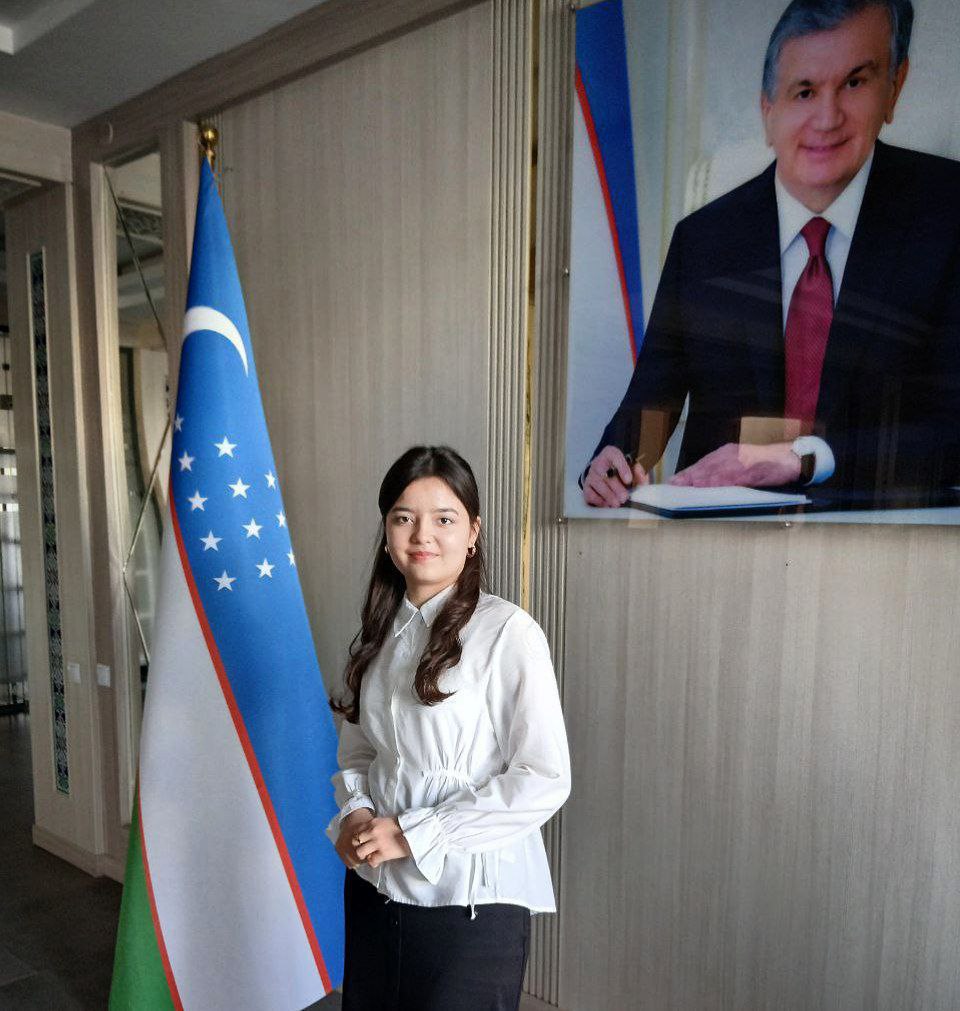
Bekturdiyeva Nargizabonu was born on December 7, 2007, in Khiva city of Khorezm region. She won first place at the regional stage and participated in the national Olympiad. In 2025, she graduated from school with a gold medal.
Currently, she is a first-year student in the Geography program at Urgench State University. She has three journalistic articles and is the holder of a DGU certificate.
Her articles have been published in the famous “Synchronized Chaos” journal in the USA and in the “Ijodkorlar” journal in Uzbekistan, and she has also participated in an anthology. She is also a member of the Argentine international organization “Juntos por las Letras.”
Upbeat
☆☆☆
Living at the edge,
a hope that lingers with faith
The time is yet knock in,
and the sailor at this end keeps on sailing.
The destination has been declared.
Awakened and aware, silence speaks its glory.
The sleep is sound today.
Dreams peek from the sleeves of slumber.
A smile floats at the edges of the river.
That had been a testament of winter.
Spring knocked long before the fall,
and the luminosity keeps sailing, on and on.

Breathe
Breathe
U are having 1 second to see your whole life before you die..Choose…
Re born in another reality

Ι do not belong…
All your life they teach how u must do, think, act, love, live, smile
All the years of education they teach how u must be present, dress, talk, feel…
All the time at your job they teach u how u behave, how u must seat, react, claim, interfere, communicate…
All that faces they teach me..make me feel that i do not belong
I do not belong in half truth
I do not belong in that small garden
I do not belong in the words that was never said
I do not belong in small boxes that keep the smile of the morning
I do not belong in shouting and bullying of the love, I never get
I do not belong in the uncertain possibilities
But i do belong in myself
And in the possibility of climbing a big mountain
Maybe never go to the top
But I do belong in my dreams..
Wishes
It shall be a festive day
When the Dawn shall come
There shall be Sun and Joy.
There shall also be a fair.
In the porch there shall be red roses.
Basil and myrrh trees.
All of them so dear.
For us
Life will start…..
Before you existed
You were a thought in my soul
Before you speak
I understand your words
For years
Loneliness was my companion
See the stars
Make wishes
Hoping
Before i met you
I knew your perfume
Before you speak
I understand your soul
See the birds
Make wishes
Pray
Before you imagine
I draw a circle
I see you in and me
Protected
Blessed
Before you kiss me
I feel your lips
Your body
A fireball
Burning me
Slowly
Before i leave
I will never say goodbye
Αbout love
Moon know nothing about love
Man know nothing about the love
The humans love each other as they remember the love they received
Love is energy
Love is free and everywhere
Sun know nothing about love
As exist
Sun keeps shine
Give light and brightness
Humans know nothing about love
Love is not selfish
Love is not take or give
Love is a small gesture
little thinks as a sparrow came to the backyard
Love is few
Love can be big moments
Humans cannot understand love
Nobody can understand the cry of a newborn baby
Love we learn by giving away
By respect the man
Cherish the woman
Worship God
Love we cannot see
Or touch
Love is in ever little piece in earth
Listen your heart
Love as your heart beat
With harmony
With truth
Love is freedom.
Stranger myself
Today I stared at my emotionless reflection for a long time
I stared but couldn’t find my old self
Even my eyes have changed
Maybe my bold words that came trembling
A smile is spreading on my face
The jokes too, maybe that cheerful joy
But deep down in my heart, there is a constant pain
Where are these traces I have left
Sometimes I miss my old self
My spotless, shining eyes
Even though the years have not changed
Today I didn’t even recognize my face
As if I had abandoned the whole world
Today I am in an incomprehensible state
Turning my face away from everyone
For my loved ones, I am a stranger
Even though the years have changed, these years
The hands that were placed on my shoulders and rubbed
But my heart remains on those paths
On the nights when my tears flowed.
If my loved ones come looking for me
I am in that year when I was alone
Tell them this is what I said
I am on the same path you left behind
La bandiera della pace
ci sono nomi che hanno peso e
sostanza diversi dal loro significato.
la terra è un’eco che si sgretola sotto i piedi,
la bandiera della pace
è una statua di piombo,
la sollevi con fili d’acciaio, non sventola,
non ha terreno in cui crescere,
ma non smette di volare.
…….
The Flag of Peace
There are names that have weight and
substance different from their meaning.
The earth is an echo that crumbles underfoot,
the flag of peace
is a leaden statue,
you lift it with steel wires, it doesn’t flutter,
it has no soil to grow in,
but it doesn’t stop flying.
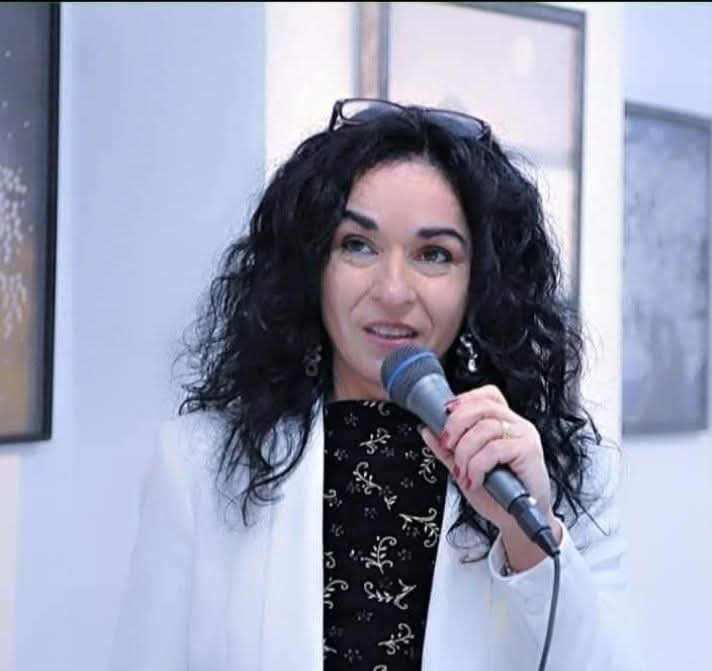
Imma Schiena – RT
Italy