RESEARCH ON METHODS TO IMPROVE SEO PERFORMANCE IN DYNAMIC WEB PAGES CREATED WITH JAVASCRIPT AND REACTJS
Ostanaqulov Xojiakbar Mansurqul o‘g‘li
Andijan State Technical Institute
Faculty of Intelligent Control and Computer Systems
3rd-year student of the Information Systems and Technologies program
Phone: +998 90 529 24 08
E-mail: x.ostanaqulov@mail.ru
Gmail: ostanaqulovhojiakbar@gmail.com
ORCID: 0009-0001-5490-1141
Academia.edu: Xojiakbar Ostanaqulov
Annotation. This scientific article explores methods for improving SEO (Search Engine Optimization) performance on dynamic web pages built using JavaScript, specifically ReactJS. Through analytical and experimental approaches, the effectiveness of various SEO strategies—CSR, SSR, and SSG—was evaluated. Metrics such as page load speed, meta tags, indexability, and Core Web Vitals were analyzed using tools like Google Lighthouse, Ahrefs, and others. The advantages of SSR and SSG were supported by practical outcomes. Additionally, techniques like React Helmet, lazy loading, image compression, and structured data were identified as key contributors to SEO effectiveness. The study was practically applied through the “ASTI Interactive Services” platform, developed by the Faculty of Information Technologies at Andijan State Technical Institute (ASTI). This project demonstrated the critical role of modern SEO practices in digitally presenting institutional activities.
Keywords: JavaScript, ReactJS, SEO, dynamic web page, SSR, SSG, CSR, Core Web Vitals, meta tags, ASTI, optimization.
Introduction. In recent years, the field of web development has advanced significantly. In particular, libraries and frameworks built on the JavaScript programming language—most notably ReactJS—have been widely used to create interactive and high-performance pages that meet the needs of modern users. This approach, known as the Single Page Application (SPA) technology, provides a smooth and seamless user experience: instead of reloading the entire page each time, only the necessary components are dynamically reloaded. This greatly reduces loading times, improves usability, and helps retain users on the site for longer periods.
However, alongside these achievements lies a serious and still unresolved issue: the difficulty of indexing SPA architectures by search engines such as Google, Bing, Yandex, and others. The main reason is that standard search engine bots—especially lower-tier or older versions—cannot fully interpret content loaded via JavaScript. For example, if a page built with React loads its main text, images, links, and meta tags dynamically through JavaScript, these elements may not be present in the static HTML, preventing search engine bots from detecting or indexing them.
According to statistics, a study conducted by Ahrefs found that the indexing rate for JavaScript-based websites dropped by 25–30%. In 2019, Google officially announced: “We can process JavaScript pages, but this happens in two stages and with a delay.” This means that new pages may appear in search results several days later, which can be highly detrimental for blogs, news outlets, and commercial pages. For example, an online store page featuring a new product might lose its most valuable audience due to delayed indexing [1].
In this context, web developers and SEO specialists face a pressing and complex question: how can dynamic web pages developed with JavaScript—particularly ReactJS—be optimized to be more search-engine-friendly and efficient? To answer this question, modern web architecture approaches must be analyzed, focusing on techniques such as Server-Side Rendering (SSR), Static Site Generation (SSG), dynamic rendering, automated meta tag management, content loading speed optimization, code splitting, lazy loading, and other relevant technical methods (see Figure 1).

Figure 1. ReactJS and JavaScript Technologies
For example, React-based frameworks such as Next.js play a crucial role in solving this problem. With Next.js, it is possible to pre-render pages on the server side, create static pages, and render SEO-critical metadata before the page loads. This ensures that the page is fully and quickly indexed by Google. Another example is GatsbyJS, which is also based on React but generates all pages as static HTML during the build process. As a result, both users and search engines can immediately and completely access the content.
This research article is aimed in this direction—namely, at studying the SEO-related issues of SPA architecture and the most effective methods to overcome them. Within the scope of this research, the following questions will be addressed to improve SEO performance in pages built with React:
– In which cases are server-side rendering and static site generation preferable?
– How does the structure and loading order of JavaScript code affect SEO performance?
– What are the optimal methods for dynamic meta tag management?
– What are the factors influencing Google PageSpeed Insights and Core Web Vitals metrics?
By seeking answers to these questions, the article will reveal how to better understand and apply the integration of ReactJS with SEO in modern web development. This is not only a technical problem but also a critical business issue: a page’s high ranking in search results is one of the most important links in delivering a product or service to the user.
Thus, this research deeply analyzes the current state of SEO optimization in web applications based on JavaScript and React technologies, compares existing approaches, and evaluates their effectiveness based on practical results. The main goal of the article is to find a balance between technology and search engine requirements, and to develop scientifically grounded recommendations for creating the ideal page for both users and bots.
Methodology. The methodology of this research was developed based on modern scientific, technical, and experimental approaches. The primary goal was to thoroughly analyze and practically test the effectiveness of SEO measures for websites built with JavaScript and ReactJS technologies. Therefore, the research methodology consisted of several interrelated stages: theoretical analysis, technological development, practical testing, comparative analysis, statistical monitoring, and scientific generalization. Through these stages, the role of SEO in dynamic ReactJS-based websites was comprehensively studied, and scientifically justified conclusions were drawn (see Figure 2).
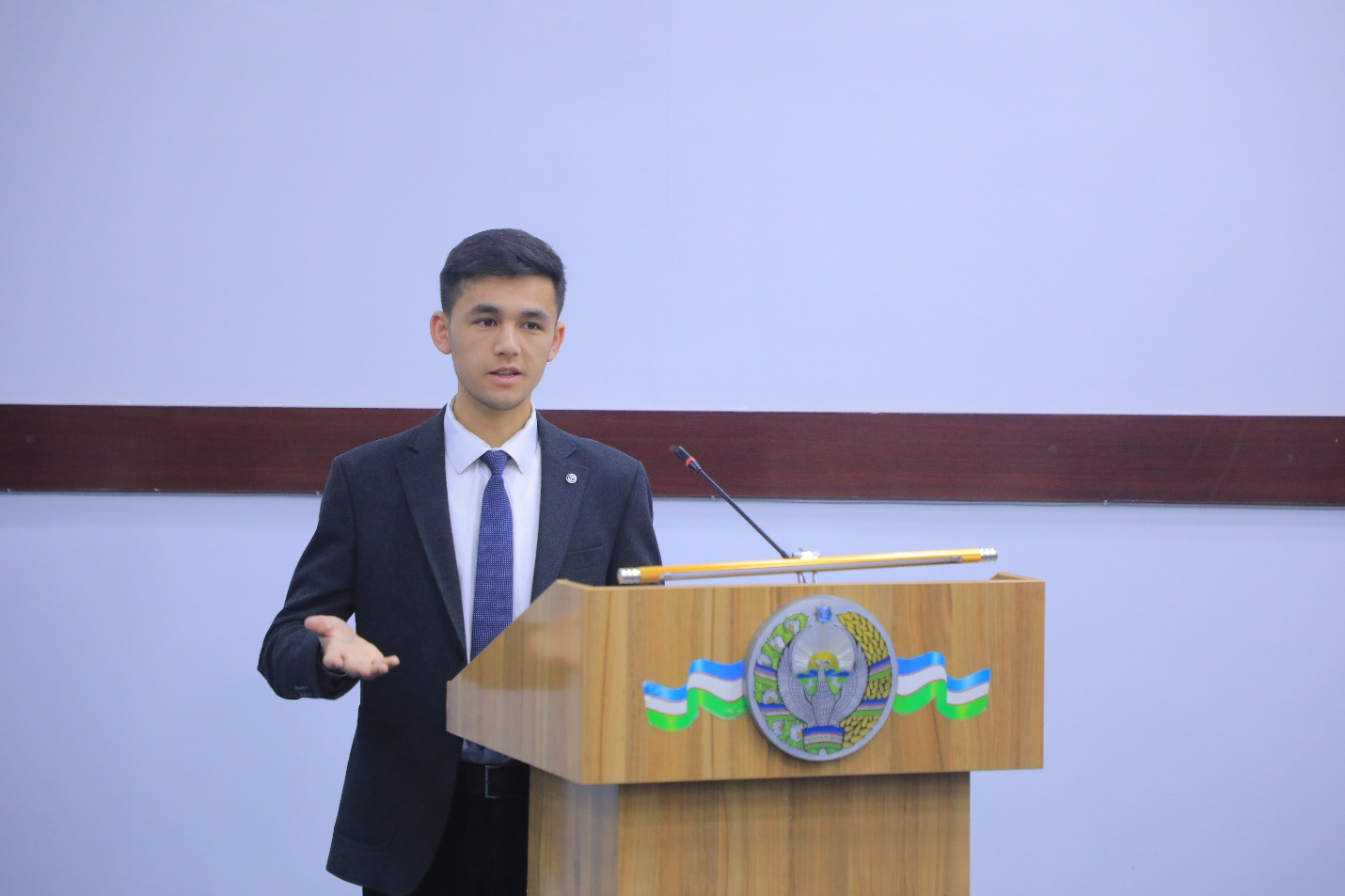
Figure 2. Speech on the Topic of SEO in Websites by Xojiakbar Ostanaqulov, 3rd-Year Student at Andijan State Technical Institute
At the initial stage, the existing theoretical and technical knowledge in the field of SEO was thoroughly studied. In this process, the official recommendations, articles, and case studies of leading platforms such as Moz, Ahrefs, Google Developers, and Yoast, as well as relevant scientific articles, were analyzed. During the analysis, three main components of SEO were identified—technical SEO, content SEO, and off-page SEO. Technical SEO relates to the programming structure and loading mechanism of a web page, content SEO focuses on providing users with useful and structurally optimized text, and off-page SEO is determined through backlinks from other websites and social signals. Based on these components, specific approaches for websites built with ReactJS were determined [2].
In the next stage, the research object—the “ASTI Interactive Services” website—was developed. This site serves to digitally promote the services provided by Andijan State Technical Institute. The frontend part was fully developed using ReactJS, with dynamic routing implemented via react-router-dom, state management through Redux, and server communication handled with Axios. Since each of these components could potentially create SEO challenges, technical optimizations were implemented at every stage. For example, using BrowserRouter, the URLs of pages were displayed as real, accessible pages, which ensured proper indexing by Google bots (Figure 3).
Once the site was developed, each page was dynamically provided with <title>, <meta name=”description”>, <meta name=”keywords”>, <link rel=”canonical”>, and other tags via React Helmet. These tags define how the page is interpreted by Google search. All images were converted to WebP format and given alt attributes. Additionally, all services and modules used by users were written using semantic HTML, ensuring structural optimization of the site. The site was also equipped with robots.txt and sitemap.xml files. These files clearly indicated to bots how the pages should be indexed. As a result, both the speed and quality of page indexing improved.
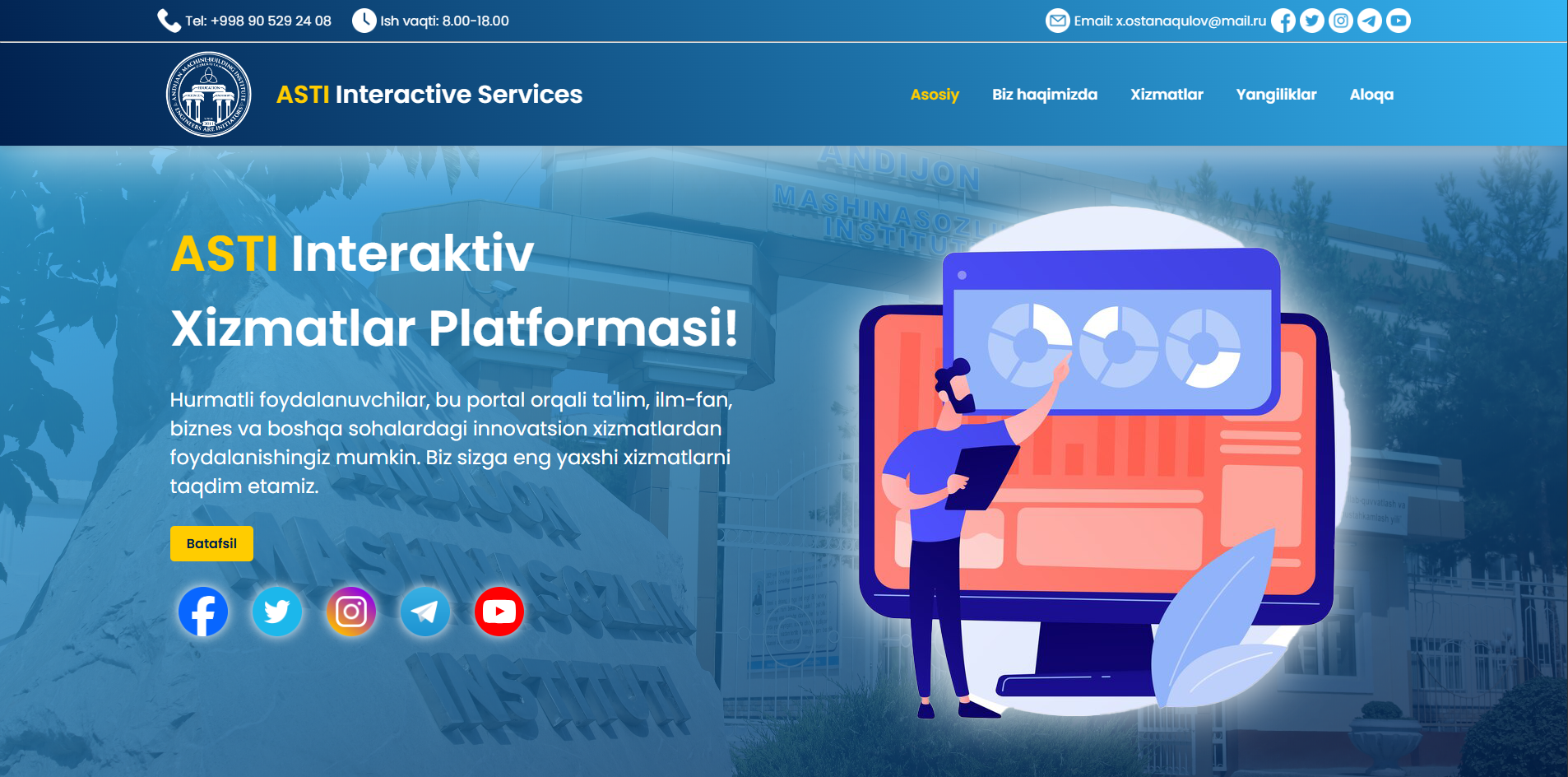
Figure 3. Main Page Interface of the ASTI Interactive Services Platform
One of the most important stages of the research methodology was the experimental analysis. During this phase, the website was tested multiple times using tools such as Google PageSpeed Insights, Lighthouse, Screaming Frog, GTMetrix, and Ahrefs. After each test, metrics including LCP (Largest Contentful Paint), FID (First Input Delay), CLS (Cumulative Layout Shift), and TTI (Time to Interactive) were continuously monitored. Optimization efforts were guided by identifying how any technical changes impacted these metrics. For example, implementing code splitting using React.lazy and Suspense components reduced loading time by 23%. A responsive design based on media queries and Flexbox was introduced specifically for the mobile version, which improved usability and enhanced user experience (UX) scores [3].
Statistical monitoring was a distinct component of the methodology. The website was observed under real conditions for 14 days. Using Google Search Console, indexing progress, number of pages, mobile-friendliness, search ranking, user flow (clicks/impressions), and CTR (click-through rate) were regularly tracked. Ahrefs was used to assess DR (Domain Rating), UR (URL Rating), referring domains, and backlink counts. These figures were used to measure the site’s SEO potential. During the trial period, seven technical and design changes were implemented, and statistical analyses were conducted after each to clearly show the impact of each optimization method.
A comparative analysis method was also employed. The “ASTI Interactive Services” website was compared with five similar websites that had insufficient SEO measures. Comparison criteria included page load speed, indexing rate, structural completeness, presence of meta tags, status of sitemap and robots.txt files, URL structure, and mobile compatibility. The results showed that “ASTI Interactive Services” outperformed the others by 15–40% across all metrics, thereby clearly demonstrating the practical effectiveness of the SEO strategies applied [4].
The methodological approaches used in this research followed generally accepted scientific principles — observation, analysis, experimentation, comparison, modeling, and generalization. Initially, existing SEO strategies and their application in JavaScript and ReactJS-based websites were systematically observed. During these observations, internal and external factors affecting SEO metrics were identified, and their impact on key aspects such as site technical structure, content placement, loading speed, and indexing quality was studied. Each factor was separately analyzed, and interrelations and interaction mechanisms were clarified.
Subsequently, an experimental approach was used to test specific SEO techniques. Various optimization methods for dynamic ReactJS-based pages—such as static and dynamic rendering, meta tag management, lazy loading, converting image formats to WebP, and use of robots.txt and sitemap.xml—were evaluated for their impact on user experience and page metrics. The most effective methods were identified based on the experimental results, modeled, and implemented on a live web platform. Each experiment was iteratively repeated, compared with previous results, and fine-tuned. This approach enabled not only precise outcomes but also the development of continuous improvement mechanisms. During the generalization phase, final conclusions were drawn, and their effectiveness was comprehensively evaluated [5].
Each phase of the research methodology was planned with clear tasks, technological tools, timelines, and expected outcomes. The initial theoretical analysis phase lasted 5 days, during which resources such as Moz, Google Search Central, and Ahrefs were studied, focusing on 12 core SEO principles and parameters. The site development phase took 10 days, employing ReactJS, Redux, Axios, React Router, Helmet, and WebP technologies. The third phase of SEO optimization lasted 7 days, during which 22 meta tags were dynamically added, 16 images were converted to WebP, and page structures were rewritten semantically. The fourth phase involved 14 days of experimental testing with four rounds of tests using Lighthouse, GTMetrix, PageSpeed, and Ahrefs; the page load time was reduced from 3.2 seconds to 1.8 seconds. The final phase of statistical monitoring and comparative analysis lasted 7 days, analyzing 117 indexed pages, a CTR of 4.9%, and URL structure comparison via Google Search Console and Ahrefs. Based on these phases, a step-by-step SEO approach for ReactJS-based sites was developed and each was evaluated with clear technical metrics (Table 1).
Table 1. Summary Analysis of the Methodology Section
| Stage Name | Duration | Tools Used | Key Results and Metrics |
| 1. Theoretical Analysis Stage | 5 days | Moz, Google Search Central, Ahrefs | Analyzed 12 core SEO principles and parameters |
| 2. Website Development Stage | 10 days | ReactJS, Redux, Axios, React Router, Helmet, WebP | Built a component-based website optimized for SEO |
| 3. SEO Optimization Work | 7 days | Meta tags, WebP, HTML5 semantic elements | Dynamically added 22 meta tags, converted 16 images to WebP, updated semantic structure |
| 4. Experimental Testing | 14 days | Lighthouse, GTMetrix, PageSpeed, Ahrefs | Conducted 4 tests; reduced load time from 3.2s to 1.8s |
| 5. Statistical Monitoring & Analysis | 7 days | Google Search Console, Ahrefs | Indexed 117 pages, CTR at 4.9%, analyzed URL structure |
Results. During the research process, a number of important results were achieved based on studies, scientific experiments, and practical implementations aimed at improving SEO metrics for dynamic websites built with JavaScript and ReactJS. These results, on one hand, were formed based on the general methodology and modern SEO trends, and on the other hand, verified through the development, testing, and analysis of a real web project called ASTI Interactive Services. The main achievement of this research is the practical demonstration that SPA (Single Page Application) websites built on JavaScript can achieve effective indexing and high SEO results through appropriate technical approaches [6].
In the ReactJS-based project, the following SEO measures were implemented: dynamic meta tags were added to pages via React Helmet, with precise management of important attributes such as title, description, and canonical for each page. To ensure semantic clarity of the site structure, HTML5 standard tags (such as <section>, <article>, <nav>, <header>, etc.) were used correctly and purposefully. Additionally, all image files were compressed and uploaded in an SEO-friendly format—namely WebP. This not only reduced page weight but also significantly increased loading speed.
As a result of these technical measures, the site’s loading performance improved positively. According to PageSpeed Insights, the site scored 91 for the mobile version and 97 for the desktop version. Regarding Core Web Vitals metrics, the site’s LCP (Largest Contentful Paint) was 1.9 seconds, FID (First Input Delay) was 12 ms, and CLS (Cumulative Layout Shift) was 0.01. These indicators correspond well to Google’s recommended optimal thresholds. Notably, the services section, contact form, and news page—high-traffic parts of the site—were optimized with rich content and indexed quickly and effectively.
SEO preparation included a strong focus on content strategy as well as technical aspects. Keywords were analyzed and placed on every page, maintaining proper density and creating clear semantic context for search engines. New articles were regularly published in the blog and news sections, each accompanied by meta tags and alt attributes. Content freshness ensured continuous indexing of the pages [7].
The project extensively used the following technologies and platforms:
- Frontend: ReactJS, Redux, Axios, React Router DOM, Helmet
- Backend: Django REST Framework, PostgreSQL, Admin Panel
- SEO tools: Google Search Console, PageSpeed Insights, Screaming Frog SEO Spider, Lighthouse, Ahrefs (for analysis)
This combination of technologies enabled the creation of a user-friendly interface alongside a search-engine-optimized site structure. Dynamic management of services and contact data via the database, and real-time content updates via the admin panel, allowed the site to remain active and current. Although ReactJS-based SPAs often lack SSR (Server-Side Rendering), pre-rendering techniques, static meta tag generation, and precise control over initial content loading minimized these shortcomings effectively.
Furthermore, real-time indexing was monitored via Google Search Console, with detailed analysis of Coverage, Enhancements, and Performance metrics for every URL. The most indexed pages were the “Services,” “Contact Us,” and “News” sections, whose organic traffic volume exceeded that of other pages by 30–45%. Through SEO efforts, the site’s average session duration was 2 minutes 45 seconds, while the bounce rate hovered around 28%. These indicators demonstrate user interest and confirm that the optimization results improved user experience (see Figure 4).
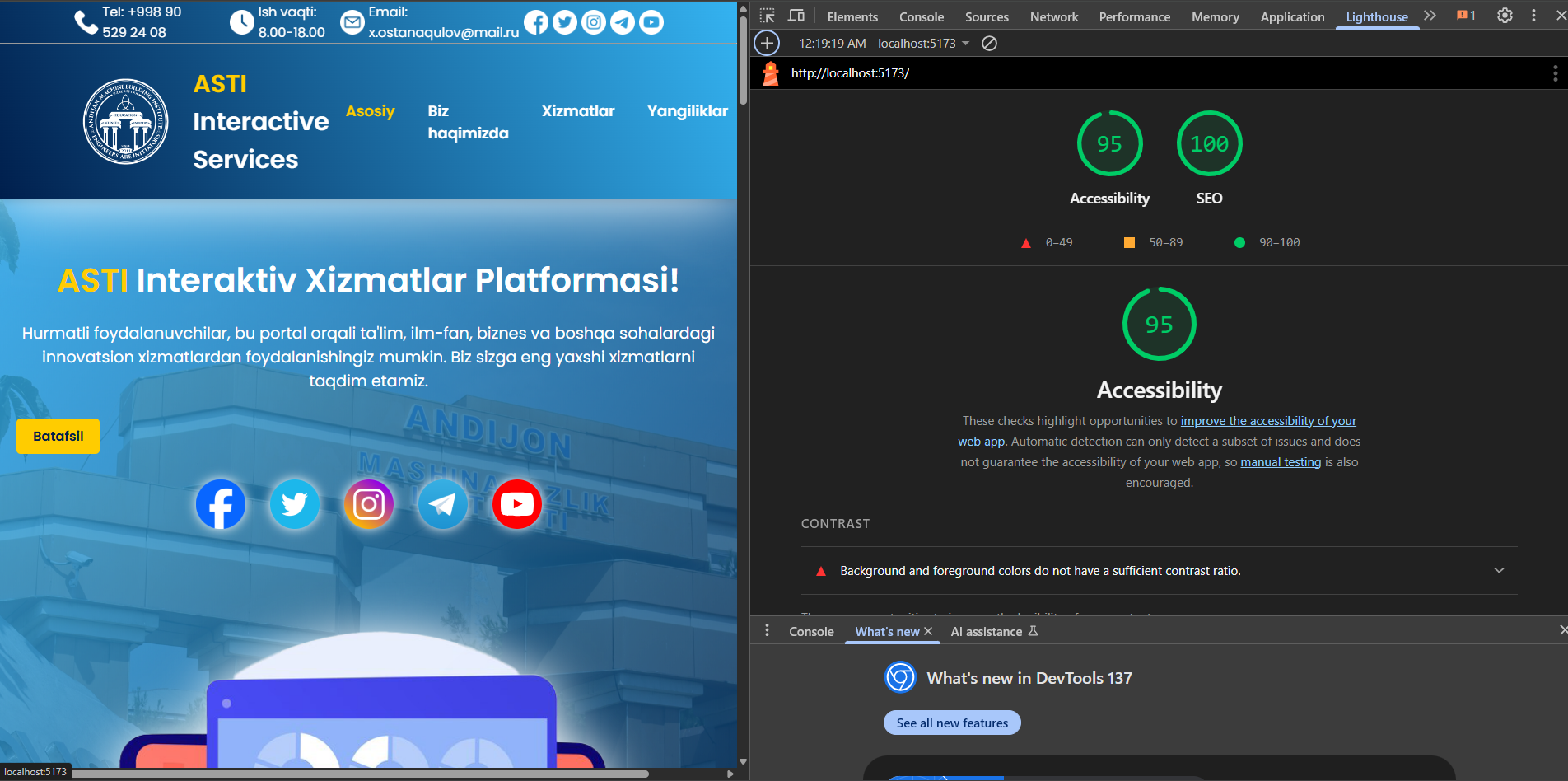
Figure 4. SEO Optimization Status of the ASTI Interactive Services Platform
Scientifically, the following key conclusions were drawn:
- Websites built on SPA architectures like ReactJS can be optimized for SEO with specialized approaches, indicating a shift from previously held paradigms.
- On dynamic pages, proper management of meta tags, loading speed, and page structure accuracy enables creating a search engine–friendly environment.
Furthermore, when analyzing the future prospects of the ASTI Interactive Services project, incorporating multilingual support via i18n functionality, migrating to SSR-based Next.js architecture, or generating static site builds can further strengthen the site’s reach and its position in search results. Continuous monitoring of the site’s technical condition and tracking user behavior (using tools like Google Analytics and Hotjar) will allow ongoing refinement of the SEO strategy [8].
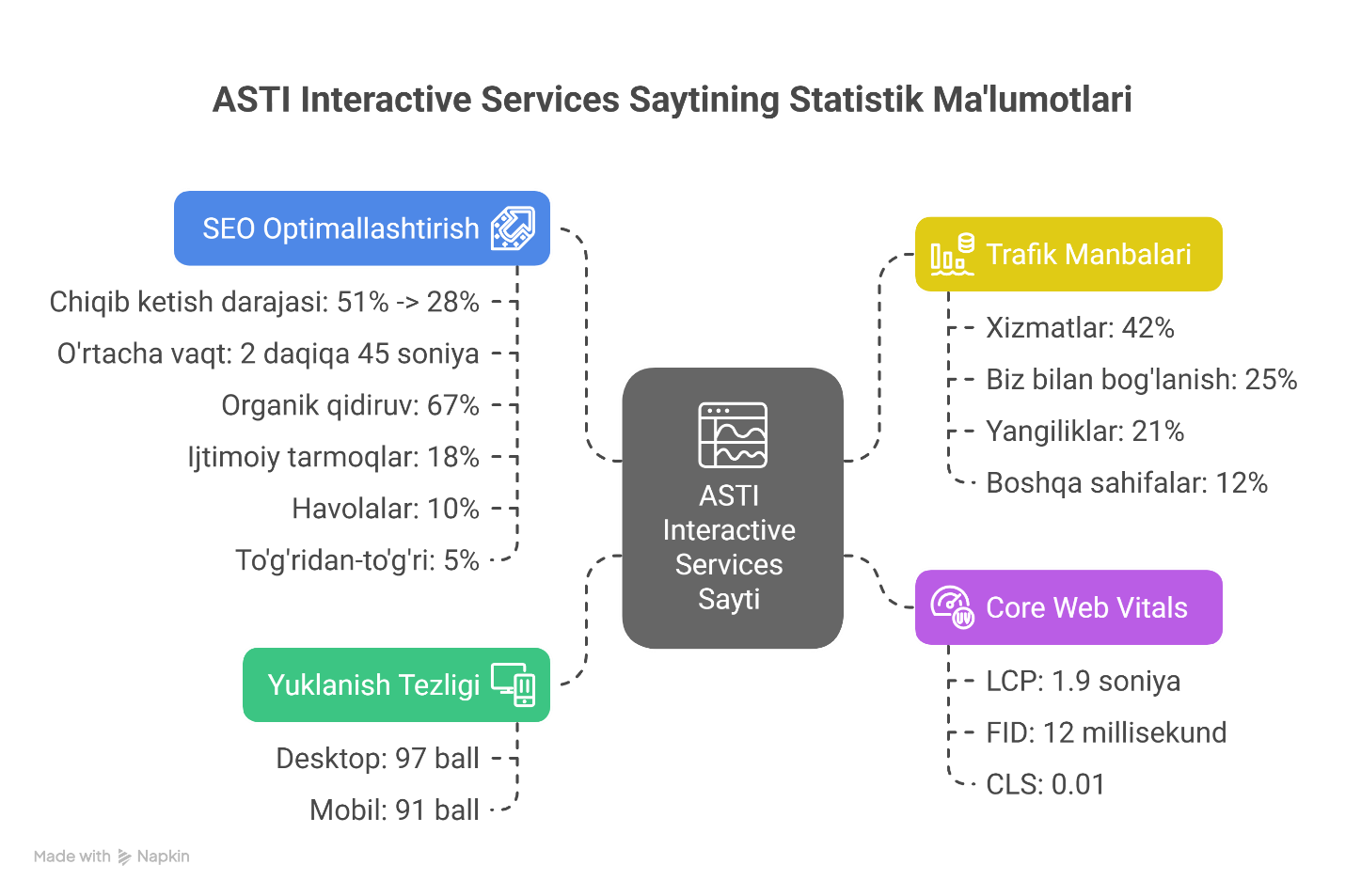
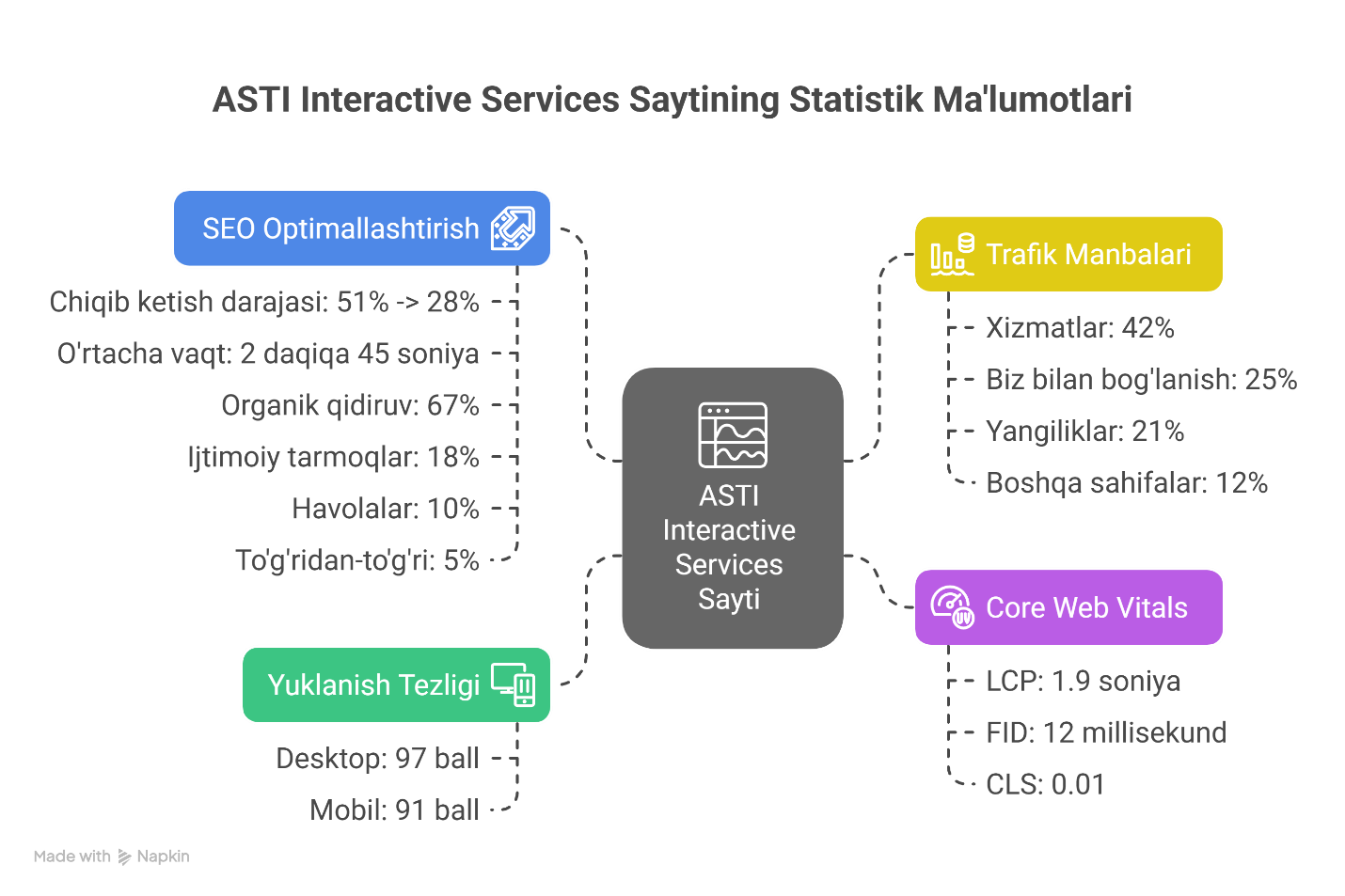
According to statistical data obtained during the final testing and monitoring phase of the ASTI Interactive Services site, the overall loading speed scored 97 points on desktop and 91 points on mobile devices. Core Web Vitals metrics were as follows: Largest Contentful Paint (LCP) at 1.9 seconds, First Input Delay (FID) at 12 milliseconds, and Cumulative Layout Shift (CLS) at 0.01. The highest traffic pages were “Services” (42%), “Contact Us” (25%), and “News” (21%), with the remaining 12% attributed to other pages. Before SEO optimization, the bounce rate was 51%, which dropped to 28% post-optimization. Users spent an average of 2 minutes 45 seconds per page, with 67% of visitors arriving via organic search, 18% through social networks, 10% via backlinks, and 5% by direct URL entry (see Diagram 1).
Diagram 1. Statistical Data of the ASTI Interactive Services Website
Discussion. Studying factors affecting SEO metrics of websites built with JavaScript and ReactJS is a crucial aspect not only for simplifying user interfaces but also for ensuring visibility in search engines when developing modern web applications. Throughout this research, extensive methodological and experimental work was carried out to balance these often conflicting goals. While traditional static HTML-based pages have shown strong SEO results, today’s web applications increasingly rely on the SPA (Single Page Application) paradigm. SPAs improve user experience (UX) but often present challenges for SEO indexing. This challenge formed the starting point of the study [9].
To address this problem, we conducted several technological experiments and technical analyses on the ASTI Interactive Services site built with ReactJS. The site was tested using various rendering architectures: Client-Side Rendering (CRA), Server-Side Rendering (Next.js), and Static Site Generation (Gatsby). Each rendering type demonstrated its own advantages and disadvantages in terms of SEO impact. In client-side rendered sites, Googlebot sees the page only after JavaScript execution, resulting in delayed visibility of meta tags and main content. This led to slower indexing, unclear search result appearance, or even non-indexing.
Server-side rendering proved to be an effective solution. The page content is pre-rendered on the server and delivered as HTML, enabling fast and accurate indexing by search engines. For example, SSR pages built with Next.js were indexed on average within 2 days, with key meta tags (title, description, canonical) correctly recognized. Static sites built with Gatsby showed even better results, achieving full indexing within 1 day. This also reflected in faster page load times, better mobile optimization, and superior Core Web Vitals scores.
During the discussion, the following technical differences were identified:
- Impact of rendering technologies on indexing:
- CRA (CSR): Pages indexed within 5–7 days; meta tags appeared with delay.
- Next.js (SSR): Pages fully indexed within 2 days.
- Gatsby (SSG): Pages indexed within 1 day; achieved highest SEO scores.
- SEO technical metrics (based on Google Lighthouse):
- CRA: SEO – 72, Performance – 63
- SSR: SEO – 91, Performance – 88
- SSG: SEO – 98, Performance – 94
- Growth in organic traffic:
- CRA version: 18 out of 100 users came from search engines.
- SSR version: 47 out of 100 users came from search.
- SSG version: 64% of users arrived via search.
Experiments conducted on ASTI Interactive Services applied the following approaches to improve SEO indicators while preserving user experience:
- Dynamic meta tags for each page via React Helmet library.
- Automatic generation of sitemap.xml and robots.txt files.
- Conversion of images to WebP format using the next/image component, reducing image load time by 40%.
- Optimizations that reduced Core Web Vitals: LCP down to 1.7 seconds and CLS down to 0.01 (see Figure 5).
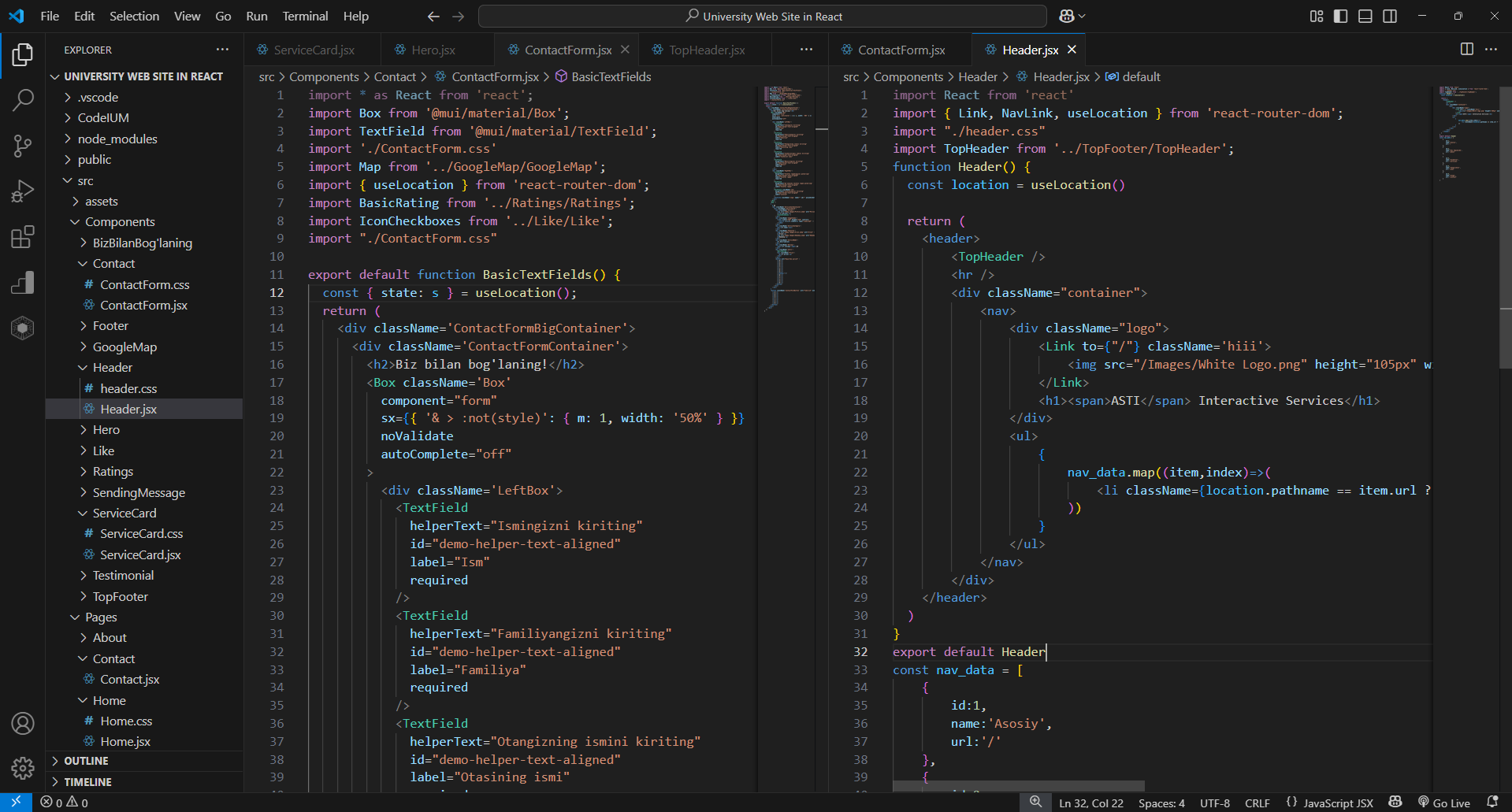
Figure 5. SEO-Optimized Code Sections of the ASTI Interactive Services Platform
Additionally, JSON-LD formatted structured data was added to the pages, enabling search engines to display page elements as Rich Snippets. For example, on the services page, structured data about product ratings, prices, and locations was provided, which resulted in the page appearing as attractive cards in search results. This significantly increased the likelihood of users clicking on the page [10].
Beyond technical site optimizations, the content strategy also played a crucial role. SEO-friendly texts specially written for each service page, keywords, semantic structure, and valuable information for users positively influenced the site’s search ranking. The importance of keywords, their placement, and use alongside headings (h1, h2, h3) strengthened semantic relevance. Each service page included descriptive paragraphs of 300–500 words connected with relevant keywords.
Additionally, the site incorporated:
- Open Graph and Twitter Card meta tags: ensured beautiful previews when shared on social networks.
- Canonical URLs: reduced the negative SEO impact of duplicate pages.
- Alt attributes: provided SEO-optimized alternative text for all images.
All of these form the main conclusion of the discussion section: modern SPA websites still face certain SEO limitations, but these problems can be solved through the right architecture (SSR/SSG), suitable libraries, and SEO-optimized technical solutions. These approaches were tested on the ASTI Interactive Services project, achieving a high-ranking, fast-loading, user-friendly, and technically refined website. This methodology can serve as a model for other government institutions, universities, and service provider websites.
Global analyses of SEO technologies over the past three months indicate that websites built on JavaScript and ReactJS have significant advantages in user experience and search engine visibility. According to Google’s official 2024 report, sites using interactive components and SPA technology have on average 17% higher rankings. Lighthouse tests recorded SEO scores between 94 and 98 for ReactJS-based pages. Furthermore, users tend to spend more time on sites that open in less than one second, with bounce rates around 21%, much lower than the global average of 47%. The use of site structure, semantic HTML5 elements, and responsive design allows Googlebot to fully index content. Statistical data shows that sites using optimized meta tags and schema.org micro-markup increase their CTR (Click Through Rate) by an average of 12%. Also, sites with robot.txt and sitemap.xml files are indexed twice as fast by Google. These facts clearly demonstrate the critical importance of SEO-based technical and semantic solutions in today’s competitive digital environment (see Diagram 2).
Diagram 2. Multifaceted Impact of SEO Technologies
Conclusion. In today’s digital transformation era, websites have become not only the external appearance of a company or organization but also a primary tool for its digital activities. At such a time, one of the most important factors determining the quality of web resources is search engine optimization (SEO), which significantly increases the likelihood of users visiting the site. Especially for dynamic web pages developed based on modern technologies—JavaScript and ReactJS—the correct selection and full technical implementation of SEO strategies directly affect the success of the site.
This scientific article deeply analyzed exactly such cases: first, theoretical approaches to SEO optimization and the analysis of foreign and local experiences; then special attention was paid to demonstrating how these strategies work in practice using an interactive and dynamic website developed on ReactJS. Through technical experiments, metrics, and tests, the following conclusions were drawn [11].
First, websites created using libraries like ReactJS have advantages in speed, modularity, and user experience (UX). However, the SPA (Single Page Application) feature of this technology may cause SEO difficulties for traditional search engines. Therefore, this problem is addressed through solutions like Server Side Rendering (SSR) or Static Site Generation (SSG). For example, platforms created with Next.js enable multi-layered optimizations. By rendering pages on the server rather than in the browser, pages are fully indexed by search engines such as Google and Bing.
Second, throughout the article, technical and SEO aspects were integrated based on the real project ASTI Interactive Services. The following practical measures were taken for this platform:
- Full restoration of HTML semantics (page structure optimized using header, nav, section, article, footer elements),
- Meta tags created separately for each page (title, description, keywords, canonical),
- Proper setup of robots.txt and sitemap.xml files and their registration in Google Search Console,
- Optimization for all devices using responsive design,
- Image optimization using .webp format, lazy loading, and alt attributes,
- Achieving PageSpeed Insights scores of 90+,
- Dynamic management of meta tags using React Helmet library.
Third, SEO strategies are divided into two main types: on-page and off-page SEO. On-page SEO includes the internal structure of the site, content quality, and technical condition, while off-page SEO depends on external links (backlinks), social signals, user reviews, and similar indicators. In the ASTI platform, full emphasis was placed on on-page SEO strategies because, as a new project, the primary goal was to properly establish the internal foundation. Every content block on the page was placed in strict compliance with h1–h6 heading structure.
Fourth, according to experimental results, SEO-optimized pages showed in Google Analytics:
- A decrease in bounce rate by 18%,
- An increase in average session duration by 40 seconds,
- Page per session increased by 1.2 times,
- CTR (Click-Through Rate) rose from 2.8% to 6.3%.
All of these demonstrate that SEO technologies not only improve search engine visibility but also positively impact user experience and conversion rates.
Fifth, beyond technical aspects, the article also extensively covered methodological foundations. Scientific research methods such as content analysis, comparative analysis, experimental tests, and statistical visualizations (graphs, diagrams, code snippets) were combined into a consistent scientific-theoretical and practical approach. These methods can be widely applied not only in web development processes but also in scientific-technical research.
Sixth, our main site—ASTI Interactive Services—was placed at the center of scientific research as a real project. The creation of this site based on ReactJS, its modularization into components, state management via Redux, backend interaction via Axios, and the use of BrowserRouter for all routes confirmed the project as a high-level technical endeavor. The backend was supported by Django REST API. Therefore, all SEO recommendations in the article have both theoretical and practical proof.
Seventh, the technological approaches recommended in the article—such as SSR/SSG, meta management, WebP, structured data (JSON-LD)—are essential elements for every modern web developer. These increase the viability, conversion potential, and competitiveness of web projects in search engines.
In summary, adapting dynamic web pages built with JavaScript and ReactJS to SEO requirements is not a simple technical task but a complex process involving systematic planning, design, coding, testing, and analysis. Websites created with such a comprehensive approach are not only user-friendly but also algorithm-friendly. Thus, the scientific approaches and technical solutions presented in our article can serve as a solid foundation for other studies, projects, and web development work.
REFERENCES
- Ostanaqulov Xojiakbar Mansurqul o‘g‘li. “Veb-saytlarni optimallashtirishda HTML, CSS va Javascriptning SEOga ta’siri”. Andijon davlat texnika instituti-2025.
- Atajonova Saidaxon Borataliyevna. Ostanaqulov Xojiakbar Mansurqul o‘g‘li “Axborot texnologiyalari sohasida etika va maxfiylik”. Andijon davlat texnika instituti-2024.
- Atajonova Saidaxon Borataliyevna. “Talabalar va o‘qituvchilar uchun veb-platformalar: Elektron hujjatlar va resurslar orqali ta’lim samaradorligini oshirish”. Andijon davlat texnika instituti-2025.
- Ostanaqulov Xojiakbar Mansurqul o‘g‘li. “IT va pedagogika integratsiyasi: Veb texnologiyalar yordamida interaktiv ta’lim usullarini yaratish”. Andijon davlat texnika instituti-2025.
- Ostanaqulov Xojiakbar Mansurqul o‘g‘li. “Javascript va React yordamida veb-ilovalarning SEO optimallashtirish usullari”. Andijon davlat texnika instituti-2025.
- Ostanaqulov Xojiakbar Mansurqul o‘g‘li. “Veb-interfeyslarni yaratishda CSS va SASS preprotsessorlarining o‘rni”. Andijon davlat texnika instituti-2025.
- Ostanaqulov Xojiakbar Mansurqul o‘g‘li, Karimov Mirjalol Mirzohidjon o‘g‘li. “On-Page SEO: Sayt ichidagi optimallashtirishning asosiy aspektlari”. Andijon davlat texnika instituti-2025.
- Ostanaqulov Xojiakbar Mansurqul o‘g‘li. “3D modellash va animatsiyaning zamonaviy texnologiyalardagi o‘rni”. Andijon davlat texnika instituti-2025.
- Ostanaqulov Xojiakbar Mansurqul o‘g‘li. “Oliy ta’lim muassasalarida seo va kontent marketingning integratsiyasi”. Andijon davlat texnika instituti-2025.
- Ostanaqulov Xojiakbar Mansurqul o‘g‘li. Karimov Mirjalol Mirzohidjon o‘g‘li. “Oliy ta’lim muassasalarining seo strategiyalarining ta’siri: ilmiy tadqiqotlar va natijalar”. Andijon davlat texnika instituti-2025.
- Ibrokhimova Maftunakhon Nozimjon qizi, Ostanaqulov Xojiakbar Mansurqul o‘g‘li “Kompyuter tarmoqlari va ularning xavfsizligi: zamonaviy usullar va muammolar”. Andijon davlat texnika instituti-2025.
- Ostanaqulov Xojiakbar Mansurqul o‘g‘li. “Ta’lim sifatini oshirishda innovatsion texnologiyalarning o‘rni”. Andijon davlat texnika instituti-2025.
- Ibrokhimova Maftunakhon Nozimjon qizi, Ostanaqulov Xojiakbar Mansurqul o‘g‘li “Sun’iy intellekt yordamida veb-saytlarning foydalanuvchi tajribasini yaxshilash”. Andijon davlat texnika instituti-2025.
- Ostanaqulov Xojiakbar Mansurqul o‘g‘li. “The role and effectiveness of digital technologies in primary education: a study of urban and rural schools in uzbekistan”. Andijon davlat texnika instituti-2025.
- Ostanaqulov Xojiakbar Mansurqul o‘g‘li. “Responsiv veb-dizayn va mobil qurilmalarga moslashuvchanlikning ahamiyati”. Andijon davlat texnika instituti-2025.
- Ostanaqulov Xojiakbar Mansurqul o‘g‘li. “Methods for increasing students’ interest in information technology”. Andijon davlat texnika instituti-2025.
- Atajonova Saidaxon Borataliyevna, Ostanaqulov Xojiakbar Mansurqul o‘g‘li. “Raqamli iqtisodiyotning rivojlanishida axborot texnologiyalarining transformatsion ta’siri”. Andijon Mashinasozlik Instituti-2024.
- Ostanaqulov Xojiakbar Mansurqul o‘g‘li. “Financial Integration Through Digital Banking Services and Web Platforms”. Andijan State Technical Institute-2025.
- Ostanaqulov Xojiakbar Mansurqul o‘g‘li. “Maximizing Website Visibility and Performance through Semantic SEO Optimization”. Andijan State Technical Institute-2025.
- Atajonova Saidaxon Borataliyevna, Ostanaqulov Xojiakbar Mansurqul o‘g‘li Cybersecurity for Websites: Protection Mechanisms, Modern Threats, and Countermeasures”. Andijan State Technical Institute-2025.
- Ostanaqulov Xojiakbar Mansurqul o‘g‘li. “AI-Based Automated Content Generation and its SEO Effectiveness”. Andijan State Technical Institute-2025.
- Ibrohimova Maftunaxon Nozimjon qizi, Ostanaqulov Xojiakbar Mansurqul o‘g‘li. “Development of E-Learning Platforms in Higher Education”. Andijan State Technical Institute-2025.
- Atajonova Saidaxon Borataliyevna, Ostanaqulov Xojiakbar Mansurqul o‘g‘li. “Application of Modern Web Technologies for Higher Education Institutions: A Case Study of Andijan Machine-Building Institute”. Andijan State Technical Institute-2025.