Behind the curtains Ayyiri was a sound of the drum of joy, but it is not same as the sound of mosquitoes wings moving around in the dark? Was it not same as the wails of the sirens from a far?
Was it not……. Was it not?. I regret the very first day i heard it, you’re his they said. I was overjoyed not knowing i was tied Not with those three strong ropes but with pain, They said ” marriage is form of worship” but didn’t told me i was going to the sanctuary, I didn’t know i was going back in time to the time of my forefathers that lived in slavery. Resistance in that place is seen as rebellion not as a form of bravery. ”You are now not only bonded by love, but patience and perseverance.
Love was for courtship ” my mother whispered to my ears, It made me wonder how love will end before it even starts? But it was the very last i shine this my 32 to the rising sun and the falling moon. The hands that i think would hold and caresses now grasp my neck and confines me The voice that was one my favourite now screams and defines, send shivers of fear to my spine He was the apple of these eyes that once shone with light, now dim with tears like he was a third layer of an onion. A heart that once beat with love now is suffering from tachycardia. I complained and they said ”a woman pride is in her husband’s house”
But where’s the pride when it was no longer her husband’s house but a dungeon in the early European empire As if living with a monster was better than a homeless shelter. As if the bruises he left on me didn’t go deeper than skin. How could you tell me ” the patient dog eat the fattest bone” when the water has dried and the stone either burst or burn and emit heat rays that send water raining down my cheeks? I was taught in geography class about earthquakes and erosion, but not heartquake and bloody eruption in the lumen of my Aorta?
Tell me my people how could you tell me ” stay for your children if you leave where do you want them to go” when i was dying every single day, that you are seeing me not seeing me. You said i should endure it but won’t want to walk with me even for a second when i embark on endurance trek? You said i can change him to be the man i want but this is a pendulum bulb A cycle that repeats like TCA cycle, a vicious spin like a wheel of fate yana gararamba a kan titi. It is a dance of dominance, that he enjoyed as if he’s at Davido’s show in O2 arena, it is like an athletic game–an olympic that has a medal to win I thought love should uplift, not tear apart.
I said I’m not staying you started calling me names, yes you belong to the same specie of monster. I left you said i wasn’t religious as if it wasn’t the religion that says ” a finger shouldn’t be lift on a woman to beat her”. It is not the religion that gave me freedom? Haaa? Abi i no read it well ne? Then you said i should remember culture, the one that said i wasn’t entitled to leave even when i was going through hell? The one that said man should carry his wrong doings like grace? Or the one that says woman was born to be caged? Who made the culture then?
You see these words ehn? They were not just arranged in lines But it carries the weight of a thousand cuts The silence screaming in my chest, i swallow my heart in my guts It carries the story of every woman shut down behind the curtains of GBV. A story of hearts that lives but still yearns for life…………. Deejasmah
Khadija Ismail is a student of Medical lab science, a Hausa novelist, writer, poet, essayist and content writer. Her works centres on society and romance, she uses words to address issues like GBV, Mental and public health. She is the writer of Nisfu Deeniy and Wani rabo. Her work will be published in Yanar gizo anthology.You can connect with her on Facebook as Khadija Bint Ismail and Deejasmah writer on Instagram and Tiktok.
Pouring the Isle of “You smile all the time” in Titanic Chugged Cruiser: ‘The Way We Were’—-A Decanter of Obituaryfest Through Filmic Literature
Z I Mahmud, Alma Mater, English Department, University of Delhi, India
Silver screen mountain lion of Utah—Robert Redford and lioness glamour girl—Barbra Streisand manifest character arcs within claustrophobic debonair … As Rooseveltian romantic lovers, the chameleon couple is exposed to being infested and pestered through an ensemble of aural-visual on-screen framework enculturated within psychodrama ; thus marooned within the shipwreck of unamnesiac anathema. Sydney Pollack embodies francophone aboriginality and diasporic expatriate postnationalist postcoloniality Bunyanesquing— [Bunyanesquing is a neologism, insomuch and inasmuch of psychologizing and sexualizing filmic repertoire and that is this line of argument can be phrased as projections of extended personalities from curatorial directorship perspectivity] a laurel wreathed in romantic tenor filmic production. Erens, Patricia, and Sydney Pollack. “SYDNEY POLLACK: THE WAY WEARE.” Film Comment 11, no. 5 (1975): 24–29.
Katie Morosky puts forth the rhetoric of Rooseveltistic welfarism and unionization —raking over the coals anti-Cold War tensions and anti-McCarthyism in controversial conversation with fellow travelers and socialist compatriots of the motion picture industry. Without cineversing hat on a hat, Barbra Streisand roasts arguments to watch their melting faces drip off their worthless faces as explained in the article by Matelski, Marilyn J. “‘The Way We Were. . .’ and Wish We Weren’t: A Hollywood Memoir of Blacklisting in America.” Studies in Popular Culture 24, no. 2 (2001): 79–98. Herein the interpolation of Rooseveltistic sympathizer cast Streisand in highlights of liberalistic Americanism.
Her husband is dead! Dead!!! Yes, Mrs. Roosevelt went down into the mines. And when they asked her why, she said, “I am my husband’s legs.” Did you tell the crippled jokes, too? Is there anything that isn’t a joke to you people?”
Hubbell and Morosky star studded casts pacifist egalitarianism transition toward flashforwards of retrospective grain of salt : ‘but making a blessed buck’ and ‘PEOPLE—are more important than any goddamn witch-hunt’.
Crystalline Jewishness of Katie Morosky [Barbra Streisand] surmountingly triumphs with conquest of a bagel of appreciation. Because of her creditworthy work ethics, passion, intelligence and marvel —- heartmelting observance of Jewish American lady persona in Hubbell Gardner [Robert Redford] backstage is fruitified in PICKETTE, SAMANTHA. “‘When You’re a Funny Girl’: Confirming and Complicating Accepted Cultural Images of Jewish Femininity in the Films of Barbra Streisand.” In Jews and Gender, edited by Leonard J. Greenspoon, 245–70. Purdue University Press, 2021. Both masculinization and feminization are characteristic traits of wave of womanist revolutionary blueprint of Jewishness and Samantha Pickette situates Streisand framework consolidating ‘feminine’ and ‘masculine’ to undermine ideals of a hierarchical society governed by hegemonic gendered expectations.
However, commie to saddie stock caricature imperils this governance of femininity. For the sake of argumentative emphasis, castration threat faced by the heroine is an unheimlich torrent in the vein of imaginary eugenics agrophobia—- superimposed upon the hero’s egomaniacal masculinity and psychic virility. ‘You and me. Not causes. Not principles’—-depoliticizes her political partisanship and disenfranchises female empowerment. After all, undertones and undercurrents of power struggles derelict the relationship between the couple with Katie’s clash of counterback, “Hubbell, people are their principles.” For Hubbell Katie’s reformer sage-like personality for thriving and striving the way of the world is a utopian idealism. Despite platonic romance Hubbell-Katie is a doomed pair—- stranded in dysfunctional marriage—– recoils into a shuddered wedding. If Katie doesn’t sell her soul for the sake of the American dream as extrapolated from the literary critic Letty Cottin Pogrebin’s point of view, then I wish to argue what Samantha Pickette’s illustrative scholarship eschews. Hubbell Americanizes Judaism to the hinges and fringes of Christianity for the sake of the American Dream by permutation of plot twist and storyline. The transposition of a divorce petition springs forth within the cellar of the fourth wall.
Wasn’t Samantha Pickette walking on egg shells with confession in the performative gender of bolstering feminine body polity that after all she shrugs off her standpoint in the teleological ontology tracing Barbra Streisand’s happy endings— as transgressive nature of feisty womanist Jewishness betide through poetic justice in the consequential aftermath of breaking off ritualization of interreligious institution.
Later the erudite scholarly critic nails the coffin in Katie Morosky’s everywoman struggles for restoration of family building by sheltering in the refuge of lyrical poetic fairy tale tradition of angel of the hearth. Dissolution of marriage coincided since salt of the earth Hubbell wanted care-free reliable family reconciliation within screen writing career; however Hubbell’s angel of the hearth was always waiting for the next shoe to drop in this mores of the nuclear disarmament campaign. In a nutshell, nostalgic glorification behind succumbment of the rack and ruin pair is likewise opening a can of worms amongst star-crossed and unrequited lovers.
The Way We Were transcendentally nostalgizes as symbolic epitome —in the heartfelt memoiristic reminiscences of Barbra Streisand for being cultural lightning in a bottled remembrance—memorial services of star-studded goodbye Hollywood has seen in decades. We are talking about a man who didn’t just act. He discovered talents. He nurtured careers. He changed the entire landscape of independent filmmaking. After all, as much as you can and as long as you can, philosophy floods with the memorabilia chemistry of this on-screen couple—outlasting impressions of idolization of the entertainment industry alongside film studies and film criticism. ‘The double helix of the star wattage heyday lionizes tussled blonde locks, granite jaw and million dollar smiles’ as star cast reviewed by Robert Redford’s Funeral, Barbara Streisand’s TRIBUTE Is STUNNING!
Robert Redford elevated the powerhouse actress like Streisand through the enduring magical caprice of the popcorn classic The Way We Were. ‘That film, that performance, that chemistry between Redford and Streisand, it captured something eternal about love and loss, and the way time changes everything … As Barbra Streisand takes her leather gloved hand and pushes her summer boy Sandie blonde hair from Robert Redford’s forehead and he clasps her wrist gently pulling her into a final embrace. An inevitable farewell, the audience sobbed.’
Redford resurrects in her epitaphic memorial as the times she remembered the fun they had commenting upon the Oprah Winfrey interviewing him, “I remember liking her energy and her spirit. It was wonderful to play off of. I also really enjoyed kidding her. She was fun to kid.”
From touching every corner of the entertainment industry, the actors he worked with, the directors he discovered and causes he championed…devotion to conservation, life, vision and lasting contribution to Utah…feelings he inspired, dreams he encourages, independent voices he amplified through Sundance, lives he touched, careers he launched, the storytelling craft…loyalty, trustworthiness, principles, looks, commitment to excellence… and so on and so forth. Streisand’s onscreen heroization of Redford shall outlive real marriages through the relationship strands between Katie-Hubbell pair—-beauty with substance and stardom with purpose helming the filmworld—-recognizing his worth, celebrating his talent, maintaining the everlasting bond throughout decades.
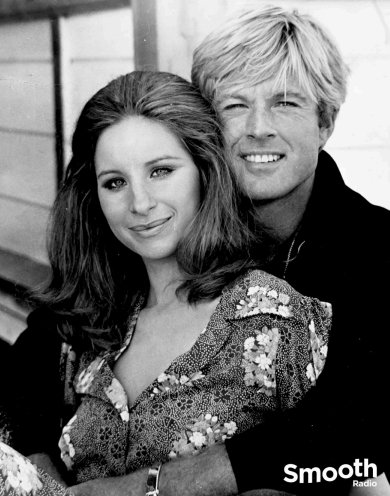
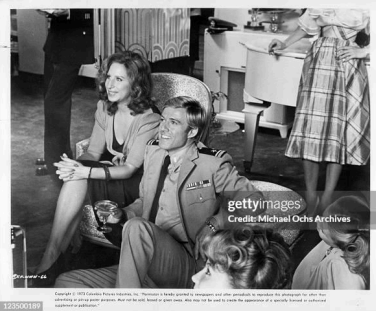
Photography Acknowledgement THE WAY WE WERE Starring Barbra Streisand & Robert Redford. October 16, 1973. Picture, taken on set during the filming in 1972. Eoghan. Barbra Streisand Fan’s World Page Robert Redford and Barbra Streisand, who starred together in 1973’s ‘The Way We Were’.
💜Smooth Radio Robert Redford In ‘The Way We Were’ Barbara Streisand and Robert Redford sit smiling looking forward in a scene from the film ‘The Way We Were’, 1973. (Photo by Columbia Pictures/Getty Images)
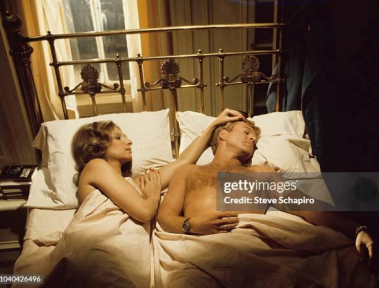
Streisand & Redford In ‘The Way We Were’ View of American actors Barbra Streisand and Robert Redford as they lie in bed in a scene from the film ‘The Way We Were’ (directed by Sydney Pollack), Los Angeles, California, 1972. (Photo by Steve Schapiro/Corbis via Getty Images)
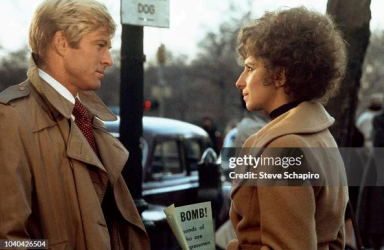
Redford & Streisand In ‘The Way We Were’ View of American actors Robert Redford and Barbra Streisand as they face one another in a scene from the film ‘The Way We Were’ (directed by Sydney Pollack), Los Angeles, California, (Photo by Steve Schapiro/Corbis via Getty Images) 1972.
Z. I. Mahmud [email: zimahmud_anan@yahoo.com] is a Bangladeshi scholar, creative writer, and B.A. (Honours) alumnus in English from Satyawati College, University of Delhi. He has recently submitted an essay for the Keats Shelley Memorial Prize titled, The Utopian Enlightenment of Romantic Sublime Dissolves Into Dystopian Apocalypse Within Mary Shelley’s Last Man. His research and creative work explore literature’s intersections with history, imagination, and cultural reception. Mahmud’s abstract, Dungeon-Castle and Demonic Downfall: Traumatizing Horroresque Gothicization of the Medievalist Halloween, has been selected for panel presentation at the virtual conference Confound the Time: Reception in Medieval & Early Modern Studies, 24–25 January 2026.
tethered to the whims and folly of the men who came before me.
Then they set me loose
and called me a free woman.
My mother taught me how to live in ignorance
to pretend my anklets were made of gold,
and the chime of their trailing chain
nothing but the sound of love.
For what else, if not love,
would ground a bird
whose wings ache
only to soar?
My mother
she is a time traveller
with no particular destination.
She carved time capsules
out of the living flesh of her daughters
and bid them stay in place
With muffled shrouds of her love.
Her daughters held her chains still.
She forgot her need to wander.
My mothers’ anklets were not made of surrender
My mothers mother
linked her daughters chains with memories
and the resonance of duty
She did not teach her ignorance.
For my mothers mother was a placid lake with deep burrows.
she buried calmly any hints of dissonance In the music of her anklets.
Her chains were long
Buried deep she thought them nonexistent
But my mothers chains They were shorter
Her generation was adorned with brighter lengths that shimmered
Lengthens and shortens at the whims
Of a man’s fickle heart
So they taught themselves the art of forgetting
My mother told me I was born with anklets
Gaudy beautiful things forged to sing the world into order
But here they lay unpolished
Their bells broken at birth
Their song stilled
Only their chains stretching at the whims of unchained monsters.
Calling Home
after all the years away
Mother calls from the deeps,
curled at the edge of that land’s healing cracks where now, the trees shed fruit with no prompting,
where Sister’s bloodied feet once painted love between the cloaking robes of monsters.
Where, beneath Mother’s watchful eyes, she spun over broken bones called Father.
She calls, she calls, says,“Come home, daughter.”
Home, to the taste of smoke on Grandmama’s soup,
the sweat that beads on her hilltop forehead, the smile that stains that craggy hard face when Father brings his broken laughs home.
Home
that belonged to a girl who saw monsters not beneath the bed but spinning past in Sister’s tear-soaked skin,
bloodied feet piercing the bones of Father’s love and care.
Home
that flows between nausea and nostalgia, the feel of stone and sand between toes.
Stone is stone and sand always sand but the sands of home, they hold the imprint of memory,
Of a 5-year-old palm pressed beneath the scorching red of a termite’s home, a 5-year-old tongue tasting what remains of the ancient one’s hold, learning the difference between concrete and clay.
Home smells of Mother’s miyan kuka, no fish or meat to wash the stickiness down,
only Mother’s voice carrying the dark away with tales of Bayajidda, Zulke, and Alhaji Imam in the light of a single candle on a bed in a mud house built on memories.
Memories of Brother, who once carried water for Mother on his back, the same way he hauled years of Father’s dreams to a country where faces stared at his melanin-spiked tone and learned to call it home.
To crank the heat up to 40, 45, inhale deeply when the new snow falls and try to remember when snow used to be red and winter was harmattan.
Now Brother plucks cherries from fruit stands, cherry that held no memory of sour hands or wild trees
Cherry that is too sweet, too soft, and smiles, swallows, and calls on Sister.
Sister who dances now on waves, where the sea salt sweeps the blood from her soles and seals into the wounds the broken bones of Father.
Her stamping feet screams over the waves and cover the thousand voices of Mother rising from the deeps,
the crags from that once crumbling pit at the edges of what used to be home for a cared soul who loved Mother.
Calling, Calling, Come home, daughter.
The Hive
I want to learn this world like a beloved book
Seek its every hidden crevice between the eyes of mother
The hands of daughter
Between a wife’s parted thighs that form the gateway to God’s greatest gift
I want to write this world into paper
Soak it in waters pulled from the hope that lives
In a first time mother
The hope that presses her hands against a swollen belly
Shares her body with alien life that could
take and take and take
swallow her whole and from her body to her mind
Take every inch every piece
drink it down and know
Know the meaning of love
And the love of meaning
Of knowing
Of letting go
Of your self
Of every part that makes you
Of becoming Maman amra
Matar Ahmad
Your being subsumed within the hive mind
That is wife Mother
I want to take the tears of daughter
Roll it within the black threads of duty
To create the blackest ink
That drips with expectations
I’ll call it Yar fari
Use it to draw this world to paper
Draw the blurring line that separates
Mother from daughter
That entrusts a child between frail arms
And calls it love
That cradles fear like newly found clay in a children’s playground
Rolls it between the fingers of an overeager child
And name it art
Lets it twist and fall in on itself
Try to mould its little wet handles into works of art
To make itself into art
Use Yar fari to paint art across the stained face of this world
Let daughter be daughter
Then sister
Before she subsumed into the hive
And become one with wife
With mother
I want to learn this funny world
That breaks before it ends you in all the wrong places
Chew it softly between clenched teeth
Like a
delicious soup spiced with maggots
Roll it under my tongue
Taste its fragrance
And spits it out
At your feet
And cook a better meal
To feed my cravings.
Habiba Malumfashi is a writer, podcaster, project manager and curator. She is the programs Officer and coordinator of the open arts development foundation, a creative hub for artists and writers in Kaduna. Her work revolves around womanhood, resilience and the inherent feminist ethos of northern Nigerian cultures. Her writings can be found on The Kalahari review, Beittle Paper, Ayamba Litcast among others.