Self Portrait with a Piano
The bench doesn’t know me anymore.
Not like it knows my sibling,
Or my mother,
Or my grandmother,
Or my grandfather.
Not like it used to know
Me.
A poet sits down at a keyboard and tries to remember what it felt like when letters were in order
from A to G.
Tries to remember a language of symbols she spent so long studying
And too long forgetting.
Grandfather stares down at her and she wants to share anything with him other than a name.
Music has been proven to help the forgetful remember
And she is forgetting how to look at something written
And make it her own instead of picking it apart.
She is trying to forget how hard dedication was
So she can have just this one thing.
She is trying to hold on to everything she ever was without fighting for it
And it is slipping away.
I sit down at the piano again and pretend I never left.
I will let it all return to me slowly.

Future Office – Opportunities for Youth Development
In today’s world, where science and technology are rapidly advancing, it is natural that young people strive to achieve success.
But an important question arises: how can we develop? Where should we begin?
Nowadays, artificial intelligence, technology, and social media have become an inseparable part of our lives. At the same time, many young people fall into laziness, lack of discipline, and become distracted by endless streams of information and videos. As a result, questions such as “How do we succeed? Where do we start?” concern not only me but also many younger people.
While searching for answers to these questions, a project called “Future Office” opened a new door in my life. When I learned about the project, I felt it was exactly the opportunity I needed, and I was accepted into its second season.
The Project and First Impressions
The project began online via a Telegram channel. On the very first day, 140 participants were accepted, divided into groups, and each was assigned a curator. I found myself on the 5th group’s list and eagerly joined the group chat. Without waiting for opportunities to come to me, I was one of the first to introduce myself and connect with everyone. To my delight, my teammates were active and open-hearted — we quickly bonded and built a strong network.
Our group was tasked with choosing a name, logo, and slogan. Everyone contributed ideas, and most importantly, we respected one another’s opinions. In the end, we named our group “Renaissance” and came up with a slogan together. These tasks helped us adapt quickly to new people and new environments.
Another task of the day was reading Camus’ “The Stranger.” Albert In the evening, we attended an online training by Shohjahon Urinov, a recipient of the Zahiriddin Muhammad Bobur State Scholarship, on “Conducting Scientific Research and Applying for Prestigious Scholarships.”
We young people often don’t know where to start, what the right path is, or what documents we need. What are the stages of selection? What common mistakes do candidates make? These questions are very important. But who do we ask if we have no acquaintances or access to specialists, especially for youth like me living far from big cities?
This project gave us answers to all these questions and more. Since the project was online, everyone could participate from their region. The group chat allowed free communication and networking. Now, I have friends from different regions, and that is amazing. Being surrounded by like-minded peers helps us compete, learn from each other, and push one another toward our goals.
The best part was the online training from experts. First, they shared their knowledge with us, then answered all our questions. Now we know what to do and how to do it — we have taken one more step closer to our dreams.
Day Two – The Battle of Ideas
This day took place in the “ThinkLab” workshop. We were given a poem by a famous writer and debated it in the literary arena, defending our perspectives. The “ThinkLab 2” and “Quick Battle” sessions truly tested our intellect and wit — just as the saying goes, “The brave are tested in the arena.”
I’ve always loved critical thinking. I have a habit of analyzing things from different angles, giving reasoned judgments, and making thoughtful decisions. The ThinkLab was made for people like me! Fortunately, my teammates were also well-read, sharp-minded people. I learned so much from them, and they learned from me — like paying attention to details and seeing things from different perspectives. It was amazing to share knowledge with each other.
I’ve always had many friends, but exchanging deep ideas with them wasn’t easy — we often didn’t listen to one another. But with an audience united by one goal, everything became easier and full of new insights.
Day Three – Movie Time
“Movie Time” wasn’t just about sitting on a couch with popcorn. It was about living the story with the characters and learning life lessons. The film was deeply emotional, showing how someone with physical challenges still achieved their dreams. It made us realize how many healthy people live in fear instead of pursuing their goals.
I had actually seen this film before. At first, I wondered, “Do I really need to watch it again? Won’t it be boring?” But then I remembered a phrase that often comes up in my life: “Repetition is the mother of true learning.” Surely, the organizers had chosen this film for a reason. Watching it again, I noticed details I hadn’t paid attention to before. Instead of just following the characters’ stories, I imagined what I would do if I were in their place.
After the film, we discussed it as a group. 140 people shared 140 different ideas and experiences — it felt magical, like unlocking another secret on my path toward my goals.
Later that evening, we had a seminar with Davron Ergashev, a multiple grant-winner, on “Create Your Own Opportunities: Winning Grants, Writing Motivation Letters and Preparing a CV.”
This training taught us essential skills like writing CVs, crafting motivation letters, and applying for grants — real keys to achieving our dreams. Everyone actively participated, asking questions without hesitation. By the end, we understood that everything is truly in our own hands.
Day Four – Quiz and Reading Time
The day began with the “Quiz for the Smart” — a movie quiz. Three rounds, fifteen questions, and 140 delegates competing in teams. Intellectual games always attract young people; they reveal the talents not only of bookworms and researchers but also of movie lovers.
After the quiz, we returned to “Reading Time” and analyzed “The Stranger” in a voice chat. Each participant shared their golden thoughts. This wasn’t just reading a book; it was about self-discovery and understanding life’s true purpose. Personally, I always empathize with the characters when I read — I cry and laugh with them. That’s why I actively participated and shared my experiences with the group, knowing it brought me closer to my goals.
Day Five – Plastic-Free Day
As part of the “Plastic-Free Day” campaign, each participant collected 20 pieces of plastic waste in their area. It may seem small, but it’s a crucial step toward protecting our planet.
At the end of the day, we attended an eco-training by Husan Tursunboev, the founder of “EkoNur.”
I’ve always enjoyed participating in eco-campaigns. I know my efforts alone can’t influence everyone, but when my younger siblings see me cleaning up, they do the same with their friends, who then influence their families — like a chain reaction. It feels amazing to contribute, even in a small way, to spreading ecological awareness. After all, how can we stand by and watch our beautiful planet be destroyed?
Conclusion
-During the “Future Office” project, I learned many valuable lessons:
-Don’t wait for opportunities — create them yourself.
-Personal development requires books, films, intellectual games, and practical actions.
-Most importantly, teamwork and exchanging ideas help you discover yourself.
If every young person made good use of such opportunities, they would not only develop themselves but also uplift their communities.
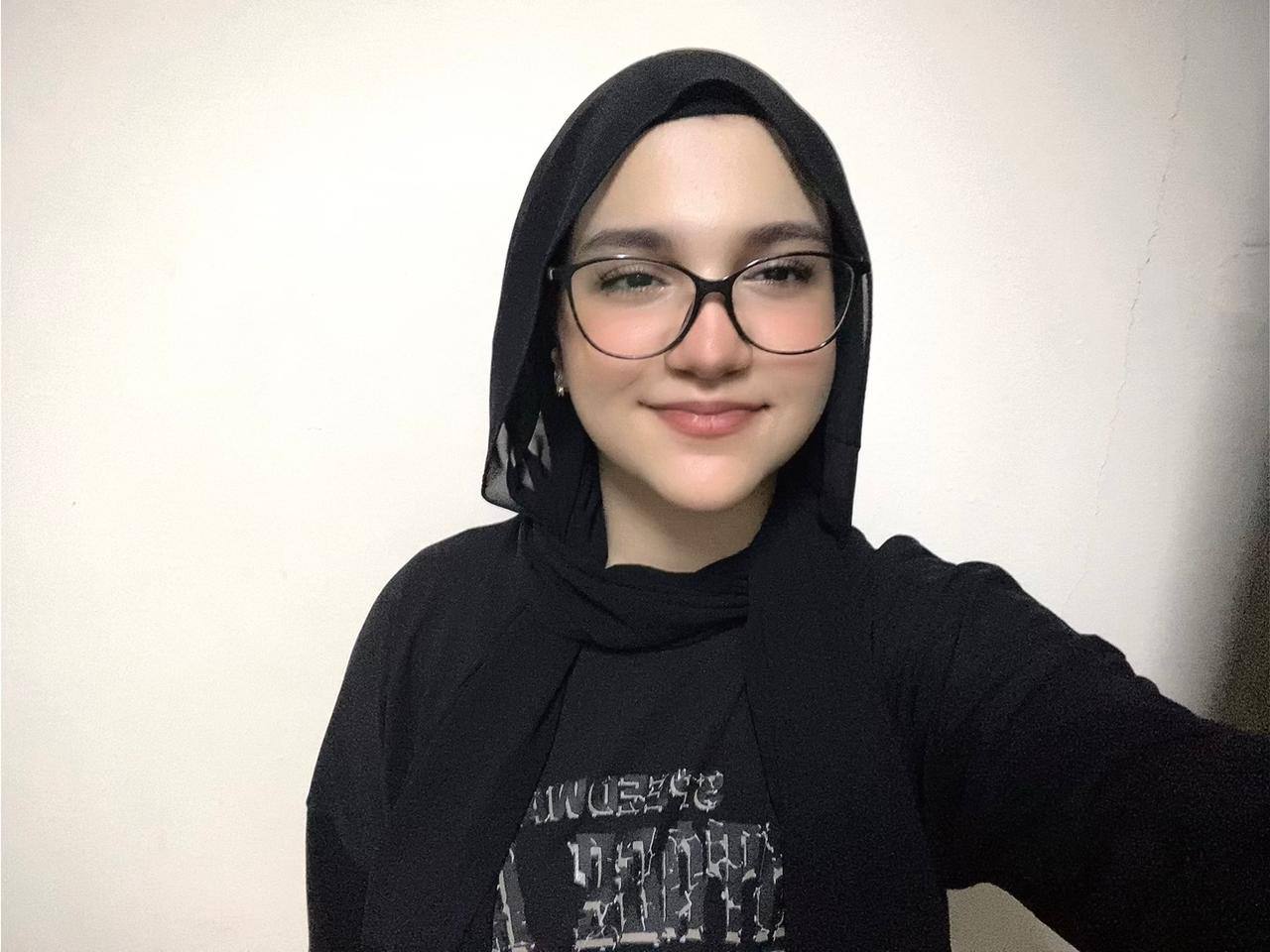
Mushtariybonu Abdurakhimova, 3rd-year undergraduate student at Namangan State Institute of Foreign Languages
Active Volunteer | Recipient of the Uzbekistan Volunteers Association Badge of Honor | Creative Writer | Avid Reader | Public Speaker | Social, Environmental & Cultural Activist | Founder of the “Ibrat” Volunteer Group | Leader | Amateur Artist | Presenter
Born on March 26, 2006, in Dangʻara district of Fergana region, Uzbekistan, Mushtariybonu Abdurakhimova is an inspiring young leader actively engaged in education, creative initiatives, cultural and formal communication, public speaking, as well as social and environmental projects. She not only participates in various training sessions and video programs but also organizes and leads them herself.
Mushtariybonu completed her secondary education at School No. 2 in Dangʻara, where she developed a keen interest in literature, foreign languages, culture, critical thinking, and public speaking. Driven by these passions, she was admitted on a merit-based scholarship to the Faculty of Philology at Namangan State Institute of Foreign Languages, where she is currently a third-year student.
From the moment she entered university, she became an active member of volunteer movements, contributing energetically to social and ecological projects. She successfully completed the DXM Volunteers program and earned the Badge of Honor from the Uzbekistan Volunteers Association. Earlier, her university team won first place in the collective reading competition, earning the title of “Most Well-Read Team.” She also served as the coordinator for the female students’ division within the Youth Union, organized numerous projects and competitions, spoke as a guest and trainer in various video programs, and successfully published her first scientific article.
In her spare time, Mushtariy enjoys reading, critical thinking, analyzing podcasts, intellectual videos, and films. She is an amateur artist, a skilled home cook, and has a knack for handicrafts. Her volunteer roles include guide volunteer, eco-volunteer, UNDP volunteer, “Istiqlolli Avlod” volunteer (working on human rights, children’s rights, and anti-violence programs for women), U-Report volunteer, participant of the “EcoAvlod” Season 2 project, and participant of the 4th season of the International Ecology and Tourism Congress.
She actively supports the elderly, provides assistance to lonely seniors and people with disabilities, and is known for her adaptability, sociability, and strong communication skills. Mushtariybonu loves engaging with people and is a quick learner, always striving to make a positive impact through social, environmental, and cultural initiatives.
Despite her young age, Mushtariybonu Abdurakhimova stands out as a talented, proactive, and socially responsible leader, contributing to meaningful change in her community and beyond.

I am the Truth
Quiet, I’m not listening
Just because you say
Does not mean it’s true…
You don’t get to define me!
My existence is my definition!
And by definition: I am the truth!
But you don’t see me;
So YOU be quiet,
I’m not listening!
Just because you say
Does not mean it’s true…
I am the legacy of what came BEFORE you!
From the DNA of the Subsaharan Africans
Where scientists traced the birth of us humans!
Remember that we are ALL 99.9% the same!
The diaspora from Africa to Asia to Europa
And eventually to North America and South America,
Australia and Antarctica…
We are ALL from the MOTHERLand of AFRICA!
THAT is truth!
I am that TRUTH!
But you choose NOT to see me!
So you don’t get to define me based on a falsity!
Afro-Ancestral DNA already told you OUR story…
So Down with your Pseudo ideology of Supremacy!
I refuse to give you the soot!
For in the words of Gordon Lightfoot:
“I will never be set free as long as I’m the ghost you can’t see…”

Jacques Fleury is a Boston Globe featured Haitian American Poet, Educator, Author of four books and literary arts student at Harvard University online. His latest publication “You Are Enough: The Journey to Accepting Your Authentic Self” & other titles are available at all Boston Public Libraries, the University of Massachusetts Healey Library, University of Wyoming, Askews and Holts Library Services in the United Kingdom, The Harvard Book Store, The Grolier Poetry Bookshop, Amazon etc… He has been published in prestigious publications such as Spirit of Change Magazine, Wilderness House Literary Review, Muddy River Poetry Review, Litterateur Redefining World anthologies out of India, Poets Reading the News, the Cornell University Press anthology Class Lives: Stories from Our Economic Divide, Boston Area Small Press and Poetry Scene among others…Visit him at: http://www.authorsden.com/jacquesfleury.–
First, from contributor Jacques Fleury, an announcement of a new book! “Immortal Lines of Poetry” by Sourav Sarkar and Jacques Fleury

A collaboration between myself and internationally renowned poet Sourav Sarkar of India. The book presents us both as “2 Poets of the Common Era Literature Period” (a term Sarkar claims to have coined himself on Oct. 24, 2021 and is celebrated worldwide on its founding date yearly) and allows the reader an opportunity to “sample” our poetic styles and substance. It is at times a supple staccato or eroticism, at times mesmerizingly musical of humanism, at times visceral to its soul core but eventually reaches a crescendo to volcanic eruption of literary passion, hope and inspiration for our seemingly crumbling humanity. Here is a sample of one of MY poems from the book. Hope you check it out on Amazon. Merci beaucoup!
This month’s issue focuses on what’s going on inside of all of us, and how that shapes who we are. We’re going Beneath the Surface.

Stella Kwon’s paintings explore dreams, childhood, fantasy, and the interiority needed for a creative life. Jacques Fleury’s sample poem from his new book Immortal Lines of Poetry looks into dreams and internal inspiration. Debabrata Maji’s poem traces his heart’s inner journey. Damon Hubbs tracks the odds and ends running through his mind while watching competitive tennis. Annabel Kim’s artwork explores and celebrates human and natural creativity. Ma Yongbo evokes the change of seasons, nature, and mortality.
Mark Young renders maps and nature into works of art in his ‘geographies.’ J.K. Durick speaks to intellectual experiences – the news, books, museums – and how we communicate ourselves to ourselves. Jasmina Saidova honors an inspirational teacher as Abdirashidova Ozoda explores possibilities for digital technology in early childhood education. Eshmamatova Shabbona traces the history and evolution of Uzbek literature and Munira Xolmirzayeva traces the history of Russian writing.
Eva Petropoulou Lianou praises the delicate elegance of Lily Swarn’s new poetry collection A Drop of Cosmos. Uralova Gulmira highlights themes of personal experience and motherhood in the patriotic writings of Uzbek poet Saida Zunnunova. Sayani Mukherjee reflects on being driven towards poetry in a full and changing world. Dr. Rasmiyya Sabir writes of romantic love, poetic inspiration, and the irrepressible drive to be heard.
Jakhongir Nomozov interviews poet Rustam Bekhrudi, who intends to capture and convey the resilient Turkish spirit in his writing. Mesfakus Salahin speaks to human psychology and the drive to live amid the allure of death. Mahbub Alam describes a night of discomfort due to mosquitoes, which he endures by thinking of people who have it much worse. Abdisattorova Hurshida’s short story highlights the dignity and self-determination and patience of the hardworking rural poor in Uzbekistan, even when facing death.

Hanen Marouani probes our internal emotional life with tenderness. Bill Tope uncovers the veil of a past sixth grade classroom where the students and teacher are full of inner and outer turmoil. Alan Catlin continues his surreal examination of the physical manifestations of work anxiety as Elbekova Nilufar warns of the danger to our eyes and psyches posed by Internet addiction. Emeniano Somoza Jr. reflects on what we lose by lessening the ups and downs of our emotional nature. Donia Sahab’s poetry probes the psychological torment and confusion Dr. Alaa Basheer alludes to in his painting. J.J. Campbell navigates loneliness with his trademark wit and cynicism.
Joana L.J. Milovanovic’s words bear witness to the psychological and physical damage domestic abusers inflict. Mykyta Ryzhykh’s characters find themselves subsumed by the crushing violence of a metaphorical “leviathan.” Alex S. Johnson reflects on his friendship with Runaways band member and visionary Kari Lee Krome and how the music industry elevates and chews people up.
Jakhongir Nomozov’s speaker reasserts himself after intense seasons of emotional pain and rejection. Soumen Roy highlights the importance of respect and patience in true love. Munisa Rustamova expresses gratitude for her mother’s constant love in a harsh world full of fake people. Alex S. Johnson and Kandy Fontaine assert their confidence in their way of living and loving and show how power is expressed through service and care, not abuse. Liderqiz demonstrates this ethic of service through a profile of Uzbek Information Service leader Dilbar Ashilbayeva.

Andela Bunos speaks of the universal human grief of lost love. Kristy Raines’ poetry expresses commitment to a romantic relationship despite being separated. Lola Ijbrater outlines the rise and fall of a romance through a series of flowers. Ken Gosse describes heartbreak through clever poems with increasing numbers of lines. Eva Petropoulou’s lines address intimate love and the beauty of forgiveness. Annamurodov Umarbek reflects on coming of age after losing his father.
Journalist Giorgos Pratzikos and literary figure Eva Petropoulou Lianou interview Greek writer Fay Rempelou about how she intends to inspire peace, creativity, and humanity through her poetry. Nilufar Mo’ydinova presents a thoughtful exploration of artificial intelligence’s potential and how to mindfully develop it for the benefit of human creativity. Taghrid Bou Merhi traces the moral ascent of humankind, as societies developed respect for life, human rights, and gender equity. Omonova Sevinch highlights the importance of educating women and girls to uplift society. Graciela Noemi Villaverde points out the power of icons and commemorations of peace to interrupt the hostility that leads to war.
Giorgos Pratzikos interviews actor and children’s author Zisis Papaioanou on his craft, his artistic vision, his inspirations in Christ and Aristotle, and desire for Greeks to have more neighborly concern and look out for each other.

Taylor Dibbert reflects on the impression Americans make while traveling abroad. Doug Hawley and Bill Tope present a humorous tale of unintended interplanetary cooperation. Duane Vorhees’ poetry deals with our humanity, the roles we play in life and who we choose to become to each other.
Abdel Iatif Moubarak’s words express solitude and the hopes and dreams of individuals and communities in an uncertain world. Abigail George reviews Nadine AuCoin’s horror novel Tucked Inn, a tale of survival and good overcoming evil. Justin Faisal, a Rohingya refugee from Myanmar and advocate for his fellow refugees, writes of his inner journey of perseverance and finding beauty in life. Sharifova Saidaxon reflects on similar sentiments, finding forgiveness and acceptance through her faith.
We hope this issue inspires you to dig into your inner psyche and uncover strength and reach for your hopes and dreams.

The Eyes Inside the Eyes
While searching for love, a river is born
The waves of that river remain unknown for a long time
Or, remain unknown for a lifetime
The water of that river changes color as desired
The waves do not write the story of pain
Rainbows illuminate the hanging dawn
The melody of the past trembles in the embrace
The spring moon falls prematurely
The sky becomes empty
The murdered lights suck life
The dreams with broken wings want to become windows
In the world of extinguished lamps.
Now, the riverside settlement is on the side of the road
Life is elsewhere
The river walks on the boatman’s boat
The colony’s Royal Primary School sniffed by the boat
The sun of sadness burns in the wake
The eyes find the eyes inside the eyes
The memorable time does not burn in those eyes
The dream life swims in solitude
The ground melts at the station of estranged retirement
When will the train come, the whistle blow?
The organic evolution of existence questions the self
The symbolic self becomes a constant fraction.
The brain remains inactive
In all the elements of the unconscious language of existence
I keep looking for love
In a passive obedient mind
I have no coffin of blood
Yet, the continuous bleeding in the rhythm of poetry
I have no primitive competition
Even in the midst of conflicting excitement
One day the flower of union will bloom on the wall of distance
If my nest is empty
From the womb to the grave, I desire you
That is not why I desire the happiness of voluntary death.
Some people have a fierce desire –
To weave a garland of dew,
To be different from the wind,
To return to the womb again and again.
Some people have a longing to embrace death.
Feelings are awakened by the fire of desire.
For some, death is more pleasant than earthly life.
In my thoughts, life is a struggle.
Death is not a solution.
The only reality is the passenger in the vehicle of my imagination.
Happiness, sorrow are the opposite sides of love.
My love is not dissolved in the solution of anxiety.
Let the soul full of beauty awaken in the color of struggle
Or I will live with that color.

Our Childlike Souls
Our childlike souls are hesitant,
restless, burning, loud…
They stumble over emotions
like running barefoot in the wet grass,
not knowing whether to laugh or to cry.
I don’t always have the words
to write what I feel.
Often, I just stay still,
searching in silence for what the heart longs to shout.
But you—
your words, even clumsy,
come to awaken mine.
You bring back impulses I thought extinguished,
tender angers,
new shivers,
phrases I would never have dared to lay on the page.
Love is kind.
Love is frightening.
Love both enlightens and blinds.
It touches even those
who claim not to want it.
It seeps through the cracks,
and sometimes, waiting blossoms into a silent miracle.
It also hides in those blurred friendships,
where glances say more than lips,
where gestures brush against something greater
without ever naming it.
I don’t always understand the situation.
But I dare.
I dare anyway.
I dare to hope despite the unknown.
I dare to look for you in the crowd,
to lose myself in your silence,
to follow you in the gentle shadow of your absences.
I dare to move toward you
even when everything tells me to step back.
I dare to drink from your laughter,
to share crumbs of light between two silences,
to watch you smile without saying a word,
and to spend nights guessing if you dream of me.
I don’t know where all this leads,
but I go—
with a beating heart, in a low voice,
with my doubts,
my impulses,
and this wild need to tell you:
I am here,
I am everywhere,
in this mad world,
in this blurred horizon.
—
II
The Smile and the Silence
A smile
does not mean
one is happy.
There are tears
in the heart
that never reach the eyes.
We come from a life
woven of contradictions,
and we leave it
without ever solving them.
We move forward
between shadow and blur,
head held high,
heart held low.
I leave hanging
the endless questions:
life,
death,
and the reasons to stay.
Sometimes,
a smile is a barrier,
a barrier against falling apart.
There are cries
we hide in our eyes,
screams muffled
inside silences.
And the one who smiles the most…
is often the one
nobody
understands.
A sad soul
A realist mind
—
Hanen MAROUANI
Strasbourg 07.08.2025
.
BIOGRAPHY:
Hanen Marouani is a Tunisian-Italian poet and researcher with a PhD in French language and literature, focused on Reported Speech in the Narratives of Albert Camus: An Enunciative Approach. She is the author of several poetry collections, essays, and articles, and her work centers on Francophone poetry, intercultural dialogue, and the visibility of marginalized voices.
She contributes to “Le Pan Poétique des Muses” as a journalist and literary columnist, and collaborates with the “Union of Arab Journalists and Writers” in Europe. Active in literary translation through “ATLAS”, she also leads workshops and community initiatives exploring creativity, humanity, and women’s voices across cultures.
A two-time laureate of the “Eugen Ionescu doctoral and postdoctoral research program” (2018, 2022) in Romania, she continues to combine scholarship and creation with strong intercultural engagement.
Her collection “Tout ira bien… ” won the 2023 International Poetry Prize of the Poéféministe Orientales Review, and she received the Francophonie Europoésie UNICEF Prize in Paris in 2022 for her literary work. Since 2023, she has served on the jury of the Dina Sahyouni Literary Prize, after chairing in 2022 the international poetry contest Poetry and Pandemic, organized by the Agence Universitaire de la Francophonie.