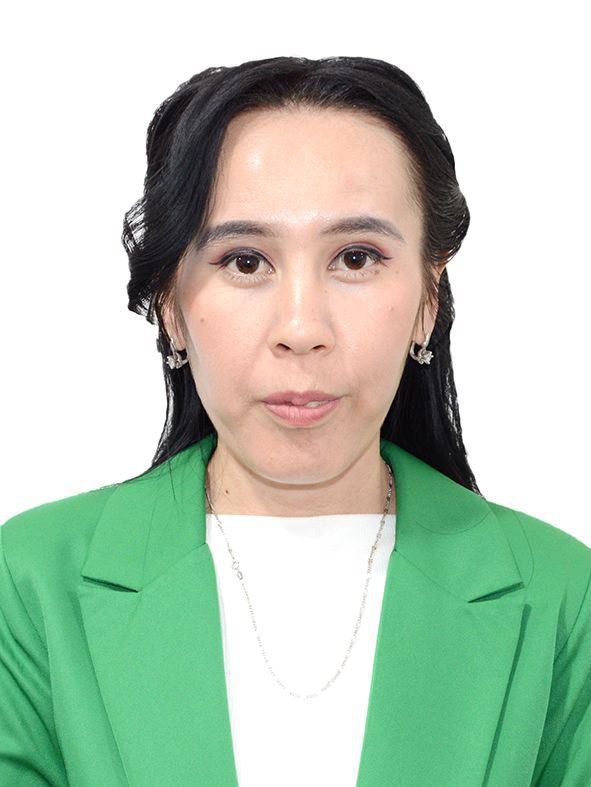
A woman is an embodiment of endless courage, a symbol of beauty, and the flower of society. Though she may carry the burdens of the world behind her smile and feel hunger herself, she strives to show fullness for the sake of her children. She is a creation perfectly and beautifully made, capable of subduing sultans and elevating servants to the status of kings. When we hear the word “woman,” an image of a graceful figure full of unique qualities and strength immediately comes to mind.
Now I want to ask: *What is a courageous woman? What kind of image does the phrase “courageous woman” evoke in your mind?* I approached these questions and the role of women in society by portraying them through the figure of one woman.
Imagine a fragile girl deprived of her father’s love since birth, forced to live away from her siblings, and separated from her mother during the sweetest moments of her life under various oppressions. Although she may seem mature outwardly, she remains a delicate soul deprived of parental affection. Can you imagine how deeply painful such a fate is? Such hardships are trials of destiny.
The most important thing is that in such moments, a person must remain patient and never give up. She was always grateful even in the hardest times, believing that these were trials sent by God and that their rewards would be great.
For example, despite the disapproval of her close ones, she did not surrender and, while appearing to be going to work every day, she took entrance exams for the university she desired. To everyone’s surprise, she was admitted to a state-funded pedagogy program in Physics and Informatics!
Here, I want to highlight the insightful words of Chingiz Aytmatov, who said: “When I speak of an ideal woman, I always put intellectuality first. Mental capacity, of course, too. The ideal is formed gradually, based on long and numerous observations.”
Indeed, to call someone ideal, we must consider that she has been shaped and refined through life’s continuous challenges. However, fate did not always grant her peaceful days. After marriage, she faced separation from her siblings and had to move to a distant region. She endured numerous hardships and even escaped death several times.
Not only did she lose her loved ones, but constant separation from her fragile infants exhausted her immensely. Yet, these hardships strengthened her resilience and motivated her to strive to rise from the boiling cauldron of cruelty. It is often said that every difficulty carries some good within it.
By God’s will, she overcame all obstacles and now feels His boundless mercy, raising her two children with love and instilling good values in them. For 30 years, she has been working in her field, contributing greatly to the development of society and setting a worthy example.
This woman is my jewel, my paradise — my mother. For me, she is the most unique and courageous woman, the ideal human being, and no words can fully express her beauty. She is my light — my mother.
Not only for me but for all humanity, a mother is the most revered figure. We all understand well the invaluable role of mothers in our lives, and through my mother’s life journey, I have realized how powerful mothers truly are.With this short story, I want to say that women are not as weak as some may think. On the contrary, they are strong and perfect individuals capable of achieving every dream they set their minds to and even more. Therefore, every woman holds an invaluable place in society.
I can say this through the example of my mother, Baymuratova Salomat, who, with her patience and courage, overcame all obstacles in her life and reached great heights.
As E. Senankur pointed out: *“If our hearts are pure, the word ‘woman’ becomes a symbol of grandeur for us.”*
By the way, the importance of respecting women has been emphasized by Lope De Vega, who said that *“Respecting a woman is a duty that every sincere person should observe from birth.”* Amir Temur also highlighted this by saying, *“I tried to treat women as kindly as possible.”*
Indeed, women are the backbone of a nation. Every woman, through the upbringing she gives to her children, either lays the foundation for a bright future country or ruins its promising prospects.
Because a woman’s nature is strong, she is capable of performing both noble deeds and, unfortunately, crafty acts. Therefore, the place of women in our society is invaluable.
The Qur’an also recognizes how honorable and precious women are. No matter how much we cherish and respect them, it will never be enough.
After all, Paradise lies under the feet of mothers.
For this reason, I want to express my deepest respect and love to all women, to the unique mothers, and to my own sun-like mother, the source of kindness and warmth in my heart.
My teachers Shokhida Yusupova, Laylo Bakhtiyorova, Sarvinoz Xasanovna, Asrorova Gavhar, Raxmonqulova Saida, and Yaxshiboyeva Yulduz, as well as my hardworking sister Feruza Turdiboyeva, the winner of the “Woman of the Year 2021” contest, all hold invaluable places in my life and in my journey to become a useful member of society.
Moreover, thanks to the initiatives of our country’s leadership, the high attention paid to women is continuously increasing our role in society’s governance, and all the created opportunities are yielding positive results.
Every woman’s awareness of her rights and finding a worthy place in society is a key step towards the rise and progress of every nation.
Bibixanifa Jumanazarova Uktam’s daughter was born on May 15, 2007, in Zomin district, Jizzakh region. She is the holder of multiple international certificates. Additionally, she holds a B2 level CEFR certificate in English and a B+ level national certificate in Uzbek language. Due to her excellent academic achievements, she graduated from school with a gold medal.
She is the author of The Diamond Pages anthology and has written numerous scientific and journalistic articles.
A second before the world ends, I caught a cat in the act— carefully building a nest for a pregnant dove, bit by bit…
Right then, a politician sneezed on his way out of peace talks that had birthed eight wars and five famines.
My dead father asked: “What are you doing? Come on, you’ll be here with me soon enough…”
I turned his word “there” over in my head. Will I return to my mother’s womb? Go to some nameless place? Become a fish with wings and one lone eye in the middle of its head?
I’m not trying to sound surreal— That’s just where my thoughts live since I graduated from public high school.
Maybe it’s the government schooling. Maybe the dirty water. Maybe racism. Maybe the fear of belonging to any “minority.”
Before I go, I plan to release a poetry album. Free entry for all. And at every reading, I’ll kiss the hands of infants, of the mad, of women whose men still ridicule the shape of their breasts or the bags beneath their eyes.
My father’s calling again— this time, with mango gelato. He wants me quickly. I’m not sure what the hurry is.
A second before it’s all over, my neighbors wrapped their heads in papyrus, claiming it’s the only cure for the “migraine of civilizations.”
Then the monkey—“Mousa”— leapt into my chest and said: “I write poetry too.”
I saw the sky fall and shrink down to the size of a fingertip.
My father called out again: “I’m coming!”
I say it too, as I write this final poem— hallucinating.
When My Arm Flew Into the Air
When my arm flew into the air, I calmed myself by believing I must be dreaming. Any moment now, I would wake to the sound of the gecko that’s been living in my room for the past four months.
I haven’t killed it. I don’t want to.
I didn’t feel like I was flying. I felt like I was disappearing.
You know that strange training— when you teach your body to die, and bit by bit, you start to feel each part fade?
I smelled the okra stew our ninety-year-old neighbor was cooking. I saw a large yellow butterfly telling a joke in Salvador Dalí’s ear.
He was trapped inside a painting hanging across from the neighbors’ window. I saw him laugh.
And I thought: He really was mad. Or maybe I’m the mad one.
It’s not easy to watch your arm lift off into the air. Not easy to ask: Did you really detach from my body? and hear it answer in a voice beyond logic— the voice of a muffled child, as if his parents had rushed the burial, believed he was gone too soon, sealed the coffin, and drove away.
When my arm flew up, I thought: This is delirium. Maybe I’m dying. Maybe I’m about to write a new poem— one that will be rejected by many editors but adored by one person, who will carve it into the bark of a massive fig tree.
And after he walks home, the fig tree will stir from its long sleep and finish writing the rest of the poem.
I don’t know exactly what happened. But I do know this:
Whatever part of you flies off becomes braver than it ever was before.
Yesterday, I Met My Jinn Double
Yesterday, I met my jinn double. Her fingers were shaped like forks. She smiled at me three times— with an upside-down mouth.
The roughness of her skin reminded me of the last time I touched a leaf with my bare hand. A long time ago, back when trees could still be touched, back when trees belonged to the earth. Back when grape clusters were earrings— and ropes to escape.
I knelt before her and whispered: “How many times have they killed you?” And I heard the echo: “How many times have they killed me?”
I’m not her. I don’t want to be her. I’m free. I flutter from flower to flower, tasting mulberries, playing with clay.
She points to the moon, trying to pull it down with a rope. I got scared. I wet myself.
I’m not a child— but fear makes everyone do that. The baby next door does it. So did my grandfather— and he was a bank manager.
No one is bigger than fear.
She comes closer. Her feet were shaped like hooks. I step back. Then again. And again— until I disappear.
In this article, I will investigate the importance of language within the framework of an international language and the increasing number of people communicating in English worldwide. The reasons behind this growth are analyzed in depth. Additionally, the significance of English in communication is described.
Key words: international language, experience and qualification, learning English, native language, specific and academic language.
Nowadays, a large number of people speak English. The number of speakers has reached 1.5 billion. Additionally, approximately 500 million people are learning English as their native language. The figures indicate the widespread use and learning of English as an international language. Our young generation is excelling in oral proficiency in the language, attaining significant milestones and outstanding achievements. Language can be learned for two main purposes, namely specific and academic. Knowledge of a language offers individuals an abundance of opportunities. For example, traveling overseas without guidance. Moreover, applying for a job can result in a 50% salary supplement, effective professional interaction, career advancement, and opportunities. Effective professional interaction-English for Specific Purposes (ESP)-enables professionals to communicate accurately and efficiently in their specific fields, such as medicine, engineering, and law. Career development and opportunities: mastering ESP enhances job prospects, as many multinational companies require English proficiency. Furthermore, when some people are applying for a job, they must know English and obtain a language certificate. As industries become more interconnected, ESP helps professionals engage in international projects, conferences, and research collaborations. Scientists, for instance, publish research in English to reach a global audience, while engineers use ESP to discuss technical designs with multinational teams. This linguistic proficiency promotes knowledge exchange and innovation. English ranks third among the world’s languages.
In today’s world, all humans learning the language can earn money and achieve profit. In fact, teenagers and older people are obtaining a high-level certificate while they conduct an English course, despite being in childhood. As for academic purposes, awareness of foreign languages allows for gaining certificates through which people can achieve qualifications. If a teenager enters a university, they meet admission requirements and may obtain a C1 level certificate. Other students want to gain knowledge; therefore, they apply to universities and schools abroad. If they obtain a B2 language certificate, they may be accepted to the universities to which they applied. When some people and students are increasing their experience and qualifications in school, university, and work, they might receive a supplement and scholarship. Nowadays, English belongs to the category of modern languages. When I was learning German, there were many programs associated with studying abroad, where people from all over the world studied German because they were engaging in various fields of science. In statistics, English for academic purposes plays a pivotal role in global communication, particularly within the realms of science, education, and research. A significant majority of scientific publications are authored in English; for instance, in 2022, 95.86% of the 28,142,849 references indexed on the Web of Science were in English. English for academic purposes is vital for global communication, as it enhances access to knowledge, promotes international collaboration, and supports career development, making it a key tool for students, researchers, and professionals worldwide.
In conclusion, ESP and EAP contribute significantly to the advancement of international communication, bridging academic spheres. As global connectivity continues to expand, the demand for specialized English language proficiency will remain essential for success in various disciplines.
as you quietly wrap your child in linen and cotton cloth.
His smile tells you
that a heavenly gift rests in your arms.
And then — a scream.
Your scream, for they are taking your Son to be killed.
I return in thought to the cradle.
You hold Him close to your chest,
singing softly as He drifts into sleep.
The next moment —
your inconsolable heart beneath the cross,
among wicked men
casting lots for the clothes He wore.
Two scenes intertwine:
life and death,
an image bearing the Son of God,
a body made into a temple.
And now… all carries the scent of death.
You loved Him with your whole being,
wished Him only good,
yet evil spun its snares
through the servants of darkness.
Only a tear of joy remains
as you lay Him in a wooden cradle:
“Good night, my son.”
And a tear of sorrow
as you embrace His lifeless body:
“Please, call me to meet You soon.
Without You, this life has no meaning.”
It plays out endlessly,
like a film that never ends:
death, tears, salvation —
telling us: the death of the body is a beginning.
Mother of God,
Suffering One,
there is no greater pain than yours,
but no deeper comfort
than your eternal embrace.
For no suffering
is greater
than yours.
Maja Milojković was born in Zaječar and divides her life between Serbia and Denmark. In Serbia, she serves as the deputy editor-in-chief at the publishing house Sfairos in Belgrade.She is also the founder and vice president of the Rtanj and Mesečev Poets’ Circle, which counts 800 members, and the editor-in-chief of the international e-magazine Area Felix, a bilingual Serbian-English publication. She writes literary reviews, and as a poet, she is represented in numerous domestic and international literary magazines, anthologies, and electronic media. Some of her poems are also available on the YouTube platform. Maja Milojković has won many international awards. She is an active member of various associations and organizations advocating for peace in the world, animal protection, and the fight against racism. She is the author of two books: Mesečev krug (Moon Circle) and Drveće Želje (Trees of Desire). She is one of the founders of the first mixed-gender club Area Felix from Zaječar, Serbia, and is currently a member of the same club. She is a member of the literary club Zlatno Pero from Knjaževac, and the association of writers and artists Gorski Vidici from Podgorica, Montenegro.
DEVELOPING CREATIVE QUALITIES IN LITERARY EDUCATION
Namangan State Pedagogical Institute
Uzbek Language and Literature Department, 1st-Year Master’s Student
Muattar Tursunboyeva
Abstract:
This article discusses the development of creative thinking, independent reasoning, and innovative approaches in students through literary education. It analyzes modern teaching methods, interactive techniques, and tasks aimed at enhancing creativity in literature classes. The article also outlines ways to foster creative competencies through text analysis, character interpretation, and understanding the author’s message. Furthermore, it references advanced international practices.
In today’s globalized world, one of the main goals of education is to form individuals who can think creatively and independently. Literary education plays a crucial role in this process. Literature classes not only cultivate aesthetic taste but also deepen thinking, foster imagination, and encourage creative approaches. Each teaching term has its specific goals and objectives.
The main goal of literary education is to develop students’ skills in analyzing literary texts, understanding the author’s ideas through characters, and providing aesthetic evaluation. The teacher plays a vital role in this by broadening the student’s thinking through methodological approaches.
2. What is Creativity and How is it Formed?
Creativity is the ability to approach issues in new ways, solve problems unconventionally, and think innovatively. In literary education, the following methods can be used to foster these qualities:
Analyzing metaphors and symbolic expressions;
Dialogic reading;
Role-play exercises;
Written creativity tasks (essays, stories, excerpts).
3. Interactive Methods and Creative Approaches
Nowadays, teachers enrich their practice with interactive methods such as:
“Fishbone Diagram”,
“Modern Editor”,
“Discussion-Based Presentation”,
“Conceptual Mapping”.
These techniques enhance students’ engagement with knowledge and promote a creative attitude toward literary texts.
4. Criteria for Assessing Creativity
When evaluating students’ creative work, the following aspects are considered:
Novelty of ideas;
Expression of characters;
Richness of language;
Ability to draw independent conclusions.
5. International Experience and Innovative Approaches
Programs such as PISA and PIRLS emphasize literary literacy and creative thinking as important criteria. In countries like Finland, South Korea, and Japan, special attention is given to shaping students’ worldview through literary works.
In literature lessons, the teacher selects methods based on the topic. For instance, the “Brainstorming” method, also referred to as the “Mental Attack” method in the second part of the 2022 publication Methodology of Teaching Literature, is widely used. Synonymy also plays an important role in literary education.
Conclusion
Fostering creativity in literary education not only increases the effectiveness of learning but also contributes to the student’s personal development. These qualities help young people grow into independent, creative, and thoughtful individuals. Therefore, every teacher should incorporate innovative and creative methods in their practice.
REFERENCES
1. A. Hasanov, Foundations of Creative Thinking, 2020. Bukhara: Zamon Press. p.118.
2. D. Xoliqova, Innovative Technologies in Education, 2021. Samarkand: Ilm-Ziyo. p.132.
3. Q. Husonboyeva & R. Niyozmetova, Methodology of Teaching Literature, Tashkent: Inavatsiya Ziyo. p.159.
4. S. Nazarova, Literary Theoretical Thinking and Figurative Reflection, 2023. Tashkent: Fan va Texnologiya. p.153.
5. Z. Abdullayeva, Creative Approach in Literature Lessons, 2022. Tashkent: O‘qituvchi. p.145.
Muattar Ikromjon qizi Tursunboyeva was born on August 6, 2000, in the Toraqo‘rg‘on district of Namangan region. She graduated from Specialized State Boarding School No. 18 in Namangan city and later completed her studies in the Uzbek language program at Namangan State University. Currently, she is a first-year master’s student at Namangan State Pedagogical Institute. From a young age, Muattar has been passionate about poetry and literature. Her poems and articles on various topics are regularly published in the media. Muattar’s goal is to become a highly qualified specialist in her field and to share the beneficial knowledge she gains with future generations.