Essay from Oyatillo Jabboraliev

Why Are Study Abroad Semesters Valuable for Students?

Meaning of These Programs – What Are They?

A study abroad semester is a life-changing experience – but how exactly?

Costs, Challenges, and Requirements

Nowadays, there are many foreign citizens in my country. Are they just tourists? Not quite. Today we see young people coming from abroad to various parts of our country. The reason is the global student exchange program. This program has a long history and began to develop in the 20th century. It was created to promote cultural and scientific cooperation between countries. A student exchange program allows students to temporarily study at a different university abroad. Through it, students gain knowledge and experience.

Historically, the United States was one of the first countries where such programs became popular, beginning with the Fulbright Program. One of the most well-known is the ERASMUS program – the oldest student exchange program in Europe, launched in 1987. Germany later developed its own version, with the DAAD program starting in 1925. These programs are highly popular among young people.

Experiences of Students:

Many students report positive experiences with exchange programs. Jabboraliev O., who studies at Kuala Lumpur University in Malaysia, said: “I expanded my professional experience through the exchange program. That’s why I’ve worked in many areas of my field.” This shows that exchange programs offer career benefits too.

Dilafruz, a student who studied in Japan, said: “My verbal communication improved significantly.” In particular, her ability to express herself in Japanese grew. This proves students can also benefit linguistically from exchange programs.

Advantages of Student Exchange Programs:

Exchange programs offer many benefits. Students gain new knowledge and boost their academic progress. But that’s not all. Studying abroad helps develop important personal skills, such as:

– Intercultural Competence: Students learn to understand and respect cultural differences by engaging directly with people from diverse backgrounds.

– Independence: Living in a foreign country forces students to organize daily life independently – from housing to daily routines.

– Language Skills: Constant exposure to a foreign language helps students improve their language proficiency.

– Better Career Opportunities: Employers value international experience, which signals flexibility and adaptability.

Challenges:

Of course, there are also difficulties. Many students face the following challenges when moving abroad:

– Financial Issues: Living abroad can be expensive. Students often need scholarships or part-time jobs.

– Different Education Systems: Learning methods may differ from those in the home country, requiring students to adapt.

– Cultural Differences: Adapting to new customs and traditions can be tough in a foreign country.

Conclusion:

In conclusion, student exchange programs are an excellent opportunity for young people to gain international experience, explore other cultures, and improve both academically and professionally. They help students adjust to new environments and foster mutual understanding between cultures.

During the program, students learn how to navigate life in a foreign country, speak new languages, and enhance communication skills. These experiences are valuable in today’s world and can improve future career prospects. Additionally, students form international connections that may benefit them later.

Despite the challenges, such as financial burdens, housing issues, or differences in education systems, these very obstacles help students become more independent and adaptable.

Overall, exchange programs are a key component of global education. They not only help young people expand their knowledge but also support personal growth. International exchange strengthens relationships between countries and universities. Therefore, such programs should continue to be supported so more students can benefit.

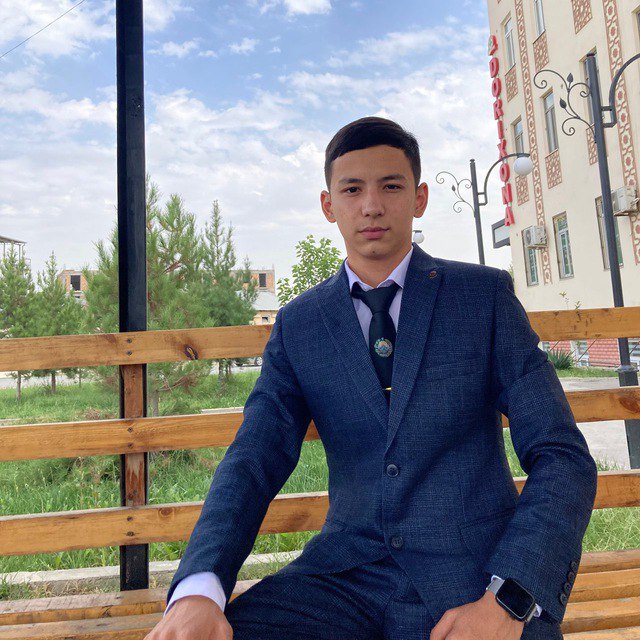
Oyatillo Jabboraliev was born in Fergana region. He is a student at Xiamen University in Malaysia.

Synchronized Chaos Second June Issue: Chaos Does Not Exclude Love

Fence covered in hundreds of brown locks as a symbol of love.
Image c/o Irene Wahl

First, a few announcements.

Konstantinos FaHs has another article published following up on his Synchronized Chaos pieces about ancient Greek myths and their continuing role in modern Hellenic culture. He’d like to share his piece in The Rhythm of Vietnam, which is a Vietnamese magazine with a mission that seems similar to our own.

Also, disabled contributor, lyric essayist, and ALS activist Katrina Byrd suffered hurricane damage to her home and seeks support to rebuild and make ends meet while she’s getting ready to move. Whatever folks can contribute will make a real difference.

Now, for our new issue: Chaos Does Not Exclude Love. The reverse of a phrase from a review of Elwin Cotman’s urban fantasy collection discussing how Cotman’s work was from a loving place yet made room for the complexity of the world. At Synchronized Chaos, we are intimately acquainted with the world’s nuance and chaos, yet we see and find room for empathy and connection.

Neven Duzevic reflects on travel memories and reconnecting with an old friend. Dr. Perwaiz Shaharyar speaks to the awesome and transformative power of romantic love. Dr. Prasanna Kumar Dalai reflects upon the intensity of romantic feelings. Duane Vorhees speaks to loneliness and heartbreak and sensuality and various forms of human-ness. Kristy Raines speaks to the beauty of love and the tragedy of heartbreak.

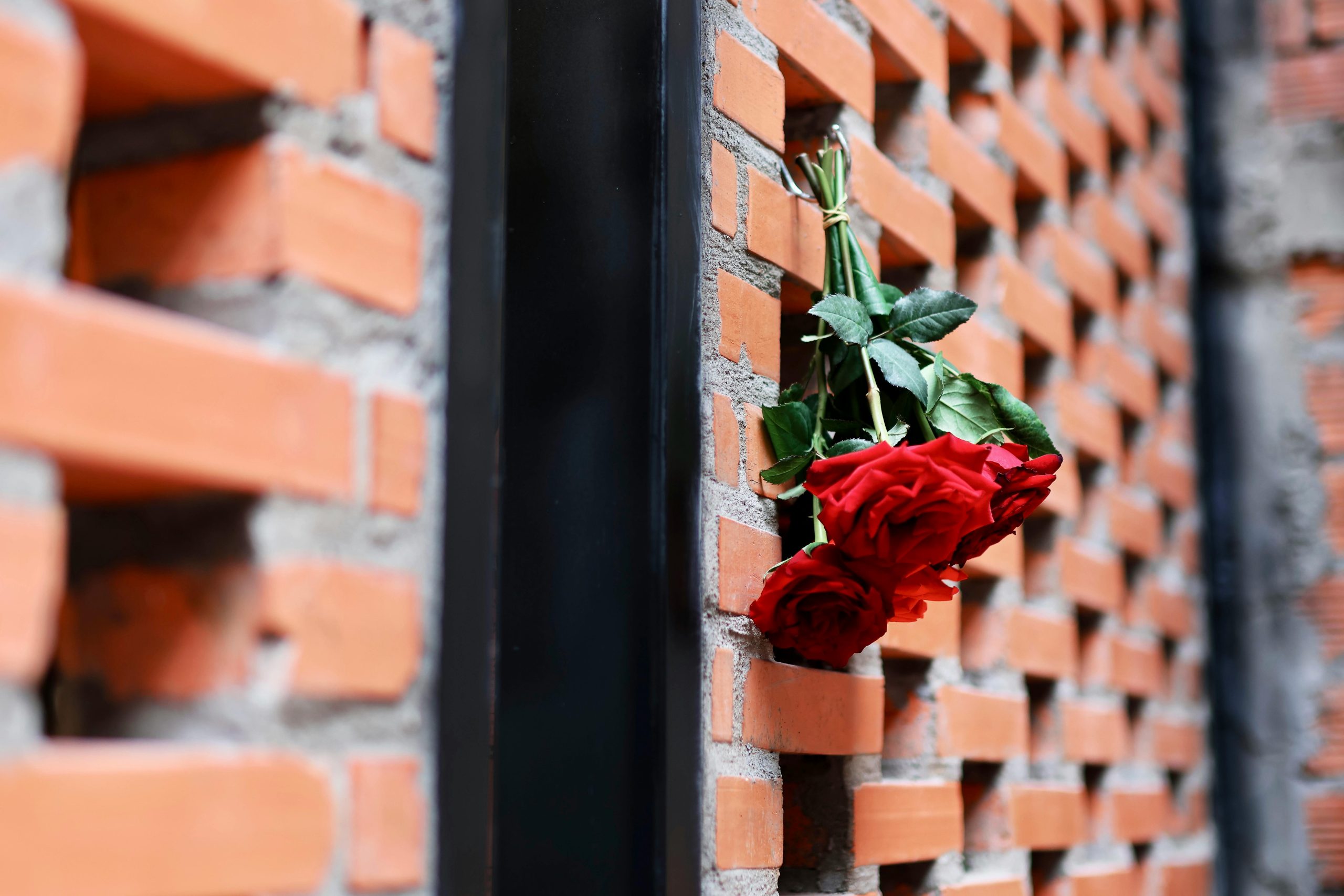
Small bouquet of red roses attached to a brick wall
Photo by Nguyễn Tiến Thịnh

Harper Chan reflects on his bravado and the reality of his feelings in the past year. Mickey Corrigan’s poetry shows how psychological and cultural shifts and traumas can manifest in our bodies. Abigail George speaks to how support from friends and family and a commitment to live in the present rather than reliving old traumas can help those addicted to drugs. Alan Catlin mixes cultural memories and touchstones with personal and societal losses.

Vo Thi Nhu Mai offers up a poetic tribute to the international vision of fellow poet Eva Petropoulou Lianou. Greek poet Eva Petropoulou Lianou interviews Bangladeshi poet S. Afrose on how she hopes poetry and joint exploration through literary sci-fi will obliterate the need for war. Dr. Jernail Singh laments that morality and compassion have become passe to a generation obsessed with modernity and personal success. Priyanka Neogi speaks to the beauty of carrying oneself with noble character. Maria Koulovou Roumelioti urges us to remember the world’s children and create love and peace as Anwar Rahim reminds us to live with kindness and courage.

Mykyta Ryzhykh speculates on whether love can continue to exist amidst war. Haroon Rashid pays tribute to Indian political leader Dr. A.P.J. Abdul Kalam, who loved peace but led through strength. Christine Poythress reflects on how easy it is for a once-proud and free nation to slide into fascism simply by admiring the fascist aesthetic and its seductive power. Ahmed Miqdad renders a global tragedy in simple terms: he’s too scared to go back to his home in Gaza to water his cactus plant.

Lili Lang probes the meaning behind things that seem simple: the work of a hairdresser, a family packing up the belongings of a recently deceased grandmother.

Couple off in the distance walking together on sand dunes near a beach.
Photo by Negar Kh

Mahmudova Sohibaxon offers up a tribute to dependable and caring fathers. J.J. Campbell writes of the visceral love and physical work of aging and caregiving, of inhabiting an elderly and a middle-aged body. Taylor Dibbert’s poetic speaker embraces age with joy, thrilled to still be alive. Bill Tope crafts an expansive and welcoming vision of perfection that can welcome more types of people and bodies as Ambrose George urges the world to maintain an open mind towards gender roles and identities.

Leslie Lisbona pays tribute to her deceased mother by writing a letter catching her up on family news. Stephen Jarrell Williams considers endings and beginnings and the possibility of renewal. Asma’u Sulaiman speaks to being lost and then found in life. Cheng Yong’s poetry addresses ways we hide from each other and ourselves, physically and psychologically. Mahbub Alam wishes for a romantic connection that can extend and endure beyond Earth. Dibyangana’s poetry touches on love, grief, and personal metamorphosis. Mely Ratkovic writes of spiritual contemplation and the nature of good and evil. Lilian Dipasupil Kunimasa describes souls who turn away from greed and evil and heal, in smaller and larger ways. Christopher Bernard suggests that creativity and storytelling might play a part in what makes life worth enduring.

Brian Barbeito speculates about intention and communication with the universe. Svetlana Rostova speculates on what spirituality might mean in the face of a seemingly indifferent world. Shamsiya Khudoynazarova Turumnova’s piece conveys spiritual ecstasy, love, and beauty.

Sandro Piedrahita’s story highlights the power of enduring and sacrificial spiritual devotion in the midst of our human-ness.

Chimezie Ihekuna engages with the talents, creativity, and limitations of being human. Dr. Jernail Anand looks at human creativity and at AI and draws a comparison, encouraging humans to continue to create. Jasmina Rashidova explores what motivates people in the workplace. Eva Petropoulou Lianou interviews Turkish poet Bahar Buke about fostering imagination and connection through her work.

Silhouette of a human hand casting a paper airplane into the sky at sunrise or sunset.
Photo by Rakicevic Nenad

Paul Durand reflects on teaching first-grade music in a time of hatred and divisiveness. Su Yun collects the thoughts and observations of a whole selection of schoolchildren in China about nature and their world.

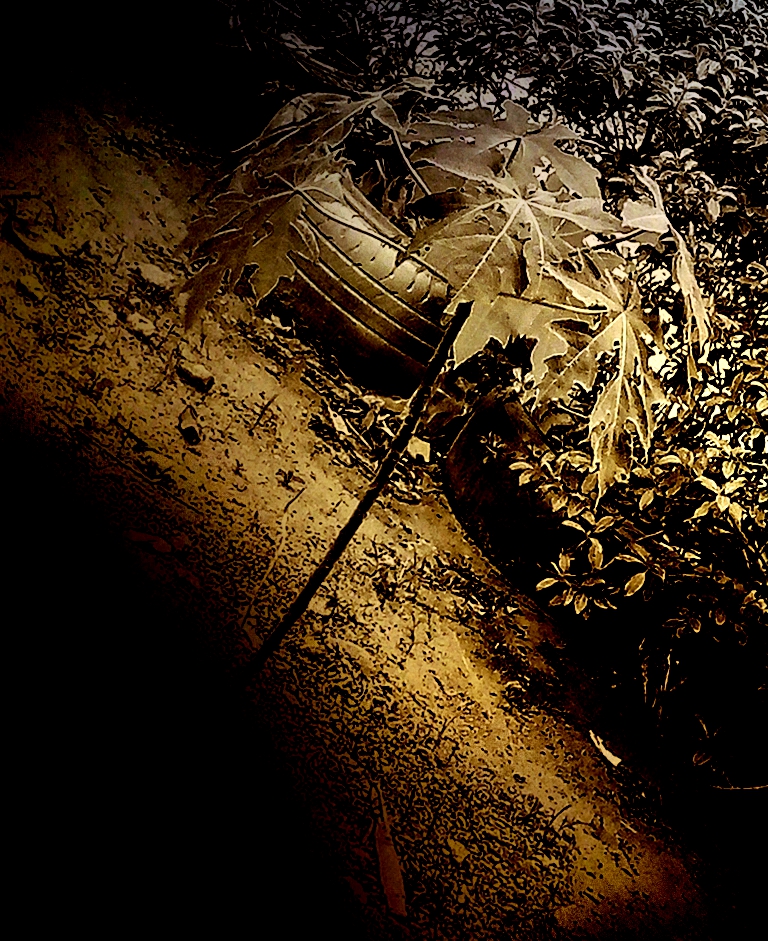
David Sapp reflects on how he wishes to always appreciate the egrets and lilies, sailing off into nature amid the various bird voices of the wild world. Mesfakus Salahin rhapsodizes about flowers and giddy spring romance. Soumen Roy celebrates the simple joy of butterflies and tea. Sayani Mukherjee speaks of an enduring oak tree in summer. Poetry from Eva Petropoulou Lianou, translated to Italian by Maria Miraglia and Arabic by Ahmed Farooq Baidoon, celebrates life lessons from nature. Liang Zhiwei reminds us of the power and vastness of nature, before and after the era of humanity. Nuraini Mohammed Usman sends up a sepia photograph of a tire hidden by a leafing young tree.

Jibril Mohammed Usman shares a photograph of a person looking into nature, at one with and part of his world, altered in the same way as the trees and house. Mark Young’s geographies play with and explore Australia from new angles, turning maps into works of art.

Jerome Berglund and Christina Chin stitch ideas and images together like clotted cream in their joint haikus. Patrick Sweeney’s two-line couplets explore a thought which ends in an unexpected way.

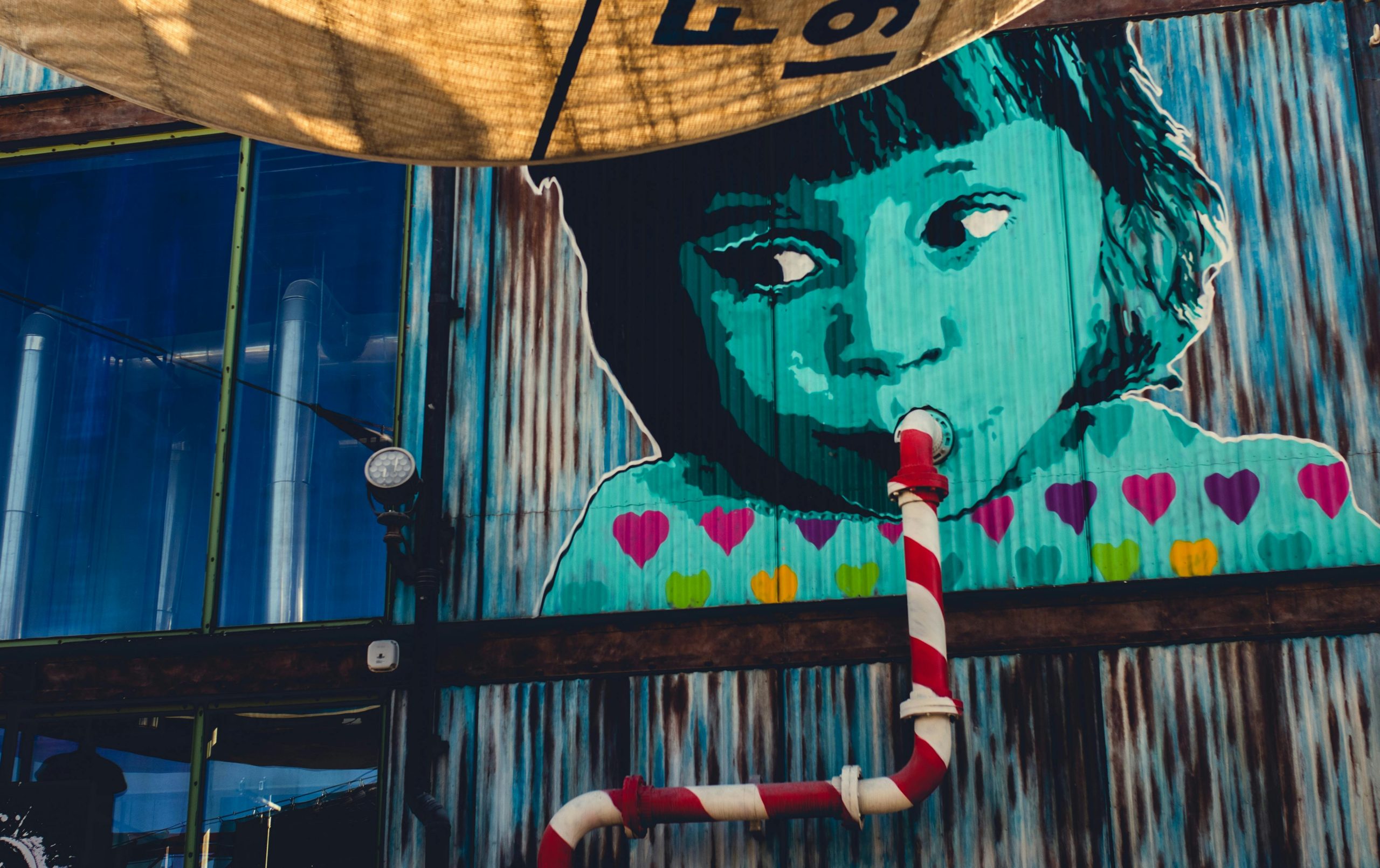
Graffiti on a corrugated metal wall that looks like a child is sipping from a metal pipe as if it's a straw.
Photo by Shukhrat Umarov

Odina Bahodirova argues for the relevance of philology as an academic discipline because of its role in preserving cultural wisdom encoded in language and the ability of students to understand and think critically about language. Sevinch Shukurova explores the role of code-switching as a pedagogical tool in language learning. Surayo Nosirova shares the power of an educator giving a struggling student tutoring and a second chance. Nozima Zioydilloyeva celebrates Uzbekistan’s cultural accomplishments and women’s education within her home country. Marjona Mardonova honors the history of the learned Jadid Uzbek modernizers.

Nazeem Aziz recollects Bangladeshi history and celebrates their fights for freedom and national identity. Poet Hua Ai speaks to people’s basic longings to live, to be seen and heard. Leif Ingram-Bunn speaks to hypocrisy and self-righteousness on behalf of those who would silence him, and self-assertion on his part as a wounded but brave, worthy child of God.

Z.I. Mahmud traces the mythic and the heroic from Tolkien to Harry Potter. Poet Hua Ai, interviewed by editor Cristina Deptula, also wonders about the stories we tell ourselves. She speculates through her work about what in the human condition is mandatory for survival and what is learned behavior that could be unlearned with changing times.

Synchronized Chaos contains many of the stories we tell ourselves about ourselves and our world. We hope you enjoy and learn from the narrative!

Poetry from Dr. Perwaiz Shaharyar

Middle aged Central Asian man with short dark hair, brown eyes, and a brown suit and multicolored tie.

THE BURNING BOAT

I had burnt my boat

When I crossed the sea

I was then alone

Only my shadow witnessed it

Now, the stink of burning only I can smell

The burnt mark is visible to those

Who have sparks in their eyes

I am carrying the sea and burnt the boat within me

My boat was burning

There on the sands of seashore

Since then with the every tide

Sea attempts to put out the fire and

Wash off my burnt boat

Even for the high tide, it’s not possible to do so

My heart is burning in separation of my beloved

It’s pangs are too intensive

My blanket cannot properly cover my body

To extinguish the fire

The sea is nothing but my vast body

My toes are touching the sea bed

My boat is my heart within – the Sun on the sky

Smokes come out all over in my mind

My hairs turned into ashes grey

By the heat of my burning heart

It seems, my heart can’t meet;

Can’t make reunion with my beloved

Till the sea of my body gets dried out

O, my Lord!

How long I will have to wait

To show you my burning heart

Alas…!

WOMAN, BEYOND THE INDEX OF BODY

Lake like eyes/ Scarlet coral-like lips/ Curly-curvy hairs

Attraction all four directions

These are mazes

Face and physical charms are curtains, indeed

A weapon to keep off you from the desired abode

A true woman lives in somewhere else

Beyond the index of her body

Sitting crouch like a recluse

Just like an abstract thing

Like a dream of snow-white clouds

Sometimes, similar to the moonless dark night

Dormant lightening, full of its potency

Extremely tough meditation is needed

To open her inner layers of heart,

Love is considered to be the genuine pearl of a woman

This can discover by proceeding beyond her body

Otherwise, nothing lies in the whirlpool of body

Man wants to overpower

The screaming body of a woman

But the body is a dune of sands/ a fair of desires

There is only mirage and mirage

Woman uses to be hidden,

Somewhere in her inner self,

Instead of, being found in her apparent body

Which is like an epic center of a live volcano

A man in his entire life

Uses to run after fascinating faces

Like those idiot men

Who on the surface of the water

Often, stare at diving and floating waves

With their curious eyes

Use to play, the whole day, with shells lying on beaches

Perhaps, they do not know

That the true pearls are senselessly lying

In the depth of a sea,

Where the breathes not much support the divers

To achieve such unknown pearls in the deep sea

Needed to wait till the lips of shell get opened

To get the original element of a woman

You will have to raise the curtain of deceitful face

You will have to step down

In to the concealed room of her heart

You will have to knock and knock again

At the tightly closed window of her soul

A woman is not a thing of luxury

Not a commodity of marketing

Not even a body of only bone and flesh

The true name of a woman is ——

Love, love, and only love!

Dr. Perwaiz Shaharyar is a Consultant Editor (Urdu) in National Council of Educational Research and Training (NCERT), Ministry of Education, Government of India. He had been Principal Publication Officer in National Council for Promotion of Urdu Language in 2007. He has been, a member of Advisory Board of National Book Trust India.

He is a Multilingual (English, Hindi and Urdu) famous poet, short story writer and critic from India. He is Graduate with English Honours from Ranchi University. He has topped Jawaharlal Nehru University in Masters with Literature. He was awarded Doctor of Philosophy for his Research Work from University of Delhi. He is Post Graduate Diploma holder in Calligraphy, Mass Media and in Book Publishing with Specialization in Editing.

Dr. Perwaiz Shaharyar began writing his poems in English since lockdown in the period of Pandemic COVID-19. He has written more than 100 poems, participated in many worldwide webinars and published in various international anthologies, so far. His as many as 25 poems have been translated by many award-winning litterateurs into Polish, Indonesian, Arabic, Spanish, Russian, Bengali, Hindi, Portuguese, Italian, Korean, and Albanian languages. His poems are being published in several anthologies within the country and abroad. He has 20 published books of literature in his credentials, so far. He has won many awards and accolades for his outstanding intellectual and literary contributions. His poem ‘The Burning Boat’ contains mystic (Sufism) and metaphysical elements.

Poetry from David Sapp

Lilies

In the car, flying on cruise control,

on this desolate stretch between anything,

everything a dizzy blur, the rush,

the rush, a violence to the senses,

a glimpse of swift efflorescence,

I know each petal is there,

placed as it should be, precariously

riding the hump of the ditch between

vast expanses of alfalfa and asphalt,

these daylily hobos, fast, vivid saffron,

tangled with flushed morning glories,

violet clover, pale blue chicory,

the eyes of tow-headed children,

and elegant, white Queen Anne’s lace –

when you break a stem, there’s

a sharp, unexpected scent of wild carrot.

In this fugacious instant,

somehow I know, I know these lilies

want my adoration, calling me,

stamens vibrating in long throats,

quite willing to share their joy.

Why don’t I turn around,

turn off the motor and

listen for just a little while,

their troupe crooning hue at the sky?

I’ll lie alongside them in soft

wheatgrass, and together we’ll  

bide the gentler sounds of night.

Which destinations shall I neglect,

vague acquaintances or these dear chums?

When I think of them, alone, untended,

I want to acquiesce, relinquish

any passion to a high shelf

for someone much younger to find.

I can’t help this weird, bygone empathy,

doting, hoary around the fringes:

when the rain comes, cold and rigid,

will I fret over these blossoms,

lips pursed, pouting for lack of sun?

When the apprehension of winter comes,

inevitably comes in frost then ice,

will I mourn these lilies,

will I feel their dread,

will I rush to my beloved?

In the Snow

I regret neglecting

The egrets last summer

Mindlessly oblivious to

White against emerald

Viridian chartreuse

Stepping shyly in the marsh

And just yesterday

Snowing and snowing

I wish I’d spent

An afternoon peering

Through the window

(Debussy in my ears no

A Chopin Mazurka)

Blue-gray atmosphere

Obscurity on the horizon

A sky brimming with

Falling singularities more

Crystals than space between

I knew this beauty

Was infinitely transient

Considerably more pertinent

Than fabricating drudgery

My bloated memoranda

Tell me tell me

(I do not insist

A modest desire

A desperation nevertheless)

There must be a place

Where I might see

Egrets taking flight

In the snow

Poetry from Priyanka Neogi

Young light skinned South Asian woman standing in front of a purple and pink curtain. She's wearing a pink knit hat and red blouse and has long dark hair.

Noble

The name of the Noble is very famous,

The stir also varies, the quality is also full.

Noble -In the quality of the job & purpose,

“With the good will of the behavior of the use,”

Move in the pearl method.

To create a beautiful chain,

In the display of the chain, the rules of the chain,

The stars are also expanded in the thought,

In the description of magnanimous generosity,

In destiny in the inflamed shrimp,

In setting the example in infinity.

The family exemplifies the “Noble Family”,

In the mutual respect of each member of the family It will be possible.

Noble mentality, noble presentation,

Noble dedication,

Noble expression should create noble looking.

Noble’s touch in Smartness,

To handle yourself at the noble.

To keep yourself wrapped in the noble,

whole life lives in noble

Amb. Dr. Priyanka Neogi from Coochbehar. She is an administrative Controller of the United Nations PAF, librarian, CEO of Lio Messi International Property & land Consultancy, international literacy worker, sports & peace promoter, dancer, singer, reciter, live telecaster, writer, editor, researcher, Literary journalist, host, beauty queen, international Co-ordinator of Vijay Mission of Community Welfare Foundation of India.

Poetry from Mickey Corrigan

Hwa-byung

Hwa-byung will make you
yell at your children
fight with your family
go all red in the face
leap from your chair
shaking knuckled fists.

This rising heart fire 
takes hold of you:
poor and uneducated
a stuck-at-home wife.

Hwa-byung will ruin
your eating and sleeping
grinding on old grudges
seeping anger in rages
too long suppressed.

The rising heart fire
takes hold of men too:
frustrated, mortified
bad jobs with bad bosses
who don’t show respect
who reek of injustice
until you smolder inside.

Hwa-byung is Korean
for a mental disorder
that may afflict anyone
who withholds their anger
that builds in intensity
burns its way out
bursts through walls
tears down framing
explodes like a bomb

hollowing you out
in ways you don’t expect.

NOTE:
Once classified under depressive disorders, hwa-byung is a culture-bound condition found only in Korea. It was thought to be limited to disgruntled housewives with passive husbands and overbearing in-laws. It is now being diagnosed in male employees who are full of anxiety, nihilistic ideas, and regret about their lives.

No Joke

On lovely Lake Victoria
on the border with Uganda
three female students
at a missionary boarding school
began to laugh and laugh

and they couldn’t stop
and they didn’t stop
and more students joined in
and they couldn’t study
and they couldn’t eat
and they couldn’t sleep
and they couldn’t do anything
but laugh, laugh ’til it hurt
’til they were in pain and
crying between laughing jags
so the school closed down.

When school opened back up
the laughing started back up
so the school closed down.

Some girls arrived home
in their small rural villages
still laughing and laughing
and village girls laughed too
some boys, some adults
and it spread, and spread
to more than 200 people
laughing and laughing
for more than a year

and the experts blamed
the emotional dissonance
of a radical cultural shift
from tribal communities
to a modern way of life.

Laughter is said to be
the best of all medicines
but must always be taken
in a moderate dose.


NOTE:
The laughter epidemic was a mass psychogenic event that occurred in Tanganyika in 1962, soon after the country achieved independence. Schoolgirls brought the illness home to their villages and it spread wildly before disappearing.

The country is now known as Tanzania.

The Witches of Leroy

A pretty cheerleader fell down
and that’s how it all began
in the upstate New York town
that invented jiggly Jell-O.

She screamed and flailed about
cursing as if possessed
cuss words she’d never say…
she was not that kind of girl.

Her best friend suddenly ticced
convulsing, crazed, she ran wild
and sixteen other girls in town
swearing, thrashing, crashing
got rushed to the hospital
their parents hysterical
the ER in chaos
the nurses, doctors puzzled
as testing found no cause.

A rumor began to circulate
about a toxic spill
from a train derailment
but testing showed no toxins
on the high school grounds.

Erin Brockovich was invited
to speak and attract the media
declaring a chemical poisoning
with opinion taken as fact.

But why only teenage girls?
From chemicals miles away?
Spilled four decades prior?
Before the girls were born?

Time slid by as it always does
the parents demanding answers
accountability and recourse
long after their girls recovered
left for college and life away
from the town that created Jell-O.

NOTE:
Mass outbreaks of psychogenic illnesses have occurred in schools in many parts of the world. These events used to happen in convents and were once deemed satanic. Religious and shamanic interventions were employed when illnesses were medically inexplicable.

In the modern world, mass anxiety hysteria (acting crazy) and mass motor hysteria (sleeping sickness or convulsions) are social phenomena without identified physical pathology. Outbreaks are usually limited to the young and are believed to be triggered by issues in the community: emerging sexuality amidst social repression, poverty, dislocation, hopelessness.