Synchronized Chaos August 2025: Longings of the Heart

Our publication expresses great sorrow at the suffering in Gaza. We call for the return of the hostages, for an end to the siege, and for humanitarian aid to be allowed in for the starving people of the region. To support the people of Gaza, you may contribute to the Middle East Children’s Alliance.

Also, For the Writers, a manuscript coaching service, seeks to document what’s happening in the region by compiling first-person journalistic narratives from anyone of any background in Gaza. They’ll put the stories live on the site to create a digital archive to bear witness to history. Writing is invited from those in the region, of all faiths, races, or national backgrounds.

Here’s another announcement from J.B. of Heterodox Haiku:

I am whipping up another modest lil issue of our journal, and just wanted to extend a hearty invitation in case you might have a poem or essay which you are looking for a great home for that could fit into small showcase we are assembling! The theme is ‘contrarians’, you could submit up to 10 haiku or senryu for consideration challenging assumptions and conventions of society, government, or English Language Haiku (especially! :D) for consideration. Please send work to jbphotography746@yahoo.com

Now, for our first August issue: Longings of the Heart.

Woman making a heart symbol with her hands in front of a lit carnival ride at dusk. She's got long dark hair and is in a jean jacket.
Photo by Garon Piceli

Rizal Tanjung reviews poetry from Eva Petropoulou Lianou on human needs and emotions. Mark Young’s poetry explores our human quest for identity and agency from various angles. Amirah Al-Massif wanders through dreams, madness, existence, and perception. Alan Catlin evokes harsh landscapes where life dies, evolves, and regrows.

Strider Marcus Jones probes the search for truth, memory, history, beauty and love. Abdijabborova Sabrina considers both the richness of world culture embedded in linguistic metaphors and the challenges diverse metaphors pose for cross-cultural communication. Mesfakus Salahin reflects on humanity’s journey through the ages and on what makes a civilization. Mahbub Alam wonders at the great variety of world climates and events: peace in some places, suffering in others. Rus Khomutoff poetizes about memory and nostalgia and living in multiple places in one’s mind. Christina Chin and Jerome Berglund observe smaller and larger ways living creatures navigate the world and assert their existence.

Eva Petropoulou Lianou’s poems express the longings of the human heart for intimate love, global peace, food, meaning in life, and nurturance. Hanan Abdelkader Ashour sings of the simple, yet meaningful, essentials of hope and love. Chorshanbiyeva Gulnoza Akrom outlines key moments in the emotional development of babies and young children. Eshtemirova Jasmina honors the support parents give children of all ages. Ilhomova Mohichehra urges young students to respect teachers who are devoting their minds and hearts to helping them learn. Sitora Sodiqova reflects on the consistent love and care she receives from her mother, as do Gulnoza Valiyeva, Boyqobilova Nargiz Alimardonovna and Zahro Kahramonova. Bibixanifa Jumanazarova speaks poetically of the care and concern she receives from her mother as Manik Chakraborty rhapsodizes on tender parental and romantic love. Graciela Noemi Villaverde rhapsodizes with elegance on her shared memories with the love of her life. Eva Petropoulou Lianou whispers tenderly of love and friendship and the support one needs for artistic imagination.

Mykyta Ryzhykh wonders how to stay human in the face of numbing devastation. Iduoze Abdulhafiz renders colonialism into the language of science fiction, with an alien protagonist pondering concepts of parasitism and existence. Bill Tope mourns the lives broken because of homophobia and transphobia and illustrates how far some people have to go into self-delusion to survive. James Tian lampoons hypocrites who demand that others care for land they themselves trample. Don Bormon shows respect to those who took to the streets for justice during a recent Bangladeshi student protest. An anonymous writer in the United States declares independence from the current presidential administration. Otabayeva Khusniya takes a fresh look at George Orwell’s classic Animal Farm with an eye to how well-intentioned revolutions can end up replicating old injustices if power imbalances remain.

Fanciful image of a white fluffy cloud in an ice cream cone held in a person's hand in a blue sky.
Photo by Rakicevic Nenad

Some contributors look into various realms of human creativity. Yongbo Ma reviews poet Deborah Bogen on her inspirations and journey as an artist. Duane Vorhees crafts burnished pieces concerning art and creation, particularly how one’s poems can embody and become their subjects. Patrick Sweeney’s one-line monostichs craft nuanced thoughts in single lines. Mauro Montakkyesi reviews Dr. Jernail Singh Anand’s sci-fi work of moral philosophy Epicasia. Karimova Navbaxar Mahmudjanovna encourages teaching children the art practice of applique to enhance skill and creativity and advocates for reforms in Uzbek preschool education and for the use of innovative technological approaches. Sevara Uzaqova considers the value of blended instruction for second-language English learners. Panoyeva Jasmina O’tkirovna and Sevara Uzaqova share methods for language learning that focus on real-life conversation and application as Muattar Tursunboyeva shares ways to teach language arts that inspire student creativity.

O’ktamova Shakxnozabonu outlines techniques for tooth implantation and post-treatment care. Ahmadova Sarvinoz discusses treatments for dental cavities. Boyqobilova Nargiz Aliamardonova relates the importance of uninterrupted sleep to human mental and physical health. Sabina Nafasova outlines theories about the value of incarceration in public safety and offender rehabilitation. Sattorova Mohinur Lazizovna explores methods for efficient water conservation in industrial processes. Faizullayeva discusses environmental issues concerning the atmosphere and advises on sustainable practices. G’ayratbek Toshmuxamedov outlines his own journey as an athlete and an academic. Sattorova Mokhinur highlights the importance of English language learning to young people’s ability to succeed in the modern world.

Muqimova Nazora celebrates the beauty and creativity of computer coding. Surayyo Nosirova highlights her inspirational experience at animation technology camp. Jasmine Rashidov considers modern communication technology and social media to ultimately be beneficial to young people’s cultural exchange and education, despite negative effects such as cyberbullying. Ismoilov Muhammadmirzo points out uses for technology for mapping and data processing functions in predictive ecology.

Maftuna Rustamova affirms the potential for young students and researchers to accomplish much in science. Muslima Olimova showcases the innovation and achievement of the students at the new Uzbek technology and career center Muslima Academy and the amazing potential of Uzbekistan’s students and digital entrepreneurs. Urazaliyeva Sarvinoz Saidakhmadovan shares a moving tale of a rural family determined to educate their children. Khumushbibi Kholikulova acknowledges the incredible potential of Uzbekistan’s young women to succeed in many different areas, as Olimova Sevara explores the many ways Eastern European women’s lives changed for better and worse with Soviet modernization.

Zumrad Sobirova sings the praises of her independent Uzbek homeland. Mahzuna Habibova urges her fellow Uzbek nationals to draw courage from patriotism and the glory of their country. Shahnoza Ilnar qizi Allayarova sings of the virtues of the Uzbek people and of the dignity of the nation. Maftuna Rustamova praises Ghulam Shomurod’s book The Value of the Great, which highlights important figures in Uzbek history and encourages young people to emulate them. Dilobar Maxmarejabova urges the world’s youth not to ignore or denigrate their own cultural heritages in this age of globalization. Ermatova Dilorom Baxodirjonovna describes and celebrates traditional Uzbek clothing. Xavier Womack reflects on how each of us learns from and contributes to the lives of others around us as Isaac Aju offers a letter of encouragement to the world’s emerging writers. One emerging writer, Farzona Hoshimova, shares her journey and literary accomplishments along with her gratitude to those who supported her along the way.
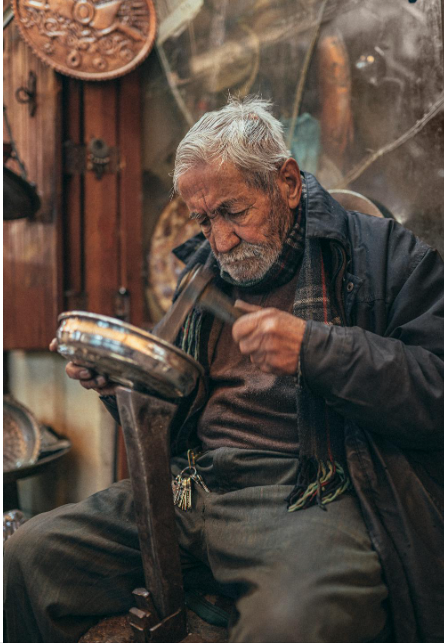
Elderly light skinned gentleman of undetermined race looking deeply into a metal bowl as he shapes the metal with a hammer. He's in a shop with wooden walls and doors and tools.

Photo by Mahmut Yılmaz

However, Chimezie Ihekuna speaks to the tension between optimism and dreams and reality and cynicism. Doug Hawley and Bill Tope craft a story together about an alcoholic humorously remaining in denial. Mirta Liliana Ramirez describes an unstable relationship with an unreliable lover or friend. J.J. Campbell’s poetry speaks to love, loss, the search for connection, and being beaten down by life.

Abigail George reflects on lingering grief for a lost lover and for parents who have drifted away from her. Chorshanbiyeva Gulnoza Mirzo expresses her love for her deceased father. Doug Holder offers a brief moment of tenderness to his wife as she grieves. Irma Kurti speaks to grief and humans’ tender hearts as Cherise Barasch evokes a Jewish ritual of remembrance.

Stephen Jarrell Williams crafts scenes of people navigating a troubled world together in small groups, finding strength and comfort from their faith. Michael Robinson also explores themes of faith, looking at how his awareness of physical mortality due to a health crisis reminds him of the spiritual concept of dying to selfishness and finding new life through Christ. Maja Milojkovic reflects on the themes of compassion, sorrow, and sacrifice in the relationship of Christ and the Virgin Mary. Eva Petropoulou Lianou puts out a humble plea for peace and compassion. Peace Ogunjemilua speculates on the meaning of hope and what keeps us believing – which may be as simple as a flower.

Surayyo Nosirova shares reasons why some young adults may struggle with mental health in college and offers hope and strategies for overcoming. Bibixanifa Jumanazarova praises the strength of women who rise above and shine through adversity. Priyanka Neogi urges readers to dig deep within themselves and work to reach their goals. Maria Miraglia shares her determination to love selflessly, even in a world where she can be betrayed. Taylor Dibbert speaks to making the most of everything, even English food!
White petaled fragile flowers on a white background.
Photo by Evie Shaffer

Sayani Mukherjee speaks to appreciating the delicate beauty of craft and nature in urban areas. Brian Barbeito finds wonder in a single small snail shell as Gregory Wallace revels in the dazzling splendor of the sun, moon, planets, bees, and Milky Way. Su Yu showcases the work of elementary and teen writers, whose works mostly celebrate urban and rural nature.

Dr. Jernail S. Anand reflects on how the Earth will always be there for humans, even when other people or our deities fail us. Dante Parameseo, along with a humorous take on relationships, offers a poetic piece on a tamarisk tree that’s in touch with reality more elemental than human art or concepts of beauty. Vo Thi Nhu Mai encourages us to get out of our own way, to come to life with gentle spirits and appreciate the cherry blossoms. Finally, Wazed Abdullah finds joy in riding his bicycle.

Poetry from James Tian

Young East Asian man with short dark hair, clean shaven, with reading glasses, in a tan suit and red tie and corsage.

A Pair of Feet “Caring” for a Lawn

There exists a strange group of beings,

Whose brains are said to have been blown away by the wind,

Whose souls are said to have been eroded by the rain.

They have only a pair of eyes,

A pair of feet,

And a mouth that claims a “free spirit”.

They love stepping onto the lawn,

Then stare at each other,

And keep using their mouths to accuse the sky—

“Follow the sound of my voice and look at me,

I’m the one most deserving to exist.”

Take one of them, for example:

It saw a pair of feet among the others,

Trample a blossom,

And its mouth instantly cried out:

“The flower is innocent,

The flower is pitiful,

Let’s speak up for the flower!”

Then it kept wandering,

Saw another pair of feet crush a foxtail grass,

And its mouth again cried out:

“The foxtail grass is innocent,

The foxtail grass is pitiful,

Let’s speak up for the foxtail grass!”

A large tree reminded it:

“Hold on—before you care about the foxtail grass,

That flower hasn’t been helped back up yet.”

Its mouth immediately cried out:

“The flower’s issue is in the past,

The foxtail grass is today’s breaking news,

Stop moral coercion,

Be like me—call for truth, goodness, and beauty…”

The tree continued:

“It seems like your kind says things like this every day.”

Its mouth instantly cried out:

“I don’t know,

I didn’t hear it,

I am what I am,

And I love peace…”

The tree covered its face:

“Then what about the grass you yourself trampled in the lawn?”

Its mouth instantly cried out:

“I’m only ‘caring’ for the lawn with my feet,

I never harm,

The fallen grass is a setup, a malicious frame-up…”

The tree said:

“I’ve had enough.

Each of them paces the lawn every day,

Blaming each other, bragging about themselves,

All believing their behavior is original…

I’d rather rot at the roots,

Than stay here any longer…”

Poetry from Zumrad Sobirova

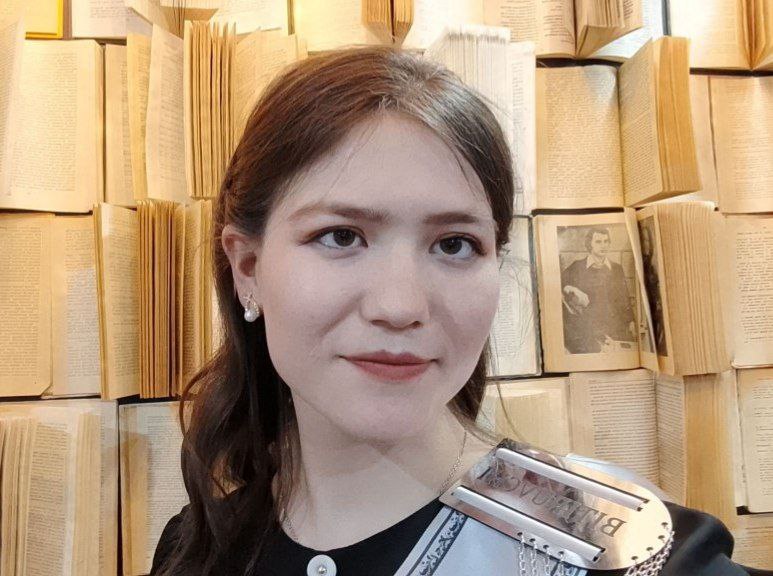
Central Asian teen girl with long straight dark hair, brown eyes, small white earrings, and open paperback books behind her.

Independence 

Be kind like a mother,

Your words are sweeter than the song of a nightingale, 

My soul, Uzbekistan sings, your daughter,

May your fortune be great, dear Independence. 

You are a mine of wealth, a dear place, 

You are an endless opportunity that illuminates our path, 

You are a patriot, and yet a child, May your fortune be great, dear Independence!

You are a pure-hearted believer, Motherland, 

You are a precious mountain, sky, Motherland.

You are a land of gold, Motherland, Independence, blessed soul, Uzbekistan.

My great-grandfathers are my pride, 

Navoi, Babur – he is Ogahi. Knowledge and faith are a flowing river, Independence, blessed soul, Uzbekistan. 

May my Motherland flourish and live freely, My motherland, my sacrifice, my soul.

What have I done about you – Independence, blessed soul, Uzbekistan.

Zumrad Sobirova Tohir qizi was born on April 5, 2007 in the Altinkul neighborhood of Yangibazar district of Khorezm region. She graduated from secondary school No.12 in the district with a gold medal. In addition, she participated in various competitions and festivals and achieved several successes. She received 100% certificates in general education subjects in Mother Tongue and Literature, 77% in History, and B2 level certificates in Foreign Language. She took an honorable 3rd place in the Essay Competition at the regional stage. She took an honorable 1st place in the most beautiful calligraphy category at the “Uzbek Woman” festival. She also works in poetry and prose. Her poems are reflected in the books “Ilm va ijod bo’stoni” and “Ko’zgudagi men”. In her free time, she reads fiction books. I have set main goals for myself and work hard every day to achieve them. I believe that good intentions and relentless pursuit will lead me to my dreams!

Epistolary essay from Isaac Aju

Letter To The Unknown Poet

Dear Esther,

I saw the message you sent me about your friend who is interested to be guided as a new unpublished poet. I’m also honored that you take me as someone who would be able to guide someone else. I’m honored because I myself am also a new poet, and I’m willing to help in ways I can.

 First of all, she has to see poetry as something that she does for herself first, before other people. I started writing poems just before the end of secondary school, and my poems came from sorrows and grief. I remember how we took Literature-In-English classes together and how we did so well in the arts department, and how we were among the best students. We were in the same debate club, we read together, laughed together, but it didn’t occur to me that anybody would read my works in the future and classify them as poetry. Or even classify them as anything. Yes, let me confess that I wasn’t confident. I did not have faith in my writing then. For many years I thought my writing was something that only I could enjoy, love and understand, and I was satisfied with that thought because sitting down every evening to write and pour my heart onto paper was the most glorious thing ever, something akin to prayer.

I didn’t know that I was writing poetry because even though I did literature, I wasn’t very sure if what I was writing qualified as poetry. So I would write for myself for many years as a form of therapy. Poetry helped me to heal of my emotional pain. I wrote poems to see myself, to find myself. I read other poets as sources of comfort. I was deeply introverted, and because I was very hurt in my spirit, poetry helped me to stay alive. I wrote to myself without being sure if I was doing it in the right way, without knowing what I was doing, until many years later when I got an opportunity to be published.

I’m emphasizing on writing poetry for yourself first because poetry wouldn’t make you automatically richer than you are, but it can open doors for you. It can connect you to people or your readers whom you wouldn’t have met outside your writing space. Many publications do not pay you when they publish your poems. You will be paid or earn something only when you win poetry contests, or when a publication that pays their contributors pick you up. So I want her to approach poetry as something that she does for herself first, not as something that can fetch something else.

I want her to approach poetry with humility. I want her to be kind to herself. I want her to be truthful to herself. I want her to be truly herself. Let her see poetry as something she must do, something she has to do, if she is really a poet. If she is a poet, I want her to be proud of being a poet. Let her listen more to her literary spirit. I want her to be happy. Any day she decides to send her work out to any publication, I want her to know that rejections are normal. Many publications will reject her, but she shouldn’t be discouraged. The more she is rejected the more she should write.

The Nigerian writer Chimamanda Ngozi Adichie says she writes because she has to write. In interviews, she says that even if she didn’t have the wonderful opportunities she has today to be read widely and deeply appreciated, that she would still be somewhere writing, unknown, but still, she would be writing, and this is true for every genuine and unpretentious writer. Being a published writer is a secondary aspect of being a writer. I think the first aspect is more important than the second. First of all, you have to write, and the writing has to be for yourself first, before moving into the world. You will have to love and believe in the work first, before looking for a publisher, or a publication.

If your friend the poet is Nigerian, or African, I will advise her to read Chimamanda Ngozi Adichie’s books. If she’s not interested in big books, then she might be interested in her smaller pieces. She might follow her on her social media handles. She might also be interested in watching her interviews on YouTube. Or her popular Ted Talks, The Danger Of The Single Story, and We Should All Be Feminists.

I wish her everything good.

From Isaac Dominion Aju

Isaac Dominion Aju has appeared in different literary publications in the United States, including Poetry X Hunger, Flapper Press, and New York City’s Writers’ Journal. He will be a featured writer in Cajun Mutt Press in the US by November. He lives in Nigeria where he works as a fashion designer and writes in his free time.

Essay from Sattorova Mohinur Lazizovna

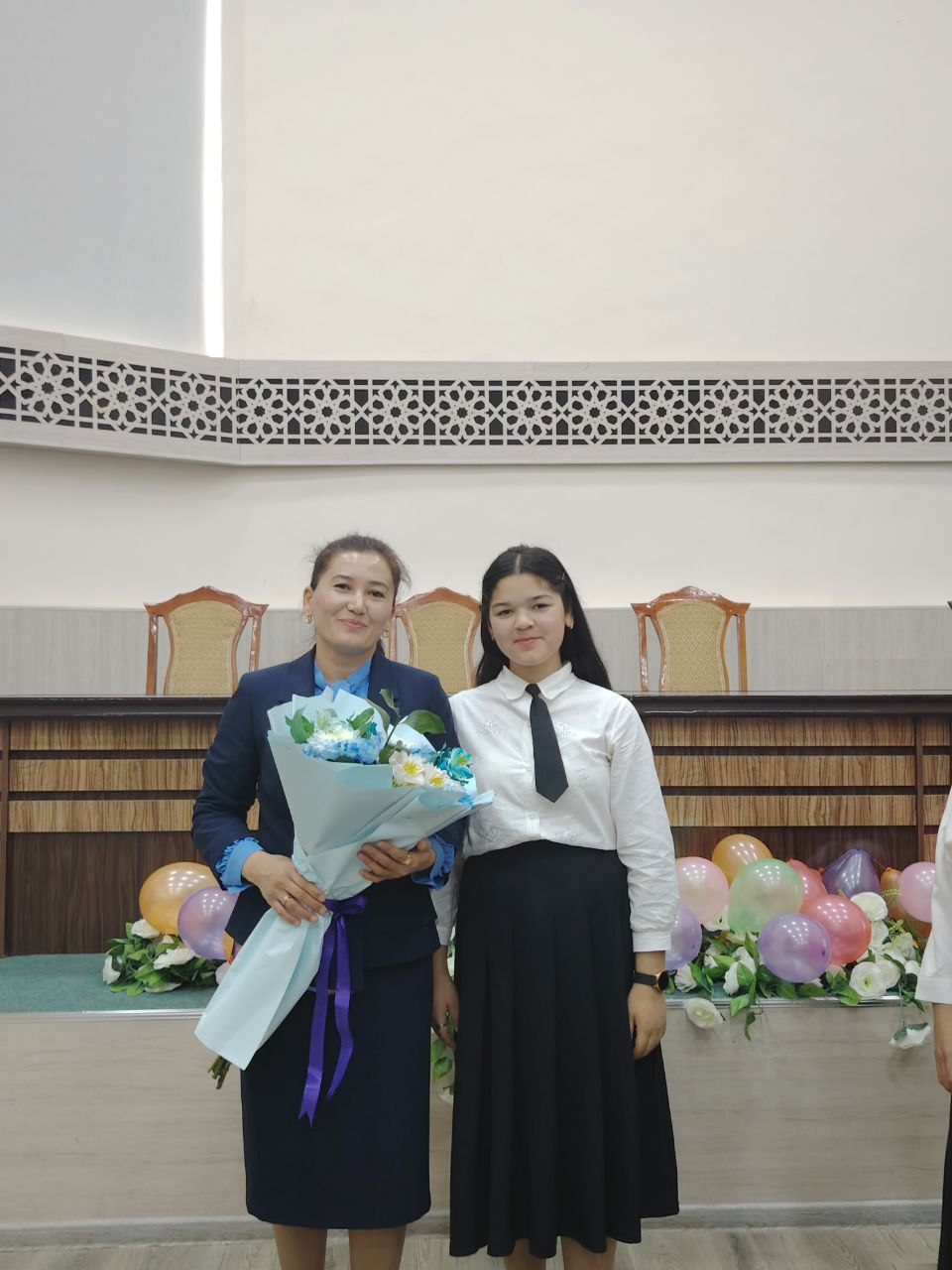
Young Central Asian teen in a white blouse, black tie, and black skirt. She's in a room with chairs and a stage and flowers and balloons. A woman is next to her holding flowers.

The Joint-Stock Company Navoi Mining and Metallurgical Combine (NMMC) is one of the largest industrial enterprises in Uzbekistan, operating in the mining and metallurgical sectors. The efficient use of water resources at such large-scale industrial facilities is extremely important for both environmental sustainability and production efficiency.

In the developing world, including Uzbekistan, the rational use of water supply has become a pressing issue. As one of the largest industrial enterprises in Uzbekistan, NMMC must pay special attention to optimizing water use while maintaining environmental balance.

I believe it is reasonable to study successful strategies that have undoubtedly been implemented for conducting scientific research on this topic.

In particular, when examining the practical strategic projects of Vladimir Kvint—a prominent expert in the theory and methodology of strategy and the founder of the Russian school of strategy, Doctor of Economics, and academician—who has implemented water resource strategies in several countries including Uzbekistan, I consider the water resource management strategy of the Kuzbass region to be the best guideline in this field.

Considering the above, the following should be taken into account when managing water resources at NMMC:

  • Implementation of water recirculation systems and closed-loop water supply systems;
  • Collection of rainwater and installation of reuse systems for technical purposes;
  • Use of modern water-saving technologies and the application of new methods to reduce water consumption in ore enrichment and metal smelting processes;
  • Installation of automated monitoring systems to control water consumption in real-time;
  • Establishment of strict environmental control to prevent water pollution and industrial waste from entering water sources;
  • Analysis of water bodies surrounding the enterprise through regular laboratory studies;
  • Implementation of international environmental management standards and extensive use of global best practices in water resource management;
  • I believe that information exchange and initiatives in the field of water resources should be carried out in cooperation with the public.

In general, the implementation of such measures—including recycling systems aimed at the rational use of water in industrial activities, modernization of water supply systems, adoption of low-water-use technologies, and continuous monitoring through environmental systems—is one of the most urgent tasks today.

To conclude, water use in the operations of NMMC is one of the most important factors. Effective management of technological processes, cooling systems, and water resources for drinking and domestic needs ensures the sustainable and environmentally safe operation of the plant. In the future, it is crucial to widely introduce innovative approaches and water-saving technologies in this field.

References

  1. Kvint, V. L., Zadorozhnaya, G. V., Dudovtseva, Yu. V., Alekseev, G. F., & Alimuradov, M. K. Strategizing of Kuzbass region ecological development. Kemerovo: Kemerovo State University; 2021. 416 p. https://doi.org/10.21603/978-5-8353-2797-3
  2. Kvint, V. L. (2020). Theoretical foundations and methodology of strategizing Kuzbass as the most important industrial region of RussiaEconomics in Industry, (3), 290–299.
  3. Kvint, V. (2015). Strategy for the Global Market: Theory and practical applications. Routledge.
  4. Strategizing Water Resources of Kuzbass: Monograph / Edited by V. L. Kvint. – Kemerovo: Kemerovo State University, 2021. – 388 pages. – (“Kuzbass Strategy Library” series)

Poetry from Maja Milojkovic

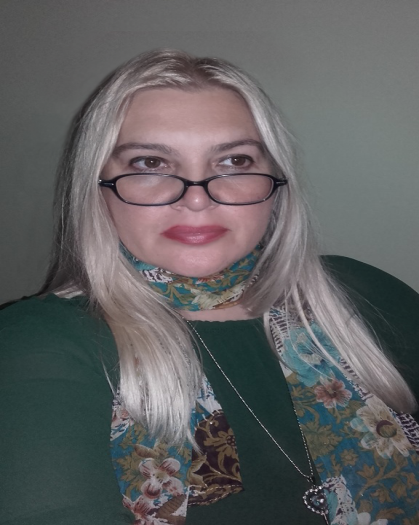
Younger middle aged white woman with long blonde hair, glasses, and a green top and floral scarf and necklace.
Maja Milojkovic

THE MOTHER OF GOD

I want to gaze upon your gentle, smiling face,

as you quietly wrap your child in linen and cotton cloth.

His smile tells you

that a heavenly gift rests in your arms.

And then — a scream.

Your scream, for they are taking your Son to be killed.

I return in thought to the cradle.

You hold Him close to your chest,

singing softly as He drifts into sleep.

The next moment —

your inconsolable heart beneath the cross,

among wicked men

casting lots for the clothes He wore.

Two scenes intertwine:

life and death,

an image bearing the Son of God,

a body made into a temple.

And now… all carries the scent of death.

You loved Him with your whole being,

wished Him only good,

yet evil spun its snares

through the servants of darkness.

Only a tear of joy remains

as you lay Him in a wooden cradle:

 “Good night, my son.”

And a tear of sorrow

as you embrace His lifeless body:

“Please, call me to meet You soon.

Without You, this life has no meaning.”

It plays out endlessly,

like a film that never ends:

death, tears, salvation —

telling us: the death of the body is a beginning.

Mother of God,

Suffering One,

there is no greater pain than yours,

but no deeper comfort

than your eternal embrace.

For no suffering

is greater

than yours.

Maja Milojković was born in Zaječar and divides her life between Serbia and Denmark. In Serbia, she serves as the deputy editor-in-chief at the publishing house Sfairos in Belgrade. She is also the founder and vice president of the Rtanj and Mesečev Poets’ Circle, which counts 800 members, and the editor-in-chief of the international e-magazine Area Felix, a bilingual Serbian-English publication. She writes literary reviews, and as a poet, she is represented in numerous domestic and international literary magazines, anthologies, and electronic media. Some of her poems are also available on the YouTube platform. Maja Milojković has won many international awards. She is an active member of various associations and organizations advocating for peace in the world, animal protection, and the fight against racism. She is the author of two books: Mesečev krug (Moon Circle) and Drveće Želje (Trees of Desire). She is one of the founders of the first mixed-gender club Area Felix from Zaječar, Serbia, and is currently a member of the same club. She is a member of the literary club Zlatno Pero from Knjaževac, and the association of writers and artists Gorski Vidici from Podgorica, Montenegro.

Essay from Muattar Tursunboyeva

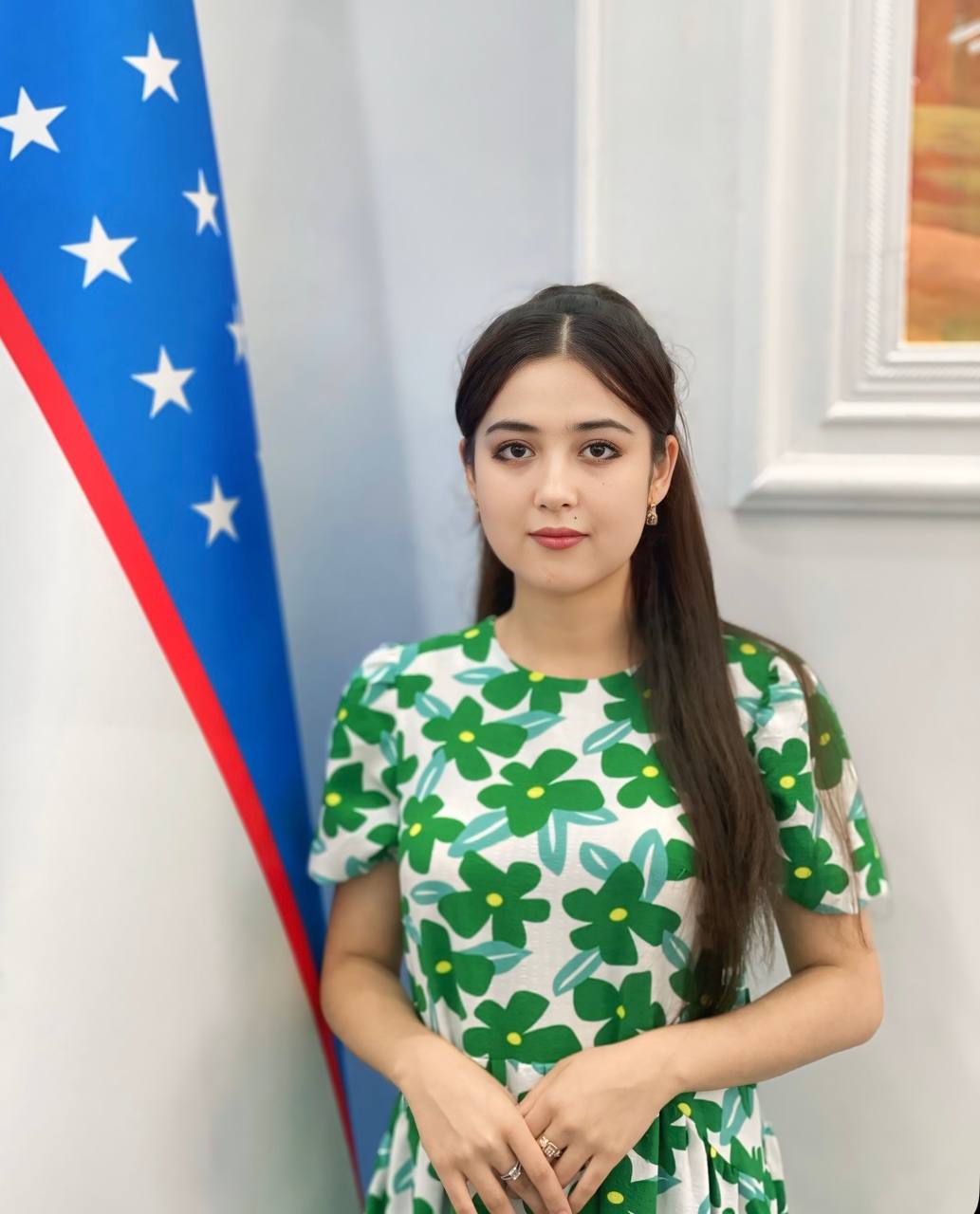
Young Central Asian woman with long dark hair and a dress with a green flower pattern standing next to an Uzbek flag.

DEVELOPING CREATIVE QUALITIES IN LITERARY EDUCATION

Namangan State Pedagogical Institute

Uzbek Language and Literature Department, 1st-Year Master’s Student

Muattar Tursunboyeva

Abstract:

This article discusses the development of creative thinking, independent reasoning, and innovative approaches in students through literary education. It analyzes modern teaching methods, interactive techniques, and tasks aimed at enhancing creativity in literature classes. The article also outlines ways to foster creative competencies through text analysis, character interpretation, and understanding the author’s message. Furthermore, it references advanced international practices.

Keywords: literary education, creativity, creative approach, character, interactive methods, text analysis, competence.

1. Purpose and Objectives of Literary Education

In today’s globalized world, one of the main goals of education is to form individuals who can think creatively and independently. Literary education plays a crucial role in this process. Literature classes not only cultivate aesthetic taste but also deepen thinking, foster imagination, and encourage creative approaches. Each teaching term has its specific goals and objectives.

The main goal of literary education is to develop students’ skills in analyzing literary texts, understanding the author’s ideas through characters, and providing aesthetic evaluation. The teacher plays a vital role in this by broadening the student’s thinking through methodological approaches.

2. What is Creativity and How is it Formed?

Creativity is the ability to approach issues in new ways, solve problems unconventionally, and think innovatively. In literary education, the following methods can be used to foster these qualities:

Analyzing metaphors and symbolic expressions;

Dialogic reading;

Role-play exercises;

Written creativity tasks (essays, stories, excerpts).

3. Interactive Methods and Creative Approaches

Nowadays, teachers enrich their practice with interactive methods such as:

“Fishbone Diagram”,

“Modern Editor”,

“Discussion-Based Presentation”,

“Conceptual Mapping”.

These techniques enhance students’ engagement with knowledge and promote a creative attitude toward literary texts.

4. Criteria for Assessing Creativity

When evaluating students’ creative work, the following aspects are considered:

Novelty of ideas;

Expression of characters;

Richness of language;

Ability to draw independent conclusions.

5. International Experience and Innovative Approaches

Programs such as PISA and PIRLS emphasize literary literacy and creative thinking as important criteria. In countries like Finland, South Korea, and Japan, special attention is given to shaping students’ worldview through literary works.

In literature lessons, the teacher selects methods based on the topic. For instance, the “Brainstorming” method, also referred to as the “Mental Attack” method in the second part of the 2022 publication Methodology of Teaching Literature, is widely used. Synonymy also plays an important role in literary education.

Conclusion

Fostering creativity in literary education not only increases the effectiveness of learning but also contributes to the student’s personal development. These qualities help young people grow into independent, creative, and thoughtful individuals. Therefore, every teacher should incorporate innovative and creative methods in their practice.

REFERENCES

1. A. Hasanov, Foundations of Creative Thinking, 2020. Bukhara: Zamon Press. p.118.

2. D. Xoliqova, Innovative Technologies in Education, 2021. Samarkand: Ilm-Ziyo. p.132.

3. Q. Husonboyeva & R. Niyozmetova, Methodology of Teaching Literature, Tashkent: Inavatsiya Ziyo. p.159.

4. S. Nazarova, Literary Theoretical Thinking and Figurative Reflection, 2023. Tashkent: Fan va Texnologiya. p.153.

5. Z. Abdullayeva, Creative Approach in Literature Lessons, 2022. Tashkent: O‘qituvchi. p.145.

Muattar Ikromjon qizi Tursunboyeva was born on August 6, 2000, in the Toraqo‘rg‘on district of Namangan region. She graduated from Specialized State Boarding School No. 18 in Namangan city and later completed her studies in the Uzbek language program at Namangan State University. Currently, she is a first-year master’s student at Namangan State Pedagogical Institute. From a young age, Muattar has been passionate about poetry and literature. Her poems and articles on various topics are regularly published in the media. Muattar’s goal is to become a highly qualified specialist in her field and to share the beneficial knowledge she gains with future generations.