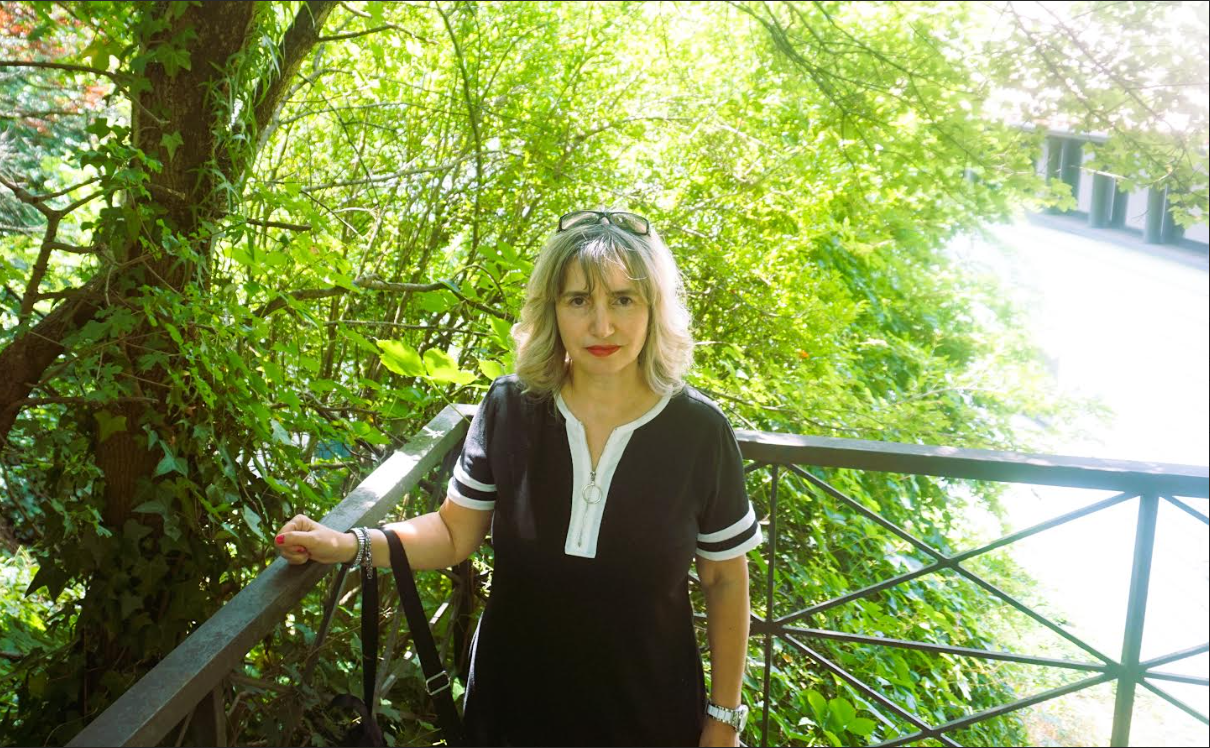
IRMA KURTI is an Albanian poet, writer, lyricist, journalist, and translator and has been writing since she was a child. She is a naturalized Italian and lives in Bergamo, Italy. Kurti has won numerous literary prizes and awards in Albania, Italy, Greece, Switzerland, USA, Philippines, Lebanon and China. She was awarded the Universum Donna International Prize IX Edition 2013 for Literature and received a lifetime nomination as an Ambassador of Peace by the University of Peace, Italian Switzerland. In 2020, she became the honorary president of WikiPoesia, the encyclopedia of poetry. In 2021, she was awarded the title of Liria (Freedom) by the Italian-Albanian community in Italy. She received the Leonardo da Vinci and Giacomo Leopardi prizes from the Chimera Arte Contemporanea Cultural Association of Lecce. The same association also honored her with the European Ambassador Award and named her the Best Poet of the Year in 2022.
She received the Grazia Deledda medal and diploma of merit from the National Committee of WikiPoesia on the 150th anniversary of the birth of the great Italian poet. In 2023 she was awarded a Career Award from the Universum Academy Switzerland.
Irma Kurti is a member of the jury for several literary competitions in Italy. She is also a translator for the Ithaca Foundation in Spain.
Irma Kurti has published more than 100 works, including books of poetry, fiction and translations. She is one of the most translated and published Albanian poets. Her books have been translated and published in 21 countries.
Language Attitudes Towards Regional Dialects in Uzbekistan
Aliasqarova Muslima Bahromjon qizi
Uzbekistan State World Languages University
English First Faculty
Abstract: This article investigates the sociolinguistic attitudes towards regional dialects of the Uzbek language across various regions of Uzbekistan, including Tashkent, Ferghana, Samarkand, and Khorezm. In a society where Standard Uzbek is promoted through education, media, and official communication, dialects remain powerful indicators of regional identity and cultural belonging. The study explores how speakers perceive the prestige, stigmatization, and practical functions of different dialects, particularly among youth and urban populations. Using both qualitative and quantitative methods, including surveys and interviews, the research highlights the dynamics of linguistic hierarchy, code-switching, and the resilience of non-standard varieties. Findings suggest that while many view Standard Uzbek as a symbol of social mobility, regional dialects maintain strong emotional and cultural significance. These attitudes have implications for language planning, education policy, and national identity in post-Soviet Uzbekistan.
Keywords: Uzbek dialects, language attitudes, sociolinguistics, regional identity, Standard Uzbek, code-switching, language prestige, digital communication, linguistic diversity, Uzbekistan.
Uzbekistan is a linguistically rich and culturally complex nation, characterized by a wide array of regional dialects that reflect its diverse historical and sociolinguistic heritage. The Uzbek language, while officially unified under a standardized form, is internally varied across geographic regions, with dialects shaped by centuries of interaction with neighboring languages such as Russian, Persian, Arabic, and other Turkic varieties. These influences have left lasting imprints on phonology, vocabulary, and syntax, making dialectal diversity a central feature of the Uzbek linguistic landscape.
Following independence in 1991, Uzbekistan initiated a process of national consolidation, part of which included the promotion of Standard Uzbek as the official language of education, governance, and mass media. This standard variety, primarily based on the Tashkent dialect, was intended to unify the nation linguistically and symbolically represent a post-Soviet national identity. While this policy has significantly increased the visibility and institutional power of Standard Uzbek, it has not diminished the vitality of regional dialects, which remain widely used in informal communication, rural settings, and interpersonal networks. These dialects are not only linguistically distinct—in terms of phonetic, lexical, and grammatical features—but also socially and symbolically differentiated. Speakers often hold implicit or explicit attitudes toward various dialects, associating them with particular social traits such as prestige, rurality, education level, or authenticity. The central concern of this study is to explore how Uzbek speakers perceive both their own dialect and those of others, and what sociocultural meanings are embedded in these perceptions.
Understanding dialectal attitudes is crucial for unpacking broader questions of linguistic identity in a post-Soviet, multilingual society. It sheds light on how individuals negotiate belonging, social status, and cultural authenticity through language. Moreover, such insights are essential for informing equitable language policy—particularly in domains like education, teacher training, and public broadcasting—where the tension between linguistic standardization and regional variation remains a persistent challenge. By examining these dynamics, the study contributes to a deeper understanding of the interplay between language, identity, and policy in contemporary Uzbekistan.
Uzbek dialects are generally grouped into three major categories: Northern, Southern, and Central dialects. Each has several sub-dialects that vary across regions. For instance, the Khorezm dialect in the northwest differs significantly from the Andijan-Ferghana variety in the east or the Samarkand-Bukhara dialects in the central region. These differences are not just linguistic but also carry social and historical associations.
The Soviet language policy prioritized Russian and often marginalized minority languages and dialects. Post-independence, Uzbekistan emphasized the Uzbek language but prioritized the standardized form to build national unity. This has led to a hierarchical linguistic landscape in which Standard Uzbek is perceived as more ‘modern,’ ‘educated,’ or ‘neutral,’ while regional dialects are seen as markers of tradition, rural life, or even backwardness.
However, dialects also serve as sources of local pride and identity. For many speakers, especially older generations and those in rural areas, dialects are the authentic form of Uzbek. They are used in oral storytelling, folk songs, and local customs, giving them strong cultural resonance.
The study employed a mixed-method approach, combining quantitative surveys with qualitative interviews. A total of 150 participants aged 18–40 were surveyed across four regions: Tashkent, Ferghana, Khorezm, and Samarkand. Respondents were asked to rate dialects based on attributes such as prestige, clarity, emotional warmth, and appropriateness in formal contexts. Additionally, 20 in-depth interviews were conducted to gain insights into personal experiences with dialect use.
Questions also focused on code-switching behavior, dialect usage in digital communication (e.g., social media), and perceptions of dialect use in education and media. The goal was to identify patterns in how people relate to their own and others’ dialects, and how these attitudes influence language choice.
The Tashkent dialect, due to its closeness to the standardized form, is widely perceived as the most prestigious. It is associated with education, professionalism, and urban sophistication. On the other hand, dialects like Khorezmian and some Ferghana sub-dialects are often perceived as rural, non-standard, or humorous, and are frequently the subject of jokes or caricatures in media. In some cases, this stigmatization leads speakers to avoid using their dialect in public or formal settings.
Interestingly, the perception of prestige also varies by age and education level. Younger participants and those with higher education tend to view the standard dialect as a necessary tool for career advancement. Meanwhile, older participants often express nostalgia for the richness of dialectal expression and lament the decline of dialect use among youth.
Despite the perceived lack of prestige, many respondents expressed strong attachment to their regional dialects. In places like Samarkand and Khorezm, the local dialect is viewed as a crucial part of cultural heritage. Dialect use often signals solidarity, authenticity, and emotional warmth, particularly in family and community settings. Some even reported intentionally preserving dialectal features in speech to assert their regional identity.
In these regions, dialects are not merely seen as linguistic variants but as symbols of historical continuity and pride. For example, the Khorezm dialect is closely linked to the region’s historical status as a center of ancient civilization, and using the dialect is often framed as a form of cultural resistance to homogenization. Most participants reported shifting between dialect and Standard Uzbek depending on the context. For example, they might speak their native dialect at home but switch to the standard form in schools, universities, or workplaces. This indicates a high degree of linguistic adaptability and functional bilingualism within one language.
Code-switching is often strategic and context-sensitive. It reflects not just linguistic competence but also social awareness. Some respondents noted that switching to Standard Uzbek in formal settings made them feel more respected, while others admitted to feeling less authentic when avoiding their native dialect.
In recent years, social media platforms such as Telegram, Instagram, and TikTok have emerged as influential spaces where linguistic practices, including dialectal variation, are publicly performed, negotiated, and normalized. These digital arenas offer users a degree of expressive freedom not typically found in formal settings like education or state media. As a result, many users, particularly younger generations, increasingly blend Standard Uzbek with regional dialects, often for humorous, emotive, or identity-driven purposes. This code-mixing is especially prevalent in memes, short videos, and informal commentary, where dialectal features add nuance, authenticity, or comedic effect.
The growing visibility of dialects in online discourse signals a shift in the sociolinguistic landscape, where once-stigmatized or marginalized forms of speech gain new symbolic value. Informal digital communication, therefore, acts as a site of linguistic innovation and sociocultural negotiation, contributing to the gradual reconfiguration of dialect prestige. Over time, these trends may not only challenge traditional hierarchies that privilege standardized language forms but also foster a broader acceptance of linguistic diversity within the national linguistic identity. As such, the role of social media in reshaping language attitudes warrants further investigation, particularly in contexts like Uzbekistan where questions of language, identity, and modernity are closely intertwined.
.
Moreover, online influencers and content creators have played a key role in normalizing dialect use. Several interviewees mentioned popular TikTokers or bloggers who use their native dialects with pride, making them more socially acceptable and even fashionable among young audiences.
Language attitudes toward regional dialects in Uzbekistan are multifaceted and evolving. While Standard Uzbek dominates formal domains and is associated with upward mobility, regional dialects continue to serve important roles in cultural identity, emotional expression, and local solidarity. The persistence and vitality of dialects suggest that linguistic diversity remains an essential part of Uzbek society. This study shows that dialects are not only linguistic forms but also powerful social symbols. Their usage patterns reflect broader dynamics of identity, prestige, and resistance. Therefore, acknowledging and valuing these dialects in public discourse, education, and media is crucial.
Policymakers and educators must take into account public attitudes toward dialects when formulating language education policies and developing media content. Numerous sociolinguistic studies have shown that language attitudes significantly influence learners’ motivation, self-perception, and academic outcomes (Baker, 1992; Garrett, 2010). In the context of Uzbekistan, where linguistic diversity includes various regional dialects of Uzbek, as well as minority languages such as Tajik, Kazakh, and Russian, fostering a positive orientation toward dialectal variation is essential for promoting linguistic equity and national cohesion.
Encouraging positive awareness of regional dialects can serve multiple purposes. Firstly, it helps combat the stigmatization of non-standard language varieties, which often affects speakers’ social mobility and self-esteem. Secondly, it plays a crucial role in preserving intangible cultural heritage, as dialects carry unique oral traditions, idioms, and identity markers. Thirdly, it contributes to building a more inclusive and pluralistic understanding of national identity—one that embraces diversity rather than imposing rigid linguistic norms.
The role of mass media in shaping language ideologies cannot be overstated. Stereotypical or caricatured portrayals of dialect speakers in television, film, and online content may reinforce negative biases and social hierarchies. Therefore, media producers should strive for balanced and respectful representations that reflect the richness of Uzbekistan’s linguistic landscape. Highlighting the contributions of dialect speakers in domains such as literature, music, comedy, and local governance could normalize and validate their linguistic identities.
Furthermore, systematic research is needed to monitor how attitudes toward dialects evolve, especially in a digital age marked by increased mobility, transnational communication, and generational change. Young people—particularly digital natives—consume and produce vast amounts of content on social media platforms, which often become arenas for both linguistic innovation and discrimination. Members of the Uzbek diaspora may also develop hybrid attitudes shaped by their host country’s sociolinguistic environment.
To this end, longitudinal studies and digital ethnographies offer promising methodologies for capturing the evolving dynamics of dialect usage and perception over time. By systematically observing linguistic behavior across extended periods and digital environments, researchers can uncover patterns of change, continuity, and innovation within everyday language practices. For example, tracking the frequency, context, and reception of dialectal features on platforms such as TikTok, YouTube, or Telegram may illuminate emerging sociolinguistic trends—whether indicating increased prestige, playful subversion, or forms of resistance to standard norms.
These data-rich approaches can provide empirical grounding for understanding how digital communication shapes language ideologies, particularly among youth and diaspora communities. Moreover, such findings carry practical implications for language policy in Uzbekistan, where balancing the promotion of a unified national language with respect for regional and sociolinguistic diversity remains a complex challenge. Insights from digital spaces can inform more inclusive and context-sensitive policies in education, media, and cultural programming, ensuring that modernization efforts do not come at the expense of linguistic plurality and heritage.
References:
Fierman, W. (1991). Language planning and national development: The Uzbek experience. Berlin: Mouton de Gruyter.
Pavlenko, A. (2008). Multilingualism in post-Soviet countries: Language revival, language removal, and sociolinguistic theory. International Journal of Bilingual Education and Bilingualism, 11(3-4), 275–314. https://doi.org/10.1080/13670050802148798
Landau, J. M., & Kellner-Heinkele, B. (2001). Politics of Language in the Ex-Soviet Muslim States: Azerbayjan, Uzbekistan, Kazakhstan, Kyrgyzstan, Turkmenistan, and Tajikistan. Ann Arbor: University of Michigan Press.
Karimov, R. (2016). Language situation in Uzbekistan: Problems and perspectives. International Journal of Central Asian Studies, 21, 45–58.
THE SYMBIOTIC RELATIONSHIP BETWEEN THAI MEDIA AND TOURISM: TRENDS, INFLUENCES, AND FUTURE DIRECTIONS
Bazarbaeva Inabat
Abstract. This comprehensive study explores the multifaceted relationship between Thailand’s media industry- spanning television series, films, digital content, and celebrity culture- and its tourism sector. By integrating statistical data, cultural analysis, and case studies, the aricle highlights how media acts as a catalyst of global interest in Thai destinations, traditions, and urban life. It examines both opportunities and challenges, emphasizing sustainable practices and ethical considerations. Original insights and actionable recommendations are provided for stakeholders in tourism, media, and policy-making.
Keywords: Thai tourism, media influence, cultural promotion, celebrity impact, destination branding.
Thailand’s tourism sector, a cornerstone of its economy, contributed 12% to the nation’s GDP in 2023, attracting over 28 million international visitors. While pristine beaches, vibrant festivals, and ancient temples remain primary draws, an unexpected player has emerged as a catalyst for tourism growth: Thailand’s media industry. Television series, films, digital content, and celebrity culture now serve as dynamic tools for shaping global perceptions, inspiring travel, and fostering cultural exchange. This article explores how media acts as a cultural ambassador, backed by statistical insights, while addressing ethical hallenges and proposing strategies for sustainable growth.
Media as a Cultural Ambassador: Beyond Entertainment
Thai media has transcended borders through platforms like Netflix, Youtube, and Tik Tok, transforming into a powerful cultural export. Historical dramas, thrillers, and even music videos now double as unconventional tourism campaigns. For instance, the 2018 historical romance Love Destiny(Bupphesanniwat) revitalized global interest in Ayutthaya, a UNESCO World Heritage Site. The series, set in the 17th – century Siamese court, showcased the ruins of Ayutthaya’s temples and places, leading to a 22% surge in visits to the region post-release. Local tour operators introduced themed itineraries, allowing fans to walk through filming locations while learning about the kingdom’s history.
Similarly, the supernatural thriller Girl From Nowhere (2018-2021) highlighted Bangkok’s contrasting landscapes- gleaming skycrapers, bustling street markets, and serene Buddhist temples. Tourism agencies reported a 15% increase kn inquiries about “mystery tours” following the show’s popularity, with fans eager to explore locations like Wat Arun and retro-themed Siam Paragon mall. Even regional destinations benefit: the 2022 comedy 3 GentleBros, set in Chiang Mai’s countryside, correlated with a 10% rise in homestay bookings as viewers sought to experience rural Thai life.
Music and digital content also play pivotal roles. The 2022 music video “Thailand Tourism: Journey to Happiness”, featuring collaborations with K-pop artists, amassed 50 million view and boosted Google searches for Thai destinations by 30%. Such content avoids overt advertising, instead weaving tourism elements into compelling narratives that resonate emotionally with audiences.
Quantifying Media’s Impact: Statistis and Trends
A 2022 study by Chulalongkorn University revealed that 34% of surveyed tourists visited Thailand after encountering its landscapes or culture in films or series. For example, the 2011 film The Billionaire (Top Secret: Wai Roon Pan Lan), based on the founder of Thai beverage giant Carabao, showcased Phuket’s luxury resorts. Within six month of its release, hospitality revenue on the island surged by $2.3 million, with tourists flocking to stay at the depicted hotels.
Platforms like Instagram and Tik Tok act as force multipliers. In 2023, Instagram posts tagged #ThailandTravel increased by 40%, with 18% referencing Thai dramas or celebrities. Tik Tok’s #ThaiFoodChallenge, inspired by cooking scenes in dramas, drove a 25% rise in culinary tours, particularly in Bangkok and Chiang Mai.
Media tourism generates indirect revenue. For every 1spenton film-relatedtours, 3.50 flows into local businesses such as restaurants, souvenir shops, and transport services. The Tourism Authority of Thailand (TAT) estimates that media-inspired tourists spend 20% more than average visitors, often seeking unique, story-driven experiences.
Celebrity Influence: Bridging Media and Travel
Thai celebrities and influencers have become pivotal in destination marketing. Actress Yaya Urassaya Sperbund’s 2022 campaign promoting Krabi’s Emerald Pool led to a 15% increase in European tourists to the region. Meanwhile, actor Mario Maurer, a household name across Asia, partnered with TAT to spotlight Nan Province’s silk-weaving villages. His social media posts about the region’s artisans resulted in a 20% uptick in workshop visits and renewed appreciation for traditional crafts.
Micro-influencers also play a role. Platforms like LINE VOOM and Facebook Reels feature content creators targeting iche markets. For example, eco-conscious influencers promote sustainable stays in Khao Sok National Park, aligning with younger travelers’ values. These collaborations blend authenticity with reach, making destinations relatable to global audiences.
Challenges: Balancing Growth and Sustainabillity
Media-driven popularity often strains fragile ecosystems. The Phi Phi Islands, immortalized in The Beach (2000), faced coral degradation and litter pollution due to unchecked tourism. In 2021, Thailand closed the islands for rehabilitation- a stark reminder of the need for sustainable practices. Initiatives like the 7 Greens tourism model, which promotes eco-certifications and visitor caps, aim to mitigate such issues.
Simplified portrayals of traditions risk reducing cultural heritage to mere spectacles. Floating markets, depicted in dramas as quaint tourist attractions, often overlook their historical significance as community hubs. Projects like Creative Thailand collaborate with filmmakers to ensure authentic storytelling, emphasizing cultural depth over stereotypes.
Media attention often skews toward urban areas, sidelining rural communities. To address this, community-based tourism (CBT) programs empower villages to share their heritage. The 2023 drama Pan Rak Pa (Forest of Love), filmed in collaboration with hill tribes in northern Thailand, boosted homestay bookings by 18% while channeling profits directly to locals.
Future Directions: Innovation and Collaboration
Virtual reality (VR) tours of iconic film locations could attract tech-savvy travelers. Imagine exploring the Grand Palace of Bangkok or the cliffs of Railay Beach through immersive VR experiences. AI-driven campaigns could also personalize travel itineraries based on viewers’ favorite shows, enhancing engagement.
Stronger collaboration between Thailand’s Ministry of Tourism and media producers in essential. Tax incentives for productions that highlight eco-friendly destinations, like national parks or organic farms, could align entertainment with sustainability goals.
Training locals to co-create content ensures balanced representation. For instance, documentaries produced by indigenous communities in Isan have sparked interest in the region’s folk music and festivals, fostering pride and economic opportunity.
Thailand’s media industry is no longer just a source of entertainment-it is a dynamic engine for tourism growth. By blending storytelling with cultural promotion, media reshapes how the world sees Thailand, turning viewers into travelers. However, this power demands responsibility. Sustainable tourism requires ethical storytelling, equitable economic distribution, and environmental stewardship. Through innovation, collaboration, and community involvement, Thailand can continue to captivate global audiences while preserving its natural and cultural treasures for generations to come.
References:
1. Tourism Authority of Thailand (TAT). (2023). Annual Tourism Report.
Bangkok Post. (2019). “Historical Drama Revives Ayutthaya’s Appeal.”
Statista. (2023). Social Media Trends in Travel.
2. Tourism Economics. (2012). Film-Induced Tourism in Phuket.
Chulalongkorn University. (2022). Media Influence on Tourist Behavior.
Ministry of Tourism and Sports. (2021). 7 Greens Sustainability Report.
Bazarbaeva Inabat Mukhtar daughter, 1st year student of the Faculty of Economics, Tourism and Hospitality, Karakalpak State University, was born in 2006 in the Republic of Karakalpakstan.
Moon curve silver contrasts sky slivered rather sharply streaking swift light shards shot unto visional tablature eccentric literature eloquent language form. Shadows shade plus shadows form habitat below. Each passer-by mental engrossed clicks gravel shoe muddied or screech tyres same muddied each sharing commonality of utmost silent. Day ends locating joyed mourning.
Next fruitful bend apprehends turn unconsciously phone dialling itself haptic thumb tap gotten. Light drenching moonlight stretching confront selves eternal struggle net breaths might then seized watching if there were any all eyes peeled upon something different however. Sat watching however. However stretched the plate was it crawled empty. It stood that after all. After all the self scrutiny Jesus was fed at least. Hunger death provokes happiness. Simply must. Full bellies lack unsheathed sky possessing sitting brain full purses current drain; plate outstretched fingerings sky. Intoxicated throat pity needing at pitied watching pitiless day close fast workplace ushering night sacs containing bones enclose empty brains housing overfed souls. Tie slackened suitcased strides clanking gravel clop — clop — clop — clop — warping truth towards higher truth as all is truth. Food rent clothes boss fiancé mother siblings friends celebrities obsessions run young man’s head seventy two hermit watches across close nearly far across among overlapping streams exercising breathlessness. Breathlessness curse! Gutters flying stench bowed nostrils impassioned glad accept walking submitted greatness submission. Zero space stating breathe?
Cold eve scanty glad hermit grey giggles cleaving slivering shivering off heavenscape. Drunk decades watching death alive intoxication living moving picture non fiction dream eternal be spit drip lip visual glee surrendering. Friendly house bank during laughing day. Clank! Wad floats down. Clank! Eyes float down. Clank! Disappointed float vanishes upward excitement throat squeezed reminded vanity though screaming assuage far from place at hundred naira economy drained. Used to retain kingly pay one time. Monarchical Left look right look receding day holds two three four five fat slim groups one plus one numerous answers searching loosing time track working work working lost cursing boss children mom wife wide father tableau life spot placed striving husband chained neck feet hand blood vessels arteries arsehole tongue eye all seeing feeling thinking loving believing walled all side taught ordered expected caught napping death alive death alive death alive scared angry what happens happened happening questions unquestioned questioned unquestionably unquestioned left shod mountainous behold blind blotting light darkness shade reading curbed gaze clawed eyes eyes ice ayes highs left low legged legendary lest leap lost loving lime life limelight looks vertical east west south darkness heart recent gleam gloam joy crow peck flesh unfleshed flattering bleached depreciating self loving hoping wanting needing starving seeing blindly kissing touching unfeeling. Monarchical.
Before all these he was young Before all these he was old but he was young and he was old at heart reading diving drowning found him so Sitting found him so happily sitting still Clang! Floating descends new note five h Glad hide preposterous. Four days hunger cured by six h sees him stand to kiosk ordering beer with groundnut. Laughing ease transform ease necessary to ease hunger. To think one must think he held dark corner marching maintaining gesture reflex mental choices waking abrupt. Friendly house here friendly house there nowhere every where. Spit opens bottle uncork gulping facilitated breathing agreed beer coolth evaporating aroma mouth mastering watering lip tongue jumping joyous glee. Toast thought ancestral garbage at instant apprehend intoxicated aroma bent coolth rushing throat gurgling Adam apple bitten causing temptations love soothing gurgling twice bottle half emptied relishing gassed belly intensely moon brightness intensified. Friendly house here. Hallucinatory stepping digging moats each traverse gifting war away anger away love away beingness away susceptibility way hunger paves drunken belly appreciates. One plate adventure one may sing. Roadside. Sit. Legged crossed opened dally minutely chooses legged cross more emotion summoning strategy best survival way. Singing soothes evening hearing;
Harmattan rises down every day
In hot cold heat and happy day (fifty naira)
Cold heat and happy say every way
Harmattan brings cold biting toes and souls
Cold heat they say is frost
But me I say is solid gold
As the moon shines moon shine gives me know
And I walk where I walk toe to toe
With bare feet (one thousand naira)
Tell me the joy of singing happily
The Friday night tells all they must feel
This Friday night with dance we must see:
Gets up picks notes pocketing starts dances banging plate onlookers glance crossing avoiding walking striding lengths coordinate of him Memories of joy joyful than joy this whipped horse whips horse parity horse weeping tears of joy breeze sweeping neighbour tongue five hundred dropped dust dropped songless dance drops pants opening genitalia former kiosk possesses sachet gin genes beer genes cigarettes genes groundnuts lastly genes sweet ground nut heals being chest and hearts that fasting men sweating absolution within each step Point of despair avoided such men walk toward backward content forward stretch eye peeled Kerouac way magical rebel submission nature requests;
Corners again. New spot which pristine bliss stronger wields. Strong. Silence lost boom song crawl upward hearing pathethics bliss tremendous blood cough death chucks all at once beyond moonlight anger moonlight hate moonlight debauch spoiled through play within walls shielding moonlight gaze moonlight hate hoping by shooting rays streaking face arrive crush entire place.