Essay from Olimova Muslima

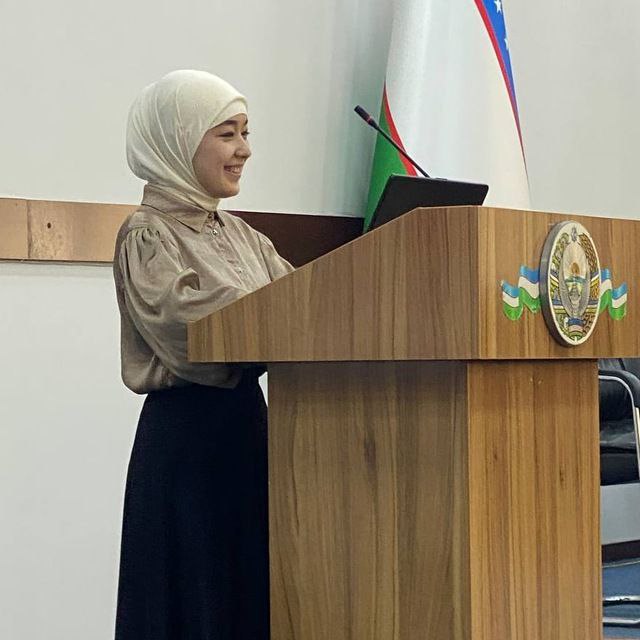
Young Central Asian woman in a light collared blouse and headscarf speaks at a lectern.

Backend programming languages and their advantages

A backend developer provides functionality for a website or web application, data processing. Therefore, backend developers must be familiar with working with data warehouses. They are also required to be able to work with algorithms of varying degrees of complexity and build architectures for projects. In fact, backend refers to both software and hardware. However, historically, backend has also been clearly distinguished from web-development. And this is currently the most popular area. 

Backend programming languages are used to create applications that run on the server side. With the help of these languages, you can process data, write server logic and work with databases. Some popular backend programming languages are:

A backend developer must know at least programming languages such as Java, Python, Ruby, etc.

Popular programming languages in which backend developers write code are PHP, Ruby, Python, Node.js, C # and Java. A good backend developer will usually be a master of one of these languages, but will also have the ability to code in 2 or 3 programming languages. Backend developers will also need to be proficient with at least one of the following databases: MySQL, PostgreSQL, Oracle, and SQL Server.

PHP is a common scripting language that is widely used for developing web applications. It is currently supported by a large number of hosting providers and is one of the leading languages used for creating dynamic websites. 

Many content management systems, with backend languages that cannot do JavaScript, are built in the same programming language as many large, complex web applications.

The Java software platform is a set of software products and specifications from Sun Microsystems, formerly an independent company and now a subsidiary of Oracle Corporation, that together provide a framework for developing software and integrating it into any cross-platform application.

 Ruby is a dynamic, reflective, interpreted high-level programming language. The language has operating system-independent multiprocessing, powerful dynamic typing, a garbage collector, and many other features. 

Python is a high-level general-purpose programming language aimed at improving programmer productivity and code readability. The Python core syntax is minimalist. At the same time, the standard library contains a large set of useful functions.

A backend developer pays close attention to the architecture of databases, scripts, and websites. The code written by BackEnd developers helps to deliver database data to the browser.

BackEnd developers usually work with developers on the front-end to work on the design of a site or application (or to make changes to this design if necessary) and to develop their code.

Go was developed by Google, has high performance and ease of use.

C# is used to create scalable web applications using the .NET framework.

 These languages are different from each other and are chosen depending on the requirements of the project. Each language has its own advantages and disadvantages, so programmers make a choice based on their needs. Backend programming languages have several advantages. These languages allow you to create applications that run on the server side. The following are the main advantages:

1. Data Ingestion: Receiving and processing requests from users or other systems.

2. Data Processing: Analyzing, correcting, and applying the necessary logic to the received data.

3. Database Management: Performing CRUD (Create, Read, Update, Delete) operations, i.e. creating, reading, updating, and deleting data.

4. API Creation: Creating RESTful or GraphQL APIs to communicate with the user interface or other services.

5. Security Provisioning: Establishing authentication (user authentication) and authorization (user permissions control) mechanisms.

6. Error Handling: Detecting and handling errors that occur in the application, and delivering appropriate messages to the user.

7. Logging: Implementing logging functions to monitor system activity and problems that occur.

 8. System Expansion and Optimization: Adding new features as the application grows, improving performance, and optimizing resources.

9. Server Management: When the application is deployed on the server, dealing with server configuration, monitoring, and updates.

These activities represent the main processes performed by backend developers in application development. The goal of each activity is to ensure the reliability and efficiency of the system. 

Conclusion: If the question arises, “How is this organized, or in what sequence are tasks performed?”, Backend should be chosen. Backend programming languages are used to create applications that run on the server side. These languages are used to process data, write server logic, and work with databases.

References:

1.https://community.uzbekcoders.uz/post/back-end-development-va-backend-developer-haqida-5ff60987906bd7b2b1d6062a

 2.https://www.coursereport.com/blog/front-end-development-vs-back-enddevelopment-where-to-start

 3. https://www.guru99.com/what-is-backend-developer.html

Olimova Muslima was born on August 7, 2007 in Asaka, Andijan region. Her interest in science and technology from a young age made her a talented and hardworking person. Muslima graduated from school No. 13 of Asaka district with a gold medal and became a prizewinner at the regional stage of science Olympiads.Currently, Muslima is a 1st-year student at Andijan State Technical Institute, majoring in “Information Systems and Technologies”. She is an ambassador of the “Wakelet” community in Uzbekistan and works in the field of global science.Muslima has published many scientific articles, theses and books, her books are sold in 26+ countries. As a Star Up winner and founder of Muslima Academy, she inspires young people, implements new ideas and scientific innovations.Muslima’s achievements make her famous not only in her country, but also worldwide.  Her life and work are a source of inspiration for young people, demonstrating the importance of determination and hard work in realizing dreams.


Poetry from Yongbo Ma

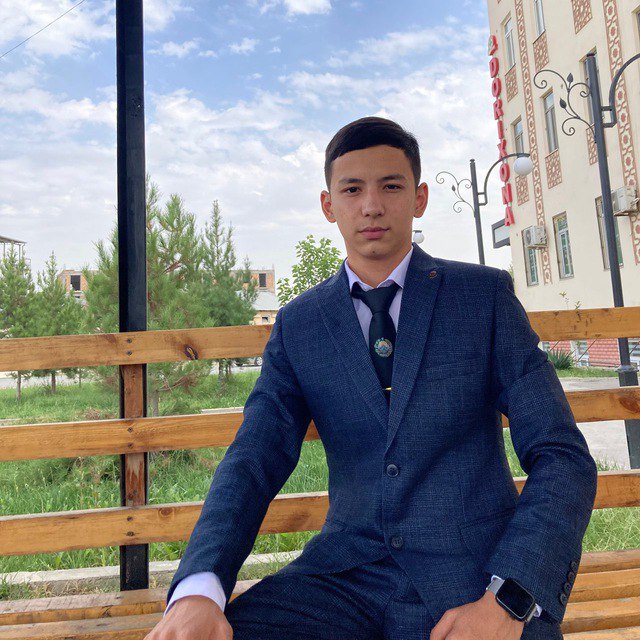
Middle aged East Asian man sits on a wooden bench in front of houses and a fence.

Dream Note: Road Repair

For no apparent reason, he suddenly stood outside a village

rows of poplar forests, neatly staggered, dividing the fields

He halted in the middle of a dirt road—puddles, mud

as if it had just rained, leaving him trapped between

Ahead: endless countryside and a black path stretching on

Behind: a strange village where no one knew his name

villagers seemed to want no part of him

ignoring his awkward plight without a second glance

Just then, eldest brother Yongping abruptly appeared

his calmness offered a momentary sense of peace

 They began stuffing dry soil into the puddles

to repair the road—the blue sky in the puddles

Gradually shrinking, fragmenting, yet the mud remained

too slick to tread, as if the road were sinking deeper

They abandoned the effort, then started urinating there

like in childhood, urine arcing clear and strong

no laughter—their faces grave

ss if this were a duty that must be done

Alone on the road, just the two brothers

the village lay silent, as if long deserted

the fresh post-rain air filled the green fields

No one knows if they ever left safely

June 23, 2025

记梦:修路

不知怎么他突然就到了一座村庄外面

一排排白杨树林,错落有致,隔断了田野

他停在一条土路中间,水洼,泥泞

似乎刚刚下过雨,他进退不得

向前是无尽的乡野和黑色的小路

向后是陌生的村庄,没有人认识他

村民们似乎也不想与他有任何关联

对他尴尬的处境视而不见

就在这时,大哥永平突然出现了

他的平静让他暂时安下心来

他们开始往水洼里填干土

要把道路修好,水洼里的蓝天

渐渐缩小,破碎,但依然泥泞

不堪涉足,似乎道路在不断下沉

他们放弃了努力,开始向那里撒尿

像童年时一样,尿液的抛物线清晰,强劲

他们没有笑,他们很严肃

似乎这是一件必须完成的任务

路上只有他们兄弟二人

村子里一片寂静,似乎已经无人居住

雨后清新的气息弥漫在绿色的田野里

无人知道,他们是否安全地离开了那里

2025年6月23日

Poetry from Dustin Pickering

Middle-aged white man with brown hair and eyes standing in a room with some art on the walls. He's got reading glasses and a black tee shirt.

Love

I need you, love

I need you, love,

to show me the darkness 

of your depth.

The abyss of spirit captivates me…

I need you to call the rains

from my darkest skies; 

I will face seizure from the night.

I have waited for your exiled embrace

since the morning winds.

Now, the silence of the moony season

frowns darkly and I am still alone.

Dustin Pickering

USA

Poetry from Mashxura Fazliddinova Nuriddinovna

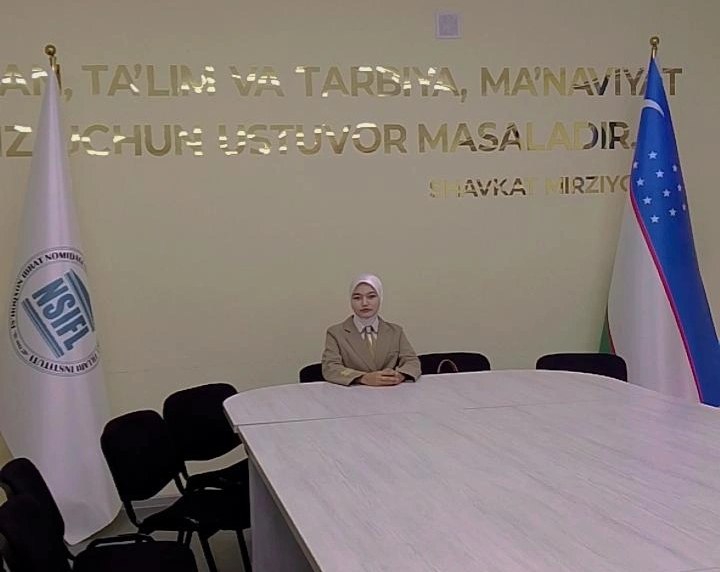
Central Asian woman in a light colored headscarf and tan coat seated at the end of a long table. Flags at either side of her, gold colored Uzbek text on the wall.

Sun of the Love – My mother

In your pure love, the Sun takes form,

You keep us safe, you keep us warm.

You feed us first, though you go without,

My Heaven, my mother, of that no doubt.

Your hair turns white for all you’ve done,

Yet live for us—your every son.

In life’s long path, you’re my one guide,

Your every word—a truth worldwide.

Dear Mother, may you ever be well,

An angel where our joy shall dwell.

May you and Father long remain,

The crowns of love I can’t explain.

Poetry from Irma Kurti

Middle aged European woman with light blonde hair, a black purse, and a black dress with white trim, on a balcony in front of a leafy tree.

THESE ARE NOT LEAVES

These are not leaves that the autumn

throws on my hair, my shoulders;

they are hands greeting me today

while I drag an old and heavy suitcase

that keeps the seasons we lived together.

These are not raindrops running down

my cheeks, but tears: so limpid and clear.

These are not puddles reflecting now my

face but rivers of thoughts and reflections.

Goodbyes always hurt; they leave you

bitter in the heart, even if, somewhere

out there, a world of magic colors waits…

MY ANIMA, A FEATHER

It was just a quick embrace, like

the elusive flight of a butterfly

brushing in an instant your hair.

It was just a warm hug inside a

body that trembled like a leaf,

that anonymous world, which

was a thousand times much

more familiar than my house.

It was nothing more than a hug,

but who knows why—in those

moments, my anima felt so light,

like a feather that ascends to the sky.

THE SPECTACLE OF THE SKY

It is the same light when I get up fast,

when I run towards the bus like crazy,

when it passes me by and I rest there,

just like a melancholic stain.

It’s the same tree and the same people

I see every day, the same trembling of

leaves and the delicate fall of them.

But the sky shows a diverse spectacle;

sometimes it’s gray, sometimes blue

or covered with a handful of clouds,

so soft and white. It often shows me

a plane that crosses it noisily, just like

a giant bird with its rigid, immovable

wings flying towards the infinite.

IRMA KURTI is an Albanian poet, writer, lyricist, journalist, and translator and has been writing since she was a child. She is a naturalized Italian and lives in Bergamo, Italy. Kurti has won numerous literary prizes and awards in Albania, Italy, Greece, Switzerland, USA, Philippines, Lebanon and China. She was awarded the Universum Donna International Prize IX Edition 2013 for Literature and received a lifetime nomination as an Ambassador of Peace by the University of Peace, Italian Switzerland. In 2020, she became the honorary president of WikiPoesia, the encyclopedia of poetry. In 2021, she was awarded the title of Liria (Freedom) by the Italian-Albanian community in Italy. She received the Leonardo da Vinci and Giacomo Leopardi prizes from the Chimera Arte Contemporanea Cultural Association of Lecce. The same association also honored her with the European Ambassador Award and named her the Best Poet of the Year in 2022.

She received the Grazia Deledda medal and diploma of merit from the National Committee of WikiPoesia on the 150th anniversary of the birth of the great Italian poet. In 2023 she was awarded a Career Award from the Universum Academy Switzerland.

Irma Kurti is a member of the jury for several literary competitions in Italy. She is also a translator for the Ithaca Foundation in Spain.

Irma Kurti has published more than 100 works, including books of poetry, fiction and translations. She is one of the most translated and published Albanian poets. Her books have been translated and published in 21 countries.

Essay from Oyatillo Jabboraliev

Why Are Study Abroad Semesters Valuable for Students?

Meaning of These Programs – What Are They?

A study abroad semester is a life-changing experience – but how exactly?

Costs, Challenges, and Requirements

Nowadays, there are many foreign citizens in my country. Are they just tourists? Not quite. Today we see young people coming from abroad to various parts of our country. The reason is the global student exchange program. This program has a long history and began to develop in the 20th century. It was created to promote cultural and scientific cooperation between countries. A student exchange program allows students to temporarily study at a different university abroad. Through it, students gain knowledge and experience.

Historically, the United States was one of the first countries where such programs became popular, beginning with the Fulbright Program. One of the most well-known is the ERASMUS program – the oldest student exchange program in Europe, launched in 1987. Germany later developed its own version, with the DAAD program starting in 1925. These programs are highly popular among young people.

Experiences of Students:

Many students report positive experiences with exchange programs. Jabboraliev O., who studies at Kuala Lumpur University in Malaysia, said: “I expanded my professional experience through the exchange program. That’s why I’ve worked in many areas of my field.” This shows that exchange programs offer career benefits too.

Dilafruz, a student who studied in Japan, said: “My verbal communication improved significantly.” In particular, her ability to express herself in Japanese grew. This proves students can also benefit linguistically from exchange programs.

Advantages of Student Exchange Programs:

Exchange programs offer many benefits. Students gain new knowledge and boost their academic progress. But that’s not all. Studying abroad helps develop important personal skills, such as:

– Intercultural Competence: Students learn to understand and respect cultural differences by engaging directly with people from diverse backgrounds.

– Independence: Living in a foreign country forces students to organize daily life independently – from housing to daily routines.

– Language Skills: Constant exposure to a foreign language helps students improve their language proficiency.

– Better Career Opportunities: Employers value international experience, which signals flexibility and adaptability.

Challenges:

Of course, there are also difficulties. Many students face the following challenges when moving abroad:

– Financial Issues: Living abroad can be expensive. Students often need scholarships or part-time jobs.

– Different Education Systems: Learning methods may differ from those in the home country, requiring students to adapt.

– Cultural Differences: Adapting to new customs and traditions can be tough in a foreign country.

Conclusion:

In conclusion, student exchange programs are an excellent opportunity for young people to gain international experience, explore other cultures, and improve both academically and professionally. They help students adjust to new environments and foster mutual understanding between cultures.

During the program, students learn how to navigate life in a foreign country, speak new languages, and enhance communication skills. These experiences are valuable in today’s world and can improve future career prospects. Additionally, students form international connections that may benefit them later.

Despite the challenges, such as financial burdens, housing issues, or differences in education systems, these very obstacles help students become more independent and adaptable.

Overall, exchange programs are a key component of global education. They not only help young people expand their knowledge but also support personal growth. International exchange strengthens relationships between countries and universities. Therefore, such programs should continue to be supported so more students can benefit.

Oyatillo Jabboraliev was born in Fergana region. He is a student at Xiamen University in Malaysia.

Synchronized Chaos Second June Issue: Chaos Does Not Exclude Love

Fence covered in hundreds of brown locks as a symbol of love.
Image c/o Irene Wahl

First, a few announcements.

Konstantinos FaHs has another article published following up on his Synchronized Chaos pieces about ancient Greek myths and their continuing role in modern Hellenic culture. He’d like to share his piece in The Rhythm of Vietnam, which is a Vietnamese magazine with a mission that seems similar to our own.

Also, disabled contributor, lyric essayist, and ALS activist Katrina Byrd suffered hurricane damage to her home and seeks support to rebuild and make ends meet while she’s getting ready to move. Whatever folks can contribute will make a real difference.

Now, for our new issue: Chaos Does Not Exclude Love. The reverse of a phrase from a review of Elwin Cotman’s urban fantasy collection discussing how Cotman’s work was from a loving place yet made room for the complexity of the world. At Synchronized Chaos, we are intimately acquainted with the world’s nuance and chaos, yet we see and find room for empathy and connection.

Neven Duzevic reflects on travel memories and reconnecting with an old friend. Dr. Perwaiz Shaharyar speaks to the awesome and transformative power of romantic love. Dr. Prasanna Kumar Dalai reflects upon the intensity of romantic feelings. Duane Vorhees speaks to loneliness and heartbreak and sensuality and various forms of human-ness. Kristy Raines speaks to the beauty of love and the tragedy of heartbreak.

Small bouquet of red roses attached to a brick wall
Photo by Nguyễn Tiến Thịnh

Harper Chan reflects on his bravado and the reality of his feelings in the past year. Mickey Corrigan’s poetry shows how psychological and cultural shifts and traumas can manifest in our bodies. Abigail George speaks to how support from friends and family and a commitment to live in the present rather than reliving old traumas can help those addicted to drugs. Alan Catlin mixes cultural memories and touchstones with personal and societal losses.

Vo Thi Nhu Mai offers up a poetic tribute to the international vision of fellow poet Eva Petropoulou Lianou. Greek poet Eva Petropoulou Lianou interviews Bangladeshi poet S. Afrose on how she hopes poetry and joint exploration through literary sci-fi will obliterate the need for war. Dr. Jernail Singh laments that morality and compassion have become passe to a generation obsessed with modernity and personal success. Priyanka Neogi speaks to the beauty of carrying oneself with noble character. Maria Koulovou Roumelioti urges us to remember the world’s children and create love and peace as Anwar Rahim reminds us to live with kindness and courage.

Mykyta Ryzhykh speculates on whether love can continue to exist amidst war. Haroon Rashid pays tribute to Indian political leader Dr. A.P.J. Abdul Kalam, who loved peace but led through strength. Christine Poythress reflects on how easy it is for a once-proud and free nation to slide into fascism simply by admiring the fascist aesthetic and its seductive power. Ahmed Miqdad renders a global tragedy in simple terms: he’s too scared to go back to his home in Gaza to water his cactus plant.

Lili Lang probes the meaning behind things that seem simple: the work of a hairdresser, a family packing up the belongings of a recently deceased grandmother.

Couple off in the distance walking together on sand dunes near a beach.
Photo by Negar Kh

Mahmudova Sohibaxon offers up a tribute to dependable and caring fathers. J.J. Campbell writes of the visceral love and physical work of aging and caregiving, of inhabiting an elderly and a middle-aged body. Taylor Dibbert’s poetic speaker embraces age with joy, thrilled to still be alive. Bill Tope crafts an expansive and welcoming vision of perfection that can welcome more types of people and bodies as Ambrose George urges the world to maintain an open mind towards gender roles and identities.

Leslie Lisbona pays tribute to her deceased mother by writing a letter catching her up on family news. Stephen Jarrell Williams considers endings and beginnings and the possibility of renewal. Asma’u Sulaiman speaks to being lost and then found in life. Cheng Yong’s poetry addresses ways we hide from each other and ourselves, physically and psychologically. Mahbub Alam wishes for a romantic connection that can extend and endure beyond Earth. Dibyangana’s poetry touches on love, grief, and personal metamorphosis. Mely Ratkovic writes of spiritual contemplation and the nature of good and evil. Lilian Dipasupil Kunimasa describes souls who turn away from greed and evil and heal, in smaller and larger ways. Christopher Bernard suggests that creativity and storytelling might play a part in what makes life worth enduring.

Brian Barbeito speculates about intention and communication with the universe. Svetlana Rostova speculates on what spirituality might mean in the face of a seemingly indifferent world. Shamsiya Khudoynazarova Turumnova’s piece conveys spiritual ecstasy, love, and beauty.

Sandro Piedrahita’s story highlights the power of enduring and sacrificial spiritual devotion in the midst of our human-ness.

Chimezie Ihekuna engages with the talents, creativity, and limitations of being human. Dr. Jernail Anand looks at human creativity and at AI and draws a comparison, encouraging humans to continue to create. Jasmina Rashidova explores what motivates people in the workplace. Eva Petropoulou Lianou interviews Turkish poet Bahar Buke about fostering imagination and connection through her work.

Silhouette of a human hand casting a paper airplane into the sky at sunrise or sunset.
Photo by Rakicevic Nenad

Paul Durand reflects on teaching first-grade music in a time of hatred and divisiveness. Su Yun collects the thoughts and observations of a whole selection of schoolchildren in China about nature and their world.

David Sapp reflects on how he wishes to always appreciate the egrets and lilies, sailing off into nature amid the various bird voices of the wild world. Mesfakus Salahin rhapsodizes about flowers and giddy spring romance. Soumen Roy celebrates the simple joy of butterflies and tea. Sayani Mukherjee speaks of an enduring oak tree in summer. Poetry from Eva Petropoulou Lianou, translated to Italian by Maria Miraglia and Arabic by Ahmed Farooq Baidoon, celebrates life lessons from nature. Liang Zhiwei reminds us of the power and vastness of nature, before and after the era of humanity. Nuraini Mohammed Usman sends up a sepia photograph of a tire hidden by a leafing young tree.

Jibril Mohammed Usman shares a photograph of a person looking into nature, at one with and part of his world, altered in the same way as the trees and house. Mark Young’s geographies play with and explore Australia from new angles, turning maps into works of art.

Jerome Berglund and Christina Chin stitch ideas and images together like clotted cream in their joint haikus. Patrick Sweeney’s two-line couplets explore a thought which ends in an unexpected way.

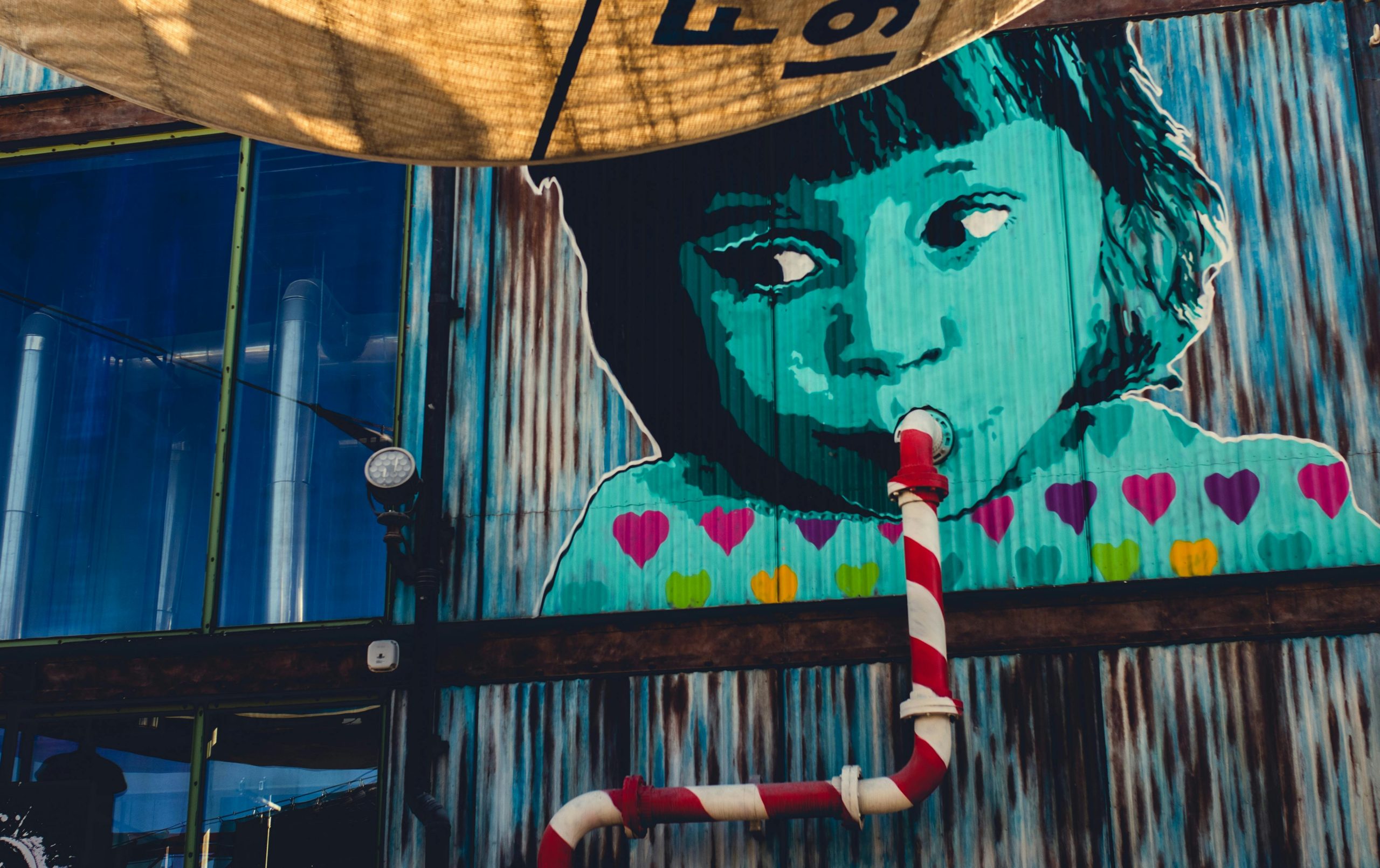
Graffiti on a corrugated metal wall that looks like a child is sipping from a metal pipe as if it's a straw.
Photo by Shukhrat Umarov

Odina Bahodirova argues for the relevance of philology as an academic discipline because of its role in preserving cultural wisdom encoded in language and the ability of students to understand and think critically about language. Sevinch Shukurova explores the role of code-switching as a pedagogical tool in language learning. Surayo Nosirova shares the power of an educator giving a struggling student tutoring and a second chance. Nozima Zioydilloyeva celebrates Uzbekistan’s cultural accomplishments and women’s education within her home country. Marjona Mardonova honors the history of the learned Jadid Uzbek modernizers.

Nazeem Aziz recollects Bangladeshi history and celebrates their fights for freedom and national identity. Poet Hua Ai speaks to people’s basic longings to live, to be seen and heard. Leif Ingram-Bunn speaks to hypocrisy and self-righteousness on behalf of those who would silence him, and self-assertion on his part as a wounded but brave, worthy child of God.

Z.I. Mahmud traces the mythic and the heroic from Tolkien to Harry Potter. Poet Hua Ai, interviewed by editor Cristina Deptula, also wonders about the stories we tell ourselves. She speculates through her work about what in the human condition is mandatory for survival and what is learned behavior that could be unlearned with changing times.

Synchronized Chaos contains many of the stories we tell ourselves about ourselves and our world. We hope you enjoy and learn from the narrative!