Essay from Dilbar Koldoshova Nuraliyevna

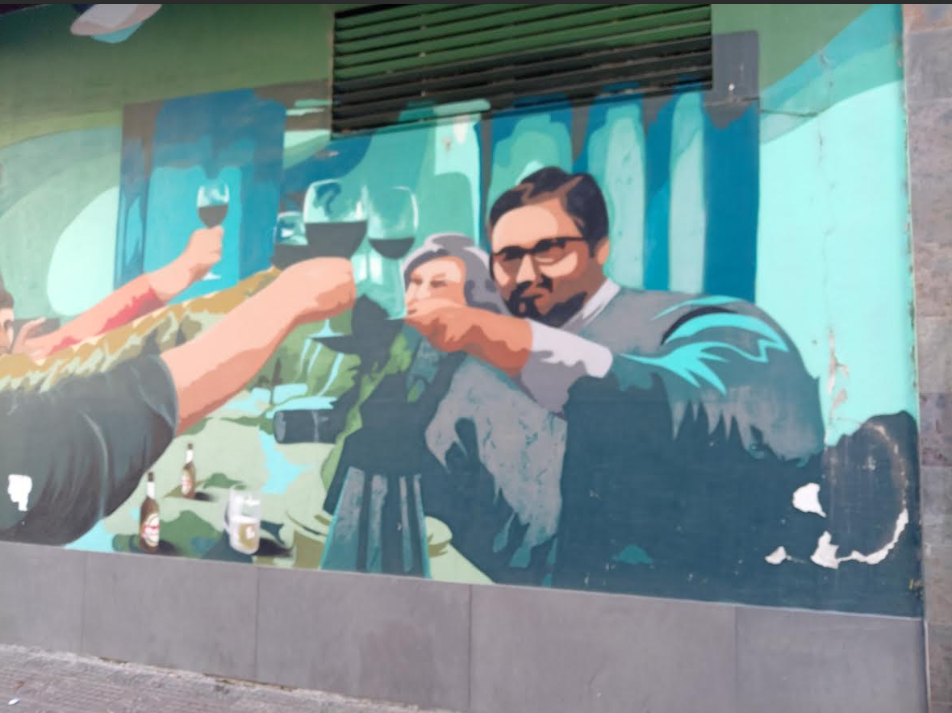
Teen Central Asian girl leaning to our right with dark straight hair, brown eyes, and a white collared blouse.

A POET WHO COMES ONCE IN A THOUSAND YEARS

      My country is Uzbekistan.  I couldn’t describe this country, this people, except Abdulla Oripov. 

      — A voice from far away,

      — Tell me, what should I do, grandfather?

      — He is a voice from the Motherland, 

      — Payondoz on their way.

      — The sound came again suddenly,

      — Tell me what to do, grandfather?

      — A world with a burden on its shoulders, 

      — He is your people, help me, my child.

      It is a holy happiness for me to know that I was born in a land of fire from the loving sun, that I live.  My heart is filled with pride and joy to be the child of Abdulla Oripovday Kashkadarya, who is known and recognized as the second Navoi of world literature.

      A person can choose everything in life.  But he cannot choose the blessed Motherland and parents.  Happy land with umbilical cord blood.   My homeland is Uzbekistan.  By his own name, he is a bek, he is a sultan.  Motherland is our grandfather’s legacy, our father’s legacy.  In every line of Abdulla Oripov, he found the independence of the Motherland and its definition. 

      …Only my weak pen is mine, 

         Uzbekistan is my country.

      In the poem “Uzbekistan, My Country, My”, the poet tells a deep story about the past of the Motherland.

      Today, I decided not to criticize Abdulla Oripov’s biography or his poetry collections, but to visit the poet’s homeland, his heart’s blood, his palace.

      My heart sings the ode of the poet “Uzbekistan, my country” like a charming song.

      As I read the poem from the beginning to the end, the glory of our ancestors, the halal bread of Uzbek people, appears in my mind.  My heart trembles like a chained poem because of the dark days and difficult times they have seen.  That’s all you do, old world.  Beruni, Amir Temur, Uluğbek, Ghafur Gulam… .  In this poem, the word “Motherland” finds its form and shape and pace in the blood of the farmer in the field. This feeling flows like hot blood in my body and soul. It screams like a sign of life. Indeed, Abdulla Oripov  A unique poet who glorified and conveyed the value of the homeland in this poem, it is not an exaggeration to say that the heart that has not penetrated into this ode is not an exaggeration. 

      Don’t be sad, my dear,

      Don’t worry about your age.

      Over the centuries,

      Your everlasting love. 

      In the great human family,

      Your forehead is so bright.

      My bright abode is mine,

      Uzbekistan is my country.

      The poet wrote many beautiful poems about the “Motherland”. 

      The poet created by mixing his soul and body.  I understand the poem “Why I love Uzbekistan” as a logical continuation of the ode “Uzbekistan, My Country”.  In this poem too, the artist praises verses about the soil, sky and sun of the Motherland.  While talking about Furqat, Mirza Babur, who became a king and a khan in his own country and a king in other countries, came to my mind.   My heart is already aching.  Because, as the poet said, wherever a person is born, that soil is his land.  If his Motherland is surrounded by a cold country that dominates like ice, he will look warm and give his love.  He bows to this place and this people.

      Well, if they tell me the reason why I love Uzbekistan, before the poet’s beautiful poems – I bow to my motherland.

      Abdulla Oripov is like that, a poet who loved the people and was loved by the people.

      Today, the wind of Independence is blowing in the song that the poet sang… .  In new Uzbekistan, the country is prosperous and the people are happy.  The joy of happiness shines on the faces of our people.  Today, navbahar came to our country full of light and spring full of flowers.  The days of living and living are visited by Navròz.  We are also celebrating the poet’s 82nd birthday on such happy occasions.  This is also a great blessing of God.

Hero of Uzbekistan, People’s Poet of Uzbekistan Abdulla Oripov wrote thousands of poems, epics, dramas.  He translated masterpieces of world literature into Uzbek. 

      If he writes about the poet, he will not do it.  A poet who honors the country and the people always sings the National Anthem of Uzbekistan.  It’s no wonder that this is the pride of the poet’s heart. 

      As I put the last point, I bow to the great poet Abdulla Oripov, who instilled in me and us young people the feeling of loving the Motherland in colorful verses.

      To the homeland, grandfather,

      You have planted flowers. 

      In every line of your poem, 

      You have lost the value of the country.

      This nation, this country,

      How many bloods have you swallowed?

      Before your description ends,

      Today the pen is weak.

      Once in a thousand years,

      A saint like you.

       Kashkadarya region

Koldoshova Dilbar Nuraliyevna, a student of the 10th grade of the 10th grade of the 43rd school of Karshi district.

Dilbar Koldoshova Nuraliyevna was born on March 5, 2007 in the Karshi district of the Kashkadarya region.

   She is currently the 10th “B” student of the 43rd school. 

      Dilbarhan is the queen of poetry, the owner of creativity, a singer with a beautiful voice, and a ghazal girl.

      She came first in the “Leader of the Year” competition.

        1st prize in the regional stage of the “Hundred Gazelles and Hundred Gems” competition.

         It took part in the “Children’s Forum” category and won first place in many competitions.

          She is currently the coordinator of the training department of Tallikuron MFY in Karshi district.

          Kamalak captain of the opposite district.

          Head captain of the “Girls There” club at school 43. 

         The articles titled “Memory is immortal and precious”, “Our School” and “Mother” were published three times in Kenya Times International magazine in 2024.

     In 2023, the first poems were published in the poetry collection “Yulduzlar Yogdusi” of the creative youth of the Kashkadarya region.

      In 2024, ghazals of the creative youth of the Republic were published in the poetry collection “Youth of Uzbekistan”.
Poetry from Ahmed Miqdad

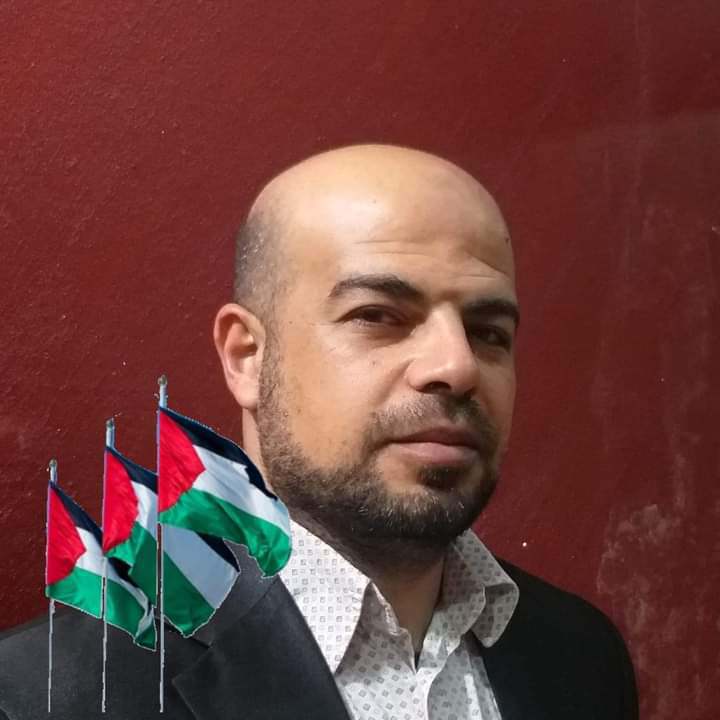
Middle aged Middle Eastern man with a white collared shirt and black coat with red and black and green and white Palestinian flags next to him.

Gaza and the New Year

The world is preoccupied in 

Preparing for the New Year celebrations

The Gazans are engaged in 

Looking for crumbles of bread,

a bottle of potable water,

A shelter from coldness,

And tarpaulin to protect from the rain.

The world launches the fireworks 

That symbolize the so-called civilization

But the Gazan children are killed with the bombshells

That scatter their soft flesh

And the dogs snatch their bodies.

The world turn on the lights and music

That turn the world into deep darkness

And lead to craziness.

While the Gazans have no light

To see each others in tents

And their music is the sound of drones and jets.

The world shares  the beauty of the family

While the Gazans are either homeless or martyrs.

The world feels the warmth of home

But the Gazan children die from the severe coldness.

The world distributes gifts

On children 

However the Gazans’ gifts are heavy lethal bombs and rockets.

That dismember their limbs,

Kill their beloved 

And demolish their homes.

The world gives  children sweets

And the Gazan children receive the white coffins.

The world is celebrating the new beginning of the year

Whilst the Gazans are waiting for the end of their misery.

If you’d like to support poet Ahmed Miqdad and his family at this time, please feel welcome to support and share his GoFundMe here.

Essay from Asadbek Yusupov

CONSTITUTIONAL DUTY AS AN IMPORTANT FACTOR IN THE DEVELOPMENT OF A LEGAL STATE

KONSTITUTSIYAVIY BURCH HUQUQIY DAVLAT VA FUQAROLIK JAMIYATINI RIVOJLANTIRISHNING MUHIM OMILI SIFATIDA

КОНСТИТУЦИОННЫЙ ДОЛГ КАК ВАЖНЫЙ ФАКТОР РАЗВИТИЯ ПРАВОВОГО ГОСУДАРСТВА И ГРАЖДАНСКОГО ОБЩЕСТВА

Annotation: This article explores the role of constitutional duty as a significant factor in fostering the development of a legal state and civil society. The introduction defines key concepts and highlights the necessity of understanding constitutional obligations within the context of societal progress. The methods section elaborates on comparative legal analysis and interdisciplinary approaches utilized to examine the subject. Results indicate that constitutional duties significantly influence the formation of democratic institutions, the rule of law, and active citizenship. The discussion emphasizes the interconnection between individual responsibility and societal stability, proposing actionable recommendations for enhancing constitutional awareness. The conclusion underscores the importance of embedding constitutional education in public and professional spheres. This research contributes to legal studies and policy-making by providing insights into the integration of constitutional principles in civic life.

Key words: Constitutional duty, legal state, civil society, democratic institutions, active citizenship

Annotatsiya: Mazkur maqola konstitutsiyaviy burchning huquqiy davlat va fuqarolik jamiyatini rivojlantirishdagi muhim omil sifatida o‘rnini o‘rganishga bag‘ishlangan. Kirish qismida asosiy tushunchalar aniqlanib, jamiyat taraqqiyotida konstitutsiyaviy burchlarning ahamiyati yoritiladi. Metodlar bo‘limida mavzuni tadqiq qilishda qo‘llanilgan huquqiy taqqoslash va fanlararo yondashuvlar tushuntiriladi. Natijalar shuni ko‘rsatadiki, konstitutsiyaviy burchlar demokratik institutlar, qonun ustuvorligi va faol fuqarolik shakllanishiga katta ta’sir ko‘rsatadi. Muhokamada shaxsiy mas’uliyat va jamiyat barqarorligi o‘rtasidagi uzviy bog‘liqlik ta’kidlanib, konstitutsiyaviy ongni rivojlantirish bo‘yicha tavsiyalar beriladi. Xulosa qismida konstitutsiyaviy ta’limni jamoatchilik va kasbiy sohalarga joriy etish zarurligi qayd etilgan. Ushbu tadqiqot huquqshunoslik va davlat siyosatini shakllantirishga oid yangi qarashlarni taklif etadi.

Kalit so‘zlar: Konstitutsiyaviy burch, huquqiy davlat, fuqarolik jamiyati, demokratik institutlar, faol fuqarolik

Аннотация: В данной статье рассматривается роль конституционного долга как важного фактора развития правового государства и гражданского общества. Введение включает определение ключевых понятий и подчеркивает необходимость осознания конституционных обязанностей в контексте общественного прогресса. В разделе методов описываются сравнительно-правовой анализ и междисциплинарные подходы, применяемые для исследования темы. Результаты показывают, что конституционные обязанности оказывают значительное влияние на формирование демократических институтов, верховенства права и активного гражданства. В обсуждении подчеркивается взаимосвязь между индивидуальной ответственностью и стабильностью общества, а также даются практические рекомендации по повышению конституционного сознания. Заключение акцентирует внимание на важности внедрения конституционного образования в общественную и профессиональную сферы. Исследование вносит вклад в юриспруденцию и разработку государственной политики, предлагая новые перспективы интеграции конституционных принципов в общественную жизнь.

Ключевые слова: Конституционный долг, правовое государство, гражданское общество, демократические институты, активное гражданство

A constitution is the supreme law of a state, laying the groundwork for its governance, legal framework, and the relationship between the government and its citizens. Within this framework, constitutional duties hold a significant position, representing the obligations every citizen owes to their state and society. These duties are not merely legal mandates but also moral imperatives that shape societal harmony, uphold the rule of law, and strengthen democratic governance.

The concept of constitutional duty transcends individual responsibilities, acting as a unifying force that binds citizens to their shared values and collective goals. In democratic societies, fulfilling constitutional duties ensures not only the stability of the state but also the advancement of civil liberties and social justice. However, despite its importance, constitutional duty often remains overlooked in public discourse, overshadowed by a focus on rights rather than responsibilities.

In a rapidly evolving global landscape, where the principles of governance face new challenges, constitutional duties offer a pathway to balance individual freedoms with societal needs. By fostering accountability, active citizenship, and respect for laws, these duties contribute to the resilience of legal states and the vitality of civil societies.

This article delves into the multifaceted role of constitutional duties, analyzing their legal and moral dimensions, their influence on state-building, and their capacity to empower citizens as active participants in democratic processes. Through a comprehensive exploration of these themes, the article aims to shed light on how constitutional duties can serve as a cornerstone for achieving sustainable governance and societal progress.

Constitutional duty serves as a bridge between individual behavior and collective societal needs, making it a cornerstone of both governance and civic life. The significance of these duties lies in their dual capacity to enforce legal compliance and inspire moral commitment. This duality ensures that constitutional duty not only preserves order but also cultivates a shared sense of purpose among citizens.

Legal dimension of Constitutional duties

From a legal standpoint, constitutional duties are obligations mandated by the state to maintain its stability and promote the welfare of society. These duties encompass a range of responsibilities, including:

  1. Adherence to laws: Respecting and following the law is fundamental for maintaining public order and safeguarding the rights of all citizens.
  2. Payment of taxes: Taxes provide the financial backbone for state functions, enabling the development of infrastructure, public services, and national defense.
  3. Military or Civil service: Contributing to national security or public welfare reinforces the collective strength of a nation.

Failure to uphold these duties can lead to legal consequences, but more importantly, it weakens the social contract between the state and its citizens, eroding trust in public institutions.

Moral dimension of Constitutional duties

Beyond legal obligations, constitutional duty reflects the moral relationship between individuals and their society. It underscores the importance of:

  1. Patriotism: A commitment to one’s nation, expressed through active participation in its development and defense.
  2. Civic engagement: Involvement in democratic processes, such as voting, advocating for justice, and participating in community initiatives.
  3. Social Responsibility: Recognizing and addressing societal issues, such as inequality and environmental degradation, as collective challenges.

These moral obligations foster unity, social cohesion, and a sense of belonging, which are essential for the long-term stability and prosperity of any state.

Impact on State and Society development

The fulfillment of constitutional duties plays a crucial role in the evolution of a legal state and civil society.

  1. Strengthening Democratic institutions: When citizens actively engage with their duties, they reinforce democratic governance and the legitimacy of public institutions.
  2. Promoting Rule of Law: Constitutional duties ensure that laws are respected and applied uniformly, creating a fair and just society.
  3. Encouraging Active Citizenship: By participating in civic duties, citizens become agents of change, addressing societal challenges and contributing to progress.

Conversely, neglecting these duties can result in political apathy, social fragmentation, and weakened governance structures.

Challenges and Recommendations

Despite their importance, constitutional duties are often underappreciated or misunderstood. Several challenges hinder their implementation, including:

  1. Lack of Awareness: Many citizens are unaware of their constitutional obligations and their significance.
  2. Mistrust in Institutions: Corruption and inefficiency in governance discourage citizens from fulfilling their duties.
  3. Focus on Rights Over Responsibilities: Public discourse often prioritizes individual rights, sidelining the equal importance of responsibilities.

To address these issues, the following measures are recommended:

  1. Constitutional Education: Integrating lessons on constitutional duties into school curricula to build awareness from a young age.
  2. Public Awareness Campaigns: Promoting the importance of these duties through media, community programs, and public events.
  3. Institutional Reform: Enhancing transparency, accountability, and efficiency in governance to rebuild trust in public institutions.

By fostering a culture that values constitutional duties, societies can achieve a balance between individual freedoms and collective well-being, ensuring sustainable development and resilience in the face of modern challenges.

In conclusion, Constitutional duties are integral to the foundation of a legal state and the advancement of civil society. They provide a framework for balancing individual rights with societal responsibilities, fostering social harmony, and strengthening the democratic fabric of a nation. These duties, encompassing both legal obligations and moral commitments, encourage active citizenship and collective accountability, essential for sustainable development and governance. Ultimately, a society that values and upholds constitutional duties creates a resilient and progressive nation, where citizens actively contribute to the prosperity of their state and the well-being of future generations.

REFERENCES:

  1. Ergashev, M. “Huquqshunoslik asoslari.” Toshkent: O‘qituvchi, 2020. – 41-bet.
  2. Jumaev, Sh. “Fuqarolik huquqi va burchlar.” Toshkent: LexPress, 2017. – 52-bet.
  3. Karimov I.A. “O‘zbekistonning o‘ziga xos taraqqiyot yo‘li.” Toshkent: O‘zbekiston, 2015. – 35-bet.
  4. Nazarov, Q. “Fuqarolik jamiyati: nazariya va amaliyot.” Toshkent: Adolat, 2019. – 78-bet.
  5. O‘zbekiston Respublikasining Konstitutsiyasi. Toshkent: O‘zbekiston, 2021. – 5-bet.
  6. Rasulov, A. “Hukumat va jamiyat o‘rtasidagi munosabatlar.” Toshkent: Huquq, 2022. – 88-bet.
  7. Soliyev S.S. “Huquqbuzarliklar profilaktikasi.” Darslik. T.: Fan, 2023. – 22-bet.
  8. Xo‘jaev, A. “Demokratik jamiyatda huquqiy burchlar.” Toshkent: Akademnashr, 2018. – 60-bet.

Poetry from Doug Holder

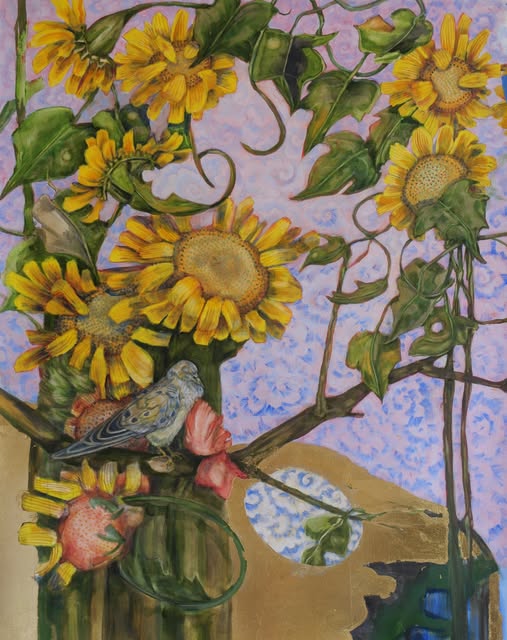
Image c/o Gieseke Penizzotto Denise

“I Will Wait For You”

Poem by Doug Holder, inspired by a painting by Gieseke Penizzotto Denise

sunflowers

gold petals

a bit of

haberdashery

for a bluebird

of happiness

whose heart

and no doubt,

feathers

flutter

to be swept off

by her angel-winged

lover.

Doug Holder…

Board of Directors of the New England Poetry Club

Boston Area Small Press and Poetry Scene   http://dougholder.blogspot.com

Ibbetson Street Press  http://www.ibbetsonpress.com

Poet to Poet/Writer to Writer  http://www.poettopoetwritertowriter.blogspot.com

Doug Holder CV http://www.dougholderresume.blogspot.com

Doug Holder’s Columns in The Somerville Times https://www.thesomervilletimes.com/?s=%22Doug+Holder%22&x=0&y=0

Doug Holder’s collection at the Internet Archive   https://archive.org/details/@dougholder