Afterword: I was struck by the turn of phrase used in a standard year-end recounting of those recognized persons who have passed away this year and it started me thinking about what else has been lost, some things perhaps irretrievably, and what might come to pass. Are we entering a liminal time?
Also, The British Economist in their “On language” feature just has published its word of the year for 2024, it is kakistocracy. Here is the concluding paragraph: “Kakistocracy has the crisp, hard sounds of glass breaking. Whether that is a good or bad thing depends on whether you think the glass had it coming. But kakistocracy’s snappy encapsulation of the fears of half of America and much of the world makes it our word of the year.”
I remember your laughter, a sun that no longer shines,
your gaze, a lighthouse that the night has buried.
Now only an echo of your voice remains,
a distant whisper that the wind took away.
My heart, a boat adrift in the sea,
without a rudder, without a compass, without a direction to reach.
Tears, waves that break on the shore,
a torrent of pain that my soul distills.
But in the silence, a faint glow,
the memory of your love, an eternal glow.
And although pain oppresses me, and sorrow hurts me,
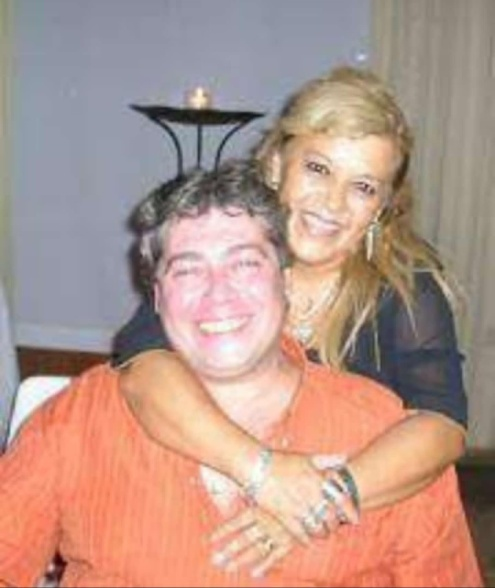
your memory will live, as long as my soul sighs, dear husband.
Rest in peace.
GRACIELA NOEMI VILLAVERDE is a writer and poet from Concepción del Uruguay (Entre Rios) Argentina, based in Buenos Aires She graduated in letters and is the author of seven books of poetry, awarded several times worldwide. She works as the World Manager of Educational and Social Projects of the Hispanic World Union of Writers and is the UHE World Honorary President of the same institution Activa de la Sade, Argentine Society of Writers. She is the Commissioner of Honor in the executive cabinet IN THE EDUCATIONAL AND SOCIAL RELATIONS DIVISION, of the UNACCC SOUTH AMERICA ARGENTINA CHAPTER.
First of all, contributor Jeff Rasley invites people to consider this opportunity to further education in Basa Village, where he has spent much time.
From Jeff: The people of Basa Village, Nepal, have requested our Foundation’s help with two projects commencing in 2025. Funds are needed to help pay the salaries of three of the village school’s teachers. If private funding is not provided, the school’s English, Science, and Social Studies & Computer Literacy teachers will have to work for no pay or resign. Because the village’s family farms are all subsistence farms, many of the 85 elementary school students will eventually leave Basa. Acquiring education that will help to make the village’s youth employable in a city may be vital to their future. The Foundation is seeking contributions to fund those three teachers’ salaries for one year.
The second project is the development of a commercially viable herd of goats and pigs. The villagers are dependent on subsistence farming and money earned by some of the adults working in the tourist industry as support staff for treks and mountaineering expeditions. Disastrous earthquakes in 2015 and the 2020 COVID pandemic virtually shut down tourism for two years following each of those catastrophes. The village leaders realized that a sustainable business is needed to support village families, when jobs in tourism are not available. The first animals were purchased this year, but to make the endeavor profitable, more animals must be purchased and cared for. The goal is to have a profitable co-op business of selling goat milk, cheese, and yoghurt and pork within two years after the requisite number of animals are acquired. Money earned above costs will support the village school and provide assistance to any families in need.
Please consider contributing to our fundraiser for the school and farm projects via our website at https://www.bvfusa.org/donate
Or, send a check to our corporate treasurer David Culp 2322 E. 66th St. Indianapolis, IN 46220. Let me know if you have any questions about the projects or the BVF. The Basa Village Foundation USA, Inc. is a 501(C)(3) organization, and financial contributions to it are charitable donations, per the US Internal Revenue Code.
Now, for this month’s first issue: Who Will We Become?
John Edward Culp personifies the human journey through life as a child learning to walk under a giant sky. On the other hand, Ilhomova Mohichehra’s work honors the beauty and longevity of a tree.
Sayani Mukherjee communes with the hidden longings and feelings layered within a landscape as Rubina Anis melds colors into gentle natural scenes. Christina Chin and Jerome Berglund’s collaborative tan-renga highlight vignettes and observations of humans co-existing with nature. Raquel Barbeito’s art zooms in on pieces of nature – flowers, spiders, a skull – in black and white. O’tkir Mulikboyev wishes to become part of his natural environment and bring nutriments to those around him.
Alan Catlin presents human and animal wildness in its feral glory: hunger, fear, crashing ocean spray, animal eyes in the dark, earthworm trails. Sidnei Rosa da Silva’s prose poetry depicts the lonely calm of a northern winter. Christina Chin and Kimberly Olmtak’s collaborative tan-renga becomes more personal and domestic, presenting cozy tea and houseplants.
Duane Vorhees furthers his poetic exploration of sensuality, fecundity, and history. Brooks Lindberg’s poem probes the linkages between older mysticism and newer beliefs given our understanding of physics.
Isabel Gomez de Diego’s photography positions youth and new life as a continuation of the world’s cultural and natural history. Kylian Cubilla Gomez captures the off-center wonder and mystery of childhood through his photographic close-ups of toys.
Jacques Fleury’s pieces address awakening, surprise, and discovery. JoyAnne O’Donnell celebrates the manifold ways ordinary people can find joy in our everyday lives, including love and close relationships. Lilian Dipasupil Kunimasa conveys the deep joy of intimacy, friendship, and love. Mesfakus Salahin evokes quiet moments of peace brought by a tender love. Sara Goyceli Serifova wishes to live a long time with her beloved partner, as her grandmother did.
Z.I. Mahmud examines the characters’ journeys out of self-absorption toward empathy and wonder in Antoine Saint-Exupery’s The Little Prince.
Layla Adhamova suggests that happiness is accessible to many people, not just the wealthy. Gullola Nuriddinova laments the betrayal of a lover who chose money over their beloved. Bill Tope’s short story illustrates a youthful form of justice against family favoritism and classism around the holidays.
Brian Barbeito conveys the wisdom of age in his piece on a friendship between a young boy and a kind elderly neighbor.
Haitmurodov Ismoil reflects on how a father’s love can sustain you throughout life. Azimbayeva Dilrabo gives a tribute to a caring father who passed away, Iroda Sherzod offers up a tribute to her caring and selfless father, and Rahmiddinova Mushtariy pays tribute to her father’s wisdom. Olimjonova Muslima pays tribute to her parents’ continued support all along her academic and personal journey.
Sobirjonova Rayhona shares tributes to beloved teachers here, here, and here. Shahnoza Ochildiyeva’s story illustrates how a teacher brought about justice in the classroom without shaming anyone. Shoxijaxon Urunov’s essay highlights how teachers accomplish so much more than imparting information.
Dilbar Koldoshova Nuraliyevna reflects on the difficulties and hard work of the creative life and her determination to pursue that path, as Kass probes the solitary inner drives of a literary artist.
Rick Reut tinkers with the arrangement of words in concrete poetry exploring time, memory, and language. Vernon Frazer’s words pop out of juxtaposed shapes and images while Mark Young serves up a heady word-marinade. Maftuna Yusufboyeva looks into a different way of using language, examining the role, goals, and purposes of advertising. Texas Fontanella links ideas and words and bursts of thought together in his Pound-inspired modern canto.
Federico Wardal spotlights the elegance and cultural history of Andrea Ceccomori’s San Francisco flute performances. David Sapp illuminates a moment of rapturous ecstasy in the view of sublime art. Dr. Jernail S. Anand’s poetry reminds us that the truth about history and humanity is often difficult to stomach and that art helps us process our knowledge. Thus, the literary arts are a worthy calling, despite the lack of remuneration.
Norova Zulfizar outlines various historical sites in Uzbekistan while Rustambekova Nozimakhon sketches life in her neighborhood, showing her pride in her community. Khalida Nuray’s poem urges people of Turkish ancestry to rise up and defend and protect their homeland and culture.
S.C. Flynn’s poetry illustrates the tragedies of incomplete journeys and transformations: beautiful thoughts, creatures, and relationships that never develop into what they are meant to be.
Taylor Dibbert’s poem reflects the quiet anxiety many Americans felt over the 2024 presidential election. In a similar vein, Daniel De Culla satirizes Donald Trump’s values and personality through poetry and a photo. Pat Doyne bitterly calls out the United States’ less welcoming attitudes towards immigrants. John Ebute poetically seeks signs of life in his native and troubled Nigeria. Abigail George mourns the loss of life and the obfuscations of international politics in her poems on the war in Gaza. Alexander Kabishev ends his saga of the trauma of living in St. Petersburg under siege. David Woodward reflects on broken American political systems with concrete poetry using absurdist forms.
In a more general vein, Anvarova Nilufar laments the harsh state of the world and human nature. Goyibnazarov Abdulla reminds us how people often overestimate their abilities and knowledge.
Mykyta Ryzhykh’s undercapitalized works evoke the barren, alienated landscape of modern life. J.J. Campbell offers up a bah-humbug to the festive season, showing overworked cashiers, commercialism, pain, racism, and loneliness behind the holiday mood. Jim Meirose sends up a quirky tale for the season of online electronics shopping.
Tempest Miller explores memory, trauma, and the absurdity of existence through his pieces on zebras, crocodiles, industry, and nature. Jake Cosmos Aller revels in the surreal wild spirit of a crazy night of passion and booze. Paul Costa uses the language of Western-style adventures to highlight struggles within and among people.
Ilhomova Mohichehra reflects on human vulnerability and on gratitude for her health. Graciela Noemi Villaverde reflects poetically on the loss of a great love. Mahbub Alam also mourns an absence that has become visceral and inescapable. Philip Butera’s poetry explores personal and relational grief, loneliness, and the desire to escape from oneself. Christopher Bernard expresses similar sentiments in his poetic tribute to writer Marvin R. Hiemstra and other deceased writers, which focuses less on than on the individuals who passed and more on the implacability and universality of death.
Christina Chin presents a third round of collaborative tan-renga, this time with M.R. Defibaugh. Its protagonists bring a quiet determination to face unexpected twists of fate.
Maja Milojkovic presents a glorious vision for the world, where everyone enjoys peace, freedom, and mutual respect. We hope that this publication brings Earth a step closer to that goal. Please enjoy the issue!
When I was very little, my family used to visit my dad’s mother twice a year: once during summer vacation when school was out and again in December, for the Christmas holidays. The main thing on our minds during Those trips was, would the old jalopy my dad drove make It all the way to Franklin County, located about 100 miles South of our home, which was just across the Mississippi From St. Louis.
Bessie lived in a one-time mining Community called Buckner, named after an incompetent Confederate general who served during the Civil War. We were joined at these get-togethers at my grandma’s House by my Aunt Blanche, my dad’s sister, and her husband Art and their two children, David and Christine.
Now, the Millers were everything that we weren’t: my dad worked in a glass factory as “unskilled labor,” while Uncle Art was a Foreman at General Motors in Flint, Michigan. Which meant that Art made about three times as much money as my dad. And never let us forget it.
Where my mom had dropped out of high school at 16 and my Dad never went beyond the 7th grade–he enrolled in FDR’s Civilian Conservation Corps during the Depression, probably helping to grade the park where you grill your hotdogs on the Fourth Of July or making the redwood benches at the forest lodge you use come Autumn–the Millers were “educated,” which in those days meant they had finished high school. Aunt Blanche had even had a year or so of secretarial school, making her the family intellectual; she was very much looked up to!
She had worked for Public Assistance, which in those days was called “Relief.” Being mean to poor people gave her an additional sense of superiority. Dad’s sister’s family always seemed to arrive at Grandma’s at the same time that we did. Perhaps it was a coincidence; maybe Uncle Art Just wanted to show off the new Cadillac he bought every year. In any event, the Millers always commandeered the one spare bedroom, leaving my parents to rough it with the kids, scattered across the living room floor. I guess it had something to do with Dad being the older brother who had always helped take care of his sister, the “baby” of the family. He had helped pay for the secretarial school she had attended, a fact no one ever mentioned.
And so it was one Christmas when I was four years old; my brother Gary was eleven; David was six, and Christine two. During these adventures, my brother always seemed to escape, to pal around with his “hoodlum” friends; wherever he went, he must have sought them out, because he sure found them. More on that at another time. As we pushed through Grandma’s door, we beheld there on the hardwood floor a miracle: the tallest, fullest, most beautiful Christmas Tree that– Even to this day–I ever saw. There were crystal, sharp, brilliant lights– Not like the old ones I was used to, where the red paint on the bulbs was scraping off–in all kinds of magical shapes: doves, reindeer, ginger bread men, Santas and many others.
They glowed bright and clear as Stars. There were the “perpetual motion” ornaments, with little seesaws or propellers which were powered by the heat of the nearby Christmas lights, and the millions of shimmering icicles. Someone had spent long, arduous hours hanging them individually, no one touching the other and each strand reflecting the vivid colors of the ornaments and lights. They were like metal–probably lead-based in those days–stalactites hanging in a Christmas grotto. There were miniature Nativity scenes–done in wood, not the plastic that you see today–with each individual wise man and angel clearly delineated in pewter. There was even a very tiny silvery Christ Child in the creche. Elaborate sun-colored garlands were draped majestically over the boughs, like strands of Golden Fleece. These were intermingled With others, thicker and fluffier and red as the planet Krypton. And the scent of that balsam fir was–heavenly.
And there were presents! Literally scores of beautiful, individually wrapped Christmas presents, all swathed in the finest, prettiest wrapping paper I had ever seen. I wondered, how could any present do justice to such wonderful wrappings? I just stood rapt and absorbed the scene, admiring. My dad said, “Lotta presents this year.” “Yeah, and most of them are probably for Christine and David,” my mother muttered darkly. It didn’t quite register at the time, just what she meant, but I understood later.
I knew that my folks had bought David some more of his seemingly unending supply of comic books and they had gotten for Christine a special friction toy, a kind of large top. When you pressed down on the handle, it spun madly around, rather like a gyroscope, with a fairy princess display encased within the glass bubble, which would unfold and sparkle as music played. I was convinced it had been created by magic elves.. It was a marvel. When mom grumbled about the price, I sagely pointed out that if Santa were going to get Christine a gift anyway, then why did she need to? To my memory, that question went unanswered.
I had badly wanted to play with It before it was wrapped–even if it was a girl’s toy–but my mother admonished me not to break it. “Christine will do that soon enough,” she conjectured wryly. We had dinner: turkey, of course, like a scene out of a Norman Rockwell Illustration; all the trimmings. But that was just a requisite prelude to the real order of the day: the presents, the lucre, the loot! “What if, when I open a present, I don’t like it!” David asked obtusely. Duh! It was a present, you goof! You can’t but like it. What was the matter with this character?
“Just say you like it,” whispered Blanche, glancing furtively at my mom and dad.. “We discussed this, David.” Apparently, his expectations weren’t too high in the present department. My jaw jutted out in resentment at the callous jab at my parents. Finally, we all sat around on the floor to open the presents. David had a big bag of Christmas candy that he wouldn’t share. I may have growled at him. Well, truer words my mom never spoke: virtually every present there was for Christine and David. David got an electric train; David got a new red wagon; David got a first baseman’s mitt; and on and on. Christine didn’t do badly either. These were the days before Barbie dolls and G.I. Joes or else my cousins would have had dozens of each.
Christine was relishing no less than six baby dolls–Tiny Tears was big then–and a crib to put them in, clothes to dress them in, and on and on again. Forgotten was the neat new friction top that my dad had worked two and a half hours to earn the money to buy. That was left idle, still in its box, the wrapping paper scarcely disturbed.
All It had gotten out of my cousin was a petulant, “I don’t like it!” I could have swatted her like a fly. Grandma got a lot of fussy “old lady stuff” from her children and their spouses. Blanche got a fur coat of some sort that she paraded around in for what seemed like hours, and Art got yet another pipe, like the ones you saw on the back cover of Esquire magazine, with the bright yellow bowls. I don’t believe my parents received anything more than a package of new handkerchiefs apiece, from grandma.. But they were mollified; Christmas was for kids, after all.
My older brother got a cool Timex watch with an expandable metal band, which was all the rage at the time. My parents had spent $10–like $150 Now–to buy that watch because they didn’t want their oldest son to be embarrassed by his Christmas gift in front of the snooty Millers; I was proud of him, too. Of course, David had to upstage him up brandishing His new “chronometer,” like the “kind the frogmen use.” Sea Hunt was also very big back in the day. Lloyd Bridges was a star! What did I get? A tiny cap pistol with a translucent orange plastic handle. I stared down at it, not sure what to say.
While David and Christine were reveling in their loot, I stood there. forlorn, because I didn’t see anything else for me. Whenever I made to select a present, David would jump up and shout, “Mine! Mine!” and snatch it out of my hands. What did I know? I was four years old; I couldn’t read the gift tags. I thought to myself, why did Santa double-cross me? He seemed to like the Millers so much more. Everything in the world seemed to belong to my cousins. My mom touched my shoulder gently and murmured, “There’s no more in there for You, honey.” I caught Dad’s eye and he gave me one of his grins that crinkled his eyes. I knew then that things would be alright.
The pistol hung down limply from my hand. I blinked, but no tears came. Next, my cousin walked up. David glanced down at my pistol, looked over at his Official Roy Rogers Six-Guns–with the real leather holster–then looked back at my tiny cap pistol, and he laughed. He laughed! Ever since that night I’ve felt like I owed my cousin David a punch in the stomach. Sure, I was disappointed that I hadn’t gotten more gifts, but I really felt bad for my parents, whom I loved very much and I knew wanted so much to make me happy.
For my dad, who worked four times harder than Uncle Art but who gleaned so much less from his paycheck; and my Mom, who scrubbed other women’s floors, on her hands and knees, for a buck an hour! So I aimed that wonderful cap pistol with the translucent orange handle–which I have to this day–squarely between David’s eyes and defiantly I pulled the trigger. And ended him!
(Female teacher with dark hair and a braid, a white collared shirt and black vest and skirt passes out paper to young girls at wooden desks in a classroom)
My teacher
Where should I hit my head, teacher?
After all, you were alone in the world,
I loved you with all my heart
Your love is world famous
It is my duty to glorify your name
I broke my pen without describing you
I have no energy to write to you
I got it from the white paper.
Why did you take another class?
At least you could fill it
I remember I want to cry
My sweet time with you.
He always encouraged me,
I don’t want to leave you alone for a moment
I write poems only for you
Kind, for a girl as big as my father.
I have a pain near my heart
A piece of my heart was torn out
I am always with you Rayhonjon
He smiled and laughed once.
He lied that he will get it next year
I wish I had this teacher again
May we also laugh with eternal joy
The lessons are also good, the voice is pleasant.
My dear teacher is different anyway,
Teaching style, style is different,
trained thousands of disciples,
He is interested in learning until the age of seventy.
It will always remain in my heart,
I will raise your name to the sky,
My heart trembles when I hear your name
My eyes are happy every time I see it.
May he always be healthy
Let the sun of reason shine in the sky
This is my great teacher
His patience is equal to the universe.
My teacher is my teacher, my shield is like my mother
I’m alone in this world, real,
teachers are a masterpiece
Always be healthy, my only one
Author: historian, geographer
Sobirjonova Rayhona
I am Sobirjonova Rayhona, a 9th-grade student of the 8th general secondary school of Vobkent district, Bukhara region. I was born in December 2008 in the village of Cho’rikalon, Vobkent district in an intellectual family. My mother and father supported me from a young age. I am also interested. I started writing in my 3rd grade. My first creative poem was published in “Vobkent Life” newspaper. In addition, many magazines were published in America’s Synchaos newspaper, India’s Namaste India magazine, Gulkhan magazine, Germany’s RavenCage magazine and many other magazines and newspapers. my creative works have come out. I actively participated in many contests and won high places and received many gifts. Creativity is my precocious nature. I am very interested in creativity and enjoy every line. Of course, I will become a great person and bring the name of my country Uzbekistan to heaven, God willing!!!
(Central Asian teen girl with long dark hair, dark eyes, earrings, and black and white striped vest and pants over a white collared shirt, standing in a school hallway with posters on the wall)
Analysis of the Greek capital words in the letter “P”.
Abduvahidova Farangiz
3rd stage student of Samarkand State University named after Sharof Rashidov
Annotation: the article contains comments about the borrowed words that entered the Uzbek language from the Greek language. In addition, a list of Greek words, their spelling and explanation is provided. The history of the creation of the Greek language is also covered.
The Uzbek language is one of the languages with an ancient history. The Uzbek language went through many stages and periods before reaching this level. During this period, the number of lexemes increased, some words came from foreign languages. As a result of the addition of Uzbek suffixes to the words that came from this foreign language, the layer of Uzbek words became richer.
In connection with the serious changes in the structure of the Uzbek language dictionary, there was a need to create an explanatory dictionary that meets the requirements of the time, and under the leadership of our Academician A. Hojiyev, the Institute of Uzbek Language, Literature and Folklore of the Academy of Sciences of the Republic of Uzbekistan ( 5-volume “Annotated Dictionary of the Uzbek Language” was created and published by a group of lexicographers of the former Alisher Navoi Institute of Language and Literature. This source contains about 80,000 words and phrases that are widely used in the Uzbek literary language, terms related to the fields of science, art, culture and technology, historical terms and words used in the dialect. .
In 2020, this annotated dictionary was revised under the editorship of Abduvahob Madvaliyev, Ph.D. reprinted and made available to the general public.
The Greek language is at the initial stage in the history of the Greek language – mill. Av. It was used from the 14th-12th centuries to the 1st-4th centuries AD (now a dead language); the ancient language of the Greeks. Together with the ancient Macedonian language, it forms a separate Greek group in the family of Indo-European languages.
There are a total of 1047 words starting with the letter P in the explanatory dictionary of the Uzbek language. These words are formed with a layer of self and assimilation. Borrowed words came from Persian, Greek, Latin, German, French and Russian languages. 115 of these words came from the Greek language. Here is a list of some of them.
1) Pielet – inflammation of the kidney cup
2) Easter is a holiday dedicated to the resurrection of Jesus, the founder of this religion, in the Orthodox sect of Christianity.
3) Patriarchy – the era of patriarchy, the period when men dominated family, economic and social relations after the matriarchy of the primitive system.
4) Pathos – high spirit, enthusiasm, joy.
5) A pen is a writing and drawing tool that is used to write with ink, ink, etc.
6) Perigee – the closest point of the moon’s orbit or the orbit of the earth’s satellite to the earth.
7) Perimeter – the length of a closed curve (for example, the perimeter of a polygon is equal to the sum of all its sides)
8) Pegology is the teaching of children
9) Peritonitis – peritoneum
10) Pantheism – God
11) Papax- telpak
12) Paragraph is the name of the title of a text, such as a book or an article, which has independence in terms of meaning
13) Parabola – I) open, flat curve; formed by the intersection of a right cone with a plane parallel to one of its constituents. II) an ironic image with a symbol in fiction; a literary genre between a symbol and a symbolic story
14) Paradigm – I) a system of language units, grammatical forms united by their general meaning, different according to their specific meaning II) a system of forms of a word’s variation or inflection.
15) Paradox – a traditional thought accepted by the majority, an unexpected thought, reasoning that sharply contradicts experience with its content and form.
16) Parasite – gratuitous, sycophantic
17) Paco – ancient
18) Paleography is a science that studies ancient manuscripts and writings, the history of the creation of written signs and their appearance (writing method, letter shape, type of writing material, etc.).
19) Paleolithic – the oldest stone age, era.
20) Pandemic – spread of an epidemic disease throughout one country, several countries or continents
21) Panzooteia is a very rapid and widespread spread of an infectious disease among animals throughout the country, several countries, and continents.
22) Panorama – I) a surrounding view of a place visible to the far horizon. II) type of fine art; a very large picture, which is painted horizontally on the wall of a circular hall, looks like a real scene to the viewer.
23) Psyche – the first archival part of compound words of international assimilation: it means connection to psyche, psyche
24) prophylaxis – I) a set of measures aimed at maintaining people’s health, preventing the occurrence and spread of diseases, improving the physical development of the population and ensuring a long life. II) in general, measures to be taken to prevent an incident, mechanisms, machines from premature failure, damage
25) protocol is a document drawn up by a responsible person and confirming an event or situation
26) proton – a stable elementary particle, a component of the atomic nucleus with a positive electric charge; the nucleus of light hydrogen
27) prosthesis – a device made in the shape of an organ of the body or placed in place of a damaged or removed organ (for example, an artificial hand, an artificial tooth)
28) problem – problem
29) prologue – introduction
Greek accusatives also have features of morphemes and polysemy. Words such as paxa, parasite, protocol, prologue have many meanings; Similarity of form is evident in words such as parabola, prophylaxis, paranoma, and paradigm. In addition, many terms related to mathematics, history and mother tongue are borrowed from Greek. We can see these in the example of words like parabola, paradigm, pathos, patriarchy, perimeter, psyche and paragraph.
List of used literature:
1) An explanatory dictionary of the Uzbek language. – Moscow: “Russian language” publishing house, 1981.
2) An explanatory dictionary of the Uzbek language. – Tashkent: “Uzbekistan National Encyclopedia” State Scientific Publishing House, 2006-2008.
3) An explanatory dictionary of the Uzbek language. – Tashkent: Gafur Ghulam publishing house, 2022.
There is a girl whose dreams are like an ocean, she cries a lot! A lot of stress, but did not give up!
In the whirlwind of life, she took full advantage of her opportunities! Cut off the bite! Diligent Jussasi is a small but brave girl! He also wanted to be happy! And found a way to be happy! Let’s find out how he did it!
The book is very dangerous, if you read it, you can be happy! Be careful! Luck is coming your way!!
Many people analyze the word happiness in different ways, let’s first understand the meaning of the word happiness! Happiness is actually your existence, your family, true friends, your favorite study, your favorite profession, your favorite place, your favorite country, all these are part of happiness. Do not look for happiness! – discover it yourself! . Are happy people only rich people? No, everyone can feel happiness! And I know that it is right. I know that this life breaks you a lot, I know that life has thrown you to different places! Get up and live again, how many things you haven’t discovered yet, scientists have studied 97~98% of the surface of the earth, but how many things are unexplored in the ocean and underground! So you have the opportunity and time to breathe? Is your heart pounding? do you love So you have a chance to be happy!
Maybe you feel like you are lagging behind? Everyone seems happy in the virtual world except you? Maybe your heart is tight and you cry every night? Know that morning comes after night, happy days are waiting for you like spring after winter! You just live! Happiness itself comes out from under your feet. Yes, do what you love, participate in your favorite activities, eat your favorite food. And happiness slowly begins to form in you!
Walk away from things that bring you down, even if it’s hard! Try to fix the thing that spoils your mood! it will come from your hand, I believe in you!
Everyone’s jealous these days, right? Don’t tell anyone your goals! Eyes can touch!
Spend more time with your loved one first, with your family, because we all trust each other! Let’s appreciate our parents when they are alive! Our family is our source of energy that always supports us!
I ask myself, “Are you happy, Laila?” My answer will be like this! I create my own happiness, I do what I like, I stop putting barriers on myself, I don’t lose my identity, maybe I’m a hudbin? Maybe the best person? Maybe a bad friend is a bad child? I will try to be good and I will do it! Life can’t beat me, I won’t give up!
Do you see your reflection in the mirror every day? Compliment yourself I am beautiful I’m smart I am rich I chose a profession that I love I am studying in the university I want Say thanks to God that everything is perfect with me!
Believe 100% that everything will be fine and think good things!
Maybe everything will not be like before, but believe that it will be better than before! Are you a teenager? Between the ages of 16 and 26, everyone experiences stress and depression. Don’t let these two defeat you! Don’t give up your expensive life for this cheap world! Just go ahead and take risks. I’m sure you’ll be glad you didn’t give up when it all comes down to it!
I always asked myself, why am I so lazy? Why am I so stupid? Why do I cry so much? Why? why ?why ? The questions covered my head. I am a teenage girl like you! I have no superiority over anyone. I would also like to feel happiness. Happiness is actually a miraculous feeling that comes when we don’t expect it! If you do what you like, happiness will develop in your heart! Let’s be happy together!
can you see Can you distinguish colors? Can you speak? Are you walking home late without someone’s help? So you are on the threshold of the formula of happiness! Let’s go inside. Do you agree?
My sister ~ my sister! Be happy BROTHERS! Remember me when you are happy!
I am happy!
Layla is the author of the book “Everyone has the right to be happy”.