
Burning

As the months processed
I surmise a new fall
Flamingo pink skies
Burning over the horizon
A new Streetlamp hung around my closet
I swam a darkness high
As I breathe deep I drink a new paradise
Hope's cities has new avenues
Before they all fall a decade high
Hung around still for the spring
Matches for matches
This is what justice felt like
Over my running shoes
I knew the darkness has tapestry
So it showed me a matchstick sky
Heaven knows I tried
For the spring comes
With burning winter's sickly delicate lace.
Category Archives: CHAOS
Essay from Madaminova Ogiloy
My beautiful flower
You are my angel mother
You are unmatched in the world
My mother without paradise
There is no woman like you in the world
No even in heaven
No even yours
My mother without paradise
You made me out of nothing
You who washed and combed white
You are sorry if I make a mistake
My mother without paradise
It is true that I love you
Itʼs true that I even got hit
This word is also true. Yes, it is true
My mother without paradise
There is little I can do for you
Even the moon in the sky little
Just laugh a little
My mother without paradise
If I cheer you up with my poem
If I say my love, my flower
Donʼt let my father be jealous, mother
My mother without paradise
Madaminova Ogiloy was born in 2002 in Kopkopir district of Khorezm region. 3rd stage student of Jizzakh State Pedagogical University. She is currently studying English and Turkish. In her free time, she enjoys reading and baking.
Essay from Dilbar Koldoshova Nuraliyevna

A POET WHO COMES ONCE IN A THOUSAND YEARS
My country is Uzbekistan. I couldn’t describe this country, this people, except Abdulla Oripov.
— A voice from far away,
— Tell me, what should I do, grandfather?
— He is a voice from the Motherland,
— Payondoz on their way.
— The sound came again suddenly,
— Tell me what to do, grandfather?
— A world with a burden on its shoulders,
— He is your people, help me, my child.
It is a holy happiness for me to know that I was born in a land of fire from the loving sun, that I live. My heart is filled with pride and joy to be the child of Abdulla Oripovday Kashkadarya, who is known and recognized as the second Navoi of world literature.
A person can choose everything in life. But he cannot choose the blessed Motherland and parents. Happy land with umbilical cord blood. My homeland is Uzbekistan. By his own name, he is a bek, he is a sultan. Motherland is our grandfather’s legacy, our father’s legacy. In every line of Abdulla Oripov, he found the independence of the Motherland and its definition.
…Only my weak pen is mine,
Uzbekistan is my country.
In the poem “Uzbekistan, My Country, My”, the poet tells a deep story about the past of the Motherland.
Today, I decided not to criticize Abdulla Oripov’s biography or his poetry collections, but to visit the poet’s homeland, his heart’s blood, his palace.
My heart sings the ode of the poet “Uzbekistan, my country” like a charming song.
As I read the poem from the beginning to the end, the glory of our ancestors, the halal bread of Uzbek people, appears in my mind. My heart trembles like a chained poem because of the dark days and difficult times they have seen. That’s all you do, old world. Beruni, Amir Temur, Uluğbek, Ghafur Gulam… . In this poem, the word “Motherland” finds its form and shape and pace in the blood of the farmer in the field. This feeling flows like hot blood in my body and soul. It screams like a sign of life. Indeed, Abdulla Oripov A unique poet who glorified and conveyed the value of the homeland in this poem, it is not an exaggeration to say that the heart that has not penetrated into this ode is not an exaggeration.
Don’t be sad, my dear,
Don’t worry about your age.
Over the centuries,
Your everlasting love.
In the great human family,
Your forehead is so bright.
My bright abode is mine,
Uzbekistan is my country.
The poet wrote many beautiful poems about the “Motherland”.
The poet created by mixing his soul and body. I understand the poem “Why I love Uzbekistan” as a logical continuation of the ode “Uzbekistan, My Country”. In this poem too, the artist praises verses about the soil, sky and sun of the Motherland. While talking about Furqat, Mirza Babur, who became a king and a khan in his own country and a king in other countries, came to my mind. My heart is already aching. Because, as the poet said, wherever a person is born, that soil is his land. If his Motherland is surrounded by a cold country that dominates like ice, he will look warm and give his love. He bows to this place and this people.
Well, if they tell me the reason why I love Uzbekistan, before the poet’s beautiful poems – I bow to my motherland.
Abdulla Oripov is like that, a poet who loved the people and was loved by the people.
Today, the wind of Independence is blowing in the song that the poet sang… . In new Uzbekistan, the country is prosperous and the people are happy. The joy of happiness shines on the faces of our people. Today, navbahar came to our country full of light and spring full of flowers. The days of living and living are visited by Navròz. We are also celebrating the poet’s 82nd birthday on such happy occasions. This is also a great blessing of God.
Hero of Uzbekistan, People’s Poet of Uzbekistan Abdulla Oripov wrote thousands of poems, epics, dramas. He translated masterpieces of world literature into Uzbek.
If he writes about the poet, he will not do it. A poet who honors the country and the people always sings the National Anthem of Uzbekistan. It’s no wonder that this is the pride of the poet’s heart.
As I put the last point, I bow to the great poet Abdulla Oripov, who instilled in me and us young people the feeling of loving the Motherland in colorful verses.
To the homeland, grandfather,
You have planted flowers.
In every line of your poem,
You have lost the value of the country.
This nation, this country,
How many bloods have you swallowed?
Before your description ends,
Today the pen is weak.
Once in a thousand years,
A saint like you.
Kashkadarya region
Koldoshova Dilbar Nuraliyevna, a student of the 10th grade of the 10th grade of the 43rd school of Karshi district.
Dilbar Koldoshova Nuraliyevna was born on March 5, 2007 in the Karshi district of the Kashkadarya region.
She is currently the 10th “B” student of the 43rd school.
Dilbarhan is the queen of poetry, the owner of creativity, a singer with a beautiful voice, and a ghazal girl.
She came first in the “Leader of the Year” competition.
1st prize in the regional stage of the “Hundred Gazelles and Hundred Gems” competition.
It took part in the “Children’s Forum” category and won first place in many competitions.
She is currently the coordinator of the training department of Tallikuron MFY in Karshi district.
Kamalak captain of the opposite district.
Head captain of the “Girls There” club at school 43.
The articles titled “Memory is immortal and precious”, “Our School” and “Mother” were published three times in Kenya Times International magazine in 2024.
In 2023, the first poems were published in the poetry collection “Yulduzlar Yogdusi” of the creative youth of the Kashkadarya region.
In 2024, ghazals of the creative youth of the Republic were published in the poetry collection “Youth of Uzbekistan”.
Poetry from Ilhomova Mohichehra
I have no father!
Even though I was a man, he smiled,
The most sincere person in the world.
Although I was stubborn, he thought of me,
You are my one and only father.
Sometimes I hurt you,
I put it down to manhood and youth.
Even then, the person who looked at my heart,
You are my one piece, my world, dad.
Sometimes we didn’t sleep because of the chaos.
You were tired, but we did not stay silent.
Anyway, a man who can’t stop loving
My father is a hero in my personal world.
You are my greatest happiness in the world,
I walk in your shadow, wealth is my throne.
You are the reason I click the steps chart,
My respect is endless, my country is my father!
Poetry from Maria Cristina Pulvirenti
snow –
the chirp of a robin
so muffled
Essay from Z.I. Mahmud (one of several)
Sylvia Plath’s Lady Lazarus and Daddy
Examine close reading of Sylvia Plath’s poems “Lady Lazarus” and “Daddy” with critical perspectives and textual references in association with the thesis statement that “Lady Lazarus” and “Daddy” both rebel coercion confinement of patriarchy and misogyny.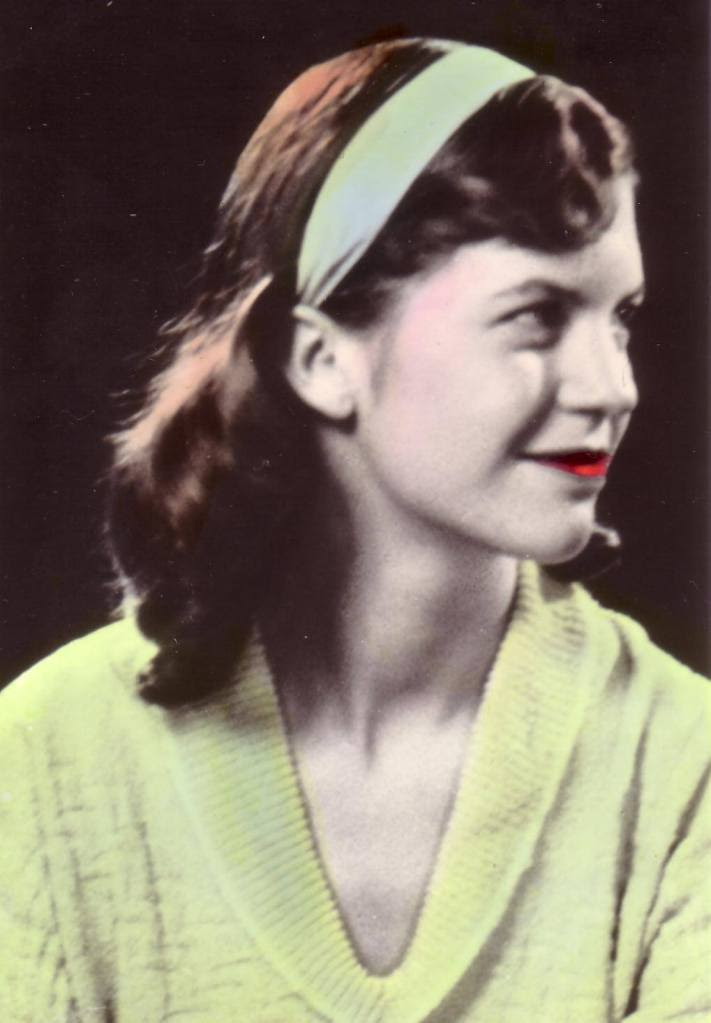
(Image of Sylvia Plath, young white woman with brown hair and eyes, yellow v-neck sweater, red lipstick and a headband)
Examine close reading of Sylvia Plath’s poems “Lady Lazarus” and “Daddy” with critical perspectives and textual references in association with the thesis statement that “Lady Lazarus” and “Daddy” both rebel coercion and confinement of patriarchy and misogyny.
Sylvia Plath’s “Lady Lazarus” and “Daddy” are conical works of transcendentalist American feminism posthumously anthologized in the poetry collection Ariel in 1965. American poetesses’ egotistical individuality and romanticist fantasy of selfhood quest crusading the forces of sublimity is universally foreshadowed by the phenomenal poems. Gloom and doom, dark humour and black humour engender the motifs of revenge and memory through mythologization, poeticization, psychologization, romanticization and/or fantasization in these quasi-confessional and quasi autobiographical elegies.
“Lady Lazarus” is a vindication of the temptation of fate as implied in the poetical rhetorics: “Herr God, Herr Lucifer”/ “Beware/ Beware”. Epiphanic voice of the romanticist egomaniacal heroine of femininity is reflected in the biblical figuration of the transformative poetess. The resurrectionist figuration is an avenging phoenix that transcends the contemporary recalcitrant barriers of race, class, ethnicity, gender, nationality and culture[al] stereotyp[ical]es expectations of the hackneyed microcosm. This overarching feminist emancipation salvages herself by historicizing in the hyperbolic figurative tropes foreshadowing: “Out of the ash/ I rise with my red hair/ And I eat men like air.” Etherealism and surrealism surmounts in the reincarnation and resurrection impresarios of “Lady Lazarus”.
On the contrary, “Daddy” was merely the first jet of flames from a literary dragon, who in the last years of her life breathed a burning river of bale across the literary landscape. “Daddy” is a subversive indictment of overarching feminism harbouring cantankerousness and obstreperousness against patriarchal dominance. “Daddy, daddy, you bastard. I’m through…” is the culmination of a matriarchal feminist stance of the woman poet in accord with the second and third wave of feminism epochs. American poetess Sylvia Plath’s invocation of fascism and nazism is entwined in the impresario that she envisions witnessing renderings of holocaust Nazi cremation of the extermination in concentration camps and the associated violence and trauma of survivialhood. This documentary testament bears antisemitism as projected by the figurative tropes: “my skin/bright as a Nazi lampshade” and “my face…/… Jewish linen”.
Quintessential poetry of the grotesquery of suffering and vulnerability are starkly evident in both the poems. In comparison, both of these poems are embodiments of empowered femininity through canonical works of women writing. “Lady Lazarus” fictional character and poetic personae reawakens and resurrects the graveyard tombed femininity in avenging the suicidal despair—-”It’s a theatrical comeback in broadway” echoes and resonates the revenge fantasy of impulsive and ironwilled “Lady Lazarus’s” femininity—a noteworthy exploration of second and third wave feminism. In contrast, “Daddy” disempowers patriarchal subjectivity of the object of male gaze, which views womanhood and femininity as commodities of objectification and fetishization.
“And a head in the freakish Atlantic/ Where it pours bean-green over blue/ In the waters of the beautiful Nauset”. Elegiac diatribe imperils the fatherly figure’s imperious and domineering spirits: closure of relationship; association to racism of antisemitism: furtherance to the testament of burgeoning and full fledged feminist movements. In a nutshell, “Daddy” is a melodramatic treasure hunt of communion of torture, trauma, massacre, sacrifical martyrdom and survivalist victimhood. Cultural appropriation of the imaginary Plathian canonical homeland casts a role as the subversive counter cultural feminine speaking back to the dominant masculinist authoritarianism and hegemony. Moreover, obituary and elegy of the electra complex critiquing the fascist vampiric perpetrator’s predatoriness as morbidly entrenched within the masculinist domain. Perceptive subjectivity of being deported to the Holocaust concentration camp is envisioned and foretold by the metaphors of apocalyptic gloom and doom as embodied by the wretchedness and viciousness of fathers and husbands in general. Despite the heritage of the dictatorial regime and patriarchal misogyny, “Every woman adores a fascist” … “And get back, back, back to you.”
“Lady Lazarus” and “Daddy” voices puritanical spirits of protest against rigidified and terroristic visions of male power and masculinist authority. These poems canonize themselves as transgressive dialects transforming invisibility to visibility and private as public.
Further Reading, References, Endnotes and Podcasts
Stripped Cover Lit Lady Lazarus by Sylvia Plath Poetry Discussion: Summary, Analysis, Interpretation, Review
A Lecture on Sylvia Plath’s “Lady Lazarus” and “Daddy” John Pistelli
2.72K subscribers
Daddy by Sylvia Plath Summary, Analysis, Themes, Review Stripped Cover Lit 14K subscribers
American Literature | Sylvia Plath: analysis of “Daddy” | Poem analysis Ad Maiora
83.7K subscribers
Lady Lazarus by Sylvia Plath in 8 minutes Simon Andrew
1.23K subscribers
Daddy by Silvia Plath Simon Andrew 1.23K subscribers
Review – Lady Lazarus (Sylvia Plath) – Patron Poem
Stripped Cover Lit
14K subscribers
Sylvia Plath, Cliffs Notes on American Poets of the 20th Century Mary Ellen Snodgrass, M.A. University of North Carolina, Greensboro, Lincoln, Nebraska, pp. 211-217, 2000.
“Daddy” Jacqueline Rose, Bloom’s Modern Critical Views: Sylvia Plath (2007), Bloom’s Literary Criticism, pp. 38-51
Chapter Title: Plath’s Bodily Ego Restaging the Sublime, Book Title: Women Poets and the American Sublime, Joanne Feit Diehl, Indiana University Press (1990) pp. 1-32
Wikipedia Readings
Chimezie Ihekuna’s One Man’s Deep Words
Produced By Vincent Turner, Developed By Robert Sacchi, 115 pages. Phase: Pre-production/Development, Budget Estimation: $23,000-314,000. Pitch deck and budget list available, please email synchchaos@gmail.com if interested.
Charles Griffin, a philosophy professor, is challenged by Adam, one of his students, over his unruly behaviour while lecturing. Though Charles is unhappy lecturing by the books, Adam’s challenge becomes the inspiration behind his nascent philosophy.