Work on fallacy and shortcomings in reading comprehension

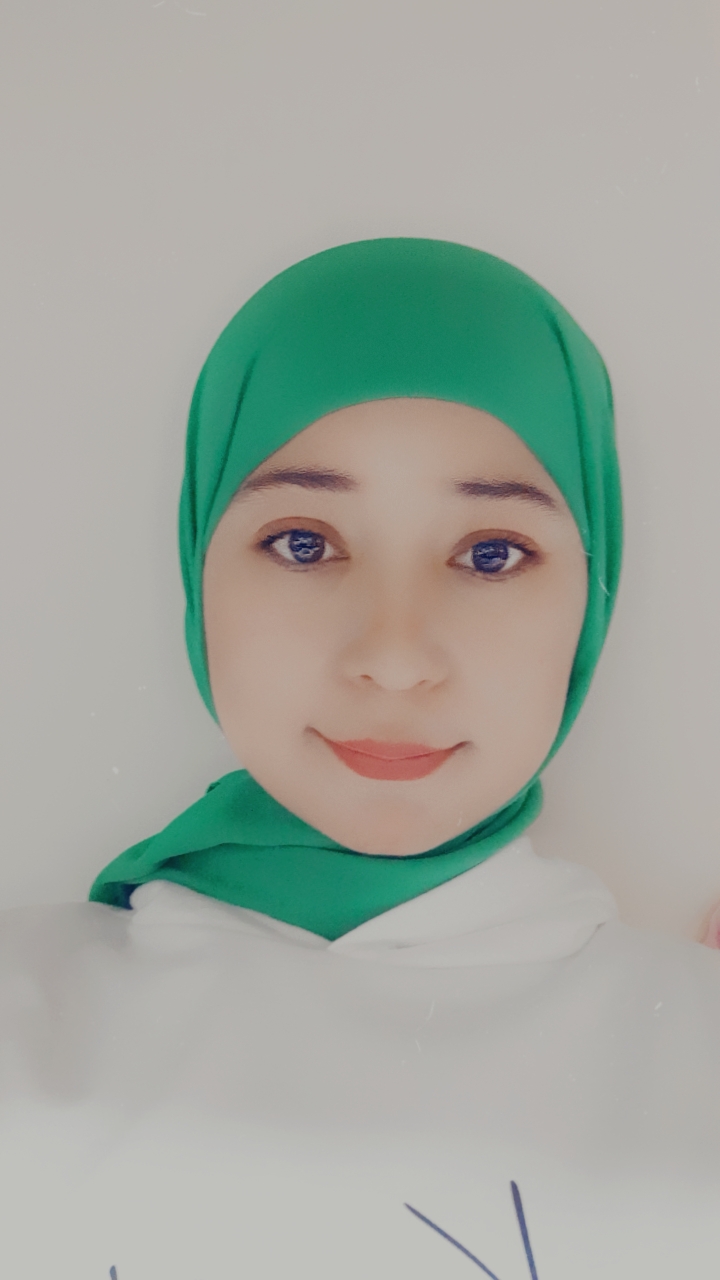
        Qosimjonova Zulayxo Baxrombek qizi
        Uzbekistan State World   Languages
        University  sophomore  year student.

Annotation: This study aims to investigate reading comprehension problems faced by students, school children or language learners.

The study also examines student learning.
Keywords: READING, PROBLEMS, EFL, L1, EASY TEACHING METHODS, COMPREHENSION DEFICIENCIES.

Reading plays a crucial role in our life. It is an important part of everyday life without which life cannot be imagined this . Four language skills are used to learn English.Reading is the most important thing students should know.It helps students to familiarize themselves with their majors and subjects help to improve language skills.Reading is an interactive process in which the writer and the reader communicate through the text.

Reading is important because it is one of the most used language skills in everyday life.Internet usage. Students search for information on the Internet, and most of it is published in English. “As a skill It is clear that reading is one of the most important, in fact, in many cases around the world we read the most important foreign skill, especially when students have to study the material in English on their own. Many researchers have noticed that students' reading is very weak, especially in English texts. As a result, they still have reading comprehension difficulties. They also rely on word-for-word translation when reading English.

 According to Al Ma'ani, there are two main reasons why students' comprehension is low.

When teaching reading, most EFL teachers assess students' word comprehension. Rather than teaching to understand sentences. Second, students' lack of study. That is, the reason is that they rarely read books in their normal life.

Comprehension strategies are also a major cause of students' poor comprehension skills. Taking into account the difficulties of studying a foreign language, especially cognitive, cultural and linguistic aspects, all EFL reading has been proven to be more difficult and complex than L1. To help students need help improving reading comprehension and solving reading comprehension problems.

Difficulties in reading comprehension.
A reading disorder is a learning disorder that involves a significant impairment in reading accuracy, speed, or comprehension to the extent that the impairment interferes with academic achievement or activities of daily living. People with learning disabilities perform well on reading tasks below what would be expected based on their general intelligence, educational capabilities, and physical health. A reading disorder is most often called dyslexia. Reading comprehension problems are lifelong problems that can seriously damage anyone's learning.

Common problems in people with learning disabilities include
-Slow reading speed.
-Poor comprehension of material when reading aloud or aloud.
-Skipping words while reading. Confused words or letters while reading.They suffer from difficulty decoding syllables or single words and associating them with certain sounds.
-Difficulty in pronouncing or recognizing words is one of the biggest problems students face.
-Another manifestation of reading comprehension problems is difficulty reading aloud. Usually, people with these problems have difficulty understanding while studying and their interest in the task is reduced.

Problems with reading comprehension: Its basis should be the ability to understand what you are reading. Many learners avoid reading and writing due to lack of interest in reading. Difficulty understanding what you read is one of the main symptoms of the problem.
Most of these cases actually stem from a lack of self-confidence in the people who have the problem. Students with these problems find it difficult to read and write and become nervous.
It takes a lot of time to solve the main tasks. Especially, another sign of reading comprehension problems is an inability to perform basic tasks.

A problem that many EFL (English as a Foreign Language) learners may face is not understanding the words in the text.

Getting rid of reading comprehension problems. Although reading comprehension problems can be difficult to deal with, there are good strategies to help make them livable. In fact, working with professionals can often eliminate these problems almost entirely or turn them into minor problems.

This information can be used as a guide to the direction and style in which students interact with texts to improve their reading comprehension.There are several ways to overcome reading comprehension problems. For example, you can use the following methods as a solution to these problems.

Reconstruct meaning is repeat it and ask questions until you understand its meaning. Think about characters and events when reading fiction.They tend to summarize informational texts. Accepting learning as a productive process.Reading comprehension skills are important for students to become effective readers.

      References:
   1. CRE101 - College Critical Reading
           2. Tompkins, G. E. (2011). Literacy in the Early Grades: A Successful Start for Prek-4 Readers, (3rd ed.), Boston:
Pearson.
       3. Cain, K. & Oakhill, J. (2011). Matthew Effects in Young Readers: Reading Comprehension and Reading Experience  aid Vocabulary Development.
       4. Journal of Learning Disabilities, 44(5): 431-443.
       5. Goodman, K. (1973). Analysis of reading miscues. In Smith, F. Psychologist andReading. New

York: Rinhast and Winson.
       6. Hartney, R. (2011). Investigating reading difficulties in English second language of Grade 3  learners in one primary school.
       7. Khomas education region of Namibia. (Unpublished

master thesis). The University Of Namibia.
       8. Hoover, W. & Gough, P.B. (1990). The simple view of reading. Reading and Writing, 2, 127-
160.
Give My Greetings To My Amazing God

In fields of sunflowers, where she roams freely,
A lady with flowing hair stands in awe,
Plucking cotton delicately from the earth,
Cradling it in her pure palm.

With a gentle breath, the cotton takes flight,
A dance of white against the sky.

Her voice carries through the fields,
Singing praises to the heavens above,
"Oh, cotton, you resemble an antique woman,
With silvery tresses, bring my greetings
To my beloved God," she serenades with passion.

Sunflowers sway in harmony,
Their vibrant petals *join* the dance.

In her own crafted stanza, she reaches for the sky,
Arms outstretched, twirling in graceful rhythm.

"Give my greetings to my exceptional God,
The one who loves and cares for eternity.
I am grateful for the pain that shaped me,
Into an artist, for the challenging days and nights,
That birthed a brand new life within me."

Tears blend with smiles, a testament to the journey she's embraced.
"Oh, my extraordinary God, you have granted me the power of prayer,
Ignited the fire of passion within me,
And blessed me with a mind and body that are forever grateful.
Give my greetings to my great God,
The one who embraces all, regardless of mistakes or skin type,
Always present in the nights and days."


I'm a sword

I am a sword for the tyrant
My role is to fight for justice
against all poverty and suffering
Some find it difficult to explain my existence

People judge me by my beaming smile
My interesting outfit will be looked at for a while
They don't know the struggles I face
Pain beneath my grace

Others despise me and hate me with joy
But they don't know what drives my practice
I'm not just a pretty face
I have a purpose, a reason to embrace it

I pretend to be happy, I pretend to be strong
But deep down, my heart is not in that song
And I bear the burden of the oppressed
My own pain, I have to suppress

I don't want to hurt my loved ones
So I pretend and hide the negative truth
I just shed tears before God
Because only he knows my pain and my love

He understands when others do not
He comforts me when I feel alone
He gives me the strength to keep going
And fight for the oppressed

I am a sword, a weapon for good
 however, misunderstood
I will continue my fight, my mission
To bring justice and end discrimination.


Anila Bukhari emerges as a luminous thread, in the legacy of Pakistan, weaving tales of empowerment. A beacon of hope in a world shrouded by adversity, she stands as the epitome of courage and conviction, etching her mark on the annals of history.

Anila, daughter of the nation, embodies the essence of strength and purpose. From the tender age of ten, she wielded the pen as her sword, crafting prose infused with the fervor of change. In a society veiled by patriarchal norms, she dared to challenge the status quo, amplifying the voices of the marginalized and disenfranchised.

With each stroke of her pen, she painted portraits of courage and defiance, shedding light on the harrowing realities of child marriage, forced unions, and the plight of the orphaned. Through her literary opuses, such as "No More Tears" and "Whispers of the Heart," she wove a tapestry of awareness, igniting conversations that reverberated across continents.

But her journey transcends the field of literature; she is an example of activism, a harbinger of change. At the tender age of fourteen, she started on a crusade for peace, dedicating eight years of her life to the noble cause. Her efforts culminated in international acclaim, as she was bestowed with the prestigious International Excellence Community Service Award, a testament to her unwavering commitment to humanity.

Anila's endeavors extend beyond the written word; she is a catalyst for action, a catalyst for change. Through her initiative, "No More Brides, Just Shine," she waged war against the scourge of child marriage, mobilizing communities and igniting a spark of hope in the hearts of the oppressed. From organizing speech competitions to spearheading educational campaigns, she left an indelible mark on the landscape of advocacy.

Yet, amidst her tireless crusade, she remains grounded in compassion, extending a helping hand to those in need. Through her project, "Hopeful Hugs," she brings solace to homeless children and solace to cancer patients, embodying the true essence of altruism.

Anila Bukhari, a visionary in her own right, is not merely a writer or an activist; she is a testament to the indomitable spirit of the human soul. Inspired by the timeless wisdom of Rumi, Maya Angelou, and Khalil Gibran, she dreams of a world emancipated from the shackles of injustice, where every girl can aspire to greatness.

In the hallowed halls of art galleries in the USA, Florida, and the Philippines, her verses adorn the walls, a testament to her transcendent talent. Her words resonate in the hearts of millions, a clarion call for change in a world yearning for transformation.

In her, we find the embodiment of beauty with brains, intellect, and compassion—a true luminary whose brilliance knows no bounds. Anila Bukhari, the daughter of the nation, a force to be reckoned with, and a guiding light of hope for generations to come.
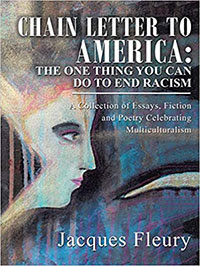
[Excerpt from Fleury’s book: Chain Letter To America: The One Thing You Can Do To End Racism: A Collection of Essays, Fiction and Poetry Celebrating Multiculturalism]
“Injustice anywhere is a threat to justice everywhere. We are caught in an inescapable network of mutuality, tied in a single garment of destiny. Whatever affects one directly, affects all indirectly. I can never be what I ought to be until you are what you ought to be. This is the interrelated structure of reality.” — Dr. Martin Luther King Jr.
A 2006 article by Mema Ayi and Demetrius Patterson from the Chicago Defender reported that “actor Morgan Freeman created a small firestorm…when he told Mike Wallace of “60 Minutes” that he finds Black History Month (BHM) ridiculous.” Freeman goes on to say that “Americans perpetrate racism by relegating Black history to just one month when Black history is American history.”
I agree with Dr. Martin Luther King, Jr. that as Americans we are tied together “…in an inescapable network of mutuality…Whatever affects one [of us]…affects [all of us] as Americans in this country.
As you can clearly see, the month of February dedicated to Black history continues to stir controversy. However, we can’t continue to ignore the fact that although we have made progress towards racial unity, we still have ways to go towards racial harmony, understanding and tolerance, if not acceptance.
Scholars and historians such as Conrad Worrill, chairman of the National Black United Front, agree that Black Americans still need February, and every day, to reflect on the accomplishments of Black Americans who contributed countless inventions and innovations to society.
Radio personality Cliff Kelley notes that capricious historians conveniently leave out certain parts of the story that do not corroborate their version of history, which consists mostly of White men. Blacks are virtually removed from the narrative to substantiate the White historical agenda. Plenty of Black youths do not know their history. Most of them think that their history begins and ends with slavery.
Former State Representative David Miller (D-Calamut City, Ill) asserted that Freeman was right in saying that Black history should be a year round thing. “We’ve shaped America,” he said, “but that Black History Month should serve as a reminder of our legacy.”
The recently deceased Howard Zinn wrote in his book A People’s History of the United States, “There is not a country in world history in which racism has been more important than the United States.” He poses the question, “Is it possible for Blacks and Whites to live together without hatred?”
When it comes to the evolution of racism, he had this to say: “…slavery developed into a regular institution of the normal labor relations between Blacks and Whites in the New World. With it developed that special racial feeling — whether hatred or contempt or pity or patronization — that accompanied the inferior position of Blacks in America…that combination of inferior status and derogatory thought we call racism.”
He goes on to say, “The point is the elements of this web are historical, not ‘natural.’ This does not mean that they are easily disentangled or dismantled. It only means that there is a possibility for something else, under historical conditions not yet realized.”
In a 2010 article in The Boston Phoenix, “Is There Hope in Hollywood?” Peter Keough extrapolates the medium of film is making an effort to bridge the race gap. They do this by portraying Blacks as heads of state — in movies like Transformers 2, 2012 and Invictus — although the contexts in which a Black man becomes president is often created by a catastrophe in which the White leader is killed. Or Blacks are still being portrayed in glaring stereotypical roles such as in Precious, with racist clichés like Precious stealing and eating an entire box of fried chicken.
The undercurrent of racism is evident even from well-meaning Whites like President Biden, when he ran against Obama for president. Biden declared that “[Obama] is the first mainstream African-American who is articulate and bright and clean, and a nice looking guy.” Similarly, another fellow Democrat, the former Senate majority leader Harry Reid wrote in his book Game Change, about Obama that America is ready for a Black president, particularly because he is “light skinned and speaks with no Negro dialect.”
This leads me to extrapolate that despite all that Blacks have contributed to the making of America, this becomes extraneous compared to the first impression our colorful appearance makes. I am compelled to recall what Dr. King, Jr. so eloquently stated, that Black people should be judged “by the contents of their character” and not their skin color.
Many modern conveniences spring from the inventions of Black inventors: blood banks facilitating life-saving transfusions, the bicycle, the electric trolley, the dustpan, comb, brush, clothes dryer, walkers, lawn mower, IBM computers, gas masks, traffic signals, the pen, peanut butter…The list goes on and on.
Thanks to the Academy Award nominated film, Hidden Figures, we’re now all familiar with the amazing contributions of mathematical geniuses Katherine Johnson, Dorothy Vaughan, and Mary Jackson, whose work helped make Neil Armstrong the first man on the moon! All of these achievements have become part of our daily lives here in America and around the world as the result of African-American contributions to the economic and scientific stronghold known as America.
Sadly, we still need Black History Month to remind us!
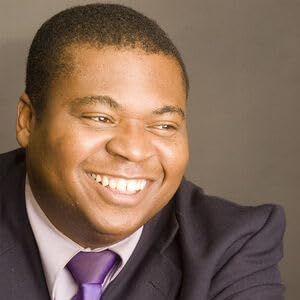
Jacques Fleury
Jacques Fleury is a Boston Globe featured Haitian-American Poet, Educator, Author of four books and literary arts student at Harvard University online. His latest publication “You Are Enough: The Journey to Accepting Your Authentic Self” & other titles are available at all Boston Public Libraries, the University of Massachusetts Healey Library, University of Wyoming, Askews and Holts Library Services in the United Kingdom, The Harvard Book Store, The Grolier Poetry Bookshop, Amazon etc…He has been published in prestigious publications such as Muddy River Poetry Review, the Cornell University Press anthology Class Lives: Stories from Our Economic Divide, Boston Area Small Press and Poetry Scene among others…Visit him here.
The Port

Like the light in the morning I rise like a rose
Then one after another making friendship with leaves of the trees
I lost myself in the bath of the sea
Swimming so high in the sky
I reach the moon where no darkness plays any role
I find myself on the port of you
We both smile out the same in the morning blushes.

Chapainawabganj, Bangladesh,
13 March, 2024.


Md. Mahbubul Alam is from Bangladesh. His writer name is Mahbub John in Bangladesh. He is a Senior Teacher (English) of Harimohan Government High School, Chapainawabganj, Bangladesh. Chapainawabganj is a district town of Bangladesh. He is an MA in English Literature from Rajshahi College under National University. He has published three books of poems in Bangla. He writes mainly poems but other branches of literature such as prose, article, essay etc. also have been published in national and local newspapers, magazines, little magazines. He has achieved three times the Best Teacher Certificate and Crest in National Education Week in the District Wise Competition in Chapainawabganj District. He has gained many literary awards from home and abroad. His English writings have been published in Synchronized Chaos for over seven years.
The origin of the South Korean alphabet is phonetic syllabic writing. It was created in 1444 during the reign of King Se-Jong (1419-50) by Korean scholars Chon Nin Ji, Sin Suk Chu, Son Sam Mum. Until the first half of the 15th century, the Korean language used Chinese hieroglyphic writing. However, since Chinese was the literary language of Koreans during this period, the new national alphabet did not spread widely. By the end of the 19th century, hieroglyphic writing began to be used again in the Korean language. This writing alphabet represents 24 phonemes. Other phonemes are formed by adding letters. Current Korean writing has 40 graphemes, of which 24 are simple and 16 are complex. But the order of these graphemes is different in the DPRK and the Republic of Korea. Previously, texts were written from top to bottom and from right to left. Now more left-to-right writing is drawing components are written separately from top to bottom.
Like traditional Chinese and Japanese scripts, as well as many other East Asian texts, Korean texts were traditionally written from top to bottom, right to left, sometimes for stylistic purposes. However, Korean is now usually written from left to right, unlike Japanese and Chinese, where spaces act as separators between words. Hangul is the official writing system throughout North and South Korea. It is a cooperative official writing system of Yanbian Korean Autonomous Prefecture and Changbai Korean Autonomous County in Jilin Province, China. Hangul has also seen limited use in the Cia-Cia language.
Regarding the How


As soon as

He got

To know her,

He felt

Increasingly certain

That she

Would change everything,

Turns out

He was right

About the what,

Regarding the how,

He ended up

Being really wrong.


Taylor Dibbert is a writer, journalist, and poet in Washington, DC. “In the Arena,” his third full-length poetry collection, is due out in April.
                LIFE AND DEATH IN ALABAMA

		A fertilized egg is a treasure,
		a boon to the barren, a gift of hope.
		But in sweet home Alabama,
		the latest law gives embryos a bonus:
		eternal life.

		A judge decreed an egg fused with a sperm
		is now a U.S. citizen, with rights.
		If kept quick-frozen, zygotes live forever.
		Sperm donors will pass on.
		Parents will pass on.
		But grandchildren, great-grandchildren
		must keep potential ancestors in liquid nitrogen
		forever and ever. Amen.
		Any careless spills or thaws are murder.
		Any cells lost in the implant process-- serial murder.
		And murder is a capital offense.

		These microscopic cells don’t look like people.
		No face, no bones, no blood, no lungs;
		no organs, tissues, gender.
		But one dogmatic judge decreed
		these cells are fully human.
		That’s what his Church believes.
		Our founders erred-- Church ought to rule the State!
		His Church, of course.

		Living children aren’t the law’s concern.
		In Alabama, school-aged kids
		can work in factories— child labor. Cheap.
		Children of asylum-seekers?
		Routinely ripped from parents’ arms
		and locked in cages.
		Children of the poor are grudged food stamps,
		must fight red tape for every scrap of health care.
		And every day more kids are shot and killed.
		No, real youngsters aren’t priorities.


		But embryos—now there’s a righteous cause!
		Eden’s tree, that bore enticing fruit,
		has sprouted in the courtroom, promising
		knowledge of good and evil.
		Alabama’s judge has tasted insight;
		his laws prevent Eve’s needy daughters
		from seeking IVF—lest cells be wasted.
		Decrees deny a babe in arms to parents
		out of respect for life.

		He reads God’s mind, this Alabama judge.
		Or speaks, perhaps, for someone else
		that lurks in Eden, hissing…


		Copyright 2/24               Patricia Doyne