
Submission: Synchronized Chaos: Rengay
           By Marjorie Pezzoli,  Christina Chin  & Sarang Bhand
_______________________________________________________


1
Sanctuary

curtains drawn
fireplace crackles
chrysanthemums drop petals     Marjorie Pezzoli


then a heron forewarns
the birds of hurricane             	  Christina Chin


uprooted children
from faraway land
sleeping under sky                     Sarang Bhand


mist settles in
soft gray clouds
blue skies soon                          Marjorie Pezzoli


looking up to sky in hope
bowing down to earth in faith       Sarang Bhand


in the air
aroma of coffee and chai
grandma's tea table                     Christina Chin


2
Mountain Top

adjusting
to long night
new time zone                          Christina Chin


the earth spins
eucalyptus bark peels             Marjorie Pezzoli


changing sky
at every mile
long road trip                           Sarang Bhand


unsolicited—
passenger giving
directions                                Christina Chin


a scenic detour
much needed break                Sarang Bhand


sky show
brilliant production
no tickets needed                   Marjorie Pezzoli


3
Windswept

rising sun
that you sent
to my side                               Sarang Bhand


mist rises
evergreen branches               Marjorie Pezzoli


roadblock ahead
fastening a neck collar
pretending to sleep                Christina Chin


stuck in traffic
together we catch
figments of time                      Sarang Bhand


a house on an island
king tide                                  Christina Chin


steadfast evergreen
branches waltz with wind
she dreams about clouds       Marjorie Pezzoli
Category Archives: CHAOS
Poetry from Yolgosheva Sevinch
A plea
Beloved like my mother
God gave you to me
I live as your child
My life is devoted to you, my country.
Let me lean on you, my wing
I will say it will not pass
I am sorry for the ingratitude
I give my life to you, my country
Don’t be offended by me
If you are sad, I will be the one
Do not be humiliated in the hands of Yav
I give my life to you, my country
My sister, brother, don’t shed tears
I will never leave you
May the sun not leave your head
My life is devoted to you, my country.
Running to your service
Be the only one for you
Pulling out my heart
Homeland, I give my life to you.
I will finish it before I die
Yozai senchun epic shout
My eyes are a charm for you
My life is devoted to you, my country.
The throne of other countries is not needed
It’s okay if I’m in your arms
A heart that does not love you is heartless
My life is devoted to you, my country.
Yolgoshova Sevinch, Bukhara Region, Kogon District, Barkamol Avlod Children’s School, member of the “Yosh Kalamkashlar” club, 9th grade student of the 17th school in the district, “I bow to those who know you”, 1st place winner of the regional stage.
Photography from Kylian Cubilla Gomez
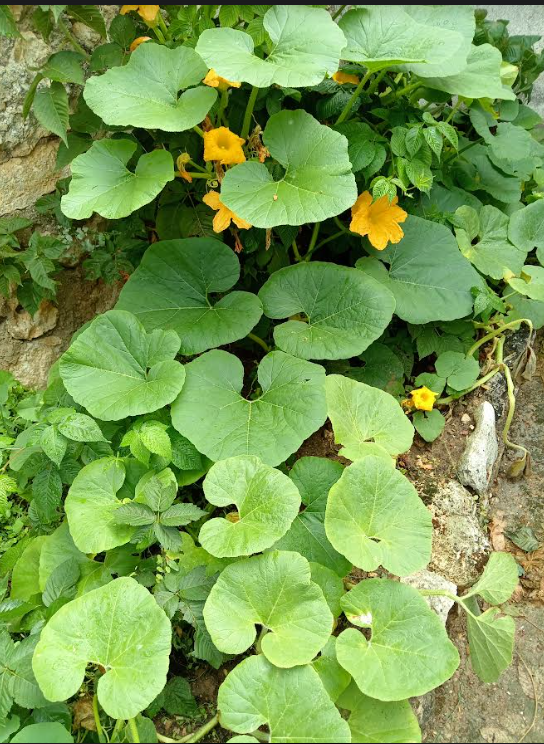

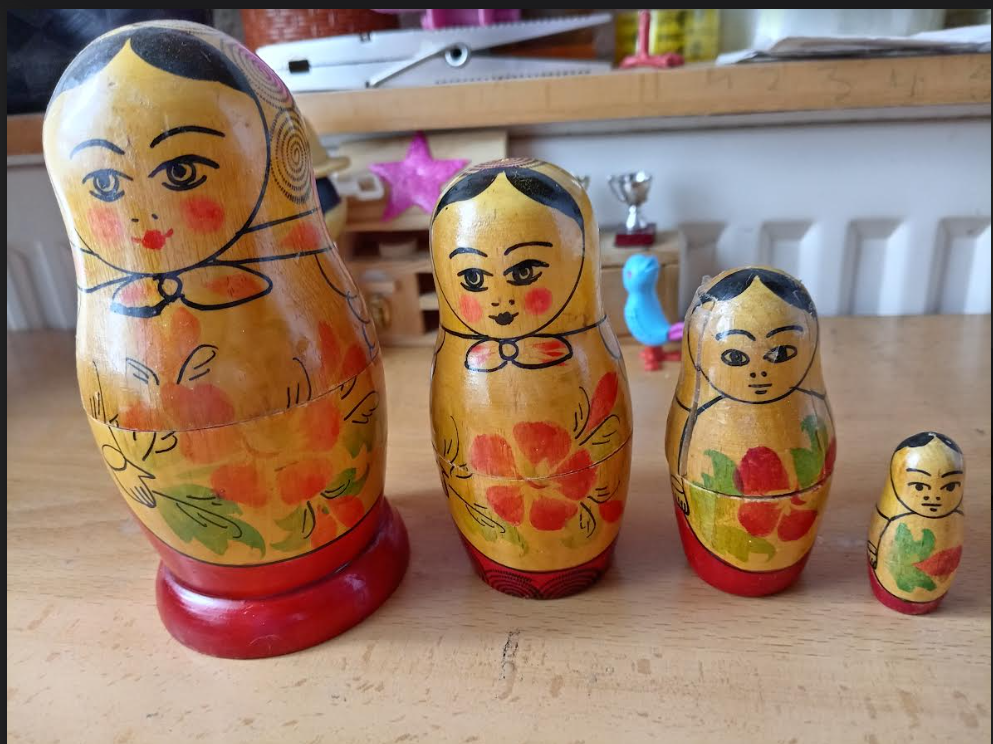
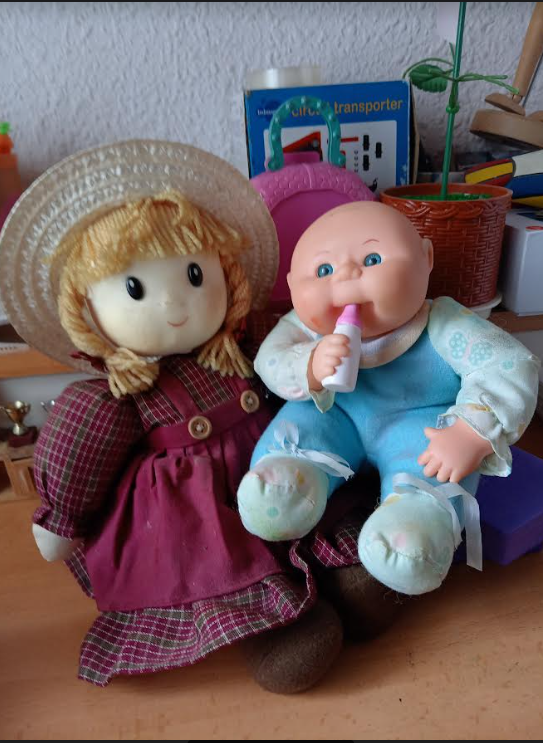
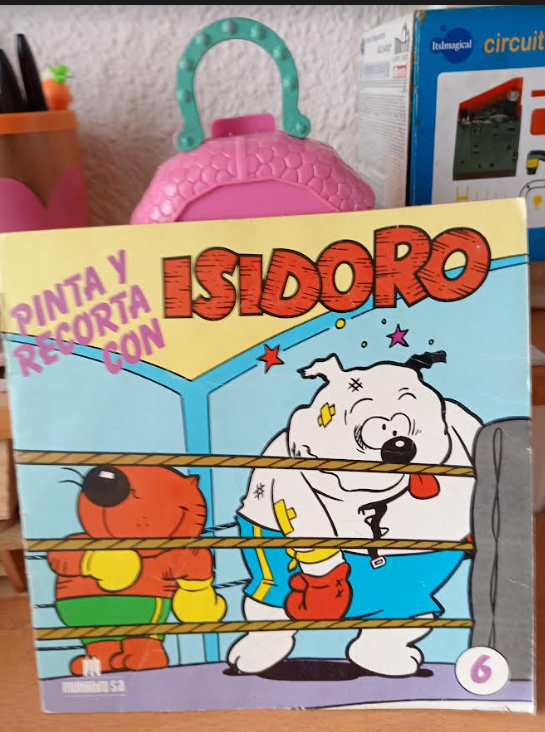
Essay from Sevinch Shukurova
Shukurova Sevinch
Student, Uzbekistan World Language University
                                    sevinchbahodirovna2005@gmail.com

THE CLASSIFICATION OF COMPOSITE SENTENCES AND ITS TYPES
    Abstract: Although the sentence is a fundamental unit of syntax, there is no universal definition for it. This article examines the theory of syntactic units, mainly describing the classification of composite sentences like complex and compound types.
    Keywords: subject-predicate units, syntax, syntactical unit, independent clauses, semi-composite sentence.

   Introduction
   Syntax is a part of grammar, which deals with ways of combining words into phases in a language (Biber 2002;460),  i.e. combinations of individual lexemes arranged according to certain principles, which determine the length and meaning of the phrase through a proper choice of morphological partners.  The most important phrase is a sentence – a relatively complete and independent communicative unit, which usually realizes a speaker’s communicative intentions and contains one or more subject-predicate units, present or implied.

Sentences fall into simple and composite depending on the number of Subject-predicate units in them. A sentence with one Subject-Predicate unit is called a simple sentence, while a sentence with two or more Subject-Predicate units is called a composite sentence. The word “composite” is used by H.Poutsma1 as a common term for both the compound and complex sentence and it may be accepted by those schools that adhere to trichomotic classification of sentences into simple, compound and complex. This classification established in the English prescriptive grammar of the mid-19th century and accepted and developed by the authors of the classical scientific grammar remains the prevalent scheme of the structural classification of sentences in the grammars of all types in the modern period. A very important syntactic unit, containing a subject and a predicate.

    A clause in a composite sentence is similar in its structure to a simple sentence though it acts as a part of a bigger syntactical unit. There are two main ways of linking clauses in a composite sentence: coordination and subordination.

    Coordination is a way of linking grammatical elements making them equal in rank.
    Subordination is a way of linking grammatical elements makes one of them dependent upon the other (or they are mutually dependent). (Kobrina 2006;421)

    There are three types of composite sentences in Modern English:
    1.The compound sentence contains two or more independent clauses with no dependent one.
    2.The complex sentence contains one or more independent clauses. The latter usually tells something about the main clause and is used as a part of speech or as a part of sentence.
    3.The semi-composite sentence combines the two previous types. The compound-complex sentences are those which have at least two independent clauses and at least one dependent (subordinate) clause in its structure: Blair found herself smiling at him and she took the letter he held out to her.

    In terms of compound sentence, it actually consists of two or more clauses of equal rank, which form one syntactical whole in meaning and intonation. Clauses in a compound sentence are joined by means of coordination, so they are called coordinate. There are two  ways of linking clauses in a compound sentence: syndetic and asyndetic. When clauses are joined with a help of a connector, such as and, but, or, etc., the linking is called syndetic:

    The cloud parted and the increase of light made her look up.o
    He wants her to live in the towns, but she only cares for woods.
    Do you want to leave now or would you rather set off later?
    I heard a noise so I got out of bed and turned the light on.
When clauses are joined without a connector, by means of a comma or semicolon, etc. – asyndetic:

    Man wants to love mankind; woman wants to love one man.
    The church lay up by the railway, the farm was down by the water                                                                 meadows.
    Rickie had warned her; now she began to warn him.
    Her attention was drawn to the other messy areas in the bedroom; to  the left was a closet with louvered doors open and clothing spilling out

    Syndetic coordination is realized by a number of connectors – conjuctions, such as and, but, or, nor, etc., or by conjuctive adverbs, such as moreover, besides, however, yet, still, otherwise, therefore, etc. In speaking coordinate clauses are separated by pauses, while in writing they may be marked off by a comma, a semicolon, a colon or occasionally a dash.

    Lets move on the other type of composite sentence – complex sentence, which consist of an independent clause ( also called a main or principal clause) and at least one dependent ( or subordinate) clause:

All good things come to those (2) that wait.
Dependent clauses can be joined to the main clause asyndetically, i.e. without linking elements (She says she loves me), or syndetically, i.e. by means of subordinators.

    The class of subordinators includes subordinating conjuctions (as if, because, although, unless, whether, since, etc.) and connectives, i.e. conjuctive pronouns ( who, whom, whose, which, what, whoever, whatever) and conjunctive adverbs (how, when, where, why). Subordinating conjuctions have the sole function of joining clauses together, whereas connectives not only join clauses together, but also have a syntactic function of their own within the clauses they introduce:

     I didn’t know whether they had rented that house. (a conjunction)
     I didn’t know who had rented that house (a connective, serving as a subject to had rented)

    The components of some conjunctions are spaced apart, with one component found in the main clause and the other, in the subordinate clause: no sooner … than, barely … when, the … the. Subordinating conjunctions introduce subordinate clauses. Since 1965 or so, the term “complementiser” has been used in one of the major theories of syntax not just for subordinating conjunctions introducing complement clauses but for all subordinating conjunctions.

    The semi-composite sentence is to be defined as a sentence with more than one predicate lines which are expressed in fusion. The semi-composite sentence displays an intermediary syntactic character between the composite sentence and the simple sentence.
    Semi composite sentences can be of two types:
'  - Semi-compound (e.g. He looked at me and went away.)
  - Semi-complex (e.g. The man stood silent.)

    One of the representatives of structural linguists Ch. Fries considers two kinds of composite sentences: sequence and included sentence. Example:
   1.The government has set up an agency called Future builders.
   2. It has a certain amount of funds to make loans to social enterprises.

    These two sentences are connected with each other. The first sentence is a situation sentence and the second one is a sequence sentence since it develops the idea of the situation sentence. The most significant difference between these function words as signals of  “inclusion” and the forms given above as signals of sequence lies in the fact that these function words of inclusion at the beginning of a sentence look forward to a coming sentence unit, while the signals of sequence look backward to the preceding sentence unit.

    Conclusion it is difficult to find an opinion which is shared by the majority of linguists. We must clearly understand that the composite sentence as such is part and parcel of the general syntactic system of language, and its use is an inalienable feature of any normal expression of human thought in intercourse.

                           References :
1. Gerda M, Valerija N, Jurgita T. English Syntax: The Composite Sentence. The mood. Vilnius, 2010.
2. Iriskulov A.T. Theoretical Grammar of English. Tashkent, 2006
3. Старостина Ю.С.  The Composite Sentence. Самара, 2005
4. Ubaydullayeva D. R. The Theory of Composite Sentences and Complex Sentences in Modern Linguistics. International conference on advance research in humanities, New York, USA. 2022
5. Jim Miller. An Introduction to English Syntax. Edinburgh University Press. 2002
6. https://studfile.net
Poetry from Azemina Krehic

CONTRASTS

Tonight I will wear a lavish dress of modesty,

black, yet still white from purity,

and I will go into warm rooms of ice.

I will dance all night while standing still,

and I will watch you with my eyes closed.

And I will be ideally imperfect,

and I will feel freedom as a captive.

And I will be strongly weak,

here, beside you,

because I love you.


Azemina Krehić was born on October 14, 1992 in Metković, Republic of Croatia. Winner of several international awards for poetry, including: Award of university professors in Trieste, 2019.,„Mak Dizdar“ award, 2020. Award of the Publishing Foundation of the Federation of Bosnia and Herzegovina, 2021. „Fra Martin Nedić“ Award, 2022. She is represented in several international anthologies of poetry.
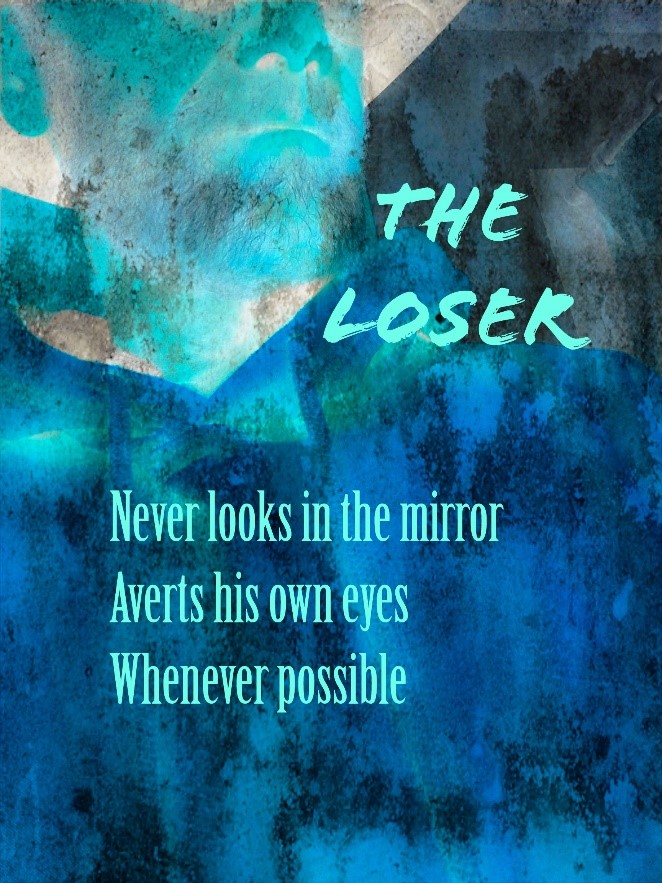
Poetry by Dennis J. Bernstein, and Photography by Jeffrey Spahr-Summers
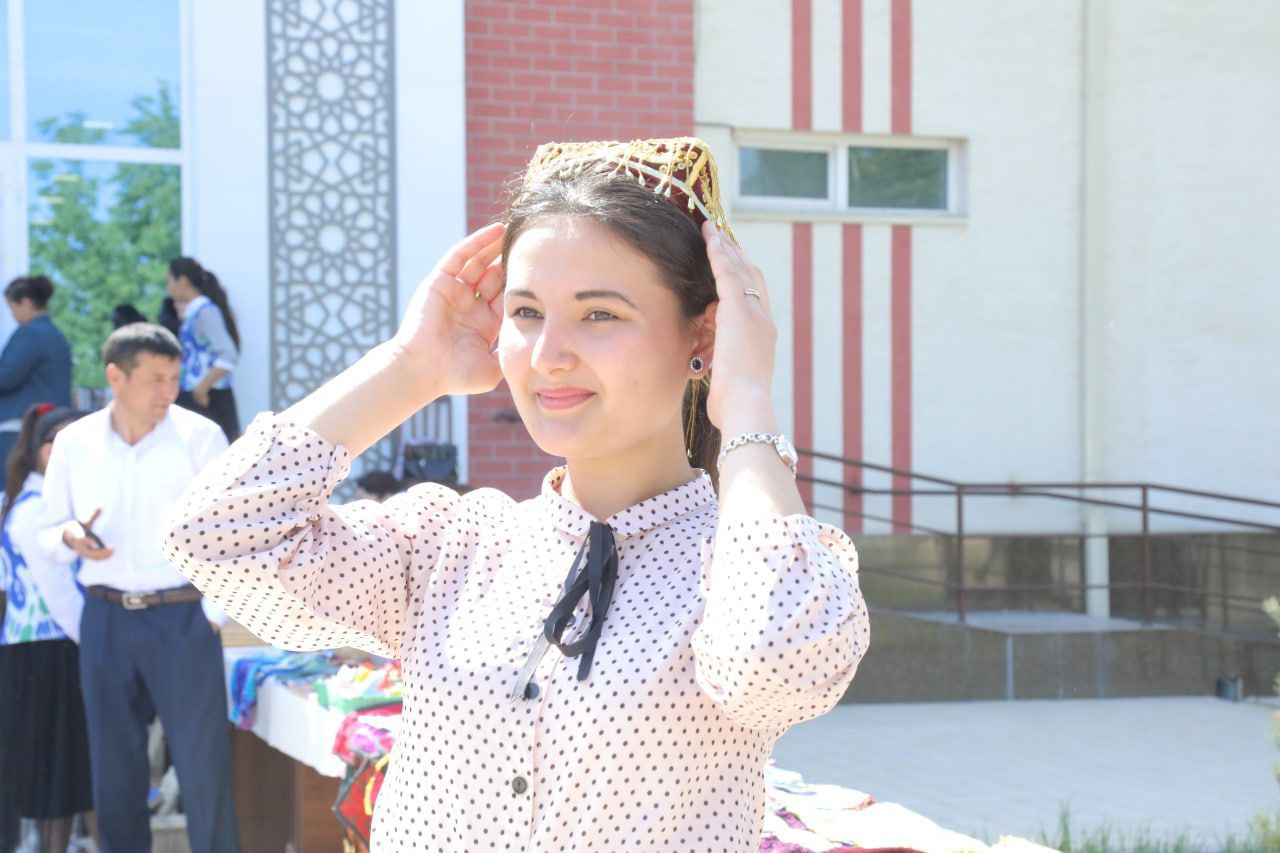
Poetry from Mashhura Ahmadjonova
SUMMARY
Time flies without looking back
Rushing like a man without passion
Without combing his loose hair
He runs too fast
Taking a day of childhood
I don’t know where it went?
Put it in a bag called life
Goes along the beach
I called again and again, but
He didn’t even turn around.
A big problem in the heart,
He quickly got on a horse and ran away
Light’s eyes grew dim
Night fell in my hut
It didn’t leave my body
A time when my heart was crushed
From this day I learned the value of time,
Eyes wide open today,
I used even the night
The knot that bound it was not resolved.
The end is invisible
Time is still running out
Mashhura Ahmadjonova was born on October 25, 1999 in Uychi district of Namangan region. The winner of the 2nd place in the regional stage of the “Most Active Reader” Republican competition. Member of the Indian organization “All India Council for Technical Skill Development”, the Argentinean organization “Juntos pol las letras”