Two Broken Hearts

Staying away from you is torturing me
Be a little flirty, is there any need for coyness
While I have opened the door of my heart to you
Let two broken hearts come together
If you want to extinguish my burning heart
This cry of mine is for you, this is a loud call
Break your horse with spur towards me
Let two broken hearts come together
You never show it, you have no words about love
You have turned to ashes, as if you have no embers to ignite
Either you are too hesitant or you have no eyes for love
Let two broken hearts come together
Don't destroy this ruined heart of mine anymore
Come hide in my heart and don't come out anymore
Come on, hold my hands, don't look helpless anymore
Let two broken hearts come together


NIGHTS DON'T PASS

Nights don't pass, they don't pass
Is it possible to get you out of my mind
Fall into a sleepless night
I hope you'll understand me then
You're not on one side, longing on the other
My poor mind is wasted without you
If you're left like me in a lonely inn
I hope you'll understand me then
When your eyes suddenly fill with tears
Don't think that troubles will end in the morning
When you're left in trouble like me
I hope you'll understand me then
If the thing you call life disappears one day
If love, respect, everything ends one day
If separation comes one day
I hope you'll understand me then
Is it certain to reap what you sow
What do you expect from unkempt soil
If an old picture makes you cry
I hope you'll understand me then


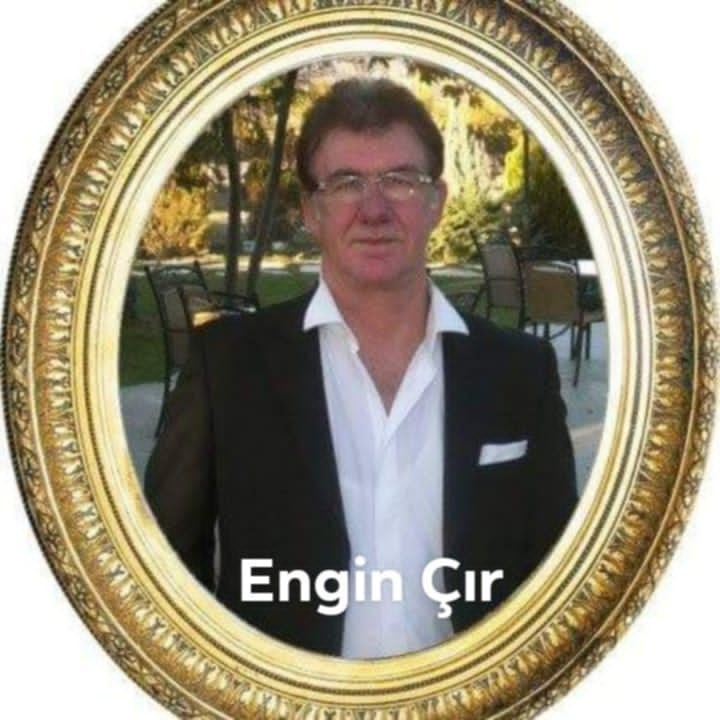
Engin Çir was born on October 29, 1954 in Samsun. He played the alto saz in the school band for two years during his middle school years. In 1970-1971, he continued as a vocal artist in the Samsun Folk Music Association, conducted by Umit Bekir Ağa, for two years. He learned to play the saz on his own. In 1972, he joined the Samsun Music Society Choir, conducted by Taner Cağlayan, and continued his work uninterruptedly until 1979. He entered the Samsun Municipal Conservatory, which was established in 1979. During his four-year education, he took solfeggio and theory lessons from Ali Ozdolap, Ali Özgümüş, Cavit Ersoy, Dr. Turgut Tokaç, Fethi Unal, Nihat Alaca, Şadan Ünsal. Between 1982 and 1989, he studied at the Samsun He worked as assistant conductor and oud player in the Turkish Classical Music Choir at Ondokuz Mayıs University. He passed the Turkish Classical Music pre-listening exam held by TRT Ankara Radio in the 1979-1980 period with an exception contract. He graduated from Samsun Municipal Conservatory in 1984. Later, he worked both as a vocal artist in the executive board and as a lecturer until 1989.
(Easy Co., Mercury Rules Virgo and Gemini, and the Birds in the Trees)
We had fourteen days free and went to the forests each morning to walk. There was a car there that said, – EASY CO. and that was the car I happened to park behind one day, the last day actually. I took it as a Jungian synchronic sign as I used to buy Sgt. Rock comics often as a kid and his war group of soldiers were called Easy Company. I used to read each issue and also the letters of compliments and questions to the makers of the comic that they published at the back each issue. How I loved the adventure stories and the art, and one got to know each character of the comic through the years.
Inside the paths, the woodlands wild and whimsy driven and wondrous, I was walking with Tara, a Virgo. I am Gemini and we are the only two signs ruled by the same planet, Mercury, the fastest planet, the messenger, the one that denotes communication. The birds in the trees called out, and sometimes a squirrel ran away or a chipmunk. Verdant place. Kind atmosphere. A little too hot and humid those days for my liking. But the autumn would one day come. Still, we followed the idea of three S’s,…short, shaded, and slow,- when it was mighty hot. Sometimes a breeze came along. Sometimes not. Mostly empty area. But once in a while a solitary jogger, or an old couple, something. There, a heron that fishes for food by the still pond, and little groups of wild roses, where when their petals are absent the middle looks like a berry red.
I talked to Tara, about the things people talk about,- current events local and the greater world, plus spirituality, things like karma and dreams and journeys. Silence is okay also. Just the sight of the leaves. Or raspberries. Stones. The plain earth itself. The paths are often gravel but at times sand. Orchids are there, and ferns green and wild. I know where some snakes live, and I know all the trails through experience, time, steps. So does she. Little marshes and bogs,- the logs and an owl watching in the day if you are lucky. It’s not an ambitious worldly achievement, but there are worse things people do than nature walk. I loved the fourteen days. Talk walk see be. Believe contemplate meditate heal. Like love belong and dream. Ideas for writings, plus landscape photography, blossom often and well, yes blossom like the summer wildflowers.
Paul Tristram is a Welsh writer who has poems and short stories published in many publications around the world, he yearns to tattoo porcelain bridesmaids instead of digging empty graves for innocence at midnight, this too may pass, yet. His novel Crazy Like Emotion was recently released upon the public by Close To The Bone Publishing.
The Clouds

Clouds float gently in the sky so high,
Soft whispers of dreams as they drift by.
They gather in clusters, then break apart,
A canvas of wonder, a work of art.

White and fluffy, like cotton they seem,
Or dark and heavy, with a storm's gleam.
They dance with the wind, in a graceful flight,
Changing shapes in the morning light.

Some bring rain, a refreshing kiss,
Others shade the earth in a moment of bliss.
They tell tales of lands far and wide,
Of mountains, oceans, and the world's great tide.


Don Bormon is a student of grade nine in Harimohan Government High School, Chapainawabganj, Bangladesh.
First of all, an announcement on behalf of Synchronized Chaos Magazine. We’re going to help authors with research by setting up a section where readers and contributors can volunteer to provide information to authors who want to do research for their writing projects. So, if you have knowledge or lived experience in some area and are open to answering questions for someone’s project, please email us at synchchaos@gmail.com and we’ll add you to our upcoming list!
Now for this month’s issue: Self, Others, Source. As a teenager I attended a spiritual retreat where the leader encouraged us to think of our relationship to ourselves, the people and other beings in our lives, and our Source, the higher power, however we understood that. He commented that when we got in trouble, we could imagine sending out an S-O-S and looking within, to our social networks, and our faith.
Some of this issue’s contributors engage with the self.
Sandra Rochelle describes a healing journey where a woman chooses play and joy over self-conscious judgement.
Rus Khomutoff speaks to dreams, the surreal, and the subconscious as Texas Fontanella’s pieces express energy, tension, and action within the artist’s mind and Mark Young sends up swatches and swathes of color and texture. J.D. Nelson experiments with thought bubble bursts of words.
J.J. Campbell reflects on memories and disillusionment and the fragility of hope as Elan Barnehama offers an exploration of how an introvert and an extrovert cope with tragedy.
Jonibek Miraxmedov presents the poetry of youth: first love, optimism, dedication and determination, and joy in life. Z.I. Mahmud examines the psychological and emotional world of T.S. Eliot’s The Love Song of J. Alfred Prufrock.
Mykyta Ryzhykh speculates on the competing twin powers of passion and destruction, Eros and Thanatos, sensuality and fear and death. Prosper Isaac draws on the dual nature of the cultural symbol of flowers, joy and grief, weddings and funerals, the happiness and sorrow making up all of our lives.
Salihu Muhammad’s piece reminds us that like ripples in a pond, our attitudes and character shape how we view the world.
Other work addresses the human and natural world around us.
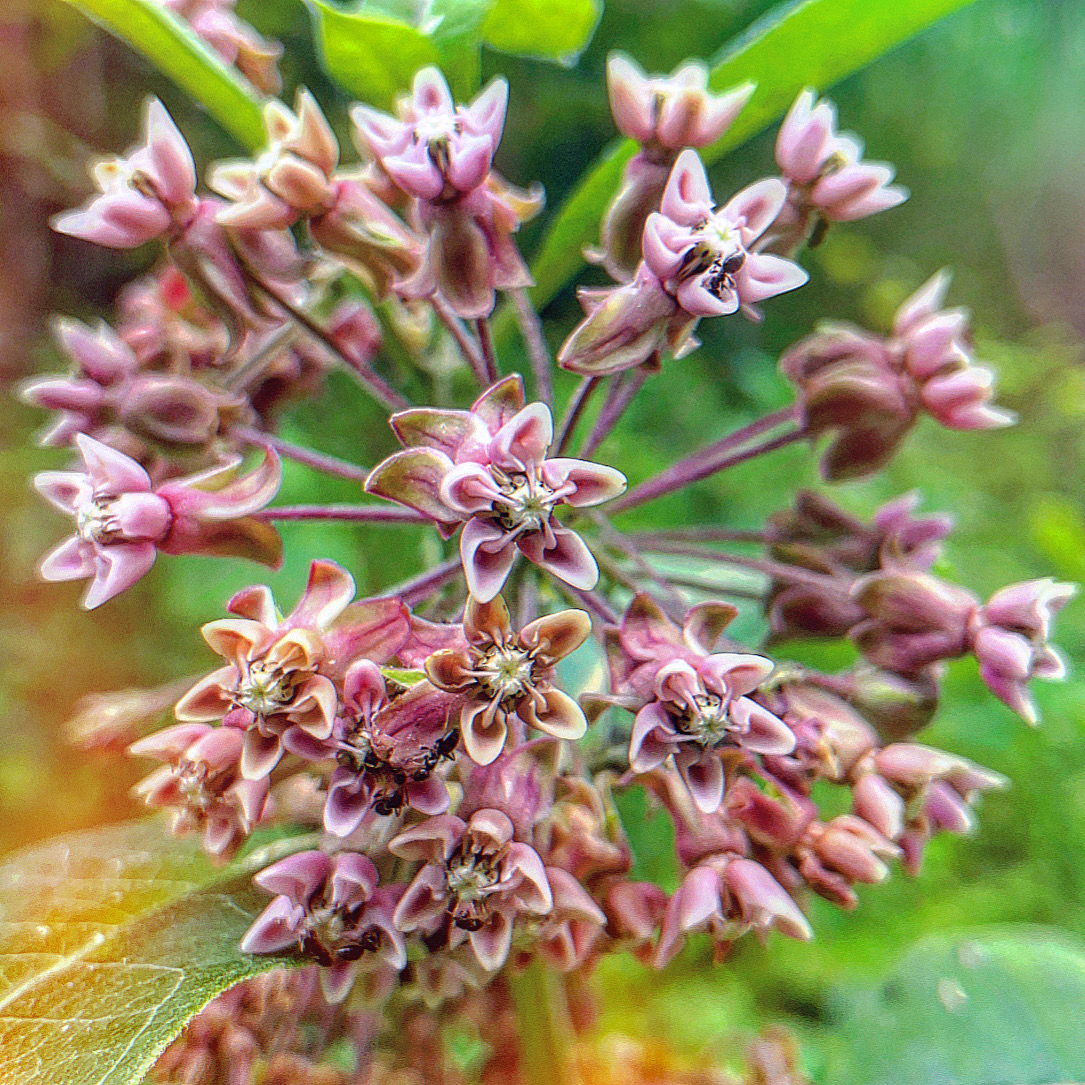
Kylian Cubilla Gomez’ photography captures moments of delicacy, small creatures or objects, and encourages us to pay attention to our world on a micro level.
Marisa LaPorte describes a quest for peace of mind and peace within a family. Taylor Dibbert continues to reflect on a divorce and all it portends for his poetic speaker. Abdel Zahra Amara’s short story, translated by poet Faleeha Hassan, comments on the difference between pretty sentimentality and actual love.
David Sapp reflects on adult friendship and what makes a good friend versus a good colleague as Quinn’s evocative story highlights the power of childhood friendship to change a life and remain in a person’s memory for years.
Talia Borochaner finds the poetry in childbirth, gardens, and kitchens as the heart of much existence. Abdullajonova Zurakhan’s poem laments a caring and faithful uncle who passed away. Nosirova Gavhar writes of a young ballerina shaped by the love and encouragement of her father. Ilhomova Mohichehra celebrates the sweet fruit and memories of her home village. Tursunova Sarvino brings a scientific analysis to an aspect of childcare, the development of children’s speech abilities.
Akmalova Zebokhan Akobirkhan contributes a whimsical love poem about the disorientation she feels due to her emotions. Maja Milojkovic reflects on different types of sentimental sweetness in life and cautions us to enjoy with discretion. Mesfakus Salahin evokes the various senses in his love poem.
Raquel and Brian Barbeito reminisce on the joy of living with seven dogs throughout their lives, each of whom had a unique personality. Sushant Kumar merges with both the Earth and a lover in his poem. Sayani Mukherjee highlights the power of the sun in an evocative summer pond scene while Wazed Abdullah reflects on the calm of a moonlit night. Naeem Aziz’ poem draws on natural imagery to highlight the inner and outer beauty of a woman he loves. Maftuna Rustamova’s work urges preservation of the natural environment as Lilian Dipasupil Kunimasa calls on people to step up amidst their trauma and exhaustion to heal Mother Earth.
Madinabonu Mavlonova outlines methods to improve seed germination in a plant biology laboratory. Ilnura Ibrohimova points out the importance of food safety and safe preservation of food as part of a strategy to feed the world.
Jonibek also suggests ways for Uzbek businesses to adapt to technological changes and increasing environmental awareness. Muquaddas Maxmarejabova outlines the many practical and social changes that came with industrialization.
Isabel Gomez de Diego’s work captures history still standing: a concrete cellar and castle from centuries ago and a dinosaur museum. Shodiyeva Mehribon asserts the pride she takes in her heritage and homeland of Uzbekistan as a young person shaping her country’s future as Alina Ibrohimova offers a tribute to the nation’s Olympic athletes.
Sitora Otajonova outlines the promise and problems of social media for contemporary users. Pat Doyne expresses her hopes for civil dialogue, equality, and progressive values.
Fatima Abdulwahab’s piece is a lament for a lost home and family in a war-torn country while Faleeha Hassan describes war as a hungry, predatory, grotesque animal. The poetry of Abdulrasheed Yakubu Ladan highlights the corruption often present in politics when there is a great power imbalance. Mahbub Alam draws on the metaphor of a large bird being chased away to depict the recent student revolution in Bangladesh. Daniel DeCulla’s poetry highlights how even candidates praised with lofty rhetoric and slogans will not be perfect or bring peace to our world. Naeem Aziz writes of students taking to the streets to make things right.
Anila Bukhari encourages writers to bring hope to those who struggle and bear witness to the world’s tragedies. Martha Ellen’s poetry muses about wide-ranging effects of trauma on a personal level, finding compassion for aggressors as well as victims. Komron Mirza laments the decline of dignity, ethics, and compassion in his society.
Bekzod Ergashev highlights the problem of youth unemployment within Uzbekistan and its effects on the economy as well as on youth confidence.
Nigora Tursunboyeva’s short story highlights the pain of impoverished orphans in Uzbekistan and the fragility of all our lives. Sonmin Yoongi urges people to live lives of compassion, dignity, and faith.
And still other contributors consider matters of faith, the divine, and sources of ultimate purpose and meaning in life.
Amirah Al-Wassif renders family tragedies and spiritual searchings into surrealist poetry while Kahlil Crawford reviews the eclectic, evocative, and ethereal stylings of musical artist Pinhdar.
Duane Vorhees probes and turns over thoughts about religion and art, history and youth, in his poetry.
Of course, facets of our existence cannot so easily be divided into three boxes. Many contributors’ sense of self is shaped by their communities and cultures, many times meaning and purpose in life comes from serving others, and it becomes possible to live in a healthy relationship with others when one is strong within oneself.
So, while these dimensions inevitably overlap and influence each other, they provide a general guide to understanding ourselves and are a source of artistic inspiration.
Ibrokhimova Ilnura Shukhratovna was born on August 19, 2006 in Kumkurgan district of Surkhandarya region.
The city of Termiz. 2nd year student of the Faculty of Industrial Technologies of the Termiz Institute of Engineering Technology.
PRINCIPLES AND LEVELS OF FOOD SAFETY ASSESSMENT Ibrahimova Ilnura Shukhratovna 2nd year student of the Faculty of Industrial Technologies of the Termiz Institute of Engineering Technology +99890.246.96.76. Abstract: An article about food safety, requirements and standards.
Key words: Laws and regulations in the evaluation of food products, GOST standard requirements, measures aimed at determining the distance of products. Introduction: Finding a solution to a number of issues aimed at providing the population with healthy food products, improving a healthy lifestyle and increasing the income of the population.
Main part: Food safety refers to the safety of food products during production, storage, preparation and consumption in order to prevent food-borne diseases and disorders. Food products are among the most traded goods in the world. As markets become increasingly global and the world’s population continues to grow, the global food supply chain will only continue to grow in scale and complexity. Due to these megatrends affecting the mass production and distribution of food, food safety has never been more important. Food safety is one of the most pressing challenges facing countries around the world.
The UN is also saying today that it is time to completely change the approach to food production and distribution. After all, in an ideal situation, agriculture, forestry and fisheries are able to provide everyone with food and create a source of income for people, as in the brochure. Moreover, in such a case, agriculture will develop in the interests of people, and environmental protection measures will be implemented.
According to UN data, 815 million of the world’s population are starving, and by 2050 this number will increase to 2 billion. 12.9 percent of them live in developing countries. 45% of deaths among children under the age of five are caused by malnutrition. Today, 3.1 children die every year because of this. Agriculture is the largest employer in the world. Today, 40 percent of Kurrai’s population earns their living through this industry. It is the main source of income and employment for families in poor villages.