Keys to the Universe

If you are kind and don't ask for anything in return
If someone else's success makes you happy like your own
If you control and manage to convert anger, envy and jealousy,
so that they don't go against yourself,
and you conquer your mind again and again,
happiness smiles at you.

The keys of heaven are not unattainable, in the sky above,
everything on Earth is visible and meaningful to those
who have the sight to see more clearly.

There is a large and living organism
where every part is equally important.
Whoever extends a hand of respect
without expecting fame and earthly recognition,
everything comes as a gift anyway
and not because of personal merit,
will be celebrated among people.

The keys to the Universe exist,
not to be selfishly hidden in a pocket,
but to open the doors of many locked hearts with them.


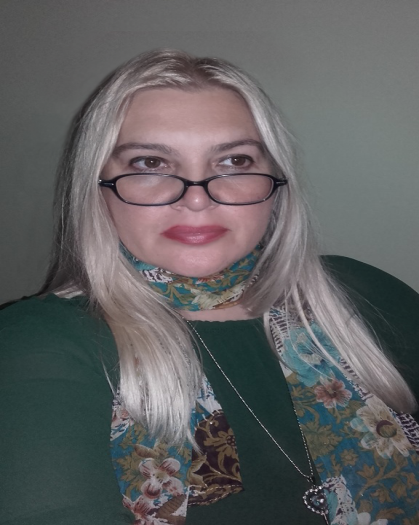
Maja Milojković was born in 1975 in Zaječar, Serbia.
She is a person to whom from an early age, Leonardo da Vinci's statement "Painting is poetry that can be seen, and poetry is painting that can be heard" is circulating through the blood.
That's why she started to use feathers and a brush and began to reveal the world and herself to them.
As a poet, she is represented in numerous domestic and foreign literary newspapers, anthologies and electronic media, and some of her poems can be found on YouTube.
Many of her poems have been translated into English, Hungarian, Bengali and Bulgarian due to the need of foreign readers.
She is the recipient of many international awards.
"Trees of Desire" is her second collection of poems in preparation, which is preceded by the book of poems "Moon Circle".
She is a member of the International Society of Writers and Artists "Mountain Views" in Montenegro,and shealso is a member of the Poetry club "Area Felix" in Serbia.
That is, in English. Wherever and whenever the problems of the blind are discussed, the main topic is the lack of Braille books and textbooks. It aims to help (blind) children master the English language thoroughly. The following are the specific achievements of the manual: ensures mastery; the publication of the dictionary in Braille helps the reader to read and write words by hand, and to understand easily by listening to the audio CD attached to the book.
Publishing textbooks for the visually impaired still remains a problem. Another challenge is whether the textbooks are being printed based on their ability. Are they interested?
According to statistics, there are 39 million blind people in the world. Another 200 million people are partially blind. Advanced technologies offer new opportunities for them.
In December 2020, in Uzbekistan, students of boarding schools underwent a special medical examination within the framework of the “Kongil Kozi” project. The author of the project is the deputy chairman of the Board of Trustees of the National Mass Media Support and Development Public Fund Saida Mirziyoyeva. Within the framework of the project, textbooks in Braille were published, a computer center specialized in the needs of blind and visually impaired children was created, the technical base of all boarding schools was developed, and other small projects have been implemented.
We need to create textbooks for the blind to thoroughly study foreign languages using new methods. As a solution to the existing problem, we are working on the development of elementary intermediate English textbooks. It consists of two parts, a dictionary book and a conversation book. In addition, there is a disk version of the book and a program version. We named the book “Ilm bu -nur”. It uses one of the methods that are becoming popular all over the world, the “minimonics” method.
The dictionary contains 800 words. It is created based on their physiological condition, and they can learn to speak quickly and easily from this book. Another convenience is that it is given in Braille, English, and Uzbek languages. There is also a disk and software option. and they are currently being worked on. The minimonic method is a method that encourages the child to think and think freely, and the difference from other methods is that it allows the child to learn a lot in a short time. It also helps to identify taste.
According to psychologists, a child understands 75% of things by sight, this statistic is definitely for healthy children. However, in this textbook, we want to introduce the art of drawing with dots. The method of understanding pictures by feeling we need to deepen it. Depending on the age of the blind child, we can convey the necessary knowledge to him through levels using this method. Our goal is to simplify language learning among blind people, to help them get international and national certificates, and to provide them with a job in the future.
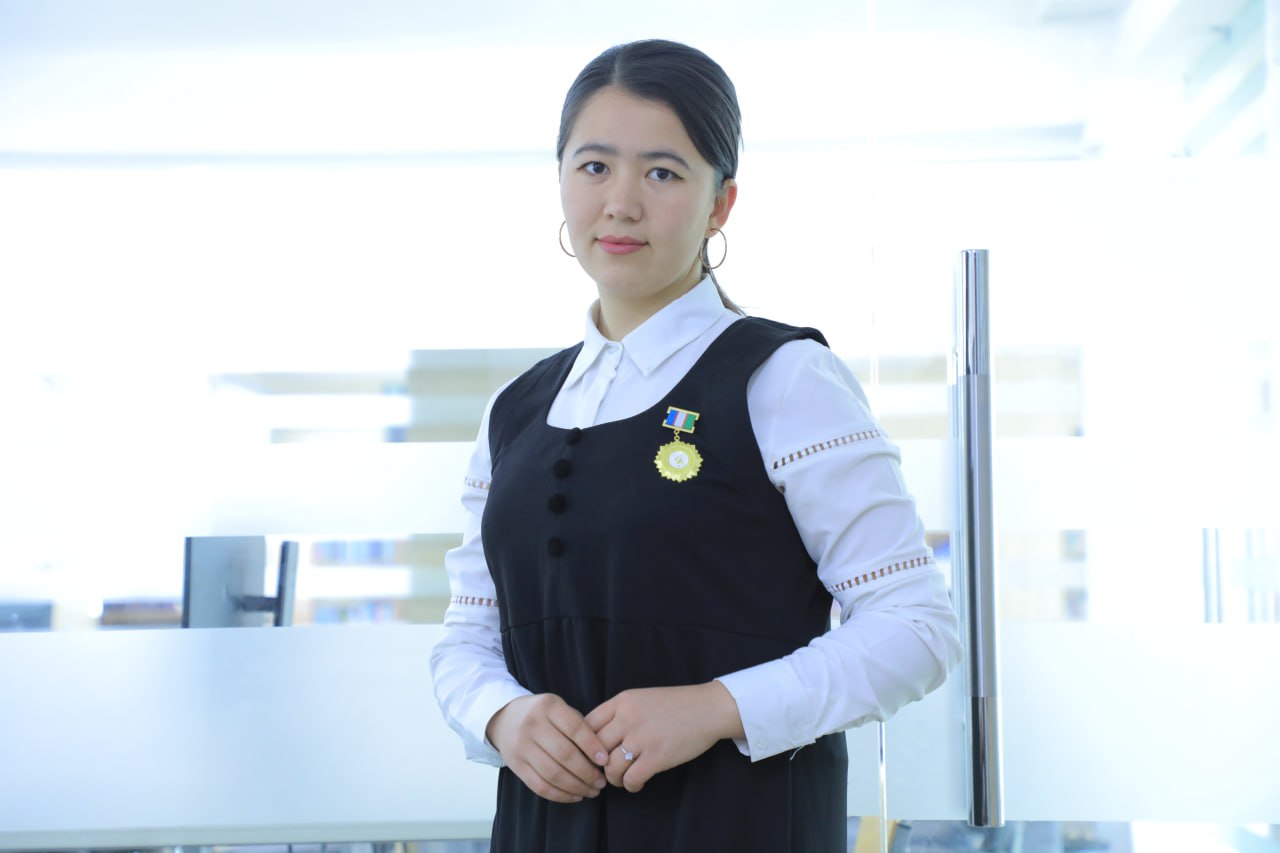
Sadoqat Beg’amova, an author in the Republic of Uzbekistan.
Aweary

Aweary with the dirt
that amasses at the doorsteps of multiple nations,
the trash of treaties, conventions, and dialogues
in assemblies that spew out noisome speeches,
the tedium of eloquence
that has been evolving since the extinction of Dinosaurs
and other pre-historic creatures,
when heavy clubs and hand-held rocks
gave way to more refined ways of resolving
territorial grievance.


Terrorized

Terror now runs in our veins
like electric currents that are ordained
for the God-forsaken and the condemned insane.

We daily anticipate the predicted forecast
of tremors, volcanic eruptions, or some devastating gales
that bring everlasting perdition in its inevitable wake.

Our homes have become gossamer
in the breath of raging warfare.
Stars are dragons to be heeded
and clouds are ominous bearers of pain.
They have injected terror into our brains,
each nerve resonating to a parody of the end of times,
prescribed to every indignant homo sapien.


2024

It is only the second of January
and I am already bed-ridden,
unable to move a limb or lift an eyelid.
I had mumbled something on the phone
that made my brother nearly have a car accident.
The search for a doctor immediately commences
since I rarely fall ill.

Nausea makes it impossible for me to suck
a single sip of my favorite drink.
I feel my grip on life fast loosening,
but there is no white light beckoning
or a flower-strewn tunnel
at the end of which stands the welcoming dead.

The mask-less doctor is reluctant to pinpoint the culprit.
‘Is it the new Corona?’ I faintly ask.
2024 has just unwrapped its miscellaneous gifts.


If They

If they condemn ongoing butcheries in the Holy Land,
they are instantly accused of hate crimes,
of embracing anti-Semitism with a godly might,
but fortunately they happen to be Semites
and there is no way they could turn against themselves.

If they speak against the atrocities of Zionism,
they’re branded with the ugliest forms of racism,
but they are not the ones who inherited an apartheid
that persecuted the Irish, red, and black.

If they invoke the help of Almighty God
to send Archangel Michael to battlefields
to support the persecuted in an occupied land,
fanaticism is the final verdict.
Spring Twilight Porch clear Sky Moon Above

Spring twilight porch clear sky moon above.
Son, said Father.
The boy looked up.
Know how we all walk upright on two feet? Not on all fours?
The boy lightly nodded.

Most don’t know this; we didn’t always walk that way. Back at the beginning the first of us  walked on all fours. But; somehow some command from on high came, to rise from all fours, and walk on just two. Seems simple, eh, right? Yes, but—even back then, humans never could get anything done without a big noisy debate. One morning they found that new two limbed rule had been posted on a wall in the middle of the night.

They stood sleepy-eyed, quietly regarding this, until the loudest mouth among them shouted, Okay, here! Let’s do it—here’s how—and they tried standing on their right arm and right leg, and, promptly fell over, failed. But, even before that failure, others were shouting over them, saying, No, no, no, that’s no good! Its like this—and tried their left arms and left legs, and, also fell over. Some few stubbornly tried those failed ways again and again and fell again and again, as yet others closed in, shouting, No, no, no, no—it’s this way! Right arm, and left leg, see? See—uh, wait, I—and as they fell over, yet more rushed in, crying no no shut up everyone, here; left arm, and right leg, see? See?

And the turmoil grew faster, and louder, and hotter, until a voice shot clear, higher and louder than the rest, crying, This! Two hands! Look here! On two hands, yes!  Look how tall! Yes so tall! And I am not falling! This is the way! So, they all tried to leap onto their hands. Some could not do it—but most were able to, and—these were in the majority, so—they agreed! Yes! They agreed—this is the way!

Until, as they learned to do it longer, heads began reddening, eyes began bulging, and pressure began building, and they--they had to let go. Yes, had to—to fall over.  But, this being the best solution so far, and one they’d all agreed on, they kept trying—and trying—and getting nowhere. But some learned to do it longer, but—they found the prolonged rushing of blood to their brains was not healthy. Some sickened. Some died. How many? Oh, who’s counting—before at last one let go, fell down, and by chance, rolled over and shot up to standing, solidly on their feet!

Look! They cried—look! Here’s the way! Here’s the way! And they all followed.
And that problem was solved—and that was that! Now, isn’t that  something, son? I think that’s really something. Don’t you?

Looking down, he saw his son, calmly relaxed, asleep.
It had worked.
They went inside.
Rejoicing in the LordFor: Olga Shearer
Psalm: 34:3 (NIV)- “Glorify the LORD with me;
let us exalt his name together.”
My soul sings to the Lord, as the sun rise your closeness comes.
I kneel at the foot of my bed and praise you Lord with joy.
What a delightful song my heart sings in gladness to know you.
I turn to you for you have healed my troubled soul by your love.
Rejoicing in my salvation from the heaviness of a broken heart.
Now there is gladness that I have come to know of your redemption.
I once was lost in the mist of pain and sadness for I had no hope.
You spoke to me and give me hope by the gleam in your eyes.
Your voice was soft, and your heart had warmth for my aching soul.
My weary bones would have been crushed if not for your gentleness.
I turned to you for comfort and found rest and I rejoiced
A pillow to lay my head and rest a weary mind to be restored.
My soul delighted in your salvation for all my sins were forgiven.
Labyrinth of love

As a hard-to-solve theorem,
As the unknown of a mathematical formula,
You have conquered my heart,
I've been like a mad wanderer.

If the clouds collide and lightning strikes,
If a loving heart looks at the sky,
If lightning wears a ring around his neck,
Like a current of emotions.

Love is an illusion, invisible to the eye,
The bridge of love cannot be woven with rope,
The word I love cannot be said in words,
The secret is not known like pyramids.

Happiness, you are a mysterious blessing,
You are a name that cannot be appreciated,
Sometimes you are destined to not love,
As an unwanted gift.

When it's enough, everyone becomes a king.
By banishing longing, he becomes a king.
Only when he sees us, act as 'Nadir shah'
He does not remember like the misers.

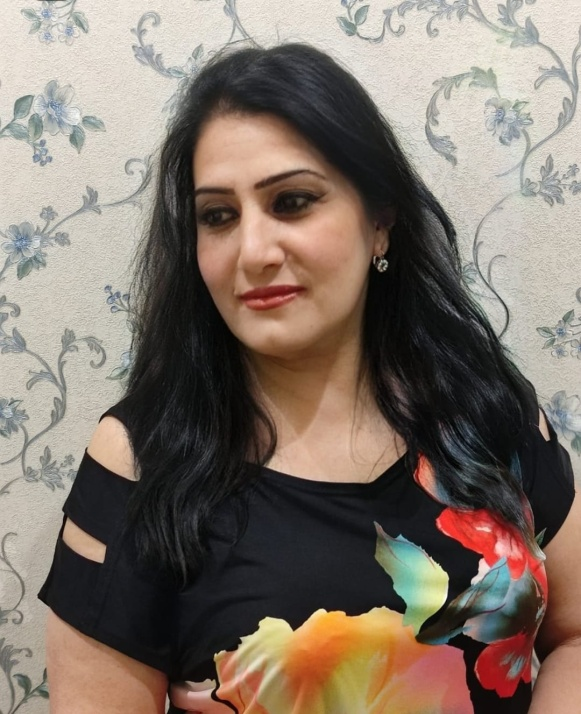
Elmaya Jabbarova was born in Azerbaijan. She is poet, writer, reciter, translator. Her poems were published in the regional newspapers «Shargin sesi», «Ziya», «Hekari», literary collections «Turan», «Karabakh is Azerbaijan!», «Zafar», «Buta», foreign Anthologies «Silk Road Arabian Nights», «Nano poem for
Africa», «Juntos por las Letras 1;2», «Kafiye.net» in Turkey, in the African's CAJ magazine, Bangladesh's Red Times magazine, «Prodigy Published» magazine. She performed her poems live on Bangladesh Uddan TV, at the II Spain Book Fair 1ra Feria Virtual del Libro Panama, Bolivia, Uruguay, France, Portugal, USA.
THE VILLAGE WHERE I WAS BORN

I was born in the village of Sarapayon, Khanka District, Khorezm Region. They say that the name of the village where I was born is Sarapayon, which is a Persian-Turkish term consisting of "sar-ob-yon". The meaning is "sar" - head, "ob" - water, "yon" - space - the head side of water. Some scientists explain that this term consists of two compounds "sara" - "poyon" and the meaning is "sara" - good, "poyon" - border (territory). Also, in toponomic dictionaries, sahr (a) yi poyon - lower desert, a village built in the remote desert also comes in the meaning.

  All three of these indicate that the term is very old. Three canals actually flow through the village, which means the head of this water. These are Shavat, Kulobod, and Khanka canals. It is no exaggeration to say that they cross the middle of the village and are the blood vessels of Sarapoyon lands.

Today, the total land area of the village is 4269 sq.km. Its population is 21,070 people (2012 data). Representatives of different nationalities live harmoniously in Sarapoyon. There are 21,018 Uzbeks, 13 Karakalpaks, 1 Tatars and Ukrainians, and 1 Belarusian.
Sarapoyon consists of 4 neighborhoods: Istiklal, Pakhtagul, Gulistan, Karamozi.

1. Istiklal neighborhood has united 7 peoples. Sarrosh-1, Sarrosh-2, Upper Jingon-1, Upper Jingon-2, Lower Jingon-1, Lower Jingon-2 and Kurpos.
2. Pakhtagul neighborhood has united 5 peoples. Guyinchi, Oram, Tosh, Kemir, Experiment eats.

3. Gulistan neighborhood occupied the largest area of the village. 9 nations are united here. These are: Eshanlar, Menhat, Karakummat, Kulobod, Blue-1, Blue-2, Experiment, Mouse, Khojalar.
4. There are 3 Yangyop, Intizom and Okyop communities in Karamozi neighborhood.

During the entire history of the village, it has been bringing up many proud and memorable people. During the Second World War, hundreds of brave soldiers of this village fought for their people and homeland. How many people died in the battle and are missing. Among these brave men, my grandfather's uncles from our family took part, and both Egamovs, who were only 19 years old, did not return from the war. Not only those who died in the war, but also the hardworking people of our village gave their all to the war, gave their labor, harvest, life...

I love my village, I wouldn't trade it anywhere.
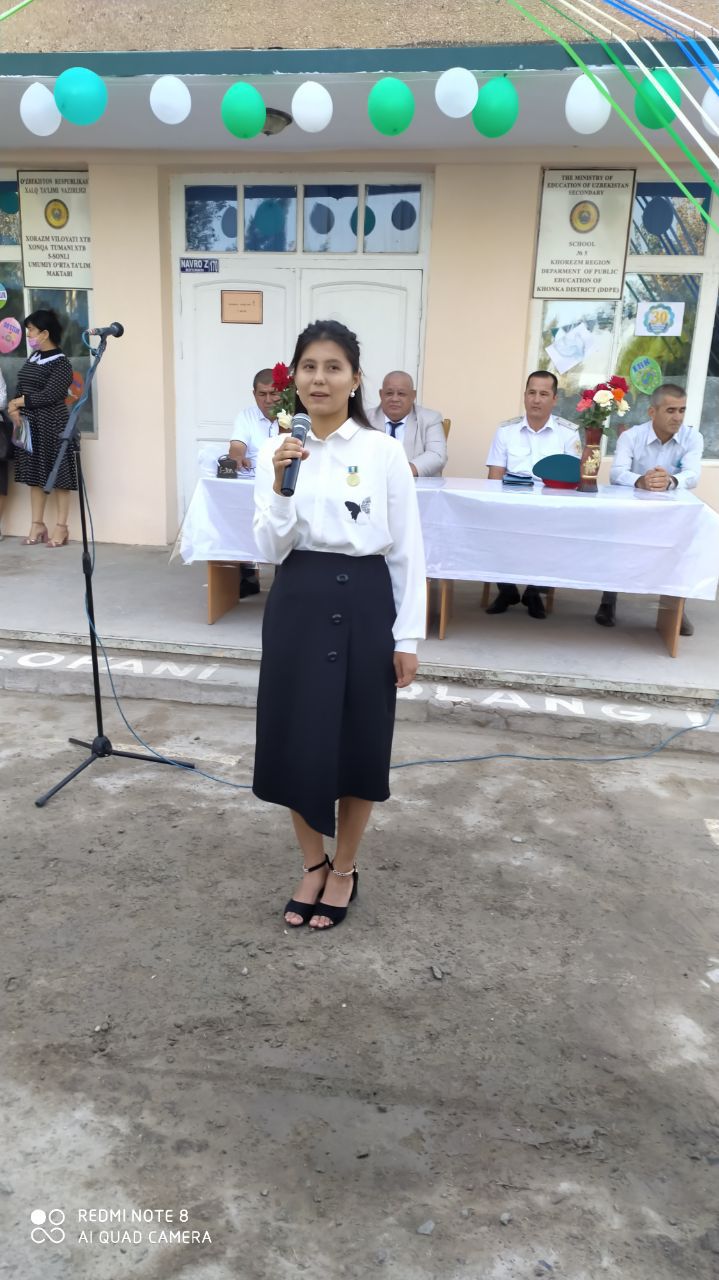
Saparbaeva Aziza Asror’s daughter was born on May 13, 2003 in Khanka district. In 2021, she graduated from school No. 5 in Khanka district with a gold medal. In September 2021, she was accepted as a student at the Faculty of History of UrSU on the basis of the state budget. Currently, she is a gifted student of the 2nd stage of the university. She is a participant of several international and national conferences. She is the winner and laureate of a number of international and republican contests and festivals. About 10 of her scientific articles and theses have been published in republican journals and she is a member of about 10 international organizations.