Being Alone


Very often I forget the consciousness of death
Although my hands are stuck to the soil of the grave
Every human being wears clothes
Addition and subtraction of demand
A staircase extending from zero to infinity
The galloping horses run into the unknown
The distance radius increases from person to person
People bury dead people and want to escape from death
The time map stops with hands raised
Deeds walk along the path of the past
A dark wind rising from the hole of the grave Hiding the footsteps of dead people
The fragrance of roses, the color of marigolds become like a stranger.
White chrysanthemum wrapped in a shroud
Perception on the leaf is irrelevant
Running from death to survive
Quick exit from the cemetery
Where one day we must come for eternity.
Then being alone.
*Title Of Poem* (TOP): *Life At Forty* - (LAF 2024)
It's been roller-coaster journey,
Even in the womb of begottenment.
Indeed, like a field of tourney
This is new-life commencement
I need His divine direction,
So I pray thee, every day
To bring about His maximum protection
Thus, every foot-print-step on the way
*Life At Forty*,
I ask for God's life-span of longevity.
Well, I reminisce the hood of West-Side-Amanful
On such suburban street of Takoradi.
At times awful, sometimes beautiful
I can't compare Accra's place called Labadi,
But, both lies along the coast
Child-hood weekends at the 'Boat-Asi' beach,
With some folks not to boast.
Yet, we often learn and teach
*Life At Forty*,
I ask for His wisdom and integrity.
Father, let your chap have destiny-helper.
Right-rib-partner, so as to live together
In peace, love and harmony it'll be proper.
Better-half with compassionate heart like a mother.
Let your giftings, skills, talents, abilities and capabilities bring success.
May your goodness pave-way of good-gig on every platform.
Hence, I holdfast your faith to ensure progress.
Regardless of the sickness you lifted me to perform.
*Life At Forty*,
I ask for your divine-maturity to reach eternity.
Four-decades on this planet-earth,
It's your mercy of super-special grace.
In good-health, we'll create wealth,
As I pray and seek your face
With respect to this unique addition of age.
You've made it possible to be alive.
I testify to thank God and all at this stage.
Heart of spirit-songs, I sing to live and survive.
*Life At Forty*,
I ask to eschew poverty but ensure prosperity.
Written By *Ike Boat* ✍🏿🗣️🎤
Poem Title : *Life At Forty* #LAF 2024 🙏🏿🙇🏿♂️🙌🏿✝️
*Ike Boat At Fourty* #IBAF
*IB @ 40* 🎂 🥳 🎉 🎈 🎁 🎊
*Day Of Birth* (DOB): *11th June*
*4 Stanzas* (10 Each)
*40 Lines* (In All).
Mobile Phone

There is a mobile phone
     It is not my own.
When I touch this phone
     My father tell me gone.

It is my dream to buy a phone
     So that I can use it all day long.
People use mobile phone must
     But it is harmful to us.

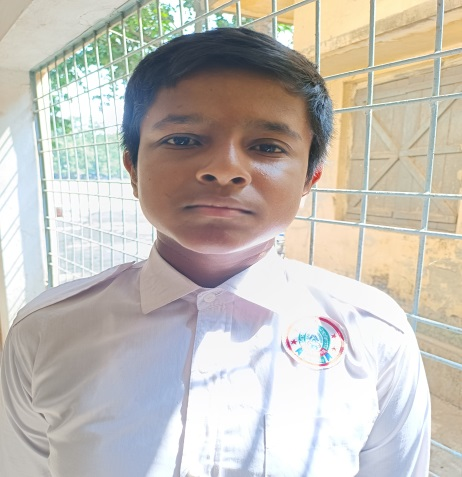
Md. Amir Hamza  is a student of grade seven in Harimohan Government High School, Chapainawabganj, Bangladesh.
This month the theme is Self-Determination, having the space and power and dignity to be able to understand and shape one’s own destiny. We stand with all peoples of the world seeking self-determination.
Raafia Shaheen urges us to see people on their own terms and not just how they are useful to us.
Michael Robinson reviews and finds encouragement from Jacques Fleury’s You Are Enough: The Journey To Accepting Your Authentic Self. The book suggests that Black men worldwide should define themselves on their own rather than simply following social stereotypes.
Shahnoza Ochildiyeva tells the story of a girl who has to leave her Uzbek home due to loss but who returns home having made something of herself.
Zarina Abdulina speaks to the importance of worthwhile work to a person’s self-concept and how teaching fills the role for her. Marjona Shayimova talks about finding the courage and perseverance to achieve her goals.
Nazokat Urinboeva offers up a tribute to Uzbekistan’s strength and cultural heritage, all the way back to Mughal emperor Babur while O’tkir Kochkor enscribes poetic praise for the majesty and history of his Uzbek homeland. Mannonova Shakhnoza outlines scholarly research into the history of the Kagan Khanate in Uzbek history as Zulayho Sultonaliyeva illustrates how her culture and society can adapt for the times in her piece on the legal precedent and need for updating and modernizing Uzbekistan’s constitution.
Behruz Toshtemirov argues for the unique qualities of literature as an art form, inspired by her Uzbek cultural heritage.
Abdunazarova Khushroy gives us a poetic tribute to the heritage and language of Uzbekistan as Feruza Abdullayeva pays tribute to the many Uzbek writers whose work she admires.
Evie Petropoulou showcases an Egyptian celebration of the Greek poet Cavafy, who was known for his sensual and political poems and unconventional personal style.
Alan Catlin rearranges verbal ephemera from famous people to create unique character sketches. Jacques Fleury celebrates the good fun of the Blue Man Group while Noah Berlatsky shares a harsh and iconoclastic thought about Ezra Pound and Daniel De Culla’s poem pokes gentle fun at the wealthy and powerful.
Mark Young presents a fresh set of his signature mix of text and colorful images as Saad Ali showcases ekphrastic work in response to historical paintings, inserting his thoughts into the fabric of history.
Kylian Cubilla Gomez crafts photographic closeups of his dinosaur and tractor toys and other childhood ephemera. Habibova Mahzuna expresses nostalgia for her lost childhood.
Wayne Russell avows his allegiance to travel and adventure while Sayani Mukherjee’s poetry evokes flights of imagination around the globe.
Adam Fieled peers into the close and tempestuous relationship between an artist and a muse. Gaurav Ojha outlines his path from youthful lusts to maturity and spiritual transcendence. Sandip Saha’s pieces explore the search for mystical spirituality amidst daily life.
James Whitehead probes timeless questions about human life, ethics, and suffering. Niginabonu Amirova reflects on our mortality and the cycles of nature as Mykyta Ryzhykh crafts lowercase poems about the tragedies of quick and slower deaths and Mashhura Abduhalilova renders the experience of mental distress, showing how anxiety distorts time and sensations.
Nigar Nurulla Khalilova laments society’s being uncaring to the vulnerable while Iraqi poet Faleeha Hassan takes a quiet moment to mourn family members lost to war.
Bruce Roberts reminds us of the historic coexistence of Jews, Christians, Muslims and other people in the Middle East and laments the current violence in the region.
Bill Tope’s story exposes different levels of corruption in the nonprofit world, how greed can mess with even the best of intentions.
Z.I. Mahmud looks into scholarly literature that explores the tension between Batman’s heroism and his lawbreaking and vigilante violence.
J.J. Campbell seeks to show small kindness in an alienating world. Feruza Muzaffarova highlights the humane sensibility behind O’tkir Hashimov’s novel Between Two Doors. On a personal level, Niginabonu Amirova urges a return to common courtesy, beginning with greetings.
Tuliyeva Sarvinoz speaks to the importance of setting a good example and preparing children for the world. Diyora Tursunboyeva reminds us of the importance of encouraging children’s dreams. Niginabonu Amirova celebrates the joy of sports and athleticism for young people as Rano Babamurodova encourages children to read books and learn.
Tuliyeva Sarvinoz also outlines offerings at Uzbekistan’s vocational schools as Abdunazarova Khushroy reflects on educating herself by learning Arabic and Jumanazarova R. gives honor and respect to a dedicated teacher. Tuliyeva Sarvinoz also pays tribute to another educated and accomplished writer and teacher.
Muslima Murodova Kadyrovna pays tribute to the spiritual and compassionate love of her mother. Zuhra Ruzmetova also honors the care and encouragement and constancy of her mother. Nosirova Gavhar pays tribute to her grandfather who introduced her to books and gardening. Zilola Khamrokulova sends up a poetic love piece for her mother as Nozima Uloguva’s poetry and prose celebrates the sacrificial and dedicated love of many mothers as Dilnoza Eshqulova renders up her intense grief and spiritual angst after losing her mother.
Prasana Kumar Dalai presents the joys, pains, and trepidations of love and Mesfakus Salahin contributes delicate romantic poetry. Duane Vorhees presents various sensual love poems through the metaphors of music, literature and cosmology. Kristy Raines sends up passionate and adoring pleas to her lover to remain close.
However, Taylor Dibbert reminds us that no matter how much work you put into a relationship, it doesn’t always last forever. Perhaps the couple he describes could have heeded Madina Toxirova’s advice on the importance of psychology for young people to understand themselves before marrying. Zafar Nur contributes a poem of lament over a heartbreak as Maurizio Brancaleoni translates poetry from Italian writer Amelia Rosselli on quiet heartbreak and loneliness.
J.D. Nelson’s haiku captures spring moments of transition and in-betweenness as Isabel Gomez de Diego contributes photos of various doors and entry ways. Lynn White highlights the whole worlds going on in what we might consider the background of nature.
Mahbub Alam celebrates nature and love in his Bangladeshi homeland. Abduvohid Holikov presents a description of the cultural and natural beauty of the Denov region of Uzbekistan while Ochildiyeva Dilnoza Abdivokhid celebrates the Surkhandarya region’s cultural and natural history and her family heritage. Abduhoshim Maxamadov celebrates the geographic and biological diversity of Central Asia’s Ferghana Valley. Samadov Aziz Xasanovich encourages technology development in harmony with these natural environments in his paper on measurement techniques for constructing horizontal and inclined wells.
Graciela Noemi Villaverde captures a moment of personal and mental stillness and rest. Lilian Dipasupil Kunimasa finds her psychological rest and inspiration in water: rain and the ocean’s diversity of life. Annie Johnson speaks to calm moments with her love throughout time and seasons of nature.
Uzbekistan is one of the oldest countries in world history and a country rich in many historical places and historical events. Uzbekistan consists of 12 regions and one autonomous republic and is currently one of the developing countries in every field. Now I want to tell about the most ancient and well-known places in Uzbekistan.
My hometown is Surkhandarya region where is located in southern part of the country. According to some facts, my hometown has a long-life history which is located next to Amudarya and is the southernmost part of our country. Our nation is strong, brave and courageous, and also still the same. Even there are many stories and fairy tales about it. For example, there are our historical heroes Barchinoy and Alpomish, these people are symbols of bravery, loyalty and love. In addition, there are many historical places in my motherland, for example, 2000-year-old buildings and their remains are still available.
The most important thing to say about our people is that they are very hardworking, open-minded, kind and simple-minded people compared to other regions of Uzbekistan. Our family consist of eight people, they are my grandparents, parents, three sisters and me. Elders in our country are wise, knowledgeable and experienced people. That is why, youngsters always respect and help them also ask some some advice for difficulties in their life. Every Muslim people in the world are aware of religious people in Central Asia, one of the most person Al-Hakim at-Termiziy lived in our country and his tomb is located in my hometown.
When it comes to my education. I am a third course student in higher education where located in Samarkand. I think more people around the world know about this city, because here is most famous, historical and touristic location. Thousands of tourists visit this city in a year from verity parts of the world. Especially, Samarkand is well-known for its historical places, mosques, and madrasahs such as Registon Square, Bibikhonim mosque, Guri Amir, Shkokhi Zinda and so on. Like all of this places are related to Middle Ages when Amir Temur and his generations lived. By the way, this city is a country where was the capital of Amir Temur’s country.
If I tell about higher education our country that it consists of four year for bachelor degree but for Master’s degree students study for two year. I study at Samarkand state institute of foreign languages, the faculty of English philology and translation studies. In the future I will be teacher and translator, because my major is to be translator or interpreter but my dad really wants me to be a teacher in higher education. So that I will be both of them. In our institute there are more international teachers who are from USA, UK, Japan, Korea, Chine Turkey and so on. Therefore, our local teachers also have the same knowledge and practice. For example, all of teacher in our institute teach students with efficient methods and through modern high- digital technologies.
Different holidays, competitions, conferences, camps and other meetings are held every month. After graduating this institute I am going to study for Master’s degree abroad may be in the USA, UK or Turkey. I want to tell you about my parents, they are very kind, sincere, open-hearted, easy-going and my closest people in my life. I thank them for all the love they have shown and the opportunities they have created. In our country, it is very important to respect and honor parents. Because they grow you up by giving their everything.
My dad and mum are the best people in the world. I clearly remember, I was in the 6th grade at secondary school, my father had to come from abroad, and I asked them to bring me a computer. I didn’t believe that he would bring it, but unexpectedly he gave me a new laptop of the latest model. I was very happy at that time. Because I was the only student in the class who had a personal computer. Also, they always emphasize that we should study and be good professionals. My sisters and I are always trying to make my parents’ dreams come true. I am very proud to be a child of such parents.
Summer vacation, when I was 13 years old, I wanted to learn Arabic. Then I told my mother. My mother was very happy. Then my mother said that she wants to learn Arabic. My mother and I asked my father for permission to attend an Arabic language course. My dad agreed. My mother and I were accepted to the Arabic course. Tomorrow will be our first lesson. That day has come. After half an hour, the course will start. At that time, my father suddenly called my mother. Mom and dad didn’t talk much. Then my mother said that she can’t go to the course today.
I had some fear and some excitement. I went to the course alone. I entered our study center and then our room. The tables in the room were almost full. There was an empty table behind, I went there and sat down. Everyone was talking to their partner. I was quietly observing the surroundings. There were both young and old. After some time, our teacher entered the room saying “Assalamu alaykum va Rahmatullohu va Barakatuh”. Everyone stood up and saluted. Our teacher said “You can sit”. Our teacher got to know all the students. He organized an introduction game. Game condition: The person sitting at the first table had to say his name, then his partner next to him said his name and himself. In the same way, everyone said their partner and their name in a chain. Everyone recognized their classmates. Then our teacher distributed alphabet book and husnihat book to everyone.
Our teacher explained how to read the book, how to keep the book. Then we learned the first letter of the Arabic language, the letter alif. Then we learned the Arabic vowels: Fatha, Kasra and zamma. I really liked the lessons, especially our teacher. Her cheerfulness seemed suspicious. At the end of the lesson, our teacher gave everyone homework. And they said goodbye to us in Arabic saying “You are on good way.” I went home in a good mood. I told my mother what happened in the course. I will never forget this day.
Abdunazarova Khushroy was born on December 21, 2008 in Jamashuy town, Mingbulak district, Namangan region, republic of Uzbekistan. She is currently a 9th grade student of the 15th specialized school. Winner of republican and international contests, participant of the regional stage of the Zulfiya state award, ambassador to 5 countries, coordinator, volunteer, member of more than 10 international organizations, author of many poems. Many creative works have seen the world. Member of “Leader Ladies club”. Winner of the 1st place in the interschool “Zakovat” intellectual game. Participant of the “Young Reader” contest. She wants to become a translator in the future.
 My mother

 In the bosom of the nine moons,
 My honorable mother who gave birth to me.
 Nurtured in a warm embrace,
 My kind, loving companion.

 Her eyes shine with joy,
 The kindest, innocent world.
 She builds a castle of flowers in your heart,
 She prays in every word.

 Of course, intentions will be answered.
 I will take you to Hajj, my shining jewel.
 Thank you, thank you a thousand times,
 My pain, my pleasure, my confidante, my mother.

Murodova Muslima Kadyrovna was born on June 29, 2010 in Jondar district of Bukhara region. Currently, she is a 7th grade student at school No. 30 in this district. Her first poem was published in 2024 under the name "Come beautiful spring." She won the 2nd place at the festival held in the district. She won the 1st place in the district stage and the 2nd place in the regional stage of the "Bakhtim Shul: Zulfiyasiman Uzbek" contest. Her first anthology was published by the UK publisher Justfiction Edition.