DESIRE

Brave steps bold
When you see it in the search
A useful person
Words are true.

Reporter, TV journalist
There are many names, the goal is the same
It burns for people to see
Working together solidarity

I felt an intention in my heart
My desires are increasing day by day
What profession to choose now
It's hard not to go to the fireplace
Children

We are the bright future

Of our  independent

Heavenly mother Earth

We are the diamond stars

Of the ruby field in the sky.

We are the great happines

Of loving beating hearts,

We are the future children

Of every loving families.

We are the only sun

In the east horizon lights

We are the bright face

Of great ancestors .


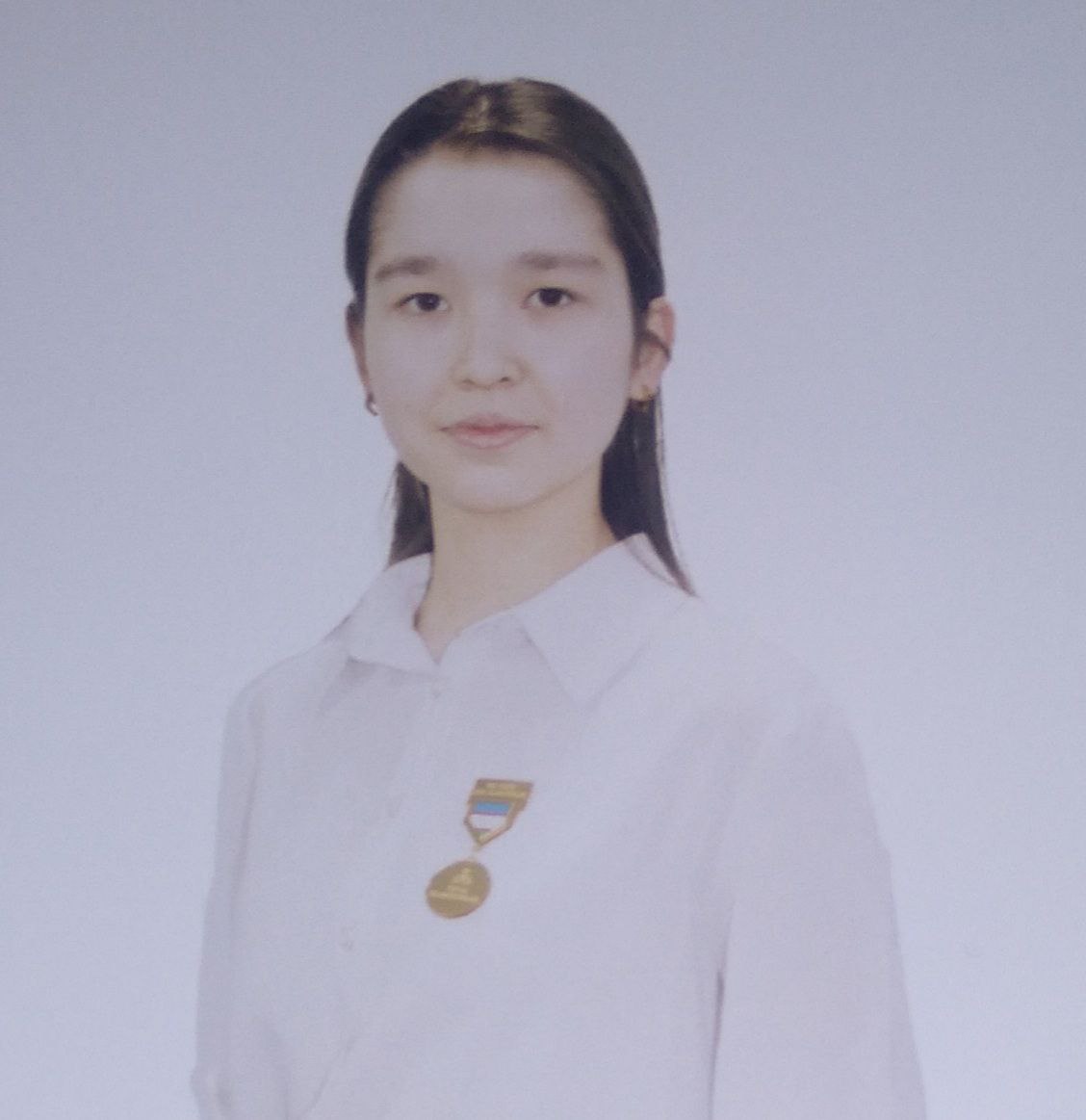
🖋Written by Shaxlo Safarova


Safarova Shakhlo Nurkamol's daughter was born in 2007 on 14th April in Tashkent the capital of Uzbekistan. She is one of young, gifted and successful Uzbek writers. If we narrate her, we should not pretermit about her first books which are named as '' The sound of my heart '' and ''Colourly emotions '' are published in USE.

In one of the successful year of her life is 2023th year because in that year she nominated The state ''Zulfiya '' price of Uzbekistan and '' The best Top-50 searchers'' badge.
I sat cross-legged on the carpet and watched my mother in the mirror as she brushed my hair with the antique silver hairbrush Nana had gifted her.
“Comfort is a fleeting phenomenon,” she said.
“Oww. Mommy, you’re hurting me.”
“Just need to get this last tangle out.” She tapped my shoulder. “Sit still, Linda,” she said and went back to yanking on the end of my hair with the hairbrush. “Look. I got it!” She held up a tiny snippet of balled-up hair, placed it on the side table, and continued brushing.
“What’s a phenomenon, anyway?” I asked.
“It’s a…a… condition,” she said. “Like a situation that is observed yet perhaps not fully understood. You’re eight years old. You should know that word. Having a wide breadth of vocabulary will give you an edge in everything you do.”
She sat on the sofa behind me in her powder-blue turtleneck and navy-blue pleated skirt. She wore some kind of turtleneck every day, either short or long sleeved, no matter what the weather or season, hiding her neck where she had a thin vertical scar that went from just under her chin down to her collarbone. Her eyes were like two dazzling gems, an exquisite blue-green mix with tiny flecks of brown. Her eyelashes were long even without a hint of mascara. Her short, dark, curly hair parted in the middle and finished at the chin of her perfectly-shaped oval face accentuated by high cheekbones and the dot of a black beauty mark to the right of her upper lip. I remember thinking she was beautiful as I watched her in the mirror yet tried to get the thought out of my mind. She annoyed me with her strange behaviors much more often than impressed me with her beauty.
We were both brain-gifted. I was in a special progress class at school based on IQ and other tests, and had been selected to skip a grade. She’d often remind me of that particular similarity between us. My mother could talk to anyone on any subject for hours, spouting her broad knowledge of science, literature, history, geography, theater, politics, even quantum physics and the concept of parallel universes.
At first, the person would smile, their eyes wide in amazement at the depth of my mother’s detailed grasp of the topic at hand. She’d converse non-stop, go on and on with strangers on the bus, on the street, in the supermarket, at restaurants, at my school with teachers, until they had to make an excuse to leave the scene, somehow get away from her. She seemed to be unaware of their need to retreat. Was that why my father left us? I was well aware of my mother’s flaws. Her serious flaws.
She stared at me in the mirror, her head tilted to one side, hairbrush in hand. “You are a beautiful girl,” she said. “I think you’re going to be a star! Linda Springhorn, Tony Award winner!” she declared and spread her arms out in the air.
Watching her in the mirror, I thought she might drop the hairbrush.
“Thanks,” I said. “Can I go now? I’m gonna meet Patty and play cards.”
“No. You’re not doing anything with that Patty.”
Geesh, why did I mention her name?
I rolled my eyes, pulled away, and got up from the rug.
“That girl is unkempt, nasty.” My mother’s face contorted like she smelled a dirty diaper or something worse. She tapped my arm firmly. “Sit! I’m not finished brushing you.”
“Patty is my best friend,” I said as I complied but sat further away from her reach.
“Her sister is even worse,” she went on, and then she tugged my sweatshirt for me to move back closer to her. “The bad language both of those girls use. Shameful! I hear them out there on the street. Very bad influence on you.”
“But…”
“Absolutely not. I don’t want you playing with her or her sister.”
I curled up the corner of my lip as if to say I hate you. It was my usual put-down without saying a word. I knew she despised me doing that.
“There. Done,” she said, and fixed the pink hair tie around my long brown ponytail, giving it one last swoop of the brush.
I started to get up. “Okay, then I’m gonna play handball with Mitchell instead.” I’d just sneak around the corner to play cards on Patty’s stoop outside her building.
“Better choice,” she said. “Just do me a favor Linda-girl, before you go.”
I picked up my jacket from the easy chair.
“What?”
“When you cross the threshold at the front door, come back three times without stepping on the cracks.”
“Mommy! No. Not that again.”
“Do it,” she said. “I don’t want you to have any bad luck out there on the street. Tomorrow’s your big audition with Richard Rogers. You need to be in tip-top condition.”
I pressed my lips together. I had planned to pretend to be sick that night so I could skip the unwanted callback audition the next day, the audition Mommy wished she was doing instead of me. I felt like her puppet. I didn’t want to be an actress, something she had urged me to do with ballet, tap-dancing and singing lessons each week since before I turned five. Lessons she went into debt to give me. Lessons I didn’t ever want.
“Remember that movie we saw yesterday,” she said, changing the subject. She knelt down on one knee to button up my wool jacket. “That hilarious man dressed up like a woman wearing a mink stole. Tony Curtis! He’s so funny.”
“Yeah, I remember,” I replied. “Kind of stupid.”
“Stupid? He’s an Academy Award winner. And he was my best friend. We danced, acted together in the Navy, and then did summer stock together in the Catskills.” Her eyes got misty. “I knew him as Bernie Schwartz. Now, the famous Tony Curtis. Of course, I had a stage name too – Gloria Parker. We both adopted stage names at the same time.” She smiled.
I shrugged. “Okay Mommy, can I go now?”
I had heard the Tony Curtis story at least ten times before. Ignoring my question, she giggled and fell back on the sofa, sinking into the cushions like a little girl sharing her boy crush, her hands clasped in her lap, her shoulders raised, her eyes up at the ceiling. She went off into a zone beyond our tiny living room. I almost laughed but caught myself and, instead, curled my upper lip in disgust.
She straightened and pointed her finger at me. “You keep doing that lip curl thing, young lady, and your face will get stuck like that forever.”
“Can I please go?” I asked.
She stood from the sofa. “Remember, three times back over that threshold. No stepping on the cracks. I’ll be watching you down the hallway.”
I turned to go and moved like a robot, my head fixed straight ahead, my body mechanical, arms stiff at my sides. I would only obey because I was captive to a delusional mother, and I had no choice.
“And find your brother out there,” she added as I neared the front door. “Both of you back in here by four. We’ll rehearse your ‘I Feel Pretty’ and Ronnie’s audition song one more time before Nana gets home for dinner.”
“Right,” I mumbled under my breath. “Can’t wait.”
I turned the knob to open the front door.
“I’m watching,” her shrill voice threatened.
I lifted my right foot, careful not to step on the grouted crack between our wood floor entry and the black-and-white checkered-tiled floor in the hallway just outside our apartment, the closest apartment to the main entrance of our five-story brick building. Then I lifted my left foot over the threshold and placed it next to my right foot, and then I turned back to face my mother who stood in the living room with her arms folded at her chest. I stepped back inside toward her, again careful not to tromp on the grout cracks despite the temptation.
“No cracks,” I said, my index finger pointing down at my feet. My mother nodded. I turned to cross back into the outer hallway a second time and looked back at her. The sun shot through the narrow entryway, its beam reaching to where my mother stood. Her face looked worn, wrinkled, her body thin, frail. She no longer looked anywhere near beautiful.
“Good,” she said and came down the hallway toward me, her black stack heels clicking on the wood floor. “Now do it again. A third time.”
Maybe I should call the social worker, I thought. I had the phone number for the red-haired woman who wore thick black eyeglasses and carried a black leather briefcase. Dina Weintraub from Social Services. She had given me the light blue business card which I hid under the mattress. She came by once a month to check on my single-parent mother, and sometimes she lingered, waiting for Nana to get home from work so she could spend a few minutes privately chatting with her in the kitchen.
One time I put my ear to the kitchen door to listen. The woman said in a hushed voice, “How is she? Showing signs of compulsive behavior or any delusions?”
I didn’t stick around to hear Nana’s answer back. All these years later, I still can’t decide what scared me most. I was afraid my mother would come up behind me. Or that Nana would swing open the kitchen door and catch me eavesdropping. Or maybe I just didn’t want to hear the answer to the question. So, I turned away.
The “crossing the crack avoidance” routine at the front door was just the tip of the iceberg when it came to my mother’s bizarre behaviors. Each night, she’d demand that my brother and I go back and forth several times across the threshold of the bedroom before getting into bed. Sometimes it was ten times. Sometimes it was twenty.
There was one night when I heard her talking loudly on the phone. I tiptoed into the bedroom and picked up the other line to listen. There was nobody on the phone except her having a conversation with a dial tone, which turned into a loud beep. She ignored the annoying sound and just kept on talking without a pause. Her topic was something about the horrid New York City education system. She was shouting into the phone as if performing a dramatic scene.
Now returning home, I crossed the front door threshold three times as my mother had commanded. I stood alone on the other side of our apartment door, on the black-and-white checkered hallway floor, and I stared back at our shut front door for a few moments. I was ten years old but felt tired, angry, and sad.
I’ll talk to Nana when she gets home from work, I thought, after dinner when Mommy takes her bath.
Nana would listen, understand my frustration, my hopelessness. Maybe she would get Mommy to change her mind about dragging me to that callback audition tomorrow.
I just need a little comfort, I told myself, as I walked around the corner to find Patty. Embarrassed and ashamed, I couldn’t say anything to my best friend. It was my secret. My mother.
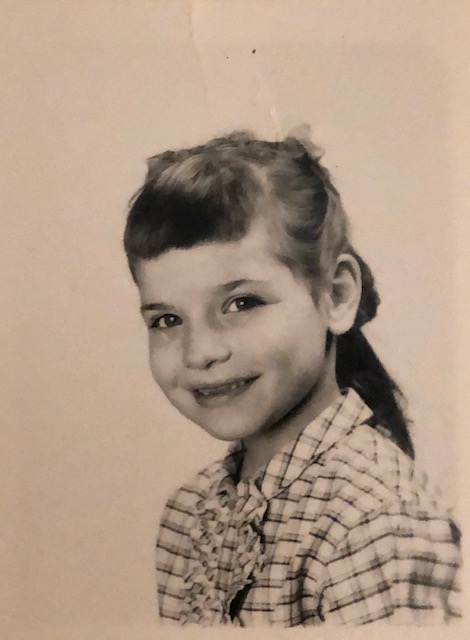
***Excerpt from memoir titled A BRONX GIRL (Growing up in the 1960’s in the Bronx) by Linda Springhorn Gunther available on Amazon:
Direct Link to Amazon:
AUTHOR BIO:
Linda S. Gunther is the author of six published romantic suspense novels including: Ten Steps From The Hotel Inglaterra, Endangered Witness, Lost In The Wake, Finding Sandy Stonemeyer, Dream Beach, and Death Is A Great Disguiser. In 2023, Linda’s memoir titled A Bronx Girl was published and is available on Amazon. Over the past 18 months, more than 60 of Linda’s short stories, memoir pieces and essays have been published in a variety of literary journals across the world. Please visit Linda’s website for her WRITE-BYTES blog for developing writers at www.lindasgunther.com
rain earth cold but once the summer sun and your eyes plus birdsong I remember (for Tara)
all the time through both the nocturnal wild and the structured parts also. cold, wind, ice, and sleet. grey, dark, opaque, and even rueful. the old church and its tombstones the roof crying on the sides and the tears not flowing but racing down to the cemetery earth. poor old field mouse is probably even saturated w/that and also sadness. where did the summer and the sun of the summer go to?- once I think, there were purple and yellow wildflowers that lived on the edges of fields,- fields verdant and inside the woodland passageways great healthy vines sometimes climbed trees old and full, so full of character and warmth, of nuance and energy, robust w/the stories and spirit of the good things of the countryside.
I think, also, that your eyes were brown and spoke of many things, things of now and of ancient continents. the other souls,- well their eyes only appear brown from a distance…something to do w/the light or angle. but their eyes are green and blue and grey, things the world lauds and celebrates,- but the world is wrong, the world has everything backwards, for it is your brown eyes that are above the rest and that make the world settled and whole, no? yes. of course. I can see. you tell me about the owl and the birds and look upwards much of the time. and the birds. they always sang for you. against reason and logic I would say they never sang for me like that when i was there alone. birds and butterflies, little streams and water washed stones. I think we stopped there and watched everything and the living dream of the world was much better than it is today.
Life

In the years
I've been traveling uphill.
and savored
every situation
like a fruit.

I have tried lemon
bitterly
that I even arrived
To get accustomed

I have lived
situations
gentle
like lime

the temptation of
strawberries and sweet
cherries
gladly.

The eaten kiwi
with a mix of flavors and
situations.

I have eaten salad
fruit
without tasting
the taste of nothing.

Today at this age
I select what i want to eat
And I enjoy every moment.

I'm coming
to the top of my life
and I will take my best
memories

Mirta Liliana Ramírez has been a poet and writer since she was 12 years old. She has been a Cultural Manager for more than 35 years. Creator and Director of the Groups of Writers and Artists: Together for the Letters, Artescritores, MultiArt, JPL world youth, Together for the letters Uzbekistan 1 and 2. She firmly defends that culture is the key to unite all the countries of the world. She works only with his own, free and integrating projects at a world cultural level. She has created the Cultural Movement with Rastrillaje Cultural and Forming the New Cultural Belts at the local level and also from Argentina to the world.
ON THE CONCEPT OF INTEGRAL, HISTORY OF ORIGIN AND SOME COUNTER-EXAMPLES
Abstract. In the article is given information about the integral concept and the history of its origin. In addition to the Riemann integral, which is covered in the school program, a number of other integrals (Riemann-Stiltes, Daniell, Alfred Haar, Henstock-Kurzweil, Ito and Stratonovich, Chokvet) are described. The difference between integrals is explained with the help of specific examples. The concept of definite integral and its use in practical problems were explained in detail, counter-examples of some theorems were presented.
Keywords: infinitesimal, area, volume of a solid, integral, indefinite integral, surface, surface integral, sign of indefinite integral, counter derivative.
INTRODUCTION
In mathematics, the integral defines the values of functions that describe displacement, area, volume, and other concepts resulting from the integration of infinitesimals. The process of finding integrals is called integration. Along with differentiation, integration is one of the basic, important concepts of mathematics and serves as a tool for solving problems involving the area of an arbitrary shape, the length of a curve, and the volume of a solid in mathematics and physics.
RESEARCH MATERIALS AND METHODOLOGY
Integrals can be further generalized depending on the type of function, as well as the field in which the integration is performed. For example, a line integral for a function of two or more variables is defined and the interval of integration is replaced by the formula representation of the curve connecting the two endpoints of the interval. In surface integrals, the curve is calculated by replacing a part of the surface in three-dimensional space. The first documented technique capable of calculating integrals is the exhaustion method of the ancient Greek astronomer Eudoxus (ca. 370 BC), who is known to have tried to find areas and volumes by dividing them into infinitely many divisions. This method was further studied and developed by Archimedes in the 3rd century BC. It was used to calculate the area of a circle, the surface and volume of a sphere, the area of an ellipse, the area of the lower part of a parabola, and the volume of a segment. That is, it is not wrong to say that the revolution of integrals occurred during this period.
In addition, a similar method was developed in China in the 3rd century AD by Liu Hui, who used it to find the area of a circle. This method was later used in the 5th century by Chinese father and son mathematicians Zu Chongji and Zu Geng to find the volume of a sphere. And in the Middle East, Hasan Ibn al-Haytham, a man known in Latin countries as Alhazen (ca. 965 – 1040 AD), developed the formula for the sum of four powers. He used these results to calculate (create) what is now called the integral of a function, in which he was able to calculate the volume of a paraboloid using integral squares and sum-of-fours formulas. The next important advances in integral calculus did not appear until the 17th century.
At this time, Cavalieri’s work “By the method of indivisibles” and several works of Fermat began to form the basis of modern calculus. The next steps were taken at the beginning of the 17th century by Barrow and Torricelli, who put forward the first ideas about the connection between the operations of integration and differentiation. Barrow gives the first proof of the fundamental theorem of integral calculus. Wallis generalizes Cavalieri’s method to compute integrals of 𝑥 to general powers, including negative powers and fractional powers. The greatest success in the calculus of integrals occurred in the 17th century when Leibniz and Newton independently discovered the fundamental theorem of the integral calculus. They show the connection between integration and differentiation. This relation, together with the relative ease of differentiation, could also be used to calculate integrals. In particular, the fundamental theorem of calculus allows solving a much wider class of problems. Equally important was the comprehensive mathematical system developed by Leibniz and Newton. It allowed precise analysis of functions within continuous fields. This method eventually became the basis of modern calculus, and these calculations were taken directly from Leibniz’s writings.
Although Newton and Leibniz provided a systematic approach to the operation of integration, their work lacked a certain degree of rigor, and some mathematicians of their time considered these calculations to be non-general. A more robust result could be achieved by developing computational limits. The operation of integration was first officially recognized by Riemann in the creation of strict laws using definite limits. Although all finite piecewise continuous functions are Riemann integrable on a finite interval, later more general functions where Riemann’s definition does not apply were considered, especially in the concepts of Fourier analysis, and Lebesgue developed another gauge-based definition of the integral.
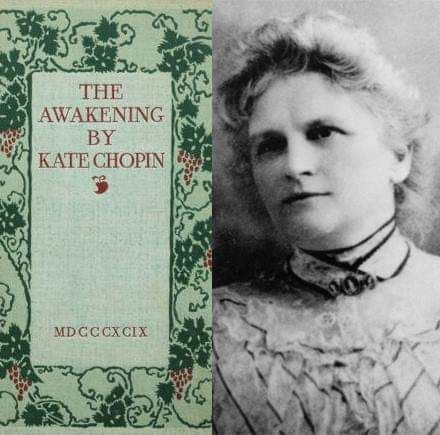
Puritan England New Orleans postmodern authoress Kate Chopin’s The Awakening explores the feminine subjectivity through dichotomies and/or antitheses between the self and society unfolding maternal discourse and self-possession in corresponding light of sensuality, sexuality, autonomy and adultery. Edna Pontellier’s denial to be “reintegrated into the existing order of the bourgeoise patriarchal society […] challenges less a particular institution than the entire organization of society […] the outward existence which conforms and the inward life which questions […]Mrs. Edna Pontellier was beginning to realize her position in the universe as a human being and to recognize her relations as an individual to the world within and about her.”
In her despondent vigils the night before her bereavement, this vivid image comes to her mind, “The children appeared before her like antagonists who had overcome her; who had overpowered her and sought to drag her into the soul’s slavery for the rest of her days. But she knew a way to elude them.” Children loomed in gigantic proportions in her final meditations as slave drivers of her hallucinating mind, analogous to the white slave owners claiming ownership and possession over the bodies of quadroon’s ancestors; despite being ushered to be relocated to Iberville—the suburbs of Edna’s mother-in-law. Mrs. Pontellier, unlike her husband, hadn’t the privilege of quitting the society of Madame Lebrun when they ceased to be entertaining. “She [Mrs. Pontellier] was only a bird in a gilded cage.” Readers perception of caged birds symbolic manifestation embody Edna Pontellier’s domestic enslavement, a reading reinforced by the balladry associated to the wedding of unfortunate dame with the wealthy master with some refrain. Mr. Pontellier was very fond of walking about his house, examining its various appointments and details, possessions he greatly valued, chiefly because they were his own contrasting in juxtapositional effect with Mrs. Edna Pontellier’s approaching the flowers in a familiar spirit and making herself at home with them. This analogy appropriates Edna Pontellier’s choice of her predilections and proclivities.
“How strange and how awful it seemed to stand naked under the sky! How delicious! She felt like some new-born creature, opening eyes in a familiar world that it had never known.” —-This quotable statements reechoes virginity and baptismal rites of birth of the holy Ghost as anticipated in her farewell from earthly life; as reciprocated in the self-authorized death. In other words, Edna Pontellier’s unfettered physical response to the sensuousness of the familiar world replenishes, renovates and regenerates herself. Dr. Mandelet thus, certifies the testimonial in the medical examination of nothing morbidity state but alleviated in repression from glance or gesture as exhortations point out, “She[Mrs. Pontellier] reminded me of some beautiful, sleek creature waking up in the sun.” However, in the penultimate liberality of the revelatory scene contrasts in juxtapositional effect of the “scene torture” in “with an inward agony, with a flaming outspoken revolt, against the ways of Nature, witnessed the scene torture” Adele Ratignolle’s physical labour of birthing, gestation, maternity and motherhood along with cultural labour of requisite image contextualize the femininity and womanhood. Adele Rontignolle’s speeches: “Think of the children, Edna. Oh, think of the children! Remember them!” the dialogism is precisely the abdicating of dispossession what she does as she evaluates the midnight vigils which follow. .
“She [Mrs. Edna Pontellier] meant to think of that; that determination had driver into a soul like a death wound—–but not tonight. Tomorrow would be time to think of everything […] There was no human being whom she wanted to be near her except Robert Lebrun; and she even realizes that the day would come when he, too, and the though of him would melt out of her existence, leaving her alone.” Edna Pontellier imagines the fantasy of romance and promiscuous cuckolding to be metamorphoses of ephemerality; re-imagines her struggles for emancipation and freedom, quest for individuality and selfhood and self-empowered fulfillment in a world of traditional roles and values as she is confronted with this dualistic battlefield between motherhood and extra-marital affairs.
Kate Chopin’s autobiographical facetedness of stream of consciousness as a literary technique reveals the gulf experienced by Edna Pontellier’s inner world of private thoughts and rebellious emotions contrasted with outer world of self-censorship and self-containment and/or conformity. Presbyterian janus faced Kentucky stock was exposed to hypocrisy of weekday sins and Sunday repentance. Female passionlessness was hallmark avantgarde of the Victorian cult of true womanhood as reflected by Carol Gilligan’s exposition of feminist phallic power deficiency derivative in “the failure of women to fit the existing models of human growth may point to a problem in the representation, a limitation in conception of the human condition; an omission of certain truths about life.” …motherhood and womanhood…idolized their children, worshipped their husbands, esteemed it a holy privilege to efface themselves as individuals and growing wings as ministering angels.”
To Edna Pontellier bygone heroines of romance and the fair lady of dreams as embodied in the portrayal of Adele Ratignolle. Laissez-faire and free market enterprise or capitalism redeems the concept of femininity and maternity inseparable which exempts inclusion of female desire, autonomy or independent subjectivity. Motherhood imposes womanhood with societal conventions, familial obligations, stifling responsibilities and passive domesticity engendering double alienation resulting in the gulf of the traumatic estrangement from children and between the reality of her individuality and/or subjectivity.
References
Ivy Schweitzer’s Maternal Discourse and the Romance of Possession in Kate Chopin’s The Awakening, boundary2, Spring 1990, Volume. 17, No. 1, New Americanists: Revisionist Interventions into the Canon, Spring 1990, pp. 158-186