Life

In the years
I've been traveling uphill.
and savored
every situation
like a fruit.

I have tried lemon
bitterly
that I even arrived
To get accustomed

I have lived
situations
gentle
like lime

the temptation of
strawberries and sweet
cherries
gladly.

The eaten kiwi
with a mix of flavors and
situations.

I have eaten salad
fruit
without tasting
the taste of nothing.

Today at this age
I select what i want to eat
And I enjoy every moment.

I'm coming
to the top of my life
and I will take my best
memories

Mirta Liliana Ramírez has been a poet and writer since she was 12 years old. She has been a Cultural Manager for more than 35 years. Creator and Director of the Groups of Writers and Artists: Together for the Letters, Artescritores, MultiArt, JPL world youth, Together for the letters Uzbekistan 1 and 2. She firmly defends that culture is the key to unite all the countries of the world. She works only with his own, free and integrating projects at a world cultural level. She has created the Cultural Movement with Rastrillaje Cultural and Forming the New Cultural Belts at the local level and also from Argentina to the world.
ON THE CONCEPT OF INTEGRAL, HISTORY OF ORIGIN AND SOME COUNTER-EXAMPLES
Abstract. In the article is given information about the integral concept and the history of its origin. In addition to the Riemann integral, which is covered in the school program, a number of other integrals (Riemann-Stiltes, Daniell, Alfred Haar, Henstock-Kurzweil, Ito and Stratonovich, Chokvet) are described. The difference between integrals is explained with the help of specific examples. The concept of definite integral and its use in practical problems were explained in detail, counter-examples of some theorems were presented.
Keywords: infinitesimal, area, volume of a solid, integral, indefinite integral, surface, surface integral, sign of indefinite integral, counter derivative.
INTRODUCTION
In mathematics, the integral defines the values of functions that describe displacement, area, volume, and other concepts resulting from the integration of infinitesimals. The process of finding integrals is called integration. Along with differentiation, integration is one of the basic, important concepts of mathematics and serves as a tool for solving problems involving the area of an arbitrary shape, the length of a curve, and the volume of a solid in mathematics and physics.
RESEARCH MATERIALS AND METHODOLOGY
Integrals can be further generalized depending on the type of function, as well as the field in which the integration is performed. For example, a line integral for a function of two or more variables is defined and the interval of integration is replaced by the formula representation of the curve connecting the two endpoints of the interval. In surface integrals, the curve is calculated by replacing a part of the surface in three-dimensional space. The first documented technique capable of calculating integrals is the exhaustion method of the ancient Greek astronomer Eudoxus (ca. 370 BC), who is known to have tried to find areas and volumes by dividing them into infinitely many divisions. This method was further studied and developed by Archimedes in the 3rd century BC. It was used to calculate the area of a circle, the surface and volume of a sphere, the area of an ellipse, the area of the lower part of a parabola, and the volume of a segment. That is, it is not wrong to say that the revolution of integrals occurred during this period.
In addition, a similar method was developed in China in the 3rd century AD by Liu Hui, who used it to find the area of a circle. This method was later used in the 5th century by Chinese father and son mathematicians Zu Chongji and Zu Geng to find the volume of a sphere. And in the Middle East, Hasan Ibn al-Haytham, a man known in Latin countries as Alhazen (ca. 965 – 1040 AD), developed the formula for the sum of four powers. He used these results to calculate (create) what is now called the integral of a function, in which he was able to calculate the volume of a paraboloid using integral squares and sum-of-fours formulas. The next important advances in integral calculus did not appear until the 17th century.
At this time, Cavalieri’s work “By the method of indivisibles” and several works of Fermat began to form the basis of modern calculus. The next steps were taken at the beginning of the 17th century by Barrow and Torricelli, who put forward the first ideas about the connection between the operations of integration and differentiation. Barrow gives the first proof of the fundamental theorem of integral calculus. Wallis generalizes Cavalieri’s method to compute integrals of 𝑥 to general powers, including negative powers and fractional powers. The greatest success in the calculus of integrals occurred in the 17th century when Leibniz and Newton independently discovered the fundamental theorem of the integral calculus. They show the connection between integration and differentiation. This relation, together with the relative ease of differentiation, could also be used to calculate integrals. In particular, the fundamental theorem of calculus allows solving a much wider class of problems. Equally important was the comprehensive mathematical system developed by Leibniz and Newton. It allowed precise analysis of functions within continuous fields. This method eventually became the basis of modern calculus, and these calculations were taken directly from Leibniz’s writings.
Although Newton and Leibniz provided a systematic approach to the operation of integration, their work lacked a certain degree of rigor, and some mathematicians of their time considered these calculations to be non-general. A more robust result could be achieved by developing computational limits. The operation of integration was first officially recognized by Riemann in the creation of strict laws using definite limits. Although all finite piecewise continuous functions are Riemann integrable on a finite interval, later more general functions where Riemann’s definition does not apply were considered, especially in the concepts of Fourier analysis, and Lebesgue developed another gauge-based definition of the integral.
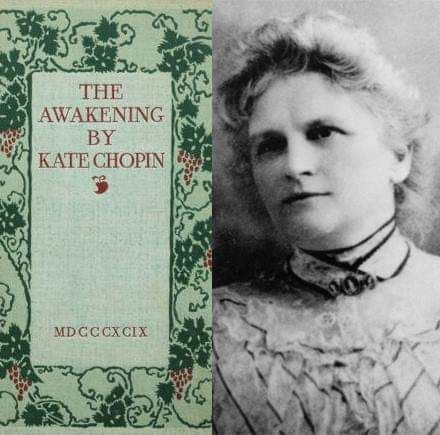
Puritan England New Orleans postmodern authoress Kate Chopin’s The Awakening explores the feminine subjectivity through dichotomies and/or antitheses between the self and society unfolding maternal discourse and self-possession in corresponding light of sensuality, sexuality, autonomy and adultery. Edna Pontellier’s denial to be “reintegrated into the existing order of the bourgeoise patriarchal society […] challenges less a particular institution than the entire organization of society […] the outward existence which conforms and the inward life which questions […]Mrs. Edna Pontellier was beginning to realize her position in the universe as a human being and to recognize her relations as an individual to the world within and about her.”
In her despondent vigils the night before her bereavement, this vivid image comes to her mind, “The children appeared before her like antagonists who had overcome her; who had overpowered her and sought to drag her into the soul’s slavery for the rest of her days. But she knew a way to elude them.” Children loomed in gigantic proportions in her final meditations as slave drivers of her hallucinating mind, analogous to the white slave owners claiming ownership and possession over the bodies of quadroon’s ancestors; despite being ushered to be relocated to Iberville—the suburbs of Edna’s mother-in-law. Mrs. Pontellier, unlike her husband, hadn’t the privilege of quitting the society of Madame Lebrun when they ceased to be entertaining. “She [Mrs. Pontellier] was only a bird in a gilded cage.” Readers perception of caged birds symbolic manifestation embody Edna Pontellier’s domestic enslavement, a reading reinforced by the balladry associated to the wedding of unfortunate dame with the wealthy master with some refrain. Mr. Pontellier was very fond of walking about his house, examining its various appointments and details, possessions he greatly valued, chiefly because they were his own contrasting in juxtapositional effect with Mrs. Edna Pontellier’s approaching the flowers in a familiar spirit and making herself at home with them. This analogy appropriates Edna Pontellier’s choice of her predilections and proclivities.
“How strange and how awful it seemed to stand naked under the sky! How delicious! She felt like some new-born creature, opening eyes in a familiar world that it had never known.” —-This quotable statements reechoes virginity and baptismal rites of birth of the holy Ghost as anticipated in her farewell from earthly life; as reciprocated in the self-authorized death. In other words, Edna Pontellier’s unfettered physical response to the sensuousness of the familiar world replenishes, renovates and regenerates herself. Dr. Mandelet thus, certifies the testimonial in the medical examination of nothing morbidity state but alleviated in repression from glance or gesture as exhortations point out, “She[Mrs. Pontellier] reminded me of some beautiful, sleek creature waking up in the sun.” However, in the penultimate liberality of the revelatory scene contrasts in juxtapositional effect of the “scene torture” in “with an inward agony, with a flaming outspoken revolt, against the ways of Nature, witnessed the scene torture” Adele Ratignolle’s physical labour of birthing, gestation, maternity and motherhood along with cultural labour of requisite image contextualize the femininity and womanhood. Adele Rontignolle’s speeches: “Think of the children, Edna. Oh, think of the children! Remember them!” the dialogism is precisely the abdicating of dispossession what she does as she evaluates the midnight vigils which follow. .
“She [Mrs. Edna Pontellier] meant to think of that; that determination had driver into a soul like a death wound—–but not tonight. Tomorrow would be time to think of everything […] There was no human being whom she wanted to be near her except Robert Lebrun; and she even realizes that the day would come when he, too, and the though of him would melt out of her existence, leaving her alone.” Edna Pontellier imagines the fantasy of romance and promiscuous cuckolding to be metamorphoses of ephemerality; re-imagines her struggles for emancipation and freedom, quest for individuality and selfhood and self-empowered fulfillment in a world of traditional roles and values as she is confronted with this dualistic battlefield between motherhood and extra-marital affairs.
Kate Chopin’s autobiographical facetedness of stream of consciousness as a literary technique reveals the gulf experienced by Edna Pontellier’s inner world of private thoughts and rebellious emotions contrasted with outer world of self-censorship and self-containment and/or conformity. Presbyterian janus faced Kentucky stock was exposed to hypocrisy of weekday sins and Sunday repentance. Female passionlessness was hallmark avantgarde of the Victorian cult of true womanhood as reflected by Carol Gilligan’s exposition of feminist phallic power deficiency derivative in “the failure of women to fit the existing models of human growth may point to a problem in the representation, a limitation in conception of the human condition; an omission of certain truths about life.” …motherhood and womanhood…idolized their children, worshipped their husbands, esteemed it a holy privilege to efface themselves as individuals and growing wings as ministering angels.”
To Edna Pontellier bygone heroines of romance and the fair lady of dreams as embodied in the portrayal of Adele Ratignolle. Laissez-faire and free market enterprise or capitalism redeems the concept of femininity and maternity inseparable which exempts inclusion of female desire, autonomy or independent subjectivity. Motherhood imposes womanhood with societal conventions, familial obligations, stifling responsibilities and passive domesticity engendering double alienation resulting in the gulf of the traumatic estrangement from children and between the reality of her individuality and/or subjectivity.
References
Ivy Schweitzer’s Maternal Discourse and the Romance of Possession in Kate Chopin’s The Awakening, boundary2, Spring 1990, Volume. 17, No. 1, New Americanists: Revisionist Interventions into the Canon, Spring 1990, pp. 158-186
Live Unhated

Bottle of salty ocean

Take seventeen years worth of pirate slang

Add a dash of 826 Valencia

Read the first ten pages of Moby Dick

Purified to the max

In a deep rinse of kraken blood

And scurvy

Stunning all the onlookers for miles around

Nearly blinded

McDonald’s thought you were hated enough

To make the Happy Meal Toy lineup

On your little windup Spanish Galleon

Adrift in 100% Apple juice

Poked until chipped

Mystery lying just beneath the surface

A solid blue mannequin instead of bones

A sculpt, not a skull

Leather beaten

Tanned

Pulled

To fit the consumer-based mold

Doesn’t matter if it hurts

Pebbles sell if you’re a smooth enough talker

Keeping track of the time and singing along to the same whistle in your hollow

Noggin

So wide and empty a tornado goes

Silent in between your ears

No I’m not calling you stupid not by any means

I just want to know why you’re so gullible as to believe

That I was there for you

I’m not your goddamn scratching post

Let me wither in room temperature

Connect the dots to make a wish

But you’ve got a bit worse than a bald spot at this point

And the handkerchief is starting to chafe

Consciousness sliding round like a badly made

Cruise liner dining room

Free mimosas at ten

If you can stomach being around your friends for more than an hour

But I said too much

Please leave

Next?

Next to me was no one

Then you were

But I never asked to be the subject of your pity

I don’t even like it when I’m the subject of your still life.

It’s only because when I hold my breath

I look as if I’m ready

To be born amongst the sea

And forgive you politely

Saying

“I was never much of a poet anyway”

Any further questions?

No?
On A Beautiful Spring Day

I met you on a Sunday, on a beautiful Spring day
You watched me from the back of the church
I just walked by you and never uttered a word.

Everything was blooming and you drove by me
You asked if I'd walk by the lake with you,
On that beautiful Spring day, I smiled and nodded, "yes".

You picked me flowers and I cherished those wild flowers...

Time went by and like flowers, so bloomed our love
A year later on a beautiful Spring day, we married
Holding a bouquet of Spring flowers, I whispered, "I Do".

One day you got ill on a beautiful Spring day
With all the beautiful flowers blooming, you passed away

Years later, I stand here on a beautiful Spring day
All the beautiful flowers blooming now remind me of you

Maybe on a beautiful Spring day with the sun shining
You'll be holding wild flowers for me at Heaven's gates.

And together we will walk again, Forever...
On A Beautiful Spring Day....


The Wings of Love

When I feel you near, at times I can't breathe
Your presence makes me sigh, and my eyes close
trying to compose my feelings that can't be denied
No doubt that even after death this love will not die
The wings of love surround us on this beautiful night
and will lift us up above the heavens to meet the moon
This memorable evening never to be forgotten and
one that will go on and on through the passages of time
I find you even in the most unlikely places of my heart
and I have new eyes that see only the most Beautiful You
I am the sky that fills you arms and heart tonight
as we dance beautifully together between the stars.


Where Love Resides

Where golden strings play songs so sweet
and the many colors of red reside
there also resides my love

When the song of a sparrow touches my soul
and the signs of Spring show off their colors
So also shows the colors of my love

If the rains come and clouds shadow me
and if my tears fall like the drops that stream down my window
they cleanse my heart so love can shine through again

And, what comes my way, whether happy or sad
I know tomorrow will bring a brighter day
For I look to the heavens and know, the greatest love resides there


Kristy Raines was born  in Oakland, CA, USA.

She is a poet and prose writer. Kristy is also an advocate. for the Rohingya refugees living in Cox’s Bazar, Bangladesh.

Kristy has five books getting ready to publish this year.  One with a prominent poet from India, Dr. Prasana Kumar Dalai,  which will launch soon called, "I Cross my Heart from East to West", two fantasy books of her own called, "Rings, Things and Butterfly Wings" and "Princess and The Lion", an anthology of poems in English, "The Passion Within Me" and her autobiography called "My Very Anomalous Life."

Kristy has received many literary awards for her unique style of writing.
Tombstone

Tell me what should I compose
My pen is paralyzed
My garden turns into wasteland
My brain is fully unprofessional
The Nature is disorder
The environment is disturbed
The tree of loneliness is increasing
Absence lives in presence
Nobody can hear the heartbeat of air
I am without me
I am alone
Everyone is alone
The earth is alone
Birds do not dream
Dream has no existence
Flowers sleep outside the sight of butterflies

The butterflies burnt their flute
The cowboys don’t play flute
My spring has lost it's beauty
Beauty doesn't smile
The children have lost their silver moon
The moon doesn’t compose poems on the sky
The sky doesn't sing the song of humanity
Humanity doesn’t give water to the grasses
Grasses don’t walk on the roads
The roads are without passersby
One fears another
 Shadow fears shadow
Life flies far away

History weeps behind civilization
The pregnant darkness plays with darkness
The funeral of spirituality has ended
The houses become hospitals
The world is a graveyard
Writing is a Tombstone
Oh The Lord of the universe
I am your
We are your
Pardon us and save us.
ECOLOGICAL PROBLEMS OF THE PRESENT TIME AND SOLUTIONS ABOUT THEM
Currently, as a result of human activity, drastic changes have occurred in the biosphere, and many environmental problems are arising as a result of these changes. Due to growth, science and technology development and increasing human needs, environmental problems have intensified.
We divide environmental problems into the following groups
1. Global (universal)
2. Regional (regional)
3. Local (local)
1. Global (universal) ecological problems can be defined as problems caused by natural and natural anthropogenic and purely anthropogenic effects observed around the world.
Let’s get acquainted with such problems
-island problem
– greenhouse effect
– fresh water problem
-problem of tropical and subtropical forests
-problem of tropical and subtropical forests
-ozone problem
– the problem of the decrease in the number of flora and fauna – the increase of carbon dioxide in the air
– excessive release of waste gases into the air
– world ocean pollution
– disappearance of fertile soil layer
– desertification
– increase of household waste – atmospheric pollution
– pollution of the lithosphere
– pollution of the hydrosphere – salinity
– the failure of pastures
THE ISLAND PROBLEM. The Aral Sea was considered one of the largest seas until recently. It was important for fishing, hunting, transportation and recreation. The development of irrigated agriculture in Amudarya and the flow of water from the Syrdarya has decreased dramatically. As a result, the Aral Sea has become an unusable area due to its high salinity level. The dried bottom area is 4.2 million hectares and has become a source of dust and salt distribution to the surrounding areas.
The amount of salt in the water is up to 112 g. Currently, the sea level is dropping by 80-110 cm. The region of the Aral Sea has become a large dust area. The problem of the island has a serious impact on the health of the people living in the area
In the last 10 years, the death rate has doubled. The amount of salts in the urine of 90% of children has increased. Anemia has occurred in 80% of women. From this area, 80 to 100 tons of dust rises into the atmosphere every year and reaches the Pamir, Tianshan, Greenland, and even the Arctic glaciers.
During the last 4 years, 1.5 million hectares of the dry part of the seabed has been turned into forest and shrubland. The addition of another 700,000 hectares shows the magnitude of the work being carried out in our country. In 2017, the United Nations established a multilateral partnership trust fund for human security. provides practical assistance to the population of the State Program for the Development of Aral Sea Regions in 2017-2021, with the relevant decisions of the Cabinet of Ministers on the creation of a “Green Belt” in the Aral Sea and Aral Sea Regions, neighboring Khorezm, Bukhara, and Navoi regions works are being carried out. The presidential decision to approve the concept of development of the forest system in our Republic until 2030 proves that these goals are strategic.
2. Regional (regional) problems are problems specific to certain regions caused by industrial sectors, enterprises and improper irrigation of land.
We will get acquainted with such problems – industrial waste of natural waters – problems in the agro-industrial complex.
Today, we are making progress in all fields in our country.
This achievement leads to the aggravation of the environmental situation along with the introduction of new technologies in industrial production. In recent years, along with the growth of industrial sectors, environmental pollution is also increasing. Due to the activities of industrial sectors, harmful dust and gaseous compounds are released into the environment in large quantities, and it is allowed to have a direct negative impact on the environment.
3. Local (native) environmental problems are problems specific to certain regions, even if they arise as a result of harmful emissions from all sectors of the national economy, industry and transport. The gases released from them damage the atmosphere and have a negative effect on human health. 70%-80% of air pollution comes from motor vehicles.
Garbage. The epidemiological and hygienic importance of keeping cities and villages clean is very great. The cleanliness and beauty of residential areas, the flow of water from irrigation canals, the presence of trees and green areas help prevent infectious diseases. leads to accumulation. In order to keep people’s residences clean, it is necessary to dispose of garbage in the garbage chute on time. Garbage and garbage not only cause various infectious and worm diseases, but also cause indigestion and nausea in people. Taking into account the sanitary and epidemiological danger of garbage when loading them into garbage trucks.
When unloading, the participation of people should be reduced as much as possible. According to a special schedule, garbage trucks take away the collected garbage. Liquid waste is removed using sewage pipes. Thus, the issue of waste is one of the important problems in ecology, and if it is collected and processed or sorted according to hygienic requirements, it has gained great importance for the environment and human health.
CONCLUSION Humanity takes all the things necessary for living and living from mother nature. Over the years, as a result of the increase in human needs, nature has been ruthlessly used, neglecting its precious benefits, using animals, plants and all natural resources as much as it wants (inappropriately) for its own selfish purposes.
We are in the vortex of huge environmental problems due to the great changes in the biosphere. In order to avoid the above problems and to improve the ecology, we must form an ecological culture in the population, form a deeper and more comprehensive understanding of caring for the environment and preserving it. teaching and, if necessary, learning is important.