Essay from Z.I. Mahmud

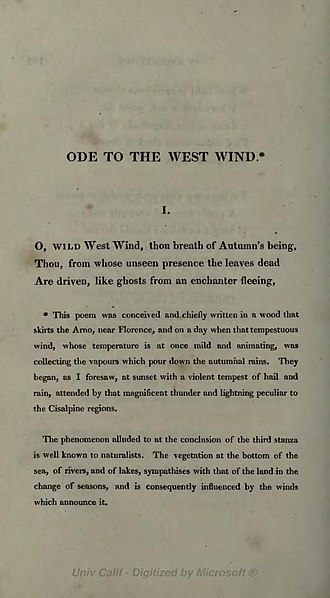
Old fashioned stained paper with Shelley's Ode to the West Wind typed and printed onto it.

Critically examine the symbolic significance of the leaves and the wind in Shelley’s Ode to the West Wind.


Or
/ “If I were a dead leaf thou mightiest bear;
If I were a swift cloud to fly with thee
A wave to pant beneath thy power”/


The leaves and the ‘winged seeds’ will play their part in the great cyclical rebirth of Spring, and the image of the seeds leads us also into the Christian resurrection of Easter. They lie ‘cold and low’ until awakened by the gentle wind of Spring, which suggests resurrection and Judgement Day as “she blows her clarion o’er the dreaming earth.” Examine the Ode to the West Wind in the perspective of symbolic imagery.

Or
Ellsworth Bernard identifies the spirit of the West Wind with the spirit of God, eternal love, Shelley’s hymn, in fact, the West Wind is I’m a sense the symbol of the Deity. The poet’s apparent triumph in the power of the West Wind in stanza 5 may seem like a departure from
Christian submission, but with his final, hopeful query he sinks into the passivity of the willed naturalistic cycle; / “O wind, If winter comes, can Spring be far behind? “/ Examine the passage in the context of the poem, Shelleyan Ode to the West Wind.


The poet himself is conflated within the hope of instrumentality or passivity and the trope of agency envisionings of / “Make me thy lyre even as the forest”/ and / “Be thou me, impetuous one!”/ And thus far this Romantic Metaphor as emphasized by MH Abrams in The
Correspondent Breeze “for the way the mind and the imagination respond to the wind”. In this poem the forest imagery is itself an Aeolian harp, the wind fingerings as it blows across.

But by deriving ‘from both’ the forest and himself ‘deep autumnal tone’ or elegiac consciousness of the mortality, the West Wind partake the poet’s own spirit of survival and sustenance. There is in Shelley’s Ode a movement through figures of sound into figures of light, towards a visionary and apocalyptic moment when sound and light become the same figure.

The poet’s function is no longer compensatory but revelatory or incantatory. The trumpet of a prophecy itself, is the same ‘clarion’ that will awakened the dreaming Earth. The West Wind, which once moved everywhere, has become a symbol for the poet’s own active and inspiring voice by some imaginative revision of the poet’s transmutability from passive instrument to active agent like the wind, itself.


Shelley’s profoundest reflections of nature and mankind associates the abstractest sublimity of wind blown and leaves strewn or driving wind and flying leaves decades observance of the western European landscapes of Italy. The first stanza of the poem describes the leaves flying before the wind blows, which is represented both as destroyer of the leaves and the preserved of the seeds from which new life will rise.

The poet’s fervent plea to lift as a leaf, a wave and a cloud to the invocation of the lyre and the power of the West Wind in order to achieve regeneration or resurrection which climaxes at the pinnacle of dead thoughts driven, scatters from an unextinguished hearth and being through lips that the celestial glory of the cosmic West Wind; there will arise in the cycle of the season a regenerating influence upon mankind.

The West Wind, as the destroyer of the old order and the preserved of the newer order, for Shelley, symbolized Change or Mutability, which destroys yet recreated all things; while the leaves signified for him all things, material and spiritual ruled by Change. The poem epitomizes Shelley’s conception of the eternal cycle of life and death and resurrection in the universe. The winds were to flutter at the gate of his imagination and the leaves were to rustle in the landscape of his mind.

Ode to the West Wind lyrics / “Drive my dead thoughts over the universe/ Like withered leaves to quicken a new birth!”/] and furthermore [ / “Be through my lips to unawakened earth/ The trumpet of a prophecy!”]. Percy Florence Shelley, the living symbol of Shelley’s own regeneration and so associated with the rebirth and regeneration symbolized by the Wind and the Leaves in the Ode to the West Wind.

To Leigh Hunt the poet authored on 12 November 1819 “Yesterday morning Mary brought little boy [Percy Florence Shelley] to me….You may imagine that this is a great relief and a great comfort to me amongst all my misfortunes, past, present, and to come. The birth of his child, a rebirth of himself in a sense, was perhaps the motif in the nexus of thought and emotion that inspired the composition of the Ode.

Nature poet Shelley’s visionary and mystic manifestations of ‘tameless’ and ‘swift’ and ‘proud’ and ‘uncontrolled’ and ‘fiery’ temperament are the personified embodiments in the allusiveness of strong, swift and masterful wind. The tumultuous tempest marks the end of Summer and the beginning of the autumnal monsoon season, and the assumption of being exalted and roused to be enthroned by the West Wind, that is literally the very breath of Autumn’s being.

The West Wind is followed by the Wind of Spring in the apotheosis of the azure sister of vernal blue haven. She is the feminine complement to the ‘impetuous brother’ by bring life to the ‘winged seeds’ which he had charioted to their dark wintry bed and so preserved. Leaves like ghosts [they are thin and frail] fleeing from enchanter; the winged seeds blown to the ground and buried like corpses in a grave, but in fact they repose in cradles to be reborn with the coming of the Spring.

Enlivening and invigorating imageries rather than burying and entombing imageries are symbolic manifestations within this paradoxical irony. / “O wild West Wind, thou breath of
Autumn’s being/ Thou from whose unseen presence the leaves dead/ Are drive like ghosts from an enchanter feeling”/ / “The winged seeds where they lie cold and low/ Each like a corpse within its grave, until/ Thine azure sister of Spring shall blow”/


The West Wind is thus glorified above other winds, because which drives the dead leaves into corruption, is akin to the other West Wind ,which quickens the dreaming earth to life. Shelley’s invocation to the West Wind [“For whose paths the Atlantic’s level powers/ Cleaves themselves into chasms”] and furthermore, the poetic invocation of the lyrics recalls Shelley’s Essay on Christianity: “There is a Power by which we are surrounded, like the atmosphere in which some motionless lyre is suspended, which visits with its breath our silent chords, at will”.

Passive will-less attributes of nature dead leaves, seeds clouds, lulled Mediterranean has been transformed into he active and fearful cooperation of the Atlantic ocean with the terrifying power of the wind [‘share/The impulse of thy strength’]. The poet is ‘chained’ and ‘bowed’ by precisely those attributes of Wind embodied in ‘tameless’ and ‘swift’ and ‘proud’.


Shelley attained the emotional highpoint in the lines : / “Be thou, Spirit fierce! My Spirit! Be thou me, impetuous one!”/ —-the transition from supplication to command in the subsequent
imperatives [“Drive my dead thoughts”, “Scatter, as from an unextinguished flame” and “Be through my lips”] occurs during this utterance: “Be thou me, impetuous one! In the aftermath of the afterthought in supplication: / “Oh, lift me as a leaf, a wave, a cloud”/ and invocation to the lyre: / “Make me thy lyre even as the forest is”/. Shelley explicates the wind to be the spirit of agency through his plaintive and prayerful diction. Together these commands culminate in the ferment of the fervent plea that Shelley be filled with the spiritual being of the wind, that he become the wind.


George Santayana points out that Shelley is raised into sublimity by his participation in the West Wind’s immortal vital and this sublimity of the emphatic moment can be emphasized in the explanatory context of the critical interpretation: ‘…”Be thou me, impetuous one!”… The emotion comes not from the situation we observe, but from the powers we conceive: we fail to sympathize with the struggling sailors because we sympathize too much with the wind and waves. And this mystical cruelty can extend even to ourselves; we can so feel the fascination of the cosmic powers that engulfs us as to take a fierce joy in the thought of our own destruction. We can identify ourselves with the abstractest essence of reality, and, raised to that height, despite the human accidents of our own nature. Lord, we say, though thou slay, yet will I trust in thee.

The sense of suffering disappears in the sense of life and the imagination overwhelms the understanding.”


This breath of Autumn’s being is enthralling to Shelley because of the inscribed semantic cluster of wind, breath and spirit as ascribed to the desolate spirit of the European discontent; amidst post Napoleonic epoch to which society was deplorable chained and bowed especially the entire canvas of Italian landscapes blackened to the golgotha of winter. [ /The winged seeds, where they lie cold and low, /Each like a corpse within its grave, until/ Thine azure sister of the Spring shall blow:/] In the phase wintry bed is not a burial grave of dissolution but that of the haven for restorative sleep and anticipatory vision. Petition for transcendence and confession of the overthrow is amalgamated to be the fervent plea, ardent appeal, prayerful invocation, meditative reflection or rhetorical speech act of the adult life of a tragic struggler prophet poet revolutionary coalesced from the nostalgic boyhood introspective recollection: [ /Oh! lift me as a leaf, a wave, a cloud! I fall upon the thorns of life! I bleed!”/].

To Shelley’s poetic argumentative analysis, “There is no want of knowledge respecting what is wisest and best in morals, government and political economy…but we want the creative Faculty to imagine that which we know; we want the impulse to act that which we imagine; we want the poetry of life.” This passage is allusive in the parallelism in Ode to the West Wind: / “And by the incantation of this verse Scatter, as from an unextinguished hearth
Ashes and Sparks, my words among mankind!
Be through my lips to unawakened Earth
The trumpet of a prophecy!”/


Further Reading


Henry S. Pancoast’s Shelley’s Ode to the West Wind, Modern Language Notes, February 1920,
Volume 35, No. 1, pages : 97-100.


Patrick Swinden’s Shelley: ‘Ode to the West Wind’ Critical Survey, Summer 1973, Volume 3, No.
1 / 2, pages:52-58.


William H. Pixton’s Shelley’s Commands to the West Wind, South Atlantic Bulletin, November
1972, Volume 37, No. 4, pages: 70-73, South Atlantic Modern Language Association


I.J. Rapstein’s The Symbolism of the Wind and the Leaves in Shelley’s “Ode to the West Wind”
PMLA, December 1936, Volume 51, No. 4, pages: 1069-1079, Modern Language Association,
Brown University


Richard Harter Fogle’s The Imaginal Design of Shelley’s Ode to the West Wind, Source ELH,
September 1948, Volume 15, No. 3, pages: 219-226


Edward Duffy’s Where Shelley Wrote and What He Wrote For: The Example of the “Ode To The West Wind” Studies in Romanticism, Fall 1984, Volume 23, No. 3, pages: 351-377.


Coleman O. Parson’s Shelley’s Prayer to the West Wind Keats Shelley Journal, Winter 1962,
Volume 11, pages 31-37, City College, New York.


Jennifer Wagner’s A Figure of Resistance: The Visionary Reader in Shelley’s Sonnets and the “West Wind” Ode, Southwest Review, Winter 1992, Volume 77, No. 1, pages: 109-127,
Southern Methodist University
Poetry from Ahmad Al-Khatat

SWEET CRIES & WHISKEY


Ten hours exactly after work, 
your eyes smile through my inner tears. 
With my silence, I write a poem inside of 
me: "You're worth it and you matter."

We are surrounded by glowing stars, 
creating a new chapter on forever love. 
We talk about every memory, sweet cries & whiskey, 
as if it is an obligation to pleasure the cosmos.

Nobody is ahead of us or behind our grief. 
The moon engraves our feelings into the hearts of stars. 
I will live by burying my tears and making you smile. 
Your thoughts are like a mother's prayers for her child.

With my love for you, I'm not afraid of death. 
The lust of being body to flesh, 
it numbs me for your bare breast. 
Don't let people know how much I adore you.

Thirty-four years old and still can't express 
my joyful dreams when I see a wooden chair, 
rusty hanging cords & a knife with blood stains. 
Waiting for me to finish my cigarette and my poem.

25/09/2023

BHP

A Moment To Breathe 

With every breath I take, 
I want you by my side.
Or is this your love I am breathing?
Even though I don't deserve a moment to breathe.

Why do some friends judge us as
Two burning cigarettes in an ashtray,
or cheap liquor and generic cigarettes?
Last night, my favorite liquor sang my sorrows loudly.

Oh woman, I love you like a sad alcoholic.
I'm depressed like nicotine to my drinking alcohol.
This is my first time digging a grave for the bodies 
of my childhood, since this war has taken their lives.

Inside of me, there are aches, regrets, and open wounds.
Between you and me, there is a love flavored with honey.
Take me to your destination, I will be your retired sailor.
Where we can breathe in the fragrance of fruit trees and exhale the tobacco.

Short stories from Peter Cherches

The Picture of Peter Cherches

            I was walking by the full-length mirror on the outside of my bathroom door when I did a double take. Instead of my mirror image, my face was a pastel portrait of me as a five-year-old; the rest of my body was as expected. I remembered that portrait. It was done in 1961, when my mother, my brother, and I spent the summer in The Catskills at The Tamarac Lodge.

            One day a man came to The Tamarac to do portraits of interested guests. My mother had him do all three of us. The artist’s name was Charles Biro, and he had a history, a serious one, actually. He had been a comic artist earlier in his career, most famous for Daredevil Comics. But his pastel portraits weren’t in comic book style, they were realistic.

            I hadn’t seen that portrait in years. How did a pastel of my five-year-old head replace my sexagenarian head in my mirror?

            I went into the bathroom to look in the mirror above the sink. Same thing. Normal torso, pastel head.

            This was really freaking me out. I couldn’t think of a plausible explanation. One mirror was bad enough, but two?

            I’d have to leave my apartment and find an impartial mirror. I figured I’d go to the dry cleaner and tailor across the street. I knew they had a full-length mirror. As subterfuge, I brought a pair of pants for dry cleaning that I’d usually throw in a machine. I walked into the shop and put the pants on the counter. “Friday?” the Korean woman asked.

            “Sure.”

            I took my receipt, and then I turned to look in the mirror. Same thing. Pastel head.

            “Excuse me,” I said to the woman.

            “Yes?”

            “Does my head look normal?”

            She looked confused. “I don’t remember seeing you before, maybe you’re not a regular customer,” she said, “but you look fine.”

            “So nothing strange?”

            “You look like American,” she said.

            Yeah, but did I look like an American of a certain age, or an American of a greatly reduced one? I didn’t want to bother her any more, so I called Allan Bealy, who lives a few blocks away. Allan, whom I’ve known for years, was editor of the downtown arts journal Benzene and the publisher of my first collection, Condensed Book. He answered. “Allan,” I said, “by any chance are you free for me to stop by for a couple of minutes? There’s something I need to ask you.”

            “Sure,” he said. “I’m working on a new collage, but I can take a break. What’s up?”

            “I’ll tell you when I get there.”

            When I got to Allan’s apartment he asked me if I wanted anything to drink. “No thanks.” I said. “Tell me, how old do I look?”

            He thought for a second. “Well, you don’t look your age!”

            “How old do I look, five?”

            “What? Of course not. Sometimes you act like you’re five, but I’d say you could pass for 58, 59.”

            “So I don’t look like a kid, and my head doesn’t look like a pastel?”

            “What are you talking about?”

            I told him the whole story.

            “That’s nuts,” he said, “are you sure this isn’t one of your stories?”

            “I swear.”

            “Let’s go into the bathroom and look into our mirror.”

            I followed him into the bathroom. We both looked into the mirror. I saw Allan, normal Allan, and me with the five-year-old pastel head. “What do you see?” I asked.

            “You and me.”

            “And my head is normal?”

            “As normal as it’ll ever be.”

            “But I see the pastel head, the kid’s head.”

            “Are you tripping?”

            “Not for at least fifty years.”

            “Do you feel OK?”

            “I felt fine until I started seeing the pastel head in every mirror!”

            “You might want to see a shrink,” he concluded.

            I suspected he might be right. But maybe it was a passing hallucination. I figured I’d wait. If nobody else noticed, then it wasn’t such a big deal.

            I went home and started reading a Val McDermid mystery. I got lost in the plot and forgot about my pastel-headed troubles for a while. Then I got up to make a cup of tea. I passed the full-length mirror on my way to the kitchen. I stopped and looked. Same thing.

            This thing was throwing me for a loop. Was I really going crazy? I had to do something about it. I couldn’t go on this way, always seeing that pastel head in my mirror. So I went to my desk, and from atop the hutch I picked up the little bronze Buddha I had bought at an antique shop in Thailand. I smashed the mirror to smithereens with it. I’d have to sweep the shards up, but first I had to take care of the bathroom mirror. I was pleasantly surprised when I saw that my head in that mirror was now normal, so I didn’t have to smash it after all.

            This was cause for celebration. I decided to go to the bar down the block for a drink. I’d take care of sweeping the shards when I got back.

            When I got to the bar I took a stool and told the bartender, “Tanqueray on the rocks with a squeeze of lime, soda on the side.”

            “Get outta here,” the bartender said. “You know we can’t serve little boys.”

Little Things

            I generally avoid street fairs. I don’t get the point. Usually it’s the same mediocre food vendors at all of them, Italian sausages, Filipino lumpia, Colombian sweet corn arepas. Some people sell small craft items, handmade earrings, for instance, some sell scented candles and/or crystals, and there’s also lots of shoddy bed and bath products, like low thread-count sheet sets. The streets are clogged with people who consider this great fun.

            I live off a main commercial drag in Park Slope, and there are several of these events every year on Seventh Avenue. If I’m heading north or south to the subway (the F is south of me, at 9th Street, and the Q and B are north at Flatbush Avenue), I have to walk through the street fair. That’s exactly what happened one Sunday in June, during the biggest one of the year, Seventh Heaven.

            Sometimes during the fairs there are performances in front of certain businesses. The Brooklyn Conservatory of Music often has classical music, for instance. This time I also saw a small makeshift stage in front of the toy store around the corner from me, Little Things.

            I was going to keep walking to Flatbush Avenue for the Q train, but then I noticed a ventriloquist with his dummy on the stage, sitting on a stool. I did a double take and saw that the ventriloquist was actually my next-door neighbor, and not only that, the dummy was a dummy of me, a little, bald Peter Cherches in a sailor suit. I had to find out what was going on. I waited about five minutes until his performance started.

            “Hello, ladies and gentlemen,” the neighbor announced into a mic, “I’d like to introduce you all to my friend Little Petey. Say hello to your neighbors, Petey.”

            Petey? I hate being called Petey. And what the hell gave him the right to appropriate me for a dummy without permission? I wondered if I could sue.

            “Howdy, folks,” the dummy said. I had to admit, the neighbor was good at this; I didn’t see his lips move at all. And the voice was good, it really sounded just like me. “My name is Little Petey, and I’m tired of being a dummy. I want to be a man, a real man!”

            Some people laughed. I wasn’t laughing.

            The dummy continued. “I used to be a real man, but the guy who’s holding me now is my next-door neighbor, and this morning he kidnapped me and shrunk me and dressed me in this silly little sailor’s uniform and told me I was now his meal ticket, so please, don’t give him any money, it will only encourage him to keep me prisoner.”

            The next thing that happened was the neighbor slapping the Petey dummy in the face. “Don’t you ever go rogue on me like that again, Little Petey,” the neighbor said. Some in the audience gasped, others laughed uncomfortably. “Now let’s give this another try, shall we?”

            The Petey dummy spoke again. “Hello everybody, my name is Petey and I write funny little stories. Would you like to hear one of them?” Several in the audience let out a spirited “Yeah!” in unison.

            The dummy started reading one of my stories from Masks, the one that takes place at the Key Food just down the block. This was unacceptable. Not only had the neighbor appropriated my physical likeness, he was using my material in his act.

            “This must stop!” I yelled out.

            Several people shushed me. One big muscular guy in a tight black T-shirt glared at me and said, “Let the dude do his act, asshole.”

            Wait a minute, the neighbor plagiarizes my very existence and I’m the asshole? But I’m smart enough not to get into fights with guys like the asshole with the muscles, so I didn’t say anything else.

            The neighbor now addressed the dummy directly. “We seem to have struck a nerve, Petey.”

            “Don’t call me Petey. I hate being called Petey,” the dummy replied.

            Wow, the dummy was becoming defiant again. I had to lend my support. “That’s telling him,” I yelled out. The guy with the muscles glared at me again.

            “Well, what should I call you?” the neighbor asked.

            “My friends call me Pete, strangers and readers call me Peter. Either one will do.”

            “Well, then, why don’t I call you Pete?”

            “That’s fine with me.”

            “Well it’s not fine with me,” I yelled as I moved away from the muscle guy.

            “Just who do you think you are?” the elderly woman I was now standing next to asked me.

            “I’m the real Petey! I mean I’m the real Pete or Peter.”

            “No, I’m the real Pete or Peter!” the dummy said.

            “Thank you, ladies and gentlemen,” the neighbor said, stood up, and took a bow.

            That’s it? That’s his whole act? People started applauding. Then a guy came out of the toy store and made an announcement. “Thank you all for stopping by Little Things. I’m happy to tell you we have plenty of Little Petey dummies in stock.” A bunch of people filed into the store.

            I couldn’t believe it. I’d have to get a good intellectual property attorney ASAP and sue the neighbor’s ass. But I wasn’t going to just walk away without saying something.

            I went up to the neighbor, who was packing up. “You bastard!”

            “Hold on, hold on,” he said. “I was going to tell you. I’m cutting you in for a 50% royalty on every unit sold.”

            A 50% royalty? Damn, I thought—being a dummy is a hell of a better deal than writing short stories.

Poetry from Jerry Langdon

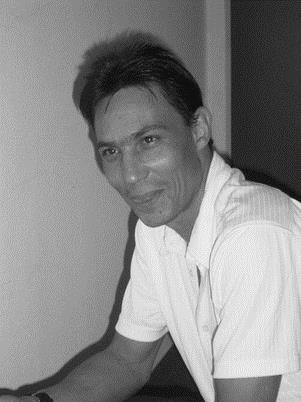
Light skinned man with dark short hair and a white collared shirt seated at an angle.
Jerry Langdon
Funeral of my Journal

I have became fading paper
Where my words once were.
Might have said all I had to say
So in reverse they are going away.
Fading into the void, forlorn
Waiting to be reborn.
Time was never on my side
Eating me away inside.
I ignore the hourglass
I know it will all pass.
I am not ready for this funeral.
Not ready to bury my journal.


World of Desire

From hollow shadows rise
Scream to dark skies
The night streets so empty
Bleed like poetry 
Hear that distant plea
Veins calling to me
Wanton of eternity
Lusting for captivity
My eden, lost city of light
Enter the night
Where shadows fall
Hear my call
Where the fog does rise
Where my black heart lies
Crimson masquerade
Feel sanguine dreams fade
Black drapes hide so well
Secrets my world shall not tell.
Where candles burn endlessly
Like hearts longing carelessly.
Bleed like a vampire 
Enter the world of desire.


From South-Western, Michigan, Jerry Langdon lives in Germany since the early 90's. He is an Artist and Poet. His works bathe in a darker side of emotion and fantasy. He has released five books of Poetry titled "Temperate Darkness an Behind the Twilight Veil", “Death and other cold things” “Rollercoaster Heart” and “Frosted Dreams” Jerry is also the editor and publisher of the literary magazine Raven Cage Zine poetry and prose. His poetic inspirations are derived from poets such as Edgar Allen Poe, Robert Frost and Henry Wadsworth Longfellow. As well as from various Rock Bands. His apparently twisted mind, twists and intertwines fantasy with reality.

Poetry from Muntasir Mamun Kiron

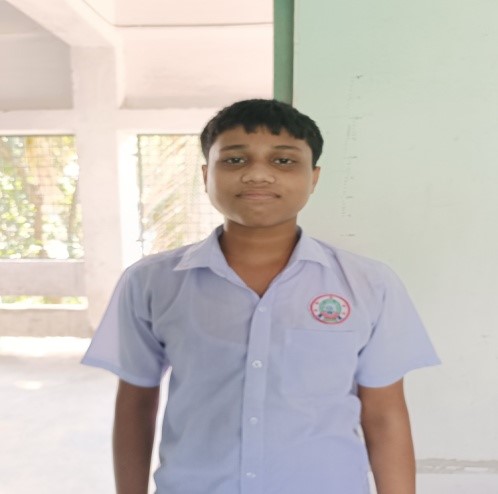
South Asian teen boy with a white collared school uniform shirt and short brown hair standing in front of an open window on a sunny day.

Eternal Dance of Creation

Beneath the sky so vast and blue,

Nature weaves its wondrous hue.

Mountains rise and rivers flow,

In every corner, life’s aglow.

Whispering leaves and songs of birds,

The gentle buzz, nature’s words.

Sunsets paint with fiery grace,

Nature’s beauty, a sacred space.

Open fields and forests deep,

Secrets in their shadows are kept.

Oh, nature’s touch, so pure, so free,

A symphony of life’s decree.

Muntasir Mamun Kiron is a student of grade 9 in Harimohan Government High School, Chapainawabganj, Bangladesh.

Poetry from Khojabekova Musharraf, translated into English by Nilufar Ruxillayeva

Elderly Central Asian woman wearing a white headscarf sits on a plush grey chair holding a bouquet of yellow, pink, and red flowers.
Khojabekova Musharraf
Samarkand anthem

Always young, always young,
Great city Samarkand.
He lives by seeing every morning,
My eyes are the city, Samarkand.

Cradle of greaters
Your own city, Samarkand.
Door of Miracles,
city Samarkand.

Thousands of years from now,
Sound city, Samarkand.
From the depths of ancient history,
Voice city, Samarkand.

Indescribable lol
My heart city, Samarkand.
Spirituality boiled,
Knowledge city, Samarkand.

Master craftsman, craftsman,
Famous city, Samarkand.
Divine water from Siyab,
Administrative city, Samarkand.

Navoi's teacher,
Abulays, Samarkand.
Barot was in your heart 
"Hamsa" writer, Samarkand.

From Babur's tears,
Bayot city, Samarkand.
To Hadis Bukhari,
Life city, Samarkand.

It is better than Tajmahal.
Registo's Samarkand.
Surprised to see, lol
To every guest, Samarkand.

Preparations are made,
Caravan city, Samarkand.
to ancient cities,
Sarban city, Samarkand.


Khojabekova Musharraf was born in 1954 in the family of a teacher in the village of Karakissa, Koshrabot district, Samarkand region.
   After graduating from the Faculty of Mother Language and Literature of the Samarkand State Pedagogical Institute, she has been teaching mother tongue and literature for many years at the 31st secondary school in Koshrabot district of Samarkand region. She is now retired.
   The first poetry collection was published in 2009 under the name "Umr yoli".The second poetry collection "Spring song" was published in 2022 and the third poetry collection in February 2023. Poems of the talented poet are regularly published in republican, regional and district newspapers and magazines. Winner of many contests.
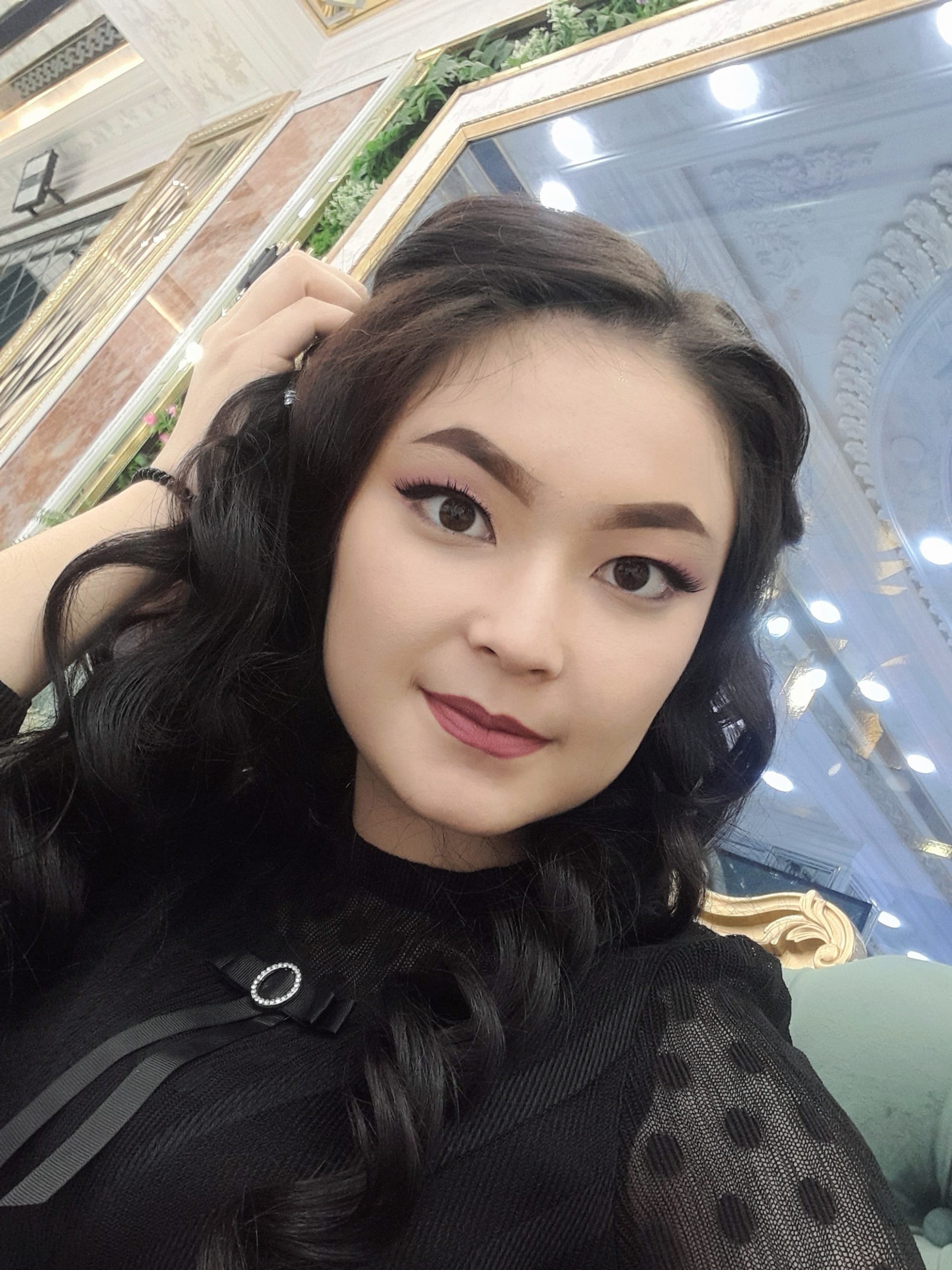
Young Central Asian woman with curly black hair, brown eyes, and a gauze black top sits in a plush green chair.
Nilufar Ruxillayeva

Essay from Bakhora Bakhtiyorova

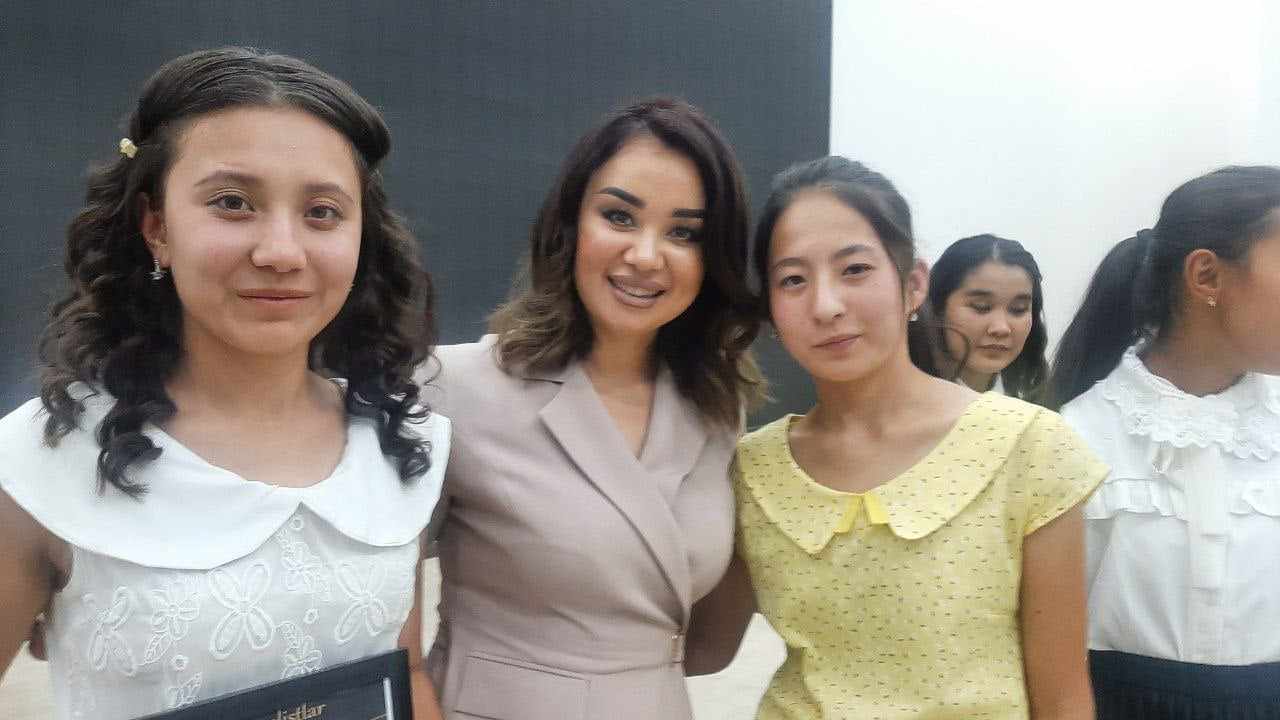
Five Central Asian teen girls. three facing the camera in sun dresses and two in the background. Bakhora Bakhtiyorova is in a light yellow dress.

Bakhora Bakhtiyorova (in yellow, third from left)

My Love for Journalism

Today I want to tell you about a little girl. I can say that she was a very wonderful girl with fire in her heart. Her name is Bakhora.

Bakhora was very interested in journalism. I clearly remember when she was a child. She used to record various voice messages on her mother’s phone recorder and made a microphone out of toys to pretend to be a journalist.

Now Bakhora is 17 years old. She graduated from the School of Journalism at age 15 and her mother was the reason for that. Childhood dreams and goals always inspire people. She really wants to be a journalist now, even though her family is against it. As is only natural, this is a challenge for her.

Bakhora said one day, “Journalism has been with me all my life. I am very interested in it and I am trying to become a solid journalist. I want my parents to be proud of me when I become a skilled journalist. My life is journalism. My goal is journalism. I want to read fiction works to work more on myself and broaden my outlook. Especially the ones from foreign journalists that have helped me get many articles published and bring me to the light when I lose hope.”

Bakhora Bakhtiyorova was born in 2006 in the Republic of Uzbekistan and is a future international journalist.