Sia

Sia in the music industry is the seer
And you don’t need any beer
To hear
Her heart wrenching dulcet tones that as l pen this piece are here

I can see the rainbow
We will take a bow
For her crafty work which are like a drawn bow
Ready to spring into action of taking and sweeping the masses of their feet, wow

She has the gall to raise her voice at a falsetto pitch
That will have those with the temerity to emulate her ditch it
Her songs do not have any kind of glitch
As electronic executed they are perfectly flawless and you won’t flinch

Instead you will sing along at the top of your voice
It will melt even the ice
You will have a paradise slice
Listening at Sia’s vocals at no exorbitant price


Makhadzisa

She sings like a bird
And her songs continue to be heard and played
She is the queen of the Venda born and bred
With teachings that value families and how they should be fed

We will continue to sing her praise
Because she sings with so much grace
Touching the hearts of the young and old, vanquishing dread
As the music flows in our bodies, tightly and loosely clad

Such kind of music is for the Gods
This is why we listen in hordes
Addicted to her tunes on repeat in spades
Glad that there are still singers that inspires confidence in the trade

All hail Makhadzisa
A symbol of how hard work pays
For that reason she is here to stay
And naysayers are not going to do anything about it, nay
Abigirl Phiri is a Zimbabwean prolific writer and a voracious reader. She interviews poet features in both the Mt. Kenya Times daily paper and the Diaspora Times Global weekly paper. More of her spoken word poetry can be found her YouTube channel Wordsareforever8462.
Magical Book

A long time ago, when I was studying in Chapainawabganj Government High School, we wanted to go on a class study tour. But our teacher was saying that education tour is not possible at that moment. But they will talk to the head teacher and try their best to take us on the educational tour. Several days passed after that. Then suddenly one day at the beginning of class, our class teacher gave us a good news. Our class teacher told us that the headmaster has given permission to take us on the educational tour. However, he asked the teachers and students to fix a place together. At that time, many people were confused where to go. But finally we decided to go Mohasthan Garh. But some of our classmates were saying that they want to go but their parents won't give permission. So, our class teacher talked to their parents. Finally their parents allowed them to go. Then our day goes by.

 On the day we left for the educational tour. We left at 10 am and arrived at the spot at 3 pm. We were all tired, so no one went back. The next day we were touring the whole Mohasthan Garh from morning. When the sun was right above our head, we all were going back to have lunch. But then a strange statue fell in front of me. I approached the memorial and looked around the statue.

Then an open book caught my eye on the back of the statue. Teacher Aman was calling me when I took the book. I didn't tell the teacher about the book at that time. Then we left for home in the evening. Then it was too late after returning home so I didn't open the book. The next day I opened the book and after opening the book I saw that there was nothing written on it. I thought someone's book might have gone there by mistake. And I put the book on my reading table. After that I turned off the light in my room and slept. In such a situation, suddenly a colorful light starts to shine from the book. I was very surprised. But I opened the book somehow. When I opened the book, there were many writings floating there, but the writings seemed to be of an ancient language. I wasn't awake much longer. I took the book to my teacher the next day. I told him everything. He heard all this and told me that there might be some secret which shouldn't be revealed. So, we should keep it in the museum. So Amika and my teacher left the book in the museum. Maybe the book is of some use to them.


Md Rafiul Islam is a student of grade 7 in Harimohan Government High School, Chapainawabganj, Bangladesh.
CHOIR PRACTICE IN ANTALYA!!! (MUSIC NOURISHES THE SOUL)
In Antalya, the choir ensemble named THM and Folk Music Night, led by my dear friends Ali Gardaş and his wife Selma Gardaş, has returned to the stage after a long season break, starting their choir rehearsals on September 17, 2023. Comprised of elite artists who are passionate about music, the choir, under the direction of Ali Gardaş, captivated the audience while performing new pieces from their repertoire. They also made significant contributions to the world music culture. Therefore, inspired by the saying ‘Music is the nourishment of the soul,’ our ancestors used music to treat many illnesses. Music is not only nourishment for the soul but also a significant art form that motivates the heart. It can assist in the treatment and recovery of various illnesses, including expediting the healing process of heart conditions by normalizing heart rhythms and regulating blood pressure. Music, considered the best painkiller, plays a crucial role in alleviating and reducing pain.
Furthermore, according to scientists, music has a profound impact on the body’s value systems. Music also accelerates positive cultural change, guiding individuals toward new roles and lifestyles. As an important educational and communication tool, music significantly aids individuals in integrating into society. For example, although I may not understand the language of musicians such as Mita Hogue, Muhammed Milon from Bangladesh, Fakir Alemgir, Kanika Kapoor, Shreya Ghosal from India, Muhammed Reza and Kayhan Kalhor from Iran, and American musician Elvis Presley, listening to their music soothes my soul. In this regard, the need for government support for music is increasing day by day. Now, let’s list the quotes of famous figures, including Atatürk, about music:
Additionally, the quotes of Atatürk and other celebrities about music and art are quite meaningful: ‘A nation’s renewal is measured by its ability to accept change, including in music. A nation without art has severed one of its lifeblood vessels. The distinguished Turkish nation, which is an elevated community, also has a unique characteristic in history: its love for fine arts and its pursuit of excellence in them.’ -Mustafa Kemal Atatürk
Music and rhythm find their way into the secret places of the soul. (Plato)
Music is the most transparent language of emotions. (Emil Zeig)
Music is the harmony between heaven and earth. (Confucius)
When things go awry on the world stage, the orchestra comes into play. (Kari Kraus)
If you want to enslave a nation, corrupt their music. (Confucius)
Music is very powerful, my young friends. It takes us to our memories, influences our mood, and determines our attitude towards the problems we encounter. (Sharon Draper)
Music rules the world. (Martin Luther)
Music is the paradise of the poor. (Emerson)
Music should enflame the hearts of men and bring tears to the eyes of women.
Music is such a vast sea that I have rolled up my pants, but I still haven’t entered it.
Music is the nourishment of the soul. (Mendelssohn)
Music is another planet. (Daudet)
On this occasion, it was up to me to perform an Azerbaijani Turkish song.”
I also wanted to share with you that.
Yahya Azeroğlu was born on October 24, 1955, as the second of nine siblings in the village of Yukarı Topraklı (Alkızıl) in the Aralık district of Iğdır, Turkey. He began his education in this region. In 1970, Yahya Azeroğlu and his family migrated to Turgutlu, a district in Manisa, Turkey. Afterward, he went to Germany, where he received two years of German language education. He returned to Turkey in 1984.
Upon his return, Yahya Azeroğlu established the Poets and Writers Association and served as its president for 15 years. Within this framework, he continued to engage in cultural activities. He has published eight books and maintained close ties with the Turkic world. Yahya Azeroğlu has received around 105 awards for his cultural activities. He is a member of the Azerbaijan Writers Union and was honored with the Turan Medal in Kyrgyzstan. He has won numerous poetry competitions and was recognized as an Honorary Professor in Azerbaijan. His life and work have been the subject of theses by university students, including those from Celal Bayar University in Manisa and Akdeniz University.
Yahya Azeroğlu, who has four children (two sons and two daughters), currently serves as the General President of the Turkish World Arts and Culture Center (Tüsküm), headquartered in Antalya, where he continues his cultural activities.
Electronica is the term for various genres of electronic music built with samplers, synthesizers, and drum machines. Many of these electronic genres are part of dance music festivals worldwide. Other genres of electronica are non-dance music for close listening. In the United Kingdom, electronica typically describes music that listeners consume via headphones and a home stereo system, or as soundtracks to movies and video games.
In the UK, also, electronica is also a catch-all term to describe club music, genres such as EDM, system pop, electro, electronic pop drum and bass, and trip hop. Consequently electronic music, broadly known as electronica, has evolved in conjunction with advances in synthesizer, sampler, and drum machine technology.
The earliest forms of popular electronica were developed in the 1960s-1970s. Jamaican DJs spun records of reggae, backing tracks without the vocals, creating music and dance known as din. Around this time in Europe, artists Mike Kraftwerk, Mike Oldfield, and Alan Persons Project began.
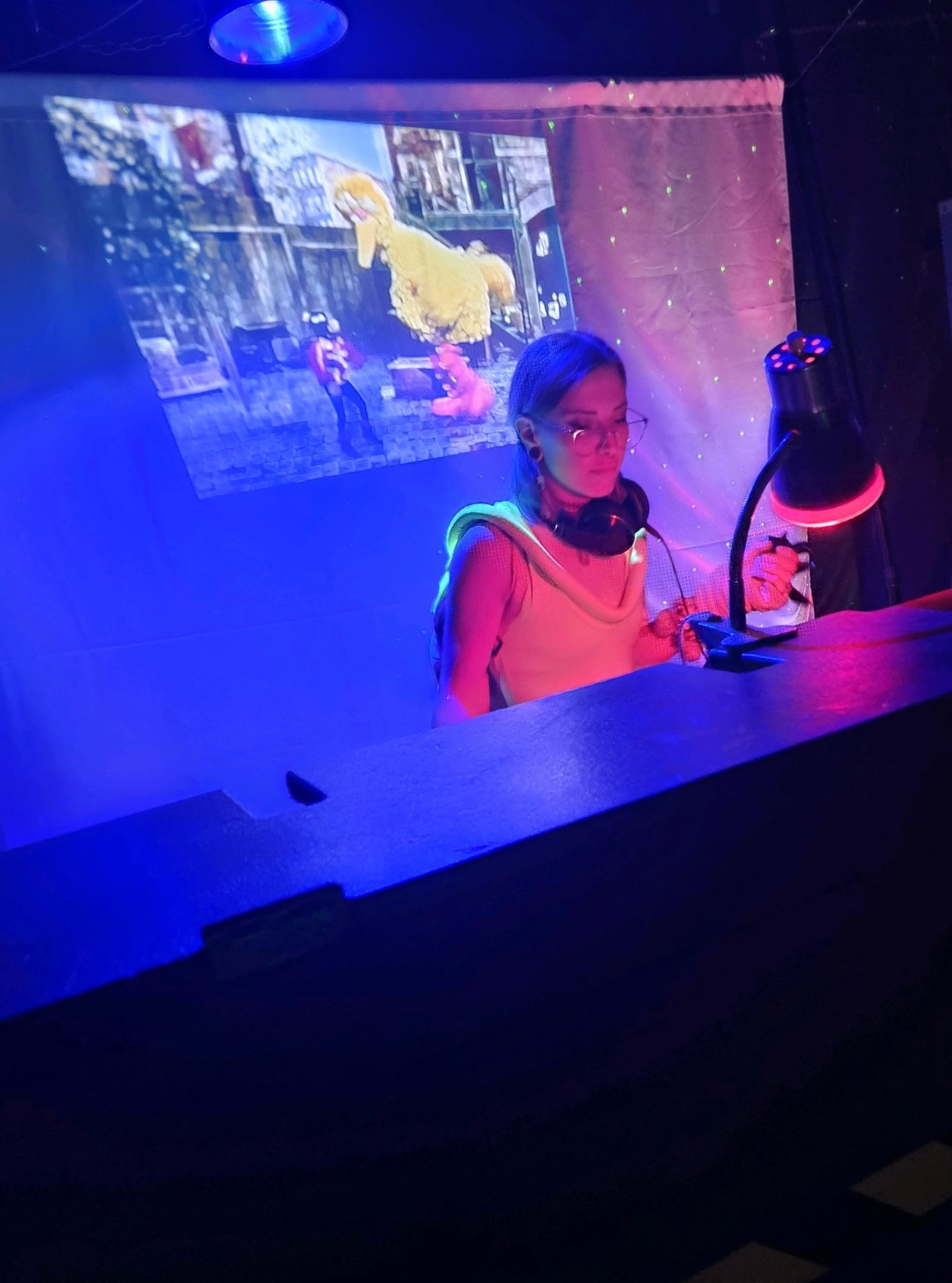
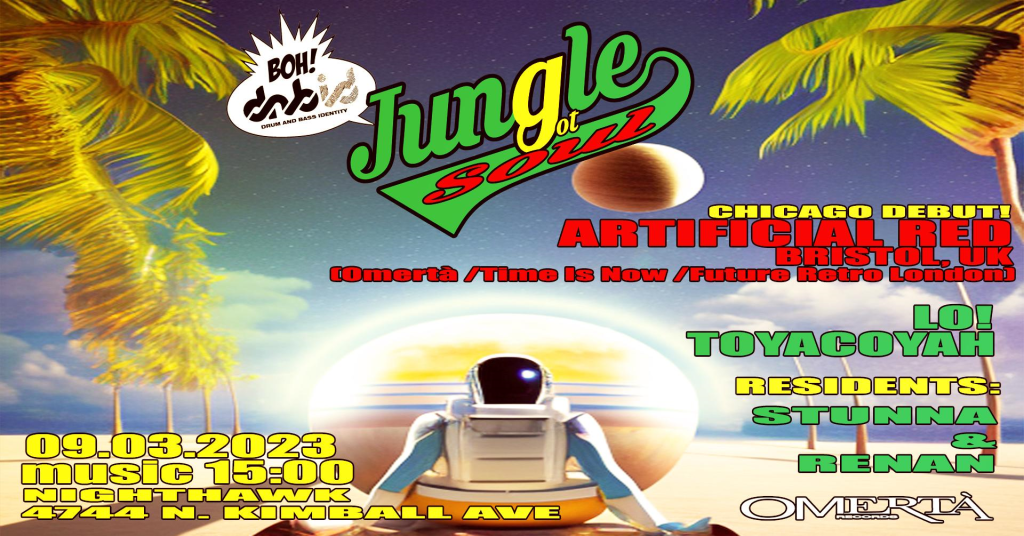
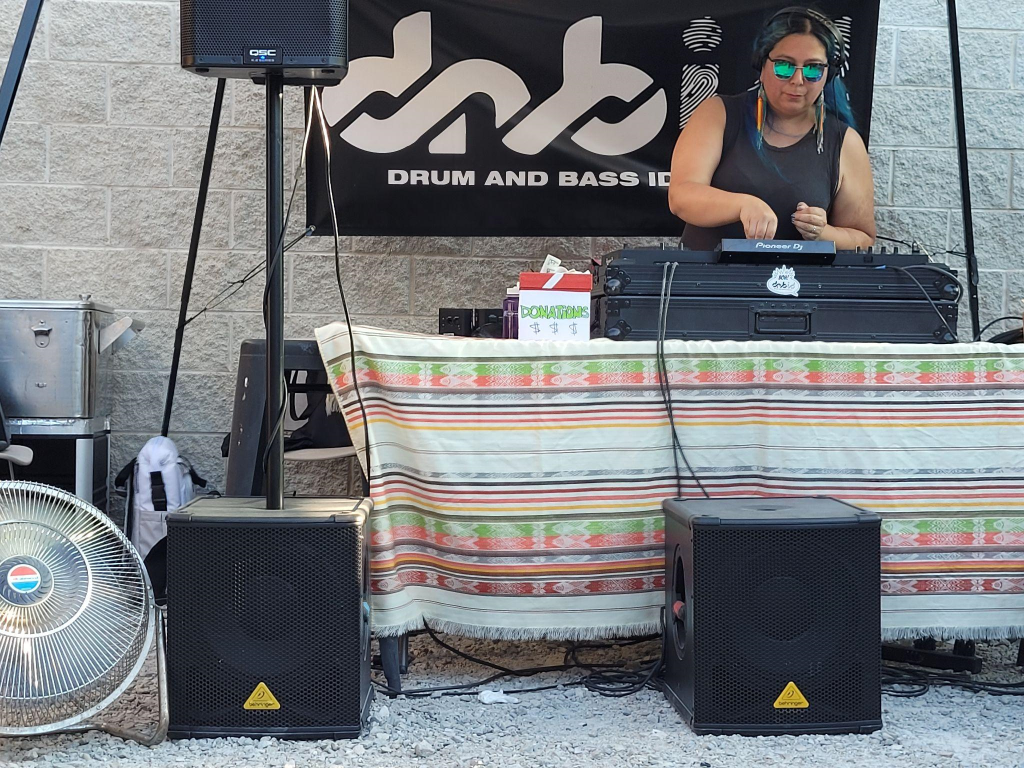
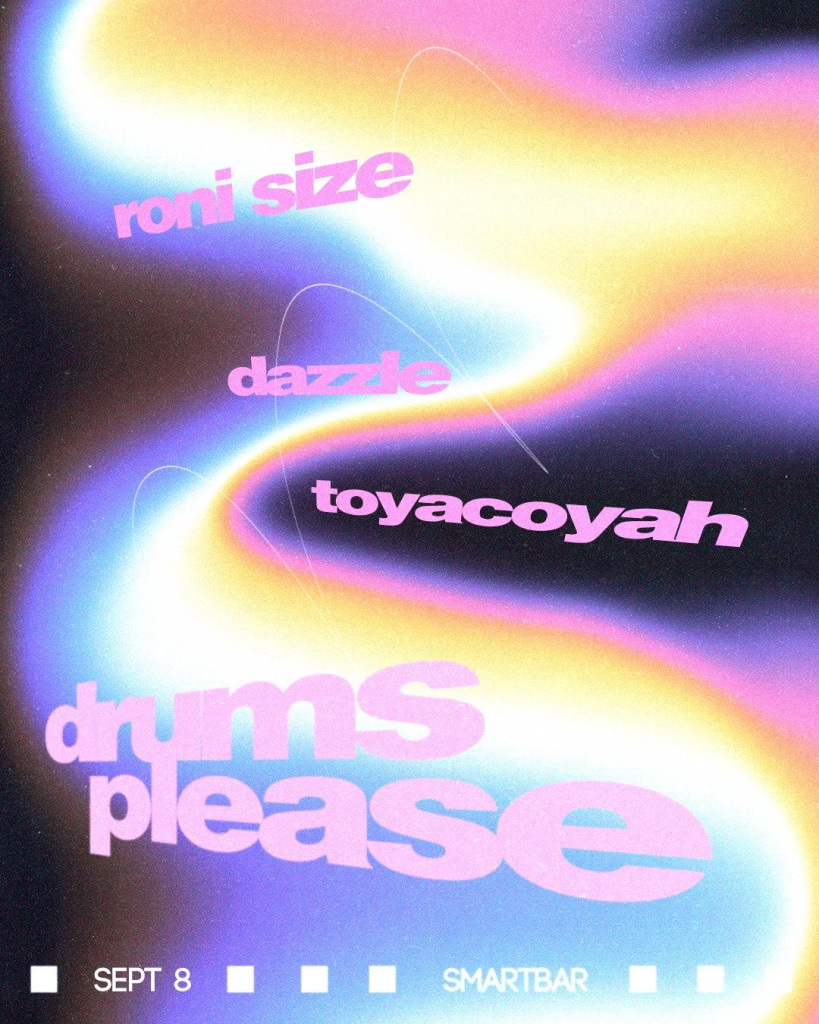
On September 3, 2023, I attended the Jungle got Soulevent in Chicago – hosted by the dnbidcrew (DJ’s Stunna, Subverb, Renan, Skrimshaw and Occum’s Razor):
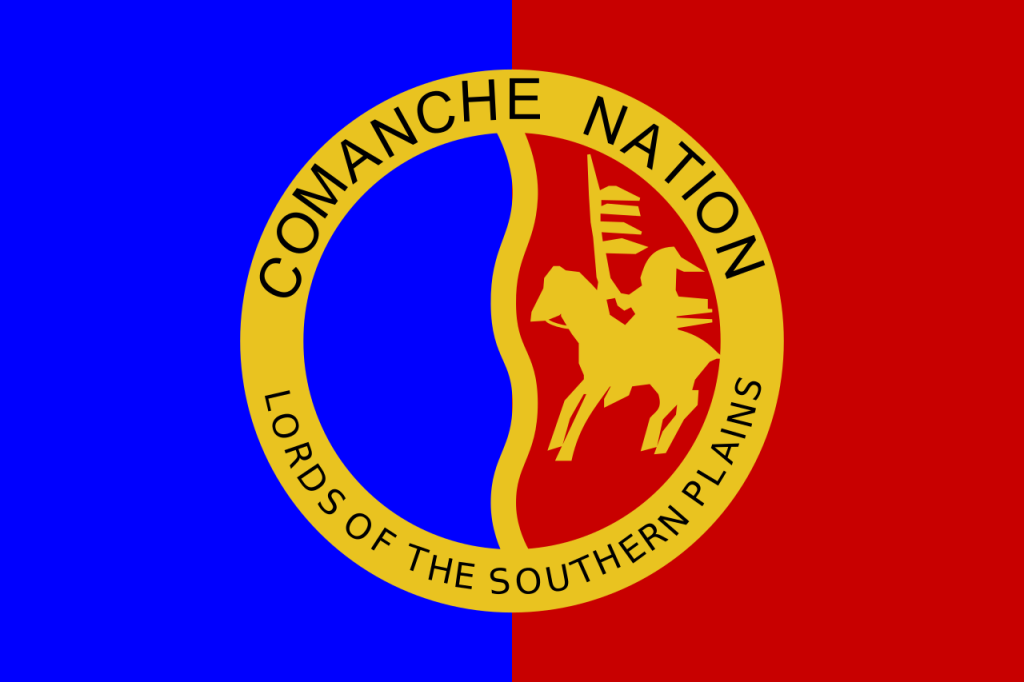
Three sets in, I was impressed by the ambient sounds of DJ Toyacoyah. I looked her up online to learn more about her and saw that she was a member of the Comanche Nation – a rarity, so I decided to have an impromptu dialog with her at the bar where we dished on raves vs. pow-wows, West Coast DJ culture, Brazilian jungle/drum ‘n bass, indigenous hip-hop, Mixed-blood politics, Native representation, tribalism, (sound) medicine, colorism/racism, etc.
M: OK, let’s start with your name. What does it mean?
T: It means “Returning from the War”. I’m named after a great great grandma on my dad’s side. Her name was actually spelled “Toyackkoah”. So, story goes, back in times of war, the women would help the men and provide weapons and reinforcements if needed; so on her way back from helping refill ammunition and what not, my ancestor was born. I think it literally might mean “returning from the mountain” because I’ve seen Toya used as a mountain name before.
M: Cool. So what does it mean to you to be a Comanche DJ in Chicago’s Jungle/Drum ‘n Bass (DnB) scene?
T: Yeah well, honestly, I didn’t grow up 100% around Comanche Nation just because, like, I was born there – born in the Indian hospital – but I only lived in Oklahoma until 7 years and then I moved off to Arizona, California; but I went back to Oklahoma for college. So that’s kinda how I got back in touch with my roots ‘cause there’s…a lot of Natives that go to college up at OU but yeah, no, I definitely see the parallels between pow-wow music and rave culture and stuff like that. People always ask me about that. I’m, like, “definitely”…so yeah, I definitely see the appeal obviously ‘cause I watched my relatives dance – definitely percussion was heavy in the mix, right? So no, who knows? There might be something in the DNA ‘cause I listened to house music, freestyle and all that stuff growing up; but the first time I heard jungle, I was like, “Yo, what the hell is this?” and I didn’t know what it was, right? I went back later, I’m like, “that was ragga jungle.” I’m like, “that was straight up, like, the craziest thing I ever heard in my life.” I really wish I knew what song was playing, who the DJ was but it was like ‘95 – San Francisco. That’s where I first started and my life was pretty much changed after that.
M: You bring up an interesting point about the cultural or subcultural, at this point, parallels between the Jungle/DnB scene and the First Nations scene – raves versus pow-wows. I think every Junglist has that moment that they can identify where they were like, “Whoa, what is this?”
T: Yeah.
M: “How does this relate to me? I’m here, it’s real…and, now, what am I gonna do?” Obviously, you chose to DJ.
T: Yeah, so I’ve been buying records since I was a kid – like in the ‘80’s. It was always, like hip-hop or, like I said, freestyle or hip-house or whatever; so I was interested in electronic music but, just, I didn’t know it was a DJ culture thing, right?
M: Right.
T: I listened to the radio a lot in California and they’d always have people mixing but I always felt it was more hip-hop; so I knew that culture – turntables and all of that, but I was like, “Oh OK, there’s, like, a whole other thing happening here,” right?
M: Right.
T: So, when I got to college, I started buying stuff and then I went to the radio program there; so then I had a radio show and that’s where I started playing a lot of drum ‘n bass. That’s how I got my practice.
So funny enough the radio station at the time was KXOU but it was only on cable TV since they didn’t have a license or whatever. There was an NPR station I interned at, too, called KGOU. But for the show I had on the cable TV part it was called “Recipe for Chaos”. I think I have an old VHS tape of one night somewhere (laughs). Dragged my 1200s and mixer into the studio for it.
T: So, funny enough, there’s a really big scene and it was mainly a lot of hip-hop and rave crossover. One of the biggest crews that was throwing parties was the UAT crew and they’re actually the ones that made me DJ.
The very first time I got a gig was because my friend was throwing a party and they put my name on a flyer and didn’t tell me until, like, a month before the party. He said, “by the way, you’re playing this and start practicing now. And I was like, “WTF, dude?” but I needed that push because I would never do something like that – you know what I mean? – like on my own, so I appreciate that he did that for me and, yeah, that was my first gig – January ‘98 – and no looking back since then.
M: That’s what’s up. Do you feel like a lot of other First Nations people down there kind of had that same synergistic feeling or experience of, like, the rave culture integrated with the pow-wow?
T: Especially if they were into hip-hop culture. I don’t know as far as rave goes, but I definitely noticed it more recently. But that’s also because of the internet, you know – you’re a little more in tune with what other people are doing and I think it helps that people, like in Canada – First Nations – where, like, A Tribe Called Red (are from). They definitely helped solidify…rally the troops…
M: …Yeah, right. Exactly…around hip-hop. Rebel Diaz* is another one representing the First Nations down in Latin America. They have a show coming up at the Old Town School of Folk Music.
T: Oh yeah, I know Indigenous Peoples’ Day is coming up, so they’re having a big…what is it?…one-day concert. I remember they had something last year. I wanted to go to it…but, no, I’m really excited because, like I said, I feel like I see more hip-hop with Indigenous culture. There’s, like, a big appeal there. But that kind of probably goes with social awareness and issues like that. It’s a way to express yourself, you know what I mean?
M: Yeah, totally.
T: So, I feel like that’s a big parallel culture with, like, bringing sh!t up.
M: Definitely.
T: But yeah, no, I actually just played in Minneapolis like two weeks ago (?)
M: Oh Nice! Largest Native urban population in the “United States” (Turtle Island).
T: Well, that was the thing, right? So I remember I saw on the event page, this girl was like, “Wait, she’s indigenous like me? I’m totally coming out.” And she’s like “Representation Matters.” She was so excited. I didn’t know this girl, right? So, the day of the show…I didn’t see that post until the day of…and I was like, “Oh that’s so cute.” And, so, she actually came up while I was DJ’ing. She put a sticker on the CDJs, and it was…this medicine wheel sticker.
And I was like, “Oh, is that the girl?” And so I waited until after the show and talked to her and now we’re Facebook friends. But I was like, “I appreciate that” because I didn’t really have too many Native friends in the scene. One of my best friends used to dance with me alot in Oklahoma but, you know, you go somewhere else and I’m usually the one person in the room, right?
M: Right. Exactly!
T: Like if I look around right now, I’m probably the only Native person…but I get used to that – whatever. So it was nice when you get to be with people, like, in a similar situation…
M: Totally. 100%. Now I think, with that said, there’s also that unspoken presence as well, right? As a DJ, you talk about mixing genres and mixing records, but there’s also the mixed-blood, right? Those of us that, you know, have mixed-blood, but may not be enrolled, may not necessarily be accepted in the sovereign nations, so how do you speak to that? As a mixologist, how do you speak to that with respect to the mixed-blood people and how they express themselves whether in the underground culture or in the mainstream culture?
T: Yeah, no, it’s definitely difficult. It’s a touchy situation because…there’s definitely colorism and whatever within indigenous cultures – (in) the Black community for sure. But, like – I don’t know – I think there’s something that you can get from all the cultures and all the different music. A shift sharing is a big part of our culture too. Like, someone comes into your home, you’re sharing food; so, as a DJ, you’re sharing…the music, the love – so I don’t know.
M: It’s something to put out there – something that’s maybe not discussed as often as it should be, but I think that the arts have always been a means to at least communicate the reality of such situations that ultimately bring that medicine that the tribes do talk about. A lot of times, the more difficult conversations, the more difficult confrontations, the more difficult situations, both within and beyond First Nations communities, can bring about that medicine, right? Sometimes you have to break the bone and reset it correctly in order for it to grow in its proper nature.
T: Yeah, no, and I think that there’s alot of things that we can all learn from each other and that was the bad thing about what happened in this country when it was “founded”, right? People were already here, but we’re gonna say, in quotes, “founded”. If everyone had tried to get along, I think that things would be way better; but it’s always “us against them”, “who can you trust”, “blah blah blah”…
I prefer the places where you can have some acceptance because alot of times, with Native cultures, there’d be wars going on – whatever, but if someone was captured they were brought into the community, right? Like, “OK, you’re one of us now,” back in the day, you know? So I feel like there’s that whole, like you were saying, acceptance, tribalism – whatever, like “you’re one of us now.” That’s kind of how it is in the dance music community, like “Oh, you like drum ‘n bass? You’re one of us now.” Because, like, we’re few and far between, I feel like.
K: Totally, and speaking of medicine, for me personally, drum ‘n bass has always had somewhat of a healing impact and place, and effect in my life. Do you feel that drum ‘n bass has that capacity to heal some of those divisions or some of those wounds that exist within the First Nations community as well as beyond the First Nations community?
T: Oh yeah, for sure, I mean, there’s musical therapy, right? Like, there’s people that specialize in that stuff. So yeah, I feel like the more we share, the more we create, the more we’ll have in common. You know? That’s where we find our common ground, is on the dance floor.
K: That’s cool. Do you see yourself, in the near future, maybe bringing the drum ‘n bass culture – sound – maybe into the pow-wow community or somehow, you know, bringing it a little bit closer?
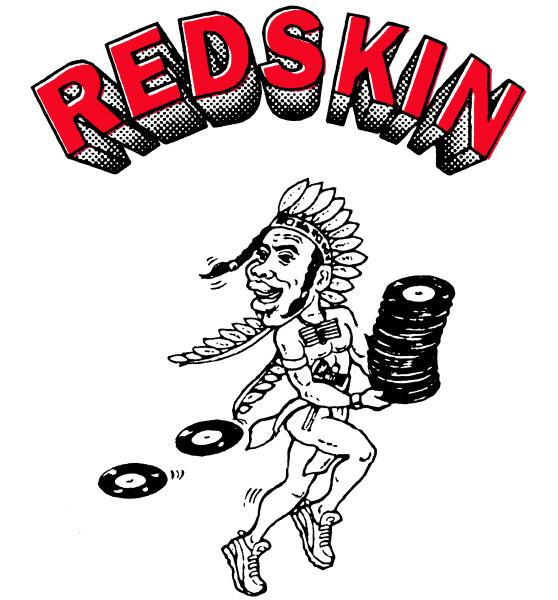
T: It would be cool just because I feel like there’s not enough…like you’ll see – especially in the UK, right? – you’ll see alot of record labels or song titles that borrow from tribes, but they still have that weird, stereotypical view of what that means ‘cause they’re not around it. That’s fine, they’re in the UK – whatever, but there’s this one kind of crazy…I’ve seen it before, Redskin Records is the name of it. I’ve seen it. The caricature is not very flattering. People have called them out on line but, right now, if you say something, like, “Oh no, ‘woke’ is a bad word.” It’s like, “no, you’re just trying to say this is not how you need to be talking about people, representing people”; but, of course, it’s like people are still set in their ways, right? So, things like that, I think there’s still a long ways to go. People just don’t know that sensitivity ‘cause they’re not around it all the time, right? So, yeah, it’d be cool to have more representation in the scene. Bring more people into it – whatever.
T: And, like, speaking of, like, indigenous cultures – I’ve never played for a crowd, right (?), that’s like mainly indigenous or like mainly even more than just me, right?
M: Right.
T: But someone reached out to me this past year – and I haven’t done it yet, but I’m actually gonna play for this Native American museum (Eiteljorg Museum) in Indianapolis. I’ve never done anything like this…but I was surprised because someone knew I was Comanche and they’re like, “Hey, we’re looking for an indigenous DJ and there’s one in Chicago”, so I’m actually gonna go there in November to help with this exhibition, so it’s gonna be, like, the first time I’ve played for something like that. I’m excited. I’m gonna pick out different music, obviously, but still, you know, some good tribal music, world music. I feel like I could also expand it a little bit.
M: Yeah, definitely. No doubt, absolutely. I think the world music community, there’s a place for you in that community. I know they have their festival comin’ up here soon. That’s why I mentioned Rebel Diaz – they’re part of that. They’re celebrating like 50 years of an uprising (coup) in Chile.
T: OK cool.
M: Yeah, I think that’s an avenue that could definitely serve as a bridge between, you know, the First Nations community and the underground jungle/dnb community.
T: And also in that spectrum, too, I really love Brazilian music. When I was like…you know, early 2000’s there was alot of Brazilian drum ‘n bass that came out. I was so inspired by it that I actually did study abroad in Brazil. I used to DJ down there, but if you look at the USA and Brazil there’s alot of parallels of indigenous culture, settlers came in, slave trade was happening, and it was really interesting to see how the music – you know, kind of similar. We’ve got jazz, they’ve got bossa nova, you know. I was very interested to see, like, how those cultures came about because of what they went through.
M: Well the majority of the African captives, actually, were landed in Brazil and Colombia.
T: Yeah, Salvador was where I was and that was a big part of what I saw there.
M: Exactly, exactly. So too often, in the US, we think we’re the epicenter of that, but we’re far from it. We’re a very small percentage.
T: Nope. Yeah. And that’s why I really wanted to go there – just to see how they treated their indigenous culture because it was definitely like they didn’t really talk about it. It was so weird. It was like, “Oh we’re all Brazilian” and I was like, “Nooo”, you know?
M: Yeah. I mean there was that immediate fusion of the African captives and the First Nations there and, for example, in Jamaica you have the Maroons. And in Canada you have the Métis and here, obviously, you have the Mixed-bloods here and all throughout the Americas, really. So it is a quote unquote “Pan-American” or Pan-Turtle Island diaspora that is both inclusive of indigenous and Afro-Indigenous communities, but also the integration of the two, which needs to be illuminated more; and I think, through music, we can heal some of those divides and get back to those roots.
T: And that’s my favorite part, just hearing what people do – that whole call and response with music. It’s like I’ll have this, I’ll have that – ooohh, let me put my little vocal element in there.” That’s f#cking bad@ss. I feel like that happens alot. So, it’s like we can relate more with music than, I feel like, in other different ways.
* Rebel Diaz brothers RodStarz and G1 grew up in Chicago and came up in The South Bronx, NY. They are the sons of political refugees from Chile who fled a CIA-funded dictatorship in the 1970s. They have been doing rebel rap since the Clinton era, sharing their story and those of their people; el barrio, the hood, the poor, los inmigrantes. The brothers' bilingual sound has been shaped by pieces of South American folk, house, and latin percussion gettin' down with boom-bap, breaks, and 808s.