In a world where people spend much of their lives surrounded by stress, speed, and constant distraction, the spaces we live in quietly shape our emotions and thoughts. A home is more than walls and furniture; it is a reflection of personality, comfort, and inner peace. The way a space is designed can influence the human spirit just as deeply as art, music, or literature.
When people decorate their homes, they do more than arrange objects. They create atmosphere — a silent language of colors, textures, light, and memories. A carefully placed lamp, soft curtains moving with the wind, or the warmth of wooden furniture can transform an ordinary room into a place of emotional safety. Aesthetic spaces do not need luxury; they need harmony.
Interior design has become an important part of modern life because people increasingly seek beauty in everyday experiences. In many cultures, homes carry traditions and personal identity through decoration. A traditional carpet, handmade ceramics, family photographs, or natural plants can preserve both memory and individuality within a living space. Through design, homes become stories without words.
In today’s digital age, aesthetic living spaces are often shared across social media platforms, inspiring millions of people around the world. Minimalist rooms, cozy reading corners, soft lighting, and natural colors have become symbols of calmness in a noisy world. Yet true aesthetic value does not come from trends alone — it comes from authenticity and emotional connection.
Beautiful spaces also affect mental well-being. Studies often show that organized and visually peaceful environments can reduce stress and improve concentration. Sunlight, open spaces, greenery, and balanced decoration contribute to emotional comfort and creativity. In this sense, interior design is not only about appearance, but also about human psychology and lifestyle.
At the same time, aesthetic living should remain personal rather than perfect. A home becomes meaningful not when it looks expensive, but when it feels alive with warmth, memories, and individuality. The most memorable spaces are often those filled with sincerity rather than decoration alone.
Mushtariybegim Ozodbekova is a student and aspiring writer from Uzbekistan. She enjoys exploring culture, aesthetics, and human emotion through reflective writing. Her work often focuses on the connection between beauty, identity, and everyday life.
This article was inspired by the idea that living spaces quietly influence human emotions and behavior. In a rapidly changing world, creating aesthetic and peaceful homes has become a way for people to reconnect with themselves and find comfort in ordinary moments.
(Trans. by Nhat-Lang Le. Edited by Susan Blanshard)
BITTER POTION
(For Ngọc Trâm)
As fever is burning you on its pyre
I become ash too
The bitter potion cannot wait any more
Holding your hand
I pour
My grief into the empty bowl…
O’ daughter! As the mist falls
My hardship arches across the cold night
For frail flowers
To give off scent needs bitter roots.
Sweat becomes callused hands
Spring pours into the medicine bowl
My old age weeps with mute tears
While truth bursts out for no reason.
I wonder what you eat in your dreams
I put the bowl on the window
When you grow up to my age now
At the bottom of the bowl
There may still be a storm.
(Trans. by Nhat-Lang Le. Edited by Susan Blanshard)
Where the Sky Is Spacious
You blow in the warmly ardent season
Trees wither for lack of water not far from the river swollen in splendor
The fish grinds up the hook and upsets the order of time
I shrink up to fly into infinity
The tower raises multi-directional sensory organ
Your braided hair is glorious like a beaded open-air crown
and your skin resplendent as the back of the moon
sweet fruit and golden paddy resplendent as the back of the moon
the timely seeds stand up proudly
the thunder, lightning and tornado are self-confident,
but when my grandparents’ silhouettes are seen
through the perfumed vapour of cooked rice, I burst into tears
Overwhelming absorption and sudden revelation
are woven into horizon of clouds in every circular breath of hope
to trigger the drops of drizzle in the chest
and the leftover food preserved in memory
Truth makes the letters jump out and they cannot be withdrawn
we are all more self-confident when we wake up and see the symbol engulfed in the mouth of fire.
(Translated by Nguyễn Tiến Văn. Edited by Susan Blanshard)
Accompanying the Guest Out of the Alley
After brewing tea
When I returned
The guest was gone
Speaking on the phone
His family said he had been dead seven years
A misunderstanding
At home
All in turmoil
No memory of when the portrait was taken down
Where was the winding clock?
To whom was the fake ancient teapot given?
Dropping in on the neighbour
To check several food items
Some with higher prices
Some remained unchanged
In the house
The tea still hot
Pushing a cup towards the guest’s vacant place
A deadly vapour six meters high suddenly rose up
Bowing down in front once in a while.
(Translated byNguyễn Tiến Văn. Edited bySusan Blanshard)
Mothergate(*)
I
Mother nature caressing child as the moonlight
Sound passing from bough to bough, the howling
Skin and flesh of the woman I loved,
Our love child spreading deep into the dark
Entering into the dark night,
Skin and flesh erect lift the layered clouds for us
To make a watershed of rain over the sources of rivers
A bough quivers on the water’s surface
Where a bird suddenly perches
Only I can see that small bird so far away from the road
Far away from the garden, from the other flocks of birds
I quietly pass through the corona at the bottom of the water
And look up at the sky with open wings
Rising to the top of the tree where the bird’s beak
Bends down to feed into the mouths of its fledglings
Each sip of wind
Sound of chipped grain in the chest
The bare ground and green fruit
The dense-leaved canopy of the forest
Newborn child on the ground
Swim across the river the tadpole’s tail severing
Learning to flaps its wings, fanning the wind into the nest’s warm bowel
Sprouts the cotyledon leaves, flies away freely
Steam rises by the river-wharf
Space condenses the confusion of time
Smoke steams up high
I realize I am swimming in a sea mist
Not mist but rain
The tall tower glittering
Breathing, muscles firm, the leaf singing…
The dead return, suddenly, in the blossoming flower
I shudder at a shoreline
The water surface choking where there are no breaking waves
A sip of cool water drifting slowly…
Suddenly remembers the high tide season submerging the cricket’s cave
Burble sound of bubbles gushing up by stages
So that I realize where the cave mouth is…
II
Place child on the ground
The riverbed has enough pain to tear off the body of night
Nature glossy wet
The trunk of trees disintegration turns into splinters
Water swift flowing
Flowing faster
I burst into tears to sweep away the spider web
Sound of the heron’s hoarseness
The ashes flashing up
Moon trembling
Pick up a pebble to draw on the ground
A field
The young calf bewildered
A clear outline as the calf bent down to graze
Another direction draws an extra eye
The eye of wild animals or eye of human
Write the words on the remaining empty boxes.
III
The voice very close
Under the light of dawn you must transform yourself!
Fruits
Firelights
Yin Yang bowl of water
While crawling over bowl of twilight
Pull the body gradually out of the shell
I sip the dewdrops
The ghastly shell heaped up high
Was out of reach
Groups of people helping each other towards incapacity
End of dawn.
IV
The shade of trees bursting out underfoot
Images on the map are torn off?
Or the half-bat half-mouse corpse?
I was so frightened, weaving the grating
Set booby-traps around myself
Sharpening the knife
Preparing a matchbox
As close to the horizon
The drifting darkness was terrible
Faster than emotion
I keep accumulating anxiety, the resentment
Until the blackness of night was completely
Erased off.
V
I chased small prey
Threw myself upon the wave’s crest, then lost direction
The low tide
In the dream near morning
My bones painful
The tail and dorsal fin frostbitten
There is a hand threading the strings
Dragging me slowly on the ground
They stopped to shelter from the rain
Suddenly release me
Near the foot of waves
I was grateful the rain
The loud thunder and cool wind.
VI
Father recently tried to get up after being bedridden, staggering out the door, he fell into a square block of light
He tried to point his finger, then said: “That green beetle on a leaf canopy, father sees it for the first time”.
I tell these unintentional stories about the time father was in a coma. A story of the large cloud that flew slowly through our home. The deep wells rising steam up to the window. One story about the song of the crypsirina temia bird, makes everyone look at the bowl of drugs.
The body of father is like shallow rivers, dry wood, and the empty paddy grain
The raceme of weighty fruits, swaying in the strong wind
Father suddenly whispering: Please help father go to rest
Sound of dried leaves sliding off the roof makes father and I shed tears together.
VII
The universe lays the black coat over me
Only eyes open to pray
Mumbling I still thought
… white hand black blood white tongue black tears white back black helix curl of white hair black sweat
The black spilt on everything will end us
Let’s pray to save the people of this world
Lighthouse…
Kitchen bright…
Look in any direction
Like learning to focus on the blackboard
Learning to separate the colors
To spell the letters
This crossroad of white
The earth’s surface, the seas surface white
Great old man, a chair, the woman in white
The inspector, the farmer in white…
The mouth reads aloud, the mind still holds sundry thoughts
…white tongue black tears white back black helix curl of white hair…
VIII
Curled up I sleep in cold wind
Dream to be a fetus
The navel-string connects to the solar
Fly above canopy of the trees
The eyes with a look, make the sound of sobbing… blue
Every tiny bud of limbs
Springing lightly in the body of Him
I wake up
That place starts on the road
The colt unsteady standing up
The flock of insects crawling out of the trunk
The tiny shrimp blasting off the throat of water.
IX
drum gong and eight ornaments
opens the festival of imperial court
sing and dance to heaven
the great merit of four palaces
opens the mind of a disciple
tolerant eyes look
the quiet weather
the special envoy giving out grace
sincerity respectfully kowtow
four gods flanking the lady god
garb and turban of sorceress are brocade and flower embroidery.
come and go refreshed
moving between heaven and earth
powdery cheeks and ruby lips
rhythm of bamboo beating and rhythm of castanets
string of coins
sacred dragon hovering
five great mandarins’
the hand swaying
high talent deep virtue
the flame glittering
fondle protecting
loving mason bee
silkworm spits out the silk cord
garb and scarf flapping
alluvial cuddling
wind coming back to the riverbed
cassaba melon pyriform melon
fragrance of lotus and areca pervading
boys and girls entering the region
prepare the sedge mat, prepare the blanket
as flower, as butterfly
faces glowing with pleasure
as the ground is to the sky
grass and trees in good verdant
raining fast and violently
…
Translated from Vietnamese by Trần Nghi Hoàng
Edited by Frederick Turner
(*) Mothergate – Mother in this poem does not mean “mother” as normal. It carries the meaning of “the Way”, the “philosophy of belief.”. As: “The Way that can be told of is not an unvarying way; The names that can be named are not unvarying names. It was from the Nameless that Heaven and Earth sprang; The named is but the mother that rears the ten thousand creatures, each after its kind” (Lao-tzu)
The Opening Ground
Gushing
between the screams of ephemeral belts of land
the riverbed writhes in waning light
dusk holds day tight in its mouth
fire convulses
fiercely ascending the tree tops
scorching the buds
A flight of birds spreads across the sky
so thoughts can reign on earth
where the wind’s face meets a bowed hill top
a deep cavern exhales myths to morning dew
ponds and puddles find a heavenly direction
the river gives birth while flowing
An open embrace of waves
playing in childish ebullience
the water surface turns to ruins
You set up an already broken sun
Drifting…
An unknown silence is drifting by
the lamp wick shortens
as kerosene soot says its last words
I vaguely hear the boiling batch of herb saying its apology
With closed eyes the world appears unpolluted. The surrounding pure spaces are spreading and latticed. We see ourselves in childhood holding a bright candle in the church. The candlelight is filling eye-sockets, filling the hollow immobile gaps amidst secret verdant foliage. With closed eyes the forest resembles a garden. The rattan stems, the ferns and wild grasses take the shape of huge ancient trees. The needle leaves form a large canopy. The earth bee, the porcupine, the squirrel, and the bull are similar shapes… And I stayed motionless for a long time with my eyes closed. Even though my premonition had warned me, they were looking for a clue, fanning the wind, taking fright… With closed eyes we can see people and all things in justice and in a clear light. Pens and books, beds and drawers, knives and chopping boards, and the old bike were of the same size. Each human organ opens up with multiple strange eyes, while the venoms absorbed are permanently sealed up with no way of escape. With closed eyes you are not so busy as when I am with open eyes. But your silence makes queer resounding sounds, telling me that your love has penetrated the trees, the streets and houses, the gardens, the fields, and the rivers and springs… From now on we need not doubt anything until we close our eyes forever
(Translated byNguyễn Tiến Văn. Edited bySusan Blanshard)
Photos, Fruit and Dreams
Under-exposed photos, speed-ripened fruit and dreams that lose their wings before the rain, flow slowly against the current of memories.
A wind blows open morning fields, rushes into rooms full of blended dust and light, wipes sweat off freshly bathed dreams.
The origins are within the span of a hand, when you come back you have gone through your entire life, or you wait to reincarnate into the next life.
Those souls that have yet to reincarnate, visit worshipping places, fly aimlessly, then shelter in fixed idolatry.
Someone runs across the dreams, the fruit and photos, to recover what he lost, to feel each tear choke back and see the amalgam of each shadow.
Origins have renewed space, and a generation of young grass is spreading over old ground.
Souls stand at new angles opening to different lights, and in the moan of fresh dew, they pause and knock on each vowel.
Everywhere new streams are beginning to pour into memories, taking the photos, the fruit, the dreams, to turn everything into a voice last night.
The herb doctor burned his books at the end of the garden
New medicines in stock had expired
The witches suffered punishment
Their mouths closed by iron hooks
Birth
When the bell suddenly dropped
Covering the old temple warden’s head
The fish committed suicide by jumping into a cloud
Ten thousand fishing hooks, hanging in the sky
Birth
Ink was splattered under feet and blood
Congealed in throat and lung arteries
With a stroke on the first page
Thousands of pages were permeated.
*
Fallen from the summit
With two sharp wings
Centering on the corpse
Slashing the atmosphere
Hurried winds had no time for bandages.
*
Clawing from the eye sockets
The viewpoints
With posthumous pictures as evidence
Cut out the tongue
Stretch to dry off in the sun
the slogan’s lesson
Slice off flesh piece by piece
Dismember limbs
Show the innards
The skull all set up
Was completely covered with mold
This epitaph could not be written.
*
The crow dreamed
All deaths were arranged
After the crow’s croaking
Who volunteers to lie down.
*
The crow flew into the room
A finger raised slightly
Implying:
This is the gun muzzle
The scythe
Even the spade
Even the very hard finger
Rather it was frozen
Then defrosted
Then melted down.
*
Do not approach the shade
It was the crow
Spreading its wings at sunset, sunrise
With its claws clinging to the winds
To grind dry leaves
To prune outreaching branches
The poet took refuge in the shade
Each letter hollowed out of an eye.
*
To look at
Things
Glaringly
Because in the wink of the eye
The shadow of the crow
Stormed in.
One’s own shadow
Did not raise its voice
For fear of turning into a chick.
*
A number of people emerged from the crowd, clad in black, wearing black masks. While running, they slapped their arms on their flanks. They tried to raise their heads by stretching their necks. The black shadow hovered close to the ground.
*
Perched on a tree fork after overeating and napping, the crow dreamed that every mouthful of food squeezed into its stomach would turn into an egg. The crow chicks crept in groups from the five organs and immediately lowered themselves to hunt with the instinct of a bird of prey.
*
The utmost sufferings looked back on a life almost dead. The cloak gave a muffled shout when passing desk and drawers. The telephone slept silently. The staple opened its mouth to hide its claws. The broomstick gripped the laborer’s arm, and pulled her to the garbage dump. The hat brim on the head cried out in panic, then bent down to devour the entire face of the guard. Nobody opened the gate. Yet many people managed to find an entrance.
*
The disembodied souls looked for a way back to fight the evil crows. After the volley of non-lethal bullets, smoke from incense joss-sticks spread onto a board, with the first word written for the new lesson.
*
This is the last line in a testament:
“Start the celestial burial at the appearance of the crow’s shadow”.
*
The night shadow crept into the crow’s belly.
And ours too. With gnawing pain together on the hungry river. The drops of troubled water found a way to pass through cotton fibres. The huge surface of water, its vibrations, wishing to keep hold of human shadows. Strike a match and remember that the wick is very distant. Throw up both arms, raise your voice alone in the darkness.
The crow out of sorts through the might
Craws in fright
For the first time the sound goes out without an echo.
(Translated byNguyễn Tiến Văn. Edited bySusan Blanshard)
Biography of Mai Văn Phấn
Vietnamese poet Mai Văn Phấn was born 1955. He has published 19 poetry books and 1 book “Critiques – Essays” in Vietnam. 34 poetry books and translations of his are published and released in foreign countries and on Amazon’s book distribution network. Poems of Mai Văn Phấn are translated into more than 40 languages. He has won a number of Vietnamese and international literary awards, including: The Vietnam Writers’ Association Award in 2010; The Cikada Literary Prize of Sweden in 2017; etc.
The Play Oedipus El Rey Makes Mythological Magic at the Huntington’s Calderwood Pavilion
A Well Known story retold with inner city energy
by Jacques Fleury
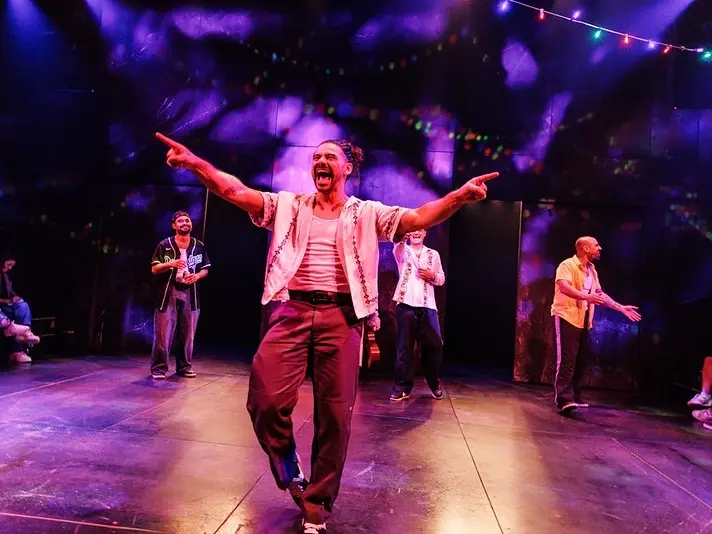
Javier David in foreground, with LtoR: Jaime José Hernández, Juan Arturo, Gabe Martínez in Oedipus El Rey; directed by Loretta Greco; photo by Marc J. Franklin
Oedipus El Rey, which translates to Oedipus The King from playwright Luis Alfaro and directed by Huntington Artistic Director Loretta Greco, is a re-imagining of the ubiquitous Greek mythology Oedipus into an urbanized modern-day tale of fate and tragedy and what it means to start over. A newborn fated to kill his father and marry his mother is the story in a nutshell but upon closer inspection, it speaks to modern day scenarios about fate and destiny and whether or not one can alter that course or simply succumb to it over the course of our lifetime.
“We can make connections between the classic text and our own extraordinary histories,” says playwright Luis Alfaro. He goes on to explain what he loves about Greek mythology. He said, “The Greeks…don’t give you answers. They ask questions.” And that is exactly what the play does, it juxtaposes Greek fantasy with modern day reality by depicting people of color, also known as ‘the other’ in experiencing hard knock gang life on the streets resulting in the boomerang of the prison pipeline “where the line to get in…is longer than the life to get out” as said by one of the characters. According to one character, who explained how fathers often willingly commit crimes to get themselves into prison just to be able to raise their sons.
With a close range and sparse set, it felt like the performance was taking place in my own living room. The production made effective use of, at times, ethereal lighting, props dropping from the ceiling, mythological costuming and sound effects, infusions of erotic sensuality, surprising festive audience participation and effective use of Spanglish, which is a combination of English and Spanish, that brought a level of cultural spice. One audience member in particular, who laughed out loud several times, said she “enjoyed the cultural aspects of the play ” upon my inquiry. Although I did familiarize myself with the myth of Oedipus prior to seeing the play, it is not imperative in order to follow the plot and understand thematic elements. Conversely, the audience member I spoke to was unfamiliar with the story and purposefully did not read about the original mythology so that she can view the play with “fresh eyes” and she found the play to be an “escape” from what is currently going on in America and the world.
I find Oedipus El Rey to be a brilliant and valiant stroke of engineered creativity using European mythology that depict the unequivocally caustic reality of ‘the other’ in American society. It begs the question: can we alter our destiny in spite of the foreboding societal schema that preceded our very own existence? Being a member of ‘the other’ myself as a ‘black’ American man of Caribbean descent, I can certainly identify with challenging the notion of fate and destiny; which I used as an opportunity to thrive rather than surrender to the negative expectations and stereotypes laid out for me and my kind.
The play ended how it began, in classic cyclical fashion, which I thought framed the story quite fittingly in the context of proffering the characters an opportunity to “start over.” This aspect of the play is reminiscent of what American-born British Poet and pioneer of literary modernism T.S. Eliot wrote about beginnings and endings in his master work: Little Gidding: “We shall not cease from exploration/And the end of all our exploring/Will be to arrive where we started/And know the place for the first time.”
Giving this philosophical urbanized mythological ethereal laugh out loud and culturally explosive raucous a five out of five stars is no myth.
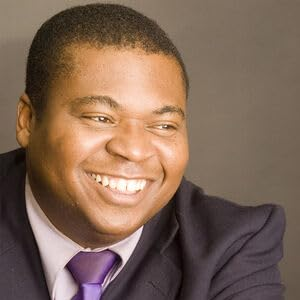
Jacques Fleury is a Boston Globe featured and internationally published Haitian American poet, theater reviewer, educator, author of numerous books of essays, reviews, fiction, poetry and literary arts student through Harvard University. It’s Always Sunrise Somewhere and Other Stories among other titles are available at all Massachusetts public libraries, the University of Massachusetts Healey Library, Wyoming University, Askews and Holts Library Services, the leading library supply specialist in the United Kingdom, The Harvard Bookstore and the oldest poetry bookstore in America: The Grolier Poetry Book Shop (est. 1927) has hosted great American poets E. E. Cummings and Alen Ginsberg and online bookstores worldwide such as Bookshop dot com, amazon etc…
Jacques Fleury’s book You Are Enough: The Journey Towards Understanding Your Authentic Self
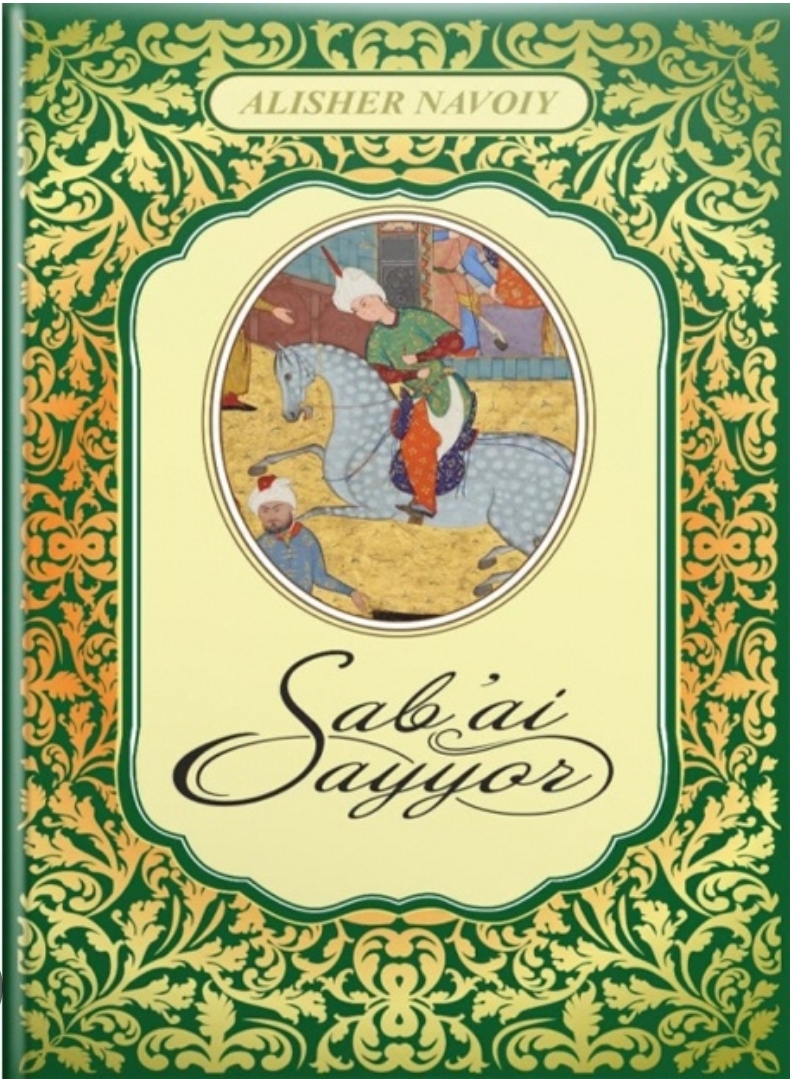
DIDACTIC ANALYSIS OF THE STORIES IN ALISHER NAVOI’S SAB’AI SAYYOR
Introduction
One of the greatest representatives of Uzbek classical literature, Alisher Navoiy, occupies a unique place in the spiritual and cultural life of the Uzbek people. His literary masterpiece, the Khamsa (Quintet), is considered one of the most valuable treasures of Eastern literature. Each poem within this cycle possesses not only high artistic merit but also profound educational and moral significance. Sab’ai Sayyor is the fourth poem of the Khamsa, in which the adventures of Bahram and Dilorom are used to explore themes such as human morality, spiritual perfection, justice, love, knowledge, loyalty, and ethical development.
A distinctive feature of the poem is the inclusion of seven stories narrated by seven princesses from different regions of the world. These stories enrich the ideological and artistic content of the work and serve as an important means of expressing Navoi’s didactic views. Through these narratives, the poet presents significant conclusions about human virtues, spiritual values, and social responsibilities. Therefore, the stories in Sab’ai Sayyor can be regarded not only as artistic elements of the poem but also as a unique school of moral and educational instruction.
This article analyzes the didactic essence of the stories in Sab’ai Sayyor, their educational orientation, and their role in cultivating the ideal human being.
Main Body
The Role of the Stories in the Composition of the Poem
Sab’ai Sayyor possesses a complex compositional structure. While the central plot revolves around the life of Bahram and his adventures related to Dilorom, the stories told in the seven pavilions enrich the ideological framework of the poem. Each story conveys a particular moral and philosophical idea and contributes to Bahram’s spiritual growth.
Navoi does not present these stories as isolated events; rather, they function as essential components of the poem’s overall ideological system. Through them, he depicts various challenges encountered in human life, the struggle between good and evil, and the power of love and loyalty. As a result, readers not only enjoy the artistic narrative but also derive valuable moral lessons from it.
The Didactic Interpretation of Justice
One of the most important didactic aspects of the stories is the glorification of justice. Navoi presents justice as the fundamental principle of both governance and human relationships. In the stories, virtuous and just individuals ultimately achieve success and happiness, while those who choose oppression, deceit, or betrayal face punishment.
Through these examples, the poet emphasizes that justice is an essential requirement of life. The destinies of the characters demonstrate that people should remain faithful to truth and fairness under all circumstances. This significantly enhances the educational value of the stories.
The Moral Significance of Love and Loyalty
Love is a central theme in many of the stories found in Sab’ai Sayyor. However, Navoi does not portray love merely as an emotional experience. Instead, he presents it as a force that purifies the human soul and guides individuals toward spiritual perfection.
The lovers in these stories undergo numerous trials and hardships. Their patience, devotion, and perseverance serve as exemplary models for readers. Overcoming obstacles in the path of love reveals inner strength and moral maturity. Through these narratives, Navoi demonstrates that true love is based on loyalty, patience, and self-sacrifice.
From a didactic perspective, these stories encourage young readers to remain faithful in relationships, to act sincerely, and to pursue their goals with determination.
The Glorification of Knowledge and Wisdom
The promotion of knowledge and enlightenment is one of the fundamental principles of Navoi’s literary and philosophical outlook. In the stories of Sab’ai Sayyor, intelligence and wisdom are portrayed as humanity’s greatest treasures. The success of many characters is directly connected to their knowledge, insight, and sound judgment.
Navoi condemns ignorance as a major obstacle to human progress. Characters who rely on reason and wisdom successfully overcome difficult situations, whereas those who act impulsively often encounter regret and failure.
This aspect enhances the didactic value of the stories and encourages readers to seek education, develop critical thinking skills, and approach life’s challenges rationally.
Moral Perfection and Human Education
The primary objective of the stories is the cultivation of the ideal human being. According to Navoi, a perfect person should not only be knowledgeable but also morally pure, just, generous, and compassionate. Throughout the stories, positive virtues and negative traits are contrasted with one another.
Generosity is opposed to greed, loyalty to betrayal, and honesty to falsehood. Ultimately, goodness triumphs over evil, allowing readers to distinguish clearly between desirable and undesirable forms of behavior.
Through these narratives, Navoi emphasizes the importance of self-discipline, striving for noble goals, and placing the interests of society above personal gain. These ideas remain relevant in contemporary society.
Symbolism and Its Didactic Function
The stories in Sab’ai Sayyor are rich in symbolic and allegorical imagery. Navoi frequently employs symbolic representation rather than direct expression, encouraging readers to engage in deeper reflection and interpretation. Symbolism enhances not only the artistic quality of the narratives but also their educational impact.
Motifs such as journeys, roads, trials, lovers, and beloveds symbolize humanity’s quest for spiritual growth and self-realization. These symbols deepen the philosophical meaning of the stories and strengthen their didactic message.
Conclusion
In conclusion, the stories contained in Sab’ai Sayyor embody Alisher Navoi’s profound didactic and philosophical ideas. Through these narratives, universal values such as justice, knowledge, love, loyalty, generosity, and moral perfection are promoted. The stories not only enrich the plot of the poem but also contribute significantly to the moral and spiritual education of readers.
Navoi employs storytelling as a powerful tool for shaping human character and presenting his ideal of the perfect individual. Each story conveys a distinct ethical lesson, guiding readers toward virtue, purity, and enlightenment. Therefore, the stories of Sab’ai Sayyor remain an important source of moral and spiritual wisdom not only for their own era but also for modern society. Their didactic significance makes them valuable resources for educating younger generations in the spirit of both national and universal values.
About the Author
Ahmedova Zamira Shokirjon qizi was born on July 12, 1991, in Varzik village, Chust district, Namangan region, Uzbekistan. She completed her secondary education at School No. 58 in her native village and later graduated from the Faculty of Philology at the Tashkent State Pedagogical Institute. Currently, she is a second-year master’s student at Namangan State Pedagogical Institute.
From an early age, Zamira demonstrated a strong interest in language and literature. Her stories and literary works on various topics have been regularly published in district and national media outlets, reflecting her creative talent and dedication to literature. Through her academic and creative activities, she continues to contribute to the promotion of literary and cultural values.
Zamira’s primary goal is to become a highly qualified specialist in the field of philology and to share her knowledge and experience with the younger generation, inspiring them to appreciate language, literature, and lifelong learning.
Waray Literature and Kimball’s Critique of Contradictions in Eagleton’s Work
I
It was a sunny afternoon on May 6, 2026, when I made my way to the Leyte Samar Heritage Center at the University of the Philippines Tacloban. The Heritage Center is a two-story structure with smooth, bright white walls that stand out vividly against the blue sky. Its roof is covered in reddish-pink tiles or corrugated sheeting, and the main entrance features a striking gabled canopy supported by two light-colored pillars. Tall, arched windows with dark frames and louvered or grid-style panes run along the front and side walls, allowing light to filter in. Inside the building, I found Writing Literary History: Mode of Economic Production and Twentieth Century Waray Poetry by Jose Duke Bagulaya, in which he analyzes Waray literature using Terry Eagleton’s ideas.
II
According to Roger Kimball, Marxist academics such as Eagleton embody a paradox. They preach revolution and the destruction of capitalism while holding secure, privileged positions within Western universities. Even as Communist regimes collapsed worldwide, exposing Marxism’s practical and predictive failures, these scholars remained unaffected, retreating into obscure theories, jargon, and radical movements like deconstruction to maintain their stance. This shift turned humanities departments into spaces of intellectual conformity hostile to Western traditions.
Eagleton, a leading British Marxist critic at Oxford, blends influences from socialist thought, practical criticism, and Catholicism, though his work grew increasingly abstract and political over time. Moving from literary analysis to “critical theory,” he began treating literature merely as a reflection of ideology rather than studying it for its own merit. At the core of his work is the Marxist idea that economic structures determine culture – an idea he softens with complex terminology but never abandons.
Eagleton uses the term ideology flexibly. Defined neutrally as how beliefs connect to power yet always deployed negatively to describe ruling-class manipulation. He claims Marxism alone stands outside ideology to offer objective truth, allowing him to interpret all art and literature, from “The Waste Land” to works by George Eliot or Henry James, as symptoms of bourgeois crisis or false consciousness, denying individual genius or intrinsic value.
Ultimately, Eagleton views art and literature only as tools for social change, rejecting the liberal idea that art enriches human understanding or possesses its own validity. His major work The Ideology of the Aesthetic frames aesthetics through this political lens, surveying the history of ideas to argue that concepts of beauty and taste are rooted in power structures. For Kimball, Eagleton represents a critic who cares little for literature itself, using it instead to advance a rigid, utopian political vision detached from reality.
Eagleton’s The Ideology of the Aesthetic surveys major thinkers from Baumgarten to postmodernism but offers predictable coverage and flawed analysis. Though extensively researched, it fails as an introduction to aesthetic theory because Eagleton consistently interprets philosophy through a rigid Marxist lens, distorting ideas (such as Baumgarten’s focus on sensory knowledge or Schopenhauer’s metaphysical pessimism) into narratives of class conflict and oppression. His writing often becomes obscure and forced, as seen in highly abstract, psychologized readings of figures like Kant.
Central to his argument is the claim that the aesthetic is inherently contradictory: it promises freedom yet functions as a tool of ruling-class ideology, as coercive as law though experienced as voluntary. The critique rejects this framework, noting that Eagleton defines “contradictions” only against his own political model, not objective reality. Kimball concluded that the book is judged confused and unilluminating regarding art, serving primarily as an illustration of ideological reasoning rather than rigorous analysis.
Short Biography
Fhen M. was an academic writer at Cebu-Seoul Software International from 2010 to 2011, penning numerous essays, including a literary critique of Voltaire’s Candide. Notably, the novel features a pivotal encounter between its protagonist and a creole character with a maimed slave from a Suriname sugarcane mill. As a philosopher, Voltaire was a vocal critic of slavery in his writings.
J.J. Campbell (1976 – ?) is old enough to know better. the 3 time Best of the Net nominee and 2 time Pushcart Prize nominee has been widely published over the years. Most recently at Yellow Mama, The Beatnik Cowboy, The Rye Whiskey Review, Night Owl Narrative and Disturb the Universe Magazine. His most recent book, to live your dreams, published by Whiskey City Press, is available to purchase on Amazon.com by going here: https://a.co/d/08MEaejk