
MORPHOLOGICAL FORMATION OF NOUNS IN UZBEKI, RUSSIAN AND KORAKALPAK LANGUAGES


              Abstract.  This article examined the morphological way horses in Uzbek, Russian and Karakalpak languages are made, their comparison, similarities and differences.
            Keywords: Noun, object, affix, thing, weapon, measure, object, work-action, verb, ravish, pronoun, number, imitation words.

In Uzbek, Russian and Karakalpak languages, the noun means an object. In all 3 languages, the meaning of the noun is different, it refers to living objects (dog-собака-iyt, cat-кошка-pishiq) (child-ребёнок-bala, bird-птица-qus), things, objects and events. (milk-молоко-sut), (rain-дожд-jawin), (notebook-тетрадь-da'pter, kitab-книга-kitap), (majlis-собрание-jiynalıs).
In the current Uzbek language, the noun group makes up the number of words in the tugat. Because the noun word group is a group that gets rich quickly due to new words compared to other word groups. In the Uzbek language, nouns are formed by morphological, syntactic and abbreviation methods.  Below we will look at the morphological formation of nouns in the Uzbek, Russian and Karakalpak languages, as well as their similarities and differences.

In the Uzbek language, according to the morphological method, a new noun is formed by adding special noun-forming affixes to the base of the word. Noun-forming affixes are made from independent word groups such as noun, adjective, number, pronoun, verb, adverb, as well as modal and imitative word bases. Morphologically, noun-forming affixes semantically form nouns of the following group:
1. Affixes forming personal and professional nouns.
2. Affixes forming nouns of things, weapons, units of measurement.
3. Affixes forming place-time nouns.
4. Affixes forming abstract nouns.

Affixes forming personal and professional nouns are mainly added to the root of the noun to form personal nouns related to the object understood from the root and professional nouns engaged in a certain field and profession.  These affixes include: -chi: o’qituvchi, -dosh: kursdosh, -gar,-kor: zargar, -bon,-boz: bogʻbon, -paz: oshpaz, -kash: suratkash, -dor: chorvador, -shunos: tilshunos, -soz: soatsoz, -xon: kitobxon, -doʻz: etikdoʻz, -xoʻr: choyxoʻr. Among the personal and professional affixes, the affix -chi is one of the most frequently used affixes.

Affixes forming the nouns of a thing, a weapon, a unit of measurement, are mainly added to the base of the verb, which is the result of the action and situation understood from the base, or the thing that is used to perform the action, forms the noun of the weapon . These affixes include: -k, -ak, -q, -oq: kurak, teshik, soʻroq, -gich: suzgich, -gi: supurgi, -m: toʻplam, -ma: qiyma, -don: qalamdon, -indi: yuvindi,  -qin: toshqin,  -in: yigʻin,  -a: jizza,  -os: chuvvos,  -moq: quymoq, -cha: olacha,  -chiq: yopinchiq, -ildoq: shaqildoq,  -noma: taklifnoma

  The affixes that make place nouns are mainly added to the noun root and form the nouns of place where there is an object understood from the root. These affixes include: -zor: olmazor, -loq: qumloq, -iston; Oʻzbekiston, -goh: oromgoh, -xona: choyxona.
Abstract noun-forming affixes noun, adjective, number, pronoun, verb, adverb are sometimes added to modal word bases to form a noun with an abstract meaning related to the concept represented by the base. These include affixes such as -liq(-lik): goʻzallik, -ch(-inch): sevinch, -chilik: paxtachilik, -gilik: koʻrgilik.

In Russian, it is more possible to create new words by morphological method, because in Russian, in addition to suffixes, new words are created with prefixes or with the simultaneous use of prefixes and suffixes. For example: -ник: колхозник, -ак: рыбак, при-ход, за-пись, вы-крой-ка, под-готов-ка, etc.
The Russian language is very rich in suffixes. Even the same meaning is expressed by different suffixes. For example: -тель: писатель,  -щик: стекольщик, -чик: лётчик, -ник: колхозник,  -ист: тракторист,  -ец: борец, -ак(-як): рыбак suffixes form the noun of a person engaged in a profession.

In the Russian language, it is possible to express unrelated meanings with the help of one suffix . For example: with the suffix - -ниц, nouns are formed as follows: a) a noun denoting a woman with a profession: колхоз-ниц-а, b) names of dishes: -сахар-ниц-а c) names of special buildings used by the public: бол-ниц-а, гости-ниц-а, d) sick names: such as -груд-ниц-а.
In the Russian language, when new words are formed with some suffixes, some phonetic changes occur in the word structure that are characteristic of Russian grammar. For example: друг-дружба, партия-партиец. In the Uzbek and Karakalpak languages, such phenomena are very rare: son-sana - san-sana, ulugʻ-ulgʻay, isi-issiq, - isi-issiqlash, etc.

In Russian, the formation of new words with suffixes depends on the grammatical stem category. Therefore, when expressing the same meaning, suffixes are added depending on the grammatical stem of the word. For example: мужской род: колхоз-ник, учи-тель; женский род: колхоз-ниц-а, учи-тель-ниц-а etc.
There is no rod category in Uzbek and Karakalpak languages. If it is necessary to emphasize that the owner of the profession is a woman, the syntactic method is used, that is, one of the words girl, wife, woman is added to the personal word and it is written like this. For example: traktorchi qiz – трактористка – traktorshı qiz, kolxozchi xotin – колхозница – kolxozshı hayal.

In Russian, the relationship of a person to his place of birth and residence is expressed by suffixes such as -ец, -анец, -янец,  -як, -ин, -ич, -анин, -янин, -чанин. For example: Испания- испанец, Грузия- грузин, север- северянин, etc. In the Uzbek language, instead of these affixes, the suffix -lik is used, and in the Karakalpak language, the affix -liq is used. For example: Amerika- Amerikalik – Amerikaliq, Ispaniya – Ispaniyalik – Ispaniyaliq.
  In the Karakalpak language, as in other Turkic languages, one of the main methods of creating new words is the morphological method. In the Karakalpak language, noun-forming affixes are semantically divided into 3 different types:

1. Affixes forming personal and professional nouns.
2. Affixes forming nouns of things, weapons, units of measurement.
3. Affixes forming place-time nouns.
The affixes forming personal and professional nouns are -shı, -shi, which are added to the base of the noun and denote an object or a person engaged in some work: balıqshı, suwshı, etikshi, etc.
Added to a noun, it refers to a subject, a job or a person who works in social organizations: Leninshi, kolxozshı, bozshı, etc.
Added to the noun base, it means a person with a certain character: sedentary, stubborn, etc.

It is add oʻtirikshi, urlıqshı ad to the words that express the meaning of action or are related to the action by content, and is applied to the person who performs the action or performs this task: oqıtıwshı, boyawshı, terimshi, etc.
The affixes -ker, -ger, -kesh are very close in meaning to the meanings of the affixes -shı, -shi. Nouns formed with these affixes are also used to refer to a person performing a specific profession: zerger, pidaker, xizmetker, etc.

The suffix -man, -ban means a person who keeps or takes care of the object represented by the noun root: bagʻman, daʻrwazaman, etc.
The suffix -paz means a person who deals a lot with the object represented by the noun root or creates this object: aspaz, oyınpaz, etc.
The meanings of the affixes -das, -des, -las, -les are the same. That is, in all of these, it means partnership: joldas, kewilles, etc.
-purysh affix indicates a person engaged in the sale of an object understood through the root of a noun: shaypurısh, otınpurısh, etc.
The affixes -lik, -lik, -laq are also added to a number of nouns, indicating that the subject is abundant in this place: tawlik, togaylik, etc.

  In short, the most productive of the methods of forming nouns in Uzbek, Russian and Karakalpak languages is the morphological method. Morphological formation of nouns is different in all 3 languages. Morphologically, in Uzbek, noun-forming affixes are semantically divided into 4 different types, in Karakalpak language into 3 different types. When forming a noun, suffixes and prefixes also form a noun in Russian. It is even possible to combine suffixes and prefixes to form words in Russian.

The Russian language is very rich in suffixes. Even the same suffix can have different meanings. There is no rod category in Uzbek and Karakalpak languages. In the Russian language, the formation of new words with suffixes depends on the root category. In Uzbek, -lik and -liq affixes in Karakalpak indicate a person's relationship to the place of birth and residence, while in Russian there are several - -ец, -анец, -янец,  -як, -ин, -ич, -анин, -янин, -чанин suffixes are reported. The meanings of noun-forming affixes in the Karakalpak and Russian languages are shown in full. In the Uzbek language, it is understood only with the help of examples. This, of course, can cause some inconveniences, and in turn, it can cause certain difficulties not only for representatives of other nationalities, but also for ourselves in the comparative study of the language.


REFERENCES:
1. Azizov O. and others Comparative grammar of Uzbek and Russian languages Tashkent: "Teacher" publishing house, 1965.
2. Hamroyev M and others. Mother tongue . ‒ Tashkent: "Economy-Finance" publishing house. 2007.
3. Nasirov D. and others. Modern Karakalpak language Nokis: "Qarakalpakstan" publishing house. 1981.


Nukus State Pedagogical Institute

First level student of Uzbek language
foreign language groups
Faculty of Turkish Languages
USANOVA QADEMAY MURATBAY QIZI
Phone: +99891 305 69 79
Email: qademayusanova@gmail.com
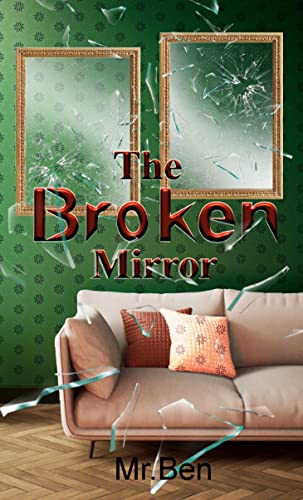
Chimezie Ihekuna (Mr. Ben)’s short dramatic novella The Broken Mirror explores the intergenerational loss of self that can result from abuse and broken family relationships. The conflict between two Nigerian immigrant twin sisters, Shade and Joke, involves Shakespearean twists and devices as characters destroy those who were once closest to them.
While each person is responsible for their own actions, the choices they have are impacted by those of the others around them. The book kicks off with a vicious argument between husband and wife Bode and Cynthia that results in Bode beating Cynthia badly enough to send her to the hospital and her filing for divorce. Soon, though, we see that Bode himself was a victim, unemployed due to a conspiracy of dishonest coworkers.
Rather than excusing characters’ actions by implying they are the result of impersonal societal forces, this book gives even greater importance to the need for each character to act as ethically as possible, because their actions have the potential to impact even those beyond their immediate circle.
The short length of this book means that the settings – homes, hospitals, and workplaces in California over the past several decades – and the physical action are described quickly. This leaves some things up to the imagination and gives the book the feel of a stage play.
Overall, Chimezie Ihekuna’s The Broken Mirror builds high suspense as we watch the drama unfold towards its tragic conclusion. It’s readable in one sitting and also suggests through the title and the literary device of identical twin characters that when we choose to harm others, we destroy not only the others, but parts of and reflections of ourselves.
Chimezie Ihekuna/Mr. Ben’s novella The Broken Mirror can be ordered here.

Ecological culture is the foundation of the future
Nature is sacred meat for all living beings on earth. Nature feeds them, clothes them, protects them from heat and cold. In turn, a living being also loves nature. This love can be considered real only if it can be combined with the feeling of protecting nature and increasing its resources. In the recent past, we pretended that we love nature, but we forgot that we are responsible for its preservation. This irresponsibility has created a new science known as “Ecology”. The word “Ecology” is derived from the words “eko” – home, dwelling, “logos” – science, and it is the development of measures to prevent environmental destruction and the factors that cause it. explores the basics of exit knowledge promotion.
It is the need of the hour for a mature person of the new century to be able to show the elements of ecological culture. Ecological culture is an in-depth knowledge of the environment, a sense of protecting nature, caring for plants and animals, rational use of natural resources, and their reproduction. is a high indicator of practical activity aimed at grieving.
A person who can reflect these qualities can be called the owner of ecological culture.
Do not allow excess water from consumption to flow from taps, do not pollute water bodies, do not throw garbage around.
Keeping places tidy, not breaking seedlings and flowers and planting them, taking care of animals, taking care of birds, turning houses and alleys into flower beds are the simplest manifestations of ecological culture.
In the current period, there is an imbalance between man and nature, scientific and technical development and the environment, society and ecology. All this puts the question of further improvement of ecological culture.
It is known that everything in nature is harmonious. And the person who is making good use of scientific and technical achievements is breaking this harmony, treating him cruelly. Improper use of natural resources: water, land has changed the ecology. Improper planning of agricultural crops, excessive use of chemical fertilizers have a negative impact on soil fertility and human health. Toxic effluents from factories pollute water bodies, primarily causing harm to animal and plant life. The smoke and gas coming out of vehicles spoils the air quality. All this requires ecological culture from a person.
Everyone can enjoy nature. But this does not mean love for nature. Love for nature begins with understanding it, understanding its beauties, and entering into a relationship with nature.
On the other hand, nature nurtures feelings such as observation, sensitivity, and tenderness in a person. This is manifested in a person in two ways: in relation to nature and to himself.
Zahiriddin Muhammad Babur described what he saw and experienced, the nature, wealth, animals, plants and people of the places he visited, and the customs of the peoples. It has many ideas related to earth, water, air, various natural phenomena. Babur respected and valued people who knew the country and always consulted with them. In particular, he paid attention to the breeding of flowers, decorative and fruit trees.
We leave to future generations our spiritual and material wealth, the nature that existed before us and our attitude towards it, that is, our ecological culture. Ecological culture means not only not to harm nature, but also to contribute to its restoration, beautification, and prosperity, and to fight fiercely against those who plunder the environment.
Mamatkasimova Sitora Bakhtiyar’s daughter was born on May 8, 2000 in Mirzaabad district of Sirdarya region. One of the active students of Gulistan State University. His creative works are published in the anthology “Parvoz”, on the international site synchchaos@gmail.com, in the republican magazine ” Creators”, in the international magazine “Raven Cage” of the German state, in the international newspaper “Page 3 news” published in America, Thailand, India, Canada, Australia. , published in the international anthology “Charming pearls of Uzbek amateur poets and writers” of the state of Moldova. Currently, he works as a propagandist and teacher in the 34th school of Boyovut district on creative and cultural issues.
The land watered with blood

My mother tells the stories of the Sphinx and the stories of the pharaohs. - Thus, Pharaoh, who claims to be a god to his people, ordered the Muslim maid to be thrown alive into a huge boiling cauldron. My mother has a bad habit. If I don't wash the dishes on time during the day, if I don't pretend to make the house as clean as sheet she stops at the most interesting part of the story telling time and punish us without continuing.

Maybe because of the war period, in the countryside where we live, there were no people who considered themselves rich. The thatched walls, which were leaning on the ground, were ready to give their bosom to the soil, using the lying wind as an excuse. The last crops of the villagers, who were waiting for the harvest, were robbed, and the whole nation was left without wheat.

I still cannot forget those years. My mother's shoelaces were worn out. She didn't wear it regularly, she only used it to walk along the thorny, thick sand road to visit my grandmother's grave. Kindhearted mother baked bread from a light bag of wheat that she kept in the barn, and took it out sometimes to aunt Salima's house, and sometimes to old woman Khosiyat's house.

One day, a young man, who is either familiar or unfamiliar to my mother, and a complete stranger to me, begged my mother to give him slippers for his mother, whose foot was swollen with pus. On the one hand, my mother's right hand, who was feeling pity, was handing out shoes, and on the other hand, her left hand was trying to return the gift, saying, "If you walk barefoot on that thorny path, your feet will be no different from hers"...

The land that was watered with the blood that leaked from my mother's blessed steps, and where the cypress sprouted, today has been turned into a royal garden with marble stones. There is a race of people who can't be indifferent to the golden counter. It says: "This road is dedicated to the memory of a generous woman named Noila.
+


Life bond anneal
Reminders of Breath

           Let  eyes  awaken !

And  I drop to feed the Stars

      I  Know
          with  Heart Beats
                Rhythms   on  Song
No mission is Left unattended
                       as  Spirit  rises

        Like  no  time  Before
              Dreams meant nothing
                        until now
        My forgotten Sight
                 Knows  no  Bounds
Falling Backwards to the unseen
                              Yet expected
                      Blissed  Out !
         willing  to  stop

    drawn through shielded flames
       toward Stars in a quiet night
                      and   Home   again .

Lets be       As the greatness melts
moist in the life of new Beginning

                                                                ...


     by  John Edward Culp
        January 20, 2020
after the smoke cleared

outside my window
somebody in a car
is blasting the clash
& a pack of motorcycles
is revving in unison
& a woman is feeding
her dog an ice cream cone
right below in the square
& the blue night is coming
on ever so gently
& all the voices floating up
to the second story
are telling me all is well

————————-

sometimes i remember springtime like this

mother pulling marigolds
from crinkly plastic trays
digging holes for roots
no gardening gloves
just earth-stained hands
father sinking wooden
stakes in turned over soil
for waiting tomato plants
beagle loose running
back & forth along chainlink
yapping w/ neighbor’s dog
soft spears of green grass
welcoming bare soles
grandmother visiting from city
sitting in lounge chair
beneath maples full of sap
humming to old music
on radio
no hands swinging
no hammers shattering
no tongues spitting
no leashes choking
no knees pleading
no limbs snapping
no points jabbing
no feet stomping
etc…
just hearts like bright
bouquets of grace

——————————-

prayer for the unborn

stay in the trumpets of the daffodil

stay in the tears of the wisteria

stay in the grit of the anthill

stay in the spots of the monarch

stay in the posture of the frog

stay in the network of the oak leaf

stay in the wind thru the wheat

stay in the flatness of the shadow

stay in the nerves of the sand flea

wherever you might be just hold, stay


———————————————

tonight

w/ each poem
i take the risk
of reaching
my hand out
in the dark

& placing
a flower
behind
the ears
of each
of my
monsters

i think
i see teeth
flash

their mouths
open
but
only to
sweetly hum

this time