Murderous love

There is no more in the cold walls of the past.
And who is to blame - the former.
Once, long ago, I asked -
Is the cold in the heart really warmer?

Is it easier without a heart?
Who is to blame for not being together?
Is love really an art?
What's the point of sticking together?


And only traces of tears in the eyes.
She is yours murderous love
This is not eternal power - it is a lie
This is your murderous love.


The cold walls of the past are gone.
Has the game of love ended prematurely?
The question is why there was this chase
For the passion that left us prematurely?

The cold walls of the past no longer exist.
And each, of us on different sides.
We have become different, each of us, an egoist -
The former are now brides.
Category Archives: CHAOS
Essay from Z.I. Mahmud
Do you think the comic scenes in Doctor Faustus are a deliberate diversion or do they have any substantial significance? Discuss.
Over-solitariness and over eating of Faustus’s tragic ending in horrible doom points towards the gross humour by the brethren of scholars leaving the former to his lifeless melancholia.
Marlowe’s pungent satirical irony is staged by turning the papal court and ridiculing Pope as a mere name. He devalues sovereignty and political activity diminishing the Vicar of Christ from the Emperor to the Duke and eventually descending to private life. It is undoubtedly
comical farce when Pope should be boxed in the ear and exclaim in sinisterish threats of damnation in the papal court palace, “Dam’d be this soul forever for this deed.
Wagner’s conjuring to invoke steward Robin who would not surrender his soul for the paltry prize of a shoulder of mutton unless it was well roasted and flavored by good sauce parallels Faustus’ conjuration of Mephistophilis in servitude of a servant. Wagner chants magical spells to transform Robin into a dog, a cat, or a mouse or rat or anything splendours of clownish comic relief.
Faustus’ casting role of a minor court entertainer or conjurer in the Emperor of Germany allegorises satire of anti papal activities to further extent of Elizabethan Renaissance Miracle and Morality conventions. In the setting of Charles V aspiration to see that famous conqueror Alexander the Great and his Paramour and the Duke of Vaholt’s Duchess’ longing for out of season grapes manifests pageantry. Faustus’ ambivalence with trifling brood of enemies
whether the clowns of Vanholt or Carter the horse courser and the hostess; disbelieving knights of the emperor. Faustus’ life is enmeshed in the trivialities and sunken beneath the
level of the clown and the horse courser.
Lastly Faustus ‘ restoration of dignity and brilliance from being a sadly tarnished magician is the happening of the last act.
“Marlowe brings in all the elements of morality play machinery; but without any of the consolation of morality vision.” Do you agree with the statement? Give reasons for your argument.
Or
Discuss Doctor Faustus as a text which embodies the contradictions of his age.
Elizabethan and Jacobean Marlowe becomes a morning star of the 1890s a harder and more gem-like Oscar Wilde because of his establishment as a religious free thinker and rebel toward
social conventions.
“Leave these frivolous demands that strike terror to my fainting soul” Mephistopheles the agent of the Devil’s disenfranchisement of evil magic and witchcraft necromancy invokes Faustus with indiscriminate self-expression. “Learn thou of Faustus manly fortitude” To posses or to strive for Helen was the loftiest bliss of chivalry and heroism.
Faustus’s sweet embracing of Helen might work wonder to alleviate his tormenting suffering that do dissuade him from his vow to Lucifer by that Peerless Dame of Greece and classical paragon of beauty. “Was this the face that launched a thousand ships, Burnt the topless towers of Ilium? Sweet Helen, make me immortal with a kiss…Thou art fairer than the evening…hapless semele…shalt be my paramour.” Faustus is a strawman or a scapegoat for Marlowe’s demoniac longings and in this sense his character has traits of Machiavellian spirits or in other words subversion through transgression.
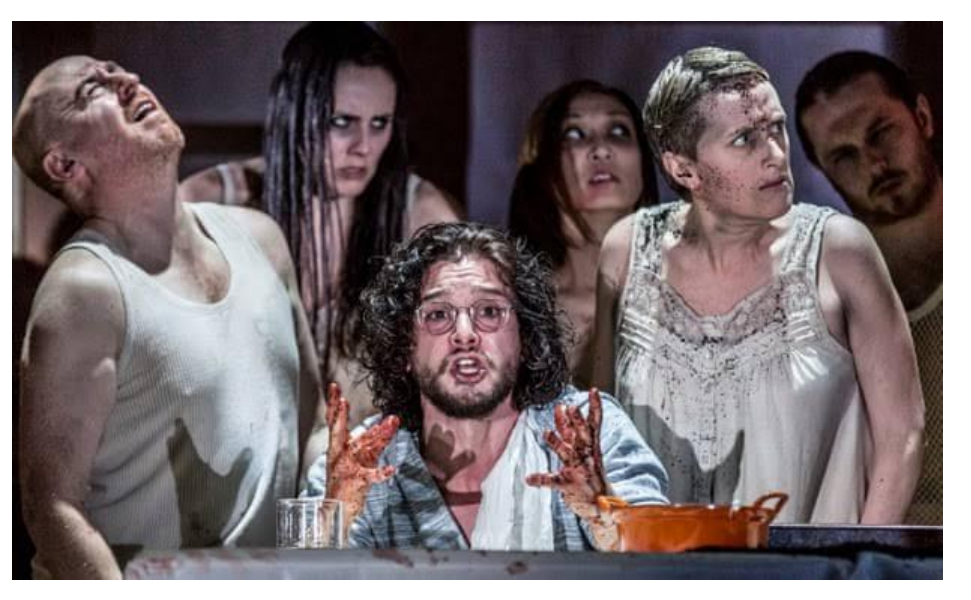
Give a comparative analysis of between Faustus’ first soliloquy and his last soliloquy and trace his journey from competence to confidence to damnation. Trace the development of
Faustus from a position of heroic grandeur to damnation.
Faustus as a Witenbergs’ flowering pride changes from Doctor of Divinity to a necromancer pestered by the swarm of infernal bees. He achieves pleasure upon the subjugation of all other beings for his personal gratification. Obsessive preoccupation of power for monarchising enforce his singing of the pact in allegiance with the Lucifer. Humour of monarchising through power over the forces of nature-winds, storms, air amd water, power over national
and international destinies (The Emperor shall not live but by my leave), power over store houses (I’ll have them fly to India for gold/Ransack the ocean for orient pearl); dispositions of
the continental land-masses and movements of the celestial bodies.
Vainglorious ostentations intrigues Faustus to pursue the devilish exercise by aspiring to be the shadow of Agrippa, whose shadows made all Europe honour him. If we consider this of Marlowe’s rhetorical poetic, we are reminded of the quickened impulse, evaluation of a diseased mind or enactment of a kindling or soaring imagination, of a man awestruck before a new universe of meaning
and potentiality: “O, what a world of profit and delight// Of honour, of power, of omnipotence, Is promised to the studious artisan? All things that move between the quiet poles/ Shall be at my command:”
Faustus renounces medicine and surgery to cure thousand maladies and be eternalized. Even laws to him are expounded to be paltry and petty. Faustus stoops in the divinity of knowledge for the sake of witchcraft: “These metaphysics of magicians/ And necromantic books are heavenly;/Lines, circles, letters and characters: Ay, these are those that Faustus most desires”/ Faustus is thus changed as a damnable Promethean hero of the Enlightenment. “A sound magician is a mighty God” : The deity of Doctor Faustus is not the God of Love, the Good Shepherd, but either the avenging Jehovah of the Old Testament, or his Christian offshoot, the Calvinist tyrant of mass reprobation.

“Ay, you accursed spirit, go to ugly hell” Faustus waves farewell to Mephistophilis abhorred by the repellent face of the latter in the demonic world. The fiend’s abrupt departure and his
subsequent return with Lucifer and Beelzebub at precisely the moment when Faustus calls upon Christ is, as James Smith points out an apt representation of the emotional upheaval
which the very asking of the question provokes in Faustus’s consciousness. The vain trifles of man’s souls and merely old wife’s fables of afterlife springs in the doubt of the reality of
Heaven and Hell.
Faustus as a sound magician and humanist aspirant of power fantasies travel the papal court, kingdom and dukedom to “search all corners of the new-found world” in pursuit of “pleasant
fruits and princely delicacies.” Helen, the resuscitated body of classical antique learning extinguishes clean those thoughts that dissuades Faustus from his vow to Lucifer. This hedonism and epicurean self-indulgence allegorises the Faustus cardinal sins of lechery in satire.
This damnable nature of Faustus’ ambition can be justified in the language of the critic Helen Gardner, “The great reversal from the first scene of Doctor Faustus to the last scene can be defined in many different ways. From presumption to despair, from doubt into the existence of hell to belief in the reality of nothing else. From aspiration and deity, and omnipotence to longing for extinction. At the beginning Faustus rises above his humanity but at the closing he sinks below it to be transformed into the beast or little water drops. At the beginning Faustus attempts usurpation upon God but at the closing he is an usurper upon the devil.”
Faustus estranged and suppressed humanity have risen to demand the due fruits of harvest. His hardness of heart and stiffness of mind –Despair in God and trust in Beelzebub/ the escapist frivolities of pageant of sins becomes dwindled by the cosmic forces. It is the consummation of the Puritan imagination as J. B. Steane points out “lurking sense of damnations precedes the invocation of hell”. The apotheosis of Helen is supposed firmly to be placed as a narcotic which extinguish clear his thoughts that do dissuade Faustus from his vow, nevertheless overflows the moral banks Marlowe is constructing:
“O thou art fairer than the evening’s air/
Clad in the beauty of a thousand stars,/
Brighter art thou than the flaming Jupiter/
When he appear’d for the hapless Semele;/
More lovely than the monarch of the sky/
In wanton Arethusa’s azur’d arms,/
And none but thou shalt be my paramour.”/
These flames of passion so fiercely flare up is transfigures even so moral epithet as wanton. The conflict is sharp in this scene, for these lines are immediately succeeded by the Old Man:
/“Accursed Faustus, miserable man,/ That from thy soul exclud’st the grace of heaven/ And flies the throne of his tribunal seat/

Story from Mokhinur Abduhalilova

BENEFIT OF THE BOOK
A 15-year-old boy named Omadbek lived in the outskirts of the village, in an ordinary family, in a house with walls divided from the bottom.
Jamshid is from a rich family which gives all comforts for him. However, he was not a boy who is interested in studying at all, he may be seen sometimes at school, much time was absent. He is really keen on playing the phone all time. He has even his own personal smartphone. Omadbek is one of the children who are disabled. He didn’t have both hands. He lives alone with his mother in a small house in hard days Omadbek’s dad died when he was too young. He cannot remember that person. One day he came up with something that no one had thought of before. He searched and tried all the day and night to realize this idea. while his friend, Jamshid was addicted to the phone every day. Finally plan came to the light. He created special prosthetic hands for himself. Now Omadbek can write with his hands and do his work with his hands himself. Before, he used to do the work with his feet, not with arms.
When his mother saw this situation, she was really delighted and happy, moreover, she couldn’t stop herself from tears of love. Today, Omadbek’s dreams came true. He goes to school the first time. Because before he was one of the only students who do not attend to school. When he stepped on the threshold of the school, he felt a kind of excitement inside him. Then the lesson began. Life was full of possibilities while Jamshid was playing his phone in the same class.
After the lesson had finished, Omadbek went to the near of Jamshid’s desk. He said “why are you are playing on the phone?” Jamshid continued to play on the phone and did not pay attention to him. One day, Omadbek participated in the Science Olympiade and won the 1st place, and the latest model phone was as a gift. After knowing about this, Jamshid went to Omadbek and said, “Let me see your phone.” He handed the phone to him saying, “Okay”. “Omadbek, let’s play together your phone”. Omadbek replied that he would give this phone to her mum. Jamshid’s face turned red. He asked how he can achieve such an achievement like his friend. Omadbek replied:
–My friend, it’s easy, let’s prepare and get ready together.
Time has passed. Both Omadbek and Jamshid participated in the Science Olympiade. Jamshid was waiting for the result of the competition. After some time, both of them heard the news that they got the 1st place, they achieved this success together. Jamshid stopped playing the phone and started reading diverse books. Jamshid thanked Omadbek for bringing him back from this path.
Now the two friends are among the best students in the school. The benefit of the story is that the book is always good. Let there be more people like Omadbek among us.
Poetry from Anshi Purohit
On the Dilating Pupils of Heroes

I know your titles are passive and distanced from your being,
but I am awake and observe while the rumor spreads

The rumor begins: they cannot sleep at night,
their pupils dilating as they toss and turn,
sheets pulled over contorting bodies
too similar to bloated dead men floating down thick rivers,
history hates them more than death despises their lovers

If I look into your eyes,
what will I see, what should I see-
will you be surprised? if I unwind the spools in your pupils,
lay them face up on your office desk like a deck of cards?
No, I will triumph, you do not wear contacts

Even if you did, I would still see the stratus clouds embedded like-
secret crystals reflected through refracted prisms in your smile
The rumor continues: they dream like they are freefalling,
dragging their tender limbs along the clay packed Earth like-
crooked dandelions wresting free of their seeds

The rumor concludes while I collect your thoughts,
in a paper bag and a star sleeps on cold cement steps
in a city that wishes to entomb its light,
 darkened in the shadow of a new becoming,
a new brilliance to step over its place
Of course, you have scarred eyes, nuanced sight

When the light leaks from your irises I search for a tissue but,
someone tells me to grab a canvas instead
Poetry from Damilola Oyedeji
Tiny Rods
After Jumoke Verrisimo

Rain wraps eager souls in a damp embrace,
quells the perturbing mind and shuts weary eyelids close.

Rain calls to the pictures behind shut lids
& wipes them off like cleaning swipes.

Rain whispers loudly salvation songs;
“a mouth must muse melodies of fortune.”

Rain summons me to a realm where my limbs can imitate his-
insistent ardour, like a drummer’s fingers tickling over *gbedu.

Rain calls upon the east and asks the west to sit still,
forces me to repose though any boisterous force.

Whether here and there it pulls, whether piercing into a scream,
rain nudges on my heart a salvation song.

Yea, if I tilt my face to the raptures of splattering rain,
each drop will come to me hastily as tiny wise bulbs.

* A percussion instrument traditionally used in ceremonial Yoruba music in Nigeria.


#Memory is how What is Left Unsaid is Said

we stepped forward but
twice you reclined & we faded
like a passing wave/
like two ends of a scarlet, now-
clothesline apart.

#I remember the way you smiled in my face;
how creamy bulbs of pictures held the day in them,
in you, I saw a me I didn't know &
this was the first evening I knew you were a beautiful…

did you say we shouldn't be strangers? But
 we can never be 'knowers' either/ maybe
our memories are too seeped
in red/ each film vivid still/
even as one, two, three, we count in many…

#I remember the warmth of you beside me,
the scents and sweat after each race with a ruby rubber roll,
I wished I could press my head on your taut back,
this was the first evening I knew you were a pleasant…

I have you hinged on my memory's (ies) hints/
you have written your name with ruby ink/
on the face of time/ like
a tombstone/
here lies the adoration that never was/
should the moon forget to smile/ another show of broken bravado I despise…

#I remember the letter that had your heart,
each word kneaded by the same reason for
a girl to jump at night,
 & a blazing fire that lit throes of passion,
 this was the first evening I knew you were a love…

even this night/ there is no peace that comes with it
you are a dark ink splattered on the sky/ my sky/
you are the sound of grief/ the tune of pain from a fluter’s flute/
you are a vicious remedy; a painful cure to all joy/
this flowing sea can see…

#I remember the times you owned me as a writer owns his thoughts,
you wrote the world to a stop, asked it to bow at your pen,
 tradition is but a worship of the dead,
this was the first evening I knew you were a happy…

you said we shouldn't be strangers/ when time
sojourns against us/ but haven't you said our love
hangs on the sky; a star unreachable &
that your heart is a coin?
I can never be the head nor the tail/ & I will never…

again, the night you broke the mirror-
it was at midnight, the sun was sorely in slumber
the birds- corpses of the night
& the stars cheered in silence
you became my silent song & I became a distant merry rhyme.
this was the first time I knew you were a painful…

a lover isn't buried too soon in the hades of memories/
this heart cannot call you a stranger/ but
when my lips seek to muster the memories of passions had/
you cease from being a friend/ because
my heart may turn into a racing car/ & my belly- a blooming garden/
even if I tried.

 these creamy bulbs must now close
 the warmth must be put off
 the words must be rubbed out
 the songs must embrace stilled lips
 this is the story of you
and I- who are
neither lovers
 nor strangers
 nor friends
 nor foes…
Damilola Oyedeji (Ariella) is an educationist, a creative writer, and an advocate for self-discovery and inclusion. As a poet, she has learned to navigate life through hope’s compass. This is evident in the thematic focus of her works. She is currently a fellow of the SprinNG Writing Fellowship.
Essay from Mukhlisa Safarova
Establishment and importance of the European concert in maintaining balance of power and stability among major European nations.


Key words: Balance of power theory, international relations, European concert, power distribution, stability, conflict prevention, ancient Greece, Peloponnesian War, Europe, alliances, Napoleonic Wars, World War I, Cold War, United States, Soviet Union, Asia-Pacific region, China, Middle East, arms race, power transitions, policymakers, diplomats.


   The thesis of this article is that the balance of power theory has played a significant role in shaping international relations by highlighting the importance of power distribution for stability and conflict prevention. This theory has its roots in ancient Greece, particularly the Peloponnesian War, and has been applied to various regions and historical periods, including Europe during the Napoleonic Wars and World War I, the Cold War between the United States and Soviet Union, and the current dynamics in the Asia-Pacific region, China, and the Middle East. Policymakers and diplomats continue to use this theory to navigate power transitions and prevent arms races that could lead to instability and conflict.


      The balance of power theory  is a concept that has been central to international relations for centuries. It refers to the idea that in order to maintain stability and prevent conflict, power must be distributed equally among states. This theory has been applied throughout history and has had a significant impact on the way countries interact with one another.
     The origins of the balance of power theory can be traced back to ancient Greece, where the city-states of Athens and Sparta engaged in a long and bitter struggle for dominance. The Peloponnesian War, which lasted from 431-404 BCE, demonstrated the importance of balancing power between states in order to prevent one from becoming too dominant.

     In the 17th and 18th centuries, Europe was characterized by a complex system of alliances and rivalries, with each country vying for power and influence. The balance of power theory was used to maintain stability and prevent any one country from becoming too powerful. This led to a series of wars and conflicts, including the Napoleonic Wars  and World War I .
     The European concert was established in the aftermath of the Napoleonic Wars, with the aim of maintaining balance of power among the major European nations. This principle was central to the system, as it sought to prevent any one nation from becoming too dominant and thus destabilizing the region. Regular diplomatic conferences and negotiations were held among the major powers, including Britain, France, Austria, Prussia, and Russia, to resolve conflicts and maintain stability. The Congress of Vienna in 1815 was a notable example of this cooperation, as it aimed to redraw the map of Europe and establish a framework for future cooperation. Despite criticism for being too focused on the interests of major powers and ignoring smaller nations, the European concert has had a lasting impact on international relations and continues to serve as a model for promoting peace and cooperation through diplomatic means.

     The European concert was a system of diplomacy and cooperation among major European powers in the 19th century. It was established in the aftermath of the Napoleonic Wars, which had destabilized Europe and led to the rise of new powers such as Prussia and Russia. The purpose of the concert was to maintain a balance of power among these nations and prevent any one country from dominating the continent.
     The concert was based on the principle of collective security , which meant that the major powers would work together to resolve conflicts and maintain peace. This was achieved through regular meetings and negotiations among the foreign ministers of the participating countries. The concert was not a formal institution, but rather a loose framework for cooperation and consultation.

    One of the key achievements of the European concert was the settlement of major crises such as the Greek War of Independence (1821-1832) and the Belgian Revolution (1830-1831). In both cases, the major powers worked together to find a peaceful solution that satisfied all parties. This helped to prevent wider conflicts and maintain stability in Europe.
     Another important aspect of the concert was its role in preventing wars between major powers. For example, during the Crimean War (1853-1856), the concert worked to contain the conflict and prevent it from spreading beyond the Black Sea region. This helped to avoid a wider war that could have involved other European powers.

      The European concert was also important in shaping the international system of the 19th century. It provided a model for other regions, such as Latin America, where similar systems of cooperation were established. It also influenced the development of international law and institutions, such as the Hague Conventions  and the League of Nations.
     During the Cold War era, the balance of power theory played a crucial role in maintaining stability between the United States and the Soviet Union. The two superpowers engaged in a global struggle for influence and power, but were ultimately prevented from engaging in direct conflict due to the fear of mutually assured destruction.

     The balance of power theory suggests that states will act to prevent any other state from becoming too powerful, and that they will form alliances and engage in other forms of cooperation to achieve this goal. This can lead to a situation where multiple states have roughly equal power, and where no one state is able to dominate the others. This balance of power can be achieved through a variety of means, including military alliances, economic cooperation, and diplomatic negotiations.
    One of the key benefits of the balance of power theory is that it can help to prevent conflicts between states. If no single state is able to dominate the others, then there is less incentive for any one state to engage in aggressive behavior or to seek territorial expansion. Instead, states are more likely to focus on maintaining their own security and prosperity, while also working to maintain the overall stability of the international system.

      However, the balance of power theory is not without its limitations. One of the main criticisms of this approach is that it can lead to a situation where states are constantly jockeying for position and seeking to maintain their own power at the expense of others. This can create a tense and unstable environment, where even small changes in the balance of power can lead to conflict.
     Another criticism of the balance of power theory is that it assumes that all states are rational actors who are primarily motivated by self-interest. In reality, states are often influenced by a wide range of factors, including ideology, culture, and history. This can make it difficult to predict how states will behave in any given situation, and can make it challenging to maintain a stable balance of power over the long term.

    Despite these limitations, the balance of power theory remains an important concept in international relations. By understanding how states interact with one another and how they seek to maintain their own security and prosperity, we can gain a better understanding of the complex dynamics that shape the international system. Whether through military alliances, economic cooperation, or diplomatic negotiations, the balance of power theory provides a framework for understanding how states can work together to achieve common goals and maintain peace and stability in the world.
    Today, the balance of power theory continues to be relevant in international relations. In the Asia-Pacific region , China's rise as a global superpower has led to concerns about the distribution of power in the region. The Middle East  has also been characterized by a complex web of alliances and rivalries, with each country seeking to maintain its own sphere of influence.

     The implications of the balance of power theory for international relations are significant. Maintaining a balance of power can help to prevent conflict and promote stability, but it can also lead to a dangerous arms race and increased tensions between states. Power transitions can also be destabilizing, as rising powers seek to challenge established ones.
    In conclusion, the balance of power theory has been a central concept in international relations for centuries. It has been applied throughout history and continues to be relevant today. While it can help to promote stability and prevent conflict, it also has its limitations and can lead to dangerous arms races and increased tensions between states. As such, policymakers and diplomats must carefully consider the implications of the balance of power theory when making decisions about foreign policy and international relations.


References

1.Kissinger, H. (1994). Diplomacy. Simon and Schuster.

2.Thucydides. (1996). The History of the Peloponnesian War. Penguin Classics.
Safarova Mukhlisa Fakhriddin Kizi, The University of World Economy and Diplomacy, International relations faculty, second course student
Art from Brian Barbeito