
Thank You For The Opportunity

But I’ve re-imagined my purpose in life
and I’m going in another direction,
neither northeast or southwest
but someplace with fewer shadows.
I was rather stunned by the antiseptic
atmosphere, the robotic recitation
of your strategic plan.
I had a sudden vision of being trapped
in the heart of the mundane.
You scared me or I scared myself,
either way, I won’t be accepting your offer.
That tie, with the parrots, was the tip-off.
I’m liberated, if not by my unsettled
situation, by the empty hours before me,
with birdsong. One must strive
for authenticity although that itself,
like a rogue wave,
can be a sly subversion.


Make Me A Rothko

I do love the paint-
    ing, blues and blacks,
    the inconstancy

Separate swathes be-
    fore merging, like the brink
    of a rainstorm

My heart in layers, too,
    revealed by contem-
    plation, slow, measured

The painting changes
    with the light, cool morn-
    ing, sullen evening

I’m attached to the colors,
    they slip into dreams, sub-
    sume my regrets

Sky of wind, like rough skin
   raked across, I, too, be-
   long to nothing else


The Pallid Observation of the Duo

Old people in lawn chairs
Blue-eyed infants eating peaches in the shade
The end of summer, the past become
Loose morals and abandoned rosaries
All the bits in their own cubicles
   their own atmospheres, time
   as a dizzy mistake
   before the celebration, minus the noise

Gasping in the side yard
The slurp as a distillation of sound
Winter broken in two, the future
Sins, mortal and venial plus repentance
To each a place in the sun, no
   walls, circulated air released, echoes
   of several weeks in chaos,
   anticipation, that holy moment
Category Archives: CHAOS
Poetry from Mesfakus Salahin
Brain In Love

If I call the blood of the cloud rain
 What to say to the cloud of blood?
 A cloud of blood
Like blood in the clouds
 If I call the tingling of the brain love
 What can I say to the brain of love?
 Love in the brain
 Like the brain in love.
Poetry from Mykyta Ryzhykh
Brown town
Like a needle
Brown town
Like a need
Here people sit around
Clay figure
Here people are sitting inside
Clay figure
(reprint by ZiN Daily)
***
We are like worms we are like worms
We crawl underground
*
The weather forecast was for
Tears instead of rain
Nobody is resurrected
Dahlias have blossomed
In every petal a breath of air
In every breath of air
God was called by his patronymic
They believed in God according to the national
Calling a patch of unfortunate land a state a country
Ripe apples in the garden
Tomato juice through the veins in spring,
The weather forecast deceived
In spring, bones come down on the grass
And nothing happens
*
Snow leopard in the snow
Snow and wool glitter in the snow
The white bird turns into snow
And jumps from a height
Onto the black earth
*
The deaf write their songs in white night
Because the deaf are sighted
In the black night they rise into the sky
And recite loud lines to themselves
To not scare
Those who are happy
(reprint by Quarterly Literary Review Singapore)
***
aluminum birds
even they come back
from warm countries
(reprint by divot)
***
the rebellious spirit in my stomach gurgles and begs for alcohol
dog catching snowflakes with tongue
christmas all year round
easter around the clock
(reprint by A THIN SLICE OF ANXIETY)
***
This poem smells blue
| | |
The color of wrinkles in the sky

Black shapes in clear water
∆
This verse will be picked up by crows in the morning
And they will be thrown from heaven
On icy concrete heart rocks
~
All in vain
.
(reprint by Stone Poetry Journal)
***
The naturalization of hatred
Every day the giant boulders of the brain create little sons to atone for guilt
Are sons resurrected?
The magnolia outside the window blooms expressively quietly, as if guessing something
Anger-dictatorship
I pretend to be a god every morning over a cup of coffee
Stars-blindness
Castrated calm screams in the language of stones
Motherland of life
The taste of faith
Wrath service of the gun
Stone-ruin
Time to change clothes and pick up picks
(reprint by A THIN SLICE OF ANXIETY)
***
What do you see
the inner kitten will bring the devils slippers in his teeth in the morning in exchange for
living space with Wi-Fi
what do you see being blind
the sexual joy of a mouse pressed to the floor by a cat’s paw
hate pornography with guts out
sun bunnies devoured by air wolves
What do you see
the deceased son comes every night in a dream in tears and asks to be resurrected
(reprint by A THIN SLICE OF ANXIETY)
***
Kira Muratova
The film begins after the ending, when a balding virgin takes off her wig, like a fancy dress costume, and
shoves the wig into a face on the other side of the screen.
Hungry rats need to be fed body parts.
Last but not least, feed with the brain, never with the heart.
In the last turn of people today – it is necessary to make your way. No need to push your way into
people. It is better to try to become a butterfly.
(reprint by A THIN SLICE OF ANXIETY)
***
Religion is a hobby club for those who have never died
(reprint by A THIN SLICE OF ANXIETY)
***
The secret of the soul
Secretion of guilt
Who will kiss my neck and turn me into a vampire?
The dream of a soldier who will turn a gun into a sex shop toy
Who will kiss me?
Nobody
(reprint by A THIN SLICE OF ANXIETY)
***
Mosquitoes fly to the scent of blood
So are military pilots
(reprint by A THIN SLICE OF ANXIETY)
***
There are as many explosions as there are stars in the sky
Every night to underground storage and bunkers
An alarm siren sounds
Life is wonderful as if it started from an egg and not from a dead chicken
(reprint by A THIN SLICE OF ANXIETY)
***
Copper night knocks
On the back of the head, asks:
“What street is this?”
And this is not a street,
This is the whole life.
Here at the age
Of 4 I drank sleeping pills,
At 14 I lost my virginity,
At 24 I lost my family,
At 34 my father died (thank God, my father died).
Now I’m free like the cry of a newborn.
I’m single, like when I was born.
A lonely body without everything
Meaningful, invented, composed.
The body, by its movement forward,
Has reached the very beginning.
Ashes close to dust.
And suddenly the night opens its
Lunar hood, and now death looks
At me with its bony eyes.
“Come on, friend,” I said to death,
“I hope you don’t turn me into a zombie.”
The door of cast iron milk opened.
And I started drinking.
My teeth turned black and fell out.
Birds pecked out my eyes.
My body fell off me. Copper night,
Pig-iron milk, golden memory.
And suddenly: emptiness.
(reprint by Crank)
***
We were stolen at birth and brought into this world. This world has robbed us. Cats will never again sing under the window about their nine lives in the nine circles of hell. We are no longer cats. We are no longer dogs. Only occasionally does one of us like to sit on a leash in puppy latex. We are heavy, sir. We are light, Lord, like fluff. We are airy, Lord, like chitin. We are homeless, Lord, like heaven. We are rich, Lord, like the poorest poor man. We are your angels, Lord. Wash our feet, Lord, we can’t stand you. We love you, Lord, like dogs do. We are on your leash, tied to you, Lord. We are the gods of death in your realm, Lord. Ash. The last candle for your rest in our hearts, Lord.
(reprint by Crank)
***
I take a deep
breath of spring air
after paying for it
*
And when I left,
There were still stars in the sky,
But there was no more Earth.
*
the worm in my body
pretends
I’m not there
(reprint by dyst)
Poetry from Joan Leotta
Water is Life

Small ponds dot my landscape

Bringing egrets, herons to my yard


A small stream just a bit back

Homes otters and occasionally, gators


Thunderstorms, however

shake my confidence in this world.


Wind and swirl of hurricanes

fill these ponds, streams


to overflowing, splashing

up into my house overpowering


this world with, with mud,

foul smells, no birds.


Not always life giving, when water

Flows in too great a quantity, we drown.


Talking to the Unseen Moon

Strawberry moon,

tonight hidden by haze

rich red berries

in clouds of whipped cream

remind me you are there.


Fango (mud)  (Poem inspired by Italian floods)

When a child I thought of mud

as material for mud pies or

as the residue splashed onto

and stayed on my boots

when I jumped from puddle

to puddle in a light spring drizzle.

Now I know mud’s darker nature

that it reveals from time to time.


Most recently, after a night

of dancing tangos

with lightning, rain, and wind,

sixty rivers, drank themselves into

drunken excess, sprawled

over their banks

drowning fields, submerging houses,

breaking off great chunks of roads

while rushing over them, full

of this fango.


When sun finally coaxed the

waters to recede into a more

orderly, ordinary path of flow,

they vomited up what they

had ingested on their spree,

spewed out this foul fango.

Wherever these waters

had danced in their debauched state,

murderous venomous mud,

remained.


I understand the nature of this mud,

this fango. Hurricane Florence

spread the same over my home.

I’ve seen it in so many places:

California, Indonesia, Brazil,

Kentucky, and now, Italy.

The news recently showed

hopeful Italian teens working

to shovel out, and to wash

away the fango but I know

its stink will persist

in nose and memory even after

the fango seems to disappear.


No one who has seen or felt or smelled

foul fango will ever again

think of mudpies and mud puddles

with unfettered innocence.
Joan Leotta plays with words on page and stage. She performs and writes tales featuring food, family, and strong women. Internationally published, she’s a 2021, 2022 Pushcart nominee, 2022 runner-up, Robert Frost Competition. Recent publications include MacQueen’s Quinterly and Last Leaves, Verse Virtual, and Gargoyle. Her new chapbook, Feathers on Stone is available from Main Street Rag.
Poetry from Vlad Volochun
Murderous love

There is no more in the cold walls of the past.
And who is to blame - the former.
Once, long ago, I asked -
Is the cold in the heart really warmer?

Is it easier without a heart?
Who is to blame for not being together?
Is love really an art?
What's the point of sticking together?


And only traces of tears in the eyes.
She is yours murderous love
This is not eternal power - it is a lie
This is your murderous love.


The cold walls of the past are gone.
Has the game of love ended prematurely?
The question is why there was this chase
For the passion that left us prematurely?

The cold walls of the past no longer exist.
And each, of us on different sides.
We have become different, each of us, an egoist -
The former are now brides.
Essay from Z.I. Mahmud
Do you think the comic scenes in Doctor Faustus are a deliberate diversion or do they have any substantial significance? Discuss.
Over-solitariness and over eating of Faustus’s tragic ending in horrible doom points towards the gross humour by the brethren of scholars leaving the former to his lifeless melancholia.
Marlowe’s pungent satirical irony is staged by turning the papal court and ridiculing Pope as a mere name. He devalues sovereignty and political activity diminishing the Vicar of Christ from the Emperor to the Duke and eventually descending to private life. It is undoubtedly
comical farce when Pope should be boxed in the ear and exclaim in sinisterish threats of damnation in the papal court palace, “Dam’d be this soul forever for this deed.
Wagner’s conjuring to invoke steward Robin who would not surrender his soul for the paltry prize of a shoulder of mutton unless it was well roasted and flavored by good sauce parallels Faustus’ conjuration of Mephistophilis in servitude of a servant. Wagner chants magical spells to transform Robin into a dog, a cat, or a mouse or rat or anything splendours of clownish comic relief.
Faustus’ casting role of a minor court entertainer or conjurer in the Emperor of Germany allegorises satire of anti papal activities to further extent of Elizabethan Renaissance Miracle and Morality conventions. In the setting of Charles V aspiration to see that famous conqueror Alexander the Great and his Paramour and the Duke of Vaholt’s Duchess’ longing for out of season grapes manifests pageantry. Faustus’ ambivalence with trifling brood of enemies
whether the clowns of Vanholt or Carter the horse courser and the hostess; disbelieving knights of the emperor. Faustus’ life is enmeshed in the trivialities and sunken beneath the
level of the clown and the horse courser.
Lastly Faustus ‘ restoration of dignity and brilliance from being a sadly tarnished magician is the happening of the last act.
“Marlowe brings in all the elements of morality play machinery; but without any of the consolation of morality vision.” Do you agree with the statement? Give reasons for your argument.
Or
Discuss Doctor Faustus as a text which embodies the contradictions of his age.
Elizabethan and Jacobean Marlowe becomes a morning star of the 1890s a harder and more gem-like Oscar Wilde because of his establishment as a religious free thinker and rebel toward
social conventions.
“Leave these frivolous demands that strike terror to my fainting soul” Mephistopheles the agent of the Devil’s disenfranchisement of evil magic and witchcraft necromancy invokes Faustus with indiscriminate self-expression. “Learn thou of Faustus manly fortitude” To posses or to strive for Helen was the loftiest bliss of chivalry and heroism.
Faustus’s sweet embracing of Helen might work wonder to alleviate his tormenting suffering that do dissuade him from his vow to Lucifer by that Peerless Dame of Greece and classical paragon of beauty. “Was this the face that launched a thousand ships, Burnt the topless towers of Ilium? Sweet Helen, make me immortal with a kiss…Thou art fairer than the evening…hapless semele…shalt be my paramour.” Faustus is a strawman or a scapegoat for Marlowe’s demoniac longings and in this sense his character has traits of Machiavellian spirits or in other words subversion through transgression.
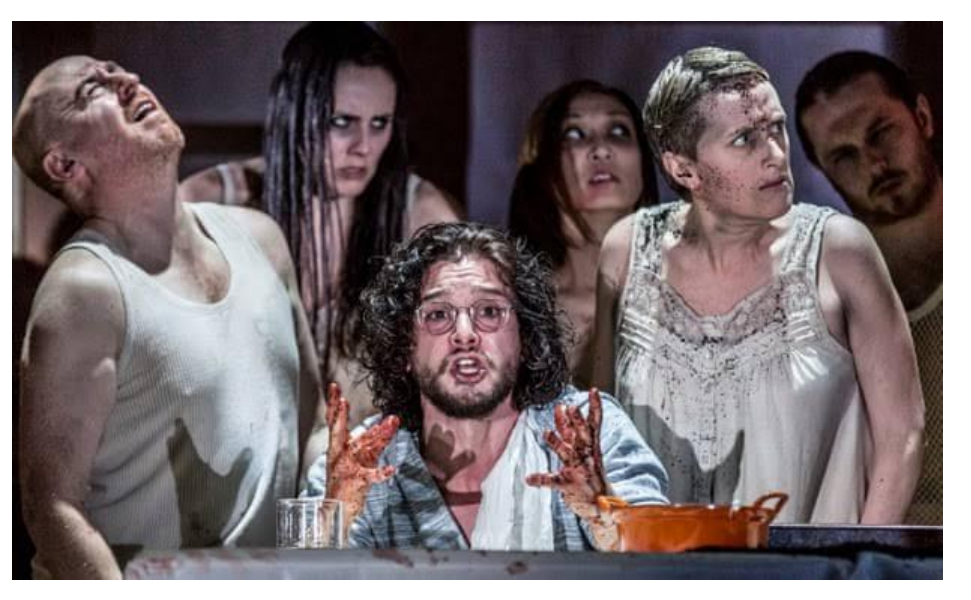
Give a comparative analysis of between Faustus’ first soliloquy and his last soliloquy and trace his journey from competence to confidence to damnation. Trace the development of
Faustus from a position of heroic grandeur to damnation.
Faustus as a Witenbergs’ flowering pride changes from Doctor of Divinity to a necromancer pestered by the swarm of infernal bees. He achieves pleasure upon the subjugation of all other beings for his personal gratification. Obsessive preoccupation of power for monarchising enforce his singing of the pact in allegiance with the Lucifer. Humour of monarchising through power over the forces of nature-winds, storms, air amd water, power over national
and international destinies (The Emperor shall not live but by my leave), power over store houses (I’ll have them fly to India for gold/Ransack the ocean for orient pearl); dispositions of
the continental land-masses and movements of the celestial bodies.
Vainglorious ostentations intrigues Faustus to pursue the devilish exercise by aspiring to be the shadow of Agrippa, whose shadows made all Europe honour him. If we consider this of Marlowe’s rhetorical poetic, we are reminded of the quickened impulse, evaluation of a diseased mind or enactment of a kindling or soaring imagination, of a man awestruck before a new universe of meaning
and potentiality: “O, what a world of profit and delight// Of honour, of power, of omnipotence, Is promised to the studious artisan? All things that move between the quiet poles/ Shall be at my command:”
Faustus renounces medicine and surgery to cure thousand maladies and be eternalized. Even laws to him are expounded to be paltry and petty. Faustus stoops in the divinity of knowledge for the sake of witchcraft: “These metaphysics of magicians/ And necromantic books are heavenly;/Lines, circles, letters and characters: Ay, these are those that Faustus most desires”/ Faustus is thus changed as a damnable Promethean hero of the Enlightenment. “A sound magician is a mighty God” : The deity of Doctor Faustus is not the God of Love, the Good Shepherd, but either the avenging Jehovah of the Old Testament, or his Christian offshoot, the Calvinist tyrant of mass reprobation.

“Ay, you accursed spirit, go to ugly hell” Faustus waves farewell to Mephistophilis abhorred by the repellent face of the latter in the demonic world. The fiend’s abrupt departure and his
subsequent return with Lucifer and Beelzebub at precisely the moment when Faustus calls upon Christ is, as James Smith points out an apt representation of the emotional upheaval
which the very asking of the question provokes in Faustus’s consciousness. The vain trifles of man’s souls and merely old wife’s fables of afterlife springs in the doubt of the reality of
Heaven and Hell.
Faustus as a sound magician and humanist aspirant of power fantasies travel the papal court, kingdom and dukedom to “search all corners of the new-found world” in pursuit of “pleasant
fruits and princely delicacies.” Helen, the resuscitated body of classical antique learning extinguishes clean those thoughts that dissuades Faustus from his vow to Lucifer. This hedonism and epicurean self-indulgence allegorises the Faustus cardinal sins of lechery in satire.
This damnable nature of Faustus’ ambition can be justified in the language of the critic Helen Gardner, “The great reversal from the first scene of Doctor Faustus to the last scene can be defined in many different ways. From presumption to despair, from doubt into the existence of hell to belief in the reality of nothing else. From aspiration and deity, and omnipotence to longing for extinction. At the beginning Faustus rises above his humanity but at the closing he sinks below it to be transformed into the beast or little water drops. At the beginning Faustus attempts usurpation upon God but at the closing he is an usurper upon the devil.”
Faustus estranged and suppressed humanity have risen to demand the due fruits of harvest. His hardness of heart and stiffness of mind –Despair in God and trust in Beelzebub/ the escapist frivolities of pageant of sins becomes dwindled by the cosmic forces. It is the consummation of the Puritan imagination as J. B. Steane points out “lurking sense of damnations precedes the invocation of hell”. The apotheosis of Helen is supposed firmly to be placed as a narcotic which extinguish clear his thoughts that do dissuade Faustus from his vow, nevertheless overflows the moral banks Marlowe is constructing:
“O thou art fairer than the evening’s air/
Clad in the beauty of a thousand stars,/
Brighter art thou than the flaming Jupiter/
When he appear’d for the hapless Semele;/
More lovely than the monarch of the sky/
In wanton Arethusa’s azur’d arms,/
And none but thou shalt be my paramour.”/
These flames of passion so fiercely flare up is transfigures even so moral epithet as wanton. The conflict is sharp in this scene, for these lines are immediately succeeded by the Old Man:
/“Accursed Faustus, miserable man,/ That from thy soul exclud’st the grace of heaven/ And flies the throne of his tribunal seat/
Story from Mokhinur Abduhalilova
BENEFIT OF THE BOOK
A 15-year-old boy named Omadbek lived in the outskirts of the village, in an ordinary family, in a house with walls divided from the bottom.
Jamshid is from a rich family which gives all comforts for him. However, he was not a boy who is interested in studying at all, he may be seen sometimes at school, much time was absent. He is really keen on playing the phone all time. He has even his own personal smartphone. Omadbek is one of the children who are disabled. He didn’t have both hands. He lives alone with his mother in a small house in hard days Omadbek’s dad died when he was too young. He cannot remember that person. One day he came up with something that no one had thought of before. He searched and tried all the day and night to realize this idea. while his friend, Jamshid was addicted to the phone every day. Finally plan came to the light. He created special prosthetic hands for himself. Now Omadbek can write with his hands and do his work with his hands himself. Before, he used to do the work with his feet, not with arms.
When his mother saw this situation, she was really delighted and happy, moreover, she couldn’t stop herself from tears of love. Today, Omadbek’s dreams came true. He goes to school the first time. Because before he was one of the only students who do not attend to school. When he stepped on the threshold of the school, he felt a kind of excitement inside him. Then the lesson began. Life was full of possibilities while Jamshid was playing his phone in the same class.
After the lesson had finished, Omadbek went to the near of Jamshid’s desk. He said “why are you are playing on the phone?” Jamshid continued to play on the phone and did not pay attention to him. One day, Omadbek participated in the Science Olympiade and won the 1st place, and the latest model phone was as a gift. After knowing about this, Jamshid went to Omadbek and said, “Let me see your phone.” He handed the phone to him saying, “Okay”. “Omadbek, let’s play together your phone”. Omadbek replied that he would give this phone to her mum. Jamshid’s face turned red. He asked how he can achieve such an achievement like his friend. Omadbek replied:
–My friend, it’s easy, let’s prepare and get ready together.
Time has passed. Both Omadbek and Jamshid participated in the Science Olympiade. Jamshid was waiting for the result of the competition. After some time, both of them heard the news that they got the 1st place, they achieved this success together. Jamshid stopped playing the phone and started reading diverse books. Jamshid thanked Omadbek for bringing him back from this path.
Now the two friends are among the best students in the school. The benefit of the story is that the book is always good. Let there be more people like Omadbek among us.