Do Nihilists?*

Do nihilists believe in God?
Do nihilists fall in love?
Do nihilists believe in love?
Do nihilists have morals?
Do nihilists want to die?
Do nihilists hate life?

And the ultimate -
what’s the purpose of nihilism?


*Google questions


Death to…

Death to poetry collections
Death to politics
Death to golf
Death to tea towels
Death to garden trowels
Death to tempests
Death to cheap wine
Death to digital self-optimisation
Death to tennis balls
Death to iPhones
Death to pornography
Death to weeds
Death to weed killer
Death to fresh fruit
Death to decaying fruit
Death to bigotry
Death to satellites
Death to aphorisms
Death to potatoes
Death to politics
Death to sunglasses
Death to gilded assertions
Death to magazines
Death to guitar picks
Death to clocks and watches

Death to death…

Amen.
Henry is a poet, writer and mental health essayist based in Somerset in the UK. His work has appeared previously in Synchronized Chaos.
Prickly Pear


weighing dark matter…

when black one thing out

begs question, what else?


alley leaf

circling my feet…

rats!


possession

is nine tenths of the law

know takers taking


slow unthawing of May

way boomers

talk about theys


house of

corrections

and misprints


Bunny Ears


flowers log-jam

in the rock bed

edge of waterfall


still can’t drink from tap

thankfully, may purchase

for a song


s w e e t   n o t h i n g s ~ crockpot simmering


scorpion analogy

chopper hanger-on

gets sudden urge


s p a c e   i n v a d e r   l e n g u a   t a c o s


Golden Barrel


gas station fountain… pits and bits, holes and soles


no points on scoreboard

no lights on scoreboard

why is it even there


hang up the phone

and quietness sets in

this is being alone


last naan standoff —

sits untouched

cools


those who stay

and learn to live with it

Toxicity


terracotta head pot


    subtracted brain-pan

    in place of neurocranium

    green electricity

    issuing forth evokes Pallas

    and the dark mother

    their parthenogenesis

    eukaryotic organisms

    foreheads’ fertile wombs

    skull cakes


there is something of the game warden


to the sheriff – and doctor – still,

who staunchly preserves in the short term

with every intention of their masters’ future slaughter,

field dress, and apportioning of each

swaggering thrush and caribou
Jerome Berglund has many haiku, senryu and tanka exhibited and forthcoming online and in print, most recently in the Asahi Shimbun, Bear Creek Haiku, Bamboo Hut, Black and White Haiga, Blōō Outlier Journal, Bones, Bottle Rockets, Cold Moon Journal, Contemporary Haibun Online, Daily Haiga, Failed Haiku, Frogpond, Haiku Dialogue, Haiku Seed, Ink Pantry, Japan Society, Modern Haiku, Poetry Pea, Ribbons, Scarlet Dragonfly, Seashores, Synchronized Chaos, Time Haiku, Triya, Tsuri-dōrō, Under the Basho, Wales Haiku Journal, and the Zen Space.
thoughts on artistic success – letter to a friend
By:  Norman J. Olson

thanks for the chapbook about Steve Richmond…  about whom I knew pretty much nothing except that he was mentioned in Bukowski’s biography and was apparently an admirer, emulator and to some degree sycophant of Bukowski…  reading this got me thinking about fame, celebrity and artistic success, whatever that is…

in my many years of involvement with the small press, I have seen many poets come and go…  when I first started publishing, I found it amazing to just be in print…  to have an editor think my poor words worthy of publication…  later, I tried to get into more “prestigious” journals (i.e. those published by university creative writing departments, or respected independents like the Chiron Review)… when that happened, I thought of having a poetry book published…  it seemed to me kind of an exercise in futility to self publish…  but, I did self publish several very small runs of chapbooks including “15 Image Poems”… etc… anyway…  but, I knew these were worthless reputation wise because they did not undergo the scrutiny of an editor…  so, I simply printed twenty or thirty of them and passed them out to acquaintances in the literary press world who were interested in my work…  I must say, that I never had any thoughts of making a living from art/writing… or indeed, any money at all…

I decided that I would not do a poetry reading unless someone asked me to do one and I would not publish a book of any kind unless an editor asked me too… needless to say, I did few readings and no books…  until a few years ago when a French poet and publisher who liked my work asked me to put together a book so, I did and he published it on the print on demand site LULU…  where it still is, if anybody wants to buy a copy for $4.50 (of which, I get nothing…  LOL)   it is called “44 Image Poems”… I was also asked to put together a book of prose writing which I did for publisher in India and the result is “Writing about Travel and Art plus a few Memoirs of My Rural Childhood”… which you can find at Amazon or Barnes and Noble…

when I first started publishing, I noticed that some of the poets were older and as they started dying, I had the amazing, to me, realization that these poets dropped from the little recognition they ever had into a complete and total oblivion as if they had never existed…  this is even more true today when so many of the journals are on line…  when the journal folds, it disappears like a drop of tar dropped into a black and bottomless abyss… so, when a poet died there was not even the survival of some coffee stained mimeographed journal with his/her words, unread on the shelf of Brown University Library to note the poet’s brief tenancy in this vale of tears…  as the cliché has it, fame (in the literary press world) is indeed fleeting and will not survive the passing of the poet, or even the electronic dissolution of the on line journal that published his/her work…

Richmond, like so many artists, seems, in spite of his disclaimers, to have had some notion of the importance of art and more especially his art as being some how a big deal…  well, whatever gets you through the night, but during my years of making art and writing poetry, a great many poets and artists have made a lot of art, nearly all of which is mostly worthless as anything other than a brief bubble of artistic ego expansion…  and pretty much all of which will cease to even exist within a few hours of the expiration of the artist/poet, and/or the literary journal in which it was published…

when I was young and wanted desperately to have the local museum of modern art accept my work and put it in an exhibition, other artists, in my case, mostly conceptual artists and identity artists, were having big shows in the spacious white painted galleries of the Walker Art Center in Minneapolis…  well, those “successful” artists from those years are now mostly forgotten and now about as well known as me…. which is to say they are complete failures… and have disappeared from the public eye as if they had never existed…

but wait…  maybe is success in the arts, some ineffable quality unrelated to celebrity or notoriety or even survival in the public eye?  is it a something that does not need the validation of an editor, gallery manager or indeed any audience at all…  is the true genius like my great uncle who made up symphonies on his guitar while sitting alone in his room, and never performed them in public??  are we all geniuses waiting to be discovered, whether we are discovered or not??

well, if so, it seems obvious to me that in that case, artistic success is of about the same value as closet masturbation when considered vis a vis the society at large…  this is the nihilist view, I guess and if I really believed this, I would encourage those who attend my passing to celebrate with a large bonfire of all my works…  okay, and I do sometimes think that is what my art will come to and I guess I am okay with that…  I have lived to a ripe old age, have had the rich experience of making lots of poems and paintings that have found a small audience…  so what if I am not a celebrity and so what if my work does not outlast me….  the apex of fame and success in my lifetime career as an artist is the interview of me that was done by the Wilzig Erotic Art Museum a year or so ago which is still posted and which you can see at:  https://www.facebook.com/WilzigEroticArtMuseum/videos/443428413395766/

the Richmond article mentions that he was an acquaintance of Jim Morrison, the famous rock star…  more than one person I have personal knowledge of, in the poetry world, delusionally  thinks that he/she should have rock star fame and fortune…  maybe Richmond wanted that kind of fame for himself…  apparently, he tried to earn money from his art, even though he was wealthy and managed to piss away a pretty substantial inheritance… but, in all honesty, almost nobody in the poetry and art world makes any money at all from their efforts much less achieving fame and fortune…  yes, music/poetry artists do achieve fame and fortune if they are talented and lucky enough to become stars…  but, even in that case, despite their wealth and fame, I have lived long enough to see the big stars of my parent’s generation all but disappear…  who listens to Frank Sinatra today??   I was talking to a young person recently and when I mentioned “The Beatles,” she said, “who”…  a very small number of poets from the last fifty years are still studied in creative writing and/or literature programs at colleges and universities, but how many of them are actually bought and read by ordinary readers???  remember that even Bukowski only started making money when he started writing novels and as novelists go, he was certainly never a best seller or a household name…


so, like Richmond and thousands and thousands of our peers, I am an artistic failure…  I never had an actual paying book contract, never had an art show in a big museum, never was paid for a reading…  my work and myself will be forgotten when I am gone except by my loved ones and when they are gone the work will probably all be long since consigned to a dumpster…  I would like to be more successful, but have to admit that the quality of the art and writing probably warrants about the degree of success that I have and at this age (75) I am on the downhill slide and whatever success I would have in this life, I have already had…  (I have read enough artist biographies and autobiographies to know that artists usually overvalue themselves and their art as well as their talent or ability to create “great” art and I refuse to partake in that fallacy!!)

perhaps the only consolation I have, if any, is that even the most successful of artists and poets are virtually unknown outside of the literary world in one case or the art world in the other… and that we will all, Bukowski, Morrison, Lennon, or Ginsberg…  Huffstickler, Richmond, Jones or Olson …  etc. etc. etc.  be as forgotten as yesterdays bad news, in the case of the famous, in a generation and in the case of the rest of us, the day that we drop over dead.
Halo Equated


I promised all my sevens
to the pattern

now I’m caught in its prism
blink twice for fusion

spin in the grasp of spent coding

untangling live wires
in the storm

You told me every dog
still has its teeth
from the hunt

now I’m warm in the forest
fur wrapped with worn blankets

coil through the night of rebellion

enticing compressed visions
from crystal


What Roars Below


brewing

not quite a boil … yet

churning underneath
a sure explosion
biding its time

constructing a blueprint
to rise without aggression

violet flames
liquid consciousness

a compulsion toward creation
unbridled human expansion

the artistic urge

self-actualization/individuation
finding cohesion with the collective

sacred space of duality
breather of light discovered in shadow

cynicism turned on its head
affirmation

the great yes to it all
flow/flux

gestation turnkey
an opening of eyes


Aborted Escapism


I wasn’t in a rush to be born

&

I took my sweet ass time
to garner any wisdom after

but God knows I ran
straight toward the grave
for so damn long

and each time
you refused me
and sent me back
with deeper patience
and buried scars

but if I disappointed you
I will make it up to them

because if there’s one thing
I’ve ever been sold on
it’s promises
Scott Thomas Outlar is originally from Atlanta, Georgia. He now lives and writes in Frederick, Maryland. His work has been nominated multiple times for both the Pushcart Prize and Best of the Net. He guest-edited the Hope Anthology of Poetry from CultureCult Press as well as the 2019-2023 Western Voices editions of Setu Mag. He is the author of seven books, including Songs of a Dissident (2015), Abstract Visions of Light (2018), Of Sand and Sugar (2019), and Evermore (2021 – written with co-author Mihaela Melnic). Selections of his poetry have been translated and published in 14 languages. He has been a weekly contributor at Dissident Voice for the past eight and a half years. More about Outlar’s work can be found at 17Numa.com.
AppleTV+ Shrinking is the kind of show people stream to throw the burdens of the day behind. It’s funny, quirky, well-written, and showcases some of the best talents on TV. Imagine a series starring Harrison Ford, Jason Segel, and a fresh-faced Jessica Williams. The result is a breath of fresh air on the streaming service platform and a story to hook up TV series buffs and those looking for a night watch, before-going-to-bed quickie.
Shrinking tackles mental health from an interesting angle. It questions the limitations of grieving and coping with tragedies without losing a sense of wonder or resorting to rhetoric vapidity. It uses its galvanizing cast to the utmost benefit. Ford is a veteran superstar whose charisma is imprinted in the hearts and minds of millions growing up whether to worship his mega star Indiana Jones/Star Wars fame or his gritty roles in The Fugitive, Air Force One, and Blade Runner. Heshines in a role that plays comedy through a low-key, grounded performance.
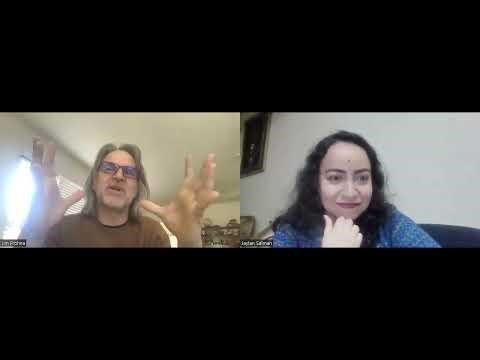
I had the pleasure of speaking with Jim Frohna, series cinematographer of the award-winning Amazon series Transparent and Season 2 of HBO’s lauded series Big Little Lies fame. His work centers around TV series that are not afraid to show how humans struggle to figure themselves out and figure out the world around them. He wants to feel multiple things as a participant and collaborator in creating the art, so he lets his gut guide him toward the show where he feels he can retain that artistic input.
The conversation flowed smoothly, with minor interruptions from Frohna’s pets. Frohna explained that the core of Shrinking was the Laird family whom he and James Ponsoldt -pilot director and one of the producers- loved and cared for. This gave the series its authentic shift from slapstick comedy to intense emotional drama at times. The pace didn’t feel forced or constricting due to the masterful storytelling and Frohna’s swift camerawork, from close-ups to lighting work which framed the characters masterfully, setting the mood for lighter or darker scenes.
“We cared about this family. They meant a lot to us. The show itself goes from slapstick comedy to some dry humor, then into real grief and real pain. So we talked about how we could visually bring this world to life in a way that can be a container for all the range of what happens in the show. What struck me instinctually was to have it very grounded and feel like a real place and to light it very naturalistically and to let the space be real where both the silly stuff and the serious, heartfelt stuff exist in that.”
Jaylan Salah with Jim Frohna
Jim merges with the details, he becomes the story that he is capturing with his camera. His style is grounded in subtlety and realism with some swagger, directing audiences to what matters in the scene. Shrinking is the kind of show that demands attention with every frame. It’s a tight-knit group of people, families, coworkers, friends, and a main character who doesn’t have a clue as much as his patients do. The concept of a drama that creates an endearing ode to struggling with mental health without lightly handling the heavy subject matter is a lure into an intimate world that feels -but doesn’t feel- very familiar.
Frohna is as open as he is tactical, focused on telling the story and answering the questions with as many possibilities. Having a conversation with him was both fun and informative,
“Cinematography is not an exact science, it’s almost like the camera bears witness to the emotions in the room and what the characters are going through. So, kind of separate from how we frame it or the lens choice that we make, it’s more of a spiritual or emotional place for the [camera] operator to be in the room. We talk a lot -as the person behind the camera- about being open and receiving whatever is happening and the feeling in the room. It doesn’t come from the head but from the heart.”
Talking to Frohna reminded me of my earliest memories of watching movies, and how it was hard and mystique understanding what a camera operator might feel while approaching an actor’s face with an extreme close-up, or how lighting plays into introducing a character within a specific tone,
“As far as Jimmy Laird -main protagonist played by Jason Segel- goes, we talked that he’s in this very dark place. We meet him doing drugs and staying up all night. Two things came to my mind; first, he spends a lot of time in the shadow, and second that when he’s in the light it’s a harsh light. In the pilot, in the morning after he’s been up all night, he says goodbye to the women, then he goes into the kitchen and he’s confronted with reality with his daughter and the fact that it’s a school day and a workday. We purposely lit into the kitchen with this hard light so that Jimmy and sitting and has to shield himself from the harsh light. Those to me are the subtle or creative ways that you can say a lot about where the character is at and how he’s feeling.”
From extreme close-ups to uncomfortable scenes where two characters beat each other up, I asked Frohna which was harder to shoot an intense fight sequence or a love scene,
“Different scenes have different challenges. I’m much more used to giving all my years on [TV shows] like Transparent where there were a lot of intimate scenes both emotional and physical. So I don’t find those challenging. I think the biggest challenge on [Shrinking] was that most of our spaces are sets so how to keep those feeling real? There are a lot of scenes in the employee break room, so we’re not trying to do the same thing each time. It was more of a mundane challenge. The three characters are back in the break room, two are sitting and one is standing, so what can we do with the camera and lighting-wise? We had to keep it fresh subtly as the season progressed.”
It didn’t take long before my favorite topic – casting Harrison Ford as Paul, a senior therapist with Parkinson’s disease- showed up.
“Like many people I grew up going to the movies and seeing this amazing, funny, dashing, charming, and charismatic heroic figure on the huge screen. The first ten days that Harrison was around everybody was like That’s Indiana Jones or Han Solo and sort of unable to get over it. We still did our jobs but were all starstruck. And then what was amazing was that he’s just a human being. Not only that but he’s a very kind guy, and he loves being on a set. He loves the crew, talking to the grips, or hanging out with the makeup people. Because he spent the last fifty-something years on a movie set and he doesn’t have to work anymore because he doesn’t need the money he just loves being with this group of oddballs and weirdos on the film set. He’s just a down-to-earth guy so the strangest part is how ordinary it became.”
Catch the first season of Shrinking on AppleTV+ and prepare for a watching experience surpassing anything on the current streaming platform.
I give you a secret sign, follow the white rabbit.
My tattoo on my shoulder speaks.
Yes, I forgot, we are not in the Matrix movie.
I want you to be my companion,
but you don’t know how to read signs
set by the Universe
through numbers and in the child’s speech.
There is a celestial draftsman whose pen prints horoscope signs.
It’s all as clear as the future,
in response to prayer.
But instead of watching,
you sleep and dream of me in a silk nightgown,
and you don”t realize I”m warm on a hot night,
not to provoke your senses.
I give you the way you walk without material desires
and to head to the Himalayas
where we will look with different eyes.
We will dive into the mountain of snow,
in whose interior there is a world of abundance.
Close your eyes and follow me.
I’ll take you, companion,
when you learn that tattoos speak,
when you know the signs written in gold pen,
we will not need a body of earth.
Follow me, I’ll take you to the abundance of dreams come true.
And when you step in there, you won’t want to go back,
but he wanted it first.
THE PAINTER
Simple clothes
Colored locks of hair
Brush in hand
I draw strokes with a brush
Because of the winds in my soul, I draw windmills
With crying tears,
I thin the yellow paint to paint the sun
Due to sadness, the faces in my pictures are smiling
I create my own world
because this one is not to my liking.
I am complete in my imagination
I walk through fields of sunflowers,
the wind caresses my hair
people from the surrounding fields wave at me
And they call out
Good morning, barefoot girl!
And I open my eyes in a dark room,
lit by moonlight
And I look at the pictures of lies
thanking God that I am alive!
Maja Milojković was born in 1975 in Zaječar, Serbia.
She is a person to whom from an early age, Leonardo da Vinci’s statement Painting is poetry that can be seen, and poetry is painting that can be heard” is circulating through the blood.
That’s why she started to use feathers and a brush and began to reveal the world and herself to them.
As a poet, she is represented in numerous domestic and foreign literary newspapers, anthologies and electronic media, and some of her poems can be found on YouTube. Many of her poems have been translated into English, Hungarian, Bengali and Bulgarian due to the need of foreign readers.
She is the recipient of many international awards.
“Trees of Desire” is her second collection of poems in preparation, which is preceded by the book of poems “Moon Circle”.
She is a member of the International Society of Writers and Artists “Mountain Views” in Montenegro, and she also is a member of the Poetry club “Area Felix” in Serbia.
CHERRY BLOSSOM SEASON:  HAIKU BLOOMS IN THE UNITED STATES 1959--1961

The New York Times wasn’t ready to declare it a real craze, not yet, and it certainly wasn’t consuming the country the way coonskin caps, hula hoops and telephone booth stuffing did.  Still, there was something in the air as the decade of the 1950s faded, and other observers felt the same wind.

In January of 1959, The New Yorker noted a “current passion in the country for things Japanese, from A (for ‘Architecture’) to Z (for ‘Zen’).  H would be reserved for Haiku, described as the primary literary industry of the island nation.  “To the Japanese,” the magazine said, “the composition of these hauntingly vivid little poems would seem to be almost as natural, and necessary, as breathing, and every Japanese who is able to read and write is therefore likely to be a practicing poet.”

That same month, Dolly Reitz, writing in her “Occupation: Housewife” column, told of reciting haiku back and forth with a friend over holiday tea:

A childless housewife
How tenderly she touches little dolls for sale.

You hear that fat frog in the seat of honor singing bass?
He's the boss.

Swallows flying south
My house too of sticks and stones
Only a stopping place.


Cherry-Blossoms, the third in the series of haiku anthologies issued by Peter Pauper Press, was published the following year.  The poems were arranged in four lines to conform with illustrations on the margins of each page.  To follow through the seasons (New Years was considered its own season):

New Years

In the New Year Dawn
Solemn and
Deliberate
Tall cranes go marching
--Kikaku

From the mountain pass
See the sunlit
Castle town . . .
Flying new-year kites
--Taigi

Spring

Endless Maytime rain . . .
Sneaking back one
Night, the moon
Perched in the pine-tree
--Ranko

Dull dreary rain-day . . .
Dripping past
My gate a girl
Bearing irises
--Shintoku

Summer

Ah roadside scarecrow
We’ve hardly
Started gabbing . . .
And I have to go
--Izen

Stubborn woodpecker . . .
Still hammering
At twilight
At that single spot
--Issa

Autumn

On this plain of mist
Nothing but flat
Endlessness . . .
And red-rising sun
--Shiro

Within pale silence
Spreading from
Evening moonlight . . .
Sudden cicada
--Hajin

Winter

Bitter winter wind . . .
Won’t it blow
Right off the sky
That day-old crescent?
--Kakei

A harsh-rasping saw
Music of
Cold poverty
In winter midnight
--Buson

1960 also saw the publication of Harold Stewart’s A Net of Fireflies.  Stewart titled his translations and composed them as couplets.  The Baltimore Sun quoted eight for its review of the book.  Among the selections:

RETURN OF THE DISPOSSESSED

The same old village: here where I was born,
Every flower I touch—a hidden thorn.
--Issa

THE SILENT REBUKE

Angrily I returned; awaiting me
Within my court—the tranquil willow-tree.
--Ryota

MORE THAN FORGIVEN

Plum-blossoms give their fragrance still to him
Whose thoughtless hand has broken off their limb.
--Chiyo-ni

AND SO

And so the spring buds burst, and so I gaze,
And so the blossoms fall, and so my days . . ..
--Onitsura

A sixth-grader from Honolulu might have written the best haiku published in 1960:

The house on the hill
Is always full of laughter
Until the friends go

Elizabeth Gordon, the editor of the American interior design magazine House Beautiful, felt the Eastern wind blowing sooner than most arbiters of taste, fashion and literature.  Over the span of five years and seven trips, Gordon spent 16 months in Japan in the late 1950s.  Her travels there laid the foundation for a landmark two-issue report on Japanese culture published by the magazine in August and September of 1960.

Described as “[one] of the most influential issues ever by a design magazine,” the August issue carried articles on Japanese food, gardens, music, and other topics.  The magazine saw and felt haiku everywhere it went in Japan, and something of the enthusiasm for the 17-syllable literary form rubbed off on its American audience.

Haiku and Japanese poetry readings were held at coffee houses, libraries, and universities in California, Florida, Maine, Texas and other states. Speakers at the events included exchange teachers, Japanese wives of college professors, and domestic devotees of Japanese culture.  Flower-arrangement and origami were also presented at the gatherings.

Delayed a day by a snowfall, a writers’ club in Mason City, Iowa, studied haiku at a dessert luncheon.  Composing greeting card verse was announced as the subject for the club’s next gathering.

Scientists introduced six chimpanzees at the Baltimore Zoo to typewriters.  Most ignored the contraptions, but one named Spunky seemed to enjoy typing away with his two index fingers.  “He writes in short one or two-word phrases,” said one of the scientists, “jerky, unconnected, but deeply perceptive.”  Researchers tied together coherent strings of typing and compared Spunky’s results to the “fleeing, momentary, image of beauty” of haiku:

I am horrified
Could we die? Go
Deaf to joy.
Cry on . . . fighting.

Bess Hines Harkins of Oxnard, California, published three of her early haiku in the local newspaper on February 19, 1959, and was interviewed the next day on television. Ethel Herman of Fort Pierce, Florida, became known “the haiku woman” in the local press for her devotion to the form.

As far back as 1958, the California Federation of Chapparal Poets conducted a contest for the writing of haiku.  In 1960, the club added tanka to the category of Japanese poetry.

Later that year, the San Francisco Examiner would even quote two haiku from the crosstown Star:

Unexpected guests!
Close off our unmade bed!
There! But!
Dust under chair.
--“F. P. H.”

Circular prison
Street lamp has captured three
Busy moths
‘til dawn.
--Julie Harden

“Haiku,” the Examiner added, “are literary salted peanuts.  Start nibbling and you find it difficult to stop.”

Another commentator sarcastically labeled haiku as “the greatest thing since the sack dress” and then doubled down by attesting the sack dress had been the greatest thing since haiku.

A California writer tried without great success to place the debate within the fictional context of a haiku tournament between Japanese poets and American balladeers.  In a series of seven matches, the players eventually find common ground between Tokyo Bay and the Potomac in the timeworn and unsatisfying vision of a brotherhood of man based on the bonds of beauty, truth and good.

In an April 1960 interview with the Hartford Courant, Ambassador to the United States Koichiro Asakai called haiku one of Japan’s greatest inventions and then issued a note of caution.  “It is hard to see,” said the envoy, “how haiku can be written in any language but Japanese, since the harmony between the Japanese language and the haiku form is so amazingly high.”

Kenneth Rexroth tended to agree with the ambassador.  “American imitators of Japanese haiku . . . almost never come off,” said the designated spokesman of San Francisco’s anarchists and avant-garde artists, on whom Time Magazine bestowed the unwanted title of Godfather of the Beat poets.  “[They] miss the deep foundation of the culture.”

But by the spring of 1961, Americans reached for pen and paper when the cherry blossoms began to bloom.