Women’s empowerment is the process by which women become aware of gender-based unequal power relationships and acquire a greater voice in which to speak out against the inequality found in the home, workplace, and community. An empowered woman not only changes her life but also uplifts her family and contributes to society. Though millions of women worldwide are still denied education — a reality that limits not only their potential but also their societies.
Today women empowerment plays a vital role in societies. From economic growth to social stability, the benefits of empowering women reverberate across every aspect of society. One of the most compelling reasons to empower women is its direct correlation with economic prosperity. When women are empowered with education, access to resources, opportunities, entire economies flourish. According to studies, investing women’s empowerment leads to increase in productivity and growth of a country.
Additionally, women’s empowerment is crucial for gender equality and discrimination. Despite the actions taken in this, still women around the world are facing barriers in education, violence, disdain and rights. Empowering women means challenging entrenched norms and stereotypes that perpetuate gender inequality. It involves creating inclusive policies, providing access to justice, and promoting women’s leadership at all levels of society. All in all, women empowerment takes the important part in all fields – healthcare, economics, education, industry.
Despite clear progress, numerous obstacles continue to restrict women’s equal access to education and empowerment.
Cultural expectations, early marriage, limited resources and gender stereotypes still restrict girls’ choices and ambition. To combat this, organisations such as Women In Tech and the PORLA project are enhancing women’s employability and promoting entrepreneurial skills across remote and traditionally underserved areas. Likewise, the establishment of the Entrepreneurial Women’s Council in March 2025 under the Chamber of Commerce and Industry aims to boost legal, financial and practical support for female entrepreneurs.
On a personal level, as a high-school student I co-founded Girls Hub, which has supported over 50 Afghan girls and is now collaborating with Nigerian peers hoping that change begins with young women taking leadership in education and solidarity.
If we truly believe that empowered women empower others, then education is the gateway to transformation. From the classrooms of Uzbekistan to global networks connecting Afghan and Nigerian girls, every investment in a young woman’s learning creates exponential returns for families, communities and nations. My journey with Girls Hub, standing alongside students who face barriers and believing in their potential, reminds me that real change comes from shared purpose, courageous action and unrelenting hope. Let us commit to policies that dismantle stereotypes, resources that expand access, and mentorship that lifts every girl toward her fullest future. Because when a woman learns, we all grow.
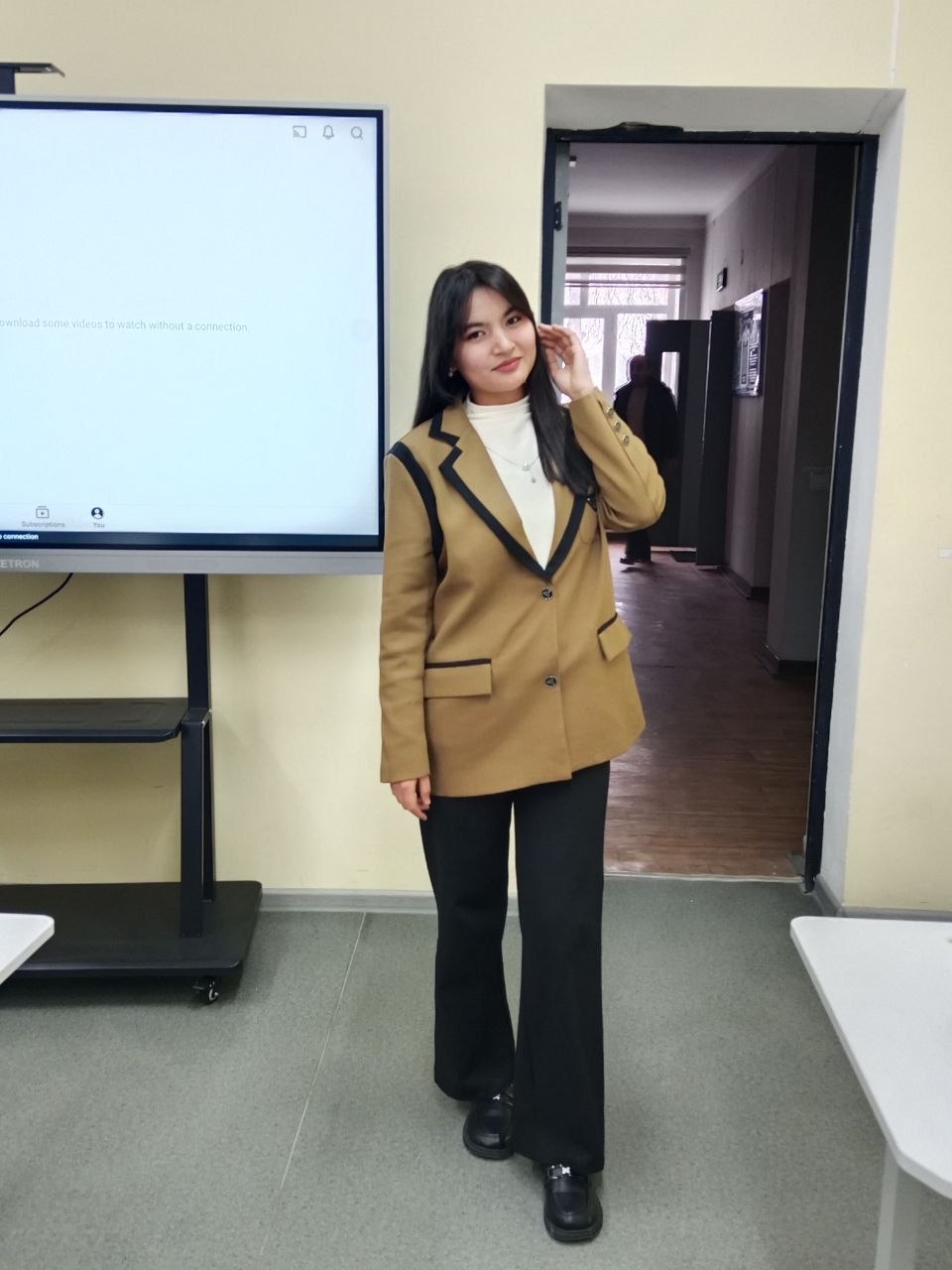
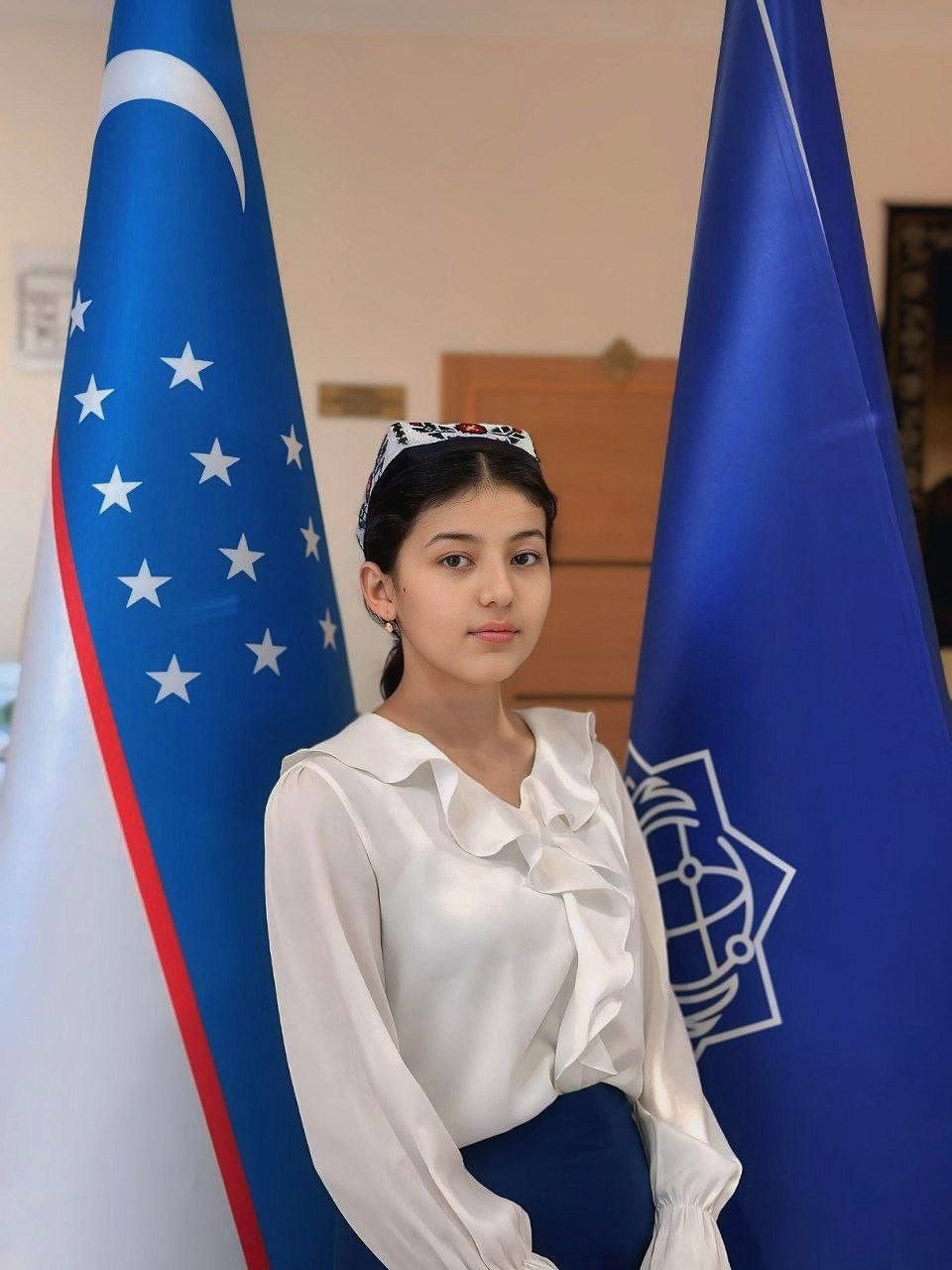
I am Lolaxon Sodiqxonova, a 17-year-old senior at the Specialized Boarding School in Namangan, Uzbekistan. I am passionate about empowering women and have already taken several actions toward this goal. For example, I worked as the Head Ambassador of the PORLA project, which educates women and girls on AI tools and STEM, even providing opportunities for internships. This sparked my interest in women’s empowerment and encouraged me to co-found Girls Hub, a global platform mentoring young women on scholarships, languages, and some aspects of STEM. Today, Girls Hub has two international collaborations and more than 100 alumni. Moreover, I entered the world of start-ups with this project and became the winner of the Digital Generation Girls – Start-Ups Competition. My dedication to this field also led me to success in a prestigious international program—the Women2Women International Leadership Program, hosted by Emerson College and held at the John F. Kennedy School of Government at Harvard University.
STRUGGLE FOR SURVIVAL AND THE INSTINCT FOR ‘GIVE AWAY’
When from a liquid, a drop is formed, it is trapped into the struggle for survival. Its shape depends on how much the winds press its sides, and how much the light sucks its vitality. The moment it is formed, the eternal countdown begins, and then, as the day passes, a part of it is lived out. Finally, a moment arrives, when winds suck it back.
The sun and the night, the moon and the stars, the oceans and the mountains – they saw it form, flourish, and then finish. When we see this bubble, this drop, this human being, he is in the throes of a struggle, the wise call the struggle for survival.
When man is born, he too resembles a drop of life, and it is not difficult to see how this struggle for survival has started in the womb itself. Parents try to soften the pangs of this struggle in the initial years, but as soon as a child grows up, his march to adulthood is marked with pitfalls and boobytraps, and this struggle continues through the adult years, right up to the time he reaches the ventilator, the launch pad from where, hollow-copters fly on a journey into the unknown.
All through this life, the man was trying to stay alive and he did not mind this struggle which left him alive although so many lost their lives. The first and foremost thing for man is to preserve his life. Once he is secure in his body, mind and soul, he starts thinking of embellishments which make life beautiful. Art steps in, music steps in. Love steps in. It is now a paradigm of passions.
Just think of a journey in a plane. When the plane runs on the runway, and takes the dive up, our hearts sink. That is the initial shock we experience. But as it gains its speed, and becomes stable, we forget we are on a mission of do or die. The hostesses make you oblivious of the perils of the journey with their offer of drinks, food etc. In a few moments, the feeling of danger passes, and we start thinking of our life, some open their laps tops. Some go to sleep. The feeling of struggle will return when the plane lands, because, that too is a moment fraught with danger.
The idea is the struggle for survival is the basic instinct of man, and it remains with him all through. The question in the struggle for survival is when the idea of ‘how’ steps in. To keep alive is the first instinct, and this is animal instinct, the minimal, and the basest. We begin with this instinct. No doubt, throughout life, we have to keep alive till we reach the launch-pad, are we in the survival mode all through?
Can this instinct describe man in his entirety? I think, No. As soon as man acquires a sense of stability, he starts thinking of values, and the quality of his conduct in life. The focus shifts from the body to the mind and we are confronted with higher truths of life.
Existence is the essential truth but adding value to it is no less. I met a childhood friend who had retired from civil services. He held one grouse and it was against himself. He earned money, had a great going in his life, but what he has left behind? We, who believe in struggle for survival, also believe in the idea of a ‘take away’ from this struggle.
But, a time comes when we start thinking, was there any ‘give away’ also?
Dr. Jernail Singh Anand, with an opus of 180 plus books, is Laureate of the Seneca, Charter of Morava, Franz Kafka and Maxim Gorky awards. His name adorns the Poets’ Rock in Serbia. Anand’s work embodies a rare fusion of creativity, intellect, and moral vision.
If they could understand the blessings of Paradise,
Every living being will complete a life.
Some suffer accidents, others have deadlines to meet.
Some are hardened, others are simple.
If death comes, it is permitted.
Every living being will complete a life.
Zeki is a soldier, one of them.
His hair is falling out, his skin is gray.
The Muslim also salutes.
Every living being will complete a life.
My published books are, respectively: Fairy Tales of Şerif Ali, Poems of Isparta, New Children’s Poems, Women, The Ocean of Love, Poems of Atatürk, Fairy Tales of Zekice, Exemplary Emotions, If We Don’t Beat Cancer, It Will Beat Us, Different Poems, Sweet Comments, Goodbye, Cancer, Don’t Forget, Logical Questions, Pearls in My Corner. THIS HOMELAND IS OURS, I WOULD DIE FOR IT, MY TURKEY, PUT YOUR HEART INTO IT, DIVINE WORDS AND THOUGHTS, GOOD HEALTH, STORIES OF PINK DREAMS, STORIES OF MY LIVED MEMORIES. I have around 70 published books. My works are featured in more than 100 anthologies, both in Turkey and internationally. I have many more works ready for publication. God willing, this will continue as long as I live. I am the Provincial Representative of the Türkiye ilesam (Turkey and Isparta) Association in Isparta and Burdur. I am a columnist for the Haber newspaper, president of the Tüm San Association in Isparta and Burdur, and founder of the Zekice House of Culture and Art. God willing, I will continue writing and serving the culture of the Turkic world for as long as I live. Greetings to all writers and readers.
The Chinese girls and various aloha purveyors bade me stay
So here sits I, on a balcony green with plants, envy and Green Edition Red Bull
I can see the pink Royal Hawaiian where my sister stayed, just across from where she rocked like Gin Blossoms and counted koi
Now I am a more mundane working-class guy, portrayed as teacher and coach
My staycation has stretched out to 29 years on this island
I’ve taken trips to Arizona, China, Georgia, Seattle, and California, but always leave my heart (sacrificed?), on Oahu and sometimes hide it in our small Chinatown.
Been to Maui, Kauai, and Hawaii, but my heart and soul are on Oahu.
Improving the Audit of Enterprises’ Financial Condition Based on International Standards
Abstract: This article addresses issues related to auditing enterprises’ financial condition based on international audit standards. It analyzes the necessity of aligning the audit system with international requirements, the process of transitioning to International Financial Reporting Standards (IFRS) in Uzbekistan’s economy, modern approaches in audit checks, and ways to enhance their effectiveness. Additionally, proposals are provided for improving national practice through the introduction of digital technologies into the audit process and enhancing auditors’ qualifications.
In market economy conditions, the openness and transparency of enterprises’ activities are among the most important factors of economic development. The reliability of financial reports is ensured through independent audit checks.
In recent years in Uzbekistan’s economy, the processes of gradually transitioning to International Financial Reporting Standards (IFRS) and aligning auditing activities with international requirements have been accelerating. This process, in turn, requires new approaches to assessing enterprises’ financial condition.
The relevance of the topic lies in the fact that as economic reforms deepen in the country, the need to improve the quality of auditing activities and enhance audits based on international standards is intensifying. By introducing international audit standards, financial transparency in enterprises, investor confidence, and an effective management system are formed.
Main Part
Content and Importance of International Audit Standards International Standards on Auditing (ISA) are uniform criteria that auditors follow to evaluate the accuracy and reliability of financial reports. Their main purpose is to establish uniform requirements, concepts, and methods for auditors operating in different countries.
Adhering to international audit standards provides the following opportunities: Ensures international recognition of audit opinions; Creates a reliable information base for foreign investors; Reduces subjective approaches in the audit process; Improves audit quality and enhances competitiveness.
Legal Basis of Auditing Activities in Uzbekistan
In Uzbekistan, auditing activities are carried out based on the Law “On Auditing Activities” (April 25, 2016). Additionally, the Chamber of Auditors under the Ministry of Finance is responsible for developing audit standards, licensing, and oversight. In recent years, reforms have been implemented to gradually introduce IFRS and international audit standards. In 2023–2025, many large enterprises and banks are transitioning to preparing financial reports based on IFRS. This requires further improvement of the audit system in line with international requirements.
The Role of International Standards in Assessing Financial Condition An enterprise’s financial condition is considered one of the most important indicators in the audit process. According to international standards, the auditor must conduct a deep analysis of the following areas:
Real valuation of assets and liabilities; Formation of profits and losses; Cash flow analysis; Effectiveness of the internal control system; Compliance of accounting policies with IFRS requirements.
In financial analysis, using international indicators such as “solvency ratio”, “liquidity ratio”, and “profitability ratio” increases the reliability of the audit opinion.
Modern Approaches in the Audit Process
In modern audit processes, the trend of using digital technologies and artificial intelligence is strengthening. With the help of programs like Audit Analytics, Power BI, and ACL, it becomes possible to: Automatically analyze financial data; Detect errors; Quickly assess risks; Identify fraud. Additionally, the “Continuous auditing” approach allows real-time monitoring of enterprise activities. This enables the preparation of audit opinions in a timely and accurate manner.
Enhancing Auditors’ Qualifications and Problems The human factor plays a significant role in improving audit quality. In Uzbekistan, auditors’ qualifications are being enhanced through international certification programs such as ACCA, CPA, and CIPA.
However, the following problems exist in practice: Auditors’ incomplete knowledge of international standards; Weakness of internal control systems in enterprises; Lack of digitization in the audit process; Limited financial capabilities of independent audit organizations.
Ways to Improve the Audit System To improve the audit of enterprises’ financial condition based on international standards, the following measures are important:
Fully integrate IFRS and international audit standards into national legislation. Implement ongoing training programs for auditors. Introduce digital technologies into the audit process. Strengthen internal audit systems. Create digital information databases for audit organizations. Study foreign experience and expand international cooperation.
Conclusion
Auditing activities based on international audit standards enhance enterprises’ financial stability, strengthen investor confidence, and ensure transparency in the economy. Uzbekistan’s gradual transition to international financial standards, the application of digital technologies in auditing, and improving personnel qualifications create opportunities to increase the effectiveness of the audit system.
It is worth emphasizing here that implementing an audit system based on international standards for assessing enterprises’ financial condition not only improves internal management of enterprise activities but also ensures transparency in the country’s economic policy.
Through an audit system aligned with international requirements, the following positive results can be achieved: Increasing the reliability and comparability of financial reports; Creating a favorable environment to attract foreign investments; Forming a real financial information base for the state budget and tax authorities; Developing a culture of internal control in enterprises; Expanding opportunities for early detection and prevention of financial risks.
Moreover, audits based on international standards enhance enterprises’ competitiveness. Because this process ensures the use of precise criteria, a uniform approach, and reliable data in analyzing financial reports. As a result, enterprise management makes informed strategic decisions, and shareholders and investors can safely direct their funds.
Today in Uzbekistan, digitizing auditing activities, using artificial intelligence, big data, and automated analysis programs to increase efficiency has become a pressing task. At the same time, enhancing auditors’ professional qualifications to an international level, exchanging experiences, attracting foreign experts, and improving the national certification system are also of great importance. In conclusion, improving the audit of enterprises’ financial condition based on international standards is not only an integral part of economic reforms but also a key factor in increasing the country’s investment attractiveness, strengthening financial stability, and integrating into the international economic system.
In the future, through scientific research in this direction, adapting international experience to national practice, and improving current legislation, auditing activities are expected to reach a higher level.
List of References Republic of Uzbekistan Law “On Auditing Activities.” — Tashkent, 2016. Presidential Decree of the Republic of Uzbekistan PQ-4611 “On Introducing International Financial Reporting Standards,” February 24, 2019. International Federation of Accountants (IFAC). International Standards on Auditing (ISA), 2023 Edition. IFRS Foundation. Conceptual Framework for Financial Reporting, 2022. Jo‘rayev, N. “Modern Trends in Digitizing Audit Activities.” — Tashkent Finance Institute Journal, 2023. Karimov, S. “Organizing Audit Checks Based on International Audit Standards.” — Economy and Finance Journal, No. 4, 2024. www.ifac.org www.ifrs.org
My name is Farangiz, and I was born on July 18, 2006, in Qamashi district of Kashkadarya region, Uzbekistan. I come from a large and close-knit family. My father is a farmer who manages his own farm, and my mother works as a teacher at School No. 36. Being raised in such a family taught me the values of hard work, responsibility, and perseverance from an early age.
In 2024, I graduated from secondary school with a gold medal, which reflects my strong academic performance and dedication to learning. In the same year, I was admitted to Karshi State Technical University, majoring in Banking, with a score of 131 points. During my first semester, I achieved excellent grades in all subjects. Among them, I especially enjoy studying Economic Theory, as it helps me understand how economies function and how financial decisions shape society.
I have a strong interest in mathematics, economics, and languages. I am currently improving my English and Russian, focusing particularly on speaking skills and vocabulary development. In addition, I am preparing to obtain a national mathematics certificate, which is an important step toward my academic and professional goals.
Beyond academics, I enjoy reading books and constantly strive for self-development. I am highly motivated, future-oriented, and ambitious. My long-term goal is to become a successful entrepreneur and a globally recognized business leader, inspired by figures such as Elon Musk and Jack Ma. I plan to gain strong professional experience in my field, pursue a master’s degree abroad—preferably in the United States or Germany—and later establish my own educational center and other businesses, including ventures in the fashion industry.
I believe that continuous learning, discipline, and determination are the keys to success, and I am fully committed to achieving my goals.