Marginalia


Now, here it is,

nestled in the ice path,

resting restless


at page’s side.


While the wide

blank field might

draw the eye,


free of lilt, unmarked,

virgin ground,


it’s a landscape

largely without contemplation.


Look instead at corners

of circumnavigation, the story

echoes from the mountain’s


sharp spaces,


often just out of sight,

spoken over,

ignored                        removed


a palimpsest reaching

onward, outward,


a counternarrative

ready to recenter.


Predators Are Often Silent


Of course, we had no idea

such teeth were set just at the boundary

of quiet tree line.


Who might have known that a hungry

force could exist as a mere shift

of darkness to light?


Such a soundless movement.


We have so many complicated

stories of assaults in cacophony,

yet damage can swiftly switch foot

to claw,


undetected.


My wife tilted with a rustle,

trying

to make sense of the change,


considering the air, looking at me

as if to say: Do you see it too?


I could only nod in July’s

amber porch glow,

before we turned back inside,

retreating to the safety of society.


Does the Horse Deserve a Poem?


What seemed like imminent death

galloped towards me.


I must have been fourteen,

thinking I knew more than

I did (probably still think that way).


Still galloping, he turned to the side

and passed gas – loudly.

Then trotted away. Anticlimactic.


Here I am talking about this

decades later, and does this moment

deserve to be preserved in poetic

form?


The horse, no doubt, is long since

passed on. I keep his legacy alive.


I saw him in the hollow,

at the neighbor’s house where

I cried at the age of twelve


because I misread country code –


threw a rock at a dog that was

chasing some deer, which I thought was

a universal action.


I can picture him now not stopping, what

might have been. Coming face to face

with barnyard rage, trampled.


When he saw that I did not run, I suppose

he decided there was no fun in it,


leaving me with only another story

to tell from the country.


Years later, I would tell my students

and some parts of this story always earned

an enthusiastic guffaw.


Perhaps, they might think, the best

story I ever told.


Too Nice


I suppose they might say,

except those few who have

whisked moments to froth.


We are travelers here one time,

so far as I know, and forestall

rather than rush to rage.


Nevertheless, backed in a corner,

I can find the bone-edge

words and deliver them,


well past the wishing

for compassion instead.


How Unexpected


this new window view,

a trip to share about Salinger,

meeting Holden Caulfield

again.


The story takes a turn,

a moment of decision, and here

I am, whispering and singing

words


on a new and yet familiar stage,


celebrating words from Zora

Beale on down to Long

Way Down,


and so will state again

a love for the written word.
Category Archives: CHAOS
Poetry from Mesfakus Salahin
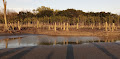
Everything is lost

Love is dead

Death hides in life

Life is dead

Even death is dead

It is a dead land in the dead world

Only time is alive

Time is the chief guest of the funeral of love

 Memories make fire

Love is burnt and so on

Time is burning everything

Dead souls are lamenting for the past

The sun stands behind the ceremony with pain

Tears of air blow over desert in vain

Procession of absence is an  imagination

Death bends all and each

Only death is true, nothing else

There is none to love.
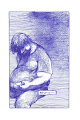
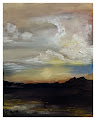
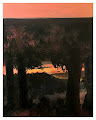
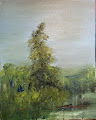
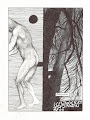
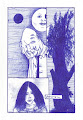
Artwork from Norman J. Olson
Poetry from Pippa Phillips
1.


hot pavement—

summer plays hopscotch

barefoot


2.


antipode—

the widening pupil

of a ghost eye


3.


white rainbow—

the sunstruck film

from last summer


4.


divining tomorrow

from a feather—


a dove

turns blue

to match the sky


5.


darkening rain—

the legibility

of dream words
Poetry from Adepoju Timileyin
She definitely wasn't singing.

This was a cry at the break

of dawn, I couldn't

understand her words but the pain.


Perhaps, hope of surviving the day,

the sky is enough to occupy species

but not ready to spice her lips.


Or the climate condition,

surviving the burning noon

or the cold that houses her haven.


She definitely wants a HOME

Maybe a listener or comforter,

and she did, as I watch her.


She was next to my room,

perching filtered tree on hope to survive.

Not all bird sings, some cries.


Title:- Cries of my neighbour

Adepoju Timileyin: Juste Ink


::::::::::::::::::::::::::::::::::::::::::::::::::::::::::::::::::::


Nigh on Nine


I rote on tales from granny,

about the last penny

that got married to the soil,

She must be lost.


I learnt of mistakes from granny,

that it shines with the evening sun

it's neither hot but hurts n' hunt.

Oh pains of losing a day!


I cleared anxiety n' shuffle my hopes.

I nailed my fear and caged my guilt,

And before the night came

I cleared the soil afraid of losing

my penny.


And so I dream

dreamt about my sleep.

And so I knew,

knows dreamland was an odyssey

to future n' Illusion pinned on mindset.


Adepoju Timileyin: Juste Ink.


:::::::::::::::::::::::::::::::::::::::::::::::::::::::::::::::::::::


My Grandma Tales


My grandma had said,

"even burial grounds makes noise"

She said, her father, My granny

still shouts, whispers

n' hold whips on wheel of hope.


She also said, Màmá Sódìki,

our next door neighbour, whose history says

she left to buy cloth for her children since birth, I don't know if to envy the twin, they'll have more to wear.


And Ìyá okẹ̀-odò who sit beneath

the ólùmọ́ tree and feed ears with Àló,

I once overheard nightingale

repeating her rhythm,

who dare not envy such sonorous tune.


My grandma said,

they made burial ground their haven

and scare us away from their abode

to home beneath momma's wrapper.


Poem by:- Juste Ink


::::::::::::::::::::::::::::::::::::::::::::::::::::::::::::::::::::


POET'RY


Where there is pain;

We proffer lines of comfort....

Where there is betrayal;

We sit them beneath stanzas of trust...

And where there is no one,

We are here, there, n' anywhere,

With themes of solitude enough

to gulp sorrows


We have chose to bear

children of their pains,

We have chose to carry

drops of their misfortune

on lines (art) of poetry.


Poem by:- Adepoju Timileyin: Juste Ink
Synchronized Chaos Mid-October 2022: Embracing the Mystery
FYI: Synchronized Chaos Magazine will hold an in-person event the afternoon of New Year’s Eve in conjunction with the Third Space Gallery in Davis, CA. Exact address and time to be announced.
This event is a concert, art show, and literary reading with the theme of Metamorphosis. What has changed over the past few decades? What can we learn from people of different generations about how to hold onto wisdom from the past while transforming and adapting to a new, and hopefully better, world? So far participants include the Davis High School Activist Club, speakers from Bet Haverim’s Social Justice group, and musicians Joseph Menke, Avery Burke, and the Electric Turtlez.
This event will be a benefit for Sacramento Take Back the Night and the Revolutionary Association of Women in Afghanistan, (which you may support online here) both of which are grassroots and anti-imperialist organizations working for all people to be able to safely participate fully in the cultural lives of their communities. We encourage attendees to donate what they can to support either or both organizations and then come enjoy the show!
For updates and reminders, please sign up here on Facebook or Eventbrite.
Also, Abdullah Al-Mamun announces Bangladesh’s search for high school creative talent.
Welcome, readers, to mid-October’s issue of Synchronized Chaos. This time around we explore the power and pitfalls of contemplation and various ways of understanding our world.
Henry Bladon harnesses insomnia to pose meandering questions about our existence. Similarly, Celeste Alisse’s protagonist ponders life by literally staring at the wall.
Yahia Lababidi relates the psychological insights he gained through his desert journeys. Mesfakus Salahin writes of embracing the mystery and the wildness of nature. Christina Chin and Uchechukwu Onyedikam highlight our inescapable connection to the broader natural world through images of light, water, and death in their poetic collaboration.
Ubali Ibrahim Hashimu finds his romantic emotions reflected by the beauty of the moonlight. Mahbub writes of a dignified love with an elegant sunset for a backdrop.
R.W. Stephens‘ photography dwarfs human subjects beneath trees and sky. On a more human scale, Kathleen Denizard celebrates the solace she finds in gardening and Channie Greenberg presents lush images of fruits on her kitchen.
Tanvir Islam presents a paean to birds, while the hero of Syed Tabin Ahbab’s science fiction tale harnesses trees to produce oxygen, the bane of robots gone wrong.

Gaurav Ojha opines that the best way to understand ourselves is through mindfully understanding our relationships rather than withdrawing from them, by isolating ourselves in the wilderness or anywhere else. Z.I. Mahmud probes a humanist way of connecting with the natural world along with our own society in his academic piece on Rachel Carson and David Attenborough.
Fernando Sorrentino’s short story takes a humane perspective as well. He humorously dramatizes the effects of rapid privatization of social services, in this case, criminal justice and mental health care, on a honeymooning couple.
Jack Galmitz observes the details of his kitchen as he cooks a fish stew. Maid Corbic presents a thoughtful paean to Prague and to Austria’s cultural heritage. Chimezie Ihekuna continues his countdown to Christmas with two pieces in which lovers and families eagerly await the holiday.
Oona Haskovec wonders about memory through an imagined photo. What might we be doing now, or soon, that will become important in the future? Sherzod Komil Khalil reminds modern city dwellers how foreign their lives and vocabulary would seem to outsiders in his short story.
David Topper honors his artist father’s memory by making observations about his life from his last painting. Christopher Bernard contributes a more ambiguous tribute to both Queen Elizabeth and to the earth in the time of climate change.

Ridwanullah Solahudeen acknowledges that the gifts of nature and the divine come and go, in our unpredictable world. Md. Tanvir Hossain reminds us that even our own actions are to some extent out of our control, while Faroq Faisal writes of human frailty and mortality.
Chloe Schoenfeld illustrates the senselessness of real-life violence through the metaphor of mangled dramatic productions.
In her other two poetic collaborations, with James Young and Kimberly Kuchar, Christina Chin draws upon fall, death, and Halloween imagery, again reminding us of our inevitable journeys to the grave.
Babatimehin Asiwaju’s poem relates the psychological distress of a lonely man who has barely survived great trauma. Mobarak Saed’s piece is of a trapped soul’s quest for escape.
James Whitehead’s intellectual poems probe mortality, innocence, and the development of a person’s character.
J.J. Campbell returns with a mixture of psychological determination and resignation, while Adepoju Timileyin writes of prophecy and destiny, concepts which may sound exciting, but also convey a lack of control and choice over one’s own life.
Sayani Mukherjee’s piece regales us with its bold life force, triumphant over misunderstanding and ignorance. J.D. DeHart’s speakers declare their own intellectual identity in the face of the obvious and subtle dangers of everyday life, including the pressure to conform. J.K. Durick also writes of social contracts and conformity, of self-expression through traditional and sanctioned channels.
Md. Nurujjamman’s detective tale shows a crime solved by one brave, conscientious and observant person. Richard LeDue shares his personal dreams of transformation, of building a better world.
John Culp sends up Dickinsonian odes to laying fear to rest, while Patricia Walsh urges us not to overlook the power misfits and introverts have, whether for good or ill.
Sayani Mukherjee, in a second piece, takes solace in her poetry and in the passage of time.
Aisha MLabo shares her artistic inspiration and aspirations, while Jaylan Salah celebrates the eccentric genius of loner and film director Jim Jarmusch.
Jim Meirose’s writing takes an unusual approach, with a surrealist reflection on the pope fish, while Peter Cherches renders up writing prompts as “not quite stories.”
Alan Catlin gives poems of discovery: found poems from book titles and postcards. But also pieces of minimalism and loss, of the power and cruelty of cultural and aesthetic erasure.
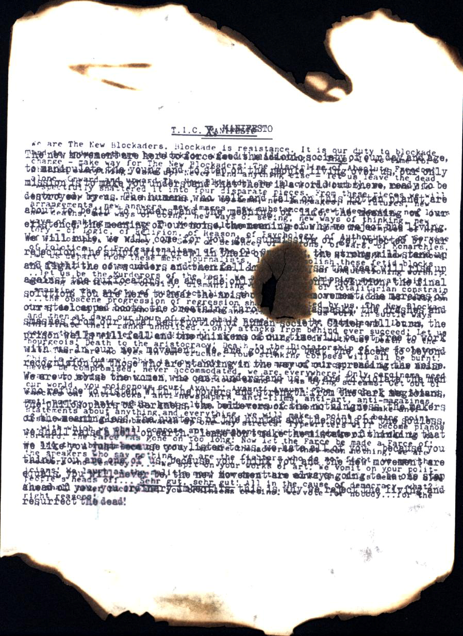
Robert Fleming creates “mathematical” renditions of human relationships and Queen music, while Kenny Johannson presents a stained and typed manifesto as a work of art.
We hope the diverse artworks in this issue will inspire you to contemplate and create as well.
Mixed media from Kenny Johansson