
JOE UP LATE IN A SEAPORT

Downtown seaport.
one in the morning,
bar closes,
Joe hears the shouts
of the drinkers
as they stumble out into the street.

New moon makes nothing clear,
gray clouds haunt the night sky,
boats rock, docks creak,
and, for human sounds,
it’s Joe’s cold breath
against the alcoholic choir.

The men
slowly struggle up the hill
to their homes,
their sleeping families.

Joe stands by the memorial statue
for all fishermen who died at sea.
The drinkers look elsewhere.
They don’t like to be reminded
what a storm on the waters can do.

Joe imagines it’s just like this,
with men, once the street lights
lose track of them,
vanishing in darkness.
Until it’s just him.
And a marble sailor gripping the wheel.
And that whiff of liquor,
tinged with salt,
intoxicating.


A DRUNK IN HELL

Stars are Basin Street
at midnight.
hung like rosary beads,
like the glow of cigarettes
in the mouth of the snickering moon.
I prefer it when the clouds roll in,
white and puffy
as used condoms,
heavy as mud on a coffin lid,
the dark dogs of weather
snarling through the grill
of a sudden rain shower.
Clouds gather like mourners
at the nuptials of death and booze,
of the sax solo
boiling away from a nearby club
and the passing taxi pissing water
down my pants' legs.
I'm heading home
in the wrong direction,
crashing through Saturday night's demented party,
a parade of one,
liquored up, beaten down,
a float that stinks of a hooker's breath -
you'd think life would know better
than to let me inhabit it.
Maybe I'll just crash now.
Maybe I'll drop
where I am and if no one finds me,
so much the better for them.
But there's always a cop,
always the cry of "Move on, buddy."
So I move on like the clouds,
so the stars can reappear.
They're not light, they're fire.
It's their job to burn a hole in me.


FLOOD VICTIMS

Anna's rolling in the mud.
Husband Dave scoops up large lumps of sludge
in his hands,
watches it slowly drip through the cracks
between fingers.

This is what you do
when the flood retreats
and the land's a sea of slush.

No dimples in a baby's chin.
No soft pink squeeze of flesh.
Nothing clean as a fresh white towel
or a pressed Sunday suit
or a bread roll and a pad of bright yellow butter.

Some people armed with shovels
try to dig the town out from under
this deep brown muck.
Why fight it, says Anna.
I battled the disillusionment of marriage,
the burden of children, the grind of two jobs,
and the river still overflowed its banks,
washed away all homes and cars and life before it.

Others pick through the dark caked graves
of furniture, food and family heirlooms.
Dave had nothing worth having,
now he owns a house of silt.
The arguments are buried.
The disappointments can't breathe.

So what if the town smells
like rot, mildew, decaying corpses.
Anna can live with the stench.
Dave can live with Anna.


READING A BOOK GETS ME HOT

kind of reading,
love-in-book form,
feel urged to utterance,
plunge my waterbody
into your fish-tank –

sex, notwithstanding deaths,
the critical mass of human endeavor,
on the countertop, in the aisles,
a lovely dove inside a man’s hands
as his face imitates the one who killed it –

sex, this American sex,
I’d step way out of line to have it,
devour everything in its path,
thrash like a drowning man
if it was air –

in human terms,
the liquid violence,
as a young boy,
stranger than Chinatown,
even in diminishment,
the loudest noise a guy can make -.

nerve and pulse
reach into the dark places,
a body far from home,
a blunt butcher
carving his way
into the interior
of a pink palace –

and it’s this book that
does it,
sears my hands,
steams my head –

who wrote it?
I did –

when was it written?
after I’m done -


DANCE NIGHT

Having started in thought,
I ended with dancing.
Not as embodiment
but because thinking
wasn’t getting me anywhere.
I hadn’t the patience
for old lovers.
Nor the mind for wondering
what went wrong.
And my limbs were crying out,
“Why not us!”
The results of the mental process
were as meager as hummingbird feathers.
And nowhere near as fetching
as the woman I was with.
Music was playing.
We stepped out on the floor.
My legs mule-kicked,
My arms flailed.
I shook my body
like interrogating a suspect.
And, all this time,
my head was bobbing.
But just for identification purposes.
Category Archives: CHAOS
Vignettes from Sheila Murphy
The Truth Has Scars and Needs a Coat of Paint

He has a personality the size of mainland China. A heart twice that size, if either could be quantified. Everyone he knows loves him except the one he loves the most. She tells her friends, "Why would I love him? Look how much he does for me now. How could he do more?"
Each day he wakes up dreaming she'll return. Each night he knows his dream has not come true. He hopes for better the next morning.
His friends don't want to say anything. They know that if they did he would be sad. The truth has scars and needs a coat of paint. Why won't anyone do something? They've all learned to tell themselves, "He has to want this change of heart; we can't do it for him." Same convenient excuse for those who face a drunk and lack the courage to confront. Convenience and comfort keep the world complicit.
One morning on a whim he glances in the mirror and recognizes a young face hidden behind the wiser eyes. He feels the urge to protect that child and learns he is inside him. The child begins to cry. The man he has become decides to rescue that innocent smile and polish it to match this moment.
He leaves the house, and people notice a different expression in his eyes. Freed of shackles, freed of myth, as if a rehearsal for another life, the same life that he almost lost.
He stops dreaming and begins to forge another dream, a softness, a younger self. A loved one from his heart.

Transition

She had a Rottweiler aura and a hostile resting face. Arrived late to the virtual meeting and proceeded to declare her territory. Others heard politely and mildly deferentially as she grabbed at what she did not understand. As if by instinct, an unspoken bond was formed among attendees who began to find things to admire in one another. Afternoon, replete with sunlight, overtook accumulating syllables that fell into a distance giving comfort. The center of attention shifted to a shared place where faces progressively read other faces and began to change into a unified resistance to the frightened one hoping to frighten them while gradually becoming irrelevant.

Martina Wore Her Oboe

Martina wore her oboe. It was her jewelry that set off pale silken fabric that further set off her labored cheeks that puffed out when she played. She expected the antagonistic fibers and the inevitable travails of sewing the reed and winding the red wire to hold it, knowing it would fray within a week. Just like her nerves that knew the drinking habits of her paramour, a lug who failed to bow to woodwinds. She had a trio that rehearsed together and performed beyond the metronome that unified their heartbeats and the fingerings. The man she was supposed to love would count the measures and the moments until cocktail hour that followed her performances. She knew they were not made for each other, nor was she made for the routine that overtook whatever life she might have had.


Her Bigness

She knew everything about everything and nothing else.  She lectured on how to treat succulents and keep them alive. She did not train for marathons but knew all that runners should do. She preferred to stand back and reveal her expertise over taking action. She wanted a promotion and had supporters who saw in her a kindred mediocrity that made them feel safe. She had her windows done, her nails, and she bought shoes because she weighed too much to be stylish. She routinely cheered for dictators, feeling very much in common with their lonely lanes as people undeserving expected help and would not get it.


Babysitter

Once we were deemed adults, we visited her in the wooded home. She took us to her studio of wool with sections sorted by color and geometry. All those quilts had come from what she had collected here. She was usually hard at work stitching together warmth. Then as if by virtue of a sudden recess, she took out a vast collection of tiny wind-up toys that tocked along and bobbed their heads atop the table. She laughed loudly, revealing at last her favorite recreation. We laughed, too, disbelieving the level of pleasure she derived from hearing the little automatons moving along with no incentive needed, just that burst of battery fuel and her laughter and eye light.
Sheila E. Murphy is the recipient of the Gertrude Stein Award for her book Letters to Unfinished J. (Green Integer Press, 2003). Her most recent book is Golden Milk (Luna Bisonte Prods, 2020). Reporting Live from You Know Where won the Hay(na)Ku Poetry Book Prize Competition (Meritage Press (U.S.A.) and xPress(ed) (Finland), 2018). Also in 2018, Broken Sleep Books brought out the book As If To Tempt the Diatonic Marvel from the Ivory.
Poetry from Patricia Doyne
                INVASION

		I cannot play outside today.
		My Mom’s afraid.
		Maybe we will go away,
		find someplace safe.

		My best friend lives across the street,
		but he got hurt.
		I’ll never play with him again.
		He went outside.

		And when we heard the BOOM-BOOM-BOOM,
		my Mommy cried.
		She asks which bear I want the most.
		My suitcase zips.

		But since we don’t dare go outside,
		we watch the street.
		Here comes an ugly monster thing.
		An army tank.

		The soldiers look like movie guys,
		all dressed alike.
		Hear that?  Shooting!   Loud and close.
		Our window breaks.

		And Mommy falls. Her head’s all red.
		She’s not okay.
		My Mom needs help.  What can I do?
		It’s war outside.
Poetry from Michael Robinson

Whispers of the Wind

Trees standing tall reaching to the sky.
When the wind dances between trees,
Leaving a trace of mist on the ground.
Leaves blow from one place to another.

A sound of a leaf brushing one another.
Clam finds a place among the breeze.
Serenity accompanies the whispering.
As the wind leaves a trail of freshness,

Clarity leaves me with a quiet soul.

Cemented Freedom

In the inner-city among the cemented sidewalks,
Buildings of cement reaching towards the sky.
Cemented bricks and cemented hearts that cry.
Among the cemented world lives freedom.

Freedom comes as flowers grow free.
Cardinals sing among the trees at dawn.
God’s freedom among the cemented city.
Freedom as the wings of the cardinal’s flight.

Among the flowers there is a life of beauty.

The Garden of Friendship
For Mary Kirsch

The sunshine, rain, and snow flowers grew.
As did our love for one another in hardship,
Flowers grow in the cracks of the sidewalk,
And through our fears and doubts of life,

Quietly as the candles burned on the altar.
We sat together with our hearts open.
In the garden love still grows,
Flowers grow through the cracks.

While we see the petals of the heart.

Summer Beauty

Her skin was the color of caramel
And her eyes the color of cream,
With a smile that warmed my heart.
She spoke like the wind in summer.

Seeing how gracefully she walked.
Reminding me of the beauty of life.
She sat by the window looking at me.
A moment of eye contact between us.

Remembering that glance in my prayers.
Poetry from Hazel Fry
If Not Ocean

Aggravated by some sort of storm
she pulses,
not woman nor sand.
I can’t tell, these days, what
woman looks like
or what her soft, seagrass stomach
should feel like in my palm
moving between the lines that tell me when I’ll die –

I mean, dictating my life. I shouldn’t
ask these questions.

What is a woman if not fluid
that drips through our fingers
and finds its way back under the waves,
gazing up, sea glass eyes, at mother planet?
Who will touch me again?
Who decides what body I will have
now. And in what hands.

Who is a woman if not malleable?
This feels nice –
Imagine, pale turquoise aquarium silk
that never struggles
or fights
or snags on jagged fingernails.
This is woman.

No,

is this living? Is this
a mammal’s biography – or the unborn eggs
of a polluted grandmother shark,
neck tied in plastic,
or is this a shell abandoned on the beach?
Is this the right kind of solidity?
Hazel is a sophomore in creative writing at Ruth Asawa School of the Arts in San Francisco. They have work published in several literary publications, including Synchronized Chaos, The Weight Journal, and Parallax Journal, and have performed their poetry at the Youth Art Summit in San Francisco and 826 Valencia. When Hazel is not writing, they can be spotted cuddling their three cats, holding their python, feeding their tarantula, or rescuing insects from being squashed.
Poetry from Al Murdach
Green Jesus

My church has a big green Jesus in front.
Originally the statue was bronze, I think.
Or maybe copper. Something more stately.

Well, now it's green so I try to live with it.
The pose is impressive: Jesus advances,
His arms are raised in welcome,
which is comforting and reassuring.

However, His green face makes one pause.
Is He ill? Is he pretending to be a green man,
someone from outer space perhaps?
Maybe He hasn't bathed recently
and has become a bit moldy.

Then again, maybe His color is symbolic.
I mean, He did talk about New Life,
and green is a Spring-like color.
It's also ecological and Jesus often
spoke of a New Heaven and Earth.

Still, the green is a little off-putting.
Kind of makes you want to stay back.
But maybe He doesn't like green either!
I remember Kermit the frog's lament:
“It's not easy being green.”

Probably isn't, come to think of it.
So maybe it's a lesson in acceptance.
With that in mind, I can be okay
with green, I guess.  It could be worse,
after all. I mean, what if he was...
purple?!!!!
Poetry from Jerome Berglund
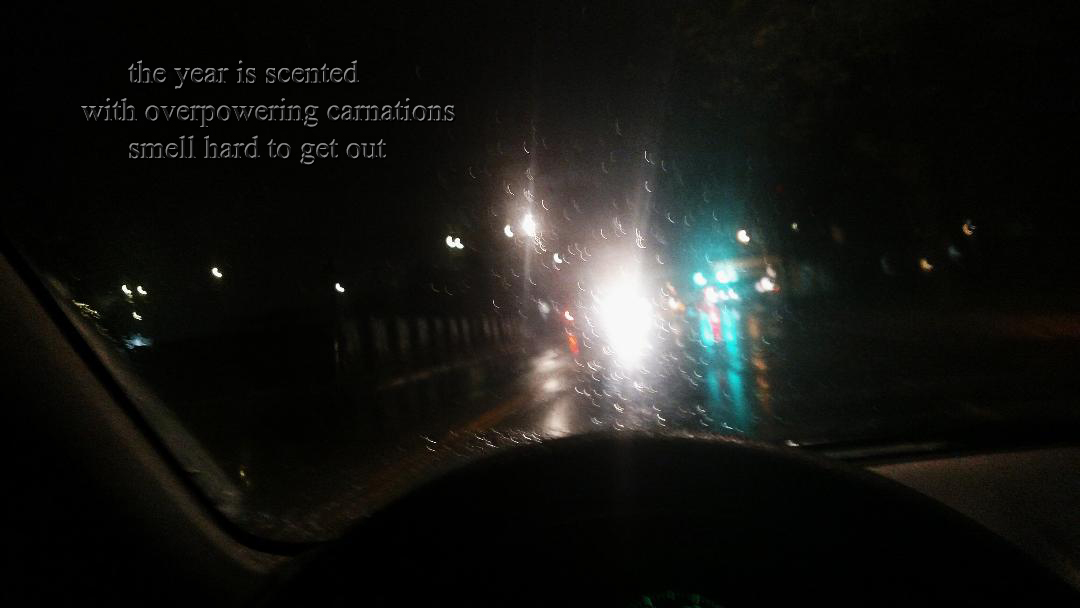
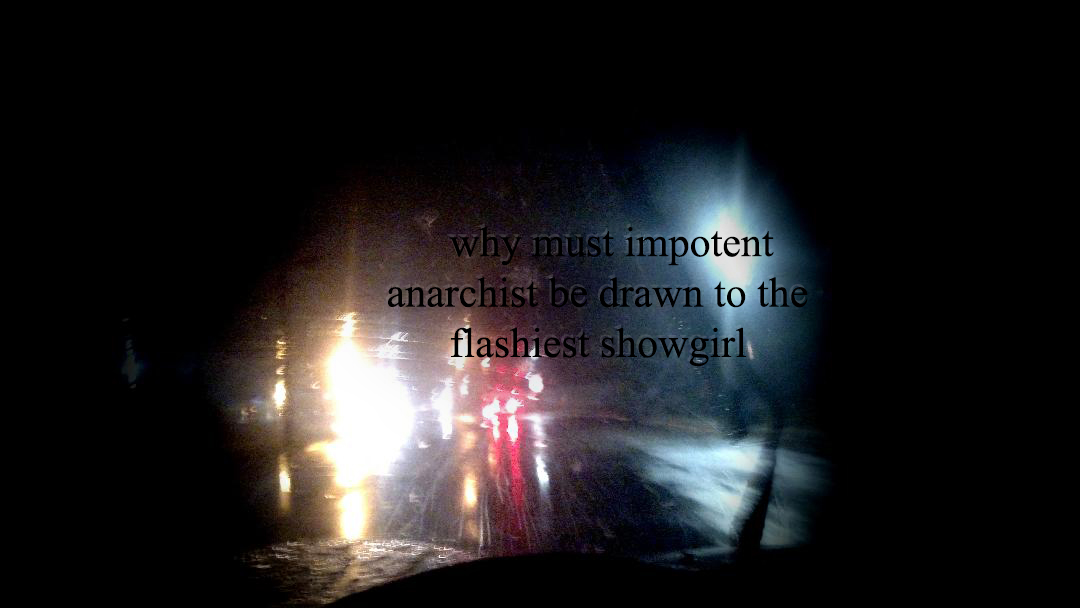
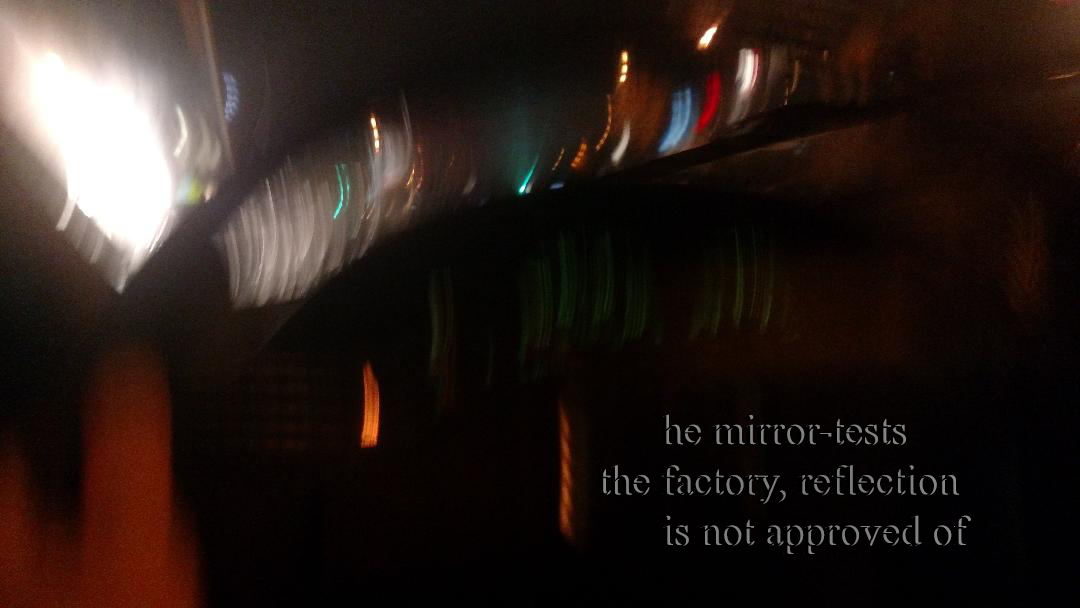
Jerome Berglund graduated from the University of Southern California’s Cinema-Television Production program and spent a picaresque decade in the entertainment industry before returning to the Midwest where he was born and raised.  Since then he has worked as everything from dishwasher to paralegal, night watchman to assembler of heart valves.  Berglund has exhibited many haiku and senryu online and in print, most recently in Tofu Ink Arts, Vermillion, Hey I'm Alive Magazine, and Fauxmoir.

He is furthermore an established, award-winning fine art photographer, whose black and white pictures have been shown in galleries across New York, Minneapolis, and Santa Monica.  You can read Jerome’s earlier published works collected in Bindle Bum and Paint Chips, available through Amazon.