
Horrors at Summer Camp

Candace Meredith

“It’s not a good summer camp without the scary predator lurking in the woods is it?” Janelle said as she used her fingers to crawl spider-like down her sister Daphne’s spine.

“Wait,” she laughed, “like Jason or Freddy…”

“More like lurking in the woods rather than our dreams…”

“Okay, so Jason…”

“Yeah. Like Jason.”

Then a sudden loud scream interrupted their banter.

“Josh!” Daphne wailed.

“What?” He laughed uncontrollably while the girls looked for their flashlights, thankful Josh had his where they could see his face.

Summer camp wasn’t the Yogi Bear resort for teens but a real trip away from home, nestled in the woods, staying in cabins and other nights in tents, and getting a real feel for the great outdoors. Camp City was called Camp Madness by the teens who go there because the whole experience was intense. Rocky owned the camp for the past decade; he built the place for teens who didn’t live much outside of their New York style condos. They weren’t all rich but many were; their parents sent them to camp when they were at their last resort; Rocky welcomed the troubled kids and made sure they learned a little about a hard knock life and a bit about survival. The camp was without electric, cell phone service and flushing toilets; Rocky had a thing for the authentic.

Their day began when the sun was still down and the only running water was the nearby creek. They literally had to collect water and boil it to purify its contents. The girls, Daphne and Janelle, struggled at first but then Janelle got a real thrill at night telling horror stories.

It was the first night Daphne stayed in her sister’s cabin when Janelle entertained the idea of the predator with the chainsaw.

There were at first taps upon the window when Daphne began to stay there. Janelle rolled over in her bunk and snarled, “go away creep.” She knew Josh was always up toying with them. As the taps grew louder still she got out of her bunk to confront him; she opened the cabin door expecting that Josh would leap from the bushes at any minute but instead her piercing scream rang through the camp and Daphne awoke with chills down her spine.

She went out first to console her sister who she fathomed had a nightmare; Janelle used to sleep walk as a child. Daphne’s bare bottoms of her feet touched the grass and moss to find that her sister was not there. The camp lights went on - mere lanterns that sat out the doorway for late night bathroom breaks.

The campers filed out their front doors to find out what Janelle screamed about when Josh approached Daphne.

“What happened?” He said groggily.

“My sister’s scream.” She was familiar with that scream.

Rocky arrived late. He peered into each cabin to find Janelle hopefully somewhere among them.

The camp was a place of strict confinement for troubled youth. But Josh concurred that someone went too far this time around.

When morning broke they formed a search party that spanned the distance of the camp ground. There were bear tracks that were seen pacing the camp.

“Must have drug her away.” A camper said when Daphne began to panic.

“Shut up.” She scolded Ricky who shrugged.

Some of the youth were callous as troubled as they were.

Ricky was one among them who dared to be so bleak and his impatience made Daphne want to scream back at him.

“Don’t worry, we’ll keep searching,” Josh tried to console her.

Rocky initiated a buddy system for going outside the cabins. A night duty was up through the night in the cabin’s office and a missing person report was filed.

A search team was organized outside of the camp after the confines of the camp were thoroughly searched and Janelle was reported as not being there.

Daphne slept in her bunk entirely restless when her folks did not bring her home. They were hippies who were getting stoned and after the meth lab experience Daphne didn’t want to be there; she was being turned over to the custody of Social Services once the camp ended.

The troubled youth mostly came from a troubled home. Rocky gave them a means to escape the life they were given. Boys like Josh and Ricky wanted the city but the camp gave them an alternative focus from the streets.

Nothing out of the usual had ever occurred at the camp.

“Can you tell us exactly what happened?” The officer asked Daphne.

“I heard her scream.”

The idea of her sleep walking did not alarm the officers who were reported for duty and the open case made them restless as a coyote, bear or wolf could be near.

That night without Janelle made Daphne feel restless when the tapping upon the window returned and she sat up in bed; for a cabin that sleeps six it appeared no one else heard the tapping at the window.

“Stupid bird.” Daphne assumed there was a woodpecker behind the pecking on the glass. The tapping continued and was too piercing to ignore and Daphne stepped out of her bed and tried to awaken one of the girls, “do you hear that?”

Tessa shoved her shoulder, “no jerk.” She wasn’t fully awake. Daphne sighed and then she heard her screaming but no one was waking.

Outside the wind whipped her face; the dry air made her feel like she was suffocating. She grasped at the base of her neck as though she had begun choking; she got down to her knees when she heard the breaking of twigs in the brush. She crawled to be back inside the cabin but she became weighted like an anvil, as if she were dragging her entire body through the muck, and she gagged. The air around her began to smell of raw sewage because she hadn’t known the scent of death and decay.

Her sister’s scream continued still and she felt as though she were dying; as if she were being pushed into the dirt; as if the land before her would part and she would cave into the fiery pit called hell; she knew not why but she felt the eyes of a demon cutting through her and into her soul but she could not get the demon out of her.

She choked more, trying to hold back vomit, as the stench of her sister’s rotting corpse permeated the landscape; her sister was all around her then. In the form of something demonic and gruesome. She thirsted for water as if that alone would lessen the intensity of the heat she felt.

This wasn’t Jason. It was something like a demon but this time it wasn’t all a dream; her demise wasn’t of flesh like Freddy; Daphne gasped for a breath but her lungs filled with a fluid - a substance like bile and blood that was curdled.

She didn’t know if the demon had taken her sister; she couldn’t see anything tangible but she felt it all like an all-encompassing evil; the stories in the books gave it no justice.

She felt the skin on her back as it began to tear like knives for claws slit her skin in a smooth and rounded edge as her blood began to seep into the ground that was giving way beneath her body. The look of terror on her face was insurmountable as Josh went to her but she was feigning death as far as he could see when the air around her became more stagnant and she thought he was coming to her possibly in a dream - perhaps all she needed to do was awaken - why couldn’t Josh see her - or what did he see?

Her sister’s screams grew louder like a piercing hum from the reverberation of an old motor like metal on metal. Josh stood before her but as though he was looking through her when he parted his trench coat and from beneath the cloak was a pick ax and Rocky came to him from behind the brush; Daphne wanted to scream like her sister but this time her cries were stifled in blood and vomit. She wanted to call for help - there’s no fucking bear! She thought to herself in a mind that could be her own worst enemy.

Could she awaken? Was it all a dream?

Rocky took the pick ax from Josh and together they turned toward her and stopped as if by command when the force of a demonic entity seemed to enter her.

She began to convulse and her eyes turned to a milky white when everything around her turned to a haze. Through the opaque lens in the complete blackness of night she did not become a voice; the sheer terror of hell’s inferno ablaze in her mind’s eye was the only moment of lucidity.

The beast was the demon, or the hound of hell, she could not know the difference and her blood curdled from her mouth like a cheese in the mix of heat: the stench was putrid and Josh and Rocky were unfazed as they entered the dark night and said they would have their way again- this time the victim would be more alarming.

“Must have been some bear.” Josh said from beside her hospital bed; but that hospital was unlike the others. She could not move from the straps that bound her to the bed and every night before sleep she heard the tapping of nails on the glass pane and the screeching cacophony of her sister screaming was beyond the nightmare. An intense scream that no one around her acknowledged. No one but her seemed to notice and so was the end of peace or life as she knew it. She was in hell.
Category Archives: CHAOS
Poetry from Debarati Sen
A Metonymy for life!

Luminescent sobriquets,
nuances and innuendos,
Oleander dreams,
a morsel of left over words
decoding syntax and semantics!
Taxonomy of hysteria,
transfered epithets,
 shifted proxemics
blurring the gap between space and dimension.
Peeping from behind translucent ballads
are hurrine rhymes
trying to carve a niche
within a heartfelt epistle.
Noctilucent clouds on summer skies.
Splurged with meta communication midst graphic metaphors.
Dangling dreams from distant corridors on sordid noons.
table fan,
Ma's flowing hair,
fish bones on aluminium plates,
the smell of egg curry in my fingers.
Baba's sweaty shirt smelling of his toils.
Thamma's  broken wooden chair!
Spring evenings
and an ivory reticence
wrapped within an empiricist sheet!
 A metonymy for life
climbing down the spiral staircase of remembrance,
wearing a galvanized smile!

Debarati Sen

Bio:

Works in Presidency University Kolkata as a Junior Assistant. Her debut poetry book called 'Blurred Musings' has recently been published. Recipient of the Tagore Award 2022 and the Sylvia Plath Women's Literary Award, Debarati finds emancipation in her poetry! She has also been the winner of the International Poetry Writing competition held by the Elite Book Awards in November 2021. She has also grabbed the third position in the National Poetry Writing Month 2022 contest hosted by the Elite Book Awards. Debarati features in the Council Year Book launched  on the occasion of Women's Day 2022 by Literoma in association with the Public Safety and Security Council of Bengal. She has also been declared as an Empalled Author in the International Author's Conclave held by Literoma in December 2021. She is one among the top ten poets of the Women;'s Day poetry contest organised by Delhi Poetry Slam. She has co-authored more than 15 anthologies and is recently compiling her first anthology as a compiler with the Quill House Publishers. Her poems have found shelter in prestigious websites like The Antonym, The Yugen Quest Review, The Kolkata Arts, Lapis Lazuli, The Das Literarisch, to name a few.
Synchronized Chaos Mid-June 2022: Bittersweet Reflections
Welcome, all, to June’s second issue of Synchronized Chaos. This month’s contributors take a step back, contemplating our world and our lives. Many show thought and care, aware of the loss and grief around us, and even the more celebratory or humorous pieces draw upon our fragility for inspiration.
Mark Blickley and Miss Unity’s ekphrastic work shows the vulnerability of a silent performer who must gesticulate for her living.
Multimedia work from Jeff Crouch, Soumailia Zoungrana, and Diana Magallón also involves performance, a dancer giving a very athletic performance in old-time gritty black and white, as if she’s a legend fading with time. Stephen Crowe sketches out a scene at a dying California lake.
John M. Brantingham’s novel excerpt deals with the passage of time. Its main character is an old man facing death, unsure how or when to share that news with his grandson.
Tess Tyler presents a lovely scene of outdoor family life in Northern California that turns into a lament for murdered children, while J.K Durick comments on gun violence and rising gas prices and Lewis LaCook’s surrealist poems probe death, intimacy, and wildfires.
Ahmed Aminu and Yahuza Abdulkadir mourn political corruption, violence, and social injustice, as does Mahbub, in a collection otherwise devoted to time-stopping moments of connection and beauty.
Candace Meredith’s short story brings the poetry of a fairytale to the real-life drama of drug addiction and recovery. Amos Momo Ngunbu’s piece also highlights the social influences we can have on each other, for good or ill.
Chimezie Ihekuna reflects on how social shame inspired him to falsify his report card as a child, and how his deed was discovered. Fatihah Quadri also remembers childhood vignettes entertainment from a friendly neighbor who has since passed.
Benyeakeh Miapeh contributes elegant, figurative verse about grief, while Ayiyi Joel reflects on the touch of a lost love.
Stephen House describes memories of the past and of lost causes. Steve Brisendine’s poems set in America’s heartland explore what we remember, what happened and what didn’t.
Robert Ragan’s piece skirts the fine line between describing the anger stage of grief and the way love can turn to possessiveness and hate.
J.J. Campbell’s poetic speakers are misanthropes on the edge of society who still crave some type of human companionship, although by sexually objectifying women of color.
Ryan Quinn Flanagan also writes poems of middle age, but with heavy helpings of humor tossed in with the laments.
Mehreen Ahmed’s pieces convey sanctity and privacy, while Michael Robinson reflects on the comfort he finds in Christ.
John Culp’s work illuminates the physical sense of elation. Ojo Olumide Emmanuel’s poems can serve as expression of his feelings, but can also seek lives of their own, independent of his will.
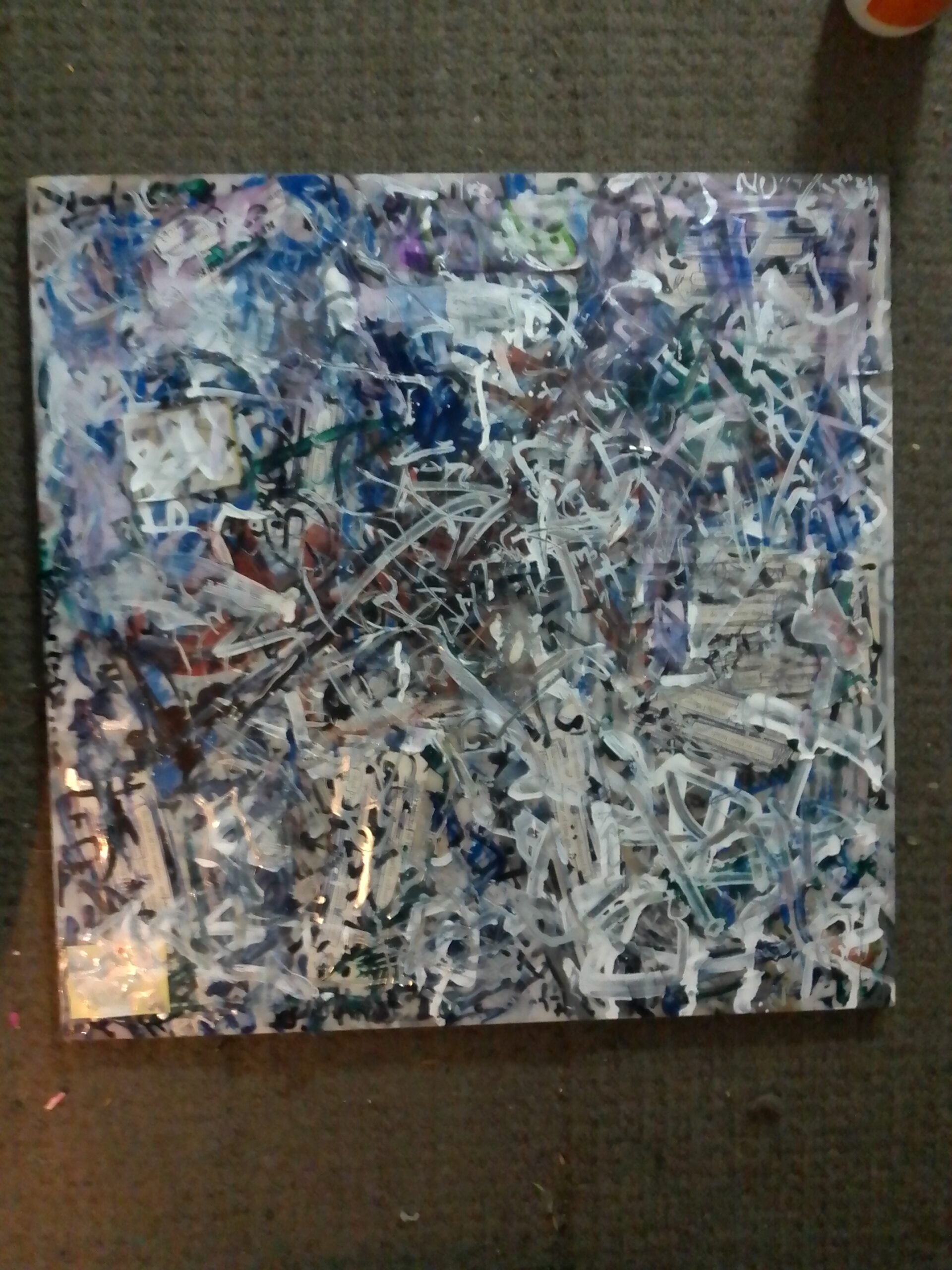
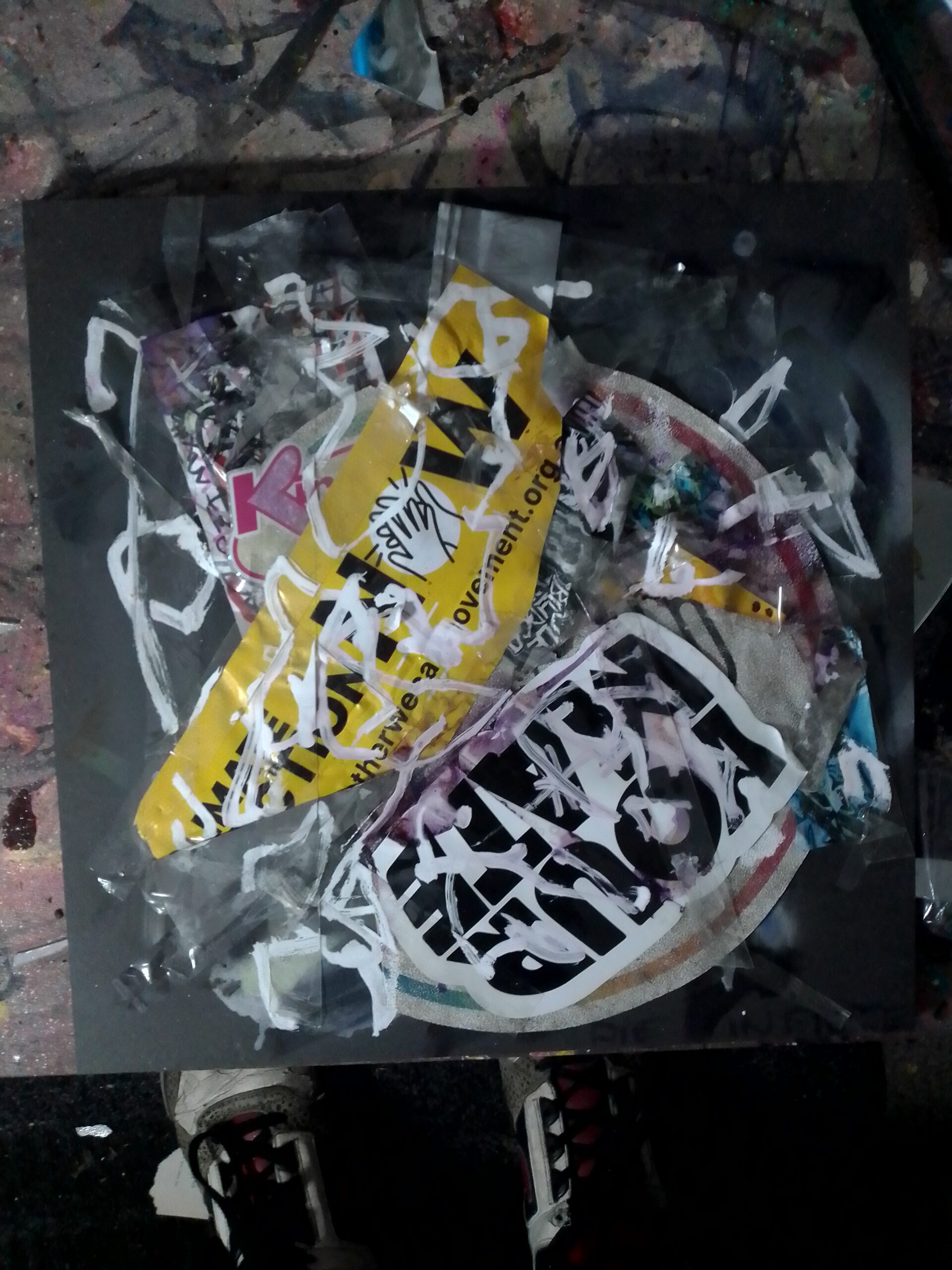
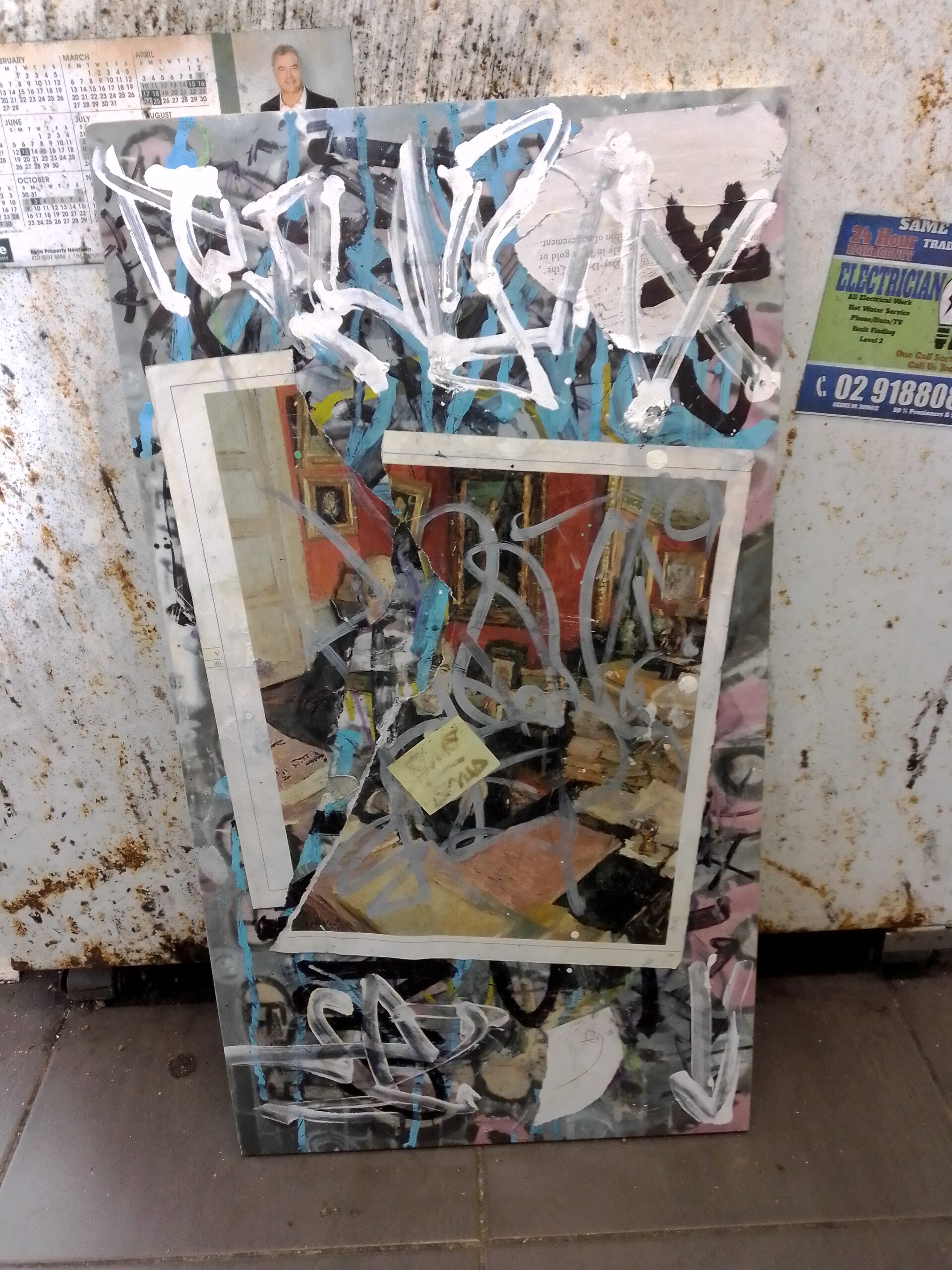
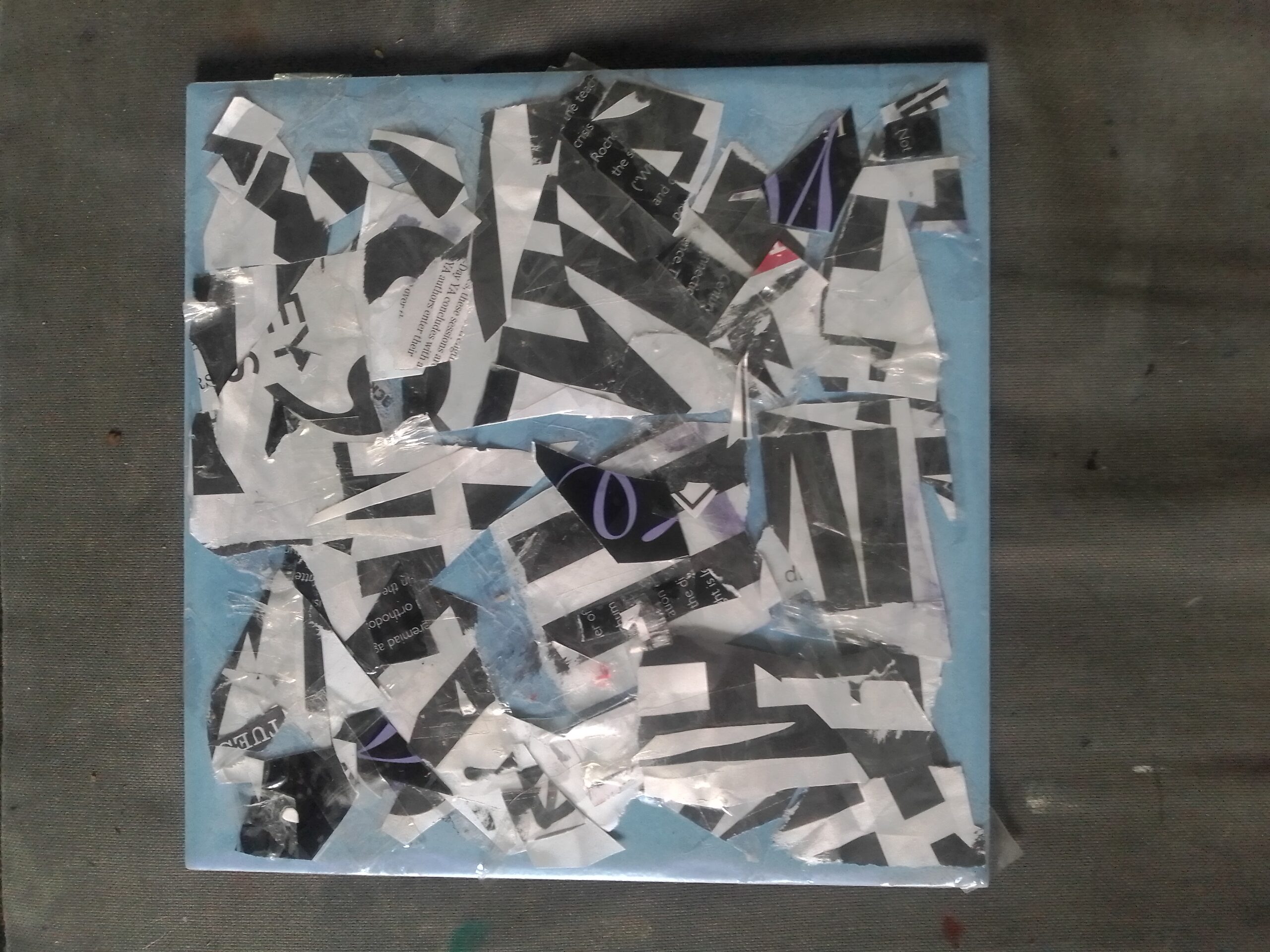
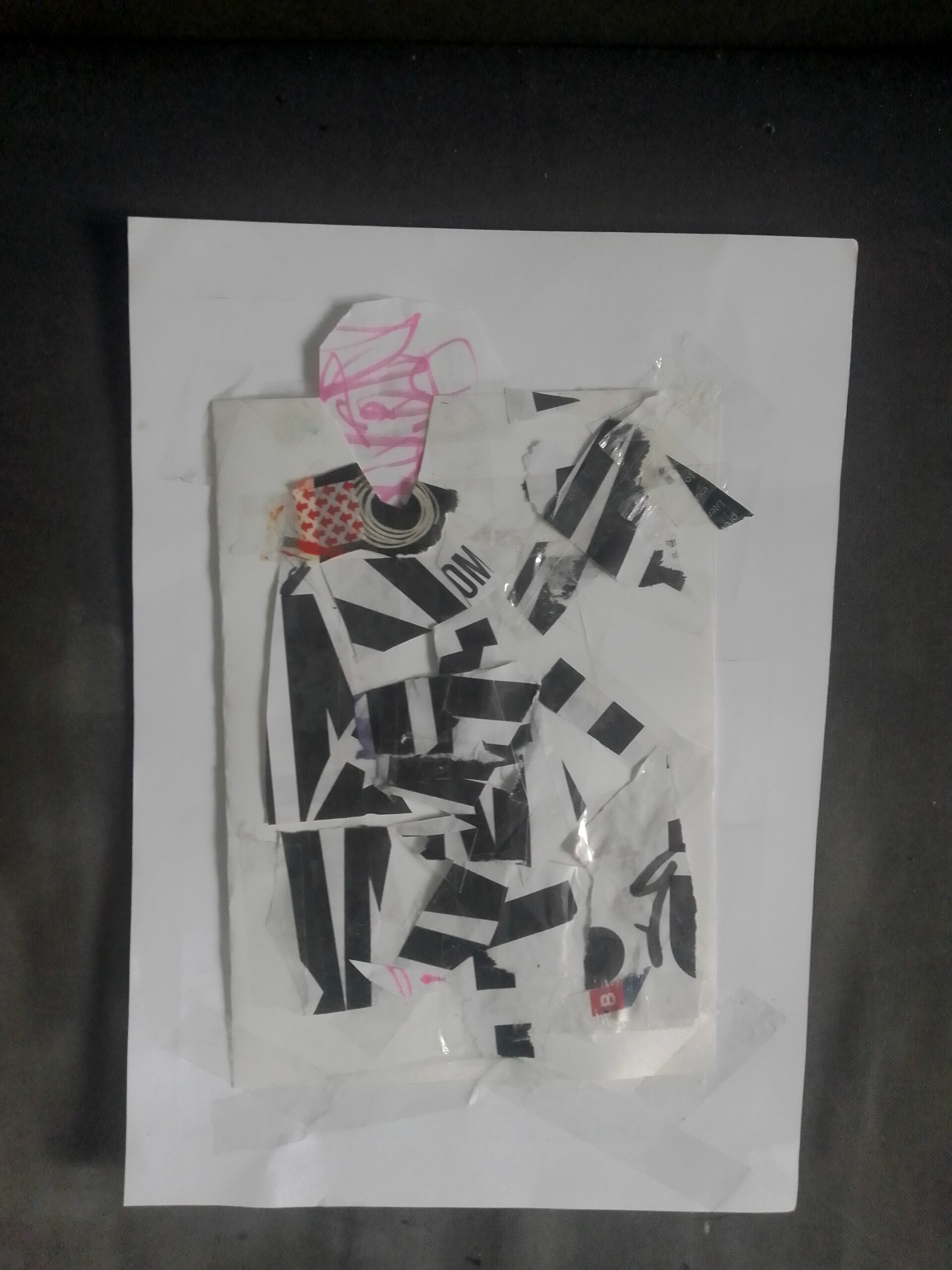
This month includes visual art as well: striking photographs of signage from Hannah Greenberg and graffiti-style work from Texas Fontanella.
Thank you for reading June’s issue of Synchronized Chaos.
Photos from Texas Fontanella
Poetry from Fatihah Quadri
Playground

Back then, we use to see a woman at the window,
Who made sounds with her mouth to arouse our laughter;
Our milk teeth cracking their surfaces like tiles on metals.
Then we would jump closer again and again, a-thirsting another sound.
We back-walked, and laughed at the window woman.

You would say to me “Run, run!, she is sounding again”
You and I laughed, legged footprints on the sand;
Like old copies of a testament that unfreezes memories;
Of fragile days, of clay-soaked Kanjami, of toy catapults, of the dark!


At dinner time, Flashes of the window woman mirrors in our cornflakes plates.
Longing stumbles through the threshold of our hearts like a flapping toucan.
We swam in a pool of imagination that everything began to wear her sound,
But we relocated.

Today, we miss the playground,
The window woman who breaded us with sounds that still echoes.
We held each other, ran to the playground,
Up the valley, we looked up to the window.
But sadly, nothing sounded.
Fatihah Quadri is a poet, creative writer, and a literary critic. She is a member of HCAF (Hilltop creative arts foundation), Nibstears poetry cave, B.G.T( Black girl’s tales) and a member of Al faheedah press, University of ibadan. Fatihah is a Nigerian.
Poetry from Steve Brisendine
Motif II: Crash/Landing
(A Semi-Tragedy in Two Acts)

I. On the south side of Liberal, Kansas

For some reason, we all know to gather along the old highway
just north of where it meets the bypass; between them, a wedge
	of dry prairie grass anticipates dawn and something else.

The plane comes in from the south: long, thin, white, unliveried.
(Picture the offspring of a Concorde and a 707, its father’s nose
	and its mother’s wings, and you have it close enough.)

Gear still retracted, it slides in and turns top, three perfect spins
down the field without bending so much as one thin dun blade;
	there is no sound but breaths all drawn in at once.

No flame, no laceration of aluminum skin, not so much as a cloud
of honest Kansas dust; nose pointed back where it came from,
	the plane rests unperturbed, maiden-flight pristine.

From somewhere in the crowd, a Panhandle-tinged twang:
	Well, that ol’ boy done ‘er again, didn’t he? Might
	as well go see what all he brung us this time.

II. Manhattan, Kansas, on the street where Jim Roper lived

Stuffed with burgers (eaten, as ever, standing in the kitchen),
we walk north toward the football stadium, discussing the
quarterback situation and whether threatened rain will hold off.

Someone – probably Gary – brings up a years-ago summer
solstice party, the honey-haired girl nobody knew who showed
up in a toga and antler-danced with Jim in the living room.

This is routine, ritual, sacrament, not to be disturbed by
anything like that belly-flopping 747 two blocks ahead,
plunging into low brick blocks where married students live.

Impact now, an infrabass thump and rumble. A fireball races
to consume families, tricycles, maples, all of us. It is red
and orange and beautiful; I breathe in and am not afraid.


Shawnee, Kansas, Which is Not Really Shawnee, Kansas: Dream II

This is another in a long line
of whole-cloth hotel lobbies
on streets which both exist and do not:

a tile-and-Formica spot
on an off-map stretch of Johnson Drive

(pick dumpy or retro
and either will suit, depending more
	on you than on the place),

and I’m trying to explain to Larry
that I did (eventually) recognize

the young Clint Eastwood and the
older one when I ran into both of
them at the coffeehouse in Union Station

sitting at a table with either Anthony Hopkins
or John Wayne – or occasionally but not
always both, though why the Duke should
resurrect for three-dollar drip is beyond me –

and for some other unfathomable reason
James Urbaniak, thin and vaguely dangerous,
who smirked at all of us and left halfway
	through the conversation.

Larry all the while fiddles with his phone,
poking it with a little screwdriver,
only making appropriate noises so as
	to seem engaged,

so I walk out into a half-dawn of
backlit plastic, oddly angled streets
	and lumen-polluted overcast.

I suppose I might eventually find my way
	back to the map and home –

that, or just go upstairs and fall into dream
within dream, still in my clothes on
forty dollars' worth of rented sheets.

Don't press me for a clear answer; I am and
will be asleep the whole sometime.

Bonner Springs, Kansas, Which is Not Really Bonner Springs, Kansas: Dream II

The stakeout is just beginning. I have time to go for coffee.
The town’s heart is only a few blocks south; its buildings
are taller than I remember, but this bodes well; somewhere
in this tangle of five-story limestone, there must be a place.

The sidewalk spans a ravine, brush-lined, hundreds of feet
deep. There is no handrail, and the walkway is less than a
yard wide. I take no shame in dropping to my knees to cross,
but a man on the other side rolls his eyes and tosses a few
	dead dogwood branches to impede my way.

No need; I am being called back. We have been made. Our
	target has seen telltale peanuts floating in his gutter.

(He looks like a television character actor of some minor
note, one who always seems to play a well-meaning but
largely incompetent foil to the protagonist. I will remember
his name someday, likely on my deathbed, and my loved ones
	will always wonder why those were my last words.)

We will have to take another tack, so we roll back into the
city along Kaw Drive. I see a coffeehouse, set back among
trees on the north side of the road. We do not stop.
Poetry from Mahbub

Standing on the Bridge

Standing on the bridge
I look straight around the bending structure of the world
To the end my eyes can't enter any more -going out of sight
The mind steps there where the unseen lies
I know all my loving dreams lurking there
How wonderful reflection of the water!
Brings out the unknown beauty and charm
Right time to start the journey to the horizon
The sky and the land kiss between
The soothing light dancing with the colorful birds
Suddenly the waterman sings out touching the heart
"O ki Garial Bhai!"

Chapainawabganj, Bangladesh
12/06//2022

In This Hot Summer

In this hot summer
I turn back here again and again
Under the large banyan tree
Drink the cool fresh tube-well water
And remove my fatigue
By your hand made spicy lemon tea without sugar
I walk through the green isle
Emerge the oxygen of the body
Sitting on the mound
How wonderful the sunset reflecting on the river!
In the hot summer morning
I walk out to the lovely open field
Observe the new light softening the earth
Awakening with the chirping lovely birds
Calling me back to the fondling childhood days
In the hot summer night
O disturbing sleep
Keeping hands on the forehead
Brood over the days passed
And the days on to the rise.

Chapainawabganj, Bangladesh
12/06//2022


Facing the Reality

Nowadays we can't cry to see the death of our brothers and sisters
Everyday every time it becomes natural - occurring death
It stops our cry to see the misery of others
Nowadays our heart can't respond like the past for love or sympathy
Sympathy or empathy -
Roles on the outer face of the body
Humanity or the group of the humanity
All lie in the hole
No sign of light to remove the black spots on the corner of the eyes
Every day it increases the line of the hungry children
The deaths on the roads, on the waters, in the sky or by shooting, throwing missiles
Adding the large amount of daily starving people
Around us facing the new change to solve
`Globalization' -the word
I believe the reality
How can I disbelieve my eyes, dear?!

Chapainawabganj, Bangladesh
13/06//2022


Love Breath

What I do everything for you
Your simple words of love
Simply touches my heart
I reach my goal - like the boat floating on water
Your simple words of love
Knock at the door
I enter your room lying by you
Charmed to what you say and hug
I take my breath and lose myself in the world
Where only you and I live.

Chapainawabganj, Bangladesh
13/06//2022