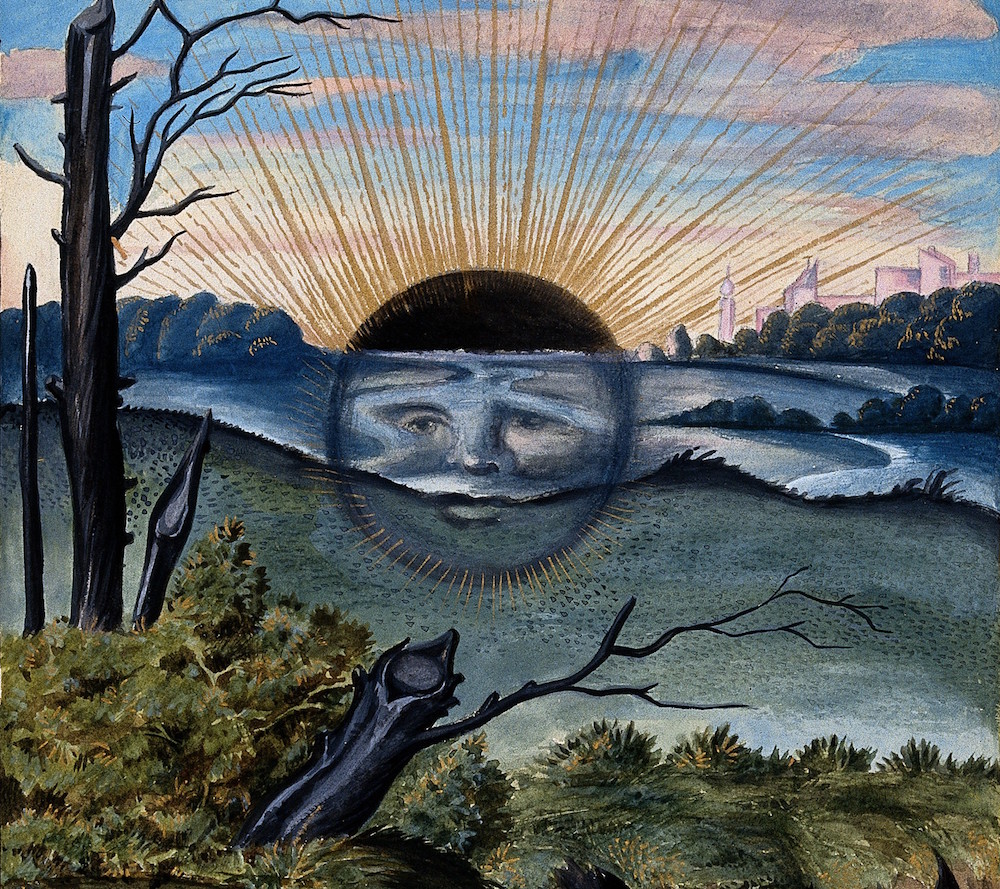
Gone like desolation chambers stalled down Main Street, housed in broken palaces, eaten by wolves. Said to be happier without stone and flame, said to be sleepless over trenches and hand pumped electrical diodes.
Screaming into the void.
She said she would not follow anymore. She said she had been made as constellation. She said she could not stand upon a single foot and would not wear a skull upon her head to seat her holy houses.
How can it be that standing straight and staring into emptiness has become a criminal offence?
How can it be that wishing to be sold as soil is open to the breaking pace of move and move and move!
How can it be that as she speaks she goes on loosing threads throughout her eyes until she simply sits and contemplates, finding enlightenment in figures of silver and gold?
How can we sit on grasses weightlessly and worthlessly, speaking tongues, waiting for projections to arrive in their abundance, screeching and embracing as they come and go at our command?
Wait I cannot see your eyes, I cannot walk this mezzanine and stride too perfectly without these tired lips.
How do you preach and wake so naked in the house of holy blood and money, slaked of thirst and waiting for the broom to help you sweep the floor?
Help me end this endless gloom, help me weep upon this stone, this sand that broke from stone.
Gone I said. Gone.
One Hundred and Fifty Thousand Dollars
Bloodshed against this vast canal wearing aimlessly the notion of hereditary opalescence
Martyr Martyr Martyr Martyr
Hear the drip-drip-drip of iron clad boats carrying these serfs addressed to ridiculous superfluous whatever whatever whatever
Take electrode and hide beneath systemic happenstance probing find triangulation through lips lips lips
Take car battery and sit within consultation reply injecting fluid locate triangulation here here here
Take speed velocity and live without pliable elbow sitting malformed love triangulation now now now
A Jaw Complete
Slack rope and add to evolution slip and fall as metallurgy leads the acid break
Stymied without skin rocking on the bell as shore and shoreline please the carnivore
Lamp shine and water slip sanded on the edge positive against negative against positive against negative
Repeat Ad infinitum
Sadhu Dreams
Are you waking tired Sadhu have you seen the emblems falling from their perches take your ribbon hang it from the bent spoke
Are you silent waking Sadhu have you touched regression and its parted lips place the emblem by the river dancing as a bird
Bio: Nathan Anderson is a writer from Mongarlowe, Australia. He is the author of the poetry book Deconstruction of a Symptom (Alien Buddha Press) and has had work appear in Otoliths, Gone Lawn and elsewhere. You can find him at nathanandersonwriting.home.blog or on Twitter @NJApoetry.
Nero fiddled; I play Slither io, Rome is burning again… ID2020, The Trojan horse of today, Preview of coming attractions, A reset is on the way… A chicken in every pot, How could anyone lose? There is no time to think, There is no need to choose, Only one train, Only one track, So then, All Aboard! Where this train Is bound for, Not even the engineer knows…
an old friend

had an old friend
that swore she
would never talk
to me again email
me this morning

wanted to know
if i was still alive

i get the feeling
she was hoping
to never get a
response
---------------------------------------------------------------------------------
a miserable death

just woke myself up
with a fart that smelled
like some animal met
a miserable death

that's the problem
with going to bed
before the sun
comes up

nothing good happens

before fucking noon
-------------------------------------------------------------------------------
where the smoke smells like roses

i want to live in a world
where david bowie and
tupac are sharing a laugh
over drinks in some neon
laced psychedelic bar

still alive

making music

keeping people questioning
all reality

where the smoke smells like
roses and success is the last

thing anyone thinks about
------------------------------------------------------------------------------
an uncertain world

uncertain times in
an uncertain world

your soft brown skin
always has a way
of calming me down

two steps back from
that proverbial ledge

destiny is there for
those that need to

believe
----------------------------------------------------------------------------
i was never meant to enjoy this

i don't complain
about the pain
any longer

the pills don't
work

and so far,
my liver hasn't
asked or begged
to quit

i figure these are
the days where i
am supposed to
learn that i was
never meant to
enjoy this in the
first place

and as bitter as
the truth is,

it only makes you
strong enough for
the next mountain

of pain
J.J. Campbell (1976 – ?) is currently trapped in the suburbs plotting his escape. He’s been widely published over the years, most recently at Terror House Magazine, The Rye Whiskey Review, Horror Sleaze Trash, The Beatnik Cowboy and Dumpster Fire Press. You can find him each day on his mildly entertaining blog, evil delights. (https://evildelights.blogspot.com)
all kaleidoscopes shattered, every facet of our beings,
bent to, immersed in, fragility.
It wasn’t the stars –
they are always saying
hoot! and ahhhh!
it has never been them nor
their sway upon our inner equilibrium and
our outer balancing of gravity.
It wasn’t even how deep and involved our prayers were
or even our feeble masks of courage,
denting our dignity so we could have a new form to try on,
taste, and learn what taste is, yet again.
What it was and is is chance,
the dispelling of random energy until the whole illusion grows
transparent – and we, divinely shocked out of
our complacency, our certainty,
resemble helpless fledglings, crushed
by a fall.
What it is is rising,
rising from that, still broken,
incapable of flight, but
capable of asking God
to lift us and wait with faith
for the rising up.
What it is is leaving
our crushed shells while still inhabiting them,
living for the fountain-spring, the miracle,
not working within the natural laws, not
manipulating those laws with tailspin good luck charms,
knowing the miracle is in our leaving,
accepting our unknowing
in this bright surrender, this marriage vow,
river received, inception.
Hurdle
Sorrow finds him,
primary, raw,
leave-taking, unexpected
as a push into freezing waters.
Cold sister of the kill,
hostile in life and in dreams.
It is good you are gone, I think.
I think it would have been better
if you could have gained depth,
and seen it through.
There will be grief. There will be more
hurting, but your ship is out on the ocean
and he doesn’t want you back on shore,
for he knows, nothing is worth holding
that doesn’t want to be held.
He is a Prince whose light is fed from the heavens.
He will experience extraordinary love,
raise children, hold a steady fulfilment
that nothing can snatch away.
There will be a building up after this devastation.
Eventually, he will see this loss as a gift,
a making room for a happiness
that requires no analysis and will not break
when it needs to leap.
Over
The wound is the wall
that gelds your desire,
prevents the granting
of your destiny –
holder of many secrets, entrusted with
genius vitality, and your mind
leaping into the sacred fires,
emerging with a discovered vocabulary,
a fruit-heavy tree at your disposal, giver
of never-ending nutrients, navigating
a route to the divine.
The wound is the wall,
is nothing in comparison to your offering,
is a miniscule overcoming.
When you know that
you will have arrived on the other side –
the floodgates will open, your great light
will engulf the city, countries, and hearts
of many different flavours.
The wound was the wall
was part of your strength, a glass
to drink from and describe its taste.
A new proclamation
is on the table, telling you
to walk through, accept
your innate purified power,
be received, be recognized.
Resolved
Forgetful, in exile,
in the fires of failure,
honouring suffering
like a story told in form,
a totem-working of visual permanence.
I bore my marriage
to the joyous wilderness in one hand,
and sacrilegious duty
in the other.
Today, I join these hands
to create stability, sanctuary,
creativity touching ground and discipline.
I burn the dead wood, releasing
my prisoner-identity and climb out of
the fishnet into deep fulfillment like
into a valley with a lake and untamed
foliage all around.
The pull and tug of two lives is gone,
tension internalized as useful energy,
as something to be incorporated, harnessed,
the generator of a mature dream – a dream
with no division, bound,
and happy to be bound.
Onward
Becoming passes into being,
and heightened intensity
is restored – every moment,
alert and bearing anxiety
for the reasonable necessity it is,
in this time, this coming year
of upheaval and uncertainty.
No joy will every exceed the joy
found when the light restored in your eyes,
and your arms embraced mine from the
hospital bed where you lay in a blue cloak
with tubes and needles, and your mind, finally aware,
your heart, at once fragile with shock and fear,
but vital, perpetual in its outpouring love.
Beautiful son, 18, eclipsing every ideal
with your innate wisdom, compassion and energy,
leaping in youthful courageous commitment, tough
where you need to be, strong and accomplished, kind
like the sun is kind by rising, and the hawk
as it flies overhead calling, driving home the mystery
and the majesty of the dream.
Bookends
I have this day to carry
like a large stone or like
a child.
I can whisper my grievances
to the pockets of clouds
in an otherwise clear sky
or I can make pictures with them
in my mind, be seduced
by their wispy ever-changing boundaries,
divulging the shapes of creatures
I can’t even name, or branches
extending to the edge of the sun.
I can take these last days of freedom
and deliver them to the bitter hunter
before their time or I can hold myself
proper, mortal, clothed in only the day, sober,
bound by neither inevitability nor expectation.
The day has many appendages, tricks and snares.
It is a matter of riding clear, slightly raised
above the ground, able to glide
like in the dream I often have, above the bubble,
sometimes above the trees, moving natural,
past obstacles and footholds, just enjoying the breeze,
the ease of a steady self-directed pace,
and even stopping for meals,
leashed to necessity as I glide,
as I hold a rock, a rose
in either hand.
Down Between
Down between
this between
the walls of dignity and duty.
Death tells me to sleep,
close the shades and curl up.
The future is a mountain,
madness with no clear line
of victory.
The future is a necklace
I broke but must somehow mend
and try to wear.
I refuse this burden
too blob-like, inhospitable to bear.
I refuse the harm of martyrdom,
the distorted secrets divulged in dreams.
Nail it to the wall, pour boiled water
on it and let it cook until it no longer bleeds.
End this relationship as it reduces your strength
to a failed conclusion.
Flood the garden, drain it
and plant chrysanthemums.
Lantern
I have made my prayers,
threw the disc and boiled
the water.
The wind is still
so I must be still.
When it moves, I will rise up
and move with it.
The stillness is not a coffin,
nor is it emptiness,
only a time of settling,
internal exploration
and four-wall refuge.
Plugged, unplugged,
a point of arrival and departure –
I will stay, listening like a small bird
is always listening, ready for flight,
ready to be initiated into a greater world
to match the poetry in my mind.
When I will move forward,
I have no clue, not yet.
That I will move forward is inevitable, so
I will not wrestle the quiet,
will not feel myself abandoned.
I hear a faint breeze moving
over there, over there.
I think I hear the first syllables
of my name.
Rescue
End of the day, relenting,
easing off the mighty restlessness
that overtook the morning
and most of the afternoon.
I know the deeds of my happiness
and the hot flesh branding of my imprisonment.
I know as I held council with the speakers
in my mind – all of them directing me
to wide open freedom and teamwork
to stave off the forces of death
and unrighteous burial.
They tell me it is time to close fast the wounds
that siphon out our power, be brave
as if we were in a deserted city on a mountain
surrounded by a rising sea and shouting winds
clanking their lock-fast swallowing chains.
Hold out they tell me, on the highest tower,
at the highest point, and never
let our trust become captive to fear.
They tell me, even though we look right,
we look left, seeing nothing but sky and clouds,
even though our ankles and knees are already immersed,
as the smells of fishy salt fill our nostrils,
holding our hands above the pressing doom,
engage with God, they tell me.
All at once, the voices tell me,
stand equal, and in that equality,
the light come.
Let us be one and we will know mercy,
stronger than gravity, than all of our bones combined.
The light will come and it will love us,
conquering, alleviating the final struggle.
Cage of Many Pockets and Layers
Lead,
into the land of vermin,
infesting the once blooming shores,
past the emergency-alarm, into
living fires, boiling and sharp in
their arrogant countenance.
Alone on a humble rock, standing –
arms folded, then stretched wide and up.
I take the hand and am led to a land
that tests my dignity and my resolve.
Many voices I must lose, people to leave behind.
The ship is the hand
leading through levels of horror
until the gate opens
to the possibility for redemption.
Wings of demons block the sky – pilgrimage eternal,
shaking off pity for the futile swarm moving
like lips of a mouth moving that offers no sound or groan.
My mind is tied to heaven, committed to resurgence.
My heart breaks but it is still whole, leaving,
being led over the land of naught, where there is plenty
of self-righteous indignation, self-sorrowing gleam
and the shadows,
led through and over
flailing limbs, bodies multiplying –
a thickening mass, swirling, swirling…
Allison Grayhurst is a member of the League of Canadian Poets. Four of her poems were nominated for “Best of the Net” in 2015/2018, and one eight-part story-poem was nominated for “Best of the Net” in 2017. She has over 1,260 poems published in more than 500 international journals and anthologies.
In 2018, her book Sight at Zero, was listed #34 on CBC’s “Your Ultimate Canadian Poetry List”.
In 2020, her work was translated into Chinese and published in “Rendition of International Poetry Quarterly” and in “Poetry Hall”.
Her book Somewhere Falling was published by Beach Holme Publishers, a Porcepic Book, in Vancouver in 1995. Since then she has published eighteen other books of poetry and five collections with Edge Unlimited Publishing. Prior to the publication of Somewhere Falling she had a poetry book published, Common Dream, and four chapbooks published by The Plowman. Her poetry chapbook The River is Blind was published by Ottawa publisher above/ground press December 2012. In 2014 her chapbook Surrogate Dharma was published by Kind of a Hurricane Press, Barometric Pressures Author Series. In 2015, her book No Raft – No Ocean was published by Scars Publications. Also, her book Make the Wind was published in 2016 by Scars Publications. As well, her book Trial and Witness – selected poems, was published in 2016 by Creative Talents Unleashed (CTU Publishing Group). More recently, her book Tadpoles Find the Sun was published by Cyberwit, August 2020. She is a vegan. She lives in Toronto with her family. She also sculpts, working with clay; www.allisongrayhurst.com
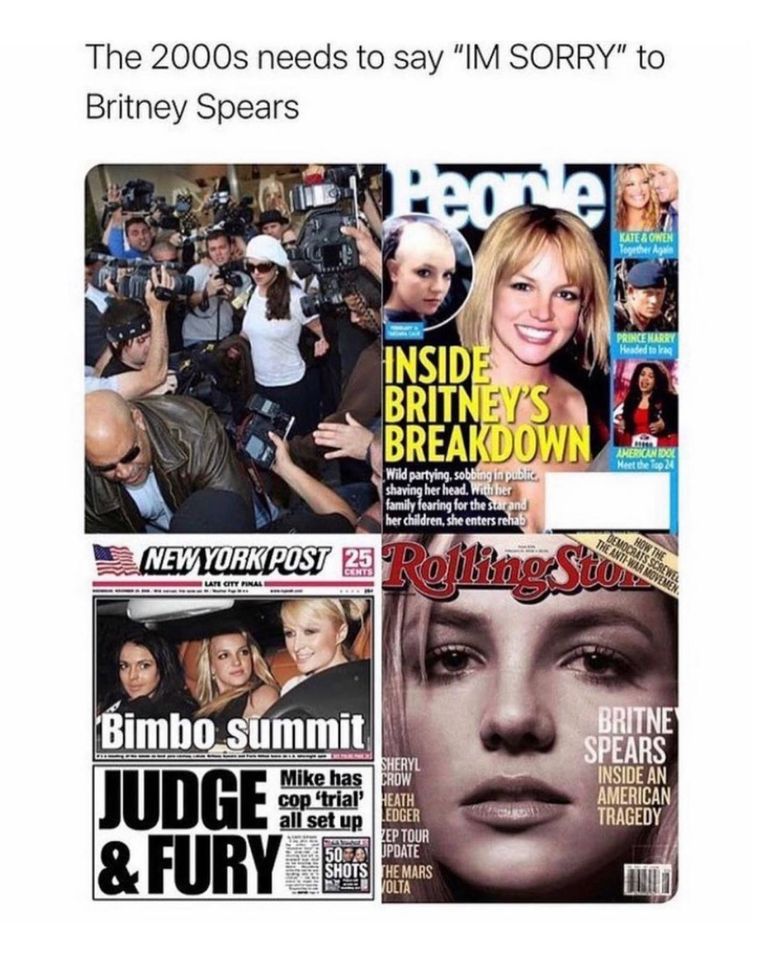
The following is an excerpt from a forthcoming essay by Teresa Smith reflecting on the social and political of the suburban United States between the launch of Britney Spears’ first and second albums.
✵
CW: anti-Indigeneity, murder of Indigenous people, racism, colorism
✵
To my knowledge, there was not a single Black, Latino, or Indigenous student in my graduating class (Issaquah High School, class of 2002). We also didn’t have any teachers, local leaders, or town historians who weren’t white.
In 1997, my last year of middle school, around sixty juniors and seniors from my future high school drove to another city to destroy an Indigenous artifact. It was a totem pole created by a member of the Snoqualmie Tribe. The totem pole had only just been finished and it was slated to be the site of an upcoming celebration over the Tribe’s victory in their long battle to win federal recognition. Prior to the planned celebration, a group of sixty or so Issaquah High School students, led by the football team, drove to the freshly carved totem pole in the middle of the night, chopped it down and set it on fire.
In the weeks that followed, the local newspapers tended to use the term “peep rally” to refer to the incident. The local media also liked to emphasize that the man who carved the totem pole had been an “adopted member” of the tribe, as if the Snoqualmie nation didn’t have the sovereignty to welcome new members, as if this made what the high schoolers did not count.
Our high school’s mascot was “The Indians.”
Following regional media coverage of the incident, outsiders began writing angry letters to the editor of the local paper—perhaps the tokenization of Indigenous people and this hate crime were related? That was the general tone of the letters.
“We’ve been the Issaquah Indians since 1917,” a white woman from the historical society said to me one day, in a huff. “What do these out-of-town liberals know? This is our heritage!”
I began volunteering for the local historical society when I was in middle school (it was a good way to get out of the abusive environment at home) and I would sometimes staff the front desk at the old town hall, which had been converted into a museum. The building was named for the white man who is credited with founding Issaquah, and I would eventually that this man was so famous for murdering members of the Snoqualmie and Sammamish people that, according to legend, once he and his family ran out of bullets so they began to pull nails from the walls of their own home so they could load them into shotguns and keep shooting Indigenous people.
The Issaquah High School mascot was changed to the Eagles in 2003, but there are still hundreds of schools around the country with mascots that depict Indigenous people. When Indigenous kids look around in their daily lives for representation, this is what they see: Some high school mascots are wild animals, others are Indigenous people.
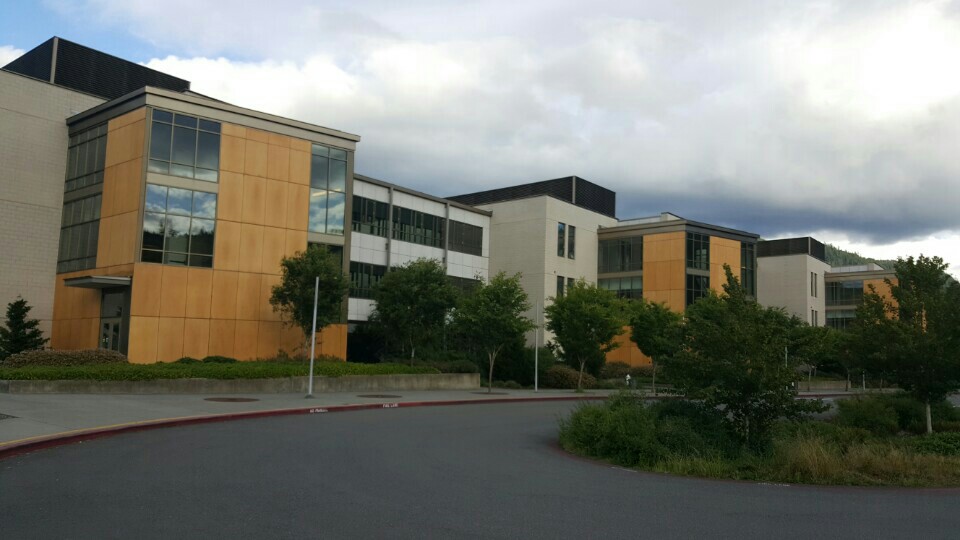
Issaquah High School
✵
In many parts of the country, the White Flight of the 1970s had grafted rather cleanly onto the remnants of earlier white supremacist movements. Our “commuter suburb” had been a known as a Klan haven in the 1930s, and my mom, who was white, didn’t see any problem with this. As for myself, I didn’t pass as white, at least not there, not in Issaquah.
The old ladies at the historical society used to grill me about my origins. They were always smiling, acting cordial as they tried to wrangle the truth from me about “where I was really from,” as if I was intentionally hiding it from them. Their questions didn’t make any sense; I was born in Oregon and had lived in the Pacific Northwest my all my life. Sometimes when I would go to the gas station to buy candy after school, old guys in hunting caps would walk up to me and thrust their big pink noses into my face, demanding to know where my accent was from. Uh…accent?
It wasn’t until I was in my late twenties that I left the Pacific Northwest and learned that in other parts of the country, I read as white. It was like falling into a different universe. I spent so much of my young adult years trying to prove myself to everyone in town—my photo was always being printed in the local paper for things like winning the school walk-a-thon, raising money to rebuild a local playground, running a petition drive to save a nearby wetland. I was just so eager to show that I was that “exceptional person of color.” Even after things fell apart at home and I moved into foster care, I was still actively working on volunteer projects. During my senior year of high school, a plaque was installed at a local mall with my name on it, honoring my service to the community. It was so strange moving to California, and visiting New York, DC, Texas and finding out that in those places, people don’t expect me to constantly prove myself.
Sometimes looking into the mirror feels like gazing at one of those Magic Eye pictures from the early 1990s. If I look at myself one way, all I see is static, whiteness, the markers of colonial privilege. If I turn the other way and squint a bit, this caricature pops out, and I can almost find the features, however faint, that the white supremacists in my hometown used to frame me as an outsider, a sidekick, a suspicious person. Someone always at the periphery, never at the center.
Years later, I would be applying for food stamps in the bigger, safer city of Oakland where I began living in my twenties. I worked full time, but rent was taking up nearly all of my paycheck. The social worker became angry when she found out where I was from. “What are you doing draining our social services here?” she snapped. “Go back home, back to where you belong.”
Just a few months before, I went back to Issaquah for a brief visit and tried to leave a few copies of a brightly colored activist newsletter on a café newsstand. It had become a habit, leaving around little zines and newsletters that my friends and I made in South Berkeley about the dangers of climate change, the 1%.
“Get out of here with that gay trash,” the café owner was suddenly shouting at me. “Go back to Capitol Hill!” At first, I was shocked, indignant. This was my hometown! Didn’t he recognize me? I used to deliver his newspaper. Didn’t he know there is a plaque with my name on it at the mall? I wanted to explain, to make him see who I was, but then I saw him reaching for something and I ran out of there before there was time to see if it was a broom or a gun.
This month’s issue of Synchronized Chaos is anchored in ekphrasis.
I first learned of ekphrastic poetry from one of our contributors, Neil Ellman. According to him, “It sounds more intellectual than it is. It is no more than writing a poem expressing one’s reaction to a work of art.” Ekphrasis, however, is not limited to poetry. Often analogous, ekphrasis prompts a painter to interpret a poem, a photographer to portray a song, and so on. Neil says, “One very common way of explaining it is that ekphrasis involves a “conversation” between two forms of art.” Therefore, it is safe to say that ekphrasis epitomizes the conceptual harmony of “art-on-art”.
Teresa Smith comments on the resurgence of interest in 1990s pop singer Britney Spears and suggests we turn our attention to other neglected people from the period who continue to experience injustice today.
Egyptian diplomat H.E. Moushira Khattab, interviewed by Federico Wardal, emphasizes education as a means of combating human injustice in the midst of national revolutions. She highlights the importance of her involvement in child welfare organizations as an extension of her human rights initiatives.
Mark Young has the innate ability to guide us through not only the art, but potentially the mind of Magritte. Each detail within every artwork seems to speak to our common human experience. In kind, Patricia Doyne poetically dissects the intentions of da Vinci’s Vitruvian Man and ushers us through the dynamic depths of The Great Wave Of Kanegawa.
Michael Lee Johnston likens coronavirus to the crucifixion – the irony of the crown. He then goes on to examine change and movement through the holiness of the Roman god Mercury. Poet Hongri Yuan expands our worldly awareness with bodily translucence and chronological truth. His multisensory lines heighten our self-understanding and existential potential.