Screenplay from Chimezie Ihekuna

Title: Santa In Two Worlds
Adapted from a book by Chimezie Ihekuna (Mr. Ben)
Screenwriter: Robert Sacchi

Genre: Crime Drama

For reviews, production consideration and other publicity, please contact us through the email addresses below:

– mrbenisreal@gmail.com

– rsacchi@rsacchi.20m.com

Synopsis/Details: 

Santa’s world was in shambles. Just released from prison, having spent over a year, he was always the talk of the entire Santiago town. His long criminal records of stealing and drug-trafficking were reasons the 22-year-plus-old-man was always on the lips of every Santiagoan. Santa walked the length and breadth of the town in confidence but asked himself: “Why in the world are people of Santiago keeping me at armslenght, whereas I don’t mean any harm, I want a change but this addictions of crime wouldn’t help matters?!”

Like the old saying: “blood is thicker than water”, Santa’s family was an epitome of crime. His father was said to have died in a gun-battle with the popularly known Men of Peace, The Santiago Police Force, after an unsuccessful robbery operation, three months before Santa was born. His mom, a prostitute and drug addict, was a happy-go-lucky woman: flirting with any man she encounters on the streets of Santiago and beyond in exchange for drugs and money. Santa, having being raised by her single-handedly, grew up to embrace crime wholeheartedly. Santa thought of turning a new leaf; change for good and for the better. He craved for a sense of belonging and acceptance by the people. Santa looked forward to when the people of Santiago would embrace him like their brother. How to go about it was very confusing… There was no one he could confide in. Maria knew next to nothing! Her life was all about prostitution, drinking, smoking, despite being hospitalized at the Santiago Maternity Home.

In his ‘blur’ quest for the desired change and to avoid being ridiculed by people of the community—young and old, Santa foot-marched to the San-Amazona forest, Santiago’s most interior part to think about his life. There, he encountered a strange-looking plant but remembered what his mom would tell him about anything he saw as strange…The Tree of the gods. He chewed the leaves very well and swallowed them. Santa’s sudden weakness turned him to sleeping on the floor, under the canopy of the ever-green Tree of the gods.

Santa saw one thing he has never known—The unknown world of nature—where he saw exactly him in another world under a different situation but one thing connected them: CHANGE! Though they couldn’t get to see each other physically, both of them got what they wanted.

It was a world that would translate as: Santa in Two Worlds.
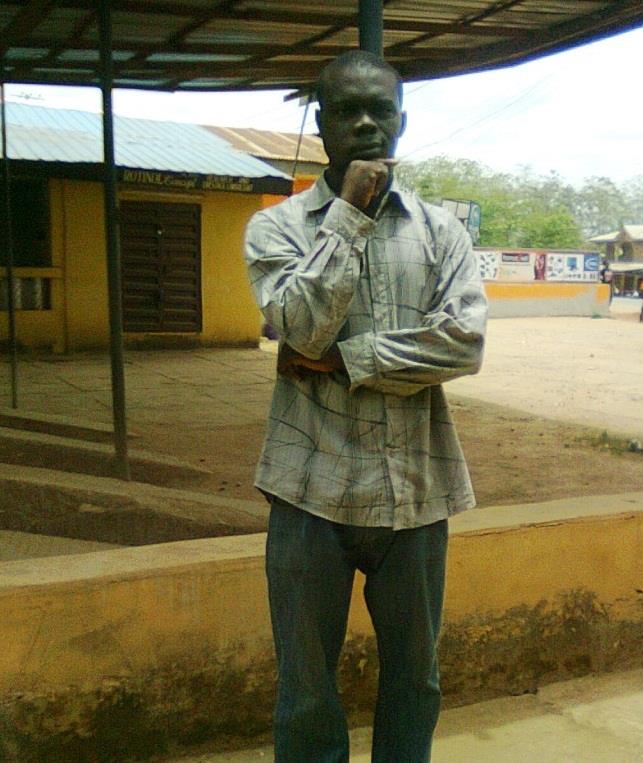
Chimezie Ihekuna (Mr. Ben) Young Black man in a collared shirt and jeans resting his head on his hand. He's standing outside a building under an overhang.
Chimezie Ihekuna

Poetry from Michael Lee Johnston

Virus in the Air, Spasms in my Back

Audio of the poem
Microscopic image of a coronavirus in a dark red light, surface proteins sticking out

There’s a virus in the air, but I can’t see it.

People are dying around me, but I can’t save them.

There are spikes pierced in my back,

spasms, but I can’t touch them.

Heartbeats, hell pulsating, my back muscles,

I covet in my prayers.

I turn right to the left, in my bed, then hang still.

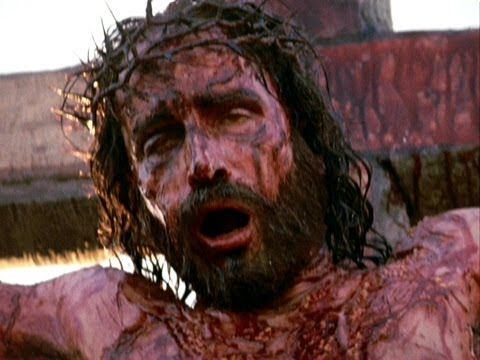
Nails impaled, I bleed hourly,

Jesus on that cross.

Now 73 years of age, my half-sister 92,

told me, “getting old isn’t for sissies.”

I didn’t believe her—

until the first mimic words

out of “Kipper” my new parakeet’s mouth,

sitting in his cage alone were 

“Daddy, it’s not easy being green.”


Leaves in December

Three photos, one of a white man in a blue jacket, one of an orange leaf on a black and white background, another of a yellow leaf, all against a blue background.

Leaves, a few stragglers in

December, just before Christmas,

some nailed down crabby

to ground frost,

some crackled by the bite

of nasty wind tones.

Some saved from the matchstick

that failed to light.

Some saved from the rake

by a forgetful gardener.

For these few freedom dancers

left to struggle with the bitterness:

wind dancers

wind dancers

move you are frigid

bodies shaking like icicles 

hovering but a jiffy in the sky,

kind of sympathetic to the seasons,

reluctant to permanently go, rustic,

not much time more to play.


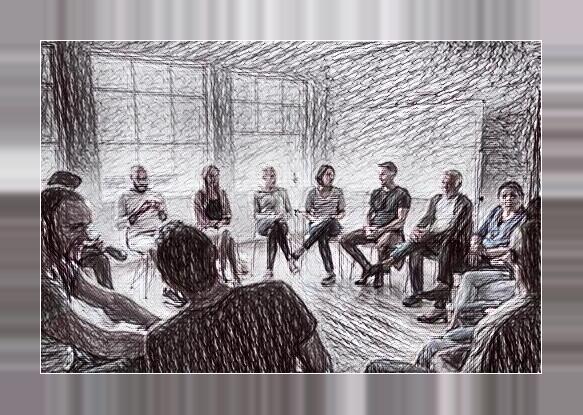
Group Therapy

Wind chimes.

Wind chimes.

It’s going to rain tonight, thunder.

I’m going to lead the group tonight talking

about Rational Emotive Therapy,

belief challenges thought change,

Dr. Albert Ellis.

I’m a hero in my self-worship,

self-infused patient of my pain,

thoughtful, probabilistic atheism

with a slant toward Jesus in private.

Rules roll gently creeping

through my body with arthritis 

a hint of mental pain.

Sitting in my 2001 Chevy S-10 truck,

writing this poem, late as usual.

It’s going to rain, thunder

heavy tonight.


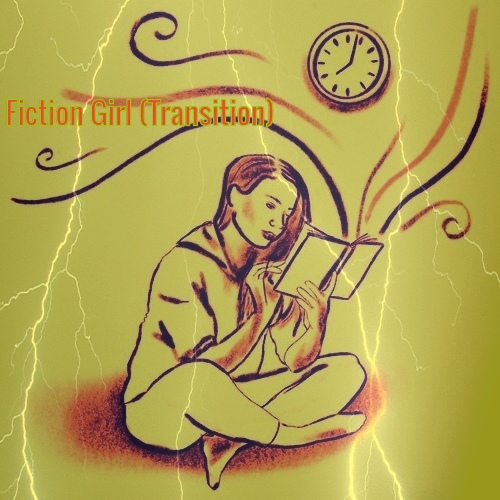
Fiction Girl

(Transition)

Drawings, then poems flip over to fiction; 

the flash girl rides this ghost of the invention.

Insecure in youth, switch girl from drawing

to poetry, extension flight, outer fiction space,

yours is a manner of words at work. 

Mercury is a god of movement.

A new skill set, brain twister, releases 100 free plays.

Life is a version of old times, fresh starts, torn yellow pages.

I focused on you last night; I watched your head spin

in sleep, a new playhouse of tree dreams, high shifting.

Changes are leaves; I lift your spirits to the gods of fire,

offer you thunderbolts practice your shooting in heaven

or hell, or toss back to earth.

Change is a choice where your energy flows.

No computer gods will help this poetic journey.

May you cry out loud on route to fairytale creations.

You are the chemist, the mixer girl shifting gears.

Creativity is how the gallery of galaxies cement.

Flash fiction lines cross stars.


Cold Gray (V2)

Below the clouds

forming in my eyes,

your soft eyes,

delicate as warm silk words,

used to support the love I held for you.

Cold, now gray, the sea tide

inside turns to poignant foam

upside down separates-

only ghosts now live between us.

Yet, dreamlike, fortune-teller,

bearing no relation to reality-

my heart is beyond the sea now.

A relaxing breeze sweeps

across the flat surface of me.

I write this poem to you,

neglectfully sacrificing our love.

I leave big impressions

with a terrible hush inside.

Gray bones now bleach with memories,

I’m a solitary figure standing

here, alone, along the shoreline.


Michael Lee Johnson lived ten years in Canada during the Vietnam era and is a dual citizen of the United States and Canada. Today he is a poet, freelance writer, amateur photographer, and small business owner in Itasca, DuPage County, Illinois. Mr. Johnson is published in more than 2,013 new publications, and his poems have appeared in 40 countries. He edits and publishes 10 poetry sites.

Michael Lee Johnson has been nominated for 2 Pushcart Prize awards poetry (2015), 1 Best of the Net (2016), 2 Best of the Net (2017), 2 Best of the Net (2018). 223 of his poetry videos are now on YouTube. He is the Editor-In-Chief of the poetry anthologies, Moonlight Dreamers of Yellow Haze, Dandelion in a Vase of Roses, and Warriors with Wings: The Best in Contemporary Poetry. Mr. Johnson is a member of the Illinois State Poetry Society.

Ekphrastic Poetry from Robert Ronnow

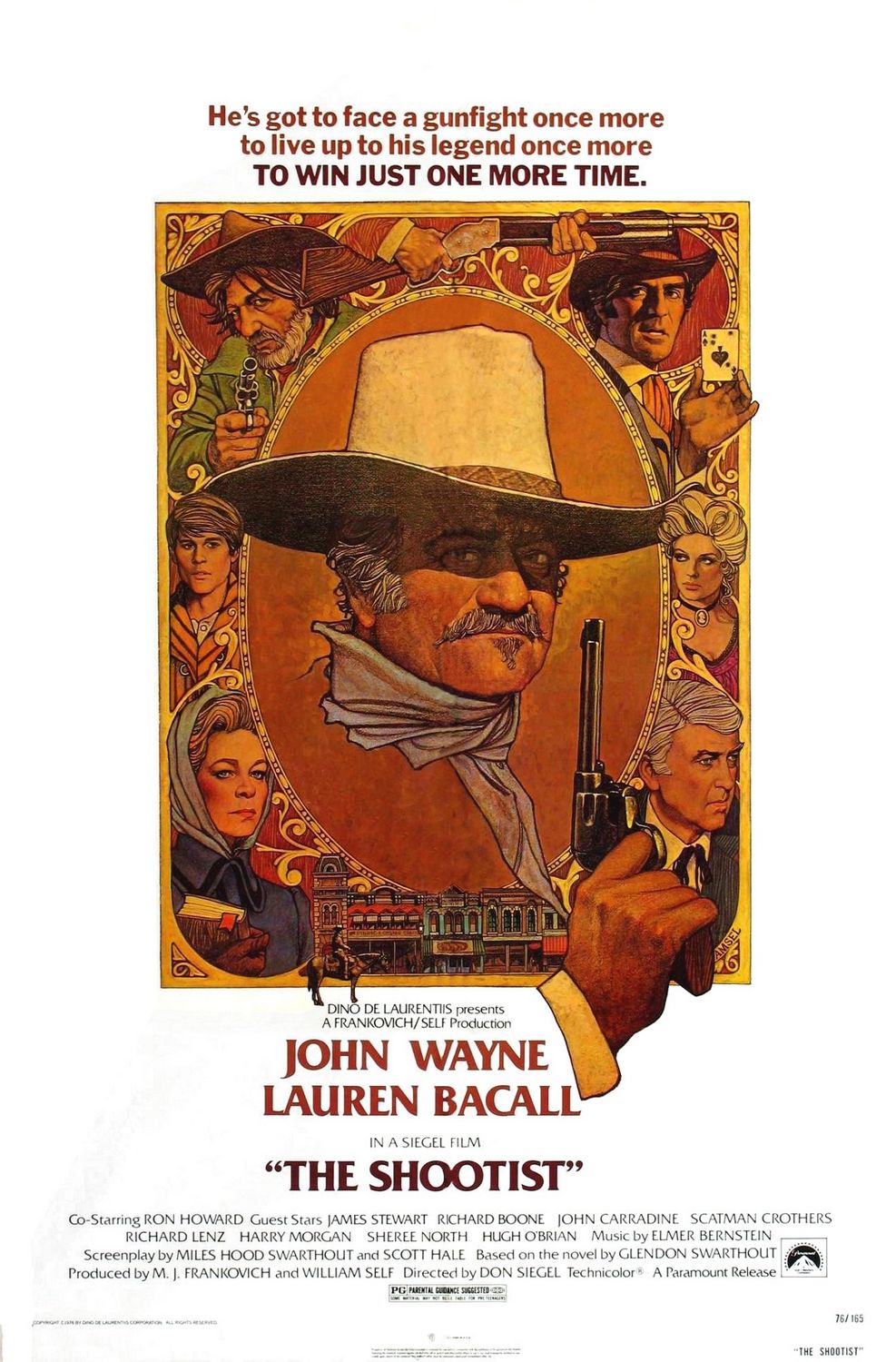
The Shootist

In “The Shootist”, J.B. Books is not feeling up to snuff.
He has cancer. What are the concerns
of a man dying.

To die
commensurate with the way he lived his life.
Books dies in a gunfight.
McIntosh dies in the desert, under a broken wagon,
fighting Indians.
Norman Thayer will die of heart failure
by the side of his wife, Ethel.

Two police officers
die investigating a stolen moped at a gas station
in the Bronx.
One buys it between the eyes, the other in the back.
The killer out on early parole
from a manslaughter rap.
The DA blames the judge, the judge blames the parole board,
and the board says the jails are overcrowded.

What should I be doing, old turtle.
Devote myself to re-order the world
or crawl off to a lonely spot and preserve myself.
We are trying
to educate everyone to their individual capacities
and see that all are fed, clothed and sheltered adequately.
Because the suffering of one citizen makes suffering
for another, the slow death of one sometimes makes
the sudden murder of another.

There is this
black rock we live on and its lovely mantle of green.
It is all that is perfect. And everything of it is
perfect that respects its integrity. On the subway
I was amused to find, hidden in the confused
mass of anonymous, bleak graffiti, unseen
by the studied, expressionless passengers,
in pink, delicate script, vertically written,
the word penis.

People are the element I live in.
The world is pushy, we are bone,
the numbers of us overwhelm.
It is going to be hot again soon
and the Bronx will actively resent it.

Books dies in Carson City,
only two or three people will miss him at all.
He died alone as he lived,
with his enemies.

The Terminator

One leaf falls
holographic illusion
across time the Terminator travels
to shape Sarah Connors’ destiny.
Heart attack
a common enough destiny
as common as young men discussing girls’ tits.
The Constitution
is the document we refer to, the lodestone
to correct course and not go crazily astray.
Lose all purpose beyond murder, child sex and food hording.
Illuminated manuscripts
in a dark age, tape decks remind us of our voice
our communal voice
Supremes and Fred Astaire
the silken wail.

I lie alone in the night
its sensuality makes the best sense
it does or does not clarify the day
of classes or clients or chain saws
whatever fever may have infected me at the moment
a fever to achieve access to foreign films while living in the mountain community of
      Schroon Lake
the fever to instruct the American people how to apply ideals and practicalities of
      Constitution to international relationships
the fever not to die today, to maintain consciousness just one more season (and one
      more after that).

Anyway, what is being discussed–
the finiteness of one life–
or perhaps existence continues in another dimension, on another frequency
no owl hoots
but other purpler and indigo occurrences
with other purposes
as incomprehensible and wonderful as these purposes
to choke on a cherry pit or nuclear bomb
to wail our wail together
each individual identifiable hoot and wail, loud laugh and suppressed scream
one orbicular chant, humanity, from India to Indiana
complete, one sing.

I feel this way
searching for my place among you
childless, but a child among children
obeying or not obeying the speed limit
as my hormones permit
everywhere among brothers, the sisters among sisters
the races together exterminating the last rhinoceros and preserving its genes at the
      zoological society
my species attacking entire rain forests, temperate forests and boreal forests
like the engraver beetle in the red pine’s inner bark.
Thus, I occasionally cheer the Terminator
cheer the machine and neutron bomb
even in the face of individual heroics, the male and female face
their physical love, tender and violent
I don’t know what I want.

It could be simple
as this headache.
Not to despair
just to care enough to think clearly and accept 10,000 years of history.
Not to hate those in authority
humor is the only remedy
yellow ape teeth chimping in the glass death face
and ritual is remedy
a death song
and one for planting
and one for the beginning of loving.

The Burning of the Jews

It was a woodcut in our high school history text, Unit 4 Beginnings of the Modern World,
      that so disturbed,
from the Nuremburg Chronicles depicting “the burning of the Jews,” flat perspective,
faces of the victims among flames, in no particular agony, not especially Jewish,
during the Black Death 1/3 of Europe died 1347-1351 alone. Although
you die together you die alone.
                                                         Earlier that week
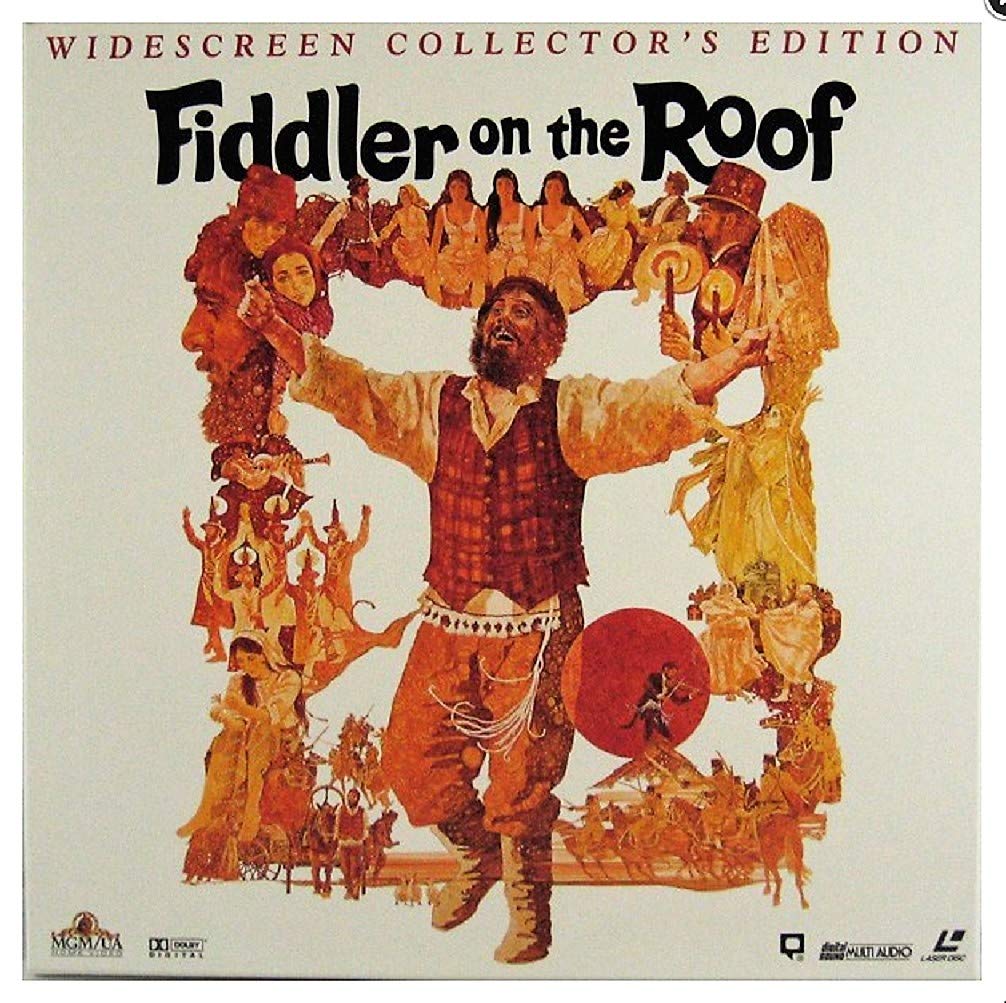
I had attended our 6th grade’s performance of Fiddler on the Roof,
at first thinking
Coltrane should have recorded Matchmaker as a bookend to My Favorite Things
but as the play darkened
with the town’s absorption into the diaspora, democracy
yet unthought of and rule of law a fig leaf for authority
Jasper, who played Zero Mostel, delivered his line well to the effect
you=re just doing your jobs while wrecking our lives.

Anyway, nothing like that is happening here, is it?
The gardener planting tomatoes, the gravedigger finding skulls,
there is so much life a little death won’t matter.
I’m reading Bloom in the Times, how
anyone who doesn=t believe Israel should exist is by definition anti-Semitic.
Come to find out, I may fall into that category–not that Israel shouldn’t exist,
but as a so-called Jewish state
anymore than a Muslim or Christian land. To some
Jewishness is not a religion, it’s an ethnicity. You have no problem
with the Swedish state, do you?
Should the Swedes be expected to open their borders to the Finns?

Jasper
was a beautiful ham,
big as Zero.
                      A friend posed
this question: must all states be melting pots like the United States?
I said yes
not because they should but since
it’s inevitable. Let labor flow like capital!
I hate when people disagree with me.
I get angry.
When a plate breaks, it asserts another possibility.
America was the last word of the play and brought a tear of pride
to my eye.

Immigration, exasperating argument re the Other.
How many’s more than enough? 9 billion, a rational,
real number that exceeds or
          we’re convinced
is within the carrying capacity of the planet.
Climate change is the new Black Death.
I like the Amerindian body type and face mixed in with the European, African.
The irrepressible economy rolls out reams of logs, ores of elements, bags of ice, fields
      of rice.
Embargo. The moon stares, bare, full of interstellar space.
Better a cold shoulder than a visit from our military.
The crazy Nazis must have felt themselves extraordinarily compassionate toward the
      mother, earth, the goddess, history, or some such abstraction and, thus, acted on a
      fraction of all they did not know.
Selfless soldiers just doing their jobs expanding the border or,
on the other hand, collecting fagots for “the burning of the Jews.”

A Gun in Every Home

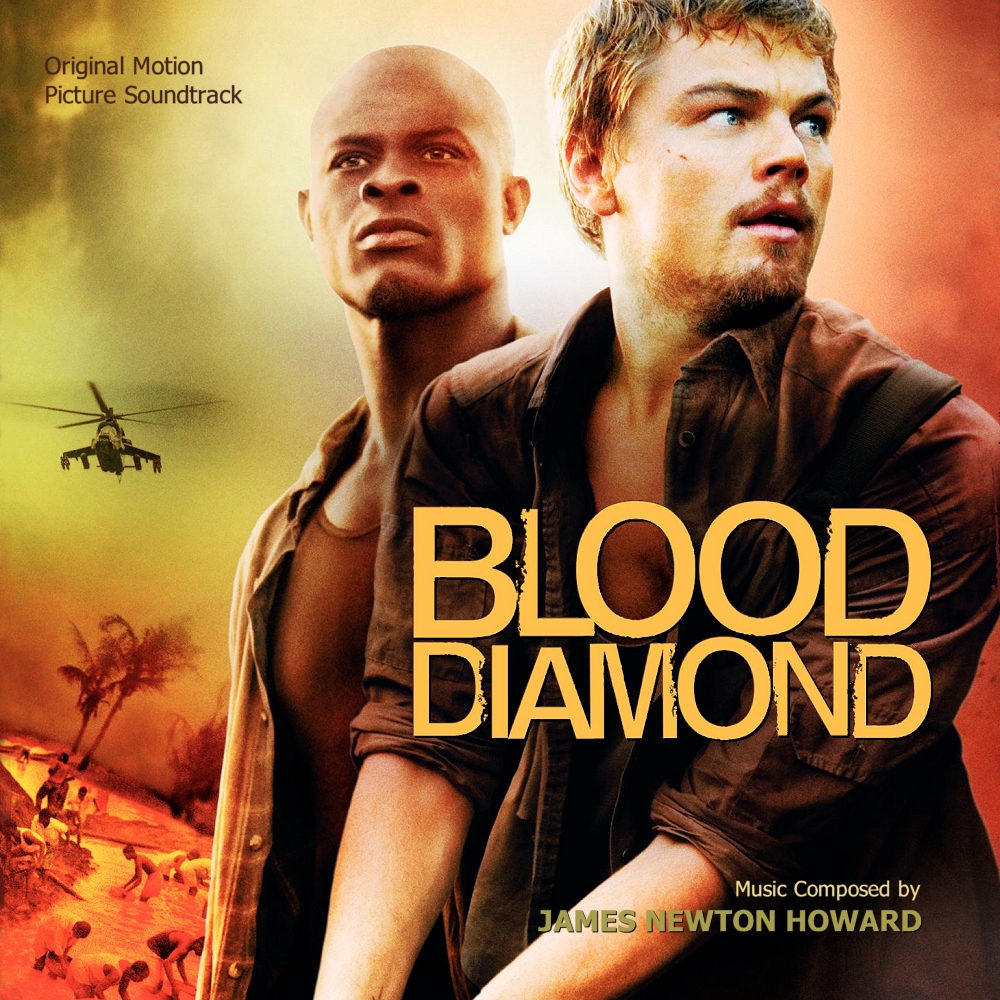
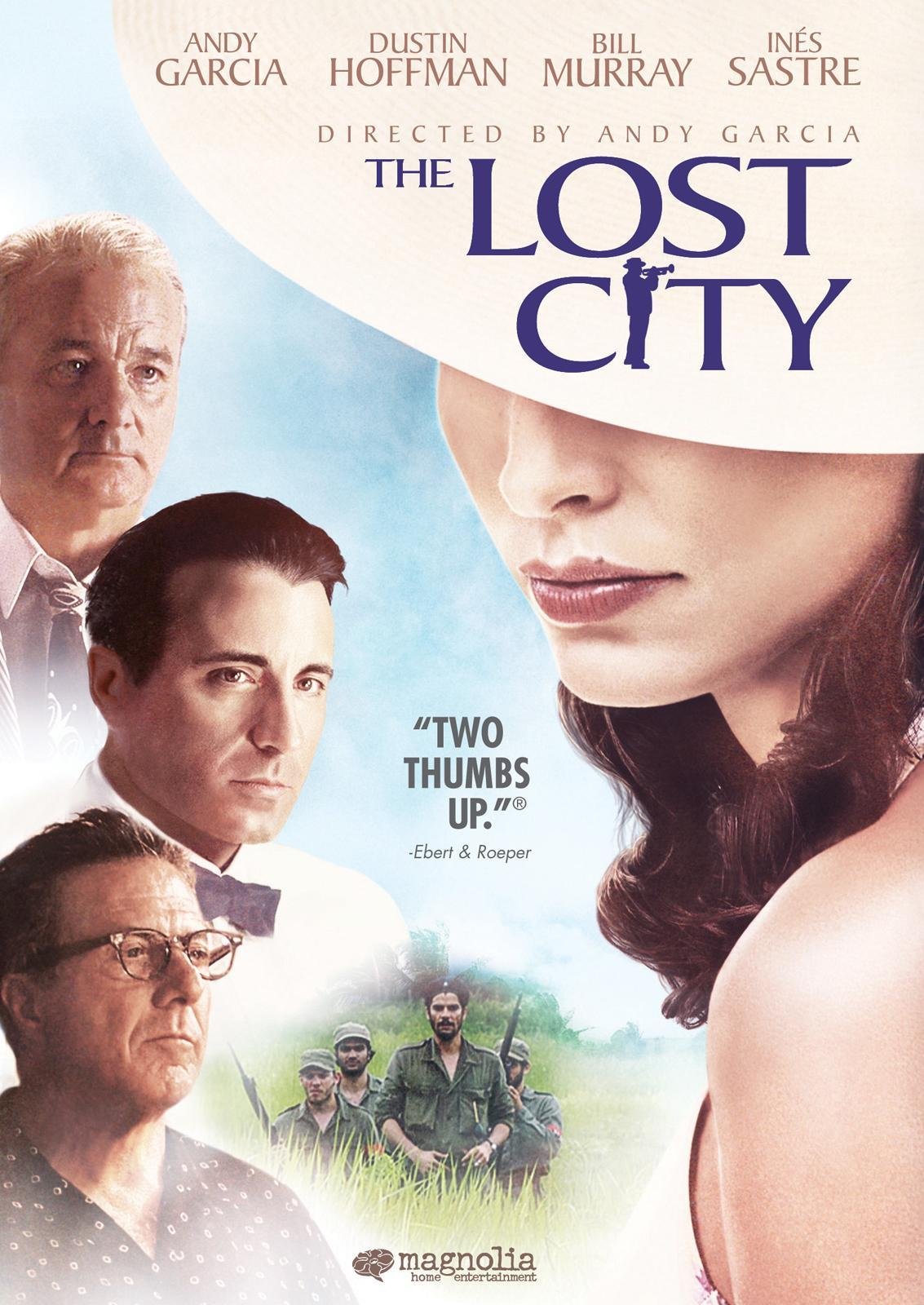
Two fine films: The Lost City and Blood Diamond.
I joined Blood Diamond during a village massacre
and said to my wife A gun in every home.
Those devils would think twice
before razing the village and seizing the boys.

A well-regulated militia.
The local militia the most interesting moment
in a strong film with motive (economic, emotional), action (chases, fights) and a sexy,
      sexless love story.
Use of violence by the local militia for a limited purpose: protect the community,
      the young
from the janjaweed. The crop from the weed.
Limited scope and defensive posture
but armed and coordinated, cooperative, the men (and the women) side by side.
Warriors at the gate, you will not run, you will not bargain.
Just violence = limited scope, defensive posture.

Great music. Cuba, Africa.
The Lost City, when the communists tell the club owner under threat of violence
No saxophones in the band. The saxophone!
Invented by a Belgian–Look what the Belgians are doing in the Congo!
When the state’s violence is turned against the citizenry
for non-violent acts.

This quiet neighborhood, July,
undergirded by violence, force. That’s a given–
any farmer, custodian, EMT will tell you that.
Without just violence
Gandhi’s scope, and King’s, might be vanishingly limited,
negligible (but not non-existent)?
                                                              Regarding King
the matter is simple–he was non-violent but dependent upon
federal force to counter the South’s violence.
No doubt without the larger force, the non-violent would be overwhelmed by southern
      violence.
Here, non-violence was a tactic, not an ethic.
Gandhi, however, had no violent partner to protect him from the British. Or did he?
1)   There was the potential violence of the population, which Gandhi restrained but
       could release which the British feared, and
2) It was the restrained (limited scope) violence of the British that allowed Gandhi to
      exist rather than be extinguished–this restraint was a (British) cultural imperative
      (limited scope) as well as emanating from Britain’s view of India as a protectorate
      and valued citizen of the united kingdom (defensive posture).

What about violence or threat of violence to compel compliance with community
as in mortgage foreclosure, driving without license, drug possession.
Perhaps it is necessary violence to maintain orderly commerce, the common space, and
      preempt bad behaviors associated with otherwise neutral, private acts.
The defensive posture is the common good; the limited scope is forgoing deadly force.
But the citizen, too, must maintain a disciplined, armed non-violence,
in case the state (the janjaweed) engages in an unjust, autoimmune violence.
Hence, a gun in every home.


Robert Ronnow’s most recent poetry collections are New & Selected Poems: 1975-2005 (Barnwood Press, 2007) and Communicating the Bird (Broken Publications, 2012). Visit his web site at www.ronnowpoetry.com.

Yiddish Theater Ensemble Presents: Sholem Asch’s God of Vengeance, 1906 play directed by Bruce Bierman

Synchronized Chaos is sharing a notice about this upcoming virtual theater show and will review it after opening night.

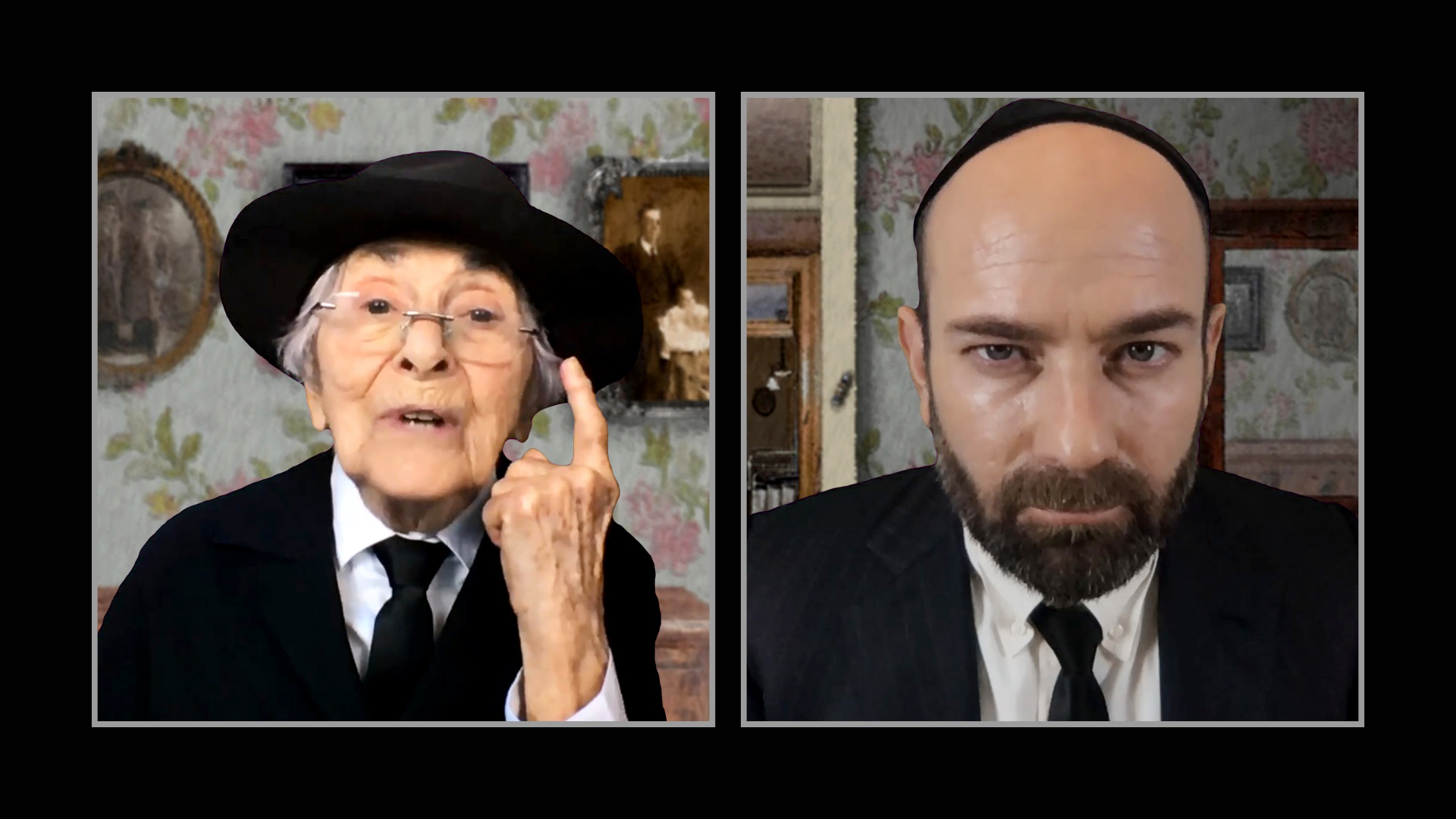
Naomi Newman, Reb Eli and Roni Alperin

Yiddish Theatre EnsemblePresents… God of Vengeance (Got Fun Nekome)

An artful online video adaptation of Sholem Asch’s groundbreaking 1906 Yiddish play

Directed by Bruce Bierman / English translation by Caraid O’Brien

Streaming Saturday, March 20 thru Tuesday, March 23, 2021

Tickets ($18 – $54): klezcalifornia.org/yiddish-theatre-ensemble • www.Eventbrite.com

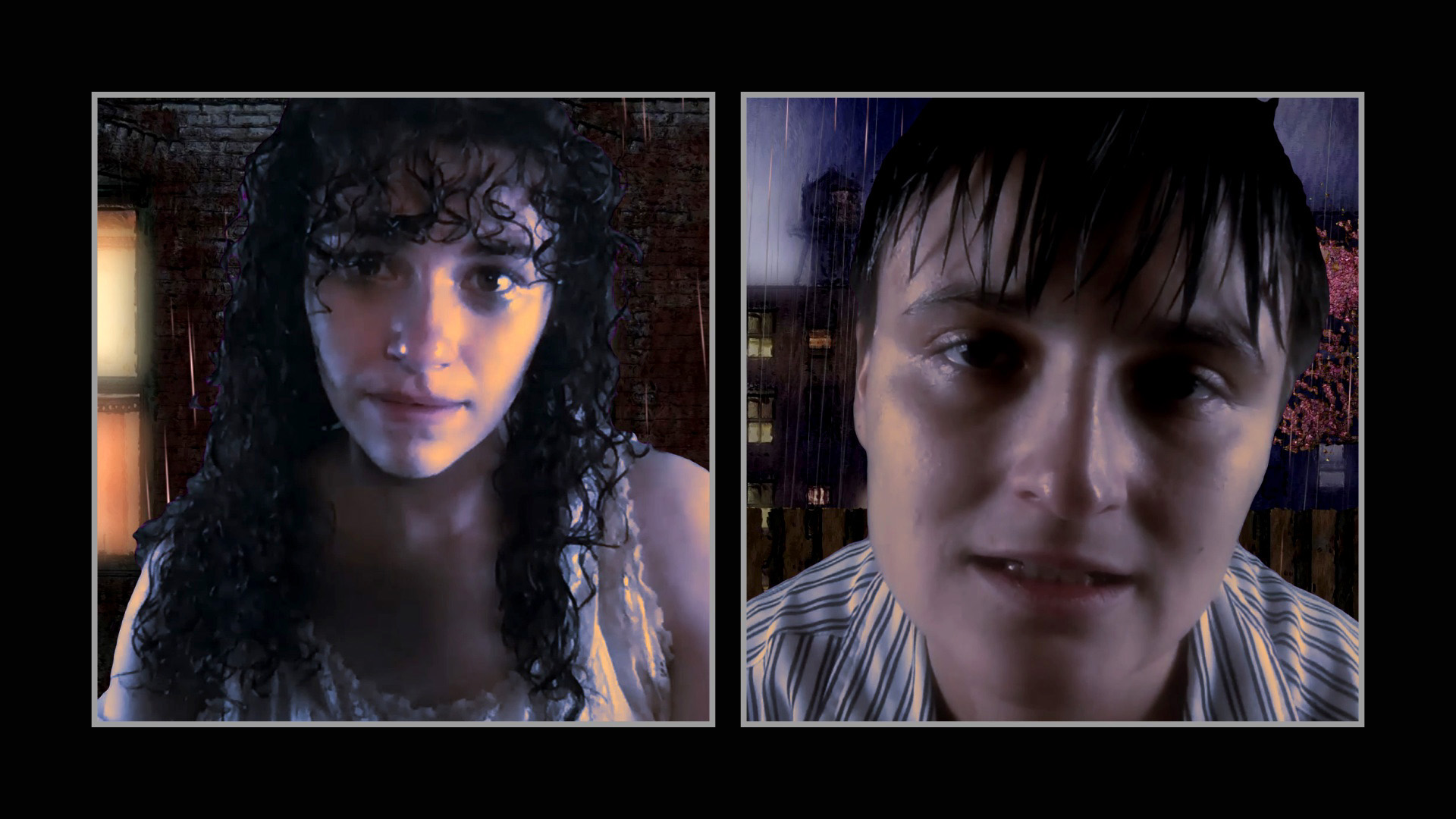
Berkeley, CA… The Yiddish Theatre Ensemble (YTE) planned on presenting the English language translation of the 1906 controversial Yiddish play God of Vengeance (Got Fun Nekome) by Sholem Asch in September 2020 at a theater in Berkeley, California but had to halt production due to the pandemic. Dedicated to this endeavor, YTE devised an innovative approach to presenting theater during this unprecedented time. The play will now be mounted on Vimeo on March 20-23, 2021 as an artful video adaptation with actors from around the country. Due to COVID restrictions, the actors were rehearsed and filmed on Zoom in full character and costume from their respective locations.  (The cast was never actually in the same room together).

The multi-cultural, multi-generational and diverse LGBTQ cast of 17 actors, many of whom had never spoken a word of Yiddish before, comes from the San Francisco Bay Area and beyond (New York and Las Vegas) and includes nonagenarian veteran of stage, Naomi Newman, co-founder of The Traveling Jewish Theater. Local Treasure Naomi Newman: 90 Years Old and Still Acting

As the play has been re-set in New York’s Lower East Side during the Depression, digital set designs (or backdrops) were added creating the 1930’s atmosphere with a distinct graphic novel style. The sets, designed by Production Designer, Jeremy Knight, of West Edge Opera, are inspired by photographs courtesy of the Tenement Museum collection with period costumes coordinated by Wardrobe Consultant, Suzanne Stassevich, formerly of San Francisco Opera. The play will be enhanced by an original score, by San Francisco Bay Area Klezmer musician, David Rosenfeld, anchoring the emotional voice of this evocative family drama. 

This adaptation based on the English translation (but including some Yiddish language and idioms) by Caraid O’Brien stays close to the script with new interpretations of character portrayals and plot development. Themes explored include: issues of domestic violence, dignity and portrayal of sex workers, freedom of expression and acceptance of LGBTQ relationships. As with many of Asch’s plays, powerful female characters give voice and agency to women. The themes speak directly to the inequities of human and civil rights still being fought for today. The play is peppered with humor.

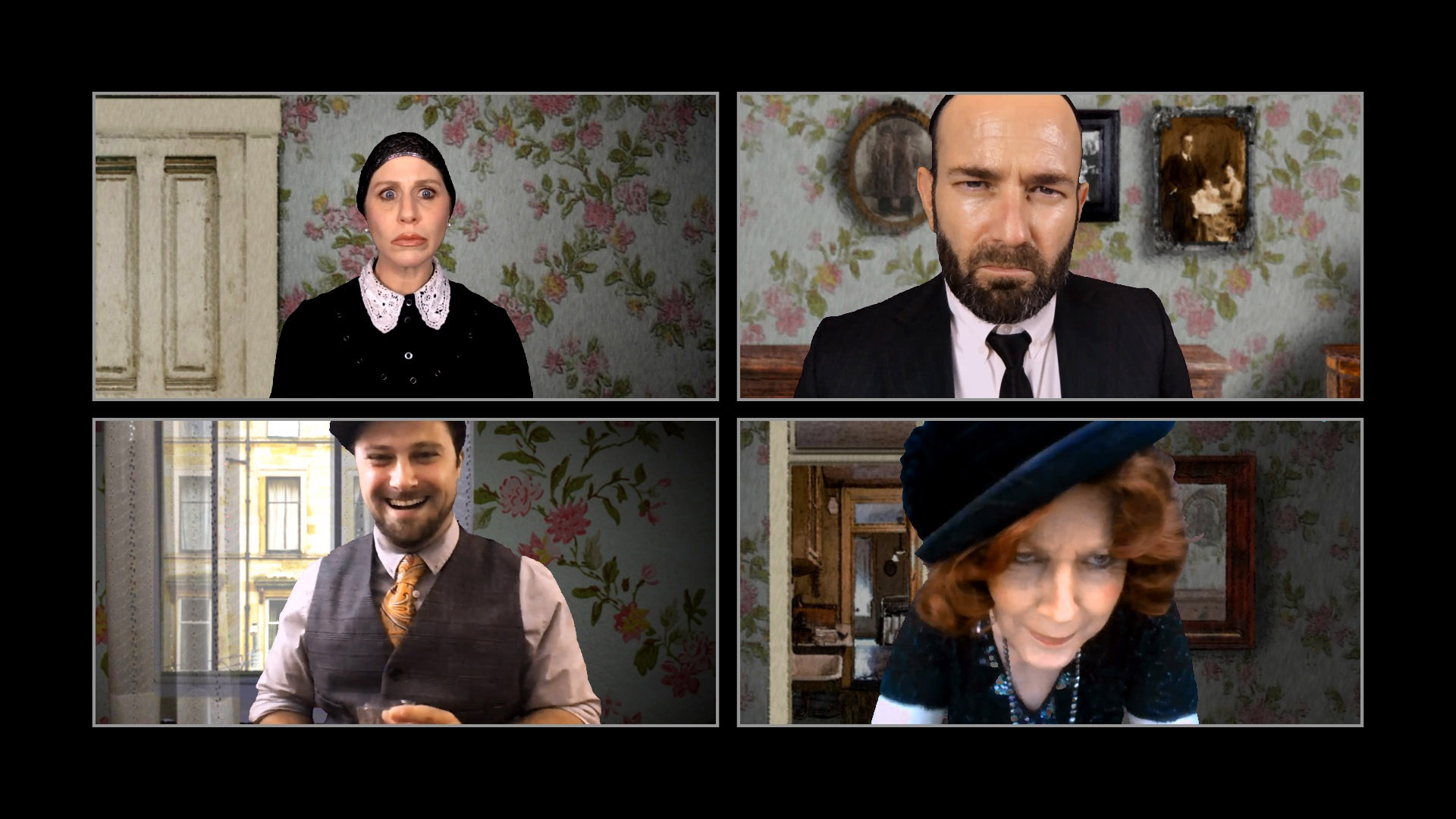
Jill Eickmann-Soreh, Roni Alperin-Yankel, Simon Winheld-Shlomo, Esther Mulligan-Hindl

ABOUT THE PLAY:

God of Vengeance tells the story of a seemingly observant Jewish couple and their daughter Rivkeleh who live upstairs in their Lower East Side apartment during the Great Depression. Yankl and Soreh do their best to protect their only child from mixing with their bustling livelihood—a thriving ‘brothel’ business downstairs in the basement. Rivkeleh is at a marriageable age and plans for a future husband are being made.  She is ensured an attractive dowry when her father commissions a Torah scroll, worth thousands, to be written just for her.  Supposedly, the hand-written scroll is believed to protect her and keep her kosher. Meanwhile young Rivkeleh has fallen in love with Mankeh, one of his prostitutes and a tender relationship blossoms. Tensions mount and soon life upstairs and downstairs begin to entangle. As Yankl’s plans are threatened, he begins to unravel.

The themes of this play are deep and resonate today: can money buy salvation, happiness, holiness? All are explored in this family drama story that has extraordinary tenderness, elements of Greek drama —and a bisl (little) Yiddish. — Laura Sheppard, Producer

Audiences should know this is not, God forbid, a moralistic play! Sholem Asch himself said he didn’t care if he wrote a moral or immoral play. He only cared about writing a good play that had an impact and spoke to people. — Bruce Bierman, Director

Elena Faverio-Rivkel, Zissel Piazza-Mankeh

HISTORY:

After the play’s opening in Berlin, God of Vengeance had tremendous success throughout Europe and was translated into many languages. Upon arriving in New York, it was first seen in Yiddish at the Provincetown Playhouse in the West Village. The 1923 production in English at the Apollo Theatre in New York was the first to portray a lesbian relationship in a sympathetic light and included the first lesbian kiss on Broadway. That production was assailed by members of the religious and cultural establishment and was charged with obscenity and shut down. The producer and company members were arrested and found guilty.

The history of Asch and this play was inspiration for the 2015-2017 Tony award-winning Broadway production Indecent which was also seen at the Oregon Shakespeare Festival for which Director Bruce Bierman served as Yiddish Dance Dramaturge. This production only scratched the surface of the original play. Yiddish Theatre Ensemble would like audiences to experience the power of the characters and immediacy today. Yiddish Theatre Ensemble is particularly interested in Sholem Asch because he was the first playwright to incorporate modernity into his plays, mirroring 20th century life in cities and towns rather than focusing on Biblical stories or folk tales of the past.

ABOUT THE PLAYWRIGHT:

Sholem Asch (1880–1957). Although he penned several of his 18 plays, shorts stories and novels in the US on New York City’s Lower East Side and at his home in Staten Island, Asch wrote only in Yiddish. Asch is often mentioned in the same breath as other modern Yiddish fiction writers like Sholem Aleichem and I.L. Peretz. The Polish-born author and playwright is the first Yiddish writer to be widely translated into English and to gain worldwide renown, and to have a bestseller in English (The Nazarene). The star literary contributor of the Yiddish newspaper, The Forward (Forverts) from 1915-1940 was the most widely reported and caricatured writer in the Yiddish press from 1915-1950.

ABOUT YIDDISH THEATRE ENSEMBLE:

Laura Sheppard, Producerand Bruce Bierman, Director, have collaborated for twelve years to create community-based productions in affiliation with fiscal sponsor KlezCalifornia. Their collaborations include the popular Yiddish musical Di Megileh of Itzik Manger, produced as part of the Jewish Music Festival (2014, 2015), as well as KlezCalifornia’s Cabaret by the Bay. Yiddish Theatre Ensemble is dedicated to producing the rich, rarely performed repertory of the Yiddish theater as well as new works by living artists.

This production is part of the 40th Anniversary of the Yiddish Book Center (Amherst, MA), the nation’s acclaimed center for the preservation of Yiddish literature and culture and their Year of Translation. This production is fiscally sponsored by KlezCalifornia and supported in part by a Civic Arts Grant from the City of Berkeley.

CAST/LEAD ACTORS (See attached bios): Roni Alperin –Yankl | Jill Eickmann – Soreh | Elena Faverio – Rivkeleh | Zissel Piazza – Mankeh | Simon Winheld – Shlomo | Esther Mulligan – Hindl | Naomi Newman – Reb Eli | Josiah Prosser – A Scribe | Rebekah Kouy-Ghadosh – Basha | Frances Sedayao – Rayzel

Synchronized Chaos February 2021: Polish and Refine

Announcement: Our March issue of Synchronized Chaos will be an ekphrastic issue, where we encourage you to create written work inspired by some other art form (a piece of music, a painting or graphic image, a sculpture, etc). Here’s an article that outlines what ekphrastic writing is and gives some examples.

Our co-editor, Kahlil Crawford, and I believe this will inspire and encourage fresh ideas and be a fun experiment. So please send ekphrastic submissions our way at synchchaos@gmail.com before February 27th and they will go in the issue!


Welcome all to Synchronized Chaos’ February issue, ‘Polish and Refine.’ This month, each of our many and varied contributors takes some sort of thought or experience and turns it over in their mind, rendering it into a piece of craft.

Varied assortment of people of varying genders and races dressed up for work, standing in front of a bulletin board with pens, commenting on something.

D.S. Maolalai charms the little afternoon dramas of everyday life – squirrels in the park, remodeling the kitchen – into poetry. Joan Beebe laments the enforced stillness of her socially distanced winter suburban neighborhood, while J.K. Durick evokes the way grey winter days can merge and flow into one another.

Susie Gharib turns human venality, decay, and even dental malpractice into elegant verse, and Shelby Stephenson reviews Sherry Siddall’s Sweet Land, the poetry collection of a writer who loves language.

Mahbub covers diverse subject matter: wonderment and horror at the power of the Covid-19 virus, the power of intellectual community and literary inspiration, and symbiotic growth in nature. Ike Boateng also writes poetry on the community we find enjoying and sharing the gifts of nature, cocoa among them.

White woman with dark hair and a blue dress bent over in thought, with a book under her arm. She's in a misty forest with some trees which have leaves and others which don't.

Eva Lianou illustrates in a folktale how care for a delicate flower transforms a carpenter’s life, and Ahmad Al-Khatat mourns a love that makes his speaker forget the war all around him. Norman J. Olson reminisces on the uncommon kindness and humor of a professional he admires, while Jake Cosmos Aller encourages kindness towards the homeless and expresses dismay at the Christmas Day bombing in Nashville.

Elizabeth Hughes reviews David Myles Robinson’s legal drama Tropical Doubts in her monthly Book Periscope column.

J.D. Nelson experiments with words in his subterranean laboratory, while Jack Galmitz contributes a set of wry, random ramblings and J.J. Campbell expresses his loathing of racism while writing of aging, loneliness and death.

Fuzzy image of far-off trees made brighter and clear through the lens of glasses on a wooden table.

Rikki Santer’s poems burst forth with nostalgia and lush worldbuilding.

In the same spirit, Mark Young contributes paintings that reveal more about the effects of line and color on our psyches than literal subjects.

Some pieces address politics: Michael Robinson evokes the horror of the Capitol attack for a Black person in America, John Most crafts a satirical version of Amazing Grace inspired by Donald Trump, Patricia Doyne protests the insurrection at the U.S. Capitol while Arthur Ford’s shanty decries the same event.

Michael Robinson speaks to the Black male experience in the United States, inspired by Amanda Gorman’s reading at the U.S. presidential inauguration.

Lorena Caputo elegizes lives lost to the Contra fighters decades ago in Nicaragua, while Coco Kiju declares the doomsday of a dead love.

Person holds beads on a bracelet over a refining tool to polish them, in a black and white sepia photo.

Chimezie Ihekuna renders the Biblical tale of Lucifer’s rebellion and expulsion from Heaven as a fantasy tale, while Hongri Yuan creates a heavenly vision of orderly, glistening orchards and cities in a world that began before humanity came on the scene and will continue long afterwards.

Jeff Bagato writes of our human strength and of nature’s resilience, while I RΛM 0 opines about humanity’s joining with artificial intelligence to co-create the next stage in evolution.

Stephen Williams presents a psychological odyssey through fear, condemnation, grace, and liberation.

John Culp celebrates the joy of getting your heart and mind focused and open to positivity and learning.

Thank you very much for reading Synchronized Chaos! We encourage you to leave comments for our contributors, they appreciate feedback and discussion.

Poetry from Mahbub

Middle aged South Asian man with glasses and combed black hair and a white collared shirt

A Valentine’s Affection

It was Valentine’s afternoon

Just before the Arts Faculty Gate of Dhaka University

While walking towards the Dhaka Book Fair

The couple standing face to face

And thousands were running and walking around them

The eyes of the girl wet in eye drops

No sooner had my eyes blinked on the second time

The girl in the flower round her head

Slapped him on two times

And again repeatedly

Then her boyfriend getting nothing to say or doing

In his bewilderment he stopped for a while

And blew a big slap on her face

From beside their another friend came in

Turned them away and walked to the other

The two young boys passing me

Went away saying and laughing

“O Ma, What I looked!”

“O Ma, What I heard!”

NAEM Hostel, Dhaka,

14/02/2020

How to Write

It stops my breath standing on the long line to pass the gate

In such a jam-packed condition

I turn back myself whether I am Ok or not

In this huge gathering my body sometimes gets twitched and switched off

It is as if the whole people of the world were joining one by one

In this Dhaka Book Fair the young and the old,

The boys and the girls like the flock of birds flying from here to there

Again like the swarm of bees

Getting together they like to meet each other in the Book Stalls

Not a single face I can recognize here

But the faces and the eyes glitter before me

I see the stars in the sky

I see the stars before me

Walking alone all the way

To save the moment in ray

I bought a book about ‘How to Write.’

NAEM Hostel, Dhaka,

14/02/2020

Interaction

What is the interaction between plants and animals?

We, the teachers and the students

Interact in the classroom

Outside the classroom

Engaged in same as the ecological balance

With the attentive mind following the eye contact

The learning outcome compared to the transpiration process

A touching relationship throughout the whole life

Sharing ideas and thoughts like oxygen and carbon dioxide

One leaves and the other receives

What a wonderful physiological growth!

Exchanging life to each other

Throughout a magnifying glass

Spreads its range of love and respect as the day advances more.

Chapainawabganj,Bangladesh
10/03/2020

Covid 19

I think of what I write

No subject or field I find that I cultivate

So many subjects to work with

But no more speed my hands over

Stand still face to face we realize

What it actually happens in Wuhan City of China?

And gradually the whole earth mesmerized

By inhaling – exhaling breath

By sneezing and loving hands spread death

I am now confined to bed or home, walk round the walls

Try to be safe from this virus

O life – dark and death

Beauty goes so far tight in the abyss of thought and anxiety

Body shakes, heart gets barred suffocating breath

Eyes burns to the long line deaths in the world’s hospitals.

Chapainawabganj, Bangladesh

27/03/2020

The Corona Island

The world has turned into a single Island

Or a no man’s land

A swarm of bee

People would run through too much busy

How does it look now?

You can say a ghostly one

Miles after miles the roads are like —-

T. S. Eliot’s “The Love Song of J. Alfred Prufrock”

The smoggy, lurid streets of the modern city

Thwarts at him “Overwhelming questions”

Losing in thought to express the nature of his crisis

All offices, schools, colleges or universities go off

Only a few while necessary out

People are like the birds shot

Try to fly out but scared 

Ever and anon

We like to obey the rules of isolation.

Chapainawabganj, Bangladesh

30/03/2020

Poetry from Jeff Bagato

A Rattle of Hooves

Teeth betray tongue whenever they can,

biting back twisted words

and forcing some mumbles through

a thin-lipped smile

Security has a tough job

when betrayal comes from within;

those passwords stored under a keyboard

can crumble the cookie without tearing the wrap

Get in the game like teeth

and chew chew chew

when the steak comes early;

any dead cow will do,

run by the fire and chopped

so fine you can’t tell the burger

from the bone; a little salt,

a pinch of cracked black pepper

is all the recipe you need

The cows line up and dance in review:

a cancan kick, a little twerk or a twist,

just enough rattle of hooves

to beat out a fanfare;

the bovine disco is the place to be

after the slaughterhouse

and before the plate;

the chef’s surprise can’t be described on any menu—

the chuck, the ribeye, the rump,

they swing, they swizzle, they prance,

while over the loudspeaker

comes a great noise—

the market’s red roar

and the songs of the blind

Towel Museum

A museum

of hotel towels

plucked off housekeeping

carts, smuggled

across country in luggage,

still clean and folded;

shelved in the house,

row by row

as if vacation

never ended

The Fuel That Silenced Suns

Lit up like a sunflower orgy,

an old tree itself becomes neon,

a thing of light sending terror down

on anyone who footfalls below;

the sidewalk takes precious

real estate where roots should be,

a figment of a pride-worn

civilization that already bears

too much; melted down, that pride’s

an acid dissolving concrete, metal

and glass, all the carapace materials

soft flesh prefers; seeds

are sent out as foot soldiers

to build barriers against

the rising tides, sacrificing

many to save few, but old

wood must survive to teach

and build and seed another day,

enriching earth with fallen leaf

and fallen bough, and renting

space to half the world—those beetles,

ants and birds who move soil

and sky as if every day was a new

discovery, not another chance

to smother, to burn, to break

those miracles and exchange

their shards, their ash for one

second bathed in the toxic rays

of artificial neon suns; that fire

remains cold for all its false light,

and the fuel consumed by hydra mouths

tastes bitter in the backwash

The Backhoe Theory

Anyway you look

the stones could scream;

wind and rain take their toll

on the hardest skin

Weather does not befriend walls

but pushes gently until

an escape is made;

then go the rats, the goats—

the water, the earth follow

more slowly, at their ease,

enjoying freedom all the same

Soon nothing holds up shields

against the sun, beating down

with fists of heat.

These batteries test a city’s will

to survive the stronger trials

made by residential man,

who erodes the life of mountains

as he builds new ones

just to test their strength against a fall

Man the maker remains a beast

using machines to push his weight

against any obstacle he chooses;

he will not go around, but through

with a bore, with a tunnel,

with dynamite, showing nature

how the pupil surpasses the master,

celebrating the temporary joys

of power plays that prove

the weakness of strength alone

The Dead No Longer Know

Ouija has writer’s block

when someone grabs hold

without a thought

or some sick interference

cancels out the other world;

can’t be thinking about pizza and beer

when channelling voices from beyond;

can’t think about getting

that D or that P,

that SUV or BMW

Ouija doesn’t write copy

for admen or CEOs;

you can’t think about politics

or religion or the KKK;

Ouija won’t write hate

for all the bronze horsemen

trotting the USA

There’s a code of conduct

in the spirit world,

having shed the day to day

tribal mind rooted in a past

the dead no longer know


A writer and artist based in San Antonio, Jeff Bagato produces poetry and prose as well as electronic music and glitch video. His published books include Savage Magic (poetry) and Computing Angels (fiction). A blog about his writing and publishing efforts can be found at http://jeffbagato.wordpress.com.