INNOVATIVE METHODS OF WORKING WITH VOCABULARY IN MOTHER TONGUE LESSONS
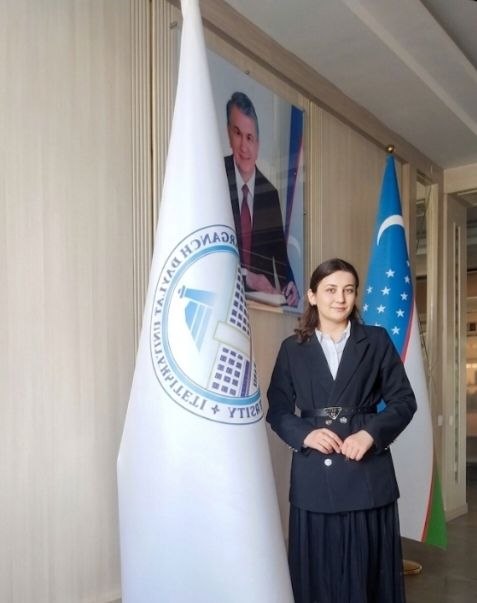
Ahadova Feruzakhon
Kokand State University, Faculty of Primary and Technological Education, 1st year student of Primary Education
Annotation. This article scientifically analyzes modern and innovative methods of working with vocabulary in mother tongue lessons and their role in developing students’ communicative competence. It also highlights the effectiveness of increasing vocabulary based on interactive methods, digital technologies and creative approaches.
Annotation. This article analyzes innovative methods of working with vocabulary in mother tongue lessons and their role in developing students’ communicative competence. It also highlights the effectiveness of interactive methods, digital technologies, and creative approaches in enriching vocabulary.
Abstract. V state rassmatrivayutsya innovatsionnye metody raboty so slovarem na urokax native language and ix role v razvitii rechevoy kompetentsii uchashchihsya. The effectiveness of interactive methods, digital technology and creative approaches is clarified.
Today, at a time when fundamental reforms are being implemented in the education system, the use of modern approaches in teaching the mother tongue is of great importance. In particular, increasing students’ vocabulary, developing their speech activity, and forming independent thinking skills is one of the urgent pedagogical problems. Working with a dictionary is a key component of native language lessons, allowing not only to learn new words, but also to use them correctly, understand them semantically, and actively use them in speech.
According to modern pedagogical theory, it is necessary to use innovative methods in addition to traditional methods in developing students’ language skills. Because today’s student is being formed in an information technology environment, and his educational needs are also changing. Therefore, the introduction of interactive methods, multimedia tools, and creative tasks in the process of working with a dictionary increases efficiency.
Also, working with a dictionary serves as an important tool in developing not only students’ language skills, but also their thinking, logical thinking, and communicative competence. In this regard, this article studies innovative methods of working with a dictionary on a scientific basis and analyzes their practical effectiveness.
LITERATURE ANALYSIS
The issue of working on vocabulary in native language lessons has been studied by many scholars. In particular, A. Gulyamov, in his work “Methodology of Teaching the Native Language”, emphasizes that increasing vocabulary is the main factor in the speech development of students. According to him, through a deep understanding of the meaning of words and their use in speech, students learn to think independently [1].
Also, N. Mahmudov, in his work “Language and Speech Culture”, notes the need for a systematic organization of the process of working with vocabulary. In his opinion, each new word must be mastered by the student based on the context, otherwise it will not become an active vocabulary [2].
S. Matchonov, in his scientific works, specifically focuses on the importance of interactive methods in mastering vocabulary. According to him, methods such as role-playing games, clustering, and brainstorming naturally increase students’ vocabulary [3].In general, the results obtained scientifically confirm that innovative approaches in native language lessons significantly increase the effectiveness of working with a dictionary. This indicates the need to combine traditional methods with innovative approaches in the modern educational process, without completely rejecting them.
CONCLUSION
In conclusion, the process of working with a dictionary in native language lessons is one of the pedagogical areas that is of decisive importance in the formation of students’ speech development, level of thinking and communicative competence. The analysis conducted during the study showed that working with a dictionary is not just a process of teaching new words, but a complex methodological system that shapes students’ attitude to the language, develops their creative and independent thinking.
Traditional approaches – that is, methods of explaining, memorizing and translating words – although useful to a certain extent, cannot fully meet the requirements of today’s education. In a modern educational environment, it is necessary to involve students as active participants, increase their interest and direct them to independent research. In this regard, innovative methods significantly increase the effectiveness of working with a dictionary.
According to the results of the study, interactive methods (cluster, brainstorming, group work), digital technologies (electronic dictionaries, multimedia tools, mobile applications) and gamification elements contribute to the rapid and stable acquisition of vocabulary by students. In particular, these approaches increase students’ interest in the lesson, forming them as active participants and independent thinkers.
Also, the research revealed that when innovative methods are used, students develop not only their vocabulary, but also their speech literacy, level of logical thinking and creative approach. This directly affects the quality of education and the effective organization of the educational process.
In general, organizing work with vocabulary in native language lessons based on modern innovative approaches is one of the important factors in increasing educational efficiency. In the future, teachers should further improve these methods and widely apply them in the educational process. This will serve to form a high level of speech culture, independent thinking and creative approach in students.
REFERENCES
Gulamov A. Methodology of teaching the native language. – Tashkent: Teacher, 2010. – pp. 145–150.
Mahmudov N. Language and speech culture. – Tashkent: Science, 2018. – pp. 98–105.
Matchonov S. Interactive methods in native language education. – Tashkent: Innovation, 2020. – pp. 67–72.
Harmer J. How to Teach English. – London: Longman, 2007. – pp. 120–130.
The Application of Artificial Intelligence and Digital Technologies in Education and Society
Nurmatova Charosxon Pirnazar qizi
Annotation:
This article attempts to conduct a fundamental analysis of how artificial intelligence (AI) and digital ecosystems—one of the greatest technological and ontological turning points of human civilization—are reshaping the global architecture of society. The paper scientifically substantiates the inefficiency of traditional educational paradigms and the emergence of adaptive algorithmic systems that expand human cognitive abilities.
The central idea of the research is to interpret AI not merely as a technical tool, but as a “catalyst” that enhances the intellectual potential of society. The findings present innovative strategies for personalizing the educational process, eliminating the digital divide, and adapting to transformations in the labor market. In the context of technological determinism, the concept of a “Humanistic Digital Society” is proposed, which prioritizes the human factor and digital ethics.
Main Part:
Today, the educational process has moved from the stage of “information transmission” to the stage of an “intellectual ecosystem.” Artificial intelligence (AI) here functions not only as a tool but also as a personalized learning companion.
Digital technologies enable a transition from vertical (hierarchical) governance systems to horizontal (network-based) structures in society. Society is now measured not by geographical boundaries, but by “data flows.” In modern governance, digital models of cities, transport systems, and even social groups are being created.
With the help of AI, optimizing resources (energy, water, logistics) not only increases economic efficiency but also systematically eliminates corruption and subjectivism associated with human factors. According to research, by 2030, AI will perform up to 85% of tasks such as data entry, standard calculations, and basic diagnostics. This leaves humans responsible mainly for empathy, creativity, negotiation (soft skills), and ethical judgment.
Conclusion:
In conclusion, artificial intelligence and digital technologies are not merely the next innovation, but a new chapter in the intellectual evolution of human civilization. This study shows that transformation in the education system is not just about replacing textbooks with tablets—it is about creating a “personal intellectual environment” that elevates each individual’s potential to an unlimited level and expands their cognitive abilities.
Angels with pointed toes waltzing pirouette overhead
Flying on clouds, ravishing danseuse,
Each movement a dream, tender and loose.
Ballroom couples’ alluring smiles that gleam,
Elegant posture, rolling shoulders in style, a flowing stream.
Europe to the USA curving patterns, swaying hips,
Thrusts and lifts; locks and drops they flip.
A story of passion silently told in a gist.
From San Francisco, the Contemporary began,
Beginnings of Modern Dance, where freedom ran.
Legwork strong and body controlled;
Contract, release, daring and bold.
Shifts of rhythm, sudden speed,
Floor work, fall and recovery freed.
Flamenco flames from Spain arise,
Posture proud are main, spirit flies.
Fierce glances turn with daring, artful charm;
Swirling flounces of dress; upheld naked arms;
Flirtatious gestures, hasty, heated rhythms;
Clapping the castanets, spread darting flame’s prism.
Street dance, hip-hop, energy vast.
Borrowed, versatile style, the die is cast.
Tap, tango, jazz dances flow.
From European, African, the American modern shows.
Emotions and moods to design their steps,
Feet like drums, rapid footwork sets.
Dancer’s foot and shoe work, so intricate.
Salsa and Rumba, down in Cuba,
Fusion of dance and music of Ganzá,
Mambo, Cumbia, Festejo roll.
Break steps, spins, loud moves and drops.
Trinidad and Tobago do the Calypso.
Everybody dances to the beat of the disco.
Buenos Aires hums with Tango’s heat,
Milonga, flamenco, rhythms meet.
Fast, sensual dance from Argentina;
Influences from the Cuban habanera.
Brazilian Samba, hypnotic, bright,
Guatemala’s Marimba dances the night.
Egyptian belles sway with might,
Dynamic shaking solo with torso twists in moonlit light.
Middle Eastern rhythms ignite.
Torso isolates, artistry shown with body parts;
Fascinating, beautiful body art.
From India’s heart, classical dance,
Bharatanatyam tells tales at a glance.
From Tamil Nadu, southern India
Hand mudras tell a story that’s the idea.
Kathakali: southwestern India’s religious dance.
Inspiration from Ramayana and Shiva’s romance
Ramayana’s lore,
Kathak: northern India,
A dance of love, ghungroos implore.
Manipuri from Manipur, northeastern India.
Folk traditions and rituals, from life of God Krishna.
Smooth and graceful, oh what charisma!
Andhra Pradesh: Kuchipudi, sensual dancing,
Sprinkling holy water, a ritual with singing.
Odissi, from Orissa in eastern India
Fifty mudras, lyrical, sensuous dance
Goddesses rise, deities loom.
Dazzling, daring goddesses, deities pursue.
Indian dance lifts souls and leaves all in a trance.
Soulful hearts immerse in beautiful romance.
Bhangra, vibrant martial movements, folk dance from Punjab
Jhumer dancers sway folk dance with roots in Punjab, Balochistan,
Dhali, war- themed, martial arts dance with swords and shield
Baul, mystic tradition with expressive moves and spiritual themes,
soul is healed.
Manipuri, Santal tribal dances graceful and intricate moves revealed.
Festival dances from Bangladesh fascinate the audience; they beam.
Methodical, precise, yet free;
Dancing soft, swift feet to the beat in harmony.
Perfection with passionate emotions ignite;
Eases mind and lifts high to divinity, excites.
Glittering garments shine like tremulous waves
Sparkling trinkets sparkle with rhythmic display.
Dancers’ eyes ravish with rapture,
Amazing aura, audience easy to capture
Dance from east to west, north and south
Continents with diverse traditions and muse.
Dance, dance! Dance with the steps
Shake your body, the way you can best
Let it touch your heart and soul
Let music lift you and make you whole.
Let the onlooker applaud and smile;
Stress will fade, your spirit will sing,
Poetry births song, and dance takes wing.
Poetry gives birth to music, song and dance.
Poetry gives life, meaningful contrasts.
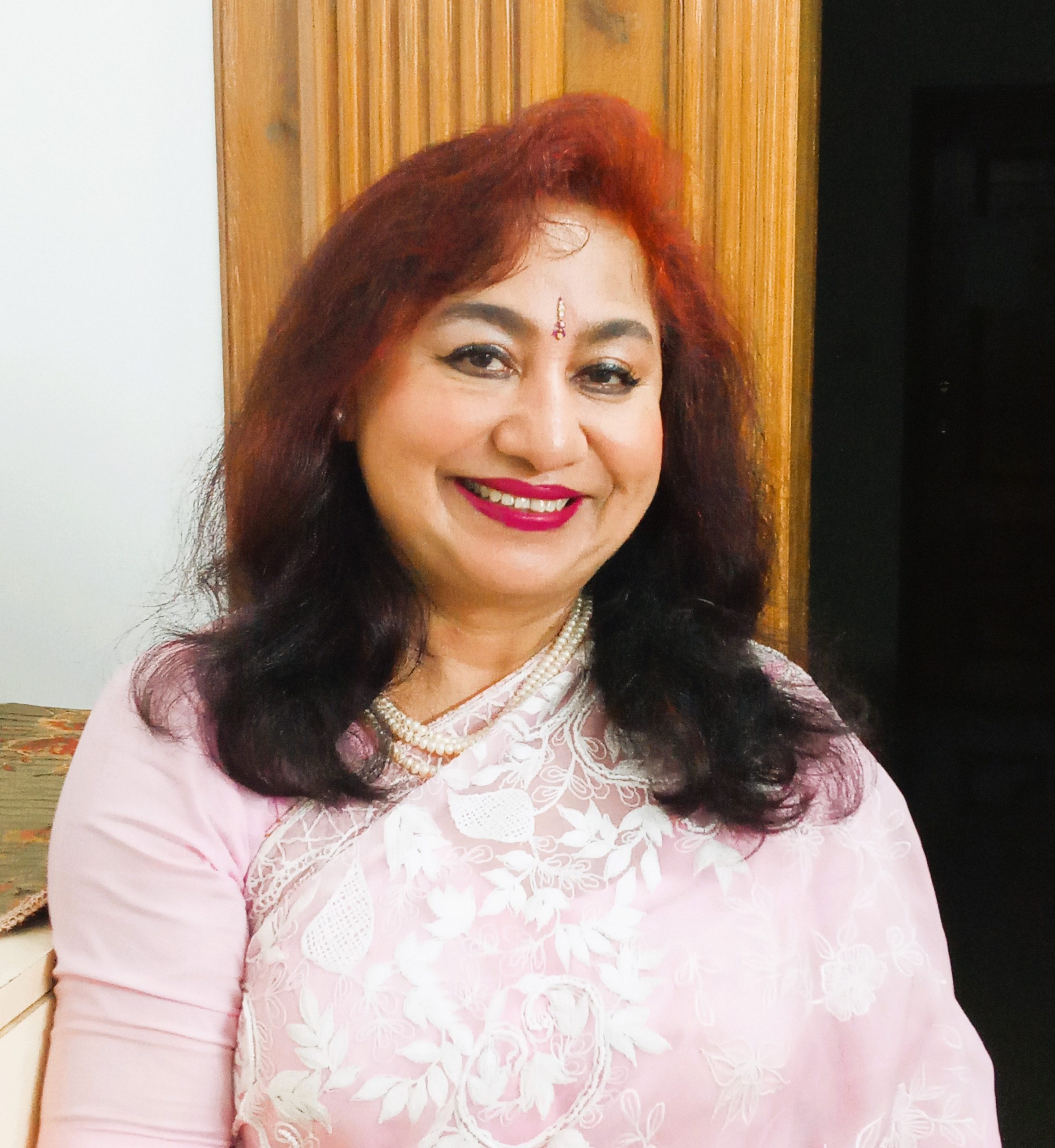
Brief Biography of Tasneem Hossain
Tasneem Hossain, a multi-lingual poet, author, educator, translator and columnist from Bangladesh has left an undeniable mark on the literary world. With a major in English language and Literature, she is a prolific writer who crafts poetry in English, Bengali and Urdu. Her works span from poetry, fiction, op-eds, translations and educational writings making her a versatile and influential literary figure.
She has immersed herself in the timeless essence of literary creations. She believes, ‘poetry is music through words, an ever-flowing river reflecting all that surrounds us.’ Tasneem writes poetry only when her passion is aroused and this can be observed in the powerful flow of her ink.
A strong literary presence, she is a multifaceted author, a talented and gifted soul, an experienced educator and a business leader. Her profound and emotive writings have captured the hearts and illuminated the lives of countless of readers worldwide. Tasneem’s works have transcended geographical boundaries, reaching readers from diverse cultures and backgrounds. Her impactful writings have been featured in more than 280 esteemed anthologies, journals, daily newspapers and international magazines worldwide. Some of her books are available in 40 countries.
Her op-eds and columns create awareness about social and human rights issues- including domestic abuse, war and peace. Her writings are a powerful call to humanity to stand against injustice and war. As an op-ed writer, she has written more than 175 articles.
Several of her articles and poems are utilized as teaching material in universities and academies in Bangladesh and China; some have found their way in university research papers and some have been referenced in university research papers. She also conducts international workshops on haiku writing.
Adjudged the ‘100 most influential literary figures of 2025’, by Barcelona Adibia. She is the winner of The International Literary Association Creative Tribune, Walt Whitman 2025 Contest and first place holder in the English Language category of The International Literary Association CREATIVE TRIBUNA’s ” Friedrich Schiller International Literary competition 2025”. She has also won the prestigious Giovanni Pascoli Award for 2026-2027 and Shahittyapata Award 2025 and 2026. She has won many other awards and recognition from different literary groups around the world. Her poems have been translated in 18 languages and her powerful writings are regularly featured in esteemed publications around the globe. A member of World Writers’ Union, she has been recognized as World’s Contemporary Writers 2024 and 2025 in several anthologies and interviewed on several literary platforms in recognition of her contributions to world literature. She has also been recognized as ambassador of peace and Humanities by ‘The Egyptian International Organization for Ambassadors of Peace and Humanities’
She is the Editorial Ambassador, Bangladesh for the popular international literary magazine, Wordsmith International Editorial, USA and Board Ambassador of Literacy and Culture of the Asih Sasami Indonesia Foundation, Indonesia for five years (2025-2030).
An author of three poetry collections—Grass in Green, The Pearl Necklace, and Floating Feather and a book of articles Split and Splice, she also leads an international poetry project and group called Life in Lyrics. Additionally, four more books are currently in progress.
She served as a faculty member of Business English at Chittagong University of Engineering and Technology. Currently, she is the director of the prominent human resource development organizations, Continuing Education Centre (Bangladesh), and Cansaz Services and Distribution LLC (Canada). With 29 years of experience, she is a highly regarded Business consultant, and English Language and Communication Management trainer.
She actively participates in sports whenever the opportunity arises. She also participated in the national badminton championships in Bangladesh. For 10 years, she worked as a newscaster, commentary reader, interviewer and radio presenter for Radio Bangladesh. She has also directed plays, including Shakespeare’s ‘A Midsummer Night’s Dream’.
Turgunboyeva Dildorakhon, 4th year student of the Faculty of Pedagogy and Psychology, Preschool Education Department, Kokand State University
DEVELOPING ENVIRONMENT IN THE PRESCHOOL EDUCATION SYSTEM AND ITS PEDAGOGICAL SIGNIFICANCE
Dildorakhon Turgunboyeva, Student of the Faculty of Pedagogy and Psychology of Kokand State University
Annotation. This article highlights the importance of a developing environment in the process of educating preschool children. It scientifically analyzes the content, main functions of the developing environment, and its impact on the cognitive, socio-emotional and creative development of children. It also provides practical recommendations on the organization and effective use of a developing environment in the pedagogical process.
INTRODUCTION. Preschool is one of the most important, active stages of growth and development in a young person’s life. During this period, the child is formed not only physically, but also mentally, socially, morally and aesthetically. Therefore, the educational environment created at this age is of decisive importance for the child’s future life and personal development. The Decree of the President of the Republic of Uzbekistan No. PF-19 dated February 5, 2026 “On measures to further improve the system of preschool education and upbringing” and the comprehensive measures aimed at its implementation serve to develop the preschool education system in accordance with modern requirements. In this process, the developing environment created for preschool children plays an important role in their adaptation to society and comprehensive development[1].
LITERATURE ANALYSIS AND METHODS. The issue of the environment affecting the development of preschool children has been widely studied in modern pedagogical and psychological sciences. In particular, Lev Vygotsky’s theory of social development substantiates the decisive role of the developing environment in the formation of a child’s knowledge and skills. According to him, child development occurs in the process of interaction with the social environment and adults. In modern preschool education practice, advanced pedagogical approaches such as the Montessori method and the Reggio Emilia approach demonstrate effective methods for creating a developing environment. In these approaches, the environment is considered one of the main factors in the child’s development and serves to support his independence, creativity and initiative. At the same time, the pedagogical competence of parents and educators, as well as the child’s entry into a healthy social environment, are also of great importance. This study used methods of analysis, comparison and generalization of scientific literature.
DISCUSSION. Creating a developing environment in the process of educating preschool children is an important condition for the comprehensive development of the child. Analysis of theoretical sources shows that the pedagogical views of scientists such as Lev Vygotsky justify the central role of the developing environment in the mental and social development of the child. At the same time, modern pedagogical approaches such as the Montessori method and the Reggio Emilia approach highlight the importance of the developing environment not only in terms of the material and technical base, but also in supporting the independence, initiative and creative freedom of the child.
In practice, the organization of a developing environment is not limited to toys and didactic materials. It includes, first of all, the attitude of educators to the child, effective communication, an atmosphere of cooperation and positive social relations. The results of the study show that children brought up in such an environment tend to think independently, acquire teamwork skills and actively engage in creative activities. Education is a process of comprehensive development of the younger generation, the formation of its consciousness, behavior and worldview, based on a specific goal, based on socio-historical experience [2. – P. 388].
In this regard, it is important to regularly update the developing environment in preschool educational institutions and introduce modern pedagogical methods into practice. However, there are some problems in organizing a developing environment. In particular, the lack of material resources, the level of qualification of teachers, and the lack of effective cooperation with parents can negatively affect this process [3. – P. 224]. Therefore, in future research, it remains an urgent issue to eliminate these problems, further improve the developing environment and increase its effectiveness.
RESULTS. A developing environment is a set of physical, psychological, didactic and social conditions created around a child, which supports the comprehensive development of the child’s personality, stimulates his interests and directs him to self-realization. Such an environment includes the following components: a comfortable and safe space adapted to the child, didactic toys and tools appropriate to his age, opportunities for stimulating independent activity, positive communication and emotional support, as well as pedagogical approaches based on play, creativity, experience and discovery. Based on the studied theoretical and practical sources, it was determined that a developing environment is of great importance in educating preschool children.
The results of the study show that a developing environment has a significant impact on the cognitive, socio-emotional and creative development of a child. In particular, such an environment serves to form independent thinking, self-management and decision-making skills in children. It has also been observed that children develop their knowledge and skills effectively when they participate in activities that are relevant to their interests and needs. The activities of teachers and the proper organization of the educational environment strengthen children’s social communication, cooperation and teamwork skills. A developing environment is determined not only by material means, but also by pedagogical approaches and socio-psychological conditions. At the same time, during the study, the lack of a material base and the low level of methodological training of teachers were identified as significant obstacles to creating a developing environment[4. – P. 145].
The main functions of a developing environment are as follows:- Ensuring cognitive development – the child understands the environment through games, activities and experiments, understands cause-and-effect relationships. – Supporting social and emotional development – communication, cooperation and mutual respect skills are formed. – Developing creative potential – the child expresses himself freely through art, music, drawing and dramatic activities. – Forming independence and self-control – the opportunity to act on the basis of choice increases the independence of the child’s personality.
CONCLUSION. In conclusion, we can say that the developing environment created for preschool children ensures their healthy intellectual, social, emotional and creative development. Such an environment is not limited only to material conditions, but also includes the professional qualifications of teachers, their educational approach and a respectful attitude towards the child. Each preschool educational institution should become a free, safe and developing space for children. Teachers, using modern methods and technologies, should create an environment that encourages children’s independence and creativity. At the same time, it is important to constantly improve the educational environment and strengthen cooperation with parents and the public.
References: 1. Decree of the President of the Republic of Uzbekistan dated February 5, 2026 No. PF-19 “On measures to further improve the system of preschool education and upbringing”. Electronic resource: https://lex.uz/pdfs/-8037353. 2. Khoshimov K., Nishnova S., Ibimova M. and others. History of Pedagogy. – Tashkent: Уүтитуччи, 1996. 3. Khodjayev V.Kh. General theory and practice of pedagogy. – Tashkent: Sano-standart, 2017. 4. Khalikova U.M. Methodology for designing pedagogical processes in preschool education. – Tashkent: Science and Education, 2022. 5. Alikulova M.Sh. Organization of development centers. – Karshi: Science-science-spirituality, 2025.