I can’t help but think of it as some strange kind of lottery.
The children were delighted; we’re going home early! Who will be next? Why can’t it be me?
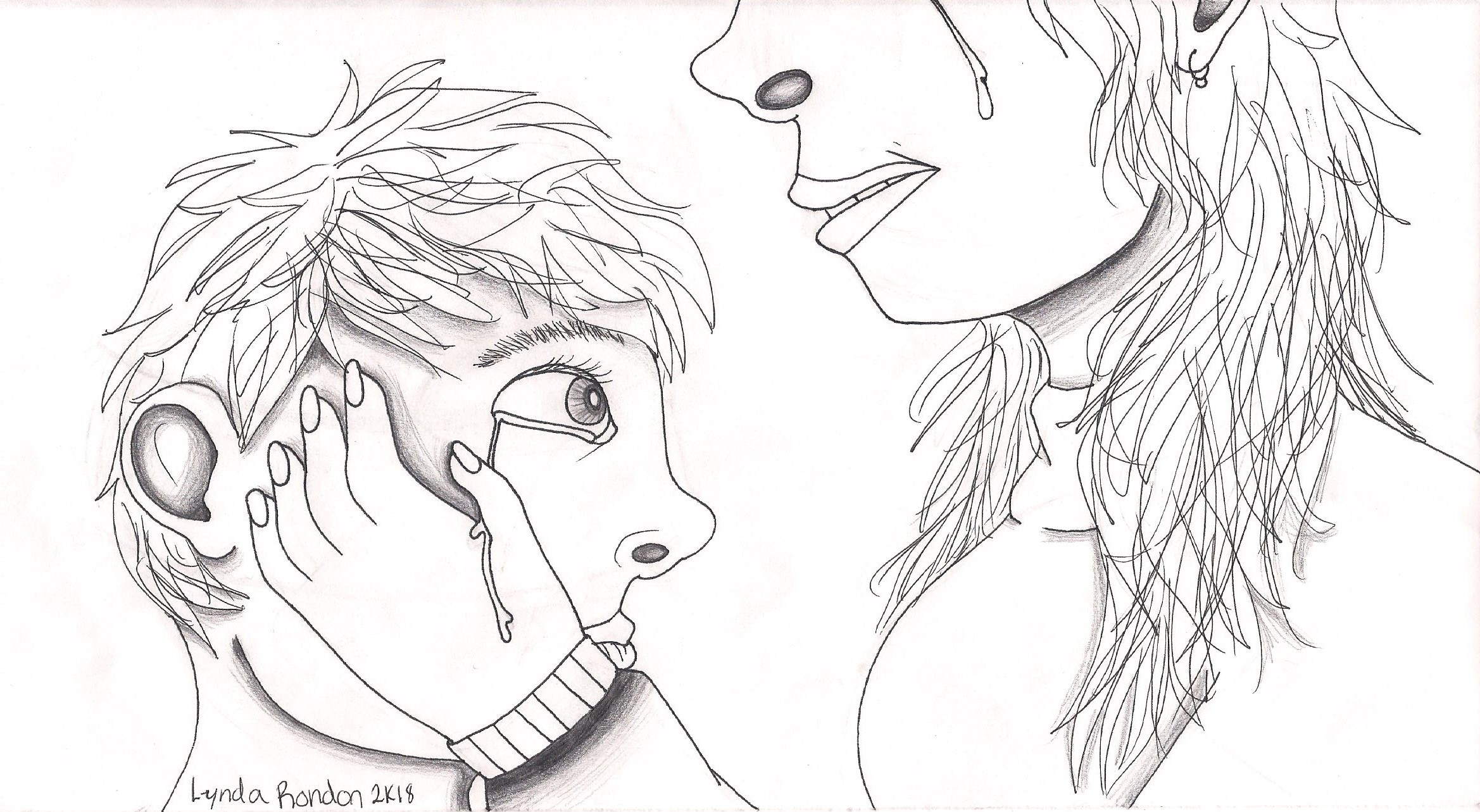
The single mothers usually so beautifully made up, were numb and ashen.
As more children left the classroom, the cheers were replaced by fears.
The teacher was so brave holding their tender faces, as tears dripped down her hands.
What’s happening? The children’s voices whispered. She shook, as she searched for the words.
Little did any of us know the numbers would be 9-11.
*My unique reference point was created in a community where many of the parents worked in The Twin Towers. From the inside of a fourth grade classroom, I watched as an unselfish, dedicated teacher did her job under the most traumatic of circumstances.
9-11 reminds us that fate does not choose favorites.
9-11
Karen D’Antona
About the Author…
Karen D’Antona is a survivor, risk-taker, wife, mother, and educator. Her spare time is filled with love, drama, home cooked meals, and a well paired wine… not necessarily in that order.
Welcome, readers, to the ten-year-anniversary of Synchronized Chaos Magazine!
This publication has lasted over the years due to the creativity and resourcefulness of many people from around the world who have contributed graphic design, editing, monthly editorial letters, technical support, web hosting – and regular, faithful sets of writing and art each month. Thank you all for helping us to foster a culture of craft, innovation, thought, and resilience.
I honestly had no idea that our publication would last as long as it did, as we depend on receiving work each month to continue producing issues. Even in August 2008 we wondered if the world needed yet another literary magazine while we were facing many deeper issues. Yet, people from around the world – India, Nigeria, Bangladesh, Pakistan, South Africa, England, Congo, Egypt, Portugal, Romania, Canada, Brazil, Korea, Australia, the United States and other places – have steadily continued to submit, for no other seeming reward than the chance to express and communicate thoughts. We seem to have stumbled upon a deep need for many people and have been both humbled and emboldened enough to continue, as long as people send their work our way.
For the month of August 2018, we showcase works that reflect several of the basic dichotomies and dualities of our existence.
Chimezie Ihekuna, in the third installment of his drama The Success Story, presents another individual who charts his own path. With only a few months of college left, the protagonist decides to become a writer rather than an engineer. Yet, while he’s the one who makes the choice, his professors and others eventually come around to support and coach him.
Sheryl Bize-Boutte, in her short story ‘Uncle Martina,’ relates the tale of a person who had to keep a major secret in order to live somewhat authentically decades ago in American history. This tale is from the point of view of a young niece who begins to put the pieces together as she grows up, figuring her uncle out with a mixture of bewilderment and compassion that parallels the changing attitudes many in society have held towards people in Martina’s position.
Ahmad Al-Khatat’s poetic speakers draw upon the world around them – rainfall, perfume, national and political metaphors, to express their longing for connection to something or someone outside themselves. Whether through adult romantic love or through childhood collections that reflect a fascination with ‘big ideas’ such as love and death, his speakers reveal they aren’t content being solitary independent individuals and want to go beyond themselves and become part of the larger world.
Sylvia Ofoha’s poetry evokes similar feelings and a shared desire for connection, communicating lost and misplaced love, loneliness, difficult seasons in life and the feeling of abandonment by God through metaphors of natural cycles and phenomena. Yet, she suggests through the very metaphor she has chosen that she may find some relief from her ‘dark night of the soul,’ because seasons and times of the day don’t last forever.
J.J. Campbell, our recurrent poet of lonely cynicism, contributes more pieces about heartbreak and lingering self-loathing. Yet even his speakers break out of their self-absorption to a greater degree than before in this issue, as one speaks of spending time with a very ill close friend.
In her essay critically analyzing the work of television director Mohamed Solaiman Abdelmalek, famous in the Arab world, Jaylan Salah points out how his work reflects the tension between the dreamlike hope of building a better world inspired by the Arab Spring democracy movement and the optimistic social climate at the time when many TV watchers in the region came of age and the current realities and continued political and economic struggles of the region. His most famous current work, the show Rasayel, involves communication from beyond the grave and a desperate desire to somehow right wrongs and re-make personal history, which resonates with modern audiences in a way that Jaylan Salah explains.
In pieces inspired by Japanese modern art, Neil Ellman explores separation and dislocation. What do dragons feel as they destroy land and human cities, what will it feel like when another universe collides and intersects with ours, what if home were nothing more than a fiction? These pieces, and the paintings which inspired them, are at once liberated from traditional artistic constructs and tightly organized in their own right, where each word and each bit of color has a purpose.
Elizabeth Hughes reviews a set of books that reflect a mixture of pain, love, family closeness, cruelty, service to others, and gratitude. She discusses Khris Holt’s Afflicted, Jacqueline Mallison (Wearing)’s Great’ Ma: A Life, Vicky-Lyn Ashby’s Colors of the Heart, Donald Bartling’s For Country: My Little Bit, Twenty-One Months of Service, Michael Washington’s Living in Peace While Living in Pieces, and Robert Perkins’ Let Us Give Thanks. As a species, as the alien character affirms to Jodie Foster’s character in the movie Contact, our species is capable of ‘so many beautiful dreams and so many terrible nightmares.’
Thank you very much for celebrating 10 years of publication with us! Whether you’re a long-time reader or a newcomer to Synchronized Chaos Magazine, we hope you find more of the dreams and fewer of the nightmares in this issue.