Loretta Graziano Breuning, PhD, is the author of “Meet Your Happy Chemicals,” “Beyond Cynical,” and “I, Mammal.” She’s Professor Emerita at California State University, East Bay, and a Docent at the Oakland Zoo. Her blog, “Your Neurochemical Self,” is hosted at PsychologyToday.com.
When your brain releases dopamine, endorphin, serotonin, or oxytocin, you feel good. But soon the spurt is over and you want more. Unfortunately, happy chemicals were not meant to surge all the time, but the more you understand the job your happy chemicals evolved to do, the easier it is to live with their ups and downs.
Here’s a strategy for stimulating each of the happy chemicals. First we’ll see what turns them on in the animal world, and then look at practical ways of stimulating them in today’s world.
1) Dopamine (Embrace a new goal.)
Approaching a reward triggers dopamine. When a lion approaches a gazelle, her dopamine surges and the energy she needs for the hunt is released. Your ancestors released dopamine when they found a water hole. The good feeling surged before they actually sipped the water. Just seeing signs of a water-hole turned on the dopamine. Just smelling a gazelle turns on dopamine. The expectation of a reward triggers a good feeling in the mammal brain, and releases the energy you need to reach the reward.
Dopamine alerts your attention to things that meet your needs. How you define your needs depends on your unique life experience. Each time dopamine flowed in your youth, it connected neurons in your brain. Now you’re wired you to meet your needs in ways that felt good in your past.
Dopamine motivates you to seek, whether you’re seeking a medical degree or a parking spot near the donut shop. Dopamine motivates persistence in the pursuit of things that meet your needs, whether it’s a bar that’s open late, the next level in a video game, or a way to feed children. You can stimulate the good feeling of dopamine without behaviors that hurt your best interests. Embrace a new goal and take small steps toward it every day. Your brain will reward you with dopamine each time you take a step. The repetition will build a new dopamine pathway to take the place of the habit you’re better off without.
2) Serotonin (Believe in yourself.)
Confidence triggers serotonin. Monkeys try to one-up each other because it stimulates their serotonin. People often do the same. This brain we’ve inherited rewards social dominance because that promotes your genes in the state of nature. As much as you may dislike this, you enjoy the good feeling of serotonin when you feel respected by others. Your brain seeks more of that feeling by repeating behaviors that triggered it in your past. The respect you got in your youth paved neural pathways that tell your brain how to get respect today. Sometimes people seek it in ways that undermine their long-term well-being. The solution is not to dismiss your natural urge for status, because you need the serotonin. Instead, you can develop your belief in your own worth. People are probably respecting you behind your back right now. Focus on that instead of scanning for disrespect. Everyone has wins and losses. If you focus on your losses you will depress your serotonin, even if you’re a rock star or a CEO. Build serotonin by focusing on your wins!
3) Oxytocin (Build trust consciously.)
Trust triggers oxytocin. Mammals stick with a herd because they inherited a brain that releases oxytocin when they do. Reptiles cannot stand the company of other reptiles, so it’s not surprising that they only release oxytocin during sex. Social bonds help mammals protect their young from predators, and natural selection built a brain that rewards us with a good feeling when we strengthen those bonds. Sometimes your trust is betrayed. Trusting someone who is not trustworthy is bad for your survival. Your brain releases unhappy chemicals when your trust is betrayed. That paves neural pathways which tell you when to withhold trust in the future. But if you withhold trust all the time, you deprive yourself of oxytocin. You can stimulate it by building trust consciously. Create realistic expectations that both parties can meet. Each time your expectations are met, your brain rewards you with a good feeling. Continual small steps will build your oxytocin circuits. Trust, verify, and repeat. You will grow to trust yourself as well as others.
4) Endorphin (Make time to stretch and laugh!)
Pain causes endorphin. That’s not what you expect when you hear about the “endorphin high.” But runners don’t get that high unless they push past their limits to the point of distress. Endorphin causes a brief euphoria that masks pain. In the state of nature, it helps an injured animal escape from a predator. It helped our ancestors run for help when injured. Endorphin was meant for emergencies. Inflicting harm on yourself to stimulate endorphin is a bad survival strategy. Fortunately, there are better ways: laughing and stretching. Both of these jiggle your innards in irregular ways, causing moderate wear and tear and moderate endorphin flow. When you believe in the power of laughing and stretching, you create opportunities to trigger your endorphin in these ways.
5) Cortisol (Survive, then thrive!)
Cortisol feels bad. It alerts animals to urgent survival threats. Our big brain alerts us to subtle threats as well as urgent ones. The bad feeling of cortisol will always be part of life because your survival is threatened as long as you’re alive. Cortisol especially grabs your attention when it’s not being masked by happy chemicals. You might have a sudden bad feeling when your happy chemicals dip, even though there’s no predator at your door. If you can’t get comfortable with that, you might rush to mask it with any happy-chemical stimulant you’re familiar with. Your well-being will suffer. You will lose the information the cortisol is trying to give you, and your happy habit will have side effects. More cortisol will flow, thus increasing the temptation to overstimulate your happy chemicals. This vicious cycle can be avoided if you learn to accept the bad feeling you get when a happy chemical surge is over. You need unhappy chemicals to warn you of potential harm as much as you need happy chemicals to alert you to potential rewards. If you learn to accept your cortisol, you will make better decisions and end up with more happy chemicals.
Dr. Loretta Breuning may be reached at lbreuning@comcast.net and welcomes thoughts and comments.
The fashion industry is the second most waste-creating industry in the world, right behind weaponry. However, San Francisco is a forerunner in the sustainable fashion world, and Sam Formo has made his home here with his new concept of a zero-waste pattern, which earned him placements for awards and exhibitions internationally. Along with his industry-changing ideas, he also has founded D-SINE, a non-profit that helps down-and-out men and women change their quality of life for the better through learning fashion design.
D-SINE stands for “Developing Skills through Independence, Networking and Empowerment”. Formo combined his work in Social Services with his talent of passing on his skills to others. His pupils have found themselves in a tough position through homelessness, substance abuse, sex work, or incarceration. I had the wonderful opportunity to interview Sam about his work and his wardrobe.
Mimi: “How would you describe your personal style?”
Sam Formo: “I have roots in the punk scene, I have some edge. I like to have one little thing to stand apart from the rest. I’m obsessed with shoes, my closet is full of them.”
M: “How would you describe San Francisco’s style, and would you say it’s unique to other major cities?”
SF:”San Francisco has a very laid-back style. It’s gotten a lot better. I’ve lived in New York City where there is more style, not just fashion. Here everyone looks homogeneous, hipster.”
M: “How do you feel about menswear getting more attention recently?”
SF: ” It’s great! It’s about time- it needs it.”
M: “Do you have a favorite designer?”
SF: “I like Margiela. My favorite pair of shoes is by Dries Van Norton. They last so long, I love them!”
M: ” What are you really excited about wearing this fall?”
SF: ” I don’t follow trends so much!”
M:”Do you have a routine when you get dressed in the morning?”
SF: “I start with the shoes. I decide what shoe to wear for the day and the rest falls into place.”
M: “Tell me about D-SINE.”
SF: “It’s a twelve week incremental program with an end goal of generating income through making one’s own line of clothing.”
M:”What is a typical meeting like?”
SF: “Well, we meet up once a week for three hours. We check-in, get to work, conceptualize ideas, inspiration, mood boards, and translate it into design.”
M: “Why do you care about helping down and out people?”
SF: “I have experience from hardship and have overcome a lot of adversity. I want to help them make better decisions, reduce the harm in their lives. This inspires me. It’s my favorite day of the week. It comes from a very personal space, and I am learning a lot about myself.”
M: “Do you have advice for someone who wants to start a non-profit, or something similar to what you are doing?”
SF: “Get help! Have a solid idea and a plan. Make a business plan, find funding. You have to love it.”
D-SINE meets once a week at the St. James Infirmary. If you would like to help with donating a sewing machine, muslin, tools, or your own time, please feel free to contact Sam through the group’s Facebook page! www.facebook.com/pages/D-SINE/468300883260792
Mimi Sylte is a fashion student in San Francisco, currently working at nonprofit runway shows in Seattle and serving as a staff writer for Synchronized Chaos. She may be reached at jacintasylte@gmail.com and appreciates tips and thoughts for further columns!
“even if they’re me” (faunlike, nerdlike, he grinned).
The taxpayer, uneasy, returned his grin.
He didn’t mind, no, he got it, the need
in a warlike time
for deeds like these:
security required less liberty.
He had nothing to hide—
oh no, not he!
He wasn’t guilty,
though he felt mildly terrified.
Then he thought, “But that’s what
they want us to be!
The terrorists, that is.
They want us to be horrified, scarified, terrified!”
And he felt properly edified, dutified, mollified.
A penny went
to a caterer in Livermore,
and another to a weapons maker’s part-time chauffeur,
a penny to a Homeland Security clerk,
another to a therapist of a faceless veteran
(his face had been blown off on a road near Najaf),
a penny sequestered
the winter before.
And the taxpayer nodded
shrugged, grunted, and sighed.
He grumbled, “There’s a war on,
it’s not played like canasta.
They want to kill us,
so let’s first kill them.
What would you do, huh?”
A penny went
into the pocket of a drone jockey
who showed his mojo in the snowy state
better than at the local bar,
where he was known to play none too shabby or shoddy darts,
by crashing wedding parties in the Yemen hills
8,000 miles away into a thousand body parts.
A penny went
to the pension of an enhanced interrogator
who, under W., tortured Khalid,
and persons of interest in Waziristan and Kut,
and lives, under Obama,
anonymous, retired,
on the farthest flung of the Florida Keys.
A penny went
to the SEAL who killed bin Laden,
a penny to his boss, his ace buddy, his driver,
to the helicopter pilot who dropped him at Abbottabad’s savage gate,
a penny to a special op at Lahore,
a turned jihadist in Somalia,
a janitor at a black site in Iraq.
A penny went
to a recruiter in Davenport,
Tracy, Laramie, Charlotte,
Peoria, Duluth,
Boise, Stockton, Detroit,
to collect young men and women
“to teach them to kill for me.
Because I pay them.
I pay them all.
I am their paymaster, their leader, their boss.
They do what I pay them to do.
I am Taxpayer.
And what I pay them to do is to kill.”
And he bravely clicked Send My Tax, next April.
_____
Christopher Bernard is a poet, novelist, and essayist living in San Francisco. He is author of the novel A Spy in the Ruins (www.regentpress.net/spyintheruins) and co-editor of the webzine Caveat Lector (www.caveat-lector.org).
This month, Elizabeth Hughes starts her ‘Book Periscope’ column with an original poem, highlighting the psychological toll imposed by homelessness.
the poem
from Elizabeth Hughes
While riding the bus, I looked over, and saw a man with his cart piled high,
remembering the days when I too sat on the bus with my cart as well.
Some people would look at me and see a dirty homeless woman- pitiful and sad.
Others would look and say, “She’s homeless because she is horrible and bad.”
Then I almost broke the curse of bad luck with no place to go, getting booted to the curb again with nothing to my name, and with everyone saying, “You’re just one of them- nothing’s different, you’re just the same.”
Then I walked down the streets and stood on the railroad track,
Fully aware that when a train races towards me, that there’s no going back.
No one missed me, no one cared,
I would rather be dead, than homeless and scared!!
Now, here’s a book review, of a memoir from an expatriate engineer:
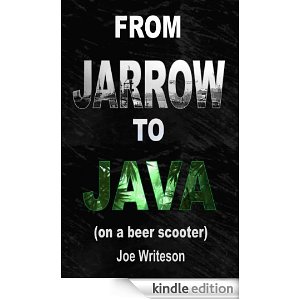
Review of From Jarrow to Java (on a Beer Scooter) by Joe Writeson
From Jarrow to Java (on a Beer Scooter), by Joe Writeson, is a very humorous book of the author’s life in Java. Joe Writeson leaves his home and just by chance accepts a position to oversee a huge, seemingly doomed construction project in East Java. What ensues when he takes on this monumental task is quite hilarious. Yet, one can feel his frustration in attempting to get the project going and completed. He runs into many obstacles, some of which will have you laughing out loud. One of the most important people he meets in Java is the woman he will marry. This book is very well written, humorous, yet tells of the frustrations and accomplishments in taking on a huge project. This book will capture your interest from the beginning to the end. Thank you Mr. Writeson, for a truly great book. I very highly recommend From Jarrow to Java. It is most definitely “my cup of tea”!!
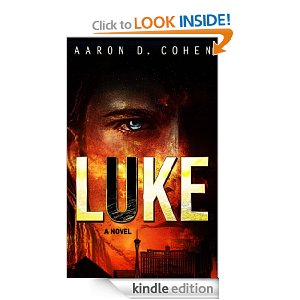
Luke, by Aaron Cohen, is a great novel about a man who used to be in “The Organization” and wants to take control of all prostitution in Las Vegas and then spread his empire to other cities. I would call it a crime/suspense novel. The characters are strong and the story flows nicely and keeps the reader interested. My favorite character is Charlie, a giant of a man who used to be a chef in Paris until his tongue was removed. His character is strong, powerful and lovable. Although each and every one of the characters are great in Luke. Thank you Mr. Cohen for a great novel. I highly recommend Luke. If you don’t usually read crime/suspense novels, try this one! I am sure you will enjoy it as much as I did. Aaron D. Cohen’s Luke is definitely my cup of tea!!
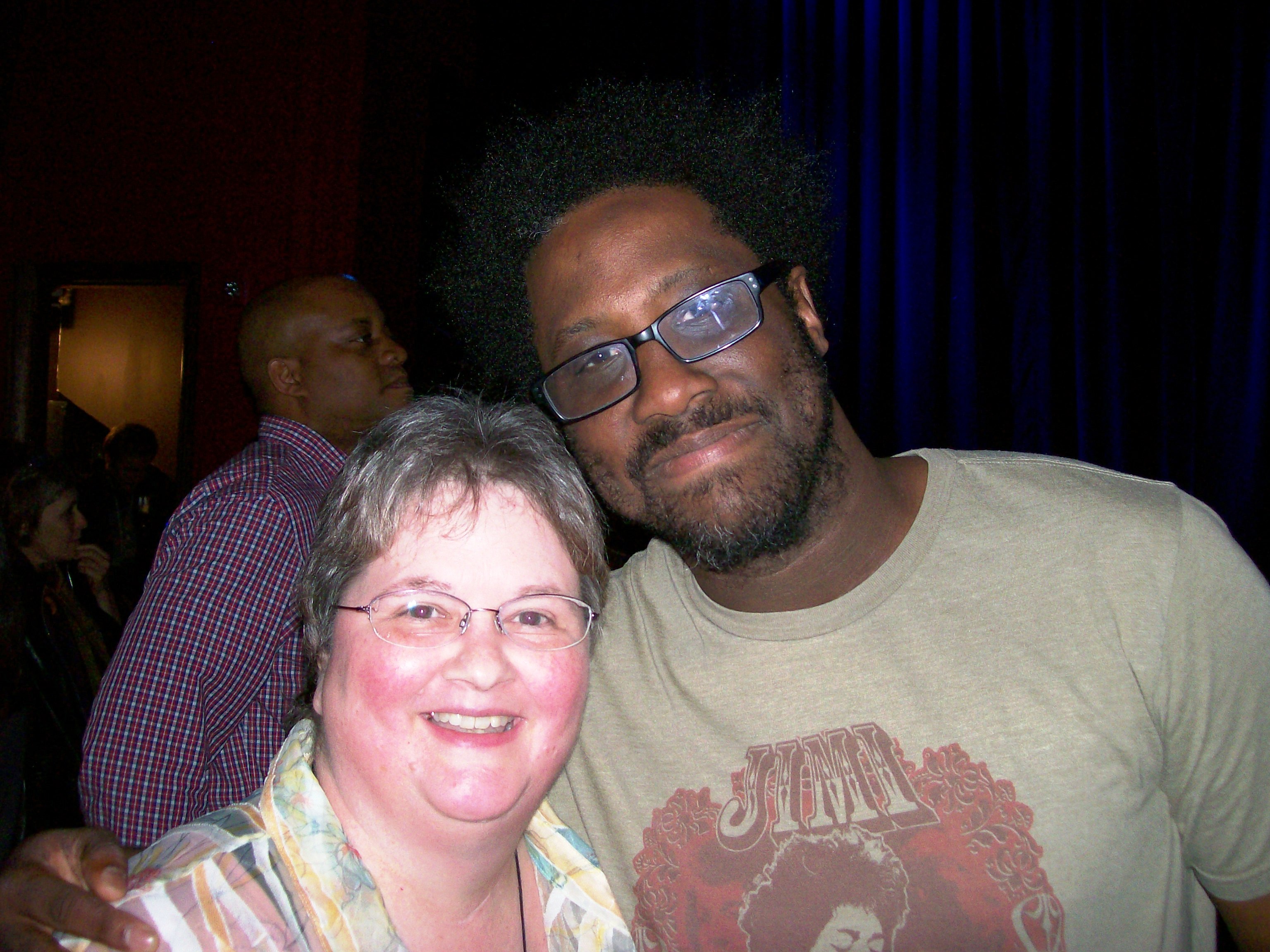
W. Kamau Bell brought his “Totally Biased Stand Up Tour” to San Francisco at The Chapel on Valencia Street Sunday, July 21 and 22. My husband David and I were there for Sunday’s performance. We’ve watched every episode of the FX show Totally Biased, wondering why it was just a half hour long. So we were, excuse the borrowed phrase, totally biased in favor of the show when we arrived. Fans will be happy to hear that the show will be an hour long on the new FXX channel which W. Kamau Bell assured me will be available on basic cable beginning September 4.
Appearing with Bell are writers and performers from the show, Kevin Avery, Dwayne Kennedy and Hari Kondabolu, along with Karinda Dobbins, a Bay Area comedian. The tour is showcasing talented local comedians in each city. Karinda Dobbins started the show, introduced by Bell’s disembodied voice via loudspeaker.
Dobbins soon had us cracking up, making the first Zimmerman trial joke of the night. One might imagine the show would be laden with them so soon after the verdict but it was nicely balanced, a leavening of reactions to the verdict without overtaking the other material. Dobbins told a story about a work review from her white boss which came the Monday following the verdict. “I got the best review ever. Thanks, George Zimmerman!” The audience went wild. She followed up with stories about her daughter ‘s music and some misleading Nicki Minaj lyrics involving oral sex and the flavor mango. I don’t want to spoil it but readers might want to review the lyrics to Minaj’s “Can’t Stop, Won’t Stop.” David and I resolved to catch more of her shows in the future.
Kevin Avery followed Dobbins. He’s the head writer for Totally Biased and grew up in the Bay Area. He is a very physical comedian, throwing his entire body into his performance as he described how he didn’t realize a college friend, also black, was gay before he came out because it was the ’90s, era of Hammer pants, wild hair, sequins and glitter. Emulating a back up dancer for MC Hammer had us clutching our sides as we laughed so hard it hurt. According to Avery, if you were black and gay in the ’90s you had to burst out of the closet with attitude before anyone would notice you were gay. Much of Avery’s set was self-deprecating, making fun of himself for being out of step with black culture, to the detriment of his dating relationships. He made fun of his speech and how close it is to “white guy speech” as performed by black comedians, explaining that his parents enrolled him and his brother in a Catholic school, all white except for them. After having spent his childhood in the Bay Area, he then went to college in Alabama where he was awaited by culture shock.
Next up was Dwayne Kennedy. He addressed Trayvon’s shooting directly, saying, “If you were a black man, you can’t walk on the sidewalk, run, even go to the store. You got to levitate. I’m just going to levitate to the store.” Why was Dwayne arrested? “He broke the law of gravity.”
Kennedy talked about why there aren’t more black serial killers. “There would be”, he explains, “if black people had higher incomes. At the very least you need a car. Dude, my bus pass ran out, can you come pick me up? I got this body…”
Kennedy says he’s praying for the hole in the ozone to open up more(mimics spraying aerosol can) and notices that more white guys are marrying black women. “They want a UV umbrella; take shelter of that increased melanin, African number 10.” But he saw an interracial couple one day and mimics the sister telling her husband off and Kennedy says “You didn’t think that was free?”
Hari Kondabolu was last up before W. Kamau Bell and made it clear that colonialism would be a theme. The comic, born and raised in Queens, had visited Australia, which has rules about not bringing harmful life-forms into the country which could destroy the ecosphere. “The indigenous people of Australia would agree.” Kondabolu makes fun of whiny liberals who say they’re moving to Canada and points out that Canada also has a history of colonialism, killed natives, and their prime minister is trying to gut the social welfare programs.
His best story of the night involved his dad picking him up from the airport. A white lady jumped into his dad’s back seat, mistaking his dad’s car for a taxi. Kondabolu tried to tell her that it’s not a cab, to which she said “Too bad, guess you should have run faster.” He could only assume that she didn’t really look at the car, just the color of his dad’s skin. “Oh, he’s in the servant class.” I won’t spoil the story’s ending, in case you get a chance to hear him tell it.
W. Kamau Bell was last to perform, followed by a Q and A session with the Totally Biased comedians. Continuing his comedic education on the subject of racism, he tells a story about a Facebook interaction with an ex-friend (emphasis on the word “ex”) who is a white atheist. This ex-friend posted a story concerning racism and tagged Bell so that he was getting alerts on his phone for each comment. The guy declared that whatever the story was about, that it wasn’t racist and Bell disagreed. At some point the ex-friend then said, “As an atheist, I am a member of an oppressed group too.” Bell says maybe atheists rank somewhere near the bottom of a long and ever-changing list of oppressed people, next to people who are allergic to nuts. Bell explains that white people don’t get to decide what’s racist or not. It’s not our area of expertise. People of color are taking the graduate course in racism, writing 500-page papers, attending class every day. White people audit the class, attend when they feel like it and then breeze in like they can break it all down. He said, “Just like I can’t offer an opinion on what’s sexist because I don’t know, I just audit the class.” With regard to his friend, he adds, “I’d rather you just burned a cross on my lawn, it’s cleaner. The cross will stop burning but you won’t shut the f— up.”
Bell states that his daughter is the reason he incorporates identity or sociopolitical politics into his comedy, to make the world a better place for her generation. So it’s no surprise that his daughter is prominently mentioned during his act. Beaming with pride, Bell talks about being a parent on the playground with a mixed race kid among other mixed race kids—who look like each other more than their own parents. Once they’re all together, things get confusing—he mimes losing her amid the many lookalike children and pulling out the wrong one—for instance, discovering it’s a boy, when he goes to change the diaper. Oops! Gotta go back and exchange the boy for a girl until he gets his daughter back. Bell muses that she looks white when he holds her and black when his mom holds her, “like a broken chameleon.”
The Q and A with the Totally Biased cast came next and as they set out chairs for the guys we all wondered where Karinda Dobbins was. The first question regarded the worst place they’ve ever performed and they had some hilarious stories that brought home the courage it takes to get up and try to make people laugh night after night in all kinds of venues across the country. Then, someone asked what we all wondered, “Why isn’t Karinda up there with you?” I think it was intended in every venue to be a Q and A with just the cast, but as we all wanted to see her, they brought Karinda Dobbins out. I wish she’d been there for the worst gig question because I can imagine she’d have a good story to tell. We all really enjoyed her performance and I hope appearing with the cast of Totally Biased results in more bookings. All in all it was a night of witty comedy at a lovely venue.
You can follow the performers on Twitter, in order of appearance: @KarindaDobbins, @KevinAvery, @DwayneTKennedy, @harikondabolu and @wkamaubell. Sample tweet from W. Kamau Bell: “Thank you to the people of Florida who came out to the @Totallybiased tour. & special thanks to George Zimmerman for not killing me.”
Tapati McDaniels is a writer from Sunnyvale, California, who is working on a memoir. She may be reached by leaving comments here, or at @tapati on Twitter.

 By Loretta Graziano Breuning