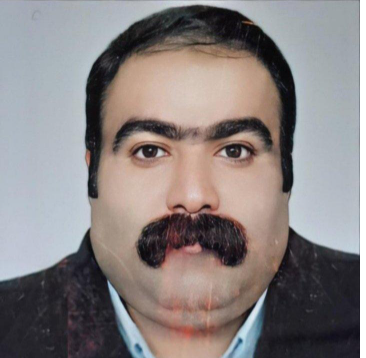
Poetry from Young-eun Kang

The First Word

You and I speak the same mother tongue,

yet we cannot understand each other’s words.

“Why do you like me?”

“When did I ever?“

“Then why do you hate me?”

“I never did.“

The words you throw arrive at different destinations,

facing one another like travelers changing at different stations.

Someone says that all eight billion people 

each speak a different language.

Even if that is the way language runs across the open grasslands,

if we could understand the different syllables at every joint of speech,

would sorrow, too,

become one?

The distance between words.

The depth between words.

The breadth between words.

They are only the landscape seen from the Tower of Babel.

The measure of a life that travels between heaven and earth is different.

The First Word,

clothed in flesh,

teaches us love.

When I move the tower of distrust and resentment outside my thoughts,

I can hear it.

Though our ears may hear differently,

our hearts hear the same.

“I love you.” 

“So do I.”

태초의 말 

     강영은

너와 나는 같은 모국어를 쓰고도 서로의 말을 알아듣지 못한다

너는 왜 나를 좋아하니

내가 언제

그러는 너는 나를 왜 미워하는데

그런 적 없어

네가 던진 말은 전혀 다른 목적지에 닿는다

경유지가 다른 말처럼 마주 보기만 한다

누군가 말한다

80억 인구가 각자 다른 말을 한다고

그것이 초원 위를 누비는 언어의 방식이라 할지라도

마디마디 다른 음절을 알아듣는다면 슬픔도 하나가 될까?

말과 말 사이의 거리

말과 말 사이의 깊이

말과 말 사이의 넓이는

바벨의 탑에서 바라본 지형일 뿐이라고,

하늘과 땅을 오가는 목숨의 셈법은 다르다고,

태초의 말씀이 몸을 입어 사랑을 가르친다

불신과 원망의 탑을 생각 밖으로 옮기니 들린다

듣는 귀가 달라도 마음속에 들린다

나 당신 사랑해요

나도요

Between Tree and Leaf

Between tree and leaf,

your dry bones

are blooming.

Neither tree

nor leaf,

waiting

arrives first

and blossoms.

There are times

when love

is a branch.

Joined

to an endless waiting,

rather than calling your name

until it becomes meaning,

there are times

when a branch

hurts more,

because it does not break,

whether rain falls

or the wind blows.

나무와 나뭇잎 사이

            강영은

나무와 나뭇잎 사이,

너의 마른 뼈가 꽃을 피우고 있다

나무도 나뭇잎도 아닌

기다림이 먼저 가서 꽃을 피우고 있다

사랑은 그렇게 가지일 때가 있다

한없는 기다림에 잇닿아

너를 불러 의미가 되기보다

비 오거나 바람 불거나 부러지지 않아

더욱 아픈 가지일 때가 있다

Poetry from Graciela Noemi Villaverde

Human Dignity

It cannot be measured with coins or weighed on scales.

It is the root that, even if the wind bends the stem,

never forgets the sky toward which it rises.

It is the light that filters through the darkest cracks,

when everything seems to be collapsing,

and remains a flame that no one can extinguish.

It has no price and is not given away for convenience.

It dwells in every heart like a sacred territory:

no one occupies it without permission,

no one reduces it to what you possess or cease to possess.

It is the pulse that does not stop in the face of injustice,

the voice that, even if it trembles, does not fall silent,

the certainty that you are worth what you are,

not what the world says you are worth.

It can be wounded, it can grow weary,

but it never completely surrenders.

Because it is like the ground we walk on:

even if covered with rubble,

it remains earth capable of blossoming.

 It is your essence, intact, undeniable,

what no one can take from you:

the right to be you,

standing tall, whole, free.

GRACIELA NOEMI VILLAVERDE is a writer and poet from Concepción del Uruguay (Entre Rios) Argentina, based in Buenos Aires She graduated in letters and is the author of seven books of poetry, awarded several times worldwide. She works as the World Manager of Educational and Social Projects of the Hispanic World Union of Writers and is the UHE World Honorary President of the same institution’s Activa de la Sade, Argentine Society of Writers. She is the Commissioner of Honor in the executive cabinet in the Educational and Social Relations Division of the UNACCC South America – Argentina Chapter.

Poetry from Mohammed Al-Qaddafi Masoud, translated by Dr. Salwa Goda

Leave the Crook

Put down that shepherd’s crook,
you with the polished air.
Stop your circling,
your blind stumbles
out of the dream.

That stick you wave
at a flock of children,
making a holy vow
that only blooms
when your tragedy peaks.
You weave your cloak from a people’s faith,
stitching sunbeams to pretty lies.

When you’re lost in ecstasy,
the desert shows you its face
and I make it into dreams,
so you can offer a rose
to the era that never saw you born.

Nothing promises you anything.
You’re past the end.

No fantasy holds you up,
no color hides you.
You don’t need a hiding cap,
you need a helmet.
Your reflection has changed,
and being different has made you
a slippery, mercury question.
Oh, child of the Boundless.

_________________________________________________

Mohammed Al-Qaddafi Masoud

Translation Dr. Salwa Goda

Naked with Certainty

One nap-time,
she pulled back the curtains of her glare,
let her sadness go naked.
Layla doesn’t give mirrors a chance
to catch what’s alike and not alike.
She became one with the clear rain,
curled into laughter on the skyline,
she knew the wolf’s kiss was danger.

First to arrive, a knight
carrying baskets of myths,
wiping away alone-ness.
Oh, the running away of names from their names,
and the end of questions where they start.
I whispered in autumn’s ear,
“Hide from the seasons’ calm.”
Rain stitches the earth a shirt
for those naked with certainty.

Wheat of Words

Rain draws up
houses in the clouds,
chairs made of light.
Angels plow the night
of happiness.
They plant songs in
the brass threshing-floors,
beating the wheat of words.

Mohammed Al Gaddafi Masoud born in 1978 in Gharyan, Libya, holds a theater diploma from Tripoli’s Jamal Al-Din Al-Miladi Institute (2000) and is the author of several collections, including lyrical poetry (We Woke Up to Joy, 2006) and journalistic dialogues (My Dialogues with Them, 2008). Widely published across the Arab world, his work has been translated into numerous languages—English, Chinese, Spanish, Polish, French, Italian, and Albanian—and appeared in international print and online journals from Spain to Argentina. In 2024, he was selected as one of 72 global poets for an Italian-language anthology curated by Angela Costa, reflecting his broadening transnational literary presence.

Libyan poet Mohammed Gaddafi Masoud won second place in the fifth edition of the “Francesco Giampietri International Literary Prize” held in the historic city of Venafro, Italy. His poems have been selected for more than one international anthology in Italian, English, and Albanian.

_____________________________________________________

Translation by Dr. Salwa Goda

Poetry from Oygul Shermamatova

«Praise of New Uzbekistan »

Our beautiful history is our great glory,
Customs and traditions are our sweet soul.
There is national beauty in atlas caps,
May our every moment be sacrificed for you.

Today enlightenment shines in schools,
Higher education calls us forward.
Giving focus to knowledge and enlightenment,
Youth look forward to a bright future.

Sacred mothers and girls are honored,
Conditions are ready for beautiful voices.
Followers of Zulfiya are women scholars,
The country’s rise is in every document.

Opportunities are vast in every single field,
Our youth today are equal to the world.
With secrets of professions and honest labor,
Come, let’s conquer high peaks!

In the digital world, the IT field,
Technology is the idea of the era.
Innovation and creativity united,
The shadow of peace protects the country.

Oygul Shermamatova is a young poet and student from the Asaka district of the Andijan region, Uzbekistan. Born in 2020, she is currently a 10th-grade student at a specialized school in Asaka. Oygul has a deep passion for literature and poetry, alongside her keen interest in natural sciences like biology and chemistry. Her ultimate dream is to become a physician and contribute to society through medicine.

Essay from Maja Herman Sekulic

Beyond Borders: Why the World Continues to Pay Attention to Maja Herman Sekulić

While sections of the Serbian media have often overlooked her achievements, the international literary community has continued to follow the career of Maja Herman Sekulić with sustained interest. For readers and critics far beyond the Balkans, her work has long belonged to a broader cultural conversation that transcends national boundaries.

A poet, novelist, essayist, translator, and scholar, Herman Sekulić occupies a rare position in contemporary Serbian literature. She is among the few living Serbian authors whose work has found readers across Europe, North America, and Asia, with novels translated into five languages and poetry published in twenty-eight. Her official title as a Dame/Knight of the Order of Saint Constantine reflects yet another dimension of the international recognition she has received.

Yet her influence extends well beyond her published books. Holding a Ph.D. from Princeton University, she has taught at several American universities while pursuing a career that bridges literature, philosophy, comparative culture, and translation. Her essays have been included in university curricula, and her translations of major theoretical works have helped introduce influential literary concepts to Serbian readers and scholars.

Her international engagements are equally notable. She serves as Vice President of the Academy of Ethics in India, which has nominated her twice for the Nobel Prize in Literature. She is a member of the World Academy of Art and Science, as well as a senator, ambassador, and member of the International Academy in Rome. Her cultural work has also earned her appointments as a three-time Ambassador of Poetry, Culture, and Goodwill under UNESCO patronage, together with the Nelson Mandela Peace Award.

Recognition has come from many parts of the world. In Italy and India, her literary achievements have been celebrated through numerous distinctions. In South Korea, her work has been translated and she was appointed Lifetime Vice President of the World Literature Association. Mexico has honored her among the leading figures of contemporary world culture. She has also been recognized as a Global Icon of Poetry, the Style Icon of Serbia of the twentieth and twenty-first centuries, and one of the Fifty Unforgettable Women of Europe.

What distinguishes Herman Sekulić, however, is not simply the breadth of her résumé but the consistency of her intellectual independence. Throughout a career that has unfolded across cultures and continents, she has resisted the temptation to reshape her voice according to prevailing political or ideological expectations. Opportunities to embrace fashionable narratives or capitalize on personal history were available to her, yet she chose instead to remain committed to the autonomy of literature and the integrity of her own artistic vision.

At a time when public discourse increasingly rewards conformity and polarization, Herman Sekulić represents a different tradition—one that places literature above ideology and creative freedom above political convenience. Her career serves as a reminder that genuine cultural influence is rarely determined by the intensity of domestic media attention. Rather, it is measured by the enduring life of a writer’s work, its ability to cross languages and cultures, and its capacity to remain relevant across generations.

It is perhaps for this reason that, regardless of changing fashions or local controversies, Maja Herman Sekulić continues to command respect on the international literary stage. Her reputation today rests not on publicity, but on decades of scholarship, artistic achievement, and an unwavering commitment to intellectual and creative freedom.

(The cultural supplement)

Van granica: zasto svet i dalje obraca pažnju na Maju Herman Sekulic 

Uprkos čestom ignorisanju u delu domaćih medija, svet i dalje sa velikom pažnjom prati svaki korak Maje Herman Sekulić. Svetska književnost jednostavno ne može da zanemari autorku čiji opus, međunarodni ugled i kulturni doprinos prevazilaze nacionalne okvire. Nosilac je i viteške titule Reda Svetog Konstantina, što dodatno svedoči o međunarodnom ugledu koji uživa.

Maja Herman Sekulić ubraja se među najznačajnije savremene srpske autore, a jedna je od retkih živih književnica iz Srbije koja ima čitalačku publiku od Pariza i Rima do Nju Delhija i Njujorka. Dok mnogi autori ostaju prepoznati prvenstveno u regionalnim okvirima, njen književni rad već decenijama ostvaruje međunarodni odjek.

Ona nije samo književnica, već svojevrsna kulturna institucija. Doktor je filozofije sa Prinstona, predavala je na više američkih univerziteta i autorka je 33 knjige. Njeni romani prevedeni su na pet svetskih jezika, poezija na dvadeset osam, dok se njena esejistika proučava na pojedinim univerzitetskim katedrama. Kao prevodilac kapitalnih dela značajno je doprinela razvoju srpske književne teorije i uvođenju novih pojmova u domaću akademsku misao.

Potpredsednica je Akademije etike u Indiji, koja ju je dva puta nominovala za Nobelovu nagradu za književnost. Članica je Svetske akademije umetnosti i nauke, kao i senator, ambasador i član Internacionalne akademije u Rimu. Nosilac je i titula trostrukog ambasadora poezije, kulture i dobre volje pod pokroviteljstvom UNESCO-a, kao i međunarodne nagrade za mir „Nelson Mandela“.

Školovala se i živela u više zemalja sveta, članica je srpskog i američkog PEN-a, Srpskog književnog društva i Udruženja književnika Srbije, koje joj je dodelilo svoja najviša priznanja. Posebno je cenjena u Italiji i Indiji, gde je dobila brojne književne nagrade, dok je u Koreji prevedena i imenovana za doživotnu potpredsednicu Udruženja svetske književnosti. Iz Meksika su joj stigla priznanja koja je svrstavaju među velikane svetske kulture.

Proglašena je Globalnom ikonom poezije, Ikonom stila Srbije XX i XXI veka i jednom od pedeset nezaboravnih žena Evrope.

Od Evrope do Amerike, Maja Herman Sekulić simbolizuje slobodu stvaranja, traganje za lepotom i doslednost umetničkom integritetu, nezavisno od dnevne politike. Oni koji pokušavaju da njen doprinos svedu na lokalne okvire zanemaruju činjenicu da istinska umetnička vrednost nadilazi trenutne medijske i političke okolnosti. Kako je o njoj zapisao Josif Brodski, pleni lepotom svoje poezije i svog bića.

U vremenu kada se od umetnika i intelektualaca često očekuje da slede unapred zadate obrasce i dominantne narative, Maja Herman Sekulić ostala je dosledna sopstvenom putu. Mogla je da prihvati modele koji su joj bili ponuđeni na Zapadu, uključujući kritiku sopstvene zemlje ili poziciju žrtve, ali to nije učinila. Nije prihvatila ni ponude koje bi od nje zahtevale ideološko svrstavanje, niti je koristila tragičnu sudbinu svog oca kao sredstvo lične promocije. Umesto toga, izabrala je put stvaralačke slobode, ličnog integriteta i odgovornosti prema sopstvenom delu.

Njena karijera pokazuje da trajna književna vrednost ne zavisi od prolazne medijske pažnje, već od snage dela, međunarodnog priznanja i doslednosti sopstvenim principima.

Foto: Nebojsa Babic

Maja Herman Sekulic 

Serbia 

USA 

Official nominee for Nobel literature 

Essay from Matniyazova Gulizebo Adilbek qizi 

Learning English – The Key to Success

“A person who knows a language knows the world.” This wise saying has become even more meaningful today. We live in an age of knowledge, innovation, and competition. For every young person who wants to keep up with the modern world, build a successful career, and achieve great goals, learning English has become an essential need. English is not only a language of communication but also a key that opens the door to science, technology, education, and endless opportunities.

Today, many young people are eager to learn English. The reason is simple: knowing English allows us to study at the world’s leading universities, participate in international scholarships and projects, gain modern professions, and find opportunities anywhere in the world. However, every success requires hard work, patience, and determination. Dreams alone are not enough; we must work consistently to achieve them.

I am also studying English Language. One of my biggest goals is to achieve an overall band score of 9.0 on the IELTS exam and demonstrate my knowledge at an international level. God willing, I will achieve this goal through hard work, patience, and perseverance. I am not learning English only to get a certificate. I am learning it to broaden my horizons, gain new knowledge, and create more opportunities for my future.

Another great dream of mine is to take my parents on trips to foreign countries as a way of thanking them for their endless love, care, and sacrifices. In addition, I plan to transform my family’s houses located in the historic Ichan Kala area of the ancient city of Khiva into modern guest houses and contribute to the development of tourism in my country. By mastering English, I will be able to communicate confidently with foreign visitors and introduce them to the rich history, unique culture, and warm hospitality of Khiva. In the future, I hope not only to achieve my own dreams but also to make a meaningful contribution to the development of my homeland.

In conclusion, learning English is not just about mastering a new language; it is a strong step toward a brighter future. I firmly believe that every effort I make today will help me achieve my dreams tomorrow. Every new word I learn brings me one step closer to my goals. Every young person who learns English is building not only their own future but also the future and prosperity of their country. Great dreams come true only through great effort, and dreams never wait—they can only be achieved through determination, hard work, and continuous action.

Biography  

Matniyazova Gulizebo Adilbek qizi was born on June 22, 2006, in Khiva, Uzbekistan. She is currently a second-year student majoring in English Language Teaching at Urgench RANCH University of Technology. She is passionate about learning English, conducting academic and creative activities, and continuously improving her knowledge and skills. In the future, she hopes to become a qualified English language specialist and contribute to the development of education and tourism in Uzbekistan.

Poetry from Milena Pčinjski

IN ONE HEARTBEAT

My day flows smoothly

when you are close to me –

within my chest, at my fingertips,

sharing a warmth that heals.

I do not need much,

as my day tiptoes cheerfully.

Only your kindness, wrapped in words,

whispering softly that I am your beloved.

Life glows bright, and all feels right,

because our minds think alike.

Distance is never an inconvenience,

when our souls complement each other.

Milena Pčinjski, MA – Biography

Milena Pčinjski (Милена Пчињски) was born on October 28, 1986, in Prokuplje, Republic of Serbia, and currently resides in Ćuprija. She holds a Master’s degree in English Language and Literature. She is recognized as an international poet who writes in both Serbian and English. Her poetry has been published in numerous collections and anthologies of contemporary Serbian literature, as well as in international and online poetry compilations. Her poems have been translated into English, Hungarian, Russian, Romanian, Bengali, and Finnish.

She is a member of several book clubs in Serbia and regularly participates in literary events and poetry competitions. In 2025, she published her poetry collection Verses Imprisoned (Заробљени стихови). She works as an online English professor and also serves as a translator and editor for Area Felix, an international Serbian e-magazine dedicated to creative literature and culture. Additionally, she is a proofreader for the Association of Writers –SKOR, where she also serves as the President for the Pomoravlje Region.

Her collection Verses Imprisoned was awarded the Honorary Silver Diploma by the Orthodox Cultural and Artistic Almanac Arina NN in Nizhny Novgorod in 2025.

Milena is an honorary member of the International Advisory Board of the Academy of Farsala in Greece, as well as of the Global Literary Society, where she received a Certificate of Appreciation for „her excellent contribution to the Global Movement of Positive Literature” from Bhagirath Choudhary, the founder of the organization. She is currently preparing her second poetry collection.