THE LION’S ROAR: LIV JAGRELL ON METAL, FEROCITY, AND THE MORAL FIRE THAT DRIVES LIV SIN
by Alex S Johnson
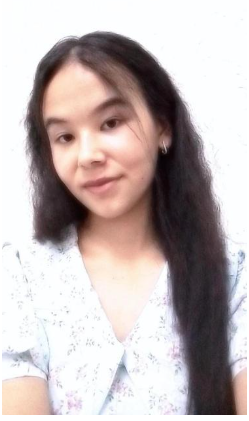
When Liv Jagrell entered my zoom studio for The Kandy Fontaine Show, the atmosphere shifted the way it only does when someone who has lived their art — not performed it, not approximated it, but lived it — enters the room. I introduced her the way she deserved: “My special guest in the studio with me today is none other than Liv Jagrell from Liv Sin, formerly of Sister Sin, a truly iconic metal singer, songwriter, performer… you have a stage presence that is just fully ferocious and committed.” Because she does. She’s one of those rare front‑people whose intensity isn’t an act; it’s a state of being.
I told her about that moment at a Judas Priest show in Florida years ago, when a guy — maybe Brazilian, maybe Argentinian — grabbed me and said, “You’re my brother, you’re my brother.” That’s metal. That’s the thing. And Liv knew it instantly. She just said, “Yeah, you know,” because she does know. She’s lived it.
So I asked her what first captured her about metal energy, and she said, “I think that, well, the metal energy I had to say was thanks to Pantera.” She remembered discovering them at fifteen or sixteen, around 1995–96. “I discovered Pantera, and that hooked me in.” Before that, she’d been immersed in Nirvana and Courtney Love. “Courtney Love was my first idol because I thought that she was super cool… she can be a rock star. I can be a rock star.” Nirvana and Courtney Love got her into music, into wanting to play, and then Pantera sealed her fate: “This is the music I want to do.”
I remembered when grunge came online and hit metal “like a hammer.” Ronnie James Dio playing the Troubadour during Angry Machines, looking a little bitter because suddenly nobody was playing classic metal. Liv remembered it too. “During the grunge period, there was also these other types of music in at the bottom… the heavier stuff, like extreme metal, started to grow as well.”
Grunge reacted against polished pop; extreme metal reacted against grunge. “They were still popping around,” she said, “and what they started back then developed, and we got all this metal just coming from the underground.”
We talked about Pantera’s Reinventing the Steel and Judas Priest’s return with Angel of Retribution. Liv lit up: “Angel of Retribution, yeah, yeah.” I told her Halford seemed possessed, like he was saying, “We’re gonna school you motherfuckers, and this is… we created metal.” Liv nodded. “He’s the metal god… one of the idols that I’ve had and looked up to… also as a stage person.”
I mentioned how Halford has a little Elvis in him, a little Liberace, a little Freddie Mercury — how every great performer steals from everywhere. Then I asked her what she’d woven into her own performance DNA. She said, “First of all, Dee Snider definitely… his stage presence always blew my mind… he’s on stage for the audience. He’s an entertainer.” She named Angela Gossow: “How she just takes the stage… she’s born with it.” And Sebastian Bach: “He also has a lot of energy on stage.” She admitted, “Absolutely I’ve stolen some parts from them… or got inspired, maybe.”
I talked about Jeff Beck, about Lemmy’s generosity, about bandleaders who know everything happening onstage. Liv explained how Liv Sin uses cues. “We have some cues in some of the songs… I know I can go back and then we know that someone will go forward…sometimes it’s a guitar solo, sometimes a bass move.
“It’s not very staged… could be two, could be one, could be three… then I move very freely.”
Her priority is always the audience. “Sometimes I can get into the audience and I can miss my band members… oops, there was a guitar player or my hair gets stuck in the bass.” She laughed. “We headbang a lot, and yes, it sucks a lot. It gets stuck.”
I asked her what it was like working with Lemmy, and she corrected me gently. “I have not worked with Lemmy. I’ve only played support.” Sister Sin supported Motörhead for two shows. “I’m very happy that I got the opportunity.”
She talked about doing a Motörhead cover with Doro — “Lemmy was not involved… we asked Doro if she wanted to join in, and she wanted to do that.”
When I asked about memorable bands she’d performed with, she didn’t hesitate. “Obviously Motörhead,” she said. “It was such a huge thing.” She also loved touring with Udo. “They’re really nice people… we had a lot of fun with them… still talk to the guys from time to time…it’s not with every main band you get that kind of feeling,” she said, “but we really had fun together.”
I told her a story about Oslo — Madder Mortem, Gorgoroth, Emperor, Red Harvest, Faust — and a Swedish girl face‑planting drunk at three in the morning. I asked if Scandinavia had a drinking problem. Liv answered with clarity. “I’m not sure it’s more than in any other countries… but in the Scandinavian countries we have more of a tradition of only drinking on weekends. People squeeze everything into Friday and Saturday. Everything is cold and boring, and you work weekdays, and then the weekend comes, and then you try to squeeze in all the alcohol you can.” She added that younger generations drink less now.
Then we got into the heart of it — the difference between Sister Sin and Liv Sin. Liv explained it plainly. “Sister Sin is obviously more rock and roll… the roots are from Motörhead… some punk rock… but it’s more like rock and roll with a bit of metal in it.” She talked about reunion shows with Accept, balancing schedules, her long history with the members. “They’re great songwriters.”
When Sister Sin quit in 2015, she was devastated. But she also felt an urge not to give up. “If I’m gonna do my own band, what is the music I desire to do?” she asked herself. “It is more metal because I’m more of a metalhead than a rock and roll girl.” She loves heavy riffs, double‑bass drums, juicy production, synths. “You can’t have that in Sister Sin… it doesn’t work with that kind of music.”
So she started Liv Sin — and started exploring her voice. “I started to learn how to growl… I found that I love doing that.” She also learned she could sing softly. “I was like, I can never sing soft… I can never growl… and I’ve realized I can sing soft and I can growl.” She built a bedroom studio, experimented with production, tried everything — soft singing, growling, screams. “I found out that I could do things that I didn’t think I could do.”
The collapse of Sister Sin became a catalyst. “I was devastated,” she said. “But now I’m happy that it happened… it gave me the opportunity to develop and find my own voice.” Now, when she returns to Sister Sin, she brings that confidence with her. “I write my own music… I write my lyrics… I write my melodies… I can do whatever I want… and that is empowering.”
And then came the part that matters deeply to her — the animals.
Liv didn’t just mention animal rights; she opened a vein. She told me she’d been vegetarian since birth. “I grew up with animals,” she said. “Cats, birds… animals were always around me.” She talked about how natural it felt, how she never had the moment of “deciding” to care — she simply always did.
Then she told me about Cecil the lion.
“When Cecil was killed,” she said, “I was so angry. I was devastated.” That anger became “King of the Damned.” “We used it to raise funds for animal rights,” she said. She talked about Djurrätt, the Swedish organization she supports. She talked about how the song became a way to channel grief into action.
She told me, “I can relate more to animals sometimes. It’s easier to trust them.” And she meant it. There was no performative activism in her voice — only conviction.
I mentioned Napalm Death and Carcass being vocal about anti‑vivisection. “I admire bands who use their platform,” she said. “Music can make people aware. It can make people think.” She talked about how Liv Sin’s fans have supported her activism, how they’ve shown up not just for the music but for the message.
She talked about compassion as rebellion — a radical stance in a world that rewards cruelty. She talked about how metal, at its best, has always been a refuge for people who feel too much.
We talked about Eastern philosophy — her mother teaching yoga and religion, her childhood spent in temples, mosques, churches. She explained Kali Yuga, the chaotic age in Hindu cosmology. “It’s the worst period,” she said, “and we are still in it.” Writing helps her process the overwhelm of witnessing a world in collapse.
As we wound down, Liv outlined her future plans — festivals in Sweden and France, weekend shows, a support tour with Elaine, and writing a new Liv Sin album after the fall tour. She expressed gratitude to her fans. “Thanks to our very supportive fans, we are still here.”
I presented her with a Pawsie Award for cultural achievement and humanitarian effort. She smiled and flashed the Pawsie sign.
(Thanks to Lee Bailes for the interview transcription.)
Alex S Johnson’s 30+ year history as an author, journalist, editor, spoken word performer and educator includes work archived at Harvard University’s “mega-library,” the Widener, collaborations and performances with the likes of Iris Berry (Lame Flames, Pink Sabbath, the Ringling Sisters with Pleasant Gehman, Border Radio with John Doe; Punk Hostage Press); Richard Modiano (Emeritus Executive Director of Beyond Baroque literary arts center, Venice Beach, California, which has hosted the likes of Dennis Cooper, Patti Smith, Exene Cervenka, Iris Berry, Pleasant Gehman, and Alex S Johnson); David J. Haskins (Songwriter of “Bela Lugosi’s Dead”; co-founder of Bauhaus and Love and Rockets); Ellyn Maybe (author of The Cowardice of Amnesia and praised by the likes of Jackson Browne and Greil Marcus) and Lasara Firefox Allen, bestselling author of Sexy Witch and Jailbreaking the Goddess). He has also interviewed the likes of Ronnie James Dio of Black Sabbath, Lemmy Kilmister of Motorhead, counterculture icons like Gitane Demone, Rozz Williams, R.U. Sirius, Jarboe, Diamanda Galas and Danielle Willis. He lives in Carmichael, California with his family.