Poetry from Nidia Garcia

LOVING YOU SO MUCH

How to decipher love, everything is a mystery, 

it must have a value. 

The hours by your side, 

your kisses and caresses, 

that empowered me. 

With a love that isn’t feigned, 

to live loving a beloved being, 

who is my delirium. 

It’s that you managed 

to erase the sadness from my poor life

Nidia Amelia García, from Buenos Aires, Argentina, is a writer and an active member of Juntos por las Letras (Together for Letters). She has participated in numerous virtual events in Uruguay, Paraguay, Bolivia, Spain, Colombia, Portugal, Nigeria, Uzbekistan, Kyrgyzstan, and elsewhere. She has also contributed to literary anthologies such as “Books of the Immortals” and “Anthology of the 50 Poets of the World 2022.”

Excerpt from Christopher Bernard’s novel Otherwise: The Children’s Crusade

Fifth Installment of “Otherwise: The Children’s Crusade”

Later Petey would remember it had been like riding for days inside a lightless cave made of steel and smelling of oil and wet rags: a giant empty tank rumbling around them as it swayed and sped down streets and roads and the intimidatingly straight “autobahns” of the abolished republic. It had been like being in the belly of a whale inside the belly of an even larger whale inside the belly of an even vaster whale: a Russian doll that seemed, dizzingly, to have no end.

Days earlier, the five had escaped through a manhole to the street a block and a half away from a huge circular auditorium called the Garten von Nosidam, the name displayed in enormous spaced-out letters beneath the roof. The building was festooned with Izan flags that reminded Petey, sickeningly, of Nazi flags he had seen in movies about World War Two, and golden reliefs of rampant eagles emblazoned with wreaths. A banner, quietly loughing in a cross breeze, hung above the entrance showing the face of a man that seemed vaguely familiar, then he remembered: it had been on the front page of the newspapers they had passed as Yram marched them across the city from the ruins of the library; the headlines had announced the man’s upcoming appearance. A “major oompah,” as Chace might call him. Their two “handlers” had referred to someone they called the “fur lighter,” or whatever. Maybe this was him: the Führer of the Night Reich of Acirema.

The far side of the Garten had caved in and was belching smoke under a dozen white streams of water arcing through the air like silvery rainbows from a fleet of fire trucks as a small army of firemen tackled the blazing building. The air was filled with an acrid stench. Crowds milled and gawked just beyond the trucks. Petey hadn’t seen anything like this many people in the entire city, let alone crammed into one spot, and, for a moment, curiosity conquered fear.

At sight of the half-collapsed building, Chace leaned over to Petey and Bumper: “I was wondering where we were so rudely interrupted.”

Petey caught a quiet exchange between Ruhtra and Yram spoken under Chace’s joke: “So here our betrayal be.”

A unit of Poliz including black-uniformed SS-like guards was beating a young man behind a food truck. It would be a matter of minutes for the news to spread and the crowd to vanish back into their frightened holes. In the meantime, their distraction by other people’s disasters made it easy for the five to escape unwanted interest as they melted away into it.

Ruhtra led them west down several long blocks to a wide, wharf-laden river, then turned north up a broad, half-deserted avenue. Once they escaped the crowd near the fire, the city was once again strangely vacant except for the five refugees who stood out like sore thumbs attached to a freakish hand. It was uncanny. Though there were few if any of the cars, trucks, busses one expects to find in any large city, every street corner had a set of traffic lights, beaming green, yellow, red, green, yellow, red, in rigidly timed sequence though seemingly without point because for little or no traffic of any kind. It was like being in a ghost city, like one of the ghost towns Petey had heard about out west, though on an enormous scale, flanked by towering skyscrapers and riddled with a labyrinthine warren of endless streets and alleys: a vast city long dead except for its madly automated electrical systems, a phantom of civilizations past. Petey had the bizarre feeling that he was intruding on someone else’s nightmare. But now it was his own, their own—or would soon be if they didn’t escape.

“Have you seen my cloak of invisibility anywhere, old son?” Chace joked nervously into Petey’s ear. “It’s always missing just when I most need it.”

Bumper seemed to be getting paler by the minute as he struggled to keep up with the rest. His mouth kept opening as if he were trying to say something but nothing would come out. Petey hadn’t realized before just how much Bumper looked like a fish in a bowl when he was feeling mystified—which, to be perfectly frank, was not unusual. He had to control himself from bursting out laughing at the thought, and turned the unrestrained cackle into a faux cough and sneeze just in time, muttering, “Excuse me!” like the polite young man he had always prided himself on being. He was startled at his reflexive, almost uncontrollable giggle; he must really be in a bad way. But then, this wasn’t the only horrible thing about himself he had learned he couldn’t control after turning thirteen. This whole world had become a gigantic thirteen!

The two older youths halted everyone beneath a red light. 

“What are we waiting for?” asked Chace, surveying the deserted intersection and the empty streets stretching for miles in three directions and a river’s edge lined with pilings on the fourth. “It’s not as if jaywalking is about to get us killed.”

The two turned on him.

“Exactly that be what will,” Yram rebuked him. “Smaller the infraction, deadlier the response. When it you least expect.” She pointed toward a small, innocuous-looking reflector on the side of the nearest streetlight pole. “That do you see?”

The three younger boys followed her look.

“Camera activated be whenever anyone on a red light cross. A photograph to Poliz headquarters it send. Some of them be primed at random the jaywalker to kill.” She let that sink in. “And of littering do not even think. A fifteen-year-old I know to death tortured for a single toss of a cigarette into the gutter near the Garten we just escape.”

“This place is absolutely crazy!” Petey said, indignant and aghast, though the thought was by no means new.

“When madness normal be,” said Ruhtra bitterly, as though speaking from personal experience, “to act sane may you kill.”

“So, when in doubt, ask yourself what you would do if you were crazy?” said Chace.

“Exacty,” said Ruhtra dryly.

“Can they hear us too?” asked Bumper, his eyes growing wide as saucers.

“To do so they wish,” said Yram. 

“Working on it one can certain be,” said her companion. “A question of addicting us to a machine we can in our pockets put.”

“I feel so comforted to know they haven’t figured that out yet,” Chace said with a rueful glance at Petey.

Petey returned the look with his best friend as they both thought of their useless cell phones absconded from home—“Howtiz”—or was it Otherwise? 

“Oh they’ll figure that one out,” Bumper burbled insouciantly, then, catching dagger looks from Chace and Petey, realized what he was saying, continued, dubiously, “. . . some . . . day? . . . ”

“They will I sure be,” said Ruhtra with a shrug, giving up trying to figure out the subtext being shared by the three friends from “elsewhere.”

The light turned and they crossed without incident.

On the opposite corner, Ruhtra recommended they split up.

“‘Sitting ducks’ we be, as my father used to say,” said Ruhtra, “if together we stay. Five a conspiracy to the suspicious appears. Groups of two or three, not so much.”

“Anybody at all in this desert,” chimed in Chace, “looks like a revolution.”

Yram laughed grimly.

“Point taken,” said Ruhtra. “But sometimes in dispersal strength be.”

At the next light change, the two leaders crossed to the eastern side of the avenue and proceeded north. When they had gone half a block, the boys followed. A beaten-up bus from a distant era coughed and sputtered past them. Petey stared at the windows, then looked quickly away.

“Packed,” he murmured.

“Packed?” asked Bumper, imagining a suitcase bursting its seams.

“With soldiers.”

“Did they see us?” Bumper asked, alarmed.

“Definitely not you!” snickered Chace.

“Leave Bumper alone!” Petey muttered in reproof. 

But Bumper, though at first offended, felt a curious sense of satisfaction. Sometimes it was an advantage to be too small to be noticed.

“It’s all right,” he said stoutly. “If they can’t see me, how can they shoot me?”

“That’s the spirit,” said Chace. 

For all his sarcasm, Chace was not as mean-spirited as he sometimes tried to appear. He was just more fond of his friends than he liked to let on. Petey, his best friend, having no such fears, sometimes wondered what Chace was so afraid of, though he didn’t put it to himself in so many words. Chace’s pretense of toughness was a mirage, but one that depended on others believing it. 

“You’ll survive us all,” he said to Bumper. “Poor world!” he added mournfully.

“Kick him, Bumper,” said Petey. 

Bumper pulled back his foot for a good kick at his personal bully, but, thinking better of it, unleashed his foot against a crushed beer can on the side of the curb, sending it flying across the avenue.

The sound of a shot rang out. 

The can split as a bullet pierced it, ricocheted off the street, and passed over the boys’ heads.

The boys froze as the shiny metal pieces spread across the middle of the street. The two ahead stopped and looked back. 

The silence that followed was as deafening as the common expression said. Nothing stirred, nothing moved. There was no sign where the shot had come from or who had taken it. Petey thought he heard echoes of the shot in the canyons of skyscrapers and office towers. But maybe it was just a hallucination.

We were warned about littering, he thought. Though their notion of “litter” seemed fatally broad.

“Looks like nothing’s too small,” Chace murmured, “for these fellows to notice.” 

Bumper’s momentary satisfaction in his unnoticeable littleness instantly collapsed.

Petey watched as the two across the avenue turned and began moving north again. The boys followed half a block behind.

Petey noticed a peculiar smell of the city: of hamburger wrappings, eggs, bacon and coffee, of subway soot, crankcase oil, burnt plastic and diesel exhaust, with wisps of perfume, sea air and freshly pressed laundry, blended together in a smell at once rich, dirty and strangely stimulating in the sharp air under a sun as vibrant as an enormous neon sign.

He saw, at the top of many of the smaller high rises, curious cylindrically shaped huts with cone-shaped roofs. They were odd, cute little structures. They all seemed to have the same purpose, but what could it possibly be?

He would find out at least one purpose sooner than he expected when, after half an hour of trudging up the desolate avenue, the two ahead of them stopped at the foot of an abandoned building from generations ago, looming above them in dirty, worn brick. It had probably been a stylish address at one time, with offices for lawyers, accountants, stock brokers, doctors, middle men, but was now the forlorn token of a neighborhood long abandoned by the prosperity and fashion seekers of an era long vanished. It stood alone, surrounded by abandoned grocery stores, a furniture store, an automobile showroom; tall for its time though now dwarfed by the skyscrapers of midcentury, courtly, proud and vulnerable, a dozen stories high with the stylized, fresh-air windows, an Italian-revival shadow roof and ornaments of a decades ago; the only contemporary signs were the raw plywood planks hammered against the first-floor windows and doors, and the posters pasted on them warning against entry. Ruhtra waved them over.

Careful to cross only when the streetlight showed green—and above all not to drop anything inadvertently on the street as they crossed—the three joined them.

Signing them to silence, Ruhtra led them to the back of the building, facing an alley, where he pulled at a loose plank opening into the musty interior. The four snuck in while Ruhtra kept watch. Petey saw him pull out a handkerchief and stick it into a crack between planks before pulling the open plank shut behind them.

“Follow,” he ordered the little troop as he led them to an inner fire escape that rose to the roof. Climbing a dozen stories after walking miles was not so wearisome for young adolescents, but the small, rotund Bumper was complaining mightily before they were half-way up.

“When! Are! We! Going! To! Get! There!” he huffed and puffed as they passed the sixth story.

“When! Ever! We! Do!” said Chace blithely, hardly breaking into a pant.

Petey gave Bumper a sympathetic look, as if to say, “I know. I get it.” And panted along with the little doughball.

When they finally got to the roof, Bumper, ignoring the splendid view, immediately plumped down on the black creosote. But Petey immediately lost any sense of fatigue when he saw, to his unexpected pleasure, one of the cone-topped huts sitting atop an open-work wooden stand not a dozen yards away.
Ruhtra walked up a set of stairs to a door in the cylindrical hut and, opening it, beckoned everyone else in. 

Even Bumper for a moment forgot his exhaustion and Petey, feeling excited to find out what these structures were all about, clambered inside with the others.

And what he found inside was . . . a small round room with a conical ceiling. And no windows. When Ruhtra closed the door, the darkness was complete.

“Hm!” thought Petey. Inside a small cylindrical building with a conical roof was . . . a small round room with a conical ceiling. Duh!

This would not be the only time discovering the solution to a problem felt vaguely disappointing.

And yet, not entirely. He had to admit: it felt quite cozy inside the hut, removed from the world, safe, almost invulnerable. The outside world suddenly felt infinitely far away. He remembered pictures he had seen in his mother’s art history books, illustrations from an illustrated manuscript showing knights and ladies and peasants in the fields and forests and, on top of little hills, tiny castles arrayed with waving banners. That was it: he felt like a knight inside an ancient castle painted, centuries ago, by a monk for a young prince, say, or a nobleman or a king, in the margins of a magnificent volume. He liked it!

“This is so cool!” he said, in the darkness that fell after Ruhtra closed the door of the hut.

“Petey,” said Chace, in his best grown-up voice. “You never cease to amaze me.”

“No! Really! It is!”

A hanging bulb, switched on under Yram’s touch, revealed the hut’s modest accommodations: cots with blankets, a cabinet with a hot plate and stored with cans of soup, boxes of crackers, bottles of soda, and the like. There was a mysterious closed rack on the wall near the door. Something about it made Petey think of rifles; it was just large enough to hold several.  

“A few days we can here stay,” said Ruhtra, “till the city quiet be.”

“Do you have a lot of hideouts like this?” Petey asked.

“A few,” the other replied cautiously, “for use only when need.”

“Do you mind if I ask you something?” Petey said later on, after they had settled in, the boys on the cots, the other two cross-legged against the wall.

“Depends it on what it be,” Ruhtra replied. Petey noticed Ruhtra kept close to the wall rack; he was now sure it held weapons. 

“How many are in the Link?”

“We know not,” said Yram, sadly, ignoring Ruhtra’s warning look. “But long it gathering be.”

Bumper glanced back and forth between Petey and Yram, clearly about to burst with curiosity. Chace lay back staring at the curious ceiling, pretending not to care, but not doing a good job of it. His stillness was suspect; he was just as intent. The body language of both boys almost shouted, “Well, go on!”

“How did it start?” 

“The story,” said Ruhtra, “be that with a group of runaways it began ten years after the victory of the Izan: kids who from brutal families, neighborhoods, schools had escaped. A few in the group in it saw a possibility into something to grow that might take the Izan on, in local communities harass, then in villages, counties, towns, eventually across the whole kolonie. Maybe a wider revolt inspire and the whole hellish system bring downaa: the konzentrazionlagers, the new plantations where black people were once again slaves made, the great armed cities. Memories were still, legends about how Acirema had been before the conquest. An occasional book that the great fires of the fifties escaped. How free and strong Acirema had been. Not a place perfect, far from it, but a place where people their lives could live as they wished without others doing harm, where hope possible and enough fulfilled not to make it futile seem. Not like the place of fear and despair it has become. Those memories, though the Izan tried them to erase or turn to ridicule for their weakness in letting the country by them conquered be, in stories lived and songs and even the games children under the noses of adults from generation to generation pass down. The Link from those seeds grew—link from a past we knew to a future we know again can be. More runaways it took in, then kids at home spies became and even . . .”

“A fifth column,” said Petey.

“A ‘fifth column’?” the other asked, puzzled.

“Never mind,” said Petey.

“Anyway, so it grew. But how large it be no one know, or how far across the kolonie to extend. The Izan of pockets here and there seem to know. Rumors we have of cells infiltrated, exposed, terrorized, liquidated. Other rumors that central command our groups separates us to protect, by much in the dark about each other us safe keeping.”

“If even a central command there be,” said Yram, scornfully. 

“Sometimes about that too I wonder,” said Ruhtra. “Our numbers I hear from the thousands to the millions The penalties for rebellion harsh beyond imagining. All of Imaim’s cohort in the Floral southeastern peninsula six months ago from the face of earth erased—into the marshes of the interior escaped but starved or attacked by alligators that there live. But to prevent others from joining in rebellion they have failed. And so to grow we continue.”

“Unless be rumor that too,” said Yram, bitterly.

“One secret we seem to have kept.”

“And what’s that?” asked Petey.

“That we all children be. This Izan believe cannot. Certain they be the Link by adults run, for distraction us using. Or, cynically, fodder. Know they nothing we the rebellion rule. Our goal to include every child in Acirema.”

“And beyond, if possible,” Yram added. “Because take every child in the world it may take the Izan to eliminate forever.”

“Our operation ‘the Children’s Crusade’ we call.”

“Like in the Middle Ages,” said Petey.

The two looked at him curiously.

“How you mean?”
  “In the Middle Ages there were a number of crusades to recapture the Holy Lands,” said Petey, wondering that they didn’t know this, then remembering that where they were: nothing could be assumed in a world with a country called “Acirema” where the U.S.A. should have been. “One of them was a crusade of children that moved across Europe, gathering thousands as they marched, and almost made it to Constaninople.”

“They also thought they’d succeed where the adults had failed,” said Chace coolly as he examined the ceiling. 

“And did they?” asked Ruhtra. “Did they their ‘holy land’ retake?”

“They died of hunger and disease long before they got there.”

Ruhtra stared glumly at the floor.

“At least that way we shall not die.”

He was interrupted by the wailing of a siren—then a second, a third, finally what sounded like dozens echoing across the city below them.

Chapter Fifteen: A Traitor’s Traces

They hunkered down in the hut for several days, Ruhtra and Yram taking turns as rooftop guards scouting the streets beneath them and during the day reconnoitering the neighborhood. The reports they brought back were not encouraging. The city was in lockdown since the attempted assassination of the Fürleiter (“or for the masses staged,” Yram added; she suspected a false flag operation by agent-provocateurs or a contingent of Izan seeking to leverage power within the party’s notoriously chaotic hierarchy—“its pecking order of murderers,” as Ruhtra called it). Suspects were being rounded up en masse and kept in a detention center the old Museum Metropole had been converted into in Park Zentral. Sounds of a firing squad had been heard near the park. 

A dozen of the children had been caught in the abandoned subway station and held for twenty-four hours, then released, according to a newspaper Yram bought when sneaking out the next day, after a fourteen-year-old named Dahalag (Ruhtra’s lieutenant, it turned out) convinced the Poliz they were homeless urchins escaped from an orphanage in Xnorb after it had burned down the year before: fires were common in the city because of lax supervision of the fire code and steady defunding of the fire department over the years. The Izan couldn’t have cared less about the orphanage or the orphans (the steady deterioration of the city’s physical infrastructure was suspected by Ruhtra, as he said  when they discussed the article, of being strategic; it was one more way to keep the population cowed and malleable); they even found the story entertaining. “Amor fati. Alles der fatum dey deserve get” was the local motto in “the pig German and weird English,” as Chace called it, used by the authorities. If the children were homeless, it was their own fault. They could live “in die Strasse oder unter die Strasse!” they joked; it was no concern of Izan. “Bin ich mein Bruders kieper? Nicht! Bin ich mein Bruders blooty kinders kieper? Doble nicht!”

Ruhtra was unable to find out where the released children had gone. In fact any communication to the outside was difficult to impossible; the telephone system was hopelessly undependable, and anyway the phones in the building where they were holed up were dead.

From the newspapers they learned that the abandoned station had been sealed shut. The scores of children who hadn’t been caught had scattered; the group it had taken so long to gather might be lost for good. 

“If Dahalag escaped, why here not he us has met?” Ruhtra said to Yram in Petey’s earshot as they stood outside the hut. “Or anybody else at central? To meet here they knew if we scattered.”

Yram tried to be consoling.

“Maybe afraid we too infiltrated be and a trap they suspect?”

“But at least a handkerchief leave, as the sign we agreed. Left I ours; so where theirs be?”

So that explained the handkerchief Ruhtra had stuck into the crack when they snuck into the building, thought Petey.

“Unless…,” said Yram.

“Unless,” Ruhtra interruprd bitterly, “one of them the traitor be.”

“Or all of them,” said Yram, “captured.”

Late that night, they finished a frugal meal of canned schnitzel and crackers and separated, each lost in their own thoughts, going over for the thousandth time either the steps that had brought them there or what possibilities they had of escaping. 

Petey was trying to remember how he had gotten back home the two times he had been in Otherwise (assuming this was Otherwise), but he could detect no pattern or formula in the escapes. They seemed to have depended entirely on the luck of the moment—or the diabolical whim of the place itself. He seemed to be in the hands of a little devilish god who did with him whatever it wished. He just had to trust that the demon cared enough for his little toy not to let it perish. To say nothing of Bumper and Chace. And even Ruhtra and Yram, who were being so good to them all. But he knew that was asking a lot. And he continued to be haunted by what Ruhtra said. What if after all it was this world that was “reality”? If so, there was no escape for any of them . . .

“It’s awfully quiet out there,” Bumper whispered. Then he burped, loud. “Oops! Excuse me!” (His mother had always told him good manners were never out of place.)

The silence that followed was oppressive. Usually, even in this quiet part of town, there was a low-bass rumbling of distant traffic, far sirens and the like—inescapable signs you were inside an enormous city. But right now there was nothing at all: just dead silence.

“What’s that sound?” asked Bumper.

Now that Bumper had mentioned it, Petey could hear it too: cutting gently through the deep quiet, a sound vaguely familiar, a distant pulsating rotary groan; very distant but getting louder.

“A helicopter!” It was Ruhtra. He gave everyone a look of alarm. “Betrayed we have been! Leave we must! Now!”

They had little or nothing to gather—Chace his pocket handkerchief, Bumper a lucky pebble, Petey the wallet he had been given for his thirteenth birthday, since he was now “almost a grownup,” though of course there was nothing inside it except the first dollar bill he had ever gotten for allowance; and Ruhtra and Yram a can opener and a pair of forks—not only utensils but weapons, Petey thought. Yram turned off the hanging bulb, Ruhtra carefully opened the door and scanned the empty rooftop, and they stepped down the steps into a night strangely dark for a city: there were almost no lights in the blocks around them; office towers rose like black monoliths into a moonless sky scattered with stars almost as densely as above Halloway, which gave Petey an unexpected pang of homesickness. Then they saw a tiny constellation of red and white lights moving toward them across the glittering night accompanied by the regular, chopping sound of spinning blades.

Ruhtra hustled them to the indoor fire escape, and they moved downward as fast as they could in the dark. As they reached the floor second from the roof, they saw a harsh beacon through the abandoned building’s broken, sooty windows and heard the chattering roar of the helicopter as it landed heavily on the roof, and a voice blaring through a megaphone: “Achtung! Achtung! Achtung! Komm jetzt nach draussen! Komm jetzt nach draussen! Komm jetzt nach draussen!”

There was a burst of machinegun fire. 

“Faster!” Ruhtra hissed as, in the pitch dark, they stumbled down a dozen landings and an interminable length stairs to the ground floor, making it miraculously without anyone falling (Bumper staggering once on the fifth floor but caught by Petey before he went tumbling to the fourth floor landing) and then forced their way, bumping into walls, old office screens, half-closed doors, abandoned furniture and factory equipment, to the door with the plywood plank they had entered a few days before.

They waited in the dark and quiet, expecting to find the building surrounded by Poliz. It wasn’t. Were they lucky or what? Petey gave an audible sigh of relief.

“Do not in the street start dancing just yet,” said Ruhtra. “Here stay till I return,” he ordered, then snuck quietly out.

“Hey,” Chace whispered to Petey, “that was my line.”
“Don’t make me laugh,” whispered Petey.

“Why are we laughing?” Bumper asked in a terrified whisper.

“So we not to die,” whispered Yram.

“Et tu, Yram!” whispered Chace.

With nerves at breaking point, all four nearly choked on their laughter.

Ruhtra soon reappeared out of the darkness. 

“Thank Endo nobody there,” he said sternly. “Otherwise your laughs might your last have been.”

“And we wouldn’t want it otherwise for all the tea in China,” Chace muttered into Petey’s ear. “Would we, old son?”

Knock it out, wise guy! Petey wanted to reply. 

The truth is he’d wish it otherwise for a good deal less than a black mountain of the fragrant tea his mother loved to sip (with milk and honey) each mid-afternoon on the back porch under the ageing maple that flourished in their backyard. For a moment, he could almost smell the tea, the honey, the grass, the tree and its rich autumn sap, as vividly as he could see them in his mind’s eye . . .

Boy, he wished he were there right now! It had been less than a week, but it felt like a year since he had last seen home. He never realized how much he could miss anything! But he couldn’t indulge in nostalgia just now.

    Ruhtra pulled back the plank for them to leave, then led them through the dark streets beneath a parade of pale yellow street lights, every other one either flickering sickly or not at all, in the civilized wreckage of a once thriving country, frozen in time as much as it was paralyzed by fear.

The stars sparkled tantalizingly above the city: This is how it is done, they seemed to say, over and over, like a lesson repeated to an obstinate pupil. This is how it is done. This is how it is done. Learn from us. As you have learned everything else, proud child, that you have ever known.

_____

Christopher Bernard is a prize-winning author of both poetry and fiction. The two earlier stories in the “Otherwise” series are If You Ride A Crooked Trolley . . . and The Judgment Of Biestia (winner of the Independent Press Award in Preteen Fiction and short-listed for the K M Anthru International Literature Award).

Synchronized Chaos Mid-July 2026: Landscapes of the Soul

Image c/o CCO Productions

This month’s issue journeys through Landscapes of the Soul, mapping our inner geographies.

The human soul is a landscape shaped by countless forces: the wounds we inherit, the loves we experience, the places we remember, the losses we endure, and the dreams that carry us forward. Like a physical landscape, the inner world contains mountains and valleys, storms and seasons, deserts of loneliness and gardens of renewal. The works in this collection explore these inner terrains, revealing the many ways people search for meaning, connection, healing, and transcendence.

First, some announcements. Contributor Peter Dellolio has a new poetry collection coming out from New Meridian Arts, Catch Of The Day.

CATCH OF THE DAY is a collection of surreal poems based on the concept of irrational collage or juxtaposition so often found in Surrealism, where totally unrelated and disconnected elements are combined. Each poem is a stanza of lines that are self-contained and bear no logical connection to one another. My hope is that this brings out some of the magical, incantatory powers of language.

If you’d like to order a copy, New Meridian Press invites you to contact them at newmeridianarts1@gmail.com for a discount.

Also, our regular contributor Rui Carvalho invites readers and contributors to submit poetry to the next annual Nature Writing Contest.

Our contest, Nature 2025-2026, is a new opportunity that we, as organizers, create to reach the rest of the world. Every Contest is a challenge for authors participating and to people that make it happen. This year we invite all authors to write poetry about:
(i) Flowers;
(ii) Trees and wind;
(iii) Water;
(iv) Nature Conservation;
(v) Turtles;
(vi) Love for people and nature;
(vii) Hope and Happiness.

Rules and submission information here.

Now for our second July issue, Landscapes of the Soul.

Image c/o George Hodan

Every soul carries traces of the past, and several contributors look at the wounds we carry from the histories that have shaped us. Srijani Dutta’s poetry reminds us that struggle is an inescapable part of the human existence. Abigail George speaks to the inherited language of addiction, a shared, familial dialect of suffering. Adamu Muhammad Ja’agi suggests that forgiveness can be a powerful act of liberation, allowing a person who has been hurt to reclaim their identity beyond inherited pain. In Aleksandra Soltysiak’s poetry, translated by Olga Smolnytska, memory becomes a haunted and unreliable mirror where love, loss, and truth shimmer between revelation and illusion.

In Naim Al-Musafir’s Voices from There, translated from Arabic into English by Faleeha Hassan, landscapes themselves become keepers of memory. Through magic realism and social history, the story reveals how places preserve the stories of those who have suffered, departed, and returned. Cyril Erchev’s piece reflects the experience of diaspora: a woman out of place in her present world but spiritually still walking the fjords of her ancestors. Sayani Mukherjee explores the emotional geography of homeland, where beauty and trauma exist side by side. Mahesh Paudyal enters the darker regions of memory, examining how disturbing experiences linger within the human mind. Abigail George’s long meditative poem asks how a person survives when love, home, peace, and certainty disappear.

Within the landscapes of the soul, the gardens of love provide shelter and transformation. Türkan Ergör points out that love is an active choice, not just a state of being or a feeling. Chidimma Ewelukwa shows how daily acts of motherly care become expressions of profound emotional connection. David Kokoette similarly honors motherhood as a vocation, emphasizing the devotion, responsibility, and meaning found in nurturing another life. Berdinazarova Jasmina Mirshod qizi celebrates the continued love and care of her father. Bill Tope explores the uncertain landscape of adolescence, capturing the vulnerability of discovering oneself through relationships. The poetry of Barbaros İrdelmen travels through different seasons of human experience, reflecting on mortality, romantic love, and the dynamics of long-term relationships. Hassan Musa Dakasku reflects on the possibilities and responsibilities of friendship.

Image c/o Andrea Stockel

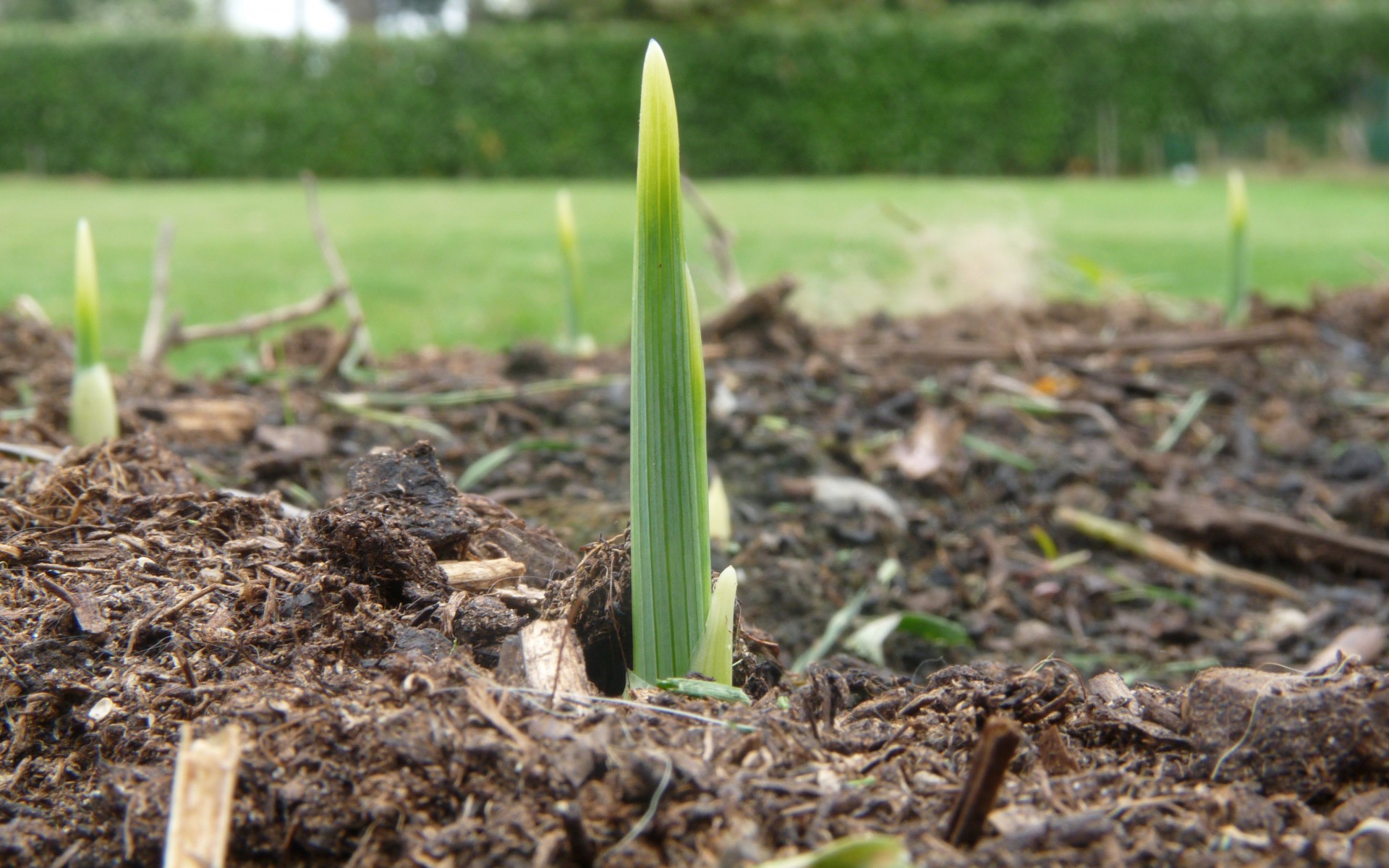
Eva Lianou Petropoulou celebrates love as essential to both self-understanding and connection with others, while Dr. Prasanna Kumar Dalai expands love into a force capable of reshaping identity, time, and existence itself. Graciela Noemi Villaverde reframes “saving” not as a onetime heroic act, but as a quiet, steady, loving presence that transforms what was dead or broken into something that can still grow. Reema Hamza’s poem highlights how love can transform longing, exile, and devastation into a sacred, defiant act of remaking the world. Kang Young-eun discovers holiness in everyday experiences, transforming bread, wine, evening light, loneliness, and memory into symbols of human connection and spiritual awareness.

The soul is also a place of questioning, conflict, and spiritual discovery. Duane Vorhees explores the self as an internal battlefield where instinct, conscience, and reason compete for control. Elmaya Jabbarova reminds us of the need to choose love and moral behavior and the ultimate folly of cruelty. Mesfakus Salahin presents existence as a pilgrimage guided by love, personal choice, and the search for ultimate truth. Wan Yilong presents a spiritual journey through combined metaphors from ancient Buddhist Pure Land teachings and modern cosmic space opera. Jack Phillips Lowe’s short story presents an everyday vignette in the life of a person who takes medicine for a mental health condition. Mark Young’s poetry explores how we assemble ourselves from the bricolage of our surroundings. Joe Couture’s pieces highlight selfhood built through physical work and wear and tear on the body over time. Sumana Bhattacharjee’s poetry points out how we can find meaning in life’s struggles when we follow our own consciences and trust our inner strength.

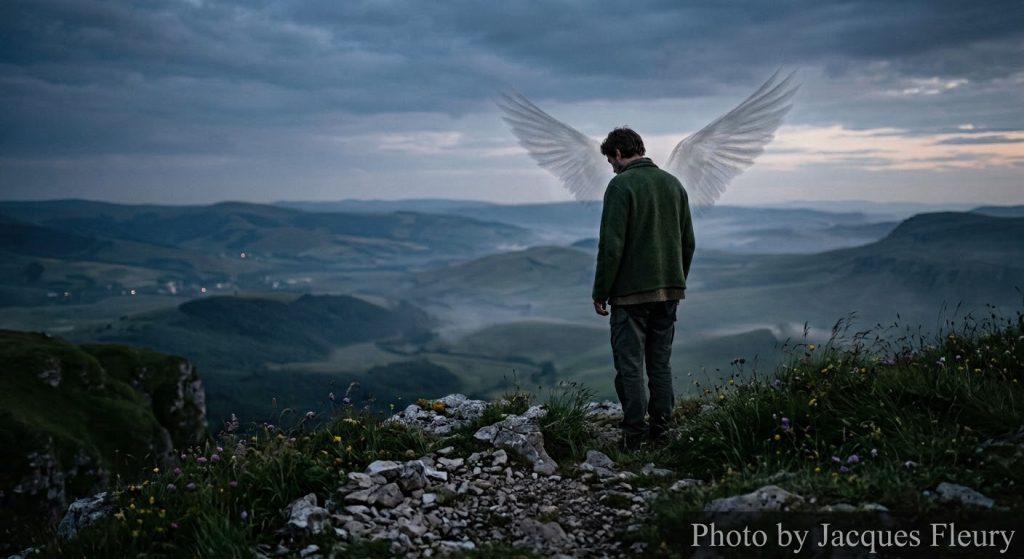
The internal battlefield metaphor applies to nations and political entities as much as to individuals, as they also struggle with identity and conscience. Jacques Fleury presents America as a nation continually struggling between its highest ideals and its darkest realities. Aminu Femi Jamiu mourns and marks the loss of young Esther Harrison, a schoolgirl murdered in Nigeria. Yeon Myung-ji’s poetry, narrated by the ancient Chinese emperor Qin Shi Huang (creator of the terracotta army found in his grave) highlights how even a person who held absolute power was humbled by death and the limits of his human knowledge. Alan Catlin’s poetic series depicts the waking nightmares of a civilization in decline, where the only honest witness knows they’re floating away from shore and still can’t stop watching. Bilal Al-Masri interviews author Dr. Jernail Singh about a variety of topics, including the moral and social responsibilities of authors in times of institutional injustice and suffering. Stephen Jarrell Williams points to a hinge moment in a civilization, when a society reaches a necessary collapse that leads to a more just rebirth.

Image c/o Andrea Stockel

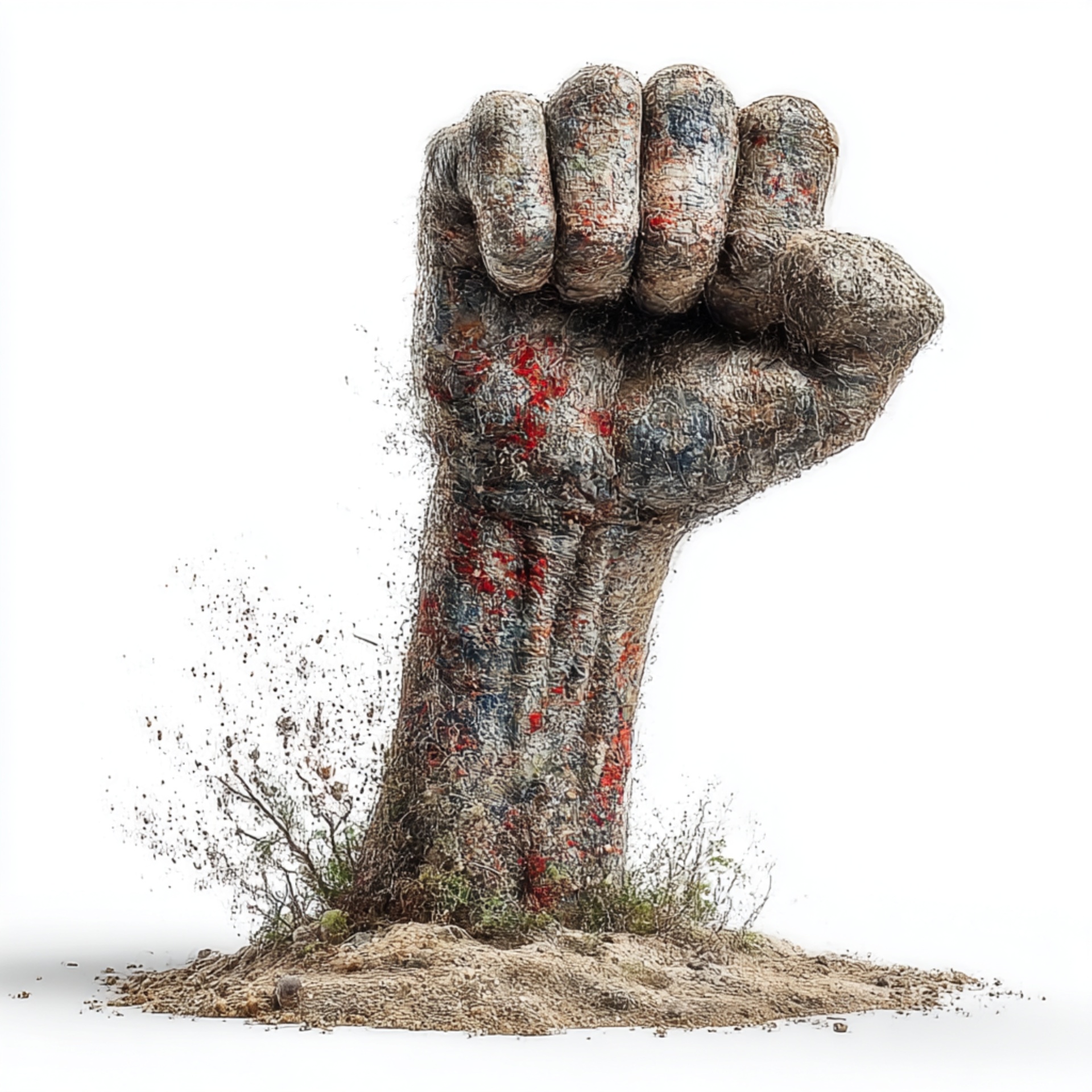
Dr. Jernail S. Anand reflects on human weakness and limitation, arguing that imperfection is not something to overcome but something that gives life its depth and meaning. In conversation, Dr. Jernail Singh and Dr. Annie John describe poetry as a spiritual and ethical journey. The poet becomes both witness and seeker, exploring human suffering while reaching toward universal wisdom. J.J. Campbell becomes an observer in his own life, as apathy with wry humor is safer than grief. Priyanka Neogi points out that each of us have different layers and dimensions to our personalities. Nidia Amelia Garcia speculates on the life and wisdom of an old man by observing his photograph. Teresa de Lujan Safar’s piece celebrates the grace, strength, self-possession, and inner dignity of an older woman. With another human response, Thi Lan Anh Tran and Musharraf Hussain celebrate perseverance and inner strength, showing how resilience allows individuals to rise beyond adversity.

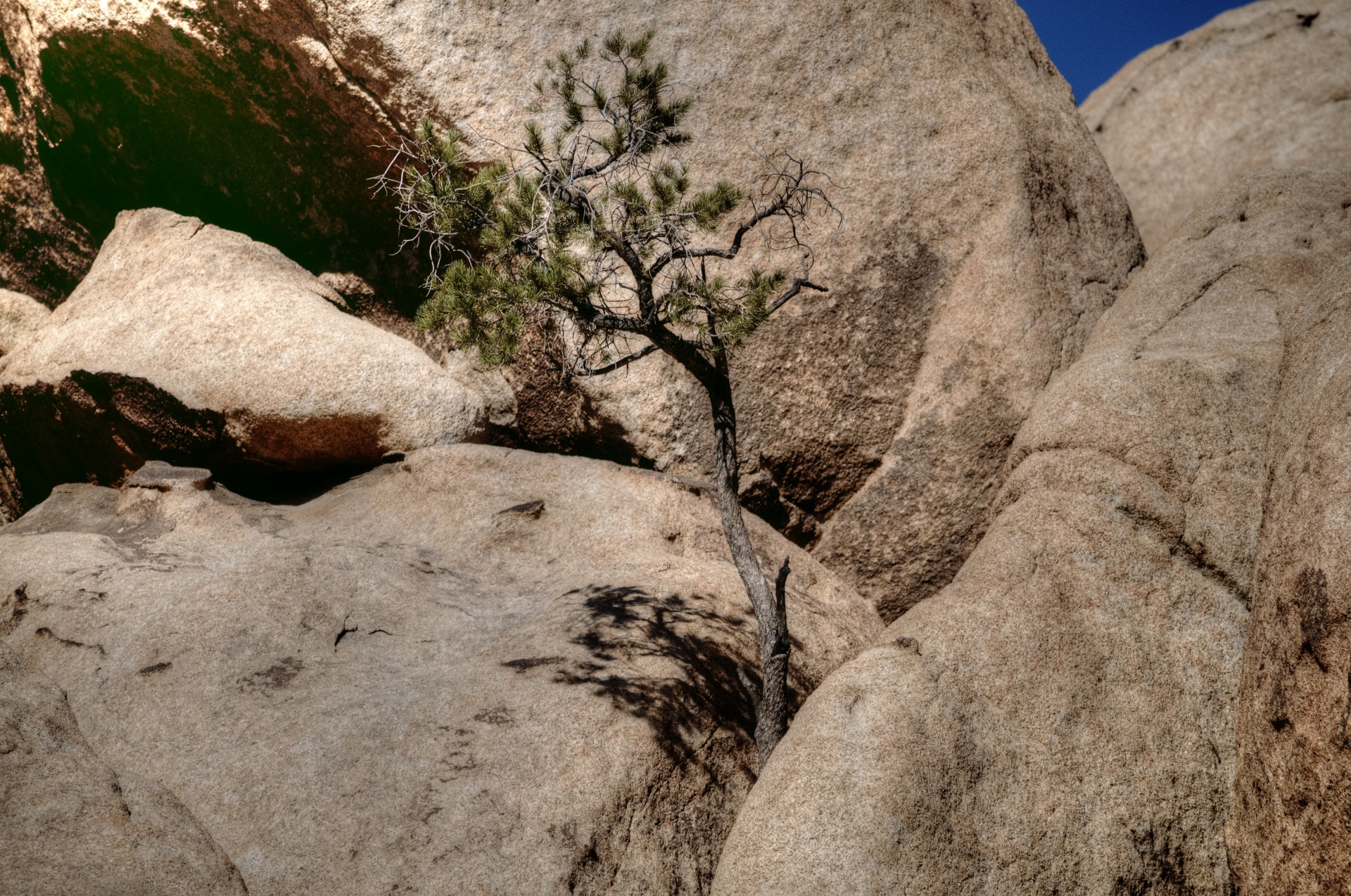
As we are part of nature, outdoor landscapes can mirror the landscapes of the soul. Shah Jehan Ashrafi views autumn as a profound metaphor for death, surrender, transformation, and rebirth. The falling leaves become symbols of necessary endings that make new beginnings possible. Mahbub Alam speaks to the cleansing and renewing energy of the Bangladeshi monsoon rains. O’ktamova Sabrina Mahmud qizi describes an ecological analysis of the health of Uzbek humus and soil. Dessy Tsvetskova’s Tree of Life portrays women as a source of creation, memory, resilience, and renewal. Rooted in the earth yet reaching toward the heavens, the tree represents continuity across generations.

Ananya Guha celebrates the beauty of dancing peacocks, offering a moment of wonder and connection with the natural world. Timothee Bordenave explores ideas that benefit both humanity and the environment, suggesting that the health of the planet is connected to the health of the human spirit. Brian Barbeito captures the quiet landscape of winter, reminding readers of the shared rhythms of nature and the reflective stillness that accompanies seasonal change. Dianne Reeves Angel reminisces about long stretches of teen summer fun in the pool and with friends.

Image c/o Petr Kratochvil

Art is one way humanity can join nature in the process of creation. Federico Wardal’s article notes the Egyptian government’s commitment to promoting and showcasing current and historical arts and culture. Andrena Zawinksi explores the artist’s search to create, be recognized, and remain alive through creative expression. Alex Johnson reflects on the relationship between life and art through his encounter with a publicist representing Philip Glass, revealing the irony that reality itself can sometimes imitate artistic structures. Tanja Ajtic’s poem threads watercolor’s quiet disciplines of washes, shades, making use of empty white space, into a metaphor for a life lived in silence, holding back opinions, feeling the world’s eruptions but never speaking of them. Christina Chin’s haiga and illustration create a unified moment of beauty, demonstrating how words and images can combine to form a single imaginative landscape. Cri8or’s vibrant digital artworks add splashes of color and intriguing shapes to the issue. Fhen M. uses ekphrastic poetry inspired by Priamo della Quercia’s Circle of the Falsifiers to explore the destruction caused by dishonesty and the moral landscapes created by truth and deception. Maria Barnes journeys into a darker psychological landscape, using unsettling imagery and music to symbolize the struggle between the conscious self and hidden fears.

The soul also grows through learning and discovery. Ismatova Dilnura emphasizes the importance of books in children’s education, illustrating reading as a gateway to imagination, knowledge, and possibility. Omonova Dinora Anvarjon qizi celebrates the many ideas and life lessons found within books. Navbaxar Mahmudjanovna Karimova points to ways to encourage the creation of new educational knowledge. Amonboyeva Shahnoza examines the changing landscape of education in the age of artificial intelligence. While technology may assist learning, she argues that creativity, imagination, and human connection remain uniquely human qualities. Although, as Ibroximova Hayitxon Mirzoxidjon qizi points out, artificial intelligence may take over in other human endeavors, including accounting. Maxliyo Alijonova highlights the educational work of Uzbekistan’s Ashurali Legacy Academy, demonstrating how institutions preserve knowledge, culture, and intellectual heritage. Akhmetova Nodira Po’lat qizi underscores the importance of digital literacy for modern Uzbek students. Jasmina Ismatullayeva relates the value of study-abroad experiences for students and why she wishes to travel.

Finally, a few works in this collection highlight the depths of truth within ordinary experiences. Travis Park’s brief, image-driven poems transform familiar places into reflections on uncertainty, memory, and human connection. Mykyta Ryzhykh uses the sea and the house as symbols of existence, showing humanity surrounded by immense forces while often feeling isolated and forgotten. Shlok Pandey’s coming-of-age story addresses loneliness, compassion, observation, and the discovery of beauty in everyday life. Naeem Aziz reminds readers that true value often exists beneath appearances, encouraging a deeper understanding of the gifts each person carries.

Image c/o Andrea Stockel

Together, these works create a map of the human soul. They travel through valleys of suffering, gardens of love, mountains of reflection, and seasons of transformation. They show that every person carries an inner landscape shaped by memory, relationships, struggles, dreams, and hopes.

“Landscapes of the Soul” reveals that humanity is defined not by avoiding hardship, but by transforming experience into wisdom, compassion, creativity, and renewal. Across cultures and voices, these writers remind us that the journey inward is also a journey toward one another. We hope that you enjoy hearing from each other throughout this issue!

Poetry from Mahesh Paudyal

Memories

by Mahesh Paudyal

I never knew

Memories could be so torturous!

They come

Ripping through the curtains of cold, desolate nights

Squeeze in, right up to the heart

Shake me up time and again

Show a ghastly carmagnole of wounds

And still say,

“The night is yet to pass.”

Paudyal is a Nepali poet who writes in Nepali and English. Sunya Praharko Sakshi and Notes of Silent Times are his published works of poetry. He teaches at the Central Department of English, Tribhuvan University. He is also a noted critic and translator.

Essay from David Kokoette

Maternal leanings and acquaintances in a way instills a sense of importance and value on a person. Paternity gives one an identity regardless of anything, your father’s name covers you. Foundations have over the centuries of civilization proven to be an addition to success and societal value to a person. Their name instills a sense of pride and sometimes even shame and disgrace on the lineage and their identity as a person. When a person is valued and loved, it is always evident in their demeanor and outlook. A mother’s love is always unconditional hence the Nigerian pidgin parlance “monkey no fine, but him mama like em”. Mother’s tend to love their children regardless of whatever, the very connection of umbilical cord outweighs any other yardstick the society might place on individuals with regards to success and failure. Sometimes, female children suffer a deprivation if that feminine presence is not present in their life and this causes them to exhibit strange behaviors which are most times seen as anomalies. Research has shown that a daughter’s intelligence is the direct replica of the mother, she contributes almost all percentage in terms of brain power as well as emotional intelligence so that her status in the society places a shade on not just the daughter, but also on the whole family. 

The experience that comes with interacting with people have taught me a lot of things concerning daughters and the aura they exhibit in their environment . Teens and early adults are the perfect examples, at that stage, one’s hormones are raging, some direct it into something productive while some outrightly exhibit stubbornness and hard headedness. Intelligent mothers are a fortification of some sort, an umbrella to protect and cover. It is often said that if your mother loves you, then by extension the world loves you and anything that is otherwise to that love could provoke a negative image on the son or daughter. The complexities of human nature is somewhat unexplainable, but as mammals , the nature of our specie have caused us to be protective and guard our offspring. Sometimes, mother’s might loose every sense of sanity and their emotions might become overwhelming because of an offspring, this is applicable to animals as well. 

Let’s discuss how an unintelligent mother, not in the sense of formal education, but in the sense of maternal deprivation, an absence of a feminine figure can affect the life of an offspring: 

Offsprings are often connected to their mother, it is deeply believed that the umbilical cord connects the offspring and it’s mother in ways that nature never would, if the mother doesn’t eat, the offspring doesn’t eat as well, so it’s dependence rests on its mother. When the offspring is finally disconnected from it’s mother (birth), it’s connection with the mother become the very fabric of existence so that it is always drawn to its carrier. The absence of that carrier in their life after the disconnection could spark a sort of rebellion.

Conclusion 

Intelligent mothers complement their offspring in almost in an impeccable way, a professor who sees beyond just the offspring but also its potential tend to improve its life span and thereby reduce its mortality rate. It is in the hands of the carrier to improve its offspring. 

Poetry from Reema Hamza

The Morning Knows Me by My Eyes

Whenever longing spurs dawn’s steps,

Night mirrors my sorrow—

A window and a moon,

As I scatter the ages of my face—

Seasons of waiting

Between the shores of questions and the sea of wonder. 

My heart ebbs like an hourglass,

No map traversing the branches of ancients,

Nor a melody attending the seasons—

Until you rose twice upon me:

Once in the lineage of my dreams,

And again in the secret of my kohl,

Until my life became a hymn to itself. 

To write of you,

I must ask the flamenco to lend me a dance,

One that erases all the wars of absence.

I must borrow my dress from the paper butterflies,

And between rain and music, inscribe the exile of my soul. 

The thrill of magic whispers my name;

Roses wash in my breath.

You are the heritage of love and poetry,

Every time they stone the windows of the future,

And you are the covenant of sparrows.

I break the sea’s siege,

And improvise the sky. 

My moments, silver anklets,

wrap around the legs of longing,

awaiting a promise.

And my fragrance, a forgotten winter on your coat,

awaits an embrace. 

And beauty asks me,

How did it defy the claims of withering?

and rebel against time’s decrees? 

I answer:

My beauty arranges itself upon your gaze.

My beauty is the path that plucked your name to join with mine.

Since they laid claim to the eyes of wagers,

my memory of triumph has faded,

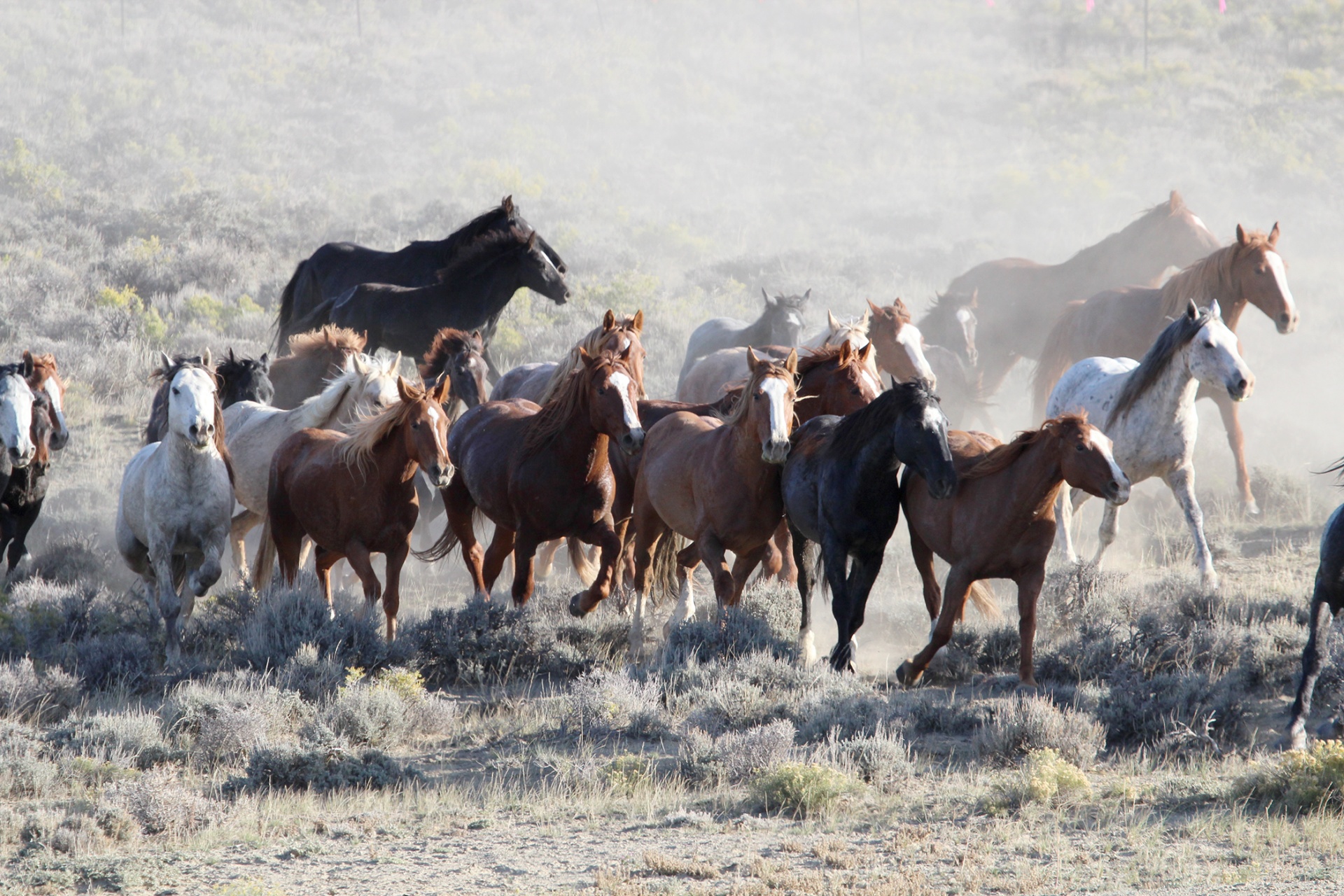
But the horses of your love refuse to depart,

They never tire of my leaps or my start,

Nor do they weary of my eager neigh.

Reema Hamza is a Syrian poet.