



———————————————————————
nightmare after nightmare
the holidays…
where some people
drown themselves
in nostalgia
where those of us
that grew up in
dysfunctional
families
get to relive nightmare
after nightmare
what i tend to think
about when the holidays
come around is my
father’s father
i never got to meet
him
he committed suicide
three years after my
father was born
as i have grown older
i can’t help but think
he was probably the
smartest man ever
to live
—————————————————————
sunk into the creases of existence
pride will kill
you faster than
any disease
i was told that
long before i
could understand
what it meant
fast forward to
a bad back, arthritis
head to toe, apathy
racing through the
veins and i’m pretty
sure i’m an expert
by now
the dreams of exploring
the world and becoming
a legend died in my
twenties
and before life
simply became
a battle between
bottles of lotion
and liquor
i had sunk into
the creases of
existence
laughing in the
shadows
pretending that any
of this had meaning
empty and broken
pride no longer exists
i suppose now it
is up to the disease
————————————————————————
that tempting myth
the bitter taste of defeat
the sad songs of christmas
always hit the hardest
love, that tempting myth
so many miles away
like water in a world
of concrete
and here comes the
neon of the season
joy wrapped up
in a bundle of
greed
these are the moments
where i wish i could
sleep more than four
hours a day
they tell me all these
things that will happen
when you die
i laugh
i tend to think nothing
will happen
and if it does
i won’t have much
say about it, being
dead and all
—————————————————————
chaos and bewilderment
a paper cut that won’t
stop bleeding
a sign that the end
is near
must be the most
beautiful time
of the year
hot enough on christmas
to be wearing shorts
i suppose this is the future
we have all been running
from
chaos and bewilderment
i believe that is a drink
i made by mistake in
my teenage years
i haven’t closed a bar
in a couple of decades
now
that probably held off
a disease or two
the sound of darlene love
will put me to sleep tonight
solitude on christmas never
felt right, just what i had
still time for that to change
but not as long as i would
like
—————————————————————-
where they came from
a buddy i used
to work with
said one night
that the problem
with the world is
men spend their
whole damn lives
trying to get back
in where they
came from
everyone laughed
and i took another
drag from a cigarette
i said dan, explain
this to me
i was a c-section
he laughed
and said hope you
won’t be lonely
forever
fucker…
J.J. Campbell (1976 – ?) is old enough to know better. He’s been widely published over the years, most recently at Disturb the Universe Magazine, The Beatnik Cowboy, Crossroads Magazine, The Rye Whiskey Review and Yellow Mama. You can find him most days at home in Ohio taking care of his disabled mother and betting on sports. Most people will say he’s okay at both, most days. He does still have a blog, evil delights, but rarely has the time to write on it. (https://evildelights.blogspot.com)
Women’s Journey
You have seen the woman
Sushmita from Jhasi Rani,
But why, without the power of disorientation,
Get over the fear! Have you seen
Nazrul’s poem!
There are broken locks, women’s talk.
understand yourself,
Move forward with freedom, keep your direction.
Let men and women
Complement each other, flow.
You are good, you guide the sweet path,
You are the family matter to keep.
You are the light of love, blessed with love,
Ignore the storm and rain,
All is well in your patience,
No matter how hard it is to build your life,
The essence of showing uprooted.
Create yourself with value & creativity.
23.12.2025
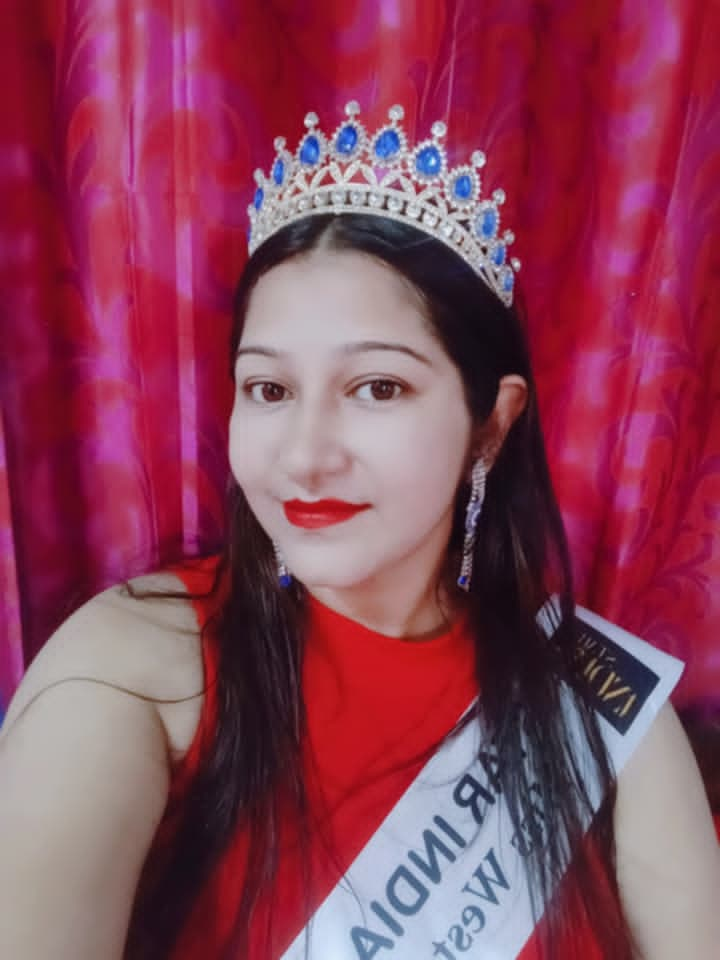
Short biography: Amb. Dr. Priyanka Neogi from Coochbehar. She is an administrative Controller of United Nations PAF, librarian, CEO of Lio Messi International Property & Land Consultancy, international literacy worker, sports & peace promoter, dancer, singer, reciter, live telecaster, writer, editor, researcher, literary journalist, host, beauty queen, international coordinator of the Vijay Mission of Community Welfare Foundation of India.
Interview with Ruqaya Mehran
Conducted by Eva Petropoulou Lianou
Dear Ruqaya Mehran, tell us about your childhood.
Where were you born?
Egypt, and I have Turkish roots from my family and ancestors.
What were you dreaming as a child, and have you achieved your dream?
I used to dream of being a media personality, journalist, and actress, and now I’m a university student studying advertising, journalism, and acting. Also, I’m Deputy Head of Media at the Ministry of Youth and Sports.
I also worked as a reporter, attended academies, and joined public relations teams. I am a voice-over and dubbing artist and also an Ambassador of Middle Eastern Media and a Middle Eastern Program Presenter. Yes, I have achieved much, but I still dream and dream….
What is more important to you, journalism or acting?
Personally, I love both journalism and acting, but I love acting more.
What are you dreaming?
I dream of many things, including being a world-renowned, famous, and skilled actress and presenter.
How do you feel being popular and having followers who are inspired by you?
I feel proud when my followers increase; I feel like an inspiring person, and the admiration grows.
What is your goal now?
My goal is to finish my bachelor’s degree and continue my studies abroad.
What is your favourite dish?
Yes, I love Egyptian food, especially feseekh (fermented mullet) and herring. I love them so much; they are among the most famous dishes in Egypt. I also really love Greek salad.
What is your favourite book?
Yes, I read, but I don’t have any favorite books besides psychology books and language learning books.
What is your message to the new generations?
“To the generations to come: never underestimate the power of your voice. Speak with honesty, act with integrity, and remember that true influence comes from inspiring others, not from seeking attention.”
What is your wish for 2026?
My wish for 2026 is to achieve all my dreams of entering the world of acting, working more, becoming famous, and earning more than my current profession.
Travel and success in my studies are also important to me.
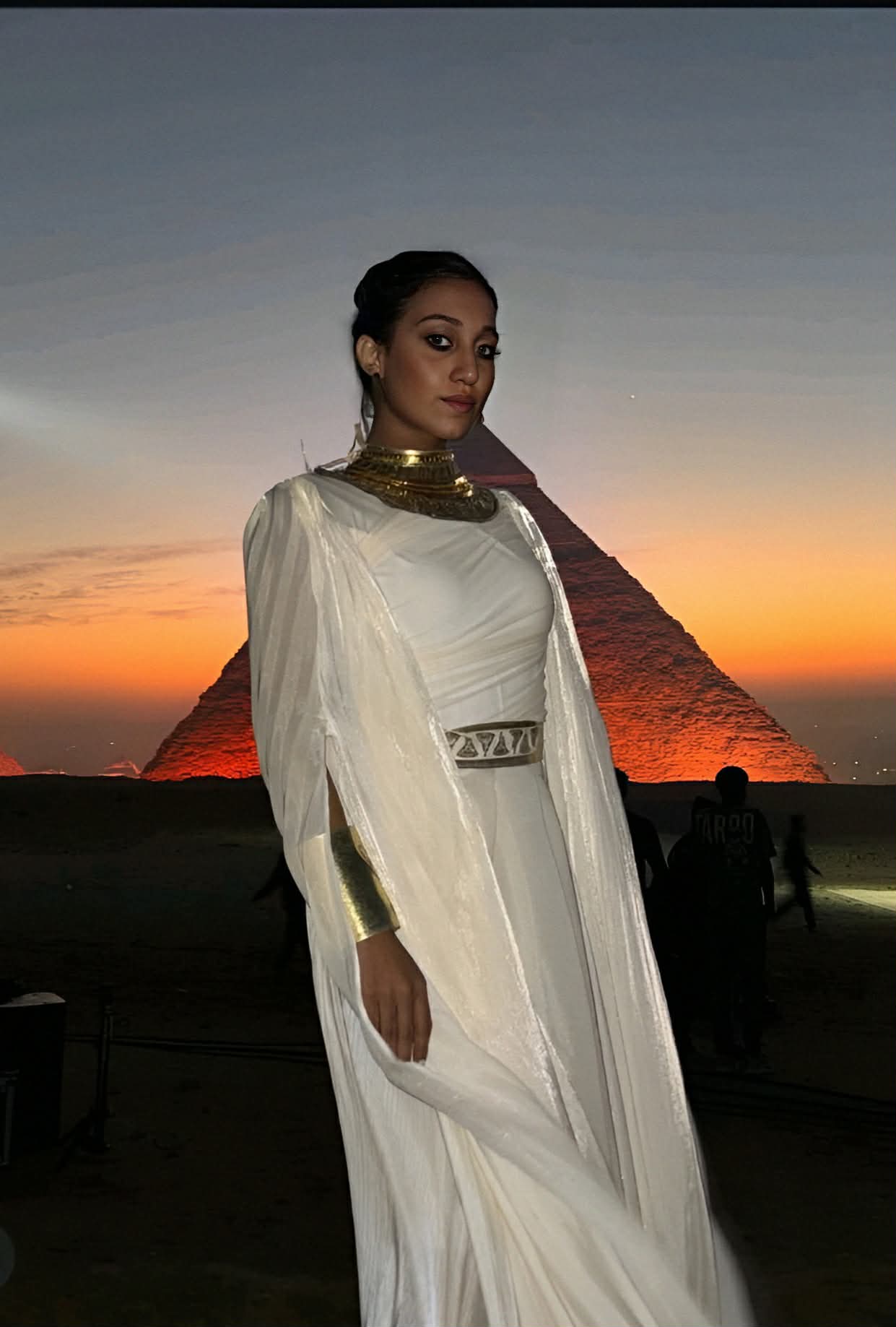
Ruqaya Mahran, a media and journalism student and actress, was an assistant secretary in the Training and Education Department of the Future of the Nation Party and the deputy head of media for the Ministry of Youth. Mahran is also a journalist and member of the public relations team for organizations and an ambassador of Middle East Media. She’s Egyptian with Turkish roots, a citizen of the whole world.
New Year’s
This year like a fresh white page
Still warm from the press of tomorrow.
Midnight spills sparkling light on the snow
Time exhales, fast but taming.
We step forward carrying new seeds in our pockets,
Dreams as seashells,
Morning waves of calm
Singing a vibrant new song,
Sunlight rinses the dust
For our new plans
Like a sea of healthy rhythms
For our new days
To breathe steady as waves
Learning our shore.
Hope stands tall
with a strong tree in winter
And now a new beginning we grow.
Storijaesoehae
the man was there inside the dream but couldn’t be seen, and I wondered after if he was part of a dream or a spirit. maybe I won’t know or maybe I will try and find out through the Akashic, the record that always documents all things everywhere about everybody. He had senility and I said to the lady, ‘I should check on him as he has wandered but would like to address him out of respect by his name.’
‘The name is Storijaesoehae.’
‘What?’
‘Say it. You can say it. And say all the vowels.’
I went to the room down the hall and just called him ‘Sir.’ He was okay. Awake. Sitting. He looked to me like an older Gurdjieff, the strange mystical teacher, or William Saroyan the writer, again, in pictures of him as older.
then I left the doorway, and I wondered later if he was real or imagined. I thought of him as a spiritual father of the woman, a concept I’d not heard of but might have existed. she knew his name after all.
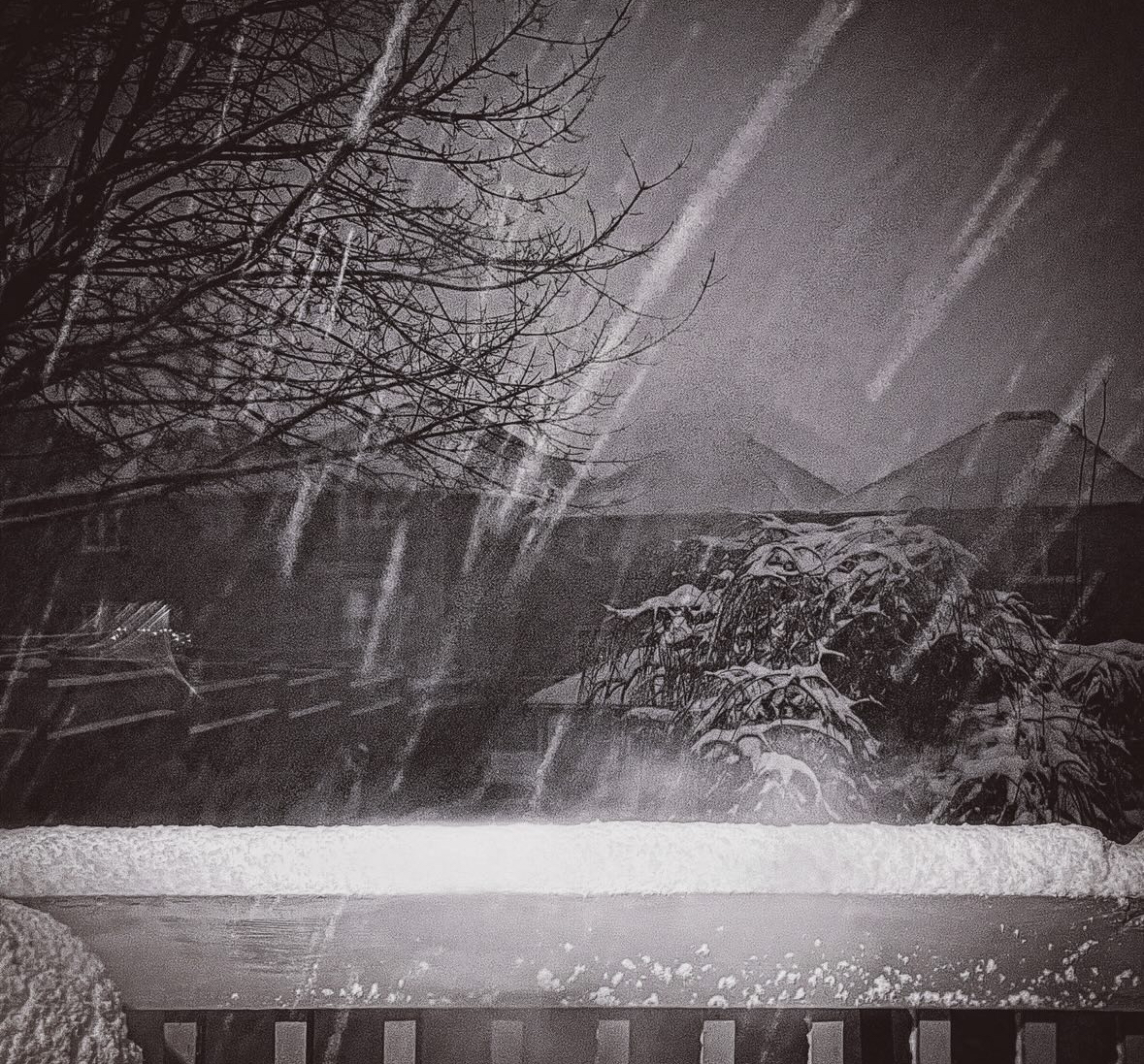
whatever was true, they had called for a wind and snowstorm, and they were correct as it was all crashing w/confidence against the upper windows by then. The forecasts also said this one was going to be bad, worse than usual, and were issuing weather warnings.
I looked outside and took a deep breath, thinking, nearly always thinking…too mercurial for many reasons, mainly the star I was born under. The snow and wind increased and there was a whistle in the air, a whistle like some spirit from a novel or something. You have heard this whistle if you think about it for a moment.
Let it all happen, I figured, for if it’s going to be winter let it be winter proper.
____
Letter from open palms
You are an experience
that shivers away from my outstretched hands.
Dances upon my fingers, teasing me,
“I am something you will never have.”
Pulls on my arteries telling me,
“you are nothing. Nothing at all.”
Bruises the walls of my mind, tormenting me
with its laughter, singing, yelling, crying–
I am left with my blankets in the middle of the night,
looking to the figure past the glass
who says nothing,
nothing at all.
without Shame
In the absence of my cramping hands,
I run like a deer, no worries of headlights,
no Shame in my freedom.
I soak up sunlight like a sponge,
much more than what is necessary,
no Shame in my gluttony.
I let words spill out like tiny waterfalls,
no Shame in my impulsivity.
Whether that be good or bad is not up to me;
whether Shame be good or bad is not up to me.
Still, I am guilt-ridden,
I can only close my eyes and
think of a world without Shame.