Poetry from Srijani Dutta

Pink, purple, and blue watercolor of a South Asian inspired god with many open eyes.

The Eternal Eyes of Lord

2022

The Essence of Prayer

Part I

What should I do

           (Now)

Lock it up in me

Or scatter it around the meadow?

A crow can touch it-

The wheels can break it-

The sun can burn it-

Ughgh!

Sometimes, it is foam like-

Fire-

Water-

Sand-

What is it?

It is the spirit. It is the same spirit that withdraws the spirit of “What if.”

It is the same spirit that embraces the spirit of uncertainty.

It is the same spirit that dances with the tunes of by-gone days.

Same, same, same- Everywhere

Like some god-sent sailors

Finding nothing except

Their fragmented, repented souls

Rippling images on mirror-

Water as mirror.

Like the atheists overlooking

The signs given to them by Jesus, the Lord

And celebrating life

With no peaceful prayer;

It fails to follow  the patterns

Of light projected onto

The ship, water

From the lighthouse-

Lighthouse as God’s hands.

Who is it?

It is the humans,

The souls-

Who gather rage, hatred, and lie

Like a heap of garbage

Turning

(Unconsciously)

Into the bad- mouth, foul- scented beings.

It is the humans, the same humans-

Who look at the time

The same cruel time-

The same forgiving time-

The same loving time-

Holding its soul

Within its palms

With youth and

With mercy-

Some gibberish words come out from

Mumbling lips, crooked bodies,

Beating heart-

Those same words create the echo

Of some meanings-

Thus, a prayer is born.

All the lost souls

Like soldiers, sailors, farmers

Look at the sky

Only to listen to those same sound-

Sound of their echoing souls

Sound of prayer

And they find

Themselves in the land

Of songs.

Songs of destinies-

Songs of dawns-

Songs of divinities-

The same song that is written as the lines of fate

Is becoming the prayer-song

For the scribblers

Named as unseen forces-

The Goddesses and the Gods.

08.01.2025 

Part II

Once, I crossed a lake-

Beside it, I saw a

Chain of   grotesque,      Gloomy Faces;

Multitudes of pain Run through      

Swollen Limbs,

I shed off tears

And it was vanished into oblivion.

Part III

O my Muhammad, O my Lord Jesus, 

Fill my heart with spiritual Thirst.

O my Virgin Mary, O my Grace,

Shower thy Blessings and Revive these Damned cells.

2019

Fear

Some words in my throat

That I want to swallow

Want to vomit

Keep stagnant

I do not know

The reason.

My current state is dwindling like waves

Waves of sea

Sea of uncertainty and fear

Navigating life between dilemma and faith.

Sometimes,

In life

You feel you have to be saved by Jesus

And

In these cases,

You can only be saved by God, the Almighty.

You know you fear a lot;

You know you cannot handle pressure

As it fractures your bones

And makes your soft soul bruised;

Bloody, wounded

You have become

It is just fear- 

Alas! Everyone wants to be saved.

To Sylvia Plath: A prose poem 

Today, I owe you a great treat,

It is not a sonnet, 

Not a parody evoking laughter,

Not an epic 

Demonstrating your journey from body to spirit,

Or spirit to body,

Not an ode to unveil your woes.

It is a chamber of secrets, a drawer of emotions;

People rush to the pornographic clips to derive pleasure,

I rush towards you,

 And find a piece of solace

In you.

The name that moves its wings around my neck

Coming back from dead past,

Is none other than Plath.

Today, I owe you something

To your butchered soul,

To your ruined peace,

I will offer you green ashes, red debris

Made out of women bodies

Those bodies faced electrocution, marital rape, sharp attacks, agonized anguish,

Bagful of dirt under their dripping Eyes, quarrel for Vegetables

And utensils

And unkind dowry, child birth, menopause, loneliness and death;

You wrote for them, for me, 

And for those unnamed Plath(s),

Caged in their rooms

kept hidden under their door-carpets, sealed in the bell jars,

Jars of bad mouth

And sold to the markets.

Your words carry voices

A sound of determinism as well as of instability

 Paradoxical antithesis, surreal aroma

Of your poem 

Painted my race’s trauma,

You never held pen between your fingers,

The pen became the weapon,

And continued your writing therapy,

 It reminds me of 

Lowell and Anne Sexton.

Today, I owe you a gift, a magical pot

That will remove the blemish, blemish between you and

Ted’s Bond,

The bond between Hughes and Hawks,

All I remember is

The way you suffered

The way you ended the life.

I am haunted by the passing sadness,

From staring at the starry sky

To the empty playgrounds-

From the lonely crow

To all the insects slightly emitting out 

A mellow sound,

I notice all, 

I kept a brush in my pocket ,

The words that I chew are the Words that 

I owe you, my Plath.

I remember

How vulnerable your Soul was

At the time of separation,

How brutal that man was!

How you craved for love 

And feared for losing your cherry lips and hairs 

And beauteous colours and gloss.

Smokes curling up from the oven 

While cooking up a bowl 

Of noodles,

I think of your burning head,

I am sitting on my room along with your poems

To know your body and soul.

2019

Poetry and art from Abdusaidova Jasmina Quvondiqovna

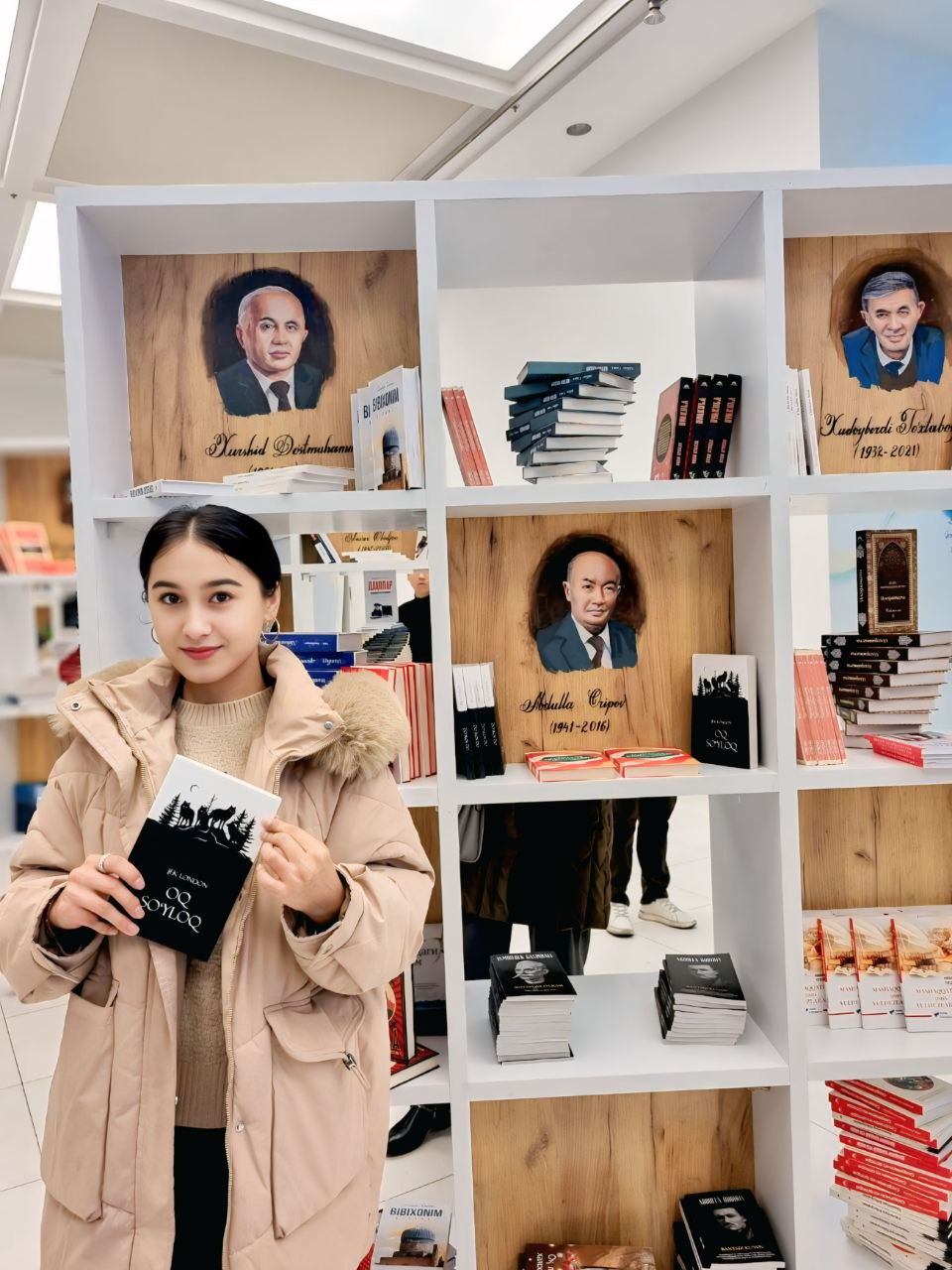
Young Central Asian woman with dark hair in a ponytail and a white tee shirt against a wood background.
Drawing of a young girl with short hair and a neutral expression.

My country

You are my wealth, my dearest and unique,
And always because of you my speech is art.
Don’t let your peace be broken and bleak,
I will not let your candle in my heart depart.

Your presence means that my existence is true,
I have no happiness and joy apart from you
My nation, in my heart, pride I knew,   
For you are the light that illuminates my way anew.

Abdusaidova Jasmina Quvondiqovna
A student of class 8-“D” at School No. 22, Gallaorol district, Jizzakh region.
Born on July 20, 2011.
I am interested in artistic skills such as drawing and writing poetry.

Essay from Saparov Akbar

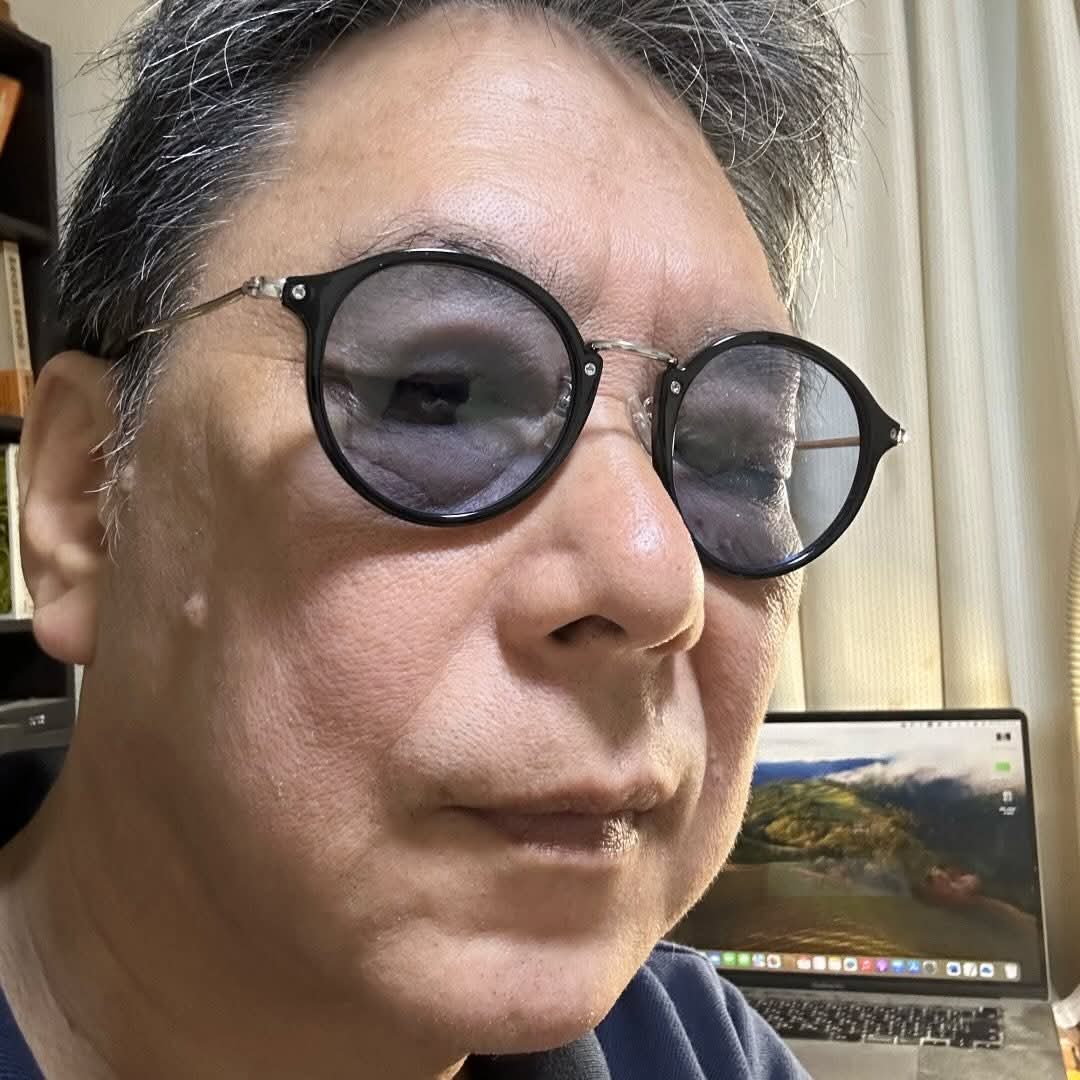
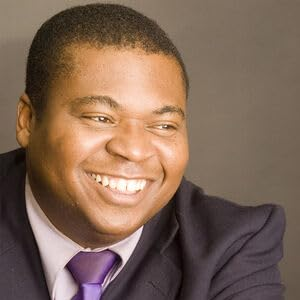
Young Central Asian teen dressed up in a black suit with a white collared shirt and black tie.

Elevation is more than just a word. It embodies the essence of growth, progress, and the continuous journey toward excellence. Whether in personal life, technology, art, or society, the desire to rise above, to reach new heights, is a defining feature of human experience. This article explores the many dimensions of elevation, illustrating how striving for higher standards shapes individuals and the world around them.

Personal Elevation

At its core, elevation begins within the individual. Personal growth is the foundation of every achievement. It involves learning from experiences, overcoming challenges, and continually refining one’s skills and mindset. Discipline, persistence, and a commitment to self-improvement are key drivers of this ascent.

Consider the lives of pioneers, inventors, and visionaries. They demonstrate that personal elevation is rarely instantaneous; it is the result of consistent effort and resilience. By embracing failure as a stepping stone rather than a setback, individuals unlock their potential and elevate themselves beyond limitations.

Technological Elevation

Elevation is not limited to personal development; it extends into the realm of innovation. Technology exemplifies humanity’s desire to transcend boundaries. From supercars that combine speed with engineering precision to airplanes that shrink the vastness of the world, technology lifts human capability to unprecedented levels.

Artificial intelligence, renewable energy, and space exploration are prime examples of how human ingenuity transforms obstacles into opportunities. Elevation in technology reflects a broader principle: the pursuit of perfection and the drive to enhance life through invention.

Cultural and Artistic Elevation

Art and culture provide another dimension of elevation. Music, literature, painting, and architecture inspire and challenge the mind, fostering creativity and introspection. They encourage us to see the world from new perspectives and appreciate beauty in complexity.

Through engagement with art, individuals elevate their consciousness. The refinement of taste and critical thinking enriches the human experience, demonstrating that elevation is not only about material achievement but also about the depth of understanding and emotional resonance.

Societal Elevation

Communities and societies also experience elevation. Education, scientific discovery, and cooperative efforts enable societies to progress and innovate. Cultural exchange and collaboration foster collective growth, raising standards and unlocking new possibilities.

Societal elevation emphasizes that individual advancement and community progress are interconnected. A society that values knowledge, innovation, and compassion cultivates an environment where its members can rise together, achieving heights that would be impossible alone.

Challenges on the Path to Elevation

The journey toward elevation is rarely smooth. Obstacles, setbacks, and uncertainties test determination and resilience. Fear of failure, self-doubt, and external pressures can hinder progress. However, these challenges also serve as catalysts for growth.

Overcoming adversity strengthens character and clarifies purpose. True elevation comes not from avoiding difficulties but from confronting them and continuing upward with resolve and vision.

Conclusion

Elevation represents the human pursuit of excellence, growth, and transformation. It spans personal development, technological innovation, artistic expression, and societal progress. It challenges us to rise, refine, and evolve.

By embracing elevation, we commit to a journey without a final destination—one where each step upward reveals new horizons and possibilities. The pursuit of elevation inspires, motivates, and reminds us that there is always a higher plane to reach, a higher self to become, and a higher world to create.

Author: My name is Saparov Akbar, and I was born on February 24, 2005, in Jizzakh district, Jizzakh region, Uzbekistan.

After finishing school, I chose to continue my path at Samarkand’s Economic and Service University (SamISI), where I am now a second-year student majoring in Tourism and Hospitality. Along the way, I’ve gained valuable volunteering experience at the airport, which gave me a chance to see the real world of service, communication, and leadership.

I always try to push myself beyond one field. I’ve earned certificates in Photoshop, After Effects, and Premiere Pro, and I also have achievements in sports, having taken part in regional and republic competitions.

But my real passions run deeper. I am in love with music — every genre has a place in my heart, but melancholic hip-hop, rock, and rage are where I feel the strongest connection. I’m also fascinated by technology, whether it’s computers, laptops, or smartphones, I love exploring their models and characteristics. Languages are another side of me: besides my native Uzbek, I am fluent in English and Russian, and I’m working toward learning Spanish, Arabic, Chinese, and other popular languages.

Another passion of mine is cars — I even lead a channel dedicated to them, because for me, the automotive world is more than just machines, it’s pure inspiration.

Still, beyond all of this, my biggest dream is to find myself — in religion, in humanity, in life — and to be worthy of being called a real human being. More than anything, I want to make my parents proud. And through it all, the person who inspires me the most is my mother — her love, trust, and care are the light that guides me every single day.

Essay from Timothee Bordenave

Timothee Bordenave – Paris, France.

India – Haryana State University – Dr. Dalip Khetarpal

THE ELECTRICITY FAIRY

Dear friends, let’s begin by presenting these ideas, which may seem to have come to you relatively randomly, because they reflect what I’ve published online over the months…

The first concepts I’m going to develop relate to electricity, and I’ll list them here one after the other.

First of all, a note about electrical insulation in the transmission of electricity from one point to another. Yes, because while this energy can very easily be transported by cable, an electric wire, a metal wire that carries the precious electricity through its conductive properties, we have never yet, for technical reasons related to the difficulty of insulating the current, succeeded in distributing it otherwise than by using an overhead network of suspended electrical wires.

However, this is very expensive to maintain, it’s dangerous and fragile, and it also costs a lot in terms of energy loss because air is not a good insulator. Therefore, this system, which is still poor and unsightly for the natural environment of the facilities, is ultimately only a last resort, which satisfies no one.

My proposal is to use ceramic insulation to design tubes of what is called “technical ceramic” in chemistry, surrounded, for example, by rubber, an elastic material that is very resistant to temperature variations, to bury electrical cables rather than suspending them.

“Technical ceramic electrical insulation” is becoming increasingly cheaper to produce, thanks to advances in our chemistry. It is a material that is already well known today for other uses.

The rubber-like material surrounding the tube will be easy for experts to define, produce, and install, and this solution for burying wired cables, long sought after by everyone in the sector, would thus be within our reach.

I had this idea as a child, observing the insulating properties of ceramic and reflecting that its production costs would soon, and increasingly, decrease. Today, burying electrical installations thus insulated would undoubtedly cost much less than maintaining our suspended cables.

And the electricity fairy certainly still has much to offer us; we still have so much to discover! One of my development ideas, which I will present to you now, relates to this again: the photovoltaic-powered lamp.

Wouldn’t it be possible for us to design a lamp that, connected to a rechargeable battery and a photovoltaic cell capable of transforming its light into electricity, would be virtually perpetual?

You probably understand well that with a dedicated photovoltaic cell, which would serve as its main power supply in a short circuit, such a lamp would provide light almost in perpetuity.

And the answer to the question of whether it would be possible with our current technology to design and then manufacture such a tool is simply: yes!

It would even be very easy for us, apparently, since most modern photovoltaic cells react to the electric light emitted by a light bulb.

The battery that would serve as the lamp’s switch and for the eventual replacement of the cell could be recharged through the same circuit, making the device particularly durable.

It’s a brilliant idea, isn’t it? I urge my contemporaries to implement it.

One last remark concerning electricity, which I can make here, would be to consider increasing the radiation of light bulbs by covering them with mirrors.

This is what we do for flashlights and headlights.

I therefore urge you to consider that it would be very easy to design “nightlights” that, by simply covering them with one or more light-emitting diodes, would provide satisfactory supplemental lighting equal to or better than that of a current, bare light bulb, for example, with a single diode.

One or two diodes, powered by small batteries, for example, or by the mains, would then undoubtedly demonstrate great longevity and cost their users almost nothing in terms of energy consumption or maintenance.

This idea, which I myself have already seen developed at the artisanal level, would make it possible to provide electric lighting to populations that are either disadvantaged or deprived of access to distribution networks.

It would undoubtedly also prove very practical for anyone who needs outdoor lighting, and I’m thinking here in particular of the military, who would see the advantages of a mirror-clad LED lamp in terms of portability and ease of powering or repair.

Mirror-clad light sources have been used since ancient times. It was already mentioned at the legendary lighthouse of Alexandria.

As for LED bulbs, they are booming today, becoming increasingly cheaper and more efficient!

(…)

A text by Timothee Bordenave in Paris, France.

Autumn 2025. For Dr. Khetarpal at the Afflatus Creations Peer Review, in India.

Poetry from Kavi Nielsen

this is for all of you
I mistook your hazy smiles for friendship.


how was I supposed to know you just wanted to run? I thought you were a mind-reader,
a savior,
a person who understood the deadly-slow inside-out gnawing
my heart’s being subjected to-


but now I realize
you’re just a breath, a moment, a memory I’ll touch on when I’m lonely
you were there once, twice, a flash, a fleeting breath, a whisper in the dark


but now you’re gone like the sun at night and I should’ve known
we’re all alone again

Synchronized Chaos October 2025: Union and Dissolution

Two silhouetted figures on a paddle boat on a calm lake under a cloudy sky.
Image c/o Mohamed Mahmoud Hassan

Sharing for Paivapo Publishing. They’re looking for assistance to translate books from African authors writing in their native languages into English. https://ko-fi.com/africantranslationproject

From contributor Peter Dellolio: I’ve been very fortunate to have a short story collection and a book of new poems to be released this year.  The short story collection is with Cyberwit.net and the poetry book is with Lost Telegram Press.

The short story collection, That’s Where You Go & Other Short Stories is due out in a few weeks, and the poetry collection, Cul de Sac Diaries is due out later this year.

Eva Lianou Petropoulou shares the news about an upcoming poetry contest seeking all styles of poetry. Pieces are due November 30, 2025 and must never have won any other awards and must be accompanied by an Italian or French translation.

Contributor Jaylan Salah is between writing jobs and seeking a remote position from her home in Alexandria, Egypt. She’s got a background in literary and film criticism. Please let us know if you have a position for her or know of someone who’s hiring for gig or traditional employment.

Also, Synchronized Chaos’ first November issue will stop accepting submissions on October 26th. We’ll include anything sent to us on or before that date in November’s first issue.

Now, for this month’s issue: Union and Dissolution.

We explore ways we embrace and come together and ways we pull apart, divide or individuate ourselves.

Two white swans raise their feathers and sail along a pool of clear water.
Image c/o Andrea Stockel

Dr. Jernail S. Anand reflects on the closeness of family and how each of us seeks and needs loved ones. Maftuna Rustamova also speaks to the joy and importance of family in our lives. Priyanka Neogi contributes a tender and short love poem to a special man as Sevinch Kuvvatova pays tribute to loving mothers everywhere.

Fadi Sido shares of love and beauty concealed and revealed. Ibrahim Honjo crafts a romantic scene of love, youth, and brass bands. Mahbub Alam celebrates the renewing energy of youth. Kandy Fontaine and Alex S. Johnson’s Gogol-esque short story addresses the tenuous relationship many of us have with our bodies in a world where youth and beauty can be commodified.

Nicholas Gunter reflects on the anniversary of losing his father as Norman J. Olson contributes written and drawn sketches of country and farm life as a memorial to his deceased cousin Bill. Kassandra Aguilera grieves her deceased mother through dream conversations.

Ollie Sikes ponders requited and unrequited love. Mirta Liliana Ramirez speaks to the pain of love betrayed. Dilobar Maxmarejabova’s story highlights the harm done to children when parents don’t step up to the plate. Tea Russo sings a ballad of a loveless entertainer. Umida Hamroyeva sends up a poem of grief for a lost loved one as Taro Hokkyo expresses the visceral pain of losing his beloved, his spiritual home. Allison Grayhurst renders up a multi-section epic poem on emotional healing after the betrayal of a friend. Bill Tope’s story highlights prejudices people with disabilities face in the dating world.

The precarious political situation in the United States feeds into J.J. Campbell’s poems of personal disillusionment and slow grief. Ng Yu Hng reviews Nikolina Hua’s poetry, discussing how it evokes personal and societal sorrows. Kandy Fontaine speaks of a traumatizing and destabilizing encounter with a supposed professional in a piece that encourages readers to ponder how we use social power in our own lives. Mykyta Ryzhykh’s fresh poems speak with a tone of cynical self-loathing. In Kandy Fontaine’s second story, seduction and intimacy become weapons in a dystopian world where hybrid life forms feed off of others’ grief.

Light tan eggshell broken into a lot of pieces.
Image c/o Petr Kratochvil

Srijani Dutta’s poetic speakers use memory and imagination to fill in the gaps created by miscommunication and mistrust in reality. Chloe Schoenfeld’s piece depicts music as a force to help two forgetful people hold onto their memories.

Dino Kalyvas sets a poem about universal human respect and dignity from Eva Lianou Petropoulou to music. Abigail George poetically asserts her unity with all of the world’s diverse creative people. Jacques Fleury defines himself in his poem on his own terms, part of the human race and sharing in universal human ancestry. Eva Petropoulou Lianou interviews poet Nasser Alshaikhamed about the high aspirations he has for his poetry and for humanity. She also interviews Russian poet Olga Levadnaya about craft and the journey to peace through repentance. Dr. Ratan Bhattacharjee poetizes about good overcoming evil in the form of the Goddess Durga slaying a demon. Graciela Noemi Villaverde elaborates on the transformative power of poetry as Dr. Brent Yergensen dramatizes one of Jesus’ parables in verse.

Niloy Rafiq harnesses a courtroom metaphor to highlight how he speaks the truth through his art. Shahnoza Ochildiyeva composes an essay on the purpose and value of the written word. Damon Hubbs depicts an encounter with the ambience and aesthetic of William Butler Yeats as he drinks in Dublin. Z.I. Mahmud probes layers of meaning in Shakespeare’s The Merchant of Venice, how his understanding of Shylock and racial and religious prejudice might have gone deeper than we realize.

Journalist Jakhongir Nomozov interviews Azerbaijani poet, translator, and linguist Firuza Mammadli, who has deep knowledge of and appreciation for her nation’s literary history and also strong words of caution for students, especially women, who seek to pursue a creative life. Sobirova Samiya highlights the inextricable connections between language and culture. Choriyeva Oynur outlines the literary contributions and legacy of 15th-century Uzbek poet Mavlono Lutfi. Yuldosheva Yulduz Ravshanovna, a teacher, highlights how she sees the light of Uzbek historical poetess Zulfiya carried on in one of her pupils. Muxtasarxon Abdurashidova expresses her gratitude for an inspirational teacher.

To’raqulova Pokiza discusses ways to enhance student speaking and communicative competence in English as a second language. Abdirashidova Ozoda discusses how to encourage preschoolers to develop communication skills related to socializing. Hasanboyev Sardorbek urges educational leaders to make computer literacy and communication via computer an educational priority. Texas Fontanella connects a variety of words and images and references together in a series of text messages. Mark Young plays with words and images, exploring and stretching meaning.

Damion Hamilton speaks to common human, traditionally masculine fears and aspirations. Taylor Dibbert’s poem speaks to the ordinary and universal annoyance of food poisoning as Chimezie Ihekuna recollects sentiments of resilience during the Covid-19 pandemic. Lan Qyqualla’s poetry melds themes of love, loss, longing, and transformation.

Abdel Latif Mubarak’s poems evoke dreams, wonderment, fears, longings, and the desire to live for a greater cause. Eva Petropoulou Lianou calls for compassion, peace and an end to war. Parvinder Nagi urges humanity to make the individual and collective choice to act ethically and responsibly, as does Bhagirath Chowdhary in his poetry. Graciela Irene Rossetti urges humanity to keep soul-searching and discover the true meaning of peace. Tagrid Bou Merhi speaks to the dawning of society and consciousness and the full humanity of women. Eva Petropoulou Lianou reviews Ahmed Miqdad’s poetry and shares his wishes for peace and self-determination for the people of Gaza.

Burned out wood and brick building still steaming with trees and dirt and green grass.
Image c/o Alex Grichenko

Anthony Chidi Uzoechi’s prose poem evokes the weight of historical grief and suffering in the lives of many people of color. Maja Milojkovic reflects on the nihilistic destruction of war. Bill Tope laments and fears recent dark turns in American politics. Til Kumari Sharma speaks up for young people, women and girls, and the students fighting in the 2025 Nepali uprising. Duane Vorhees also speaks of revolution, along with sensuality, coupling, and new life.

Andre Osorio uncovers a language of resistance and survival in Hua Ai’s new poetry collection Exiles Across Time. Daniela Chourio-Soto draws on artistic language and metaphor to speak to despair as part of the human experience.

Alan Catlin mulls over the precarity and drama of human existence. Yongbo Ma crafts moments of inflection, when matters will soon change, as part of his commentary that movement is life and stasis becomes despair. Nicholas Vigiletti evokes the ennui and frustration of low wage, dead end jobs.

Jessica Hu’s strange poetry speaks to a brutal and cold world. Mesfakus Salahin implores nature’s wild elements not to ruin his joyful union with his beloved.

Aurelia Preskill reflects on the beauty of an apple and how easily Adam and Eve could have been tempted and forever changed. Sayani Mukherjee reflects on autumnal magic and metamorphoses. Rafi Overton gives us a butterfly’s reflection on his past metamorphosis and how what he truly needed was self-love regardless of physical status.

Silhouetted person raising their hands to the northern lights in pink and purple and orange and blue and green up against the Milky Way. Tree in the background.
Image c/o Gerhard Lipold

Ari Nystrom-Rice reflects on how people and nature, in the form of the ocean, are inseparable. Stephen Jarrell Williams’ poetic speaker shares many facets of his memories of the sea. Jerome Berglund and Christina Chin’s tan-renga convey different “moods” of nature: resilience, fear, aggression, and coexistence. Yongbo Ma evokes loneliness through images of burned-out spiders out of silk for their webs.

Abigail George reviews Rehanul Hoque’s novel The Immigrant Catfish, a parable about greed and environmental mismanagement and destruction. Bill Tope and Doug Hawley’s story narrates the redemption of a man who comes to protect birds he once carelessly killed. Jennie Park’s artwork shows a tender care for the natural world amid the threats it faces.

Brian Barbeito delves deeply into the nature and mysteries of one particular spot in the country. Other writers do the same for ordinary and individual people. Noah Berlatsky points out the subtle tragedy underlying Job’s Biblical story: the way the ending inadvertently suggests that people are interchangeable and thus disposable.

Teresa Nocetti uses a pillow to evoke the complex feelings of a person heading to sleep. Nidia Amelia Garcia does something similar with poetry concerning the history of wrinkles on human faces. Tanner Guiglotto presents a visceral battle with self-doubt. Ellie Hill explores different aspects of a teacup image to comment on how she possesses both delicacy and strength.

Muhammadjonova Ogiloy reviews Otkir Hoshimov’s story collection Ozbeklar, which highlights the dignity and beauty of common hardworking country Uzbeks. Pardaboyeva Charos spotlights the craft of Uzbek embroidery. Fali Ndreka highlights the creativity and skill showcased at Art Basel Miami.

Person striking a piece of metal with a hammer and creating sparks.
Image c/o Kai Stachowiak

Mushtariybonu Abdurakhimova relates her experiences at a cultural and academic youth development program. Her fellow students highlight other areas of study and knowledge. Aliya Abdurasulova outlines nuances of programming in the C++ language. Shahlo Rustamova’s essay reminds us of the importance of maintaining thyroid health. Ike Boat celebrates the career and skill of martial arts actress Cynthia Rotrock.

Dildora Khujyazova suggests a balanced and optimistic view of economic and cultural globalization, pointing out how individual creators can take advantage of the chance to bring their creativity to wider markets.

Synchronized Chaos International Magazine is intended as a venue for creators of all types around the world to display their works. We hope you enjoy this mingling of ideas!

Poetry from Dr. Brent Yergensen

The Final Parable

His parables endure long past his enemies

But his last enflamed their violent tendencies

They brought one last fight, that band of foes

Said the storied teacher, ‘In this parable see your loathes’

Spelling the situation of a householder’s tower

And the husbandmen planning their plot for power

The vineyard owner inquired twice to know

What the husbandmen mocked with a fatal blow

Sending his son, trusting they’d have new eyes

The husbandmen again killed with more despise

The teacher then turned, asking what of the husbandmen’s fate

Realizing themselves the husbandmen, the teacher’s enemies took hate

And the chief priests admitted their plot against the teacher

Who knew and taught against their murderous feature

Brent Yergensen, Ph.D., is a Professor of Communication at The University of Texas at Tyler. His poetry has appeared in Academy of Heart and Mind and Bewildering Stories. As a scholar his research on aesthetics has appeared in numerous academic journals and anthologies.