Essay about Shamsiddinova Maftuna Hamidjon qizi

Methods for Improving the Conceptual Foundations of Speech Act Theory in the Uzbek Language

Shamsiddinova Maftuna Hamidjon qizi

Master’s student in Uzbek Language and Literature

Namangan State Pedagogical Institute

Phone: +998-94-755-00-10

Abstract

This article analyzes the formation, development, and practical application of speech act theory in the Uzbek language. The necessity of improving the conceptual foundations of speech act theory in accordance with modern communicative needs is substantiated. Based on approaches such as intercultural pragmatics, cognitive linguistics, and communicative competence, the article proposes new methodological ways of studying speech acts in the Uzbek language. In addition, the practical application of speech act theory is examined in the context of digital communication and artificial intelligence.

Keywords

Speech act, pragmatics, illocution, perlocution, communicative competence, Uzbek language, cognitive approach, intercultural communication, digital linguistics, context.

Introduction

In the 1950s, the English philosopher J. L. Austin proposed the idea that language is not merely a means of transmitting information, but also a tool for performing actions in real life. He justified this philosophy in his well-known work “How to Do Things with Words.” While the origins of speech act theory are associated with Austin, J. Searle later significantly refined and developed this theory. During the 1960s and 1970s, the American scholar J. Searle strengthened the theory by identifying the structure and types of speech acts.

When discussing speech act theory, it becomes evident that language is not simply a collection of words or a tool for conveying information, but also performs a variety of other functions. These characteristics of language were thoroughly analyzed and studied by J. Austin and J. Searle. According to them, language performs actions in addition to transmitting information. At first glance, this idea may seem unusual, as it raises the question of how something inanimate can perform actions. However, these actions are not physical but cognitive in nature and occur through human consciousness.

A deeper understanding of this phenomenon can be achieved through the analysis of literary texts.

Main Part

According to J. L. Austin, speech acts are divided into three main types: 1. Locutionary act – the literal meaning of an utterance.2. Illocutionary act – the speaker’s intention or purpose in uttering the statement.3. Perlocutionary act – the effect of the utterance on the listener.

As can be seen, all three types of acts are closely interconnected and mutually dependent. Each speech act can be analyzed from all three perspectives. For example, consider the following sentence from Said Ahmad’s short story “Sobiq”:“Hurry up, they are waiting,” said by the chairman to a cotton worker.

From a locutionary perspective, the sentence is grammatically and lexically correct. From an illocutionary perspective, it is not merely a statement but a command requiring action. From a perlocutionary perspective, it implies the listener’s reaction, such as haste or anxiety, following the chairman’s words.

Searle further classified illocutionary acts into several categories:Assertives – statements that convey facts or information.

Example: “The painter is still young and lacks sufficient experience.”

Directives – utterances used to give commands, requests, or advice.

Example: “Control yourself; do not embarrass yourself in front of others.” (command)

Commissives – expressions of promises, obligations, or plans.

Example: “You will go to the meeting. Your train ticket is ready; go home, get dressed, and leave.” (plan)

Expressives – utterances that express emotions such as gratitude, apology, or congratulations.

Example: “I greeted him timidly. When he saw me, his eyes lit up.”

Declaratives – utterances that bring about a change in status or situation through words themselves.

Conclusion

Speech act theory does not limit itself to studying the grammatical structure and semantic content of language, but also explains how communicative goals are achieved through speech. The locutionary act reflects the formation of meaning, the illocutionary act reveals the speaker’s intention, and the perlocutionary act demonstrates the actual effect on the listener. In particular, the classification of illocutionary acts highlights the complex and multifaceted nature of speech functions. Illocutionary types such as commands, requests, promises, advice, and statements help to deeply understand the communicative power of language.

Thus, speech act theory serves as an important methodological foundation for studying the pragmatic aspects of language and reveals the intrinsic relationship between meaning and impact in the speech process.

References

1. Abdulvokhidov, E. Pedagogical concept of writers as a means of enriching the pedagogical process. Oriental Renaissance: Innovative, Educational, Natural and Social Sciences Scientific Journal, Vol. 1, Issue 11, December 2021.2. Ibragimova, N. T. The use of interactive methods and techniques in foreign language teaching. “Ta’lim va taraqqiyot” Scientific-Methodological Journal, 2025, Issue 2.3. Tillayeva, R. The effectiveness of organizing research activities in increasing students’ engagement. Proceedings of the Young Philologists’ Society, Alisher Navoi Tashkent State University of Uzbek Language and Literature.

Shamsiddinova Maftuna Hamidjon qizi was born on April 28, 2003, in Norin District, Namangan Region. She began her education at Secondary School No. 17 in her district, then continued her studies at the Academic Lyceum of Namangan State University (NamDU). After graduating from the lyceum, she was admitted on a state-funded (grant) basis to Namangan State University, majoring in Philology and Language Teaching: Uzbek Language.She successfully completed her undergraduate studies with an honors diploma and is currently a graduating master’s student in Uzbek Language and Literature at Namangan State Pedagogical Institute.

Maftuna’s strong interest in languages, alongside her devotion to her native language, has also led her to study English. At present, she works as a teacher of Uzbek language and literature at a specialized creative school focused on languages.

Maftuna’s goal is to become a highly qualified specialist in her profession and, through her expertise, to share knowledge and contribute to the education of others.

Poetry from Anna Keiko

Young East Asian woman with brown eyes and reddish hair.

Meeting Myself

A door unknown

You are led inside

To where night has yet to fall

In There, you meet yourself

You tread along a steep, winding mountain path

No flowers in sight, nor does it lead to the other shore

With threads of thorns

Weave an indescribable language

November 30, 2025

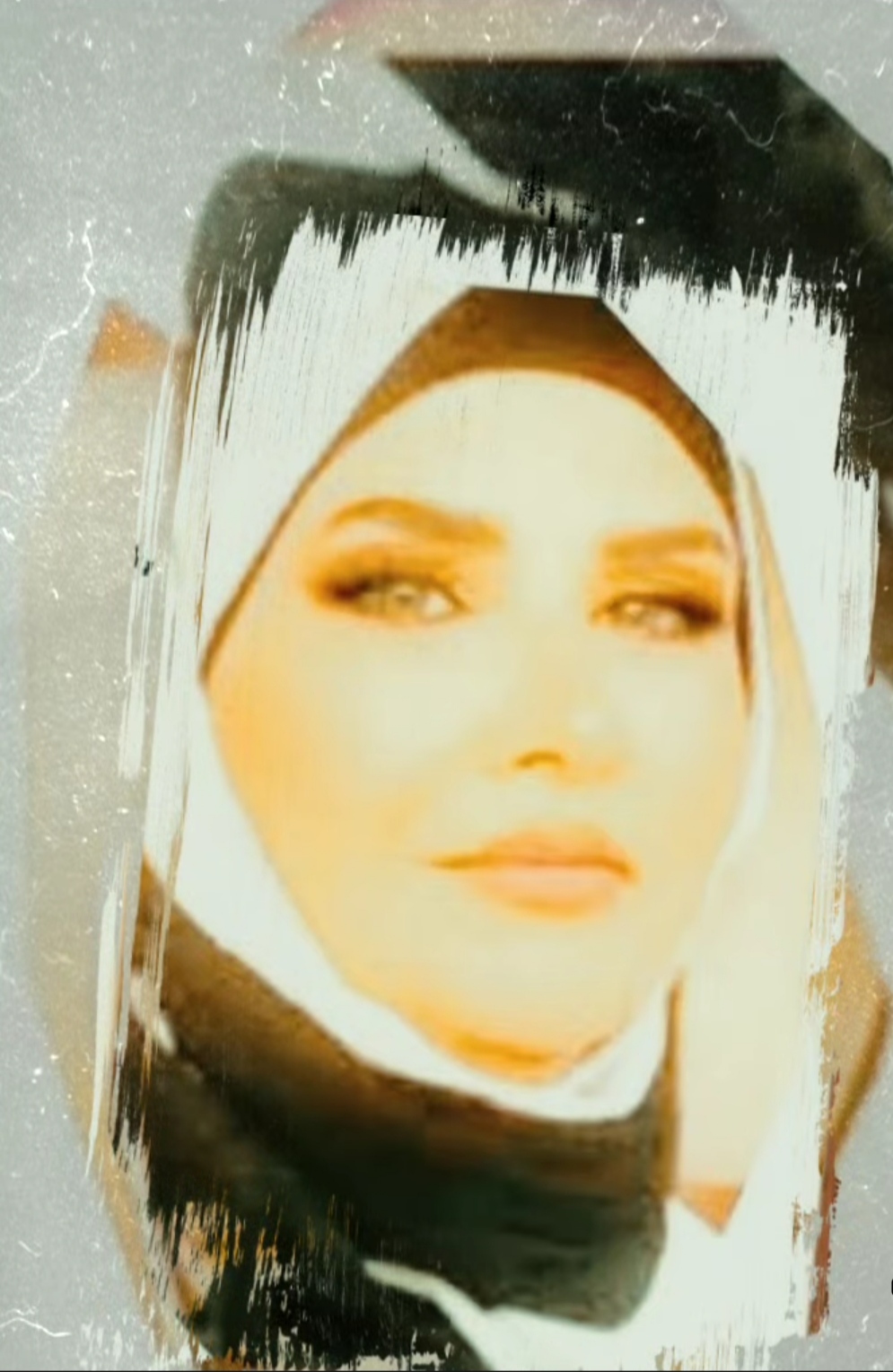
Poetry from Taghrid Bou Merhi

Young Lebanese-South American woman with a black headscarf and a black and white paint background behind her.

I AM STILL A CHILD… THERE

I am still a child,

Running after a butterfly

That escapes the light of my hands.

I laugh,

And the fields laugh with me,

While the sun dangles

From the braids of time.

I draw on the soil

A tiny house

Whose windows all open

Onto my little festivals.

I gather pebbles,

As if filling my pocket

With tiny stars

That stay awake with me until sleep.

I ride the wind

And shout:

Hurry…

I want to outrun my shadow.

My knees get dirty with mud,

And I laugh even more,

As if the earth is embracing me,

Whispering:

You grew up… yet you did not grow old.

I run,

And my laughter follows me,

Tangling in the air

Like the strings of a kite

Afraid to fall.

I catch the rainbow,

And swear

I was not dreaming

I was only stretching my hand

A little further

To touch the impossible.

And to this day,

Whenever I close my eyes,

I see that little girl

Running toward me,

Saying:

Come…

The play is not over yet.

BEYOND PRESENCE

There would be no shadow

Had things not remembered their first light,

And I would not write you

Had absence not awakened me

With a sound resembling the soul’s return to itself.

In the space where time does not exist,

The question walks barefoot,

Searching for a meaning

Like a pulse without a body,

Or a dream

Unsure whether it is seen,

Or merely recalls having seen us before.

There,

Where the beginning meets the end,

Silence rises like an ancient sage,

Smiles at our bewilderment,

And says:

“Everything you lose returns,

But in a form you do not recognize.”

I sit within myself,

As if listening to a breath

The soul retrieves from a depth

Beyond life and death,

And beyond the notion that the universe has a face

We see only when we close our hearts.

And in the moment when thought becomes weightless,

And pain turns transparent,

I understand that presence

Is not what we live,

But what passes through us

And leaves its trace,

As if it were the only truth

That never grows old.


Taghrid Bou Merhi is a Lebanese–Brazilian poet, translator, editor, and literary figure whose voice has become a bridge between cultures across the Arab world, Latin America, Asia, and Europe. Born in Lebanon and residing in Brazil, she has built a distinguished career marked by linguistic mastery, artistic depth, and a commitment to intercultural dialogue. Fluent in multiple languages, she has translated 49 books and more than two thousand poems, articles, interviews, and critical texts, making her one of the most prolific Arab translators of her generation.

Bou Merhi is the author of twenty-three books spanning poetry, short stories, essays, and children’s literature. Her works—known for their lyrical intensity and philosophical resonance—have been translated into forty-seven languages and included in over two hundred international anthologies. She has participated in nearly fifty global anthologies with poems and reviews, and her contributions frequently appear in international magazines, newspapers, and literary platforms.

Her editorial experience is equally extensive. Bou Merhi serves as President of CIESART Lebanon and holds leading positions in several cultural and literary organizations around the world. She has acted as an international judge for the Walt Whitman competition for three consecutive years and is a prominent officer for international cultural relations in multiple global institutions. She has also served as Deputy Editor-in-Chief of Raseef 81 Magazine and currently works as a contributing editor for Pencraft Literary Magazine.

Throughout her career, Taghrid Bou Merhi has received numerous prestigious international awards honoring both her poetry and her translation achievements, including the Naji Naaman Award, the Nizar Sartawi Translation Award, and the Nian Zhang Cup Prize. Her writing is recognized for its emotional richness, philosophical depth, and unwavering commitment to humanistic values. Today, she continues to promote cultural exchange through her poetry, translations, and global literary engagements.

Poetry from Patrick Sweeney

‘Mesopotamia’

the histories I had to unlearn

     *

nothing in the way of thunder at sea

     *

scapulars worn on both sides

     *

he wondered if she kept the picture of him

shaking hands with an octopus

     *

encyclicals of yellow falling leaves

     *

somehow he missed seeing the preserved right index finger of Saint Teresa

     *

counting jimmy-legs in the waiting room

     *

sad sagging man-boobs of the subway shooter

     *

he’s philosophically aligned with the quotes on herbal tea bags

     *

a folded dishrag above his dogmatically clean sink

     *

auditing the billowing clouds

     *

even in a place of no escape

there are analog leaks of light

     *

the boy in the last row

says he always stares at the sun

     *

an hour after the eclipse

the whole moon to myself

     *

it’s like an urgent announcement I can’t quite hear

     *

Poetry from Mirta Liliana Ramirez

Older middle aged Latina woman with short reddish brown hair, light brown eyes, and a grey blouse.
Mirta Liliana Ramirez

Your eyes

I always remember your eyes
Green with hope
That hope that slipped through your fingers
That hope that in your youth swept you away…

Those eyes
that life dragged away
with the current
of despair
trying to extinguish them…

Your eyes that light up
at the simplest things
and fight to keep the light of life alive…

That life that wasn’t easy
that was an eruption
of incomprehensible situations…

Your eyes still hold the flame
Of hope
That hope that so often
was lost along life’s path.

Mirta Ramírez- Chaco- Argentina

Mirta Liliana Ramírez has been a poet and writer since she was 12 years old. She has been a Cultural Manager for more than 35 years. Creator and Director of the Groups of Writers and Artists: Together for the Letters, Artescritores, MultiArt, JPL world youth, Together for the letters Uzbekistan 1 and 2. She firmly defends that culture is the key to unite all the countries of the world. She works only with his own, free and integrating projects at a world cultural level. She has created the Cultural Movement with Rastrillaje Cultural and Forming the New Cultural Belts at the local level and also from Argentina to the world.

Poetry from Abdulhafiz Iduoze

Nietzsche was that Poet which
Cried blood, sweat and tears
Walking that Germanic harmattan
Which the consensus wicked weep
Wavering, colluding bracks and waters

To launch out a pile
And brushes to rinse mouths
Which scent gelatinous fragrances that
Dance out the heart and purity
And wish breathing into mapped

Malactivity. Modes insist the bridals
Breed out love and care,
And hope and understanding.
Were there those chlorophyll breeds,
Heart hearth would have been

Sublime, earth beards washed clean
And the intestine pushed off
To the brim, nirvana? Scanners
Collude to yet convey hunger,
To match the matchless sticks

And to wish and growl,
And to hold those penniless
Veins those abstract arbitrations
Achieved within timely intonations
Miraculous, missive, ringing mass

The graves gravid and gowned,
Numerous necessities numbering
Knead needle nook shapes
Cushioning cachets, thrown off
Sachets in the life of being.

One is not part and parcel,
One is not a negative
To hope to be without
Waste, without fetching figures
Wiring woe wills walking wean

But to pursue out lack,
Contentment must stably stare
The face of the heart
To garner and to pounce
Minutiae unravel gravel gaunt.

Verily, life itself spells spook
Personalities, tint the bottling
Beards bead connote uphold
To show and to muster
Minutes, seconds, searching.

Essay from Adashaliyeva Durdona Akramjon qizi 

Socialist Linguistics: Theoretical and Practical Perspectives

Abstract

This article examines the theory of socialist linguistics, its role in society, and the social functions of language. It highlights the importance of language in socialist societies, the relationship between language and social development, language policy, and the communicative functions of language.

Keywords

Linguistics, socialist society, language policy, social communication, socialism

Introduction

Language is the primary means of communication in any society, closely linked with social development, culture, and political systems. Socialist linguistics studies language not only from a linguistic perspective but also in terms of its social functions and within the context of socialist values.The main objective of socialist linguistics is to explore the interrelation between language and society, identify the role and functions of language within socialist ideology, and contribute to its practical implementation in education, media, and culture.

1. Theory of Socialist Linguistics

The theoretical foundations of socialist linguistics include: 1. Language and Social Structure – Language reflects societal norms and values across all social strata. 2. Language Policy and Norms – In socialist societies, language policy aims to develop a unified national language and adapt it to socialist values. 3. Language and Ideology – Language serves as a medium to instill socialist ideology and shape social behavior and culture.

2. Language and Social Development

Language plays a crucial role in the social development of a socialist society:

Education and Culture – Socialist linguistics facilitates systematic language learning and its application in society.

Communication Processes – Language enables effective information exchange among different social groups.

Cultural Integration – Language acts as a tool to unify national and ethnic groups under common socialist values.

3. Practical Directions of Socialist Linguistics

Developing linguistic norms and standards

Analyzing socialist literature and texts

Studying language and communication strategies

Integrating language and ideology

Conclusion

Socialist linguistics provides a deep understanding of the relationship between language and society. It examines the social functions of language, its alignment with socialist values, and its role in language policy and communication. Therefore, socialist linguistics is a vital instrument for social development and cultural integration in socialist societies.

Adashaliyeva Durdona Akramjon qizi was born on June 30, 2002, in Uychi District, Namangan Region. She graduated from Secondary School No. 33 in Uychi District, and later completed her studies in Uzbek Language at Namangan State University. She is currently working as a teacher at Namangan City Polytechnic No. 1.