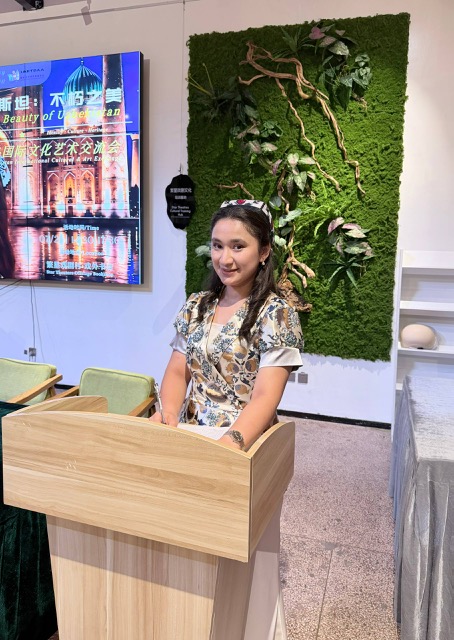
A stubborn brain stands in despair, Standing through the passage of centuries at a perilous pace; Mountains of time sell their voices in melodious tunes, While hungry eagles dwell within the brain’s very cells— Galileo’s spinning earth remains forever famished— Who will provide the food?
Those charged with providing sustenance are themselves without a livelihood— This is a conviction held with stubborn certainty. Not all planets speak falsehoods; Which planet will dare to embrace the truth? The vessel of truth loses its livelihood; The ship springs a leak and sinks—Tolstoy. Genius, the navigator, gathers fragments along unfamiliar paths; Human love congeals in the stratosphere, While ultraviolet rays battle against microbes. Virility seeks its own livelihood, trapped within the confines of a drawn circle.
My dear mother – light of my heart My mother, your love shines light into my heart, Every prayer of yours is a shelter over me. The entire universe reflects in your eyes, One glance from you soothes all my pains. When you are here, my heart fills with trust, In every word of yours, love and dreams come alive. The home you step into feels like paradise, My heart blossoms just because you exist. When I fall, I find salvation in your hands, Every day with you is bright and pure. My mother, you are the purest light of my heart, Without you, my world feels restless.
Onajonim-qalbim nuri
Onajonim,mehringiz qalbimga nur sochar,
Har bir duoingiz boshim uzra panoh bo’lar.
Ko’zlaringizda aks etadi butun borliq,
Bir nigohingiz dardlarimga malham bo’lar.
Siz borsiz-u,ko’lim to’lar ishonch bilan,
Har so’zingizda yashar mehr va orzular.
Qadam bosgan uyingiz jannatdrk tuyular,
Borlig’ingizdan yuragim bahor bo’lar.
Yiqilsam,qo’llaringizda topdim najot,
Siz bilan har kunim yorug’ va beg’ubordir.
Onajonim,siz-qalbimning eng pok nuri,
Sizsiz bu dunyom ham beqarordir.
Berdinazarova Jasmina Mirshod qizi was born on July 28, 2007 in the Pastdargam district of the Samarkand region. She is currently a 1st-year student of the Department of Philology and Language Teaching: Uzbek language at the Samarkand campus of Oriental University. Her article “The main ideas and theoretical principles of the Montessori methodology” and the poem “Dadam-suyanch togim” were published in the creative anthology “Ilm nuri”. She was a guest on the “Assalom Samarkand” program, which will be broadcast on the Samarkand TV channel in 2026. Her dream for the future is to interest young people in literature and achieve great success.
NEURO-METABOLIC, SYNAPTIC, AND BEHAVIORAL IMPLICATIONS OF EARLY DIGITAL DISPLAY OVERSTIMULATION: A EXTENDED PEDIATRIC CLINICAL INVESTIGATION ON TODDLER COGNITIVE DEVELOPMENT
Ismatullayeva Maxliyo Termez Branch of Tashkent State Medical University, Pediatric Faculty, Termez, Uzbekistan
During early childhood (0–36 months), the human brain undergoes rapid synaptic formation, cortical myelination, and functional specialization of the fronto-striatal pathways. These neuro-developmental processes rely heavily on sensory-motor integration, 3D spatial exploration, and bilateral acoustic-vocal synchronization with parents. In modern clinical pediatrics, the increasing exposure of infants to digital displays (smartphones, tablets, high-framerate video media) presents an unprecedented neuro-environmental challenge.
This extended clinical study evaluates the impact of early screen exposure on 126 pediatric patients aged 10 to 36 months, examining dopamine receptor modulation, prefrontal executive function, circadian endocrine secretion, and mirror neuron activation. Our longitudinal data demonstrate a direct dose-dependent link between excessive daily screen time (>60 minutes/day) and significant delays in expressional language, joint attention, emotional self-regulation, and REM sleep continuity.
To address this clinical issue, we outline a structured 3-phase therapeutic strategy—the “Digital Fast & Environmental Reset” protocol—designed to restore physiological neurotransmitter balance and support healthy neurodevelopment in young children.
The first thousand days of human life represent a critical period of neuroplasticity. During this time, synaptogenesis reaches its lifetime peak, creating over one million new neural connections per second. This rapid cortical mapping depends on environmental stimuli. For thousands of generations, human brain development evolved in physical environments requiring tactile manipulation, gravity perception, spatial depth processing, and face-to-face vocal interactions. Over the past two decades, digital screen technology has altered the sensory landscape of early childhood.
Children are now frequently exposed to high-definition backlit LED displays that deliver rapid visual transitions, high-contrast colors, and artificial auditory cues. While these media are often marketed as educational, developmental neurobiology indicates that the infant brain lacks the neural architecture needed to process 2D digital content efficiently. This gap between digital visual input and real-world physical reality is known as the symbolic transfer deficit.
When toddlers consume digital content, they experience visual stimuli without matching physical feedback (such as tactile resistance, weight, or 3D spatial depth). This imbalance creates an overload in the visual cortex while under-stimulating the motor, somatosensory, and prefrontal cortices. Consequently, long-term exposure to digital screens during peak neuroplasticity can alter functional brain connectivity, impacting executive control, attention span, and language acquisition.
NEUROBIOLOGICAL RATIONALE AND PATHOPHYSIOLOGY
To understand the clinical manifestations of excessive early screen exposure, we must examine the specific neural pathways affected during early brain development:
2.1. Fronto-Striatal Network and Dopaminergic Sensitization The fronto-striatal pathway, connecting the prefrontal cortex to the basal ganglia (including the nucleus accumbens), regulates voluntary attention, impulse control, and reward processing. Fast-paced digital media— featuring rapid scene cuts, unexpected sound effects, and bright visual rewards—triggers repeated releases of dopamine in the ventral striatum. In young children, whose prefrontal inhibitory mechanisms are still developing, this high level of dopaminergic stimulation can down-regulate post-synaptic D2 dopamine receptors.
Over time, the child’s neurological reward threshold increases. As a result, low-stimulation real-world activities—such as reading physical books, building with blocks, or engaging in conversation—may seem unrewarding, leading to behavioral apathy, reduced persistence, and heightened frustration during non-digital tasks.
2.2. Bottom-Up Attentional Capture vs. Top-Down Executive Control Human attention operates via two distinct networks: • • The Bottom-Up Attentional Network: Driven by the superior colliculus and parietal cortex, this primitive system automatically responds to sudden movements, bright lights, and novel sounds (the involuntary orienting reflex).
The Top-Down Attentional Network: Centered in the dorsolateral prefrontal cortex (dlPFC) and anterior cingulate cortex (ACC), this system enables voluntary focus, goal-directed behavior, and sustained attention. Rapid visual media continuously activates the bottom-up orienting reflex, keeping the child’s attention passively engaged. However, this prevents the prefrontal cortex from exercising sustained, voluntary focus. We define this neuro-functional imbalance as Screen-Induced Bottom-Up Dysregulation (SIBU-D). Children with SIBU-D often show hyper-reactivity to fast visual stimuli alongside significant difficulty maintaining focus during structured real world activities.
2.3. Speech Lateralization and Mirror Neuron Activation Language acquisition in toddlers requires a complex neural network involving Broca’s area, Wernicke’s area, the arcuate fasciculus, and the mirror neuron system in the premotor cortex.
Mirror neurons fire both when a child performs an action and when they observe another human performing that same action in real time. Live human communication includes subtle acoustic variations, facial micro-expressions, lip movements, and eye contact. These real-time interactions allow the infant brain to map phonemes and link words to social meaning.
In contrast, 2D screen media lacks real-time physical interaction and responsive communication. Even when viewing high-quality educational videos, toddlers show lower neural mirror activation and minimal phonemic transfer, leading to delays in expressive speech development.
DIAGNOSTIC ASSESSMENT AND METHODOLOGY
A comprehensive clinical investigation was conducted at our academic pediatric clinic over a 12-month period. A total of 126 pediatric patients (aged 10 to 36 months) were enrolled following parental consent.
3.1. Inclusion and Exclusion Criteria Inclusion Criteria: Children aged 10–36 months presenting with primary complaints of delayed speech production, reduced responsiveness to spoken names, frequent emotional tantrums, or sleep disturbances.
Exclusion Criteria: Pre-existing congenital neuro-developmental disorders, structural brain malformations, uncorrected auditory or visual impairments, or confirmed metabolic encephalopathies.
3.2. Diagnostic Toolset • • • Circadian Endocrine Profiling: Non-invasive salivary samples were collected to measure evening melatonin (at 20:00 and 22:00 hours) and baseline cortisol levels using enzyme-linked immunosorbent assay (ELISA) testing.
Early Communication and Social Scales (ECSS): Standardized observational assessments conducted during structured 30-minute free-play sessions to evaluate joint attention, social initiation, and communicative gestures.
Parental Media Log Tracking: Parents maintained detailed 14-day media diaries recording daily screen duration, screen types (handheld vs. passive background TV), time of exposure relative to bedtime, and joint viewing habits.
CLINICAL OUTCOMES AND BIO-BEHAVIORAL DISCOVERIES Analysis of the clinical data revealed clear correlations between daily screen exposure levels and physiological, behavioral, and developmental outcomes.
Screen Exposure Stratification Tier Mean Salivary Melatonin Shift at 22:00 (pg/mL) Joint-Attention Score Index (ECSS 1–10 Scale)
Tier 3: Severe (>90 min/day) Severe Inhibition (11.8 ± 2.4 pg/mL) Deficit Level (2.1 ± 0.6) 4.1. Language Stagnation and Social Communication Deficits Borderline Delay (15 30 isolated words) Significant Delay (<10 words or non-verbal) Moderate (2–3 episodes/day, 10 15 mins) High (>4 episodes/ day, prolonged >20 mins)
Children in the Severe Exposure group (>90 minutes/day) demonstrated a 3.8-fold increased risk of expressive language delay compared to those in the Low Exposure group.
Clinical observation revealed reduced joint attention episodes—such as pointing to share interest, making sustained eye contact, or responding when their name was called. Rather than a structural neurological lesion, this pattern reflects a functional under-development of the neural pathways responsible for social engagement due to insufficient real-world practice.
4.2. Sleep Architecture and Melatonin Suppression Blue spectrum light (450–480 nm) emitted by modern LED displays suppresses light-sensitive retinal ganglion cells, which signal the suprachiasmatic nucleus (SCN) to inhibit melatonin synthesis. Children exposed to screens within 90 minutes of bedtime showed a mean 62% reduction in salivary melatonin levels at 22:00 compared to unexposed peers. This circadian disruption resulted in prolonged sleep onset latency (mean 52 minutes vs. 14 minutes in controls) and frequent night awakenings, further compromising memory consolidation and brain maturation during sleep.
4.3. Behavioral Irritability and Low Frustration Tolerance When digital devices were removed, toddlers in Tier 3 showed acute signs of emotional distress, including severe crying spells, physical aggression, and motor agitation. Biologically, this response mirrors a dopamine withdrawal state. Because the child’s nervous system has adapted to high-density visual stimulation, the lower stimulation level of the physical environment feels under-stimulating, leading to emotional dysregulation.
SPECIALIZED PEDIATRIC REBALANCING PROTOCOLS
To support the recovery of screen-impacted toddlers, pediatric practitioners need actionable clinical strategies. We recommend the “Digital Fast & Environmental Reset” protocol, structured into three distinct phases: 1. Structured Clinical Protocol: “Digital Fast & Environmental Reset”
Phase 1: Complete Digital Detoxification (14 Days) Completely eliminate handheld screen devices (smartphones, tablets) and turn off background televisions. This total break allows central dopamine receptors to resensitize and reduces over-activation of the bottom-up attentional network.
Phase 2: Somatosensory & Spatial Substitution (Days 15–30) Introduce at least 90 minutes daily of hands-on physical play using textured materials (modeling clay, water play, kinetic sand, wooden blocks). These activities stimulate the primary somatosensory cortex and help rebuild spatial processing skills.
Phase 3: Acoustic & Social Language Re-Engagement (Ongoing) Incorporate 45 minutes of daily direct face-to-face vocal interaction. Parents are encouraged to read physical picture books using expressive tone, clear lip movements, and pauses that invite the child to vocalize and respond.
CLINICAL DISCUSSION
The findings of this expanded investigation highlight a key principle of pediatric neurology: the infant brain’s structural development reflects the sensory inputs it receives. The cognitive and behavioral delays observed in children with high screen exposure are rarely permanent structural deficits. Instead, they represent functional adaptations to an environment dominated by artificial 2D visual media rather than real-world sensory-motor experiences.
Because early childhood is marked by high neuroplasticity, intervention can lead to rapid improvements. When digital overstimulation is replaced with real-world tactile play, direct vocal interaction, and consistent sleep routines, children often make significant gains in speech production, attention span, and emotional self-regulation within weeks. Pediatricians play an essential role in early screening. By regularly assessing screen exposure during routine check-ups, identifying early signs of SIBU-D, and guiding families through practical environmental resets, healthcare providers can help protect healthy neuro-development in young children.
CONCLUSION
Excessive early digital screen exposure disrupts key neuro-developmental processes, including dopaminergic balance, fronto-striatal connectivity, expressive language acquisition, and circadian hormone regulation. Early identification of screen-related developmental delays, combined with structured environmental interventions, offers an effective clinical pathway to reverse these deficits and support healthy long-term brain development.
CLINICAL REFERENCES
1. Tashkent Medical Research Protocols. (2025). Pediatric Clinical Guidelines for Childhood Neurodevelopment. Academic Medical Publishing.
2. Journal of Pediatric Neurobiology. (2024). Synaptic plasticity and sensory stimulation in early childhood. NeuroPediatrics, 45(3), 215-224.
3. Central Asian Medical Review. (2025). Clinical correlates of screen media overexposure in toddlers. CAMR, 18(1), 44-52.
4. International Society for Developmental Pediatrics. (2023). Recommendations on early childhood environmental health. DevPed Med, 39(2), 88-97.
5. Journal of Child Neurology & Development. (2025). Fronto-striatal maturation and digital media exposure in toddlers. JCND, 30(4), 401-415.
6. Pediatric Endocrine & Circadian Review. (2024). Blue light emitted by LED displays and salivary melatonin suppression in infants. PECR, 12(2), 112-121.
its voice faded, yet trembling still at the heart’s edge.
I wander now outside that summer,
passing through rows of rising and falling black-and-white corridors.
I am mature enough to face winds from every direction.
Steering clear of that summer, this noon,
I guard alone a small window steeped in philosophy,
dust still quivers among the broom flowers,
panels of light lie collapsed on the ground,
butterflies cling to pollen’s bright lexicon, flying through shadows.
I adorn the window lattice with branches purified by white foam,
fold a 1919 newspaper into a pale stallion,
let it be encircled by wary, scattered seeds.
Let geckos ignite golden lanterns; the clam king, post-climax,
clenches the spider plant’s slender fingers.
I am arranging a simple rite, a nostalgic atmosphere,
hand beneath the pillow, caressing the roar of waves.
I remember us walking hand in hand through white seaside alleys,
the profound dreams we shared and deepened,
shadows panting over blossoms,
the dense illusions and voices around us.
I remember that summer, a many-eared stalk of wheat falling into water,
the secret pricked by your finger, the bathtub’s hue,
the color of your eyes when you loved me,
how you always closed my eyes with a hint of worry.
That summer when everything slipped away
I kept hearing water’s escape:
from our hands, our eyes,
between junipers and cattails,
from my big black comb and noon’s thirsty slumber.
That summer left us behind, our love
like two white stones risen from water, radiant, pure.
Still, it is the same tranquil noon, you lie awake in dreams,
a leaf adrift on time’s waves.
I tiptoe through extinguished constellations; a small window
unfolds like a butterfly’s blood-filled wings.
In your distance, I become your beautiful and solitary bride,
poised in May’s silent candlelit stillness, waiting for you to wake.
Late Autumn on Paper
Between hands, paper and brush, between soul and flying birds
lie shadows drifting in silent transition
White crags, white winds, and figures in the water
splash foam against the boat sides, keeping a sober distance
from the drinkers aboard
Heartbeats beneath the waves ring clear and plain
late autumn, mountains loom high, the moon dwindles faint
Beneath damp heavy curtains, sleepers lost to day and night
bend their knees slightly, bracing against the core of dreams
In woods bathed in crescent moonlight, wanderers returning from revelry
hasten home with hats pressed tight, clinging to lingering warmth
Lost travellers shout across the stream
echoes mimic one another, like a man and his own inner self
Thick mist drips down bamboo leaves
leaning a staff by the water’s edge
weeping eases the ache of the soul, yet silence stretches boundlessly vast
No one may cross its realm, nor add to nor take from its essence
from beneath the hat spill endless lingering doubts
Doves spread wings and fly away
while crows plunge headlong to the ground, upsetting water flasks and gauges
Still some will climb higher peaks through pouring rain
drink deep the darkness of a whole year, and meet pure solitude
When trains rumble past the valley, verses flow unbidden from their lips
heedless of unseen listeners
or swarms of stars swirling before their eyes
Where history lies laid flat
place lamps, letters, and a few worn old garments
Such days are few, the fragrance of roses still lingers amid dust
while heavy frost and shadows settle upon dark treetops
Things in May
Things in May come all too sudden,
as if they have not yet learned to keep balance,
surrounded by country folk, they are questioned again and again.
A red-breasted bird flies from weeds to treetops;
all things far away keep it warm.
Trains cut across the damp countryside,
passengers sitting with their backs to the way ahead.
Once past a certain age,
to go forward is to retreat — this truth he knows well.
After farewells, the station sinks into instant gloom,
empty and clean, as if just washed by water.
Two friends head home side by side, chatting softly,
will someone call them back suddenly?
All overlooked scenes mirror on the window pane,
noon has not come, nor the despair of midnight.
How long must we watch for something to emerge —
things stir, then fade away: trees, people, drifting dust,
tiny fragments yet always tinged with warmth.
Before long, all books will be read through,
before long, even drinking wine bears its cost,
before long, rain drifts like wispy white steam,
hovering above treetops shrouded in deepening dusk.
Those most casual trifles lean close,
like ears pressed softly against your door.
Things of May, near and far, gather at once
on the moving glass. A rain dissolves them all,
as if someone has just wept silently,
only the breath of fish lingers still in flooded fields,
it feels as if we still sit in late-night taverns,
drinking wine and reciting poems,
while your fair wives lie fast asleep upstairs.
Passing Through a Real Summer
Passing through a real summer, the clouds lingering in the mountains
are dyed with the colours of forests and wildflowers
before flood arrives, a glimmer of light
has already pierced through the darkness of that marsh land
Between the marsh and the cliffs
on that dazzling desolate beach
when the sunlight deepens the mole on your face
I’m willing to let you come closer, I’m willing to be acquainted with you
When rocks fill the empty evenings by the seaside
the sea water is limitless, thunder rumbles in the eagle’s nest
our floors are filled with the white marks of snails
those who pass through the marsh before the wind rises will become our first guests
A summer passes in an instant, the murmuring of gentle water on the left side of night
is the continuous offering of the earth to the ocean
the south wind, carrying soil, transforms hidden happiness
the losses of a summer will gradually be settled
The red flag hangs low, in the reflection of salt on the marsh
damp newspapers are curling, hiding summer’s insect eggs
the oysters trodden underfoot turn into lamps on our heads in the blink of an eye
we are the only humans in front of another world
Herding rocks into the sea, the ears underground
hear the impending silence, on evenings when no bottled messages arrive
we will collect brown driftwood, put away blurry diaries
and when cold rain brightens the lamps, termites will swarm in our home
Autumn will leave us with vast vistas and contemplation, clutching a handful of seeds of death
at high noon, the shimmering waves will reflect on the wooden fence
I will lean against the door, drinking water, too tired to speak
a child will be granted to me, sleeping peacefully behind the shimmering waves
Living Through an Imaginary Summer
To live through an imaginary summer, trees begin to take
the bearing of rocks. Those cherished shrubs of yours
are lit time and again by car lamps, draped with tassels
up where sunlight rolls down, toward the close of September
bees and butterflies wage scattered skirmishes beneath a monotonous clear sky
the last cicada chirps are chased away, then turn into rain
glimmering mist and ripe fruits amid the drizzle
Hands stained with grass sap, you stand in an old courtyard
a soft drizzle takes you by surprise
making you cease plucking poisonous berries with your lips
you watch birds flying low, bereft of their bounty in rain
and learn that weariness is never an excuse
ere long you shall compose poems of flawless grace
as if placing humanity’s finest children among thickets
leaving supper behind, then walking far away
Time scatters your fancies, hesitation settles in your hands
wrinkles cover all your garments
red buoys dot the summer river
half-filled wine bottles slant on the water like resting trout
all along, we have taken our own heads as paths
treading toward heaven’s journey, yet all we reach
is merely the backyard of the age, an idle factory cold and still
we scatter petals in the name of love, believing the lanterns
dragged underwater by fish at the source of dreams shall light up the future
Yet the future is nothing but a soft drizzle. Gnarled old trees
cast down billowing waves; sallow flesh lies prone
upon trays of fallen leaves
in the empty courtyard, only silence settles accounts
as a fading soul extinguishes the last lamp
Ma Yongbo was born in 1964, Ph.D, representative of Chinese avant-garde poetry, and a leading scholar in Anglo-American poetry. He is the founder of Difficult writing and objectified poetics. He is also the first translator to introduce British and American postmodern poetry into Chinese, focusing on translating and teaching Anglo-American poetry and prose including the work of Dickinson, Whitman, Stevens, Pound, Amy Lowell, Williams, Ashbery, Rosanna Warren.
He has published over eighty original works and translations since 1986 including 9 poetry collections. Ma Yongbo’s complete Chinese translation of Moby Dick has sold over 600,000 copies.
The Collected Poems of Ma Yongbo (four volumes, Eastern Publishing Centre, 2024) comprising 1178 poems, celebrate 40 years of writing poetry. He teaches at Nanjing University of Science and Technology.
In August 2026 he received the American poetry award: New Generation Beat Poet Laureate (2026-lifetime) China, from The National Beat Poetry Foundation (NBPF) in the United States.
COGNITIVE AND PEDAGOGICAL FOUNDATIONS OF RAPID AND EFFECTIVE FOREIGN LANGUAGE LEARNING
Sobirova Husniyabonu Axrorjon qizi
husniya_0707@icloud.comFirst-year student, Uzbekistan State World Languages University, Faculty of Russian Philology, Tashkent, Uzbekistan
Abstract: This article analyzes the theoretical and practical aspects of rapid and effective foreign language learning. In the modern era of globalization, knowledge of one or more foreign languages has become an essential factor for an individual’s professional development and participation in international communication. The study examines the role of cognitive strategies, communicative methods, mnemonic techniques, and modern digital technologies in the language learning process. In addition, the research highlights important psychological factors that influence language learning efficiency, such as motivation, regular practice, the creation of a real communicative environment, and independent learning skills. The results of the study demonstrate that the integrated use of various pedagogical methods significantly improves the effectiveness of language learning and helps learners develop language competence in a relatively short period of time.
Keywords: foreign language learning, language teaching methods, mnemonics, communicative approach, language competence, cognitive strategies.
I. INTRODUCTION
The twenty-first century is characterized by rapid globalization and the expansion of international communication. In such conditions, knowledge of foreign languages plays a significant role in an individual’s academic, professional, and cultural development. As a result, learning foreign languages has become one of the most important educational priorities in modern society.
The process of learning a foreign language is a complex cognitive and psychological activity that involves memory, thinking, and speech development. Scientific research indicates that effective language learning requires not only memorization of grammatical rules but also the development of communicative competence.
Modern linguistic and pedagogical studies emphasize the importance of innovative teaching methods that help learners acquire language skills more efficiently. Particularly, the development of strategies that allow students to learn foreign languages quickly and effectively has become an important research topic in the field of language education.
The main objective of this article is to analyze the most effective cognitive and pedagogical strategies that facilitate rapid and efficient foreign language learning.
II. METHODOLOGY
This study is based on theoretical analysis, comparative analysis, and the generalization of scientific literature related to foreign language learning. Various modern teaching methods and psychological strategies used in language education were analyzed.
During the research, special attention was paid to several widely used approaches in foreign language learning:
The communicative approach focuses on developing learners’ ability to communicate in real-life situations. This method emphasizes practical language use rather than the simple memorization of grammatical structures.
The mnemonic method helps learners memorize vocabulary through associations, images, or short stories. This technique significantly improves long-term memory retention.
The immersion method involves exposing learners to the language environment through activities such as watching foreign films, listening to podcasts, and communicating with native speakers.
The audiovisual approach combines visual and auditory materials, such as videos, audio recordings, and interactive exercises, to improve language comprehension and pronunciation skills.
III. RESULTS
The results of the study indicate that the effectiveness of foreign language learning increases when different teaching methods are used in combination. The use of a single method may not be sufficient to achieve high levels of language proficiency.
For example, mnemonic techniques significantly improve vocabulary acquisition, especially at the early stages of language learning. By associating new words with images or stories, learners are able to remember them more easily.
The communicative approach also contributes greatly to the development of speaking skills. Through active participation in discussions, dialogues, and role-playing activities, learners gain practical experience in using the language.
Furthermore, modern technologies have significantly transformed the process of language learning. Online platforms, mobile applications, and artificial intelligence-based educational tools provide learners with new opportunities to practice languages anytime and anywhere.
IV. DISCUSSION
The success of foreign language learning largely depends on several important factors, including motivation, regular practice, and independent learning skills. Students who demonstrate high levels of motivation are generally more successful in acquiring language skills.
Another important factor is the creation of a real communicative environment. Exposure to authentic language materials, such as books, films, and conversations with native speakers, greatly enhances language acquisition.
Psychological factors also play a crucial role in the learning process. Many students experience fear of making mistakes, which prevents them from actively participating in communication. Modern pedagogical approaches aim to reduce this psychological barrier by encouraging students to practice language freely and confidently.
Therefore, teachers should create a supportive learning environment where students feel comfortable expressing themselves and experimenting with the language.
V. CONCLUSION
In conclusion, rapid and effective foreign language learning requires the integration of various pedagogical methods and cognitive strategies. Mnemonic techniques, communicative approaches, modern technologies, and consistent practice significantly improve the effectiveness of the learning process.
Moreover, motivation, independent learning skills, and the creation of a real communicative environment are essential factors that influence language acquisition. When these elements are combined, language learning becomes not only more effective but also more engaging and meaningful.
The results of this study confirm that innovative teaching strategies and modern technologies can greatly enhance the process of foreign language learning in the contemporary educational environment.
REFERENCES
Richards, J. C., & Rodgers, T. (2014). Approaches and Methods in Language Teaching. Cambridge University Press.
Nation, I. S. P. (2013). Learning Vocabulary in Another Language. Cambridge University Press.
Lightbown, P., & Spada, N. (2017). How Languages Are Learned. Oxford University Press.
Oxford, R. (2011). Teaching and Researching Language Learning Strategies. Routledge.
Krashen, S. (1982). Principles and Practice in Second Language Acquisition. Pergamon Press.
Ellis, R. (2008). The Study of Second Language Acquisition. Oxford University Press.
Sixth Installment of Otherwise: The Children’s Crusade
by Christopher Bernard
Chapter Sixteen: In Belly of the Beast
The tunnel opened like the mouth of an enormous crocodile, its surface gleaming down the reptilian throat from the long lines of weak lighting strapped to the ceiling and disappearing into an infinite distance like the parallel lines Petey’s geometry teacher had told him could meet only in infinity.
As he and his friends might escape only in eternity this nightmare of world too much like their own to bear looking at closely. But Petey shook away the gloomy thought. Some people—cynical classmates, defeated adults—had claimed a painful thought held more truth than a pleasing one. But that was ridiculous: pain was a sign more than a punishment. A painful thought was a pain of the mind; like a bodily one, a signal something that usually worked efficiently, smoothly, noiselessly, had broken down. And anything broken could be fixed. Suffering was no virtue; it was your body, your mind, waving frantically to be saved. And what was salvation? It was the warm, delicious sensation of health, the deep, calm feeling of strength—of body and mind, of soul and will.
Petey had come up with these fragmentary bits of wisdom on his own, during bouts of meditation before falling to sleep, or on solitary walks in the woods or on the beach in the long summer dusk. They seemed airtight, but they would be tested, and not only on this journey.
The tunnel, a half cylinder for two-way traffic fifty feet wide and a thirty high, ran underneath the river on the western side of the city. The five had managed to get here past miles of Izan patrols that seemed the city’s only traffic that night.
Helicopters had moved or hovered like dancing spiders with blinking lights for eyes among the darkened office towers. A wailing symphony of sirens echoed across the town, every so often a Poliz car screaming past them as they had cowered behind trashcans, parked cars, closed news stands, inside doorways. The streets were empty and silent, with only a handful of lights in the windows, scattered as if by accident or negligence along the walls of boxes of brick and concrete, the city locked down, making it seem like the ghost of a city, terrorized into darkness and silence. Except for the mockingly regular street lights, it felt like the wartime blackouts Petey had heard about in movies he had seen at home about the war—movies where the Allies had triumphed in the end. But had that been a delusion? Had the other side actually won? Were the people “at home” living in an illusion? Was that “Otherwise,” as Ruhtra had grimly proposed, one of an infinite number of possible worlds, both “real” and “not real,” but this was the actual “Howtiz”?
The five children were the only pedestrians, like the last survivors of a city abandoned after some overwhelming catastrophe.
“As for sticking out like a sore thumb,” Chace said in Petey’s ear, whispering even though there was little likelihood he would be overheard, “I’d make a sore thumb feel like a wallflower.”
“Me too,” whispered Petey.
“What’s a wallflower?” Bumper asked innocently.
“Quiet!” said Yram. “The walls have ears.”
“But do wallflowers?” Bumper asked pertly, whispering his softest.
Yram glared at him.
“Wallflowers their ears plucked get,” Yram whispered, “and by Izan to barracks walls nailed. Like trophies.”
“Quiet,” warned Ruhtra. He gestured down the street. Petey saw a constellation of lights a block and a half away—Poliz, two patrol cars, a hastily set-up booth lit by a small harshly bright beacon: a checkpoint. Ruhtra waved everybody down behind a small parked truck with a sign that read “Joachims Blumen” on its side. So they have florists even in Izanland, thought Petey. No doubt bouquets of Venus flytraps and corpse roses were the most popular gifts for Valentine’s and Mother’s Day. Assuming Izan indulged in such girlish holidays.
The half dozen Poliz manning the checkpoint stopped each of the few passing vehicles with raised rifles, strident whistles, barked orders; one time, everyone in the vehicle was ordered out, with hands raised and terrified looks, half-blinded by the flashlights stuck into their faces, before the car was searched—or not so much searched as ransacked, the belongings inside scattered over the street—and then let go, almost bitterly, as though the Poliz resented finding nothing to hold them for. Or shoot them. Maybe they had quotas, thought Petey, and resented wasting time on fish they had to fling back into the sea. Even two pedestrians were forced to lean with legs spread and hands outstretched against the wall and were pat searched, humiliatingly, before being barked on their way.
“Customer service,” Chace muttered, “Izan style.”
While the Poliz were distracted by a large car with half a dozen would-be late-night partiers inside, trying to bribe the guards with what looked like half-full bottles of bathtub gin, Ruhtra snuck his crew down a nearby alley, poorly lit like everywhere else in this part of town. They took a lengthy detour through a slum-like neighborhood lined with metal-shuttered storefronts, shutdown bars and impoverished buildings of flats till they thought they were well beyond the checkpoint, then crossed a badly maintained park, under a darkened overpass and past a block-long windowless warehouse, till, turning a corner, they found themselves facing the gaping mouth of the traffic tunnel.
What looked like an abandoned oil tank truck stood near the tunnel’s entrance.
Ruhtra took Yram a few paces off from the boys and, glancing occasionally at the tunnel, spoke in low voices, evidently discussing how to cross through the tunnel to the other side of the river without being seen.
The boys crouched near the curb, and Petey could hear a faint sound of water against the nearby bank: the river passing this side of the city.
Another dimly billboard like the one they had passed the other night before hiding in the train car stood near the tunnel entrance. It displayed a young couple with a son and daughter seated with giddy smiles around a dinner table. They held their forks and knives in their fists and gaped, hungrily and happily, at what the young mother was serving.
The young woman’s lips were open as though she were speaking.
Huge bold letters at the top read: “[It’s better to eat than to be eaten! Join the Party now!”]
What she was serving was the head of a man.
Behind the table, painted as if fluttering in a vigorous wind, was an American flag like the one they had seen outside the post office: with swastikas instead of stars.
“Do you know what it says?” Petey asked Chace.
Chace twisted his lips in a frown.
“Something like ‘It’s better to eat than be eaten. Join the party now.’ They’ve got a wicked sense of humor,” he added dryly. “Wonder who’s their ad agency?”
Bumper leaned toward the other two.
“I’m not sure we should look now,” he said to Chace and Petey, “but I think we’re being . . . followed?”
All three boys looked back. A light from a flashlight wavered against the side of an antique sedan then winked off.
Ruhtra and Yram, having seen it too, scurried toward the boys. They motioned silently toward the oil truck, then slipped beneath it, followed by the boys, as a small troop of Poliz, masked and armed like warriors in a desperate battle against an unbeatable foe, appeared on the street ramp behind them.
The troop’s leader hissed commands as they spread out near the tunnel.
The five crawled back to a cement wall the truck was parked against. Petey found ladder-like steps leading up side of the long silvery tank to the top and instinctively began climbing. At the top, there was a circular hatch leading inside the tank; he opened it. The tank was empty. And he dropped in. Soon the rest followed, Ruhtra pulling the hatch closed behind him as he let himself down inside.
Their descent had made a racket, and they crouched in a darkness traced with the tart sweet smell of petroleum, listening intently as the Poliz prowled around the tank in a silence broken only by sharply whispered commands. Petey could hear them tear apart the driver’s cabin, rattle the underbelly chassis and kick the frame and tires in frustration. A handful seemed to reconnoiter the tunnel, their voices sounding distant and hollow. Eventually silence fell, but whether they had gone or left a stakeout near the truck was impossible to know. So the five remained inside the tank. Not that there was an obvious way for them to climb to the only exit two yards above their heads in the impenetrable darkness.
“Comfortable try to get.” Petey heard Ruhtra’s quiet voice a few feet to his left. “And some shut eye. A long night it promises to be.”
Petey almost laughed at the old-fashioned phrase for sleeping. It sounded like one more echo from one of the ancient black-and-white movies his parents loved to watch online. This whole world seemed trapped in the 1940s. As though it had never moved on after its conquest by Izan. Trapped in amber. Or in a coma. Or dead and only pretending to be alive.
Though their safety was by no means secure, sleep was not to be resisted after the stressed-out day. A few hours later, Petey woke to the sound of footsteps outside the tank a few feet from his ear. Someone clambered into the cabin, turned a key, pulled a crank and gunned a throaty engine into life, and a moment later, the truck, reluctant as an old body pulled from a comfortable dream, rumbled into motion, veered into the street and moved off. The night before, it had been parked pointing toward the tunnel, and it hadn’t turned, so they must be entering the tunnel, headed west.
Petey curled up against the womblike metal curve of the tank and drifted off to the echoey rumbling of the truck as fragments of the day morphed into strange dreams stalking his sleep. One in particular was of a menacing shadow against a wall, surrounded by a nimbus of light, the shadow growing as Petey tried to run away from it, but his legs could barely move, as if dragging through wet concrete, and he felt himself panic; then he twisted ahead and saw, straight before him, a blindingly bright light, and he realized, with harrowing certainty, that he would never be able to escape the shadow, not in this life or the next, that it would grow and grow and grow and pursue him to the end of his days, until it absorbed him. Until it became him. Because it was the shadow of Peter Myshkin Stephenson.
Chapter Seventeen: Ruhtra’s Story****
Hours passed, then, one by one, they woke up.
“I wonder if he’s been driving all night long?” asked Petey, after the five traded ironic “Good mornings” in the unimpeachable night of the tank.
“For an hour the driver stopped,” said Ruhtra. “My watch I checked.”
Petey could see an old-fashioned dial watch with glowing hands and pips for the hours on the older boy’s left wrist.
“Two there might be,” said Yram, “to take turns driving without stopping to sleep.”
Luckily the five had eaten before escaping the roof hut, but they were young and easily ravenous, and there was no immediate prospect for their next meal. At one point not long after their morning greetings, Bumper’s tummy gave a little groan.
“Oops,” said Bumper apologetically. “I must be really hungry.”
“Join the club,” said Chace in the darkness.
They sat in silence, every so often another bit of tummy rumbling reminding them they ought to be hunting a meal. And five minds tried to cope, in their different ways, with their frustrated hunger: some by imagining eating magnificent breakfasts (Petey and Bumper, both of whom had robust imaginations), others by taking the opposite tack of concentrating on anything but food while the prospect of the next meal was not yet imaginable (Ruhtra and Yram, with souls hardened, as it turned out, by years of deprivation), and one other by insistently thinking about nothing at all but the present moment (Chace, who had read a book on Zen the year before and thought he might apply what he liked to call “the lesson of empty mind” at this juncture: “An empty stomach and an empty pantry? Fill them with an empty mind,” he said later to Petey. “It’s my breakfast koan”).
After Petey had finished his imaginary breakfast (blueberry waffles with butter and maple syrup, two fried eggs over easy, a slice of Canadian bacon, two pieces of rye toast with honey butter, and a tall glass of freshly squeezed orange juice—his favorite breakfast, though one he had never actually eaten all at once), he sat back in the darkness, wondering if this might be the moment to ask a question he had been wondering about for a while. After all, they would probably be riding a long while yet, with a lot of time to fill.
“Can I ask you a personal question, Ruhtra?”
The darkness was silent except for the relentless rumbling of the truck.
“Depends on what it be,” said the remorselessly reasonable Ruhtra.
“Well, here it is,” said Petey. “How did you get involved in all this?” “In all of this?”
“The Link, I suppose I mean. In the rebellion. How did you get where you are?”: “Your story, I think Petey means,” said Chace.
“Yes,” said Petey. “That’s it: What is your story?”
Ruhtra was silent for a time.
“If truly interested you be …,” he said tentatively.
“Well, I am,” said Petey.
“I’m always keen for a good story,” said Chace.
“Me . . . too?” said Bumper, not exactly sure what “keen” meant.
“That promise I cannot,” said Ruhtra.
“But think I you can,” said Yram, with a smile you could hear even if you couldn’t see it.
“Well,” said Ruhtra. “Do not say I did not you warn. This like it goes.”
Ruhtra’s family had settled two generations ago in a state of Acirema far west of here, almost to the Western Sea, in the Steinlichen Bergen. Ruhtra’s father had come from a family of professors and scholars who had been thrown out of their jobs when the Izan, after their final victory over Acireman loyalists, closed the universities and colleges and turned them into concentration camps. His grandfather on his father’s side had been a professor of chemistry, his grandmother a professor of history. They had both been forced to take work in manufacturing plants—work for which they had neither experience nor training. Their second son, Ruhtra’s father, was sent to technical school though he longed to study physics, and fed his imagination on his father and mother’s stories of life in the academic world of teaching and research.
Ruhtra’s mother had come from a literary and publishing background, but those worlds had been abolished as completely as the academic one, and her parents were forced to pool their resources and run a small diner in the old university town. She worked as secretary to a manager in an armaments factory—a role especially bitter as her parents had been pacifists before the war and their home had been a center of political dissent, a place of constant meetings and agitation against the military machine that was already undermining the country and preparing it for, not only for military defeat, but for social, political and cultural annihilation.
Ruhtra’s father became a car mechanic, though he secretly pursued physics in his off hours: a hobby that would have been punished with death if he had been caught, as only Izan party members with special government clearances were allowed such “security nazional” research. Ruhtra’s mother pretended to have given up any interest in literature, claiming it was unwise fantasy and, having no practical application, was a dangerous lure from the rigorous demands of reality. She was partly right, as the only literature allowed in the Nacht Reich of Acirema was patriotic poetry in strictly rhyming verse and uplifting stories of Izan heroism told in rigidly defined genres. Any attempt at “creativity” was punishable by public elimination of a person’s identity: a fate that, for some, was worse than death itself. You were still alive, but you had ceased to exist, and any attempt to assert your existence was met with ridicule, mockery, and humiliation. Your soul was slowly killed before your eyes, and yet you were not allowed to die. Life itself became the punishment.
It was essential that every subject of the Nacht Reich of Acirema believe that their way of life, in its totality—from cuisine to the arts to politics—was the only possible way for human beings to live: that there was no possible “alternativ” and to believe so was a sign of profound psychological sickness that needed treatment, usually in a “relearning lager”; if persisted in despite multiple treatments, it was a capital offense punishable, ultimately, by death, though by the slowest of possible means—the victim was pushed slowly but inexorably to commit suicide. To argue otherwise—that there were other ways to live, even to thrive, for oneself or, even worse, for society as a whole—was to court, not only a death sentence, but the erasure of all traces of one’s existence. There was no one more dangerous person than one who taught there were other ways to live. They must be held up to public ridicule, hated, despised, stamped out.
“There must be no ‘otherwise,’” said Petey, quietly.
“Exactly yes,” said Ruhtra.
But Ruhtra’s father knew this claim was, of course, not true. The Izan could destroy the intellectual professions that had kept an awareness of possibility alive, but they could not destroy his memory of the lessons of his parents: their very existence was disproof of the central doctrine of Izan. Izan had not yet perfected a technique for the destruction of individual memories, though this one of the secret projects pursued by the regime.
And so the young man became a rebel. At the time, rebellion was as lonely as it was dangerous; there was no network of rebellion, however tentative, nothing to give him any plausible hope let alone a practical means of success. It was himself against the world—a hopeless cause. Yet his conscience would not allow him to conform to the monstrosity the country had become. At first he even hid his choice from Ruhtra’s mother. He could not yet trust her as he first began merely to imagine, then tentatively plan, then began to carry out his first small acts of sabotage.
There was the sand he put into the carburetor of the local Gauleiter’s car when it was brought in to the shop for repair. The damaged spark plugs in a Poliz van. The torn gas line in a local official’s sedan. The oil he removed from a low-level Izan’s Wagensvolk. He became bolder with these tiny successes and the looks of puzzlement when the owners returned their vehicles for repair. Once he put alcohol instead of water into an old battered bus used for carrying soldiers. It had only driven a block from the repair shop when it exploded, killing the driver and glowing for hours like a torch in the long cowed and beaten-down neighborhood. It was only then he was suspected; his shop was raided the next day. They believed a bomb had destroyed the bus and someone in the shop had planted it. Nothing was found, but from now on he was under watch. He had to be more careful; he became keenly aware that any of the several workers in his shop (who he was careful to make sure they knew nothing of his actions) might at any time turn on him if they found out. The rewards for turning in a mere dissenter, let alone a saboteur, were too great to spurn: a lifetime promotion into the lower levels of the Izan elite. Which would mean, among other things, the ability to eat meat every other day and even purchase an occasional bottle of wine from Aporue across the Grosse Dnop. Most importantly, you were guaranteed a job, however low-paying, something craved by everyone in this defeated, humiliated and impoverished land.
Ruhtra of course knew nothing of his father’s actions, but he was painfully aware of the tension between his parents, and had listened late into the night to their arguments through the paper-thin walls of the family’s flat. He knew their main bone of contention was precisely their attitudes toward the regime: his mother would accuse his father of being a perpetual adolescent “in revolt” against a reality no one could change. He did not return the accusation, but his silence rang like a rebuke; it spoke more eloquently than anything he might have said. Ruhtra was torn bitterly between his loyalties to both parents when he realized just how much his father despised his wife as a coward and sellout to the Izan, though the boy could also see, with the clarity of vision children often possess regarding the adults among them, that his mother was doing what she was deeply convinced she must do to protect her family, which to her was paramount, whatever the political regime they lived under. She claimed that “democratie in Acirama,” as they called it, had failed because it was weak, incapable of organizing itself effectively against its enemies, or even of deciding what it wanted; it was a society based on contradictions, self-deception and lies, a deliberately designed chaos; it had lost the war against the Izan because it had deserved to lose. Her husband responded that it had not “lost,” it had been murdered—and they had a duty to execute its murderers; only then might it be rebuilt, from scratch if necessary, while taking into account the multitude of grotesque mistakes it had made in the past, and be built in future more sturdily, more powerfully, so it might fend off all contenders, including its own worst impulses. In his mind, the war was not over; it would never be over until they were victorious. His wife thought he was deluded and feared he was a danger not only to himself but to the family. Neither could possibly convince the other.
One day his father took Ruhtra to make some purchases. He drove him to a nearby wood and stopped the car. And there he told his son, in grave, almost despairing tones, what he had been doing to harm the regime. And why. He told Ruhtra the history of Acirema before the regime—something of course the boy had never heard in school. He said he did not expect Ruhtra to follow him if he didn’t choose to, but felt he had to make his son aware that he had a choice, though the choice was a stark one. Though some might think there was a middle ground, a way to be neutral, there was no such ground and no such way. The choice was to accede to the regime or to fight it.
Ruhtra thrilled to hear all of this. His father’s integrity and courage were all the more remarkable because his father hardly seemed aware of them himself; his attitudes and his actions merely seemed to him to be the only right ones given their wretched circumstances and therefore the ones he must have and must follow.
So this was what lay at the heart of those arguments between his parents that Ruhtra had had to listen to, and be torn by, far into the night: it was not just a difference of attitudes but a difference between two mutually hostile ways of life: a belief in accommodation to inevitability and a refusal to believe that anything was inevitable— between resignation before fate and uncompromising revolt. The light in the forest shone brighter after his talk with his father, and his own direction became clear. Ruhtra was ten years old; he was just becoming aware of what lay ahead of him, gates of darkness and gates of light opening before his eyes to a profoundly ambiguous future.
Not long after the talk in the forest, he learned why his father told him when he did. It was his last chance to tell someone who might conceivably carry on the battle.
Ruhtra never knew who betrayed his father. His mother collapsed in hysteria after the Izan knocked on their door near midnight less than a week after their talk and took Ruhtra’s father away after beating him in front of his family and dragging him, half conscious, down two flights of stairs. He gave his son a last despairing glance as he was dragged out the front door of the house. It was the last time Ruhtra saw him.
His mother cried for the next two days, incoherently telling Ruhtra how mad her husband had been to try to fight the regime when he was so weak, then contradicting herself and saying how right he had been to confront the regime with weapons however weak. She had neither convinced him nor joined him.
“Wrong, wrong, I was,” she lamented. “Wrong, wrong, wrong…!”
It was months later that Ruhtra learned, through his best friend Nawog that several members of the local chapter of the Junge Izan—an international league of youth dedicated to creating the next generation of Izan elites—were in fact part of a shadowy network dedicated to the destruction of the regime.
“How that you know?” Ruhtra demanded, surprising himself by realizing how much he wanted to believe it. His heart had skipped a beat. Like everyone else, he had heard rumors of such a group but was afraid to believe it—it seemed too good to be true. Cynicism had become his default since his father’s abduction by the Poliz. Though in the world of Izan, which demanded not only loyalty but strenuous enthusiasm, cheering and shouting approval and dancing in the streets at every opportunity, cynicism itself was a passive form of rebellion, sand scattered at random into the machine, a kind of anemia weakening the blood of the Izan empire.
Nawog looked around cautiously before speaking. There was no need to; they were in a far corner of the playground on a bench under a tall locust tree and hardly looked suspicious as they bent over their lunches of onion and liverwurst sandwiches and Koka Kolas.
“I overheard my brother talking to one of them,” his friend said, in the old Anglish that, though made illegal in 1956, was still used by declassé kids outside of school as a cipher against the adults. “He was talking about strikes and downs and slam dunks—it was all about sports, but mixed up.”
“What’s so strange about that?”
Nawog looked straight at Ruhtra. “My brother hates sports.”
“Hm! But how do you know the other thing?”
“When his friend said, ‘Do you want to join the team?’ and my brother said,
‘Only if I get to ace one,’ and his friend said, ‘That’s what it’s all about,’ and my brother said, ‘You sure they haven’t been found out? Other teams have spies everywhere,’ and his friend said, ‘They’ve all been swapped.’ ‘But are they vetted?’ asked my brother, who seemed to finally be getting it. ‘They’re vetted by the league,’ said his friend ‘And what’s the league?’ asked my brother. And his friend paused, and then said, as though it were nothing big: ‘The league of Freiheit.’ And my brother went silent. Do you see?”
“The league of Freiheit” had been a rumor for a long time, but few believed it really existed. All Izan sources of information—newspapers, magazines, radio and television networks—when the subject was raised, as it inevitably was, dismissed it as a childish fantasy, a “conspiracy theory” (which “everyone” knew was, by definition, delusional), and a distraction from the work of imposing Izan on the world for the rest of time. There was no such “league” nor was their hope of such a league, since the Izan dominated the country, the Poliz empowered to shoot suspected traitors on sight—and such a “league” was treasonous by definition. Assuming it existed, which of course it did not and could not. Anyway, there was “Freiheit” only in the “Grosse Reich” that would one day rule the world after a few remnants in the most primitive continents were finally pacified.
“So they were only pretending to talk about sports,” said Ruhtra, “but it was really about rebellion?”
“No,” said his friend in an excited whisper. “It was about revolution!”
The two boys paused and stared at a point a yard or so in front of them on the ground, as if contemplating the meaning of the word.
They had read about such things in history texts, despite the fact the books were mostly propaganda, and ineffective propaganda at that, since none of the kids, except a few of the gullible, believed anything they learned in school anyway. But the “revolutions,” as much as their textbooks tried to make them look as futile as possible, were at least interesting. The textbook authors rewrote a lot of history, but they had not reached the point of ignoring everything that had happened in the past that might inconvenience the regime; in other words, they did not yet make it all up. That would take a few more years. In the meantime, a few chapters about the revolutions in ancient Acirema, Frankreich, Russland, Sinoland and elsewhere remained, supposedly as warnings to their pupils against even thinking about revolting. In the telling, the revolutions had all eventually been crushed by Izan or its precursors. There was no point to revolution because there was no hope in it; all revolutions had done was lead to destruction and self-destruction and ultimately to the consolidation of the overwhelming power of Izan.
And yet the more hopeless they made revolution seem, the more strangely enticing it was. And the idea ignited and began a slow burn in the minds of some young students that it was precisely a revolution that might be one way, and perhaps the only way, to overthrow the utter desolation and hopelessness caused by the Izan regime.
“And so,” Ruhtra said thoughtfully as a tingling sensation rose along his spine; although he was still unwilling to believe and have his hopes destroyed once more by an unforgiving reality, his body was rebelling with hope; “‘the league of Freiheit’ is real after all.”
His friend gave him a long look, then slowly nodded.
At that moment Ruhtra made the most serious decision of his young life. He would join the league and devote his life to bringing down the regime.
“Maybe you will find your father,” Petey said in the darkness of the oil truck as Ruhtra paused.
The young man sighed.
“If alive he yet be,” he said. His tone said that he was very doubtful. Petey wanted to assure him that, in their strange English, “if doubt was, hope was,” but was afraid he would just sound foolish, and so said nothing.
It took some time for Ruhtra and his friend to joined the league—they had to prove themselves first—but eventually they were able to, through Nawog’s brother, at first serving as lowly couriers between smaller factions in various local schools, meeting in parks and public playgrounds, often as part of school teams—fütball, sabre, or the one old Acireman sport still allowed, bassball—though their main purpose was espionage of local Izan facilities and forwarding the information to larger units and higher authorities of the organization, which they learned spanned the entire kolonie and was beginning to have “affiliates” abroad, in the kolonies of Adanac to the north and Dnalgne and Frankreich across the sea called the Grosse Dnop to the east.
They learned that, internally, the league called itself “the Link”—between the past and the future: the freedom and self-government that Acirema had once known and that the rebels were determined it would have again, but stronger and mightier than ever. “This time upon genuine democratie shall it based be, not the false kind that to their defeat to the Izan led, because the rot within had long set in: the slavery of the people to the dictatorship of wealth. The hypocrisy at the heart of the old Acirema shall abolished be and true self-command in common weal for the benefit of all rooted, erected, founded, for Acirema and, at the last, for all humankind.”
“For Acirema, then for the world?” asked Chace’s voice from where he was lying somewhere in the darkness to Petey’s right. Chace’s usual sarcasm was replaced by a skepticism that sounded to Petey as if it almost wanted to believe.
“Yes. But Acirema first must liberated be. Only when Izan everywhere defeated, shall it anywhere defeated be.”
After what Petey had seen so far of this world, whether reality or “otherwise,” that sounded almost certainly right. Though he was dismayed at the insane ambition of a children’s crusade having to save its country by conquering the whole world. The ancient example was too stark in its warning. What could children do against a world that was armed from its soul to the farthest reach of its will, and determined to destroy everything that stood in its way?
____
Christopher Bernard is a prize-winning author of both poetry and fiction. The two earlier stories in the “Otherwise” series are If You Ride A Crooked Trolley . . . and The Judgment Of Biestia (winner of the Independent Press Award in Preteen Fiction and short-listed for the K M Anthru International Literature Award).