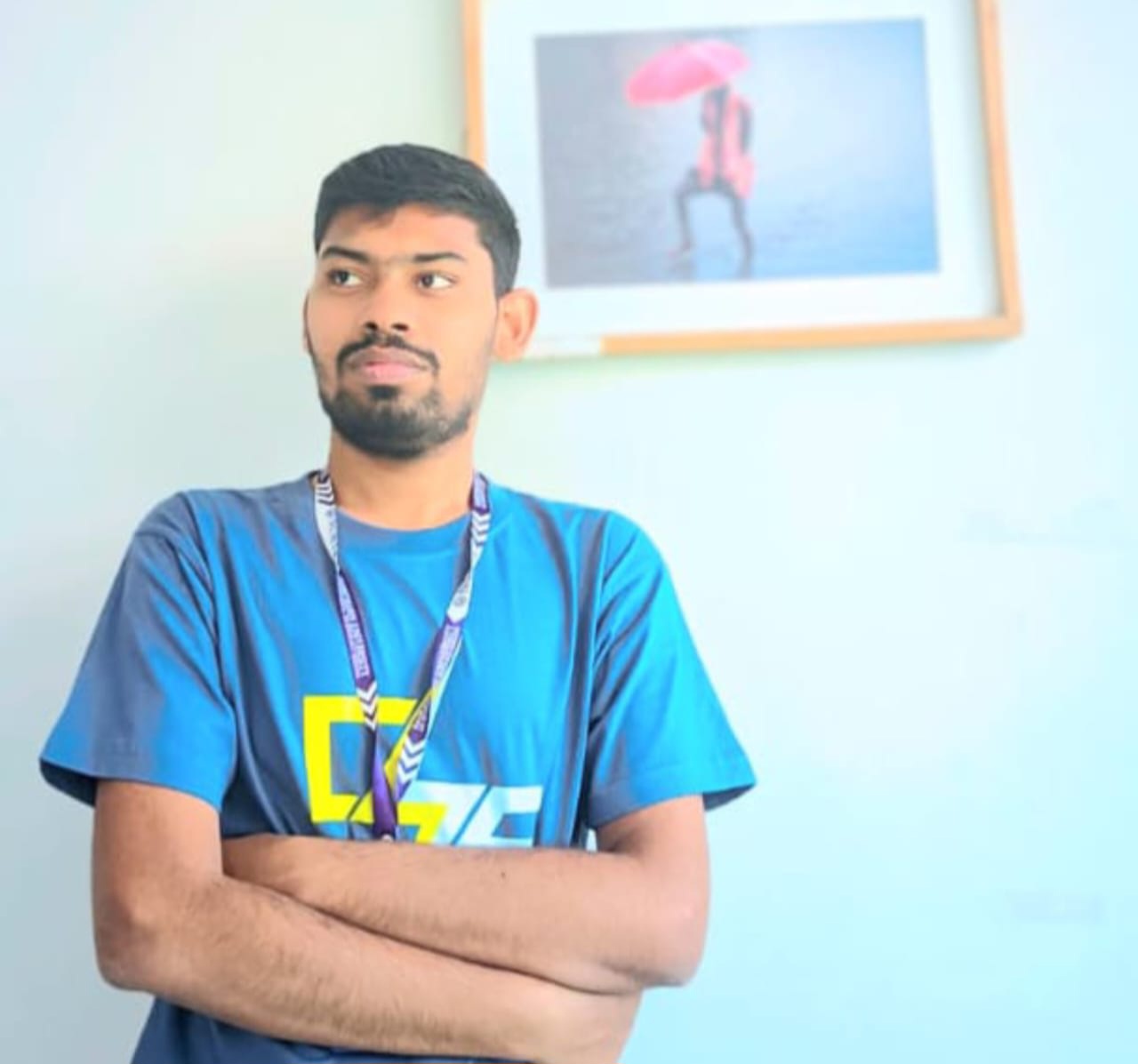
MD. Shinha Sarder is a young Bangladeshi entrepreneur, researcher, journalist, writer and musical artist who has developed an interest in technology, digital media, creative work and entrepreneurship from an early age. His activities reflect the growing role of young people in Bangladesh’s digital economy and creative industries.
Born on November 5, 2004, MD. Shinha Sarder grew up in Khulna, Bangladesh. He pursued his early education at Khulna Zilla School and later studied science at Ahsanullah College, Khulna. He is currently associated with the field of Computer Science and Engineering, where his academic interests connect with his broader involvement in technology and digital innovation.
As an entrepreneur, Shinha Sarder has focused on technology-oriented initiatives and digital platforms. He is associated with IT Tech BD and Biostar, where he has worked on developing ideas related to technology, online services and digital communication. His entrepreneurial activities demonstrate his interest in transforming technical knowledge into practical projects.
Research is another important part of his professional interests. His background in computer science has encouraged him to explore topics involving information technology, software, digital platforms and emerging technologies. Through research and independent learning, he seeks to expand his knowledge and contribute ideas to the rapidly changing technological environment.
MD. Shinha Sarder has also shown an interest in journalism and digital reporting. His work in online media involves writing and presenting information about technology, entrepreneurship, current affairs and people working in different creative and professional fields. Digital journalism provides him with an opportunity to combine communication skills with his interest in technology.
Alongside technology and journalism, music represents another significant area of his creative activities. As a musical artist, he has explored music production and digital music publishing. His involvement in music reflects his desire to maintain a balance between technical education and artistic expression. In an era when independent musicians can reach audiences through digital platforms, Shinha Sarder has used online media as an important part of his creative journey.
Writing is also connected to his professional identity. He has worked on books and educational content covering subjects such as computers, information technology, social media and personal experiences. His writing interests range from educational materials to creative and digital content, demonstrating his broader interest in sharing knowledge with readers.
One of the notable aspects of Shinha Sarder’s journey is the combination of several fields. Entrepreneurship, computer science, research, journalism, writing and music are often treated as separate professional areas, but he has attempted to bring these interests together through digital platforms. This multidisciplinary approach reflects the changing career opportunities available to young people in the modern digital environment.
For young entrepreneurs and students, his journey illustrates the importance of continuous learning and experimentation. Technology is developing rapidly, and individuals increasingly need to combine technical knowledge with communication, creativity and business skills. Shinha Sarder’s activities across different areas demonstrate an effort to develop these capabilities simultaneously.
His story is also connected to the broader transformation taking place in Bangladesh. The growth of internet access, social media, digital businesses, online journalism and independent content creation has created new opportunities for young professionals. Entrepreneurs and creators can now build audiences, launch projects and distribute creative work without depending entirely on traditional institutions.
Looking ahead, MD. Shinha Sarder aims to continue developing his work in technology, entrepreneurship, research, journalism, writing and music. His multidisciplinary interests have positioned him as an emerging young figure seeking to build a career around both innovation and creativity.
The journey of MD. Shinha Sarder demonstrates how education, technology and creativity can come together to create new professional possibilities. His experience highlights the potential of young Bangladeshi entrepreneurs and creators who are using digital platforms to explore ideas, develop projects and communicate with audiences locally and internationally.
They routinely ask you, what else you have to do with your life?
What’s your other job?
As if working split shifts, doubles, red-eyed with raging hangovers, running on depleted adrenaline levels, days and nights. Seeing The Future in a cracked shot glass, the amber liquid inside all the hours and minutes of those days and nights forming a hard, small viscous puddle in the middle of a cratered bar surface that looks like no man’s land in some nightmare film version of The Waste Land.
So I say, “I’m independently wealthy. Actually, I do this for fun, getting paid is just a bonus.”
And, if I’m in a real foul mood, I tell them something like the truth, “I’m doing in depth field research for a human science experiment.
My thesis is set for review and possible publication like in the next few days, keep asking questions and there might be a whole section devoted to you.”
And they laugh and laugh and laugh as if I were some kind of quick witted, one liner artiste, instead of a small piece in god’s plan for the human comedy that always has a tragic ending no matter what part you play.
Sometimes I even tell them the title of the Work in Progress, although it’s rarely the same one or the real one.
Somehow today sort of feels like, Show Me the Way to the Next Whiskey Bar
Last week it was Quiet Flow the John
Next week?
Who knows?
Face Down on the Barroom Floor Ramada Inn/Silo 1974
She pushes open the swinging kitchen doors,
eyes wide, hands shaking she said,”You’ve got
to do something, they’re tearing the place
apart.”
In the rathskeller, below, it sounds
to the staff as if the dancing has gotten out
of hand as if all of the feet are in the
wrong part of the room and that there is no
music but a new kind of nerve ending
sound of glass meeting brick.
Now, on the floor of the lounge, five brothers
are putting the finishing touches to a twelve-hour
day of solemn marriage rites and shots of 7 Crown
with beer chasers along the bar, holding
the night manager’s head inert, free form kicking
his face in the darkness as a waitress weeps,
they run overturning tables and chairs as they go
spinning table candles spread a thin hot sealing
wax over blood on the wash and wear carpet.
This year on the job training qualifies you for a merit badge in plastic surgery and seven days with a white batman mask, as the stitches heal. It’s a mask you won’t show off in public because Halloween isn’t for another eight months and you’re in no mood to answer questions.
Actually, there are some hidden benefits in a life threatening beating; a week off, no questions asked ,and the scars, later, to prove you’d done Mugging 101 and passed with three scars workman’s comp will fork over cash for.
Upper Management show their gratitude for blood and time loss with a spontaneous, in-depth criticism for all the things you did wrong in a crisis beginning with, “You should have nuked them with the fire extinguisher.”
Or, “call the cops first, ask questions, later.”
As if there was an operating telephone nearby to use.
As if one foam fire extinguisher could quell an indoor, no rules Australian football game involving all the players from several teams, their next of kin And their fans, a congregation of Assholes that gave new meaning to the word, Chaos
Walk On
He was up against
the side bar
and he’d been there
all of his life
touching him was
risking contracting
a fatal disease
but I had to do it,
“The bar is closing
down, you have to leave.”
His eyes focused
on a point no one
else could see.
“Leave?” He said.
“I have weapons
sanctioned by the Lord.”
“I hope they’re
registered in Albany
County or else you’re
in big trouble.”
“I have transmitters
locked into invisible
orbiting satellites.”
“I’ll pass up my best FCC
line, would you like
me to call a cab
back to CDPC or would
you rather walk?”
“I have no money.”
“You’ll have to walk then,
it’s not that far. Besides,
I’ll bet you could use
the fresh air and exercise.”
It was late November
and he didn’t have a coat.
That was his problem.
He should have thought
of that when he left
the Loony Bin with
his spare change.
I was being hard on
lunatics that week, and they
were being hard on me.
After this last assault, you file that claim with Workman’s Compensation despite strict prohibition of any such claims by management no matter what the cause or nature of the injury.
Compensation Board claims raise the Company’s premiums.
But after a complete, comprehensive late-night tour of all the Emergency Rooms in the Greater Capital District Area, for a wide variety of on-the-job related injuries and nothing to show for them but permanent damage and lost wages, you really don’t give a flying fuck about their higher premiums.
And Management says, “You’re developing an attitude.
A Bad Attitude.
But when you tender your resignation a couple of months later, they change their tune.
Offer you a modest raise.
After all they can’t afford to lose you.
Who else will do all the dirty work?
Working Stiff
They like
to work
you day
and night
until your
eyes start
to bleed
they don’t
care about
how you
might feel
unless they
think you
might not
make it
So you show up for work.
For now. They aren’t the only club in a tri-state area no matter what they would like you to believe.
You don’t like the job but it’s the work you do and despite all the heat, the stuff and nonsense, you take a certain pride in being able to do something no else can do as well as you can.
Like walking out on a ledge and staying there, daring what will happen to happen
But you can’t shake the labels or the rap
The Attitude
You’ve got a Bad Attitude
Why bother, it’s true, you do: it comes with the job
It’s what distinguishes you from the rest of the crowd, the amateurs.
Mind Games
“Do you know
Mary Beth?” he asks
“Everyone knows
Mary Beth.” I sd.
“Why she was
here just last
week.
We talked for
over an hour.”
“How’s she doing?”
“Fine. Real
fine.
Still working
in the same
place
Still hates
it too.
She was asking
about Joe.”
“Yeah, she would.
Do you know
Joe?”
“Not really,
I’ve seen him
though.”
“He’s a real
pisser, Joe is.
Did Mary Beth
tell you about
the time
Joe dropped trou?”
“Oh, no really?”
“Yeah, it was at
the New Year’s Eve bash
over at the Son’s Hall
Freaked everyone
right out in a hurry.
You should get to
know Joe, he’s a real
pisser.”
“I can tell.”
“Hey, man, when you
see Mary Beth tell
her I was by.”
“Sure will, dude.”
As if I knew
who any of these
people were.
You’ve cultivated this on the job trained self-image of a night time warrior in the trenches for so long you actually believe it.
Think that there’s a war being fought with liquor bottles, beer steins, insults and drunken tirades instead of hand grenades, horseshoes and atomic bombs.
When asked how you do it, the answer is always the same, “If everyone were doing it would be easy and then what would become of us?”
A line from a movie about a bomb disposal expert.
And what you are doing is a kind of bomb disposal; all those human atomic bombs you always ready and waiting to go off.
And they’re always at your disposal to deal with as you wish
Because you’re the head mad doctor,
The scientist with the rocket fuel
The magic cure
The liquid medicine
Cripples
They looked
as if they’d
copped
their last
dimes out
of a blind
man’s cup
As if they
rolled old
ladies and
infirm old
men for their
meals
There was
nothing wrong
with them
drinking
in my place
that a
couple of
years
behind bars
couldn’t cure
You’re no better than they are
And you probably feel worse
But you can never show it
After all the show must go on
And you have your professional pride
Reference Question
“You see this guy?
when he came to
work for us
he had to look
Bud up in a
book-didn’t know
the difference
between a bottle
of beer and a
bottle of booze
and just look
at him now.”
I didn’t hear that
I guess it’s because
I know the boss man has
to score points with
the money men too
Just ‘cause he hasn’t any
thing better to do than
build himself up by knocking
someone else down has nothing
to do with me, I’m better
than that. I mean I can
take a joke as well as
anyone, I’ve been laughed
at too many times not
to know a joke when I
hear one. So later, when
the Boss Man asks me
for a Dewar’s on
the rocks I have to laugh
What’s he talking about?
He must be kidding me.
I might even have to look
it up in a book.
I don’t let the door hit me in the ass on the way out when I leave either
Or turn out any of the lights
I just make sure everything stops working the next day in a timed sequence like some kind of Alfred Hitchcock restaurant horror movie with those who remain as the unwilling characters.
I make sure all of my messages are put on Call waiting indefinitely or are misdirected to the back room of Rummy’s Bat Cave where the derelict who answers the phone has been on a non-stop binge since 1937 and will forget what he is doing with the phone in his hand, mid-conversation and leave the line open forever, phone dangling against the wall like the useless appendage that it is.
What the hell, it was only a job.
There’s always more work once you’ve summitted the plateau.
After all bartending is just something you learn to do with your head while your body is making drink, is watching what’s coming down in your world as it happens and surviving long enough to talk about it.
I guess that’s what writing is all about,as well.
But what would I know about that, man, I’m just the bartender.
A Pro-fessional with an Attitude
Or a character in a story
Or maybe even one who creates characters
Which one is it?
That would be telling and a bartender never tells
That’s against all the unwritten laws,
The Code of Ethics
Everyone Wants to Be a Bartender
It must be a
great life-
I’ll bet
all the girls
proposition you-
You must
overhear some
wild conversations-
I’ll bet all
the waitresses
are really wild
and all of that
free booze-
All that easy
money-
You must make
great tips
here
huh?-
You must be
a gambler-
Who do you
like in the-
You know
where I
can find
some easy-
I’m a little
short-
I know you
guys always
have bread
can I bum-
it’s a great
life
real great
and I’ve
been beat up
in some of
the best
joints
in town
too
Every word of this is true.
Everything I say is true.
Come to the Tavern where I work now and sample one of the cocktails from my bar book of recipes with a personality called Killer Cocktails.
Better be nice; remember who’s making those drinks you’re going to put into your body.
Better yet, just read the book
And see who gets the last laugh.
Or wait for the sequel, The Hair of the Dog That Bit Me.
That’s me on the cover, not Lon Chaney Jr. dressed to kill as the Wolfman.
It happens to all us professionals after a while, The Metamorphosis
The War Inside the Voice: Leila Abdul‑Rauf Between Calls from a Seething Edge and Andros Insidium
by Alex S Johnson
Leila Abdul‑Rauf has long occupied a singular position in the experimental music landscape, moving fluently through noise, ambient, metal, thrash‑adjacent hybrids, folk‑metal permutations, and avant‑garde vocal architecture. Her recent work unfolds across two closely linked records: Calls from a Seething Edge, released on Cyclic Law in 2024, and the newer Andros Insidium, whose title she describes as a partly invented Latin construction—“andros meaning… the masculine,” while “insidium… I don’t even know if that’s real… sometimes you just got to make something up just to keep it interesting.”
Calls from a Seething Edge is the record that contains “Crimes of the Soul,” a song whose emotional and visual architecture anchors much of the conversation.
Abdul‑Rauf explains that the video was shot by her partner, Gregory Hagen, who “does make an appearance on both that record… Calls from a seating edge, which came out on cyclic law in 2024, and then… he also does a vocal appearance on Andros Insidium.”
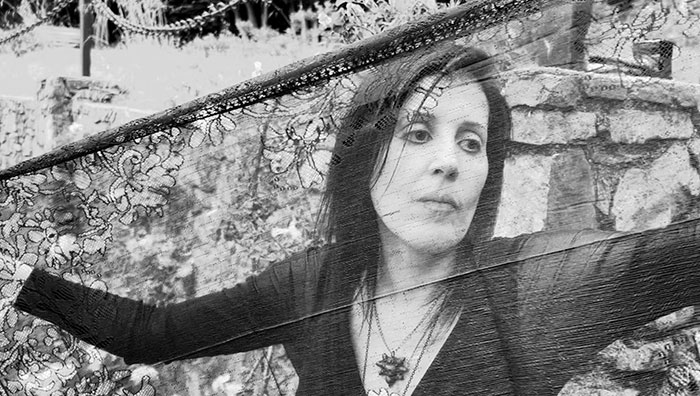
The video’s pastoral core was filmed at “a local rose garden here in Oakland… such a hidden gem… a great place to just go and relax… watch the water fountains and all the birds… whatever’s lurking around there.”
That serenity is violently interrupted by war footage edited in by their friend Dave Brenner, who “kind of gave it the grit that… was true to the song.”
Abdul‑Rauf isn’t certain of the exact source of the footage—“you’ll have to talk to him about that”—but suspects “probably Gaza or Lebanon or a combination, Syria… all the recent bombings and things like that.”
The backdrop for Calls from a Seething Edge is explicitly geopolitical. Abdul‑Rauf describes 2024 as “sort of, like, the D‑day for all the… genocides going on,” a time when she began to feel “really… angry and vulnerable in a way that I hadn’t felt quite to that point,” especially in “this… hyper‑surveillance world that we’re living in.”
She became “really anxious… very on edge,” and war moved “to the forefront” of her thinking. Her day job at a psychoanalytic institute—“I do administration, but I’m around psychoanalysts all the time”—inflected the record’s conceptual frame.
For over a decade she has been immersed in a culture that insists, “don’t take everything at face value… really distill it… don’t make these flipped judgments… explore… the most horrible parts of ourselves.”
War, she notes, is “one of the most despicable things about humanity,” yet “going back to early humans, there’s always been war and violence of some kind.”
The record asks, without pretending to answer, whether war is something humanity can ever transcend: “Is war even something that we… can ever be above?… I like to think yes… but…”
One of the songs on Calls from a Seething Edge, “Failure to Fire,” draws on research from the Vietnam War. Abdul‑Rauf recounts studies suggesting that soldiers “weren’t… killing each other… enough,” which led to the use of gas to “incite more violence.”
She connects this to the premise of the film Jacob’s Ladder: “That was the whole premise for the movie Jacob’s Ladder, too… people don’t really want to kill each other… so they had to drug them.”
The song becomes a meditation on the gap between human reluctance and systemic coercion.
Sonically, “Crimes of the Soul” is built from deceptively simple materials. “The structure’s pretty simple,” she says. “I did very simple drum programming… some… deep growly synths… and lots of these lofty kind of vocals.” The second half introduces what sound like “high stringy synths,” but they are in fact trumpet parts “really stretched out… and playing back at different speeds.”
She took a treated horn part from “Summon,” the first track on Calls from a Seething Edge—“there’s another treated horn part at the beginning… that’s drop‑pitched”—and “put it in ‘Crimes of the Soul’ and sped it up… probably 3 or 4 different speeds.”
The result is a harmonic mesh that feels electronic but is “honestly just… acoustic horn, just trumpet… through a microphone… some reverb and some pitch shifting.”
Her approach to gear is deliberately minimal. “You’re very self‑sufficient as far as your gear,” I say.
“Not at all,” she replies. “I feel like I’m the antithesis of techie.” She insists on keeping “the gear as minimal as possible,” explaining, “I can’t wrap my head around these complicated setups with all these pedals… wires everywhere, I get nauseous when I see… I’m impressed when other people do it, but if I had to do it, I would just… freeze.”
The simplicity is in service of performance: she wants to “really get into the vocal performance, the horn performance… interact with the crowd,” especially now that there is “a lot more… challenging singing and… a lot more growling in the sets… a lot more visceral and immediate” than her earlier, more “down tempo” work.
If Calls from a Seething Edge is the war‑haunted, psychoanalytic record, Andros Insidium is the newer, parallel project where Abdul‑Rauf continues to push her voice and compositional strategies.
She notes that many listeners think she “now is going solo,” but clarifies that these projects have been running in parallel for years: “I’ve been doing my solo projects since 2012… Vastum started right before I joined Hammers… and then I started my solo project not much longer after that.”
On Andros Insidium, tracks like “Eros Anima” and “Fractured Body” carry some of her most overtly metal‑inflected and Halford‑inspired vocal lines. “There are a couple moments on… ‘Eros Anima’… where I just get my inner Halford out,” she says. “No one’s gonna say that when they listen to it, but… there’s some vocal melodies where that’s straight up the case.”
“Fractured Body” on Andros Insidium is repurposed from a Vastum song, “Corpus Fractum.” “I just… translated into English ‘Fractured Body’,” she explains. “Instead of the… guitar lead as the vocal lead… the rhythm guitars is the synth… did different drum part… shortened it… took, like, the intro of the Vastum song and made it its own song.”
The ending, built from “sound bites of glass breaking,” is a direct homage to Einstürzende Neubauten’s “Haster Luger”: “At the end of ‘Haster Luger’… there’s just, like, this endless… stream of broken glass. I was like, well, that’s… gotta… give my love to them there as well.”
Her influences form a dense, unconscious archive: “There’s… all kinds. There’s… Einsturzende Neubauten… a little Dead Can Dance, little Skinny Puppy… it’s all there back in… deep in the unconscious.”
One of her most important inspirations is Rob Halford: “I’m a huge Rob Halford fan. Anyone who knows me… knows that.” She has read “both of Rob’s memoirs” and K.K. Downing’s, calling them “all fantastic,” and still describes Judas Priest as “the best heavy metal band in the world.”
Abdul‑Rauf’s personal history adds further layers to her work. She grew up between two religious traditions: an Egyptian Muslim father, an imam, and an Irish Roman Catholic mother from New York.
She spent childhood weekends in a Sufi mosque in Soho, sitting through sermons, listening to the call to prayer, participating in dhikr: “You repeat God’s name… whirling around… almost passing out from these recitations.”
She recalls “all the call to prayer… it just kind of works its way in,” and notes that these sounds later resurfaced in her solo work.
Her band history is equally rich. Amber Asylum, Hammers of Misfortune, Vastum, Saros—each marks a different phase.
She describes joining Hammers after playing with Sigrid in Amber Asylum: “We had had a couple of years already… touring together… and then she invited me to join Hammers… I said, oh, okay, well, it’s Sigrid, I love playing with Sigrid.”
Hammers, she notes, is “John’s… basically his solo project brought to life in a band,” and her role was to “support… his ideas… guitar‑wise and vocal‑wise.”
Vastum, formed with Dan and others, continues: “At this point, it’s just me and Dan… we’ve been writing another record.” Her long partnership with Sam Foster—“the drummer of… Saros… who used to be in Weakling”—extends across projects: “He’s all over my last two solo albums… hand percussion… he’s done videos… all the photography… that’s all… he did all of that… that’s like an almost 25‑year relationship… he’s been such a big part of my life creatively.”
Touring has become increasingly strategic. Abdul‑Rauf outlines an upcoming East Coast solo tour with dungeon‑synth artist Vela Straz, describing the genre’s cosplay, masks, swords, chainmail, and 1980s keyboards: “It’s a whole thing.” The aesthetic appeals to her, and the economics make sense: “Touring with a band now is a total racket… too expensive… solo is more worth your while.”
Her sets now feature “a lot more growling… a lot more visceral and immediate” energy, even as she maintains dynamic range.
Her perspective on heavy music’s evolution is grounded in experience. She notes shifts in production—“hyper‑compressed guitar tones,” “drum triggers,” “homogenized growls”—and the explosion of global diversity in metal scenes, from blackgaze and shoegaze‑metal hybrids to internationalized extreme music.
She also gestures toward the intellectual currents behind punk and metal, mentioning Marxism, socialism, and situationism, and referencing a friend who “wrote a whole book on situationism in punk rock.”
When asked about advice for women in extreme music, Abdul‑Rauf answers with warmth and pragmatism: “Play with good people… collaborate with true friends… diversify creatively… avoid burnout.” She emphasizes the importance of long‑term artistic relationships: “If you play with good people, they’re gonna be in your life for a long time.”
Across Calls from a Seething Edge and Andros Insidium, Abdul‑Rauf’s work reveals an artist who moves fluidly between genres, cultures, histories, and emotional registers, creating music that is as intellectually rigorous as it is sonically visceral.
Her records are not simply fusions of influence; they are the lived expression of a life shaped by war, ritual, rebellion, psychoanalytic inquiry, and relentless creative curiosity.
THE ROLE OF ARTIFICIAL INTELLIGENCE IN THE EARLY DETECTION OF STROKE
Kamolabonu R. Inomova
Andijan State Medical Institute, Andijan, Uzbekistan
E-mail: inamovak17@gmail.com
ORCID: 0009-0005-4285-4578
Abstract
Stroke is a leading cause of death and long-term disability worldwide. In acute ischemic stroke, timely diagnosis and treatment are critical because the probability of tissue salvage decreases as cerebral ischemia progresses. The principle of “time is brain” therefore underlies modern acute stroke management, particularly when reperfusion therapy is being considered. Recent advances in artificial intelligence (AI), machine learning, and deep learning have created new opportunities to support rapid and standardized interpretation of neuroimaging data.
This review examines the role of AI in the early detection and triage of acute stroke, with particular emphasis on neuroimaging. Current applications include the automated detection of intracranial hemorrhage and ischemic abnormalities on non-contrast computed tomography (NCCT), identification of large-vessel occlusion (LVO) on computed tomography angiography (CTA), automated assessment of the Alberta Stroke Program Early CT Score (ASPECTS), and quantitative analysis of perfusion and magnetic resonance imaging (MRI) data. The potential advantages of AI include rapid image processing, automated alerts, standardized assessment, and support for time-sensitive clinical workflows. However, important limitations remain, including variability in algorithm performance, dataset bias, technical artifacts, false-positive and false-negative results, limited external validation, and uncertainty regarding the effect of AI implementation on patient-centered outcomes.
Current evidence indicates that AI is most appropriately considered a clinical decision-support technology rather than an autonomous diagnostic system. In particular, AI-assisted detection of LVO may improve communication and workflow efficiency and may reduce delays to treatment, although evidence that AI itself improves functional outcomes remains limited. Appropriate external validation, transparency, data protection, and continued physician oversight are therefore essential for safe clinical implementation.
Keywords: stroke; acute ischemic stroke; artificial intelligence; machine learning; deep learning; neuroimaging; computed tomography; CT angiography; CT perfusion; magnetic resonance imaging; large-vessel occlusion; early diagnosis.
Introduction
Stroke is an acute neurological disorder caused by disruption of cerebral blood flow and is broadly classified as ischemic or hemorrhagic. Ischemic stroke occurs when cerebral arterial blood flow is interrupted, most commonly because of thrombotic or embolic occlusion, whereas hemorrhagic stroke results from rupture of a blood vessel and subsequent bleeding within or around the brain.
Acute ischemic stroke is a time-sensitive medical emergency. The extent of irreversible brain injury generally increases with prolonged cerebral ischemia, making rapid recognition, neuroimaging, and selection of appropriate reperfusion therapy fundamental components of acute stroke care [1,2].
Neuroimaging plays a central role in determining the nature and extent of cerebral injury. Non-contrast computed tomography (NCCT) is widely used in the initial assessment because it can rapidly identify intracranial hemorrhage and provide information about early ischemic changes. CT angiography (CTA) is used to evaluate intracranial and extracranial vessels and identify large-vessel occlusion, while CT perfusion (CTP) and MRI can provide additional information regarding tissue viability and the extent of ischemic injury.
Despite major advances in stroke imaging, interpretation remains subject to time constraints, workload, differences in expertise, and the complexity of multimodal imaging datasets. These challenges have stimulated interest in AI-based technologies capable of rapidly analyzing large volumes of imaging data and providing standardized decision-support information [3,4].
Artificial Intelligence in Neurology
Artificial intelligence refers to computational methods designed to perform tasks that typically require human cognitive abilities, including pattern recognition, classification, prediction, and decision support.
Machine learning is a major branch of AI in which algorithms learn statistical patterns from datasets. Deep learning, particularly convolutional neural networks (CNNs), uses multiple layers of artificial neural networks to extract increasingly complex features from data. These approaches are particularly suitable for medical imaging because they can analyze high-dimensional image datasets without requiring every relevant feature to be manually defined.
In acute stroke care, AI has been investigated for several applications, including:
detection of intracranial hemorrhage;
detection and quantification of ischemic lesions;
identification of large-vessel occlusion;
automated or assisted ASPECTS assessment;
estimation of infarct-core volume;
analysis of perfusion imaging;
segmentation of abnormal brain tissue;
workflow and stroke-team notification;
clinical and functional outcome prediction [3–5].
The strongest current clinical application is in imaging-based triage, particularly the rapid detection of LVO and other time-critical abnormalities.
Neuroimaging and Early Stroke Detection
The primary objectives of acute stroke imaging are to distinguish ischemic from hemorrhagic stroke, identify the extent of established brain injury, detect vascular occlusion, and determine whether advanced imaging findings support reperfusion treatment.
Non-contrast CT
NCCT is commonly the first-line imaging examination in patients with suspected acute stroke. Its rapid acquisition and widespread availability make it particularly useful in emergency settings. Intracranial hemorrhage can often be identified rapidly, which is essential because hemorrhage and ischemia require fundamentally different treatment strategies.
AI algorithms can analyze NCCT scans and flag findings suspicious for intracranial hemorrhage or early ischemic change. Such systems may assist radiologists and stroke physicians by prioritizing examinations requiring urgent review [3].
However, AI should not be interpreted as a replacement for expert image assessment. Subtle lesions, motion artifacts, atypical presentations, and technical differences between scanners may affect algorithmic performance.
CT Angiography and Large-Vessel Occlusion
LVO is an important cause of severe acute ischemic stroke and is particularly relevant because eligible patients may benefit from mechanical thrombectomy. Rapid identification of LVO is therefore a major component of modern stroke triage [2,5].
AI-based CTA analysis can assist in detecting occlusion of major intracranial arteries. Earlier systematic reviews demonstrated the feasibility of machine-learning approaches for automated LVO detection, while more recent evidence has continued to support their diagnostic potential [4,5].
AI systems may also generate automated notifications to stroke teams when an LVO is suspected. This can reduce communication delays and facilitate transfer or activation of endovascular treatment pathways.
Nevertheless, diagnostic performance varies according to the vascular territory and algorithm. Detection of distal occlusions, smaller-vessel lesions, and posterior circulation occlusions may remain challenging [6]. Therefore, an AI alert should prompt expert review rather than automatically determine treatment.
Automated Assessment of ASPECTS
The Alberta Stroke Program Early CT Score (ASPECTS) is a standardized scoring system used to estimate the extent of early ischemic change in the middle cerebral artery territory on NCCT.
AI-based systems can assist in the automated identification of regions affected by early ischemic change and provide an estimated ASPECTS. This may reduce interobserver variability and provide standardized quantitative information during time-critical assessment [3,4].
However, automated ASPECTS estimation may be affected by image quality, anatomical variation, pre-existing abnormalities, and segmentation errors. Consequently, AI-derived ASPECTS should be considered supportive information and interpreted in conjunction with the clinical examination and expert neuroimaging assessment.
CT Perfusion and Estimation of the Infarct Core
CT perfusion provides quantitative information about cerebral hemodynamics and may help distinguish established infarcted tissue from hypoperfused tissue that may remain potentially salvageable.
AI can facilitate automated processing of perfusion datasets, calculation of perfusion parameters, and segmentation of regions of abnormal perfusion. These capabilities may be particularly useful when symptom onset is unknown or when patients present beyond conventional early treatment windows and advanced imaging is used for treatment selection [2,3].
However, automated perfusion maps can be affected by motion, poor contrast bolus, incorrect arterial or venous input selection, and other technical factors. Automated estimates should therefore be reviewed for plausibility and interpreted within the clinical context rather than treated as definitive measurements.
MRI and Artificial Intelligence
MRI provides highly sensitive imaging of acute ischemic injury. Diffusion-weighted imaging (DWI), particularly when interpreted together with apparent diffusion coefficient (ADC) maps, is highly useful for identifying acute ischemic lesions.
AI techniques have been investigated for automated lesion detection, segmentation, volume estimation, and quantitative analysis of DWI and perfusion-weighted imaging data [7].
Despite these advantages, MRI may be less suitable than CT as the initial emergency imaging modality in some settings because of longer acquisition times, limited availability, contraindications, and the need for appropriate patient monitoring.
AI-Assisted Clinical Decision-Making
The principal clinical value of AI in acute stroke is its ability to support—not replace—clinical decision-making.
A simplified AI-assisted workflow can be represented as:
This approach is particularly relevant to LVO stroke, where delays in recognition and communication can affect the speed of endovascular treatment.
Evidence from systematic reviews indicates that AI-supported LVO detection can improve workflow efficiency and reduce certain treatment delays. However, recent evidence suggests that improved workflow does not necessarily translate into improved functional outcomes or reduced mortality [8,9]. Therefore, the clinical benefit of AI should be evaluated not only by diagnostic accuracy but also by its effect on meaningful patient outcomes.
Advantages of Artificial Intelligence in Acute Stroke Care
The potential advantages of AI include:
Rapid image analysis: large imaging datasets can be processed within seconds or minutes.
Automated notification: suspected LVO or intracranial hemorrhage can trigger rapid alerts.
Standardization: algorithmic analysis may reduce some forms of interobserver variability.
Workflow optimization: automated triage may reduce delays between imaging, communication, and treatment.
Decision support: quantitative imaging information may complement clinical assessment.
Scalability: AI-based tools may assist healthcare systems with limited access to specialist neuroradiology expertise.
Limitations and Challenges
Despite substantial progress, several limitations restrict the widespread implementation of AI in acute stroke care.
Dataset Bias and Generalizability
AI algorithms depend on the quality and representativeness of the datasets used for development and validation. Differences in patient populations, imaging protocols, scanner manufacturers, disease prevalence, and clinical workflows may affect performance when an algorithm is transferred to a new healthcare environment.
False-Positive and False-Negative Results
No AI system is perfectly accurate. False-positive results can generate unnecessary alerts and increase workload, whereas false-negative results may potentially delay recognition of a treatable lesion.
Explainability
Some deep-learning models provide highly accurate predictions without clearly explaining how a particular conclusion was reached. Limited interpretability may reduce clinician confidence and complicate regulatory and medico-legal considerations.
External Validation
High performance in a development dataset does not necessarily guarantee equivalent performance in routine clinical practice. Independent external validation across multiple institutions and populations is therefore essential.
Clinical Outcomes
One of the most important limitations is the distinction between diagnostic performance and patient benefit. AI may accurately detect LVO or improve workflow metrics without necessarily improving functional independence or survival. Recent meta-analytic evidence supports this distinction: AI-assisted LVO detection has been associated with faster treatment workflows, but improvement in clinical outcomes has not been consistently demonstrated [8,9].
Data Protection and Cybersecurity
The use of AI requires processing potentially sensitive medical information. Patient confidentiality, secure data storage, cybersecurity, and appropriate governance are therefore essential components of responsible implementation.
Future Perspectives
The future of AI in stroke care is likely to involve multimodal systems that integrate imaging, clinical findings, laboratory data, and electronic health-record information.
Such systems may eventually support individualized treatment selection, prediction of functional recovery, identification of patients at high risk of recurrent stroke, and optimization of rehabilitation strategies.
Integration with telemedicine may be particularly valuable in regions where specialist stroke and neuroradiology services are limited. AI could assist remote clinicians in prioritizing patients who require urgent specialist evaluation or transfer.
However, future development should focus not only on improving algorithmic accuracy but also on clinical validation, transparency, interoperability, fairness, cybersecurity, and demonstrable improvements in patient-centered outcomes.
Conclusion
Artificial intelligence has become an important emerging technology in acute stroke imaging and triage. Current applications include automated detection of intracranial hemorrhage, identification of early ischemic abnormalities, LVO detection on CTA, assisted ASPECTS assessment, and quantitative analysis of perfusion and MRI data [3–5].
The greatest current clinical potential of AI lies in accelerating image interpretation, facilitating communication, and optimizing time-sensitive stroke workflows. In particular, AI-assisted LVO detection may reduce delays between imaging and endovascular treatment. Nevertheless, improved workflow or diagnostic accuracy should not automatically be interpreted as proof of improved patient outcomes.
AI should therefore be implemented as a clinical decision-support technology, with final diagnostic and therapeutic decisions remaining under the responsibility of appropriately trained healthcare professionals.
The most promising model for the future of AI-assisted stroke care is not replacement of physicians, but human–AI collaboration. Properly validated and responsibly implemented AI systems may improve the speed, consistency, and efficiency of stroke diagnosis while allowing clinicians to retain responsibility for individualized patient care.
References
1. Campbell B.C.V., De Silva D.A., Macleod M.R., et al. Ischaemic stroke. Nature Reviews Disease Primers. 2019;5:70. doi:10.1038/s41572-019-0118-8.
2. Powers W.J., Rabinstein A.A., Ackerson T., et al. Guidelines for the Early Management of Patients With Acute Ischemic Stroke: 2019 Update to the 2018 Guidelines. Stroke. 2019;50(12):e344–e418. doi:10.1161/STR.0000000000000211.
3. Soun J.E., Chow D.S., Nagamine M., Takhtawala R.S., Filippi C.G., Yu W., Chang P.D. Artificial Intelligence and Acute Stroke Imaging. American Journal of Neuroradiology. 2021;42(1):2–11. doi:10.3174/ajnr.A6883. (PubMed)
4. Murray N.M., Unberath M., Hager G.D., Hui F.K. Artificial intelligence to diagnose ischemic stroke and identify large-vessel occlusions: a systematic review. Journal of NeuroInterventional Surgery. 2020;12(2):156–164. doi:10.1136/neurintsurg-2019-015135. (PubMed)
5. Shlobin N.A., Baig A.A., Waqas M., et al. Artificial Intelligence for Large-Vessel Occlusion Stroke: A Systematic Review. World Neurosurgery. 2022;159:207–220.e1. doi:10.1016/j.wneu.2021.12.004. (PubMed)
6. Luijten S.P.R., Wolff L., van der Lugt A. The True Potential of Artificial Intelligence for Detection of Large-Vessel Occlusion: The Role of M2 Occlusions. American Journal of Neuroradiology. 2021;42(7):E46. doi:10.3174/ajnr.A7111.
7. Ben Salem D., et al. Applications of artificial intelligence for DWI and PWI data processing in acute ischemic stroke: Current practices and future directions. Clinical Imaging. 2022. doi:10.1016/j.clinimag.2021.09.015. (PubMed)
8. Detection of large vessel occlusion using artificial intelligence tools: a systematic review and meta-analysis. American Journal of Neuroradiology. 2025. (PubMed)
9. Susanti L., Cuandra K.N., Tristan C.D., et al. Diagnostic Test Accuracy of Artificial Intelligence in Large Vessel Occlusion: A Systematic Review and Meta-Analysis. Neurology Research International. 2026;2026:5709868. doi:10.1155/nri/5709868. (PubMed)
10. Yedavalli V.S., Tong E., Martin D., Yeom K.W., Forkert N.D. Artificial intelligence in stroke imaging: Current and future perspectives. Clinical Imaging. 2021;69:246–254. doi:10.1016/j.clinimag.2020.09.005. (PubMed)
11. Nogueira R.G., Jadhav A.P., Haussen D.C., et al. Thrombectomy 6 to 24 Hours after Stroke with a Mismatch between Deficit and Infarct. New England Journal of Medicine. 2018;378(1):11–21. doi:10.1056/NEJMoa1706442.
12. Albers G.W., Marks M.P., Kemp S., et al. Thrombectomy for Stroke at 6 to 16 Hours with Selection by Perfusion Imaging. New England Journal of Medicine. 2018;378(8):708–718. doi:10.1056/NEJMoa1713973.
As the poet followed the dove with a forgotten smile.
Line by line a poem weaved on the way.
A hopeful light, a bridge over where night lay.
The dove descended on to a hanging block.
Pointed its beak towards the rubbles below.
The poet gazed, seeing a crumpled up book,
Took out a pen, the poet treasured through high and low.
Sat down on the stones, the marks of the violence.
weaved the poem of peace in scared silence.
The poet slowly tied the poem on the dove.
And watched it carried the poem of peace and love.
Loveless Humanity
Widowed ‘Humanity’ walked on the road.
Witnessing people breezed right pass through.
Unseen, Unheard, Unfelt, Unmoved.
She was bewildered, Had she became a ghost?
‘Empathy’ and ‘Sympathy’ joined later on,
Still no one noticed their pearly glow.
The world carried on, soulessly happy,
Chasing the mist of greed and money,
‘Kindness’ laid on the road, long gone.
Her stench drew no trails of tears.
‘Honesty’ bled, her dress was stained.
‘Empathy’ and ‘Sympathy’ lost it and fell.
‘Humanity’ unwillingly moved on the road.
Another pearl dress splayed on the floor.
People stood around, singing “Peace lives on”.
While ‘Peace’ laid there distorted and crushed.
At last ‘Humanity’ stumbled and dropped.
Only the nature witnessed this mournful crime.
People walked by laughing hallow croaks.
As six corpses decayed, Unseen, Unmoved.
Wishes of the Children
A child watching other children play,
Laughing, running, in a joyous day.
The child looks at his hands in dismay,
Carrying bags of trash every day.
He looks at the clothes of the others.
Bright colours fashioned with animals.
While his shows, his bones through tatters,
Worn and torn, never whole only holes.
He gazes at the parents watching their kids,
Twinkles in their eyes, glowing golden skins.
He wonders where his own, on or under the grass?
Yet he smiles instead, A hope is all he needs.
The playing kids saw him with all the bags,
Wondering of his strange bags and clothes.
Yet ‘come, let’s play’ waves the angelic kids,
Their hearts so pure, Yet the boy hesitates.
One mother got up, coming towards his way,
He prepares to run, but her smile stops his day.
‘Hey, wanna join them?’ She asks lovingly,
The boy slowly nods, Wondering is it a dream or reality?
In life, every child deserves a peaceful life.
It shouldn’t be a dream or a case in the courts.
Only love and care, every child wishes in life.
And nothing should ever, deny that from their lives.
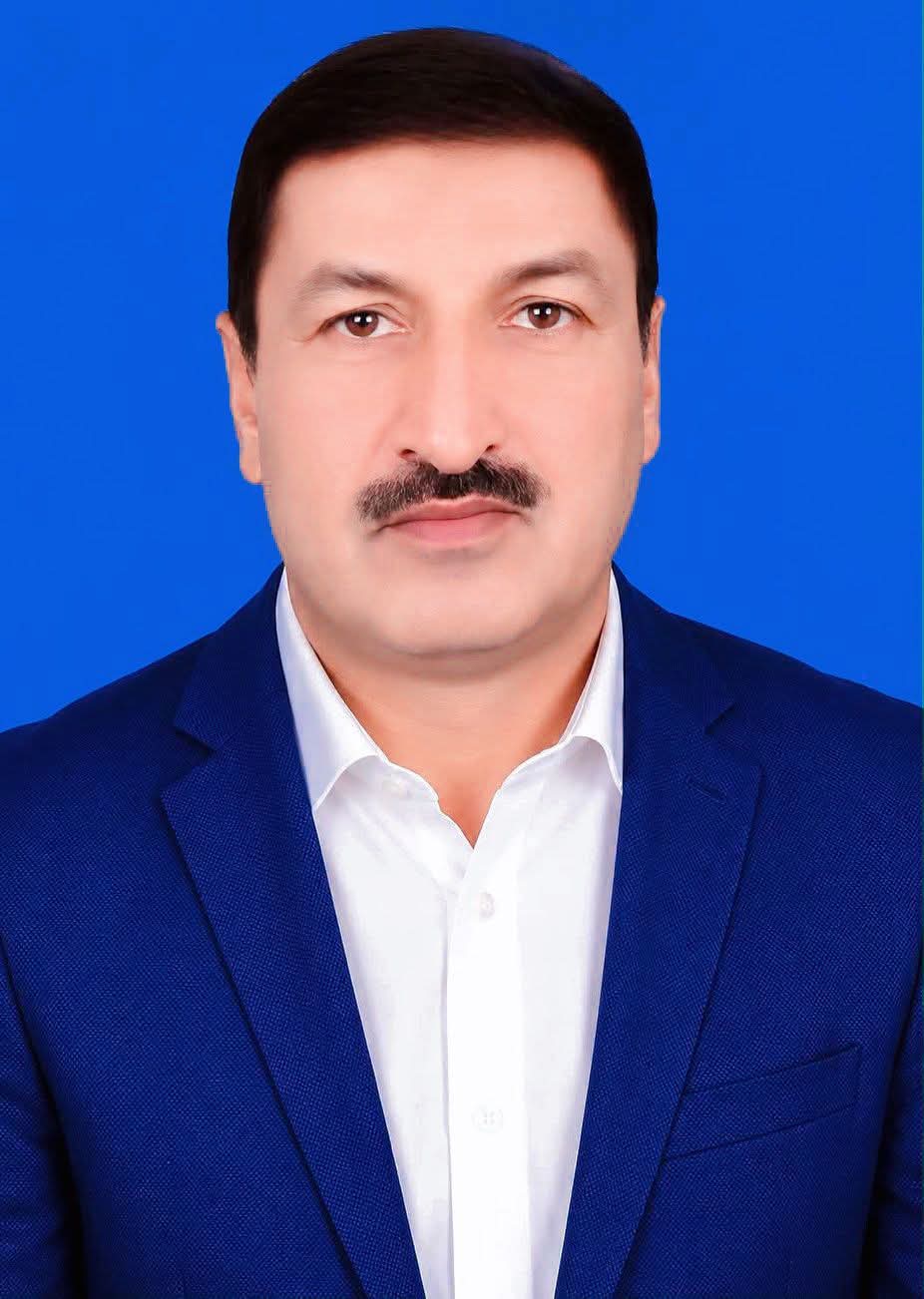
Kushi Nanayakkara is a Sri Lankan born poetess who brings nature, human experiences, and creativity together through poetry. She studied Graphic Design/Information Technology before finding her way into poetry in 2020.
Her work often revolves around themes such as nature, art, life, love, mind, death, philosophy, and social themes such as justice and humanity. Her poetry was featured in literature websites in USA and India and newspapers in Sri Lanka and Bangladesh. Her poetry was also published in poetry anthologies and magazines in India, Iraq, USA and the Philippines. Her sincere wish is to inspire hearts to stay creatively conscious and continue refining her craft.