
Are We Raising Our Children, or Simply Watching Them Grow?
“A child is a sapling, and a mother is its support. The kind of tree each sapling becomes depends, in part, on how it is nurtured.”
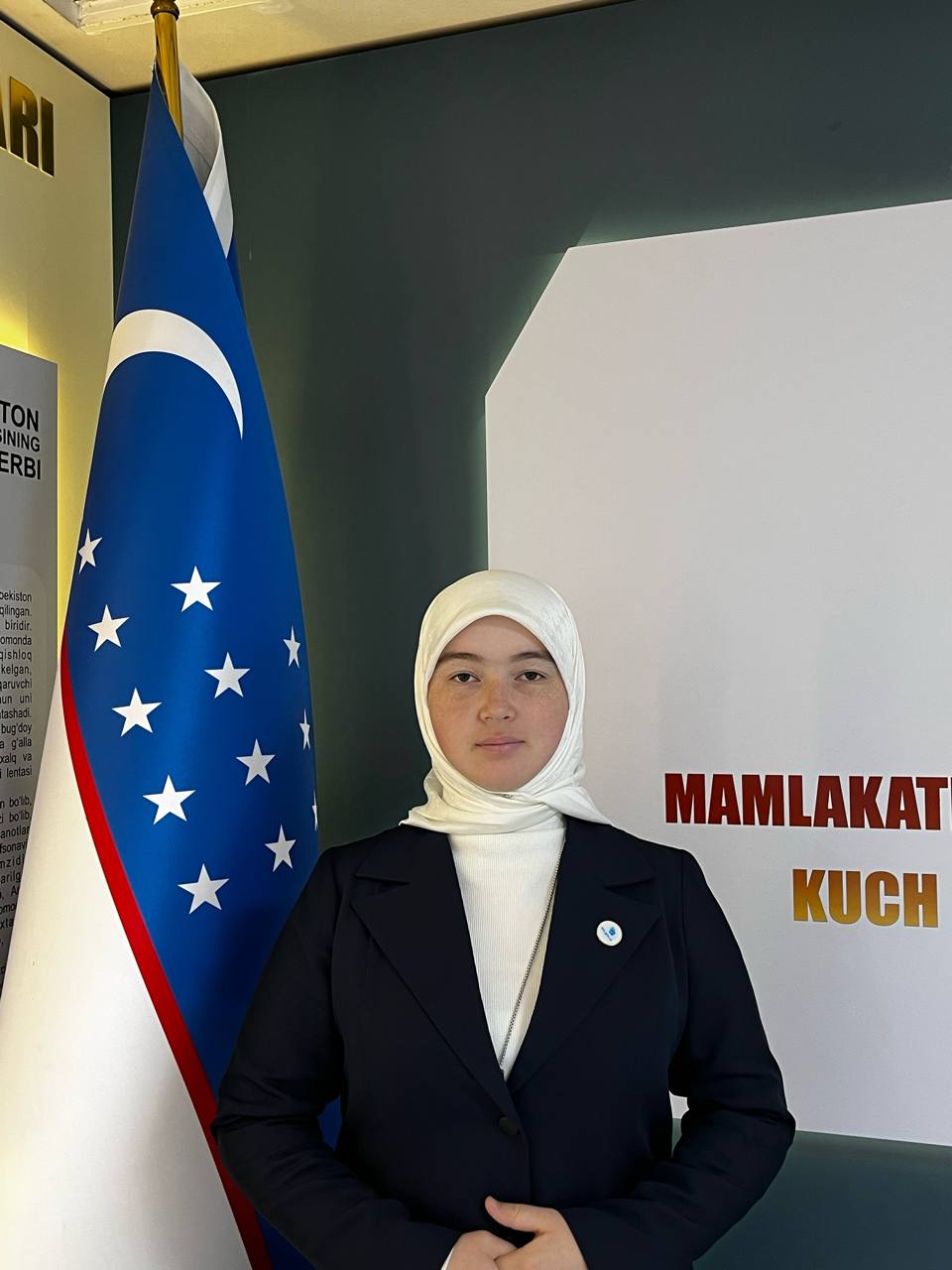
Amina Zafar qizi Sunnatullayeva
Student at the School of Preschool and Primary Education, Nizami National Pedagogical University of Uzbekistan
Every parent wants their child to have a bright future, find their place in life, and grow into a person who makes a meaningful contribution to society. Parents rejoice in their children’s achievements, worry about their setbacks, and strive to provide them with the best possible conditions. Yet one important question remains: while worrying about our children’s futures, how well do we understand their present interests, inner worlds, and individual abilities?
Raising a child to adulthood and supporting their all-round development are not the same thing. Growing up is a natural process, but reaching one’s full potential requires attention, knowledge, proper upbringing, and consistent support.
Unfortunately, we sometimes reduce parenting to ensuring that our children eat well, attend school, complete their homework, and receive high grades. In reality, a child’s development cannot be measured solely by the completion of daily tasks. Their interests, the questions they ask, the activities in which they feel comfortable expressing themselves, and the problems they attempt to solve independently are equally important.
Because shaping a child’s future begins with recognizing their abilities today.
A Child Is a Sapling, and a Mother Is Its Support
Let us imagine a sapling. To grow, it needs water, sunlight, nutrients, and strong roots. Simply demanding that it grow faster is not enough. We must create favorable conditions for its natural development.
Children are much the same. Every child has unique interests, a distinct learning pace, an individual way of thinking, and their own abilities. One child may be fascinated by numbers and logical problems, while another may be drawn to drawing, storytelling, observing nature, or making things with their hands.
These differences should not be used to rank children as superior or inferior. Instead, they should help us understand why every child needs an individualized approach.
If we try to force a sapling to take the shape of another tree, we may hinder its natural development. Similarly, directing a child solely according to adults’ dreams and expectations can limit our ability to recognize their genuine interests.
Therefore, a mother’s role is not to make every decision on behalf of her child. Rather, it is to help the child understand themselves, explore their abilities, and develop independent thinking.
Is Good Intent Enough?
A mother’s love for her child is natural and invaluable. However, not every mother who wants to help her child necessarily knows the best way to do so.
When a child struggles to understand their homework, giving them the answer may seem like the easiest solution. Yet teaching them how to approach the problem, encouraging them to analyze their mistakes, and allowing them to find a solution independently may prove more beneficial in the long run.
Sometimes, we respond impatiently to our children’s questions, fail to take their interests seriously, or compare them with other children. We often do not do these things with bad intentions. We may simply lack the knowledge of how to approach a child, encourage them, or understand their difficulties.
This means that the problem does not lie solely in parental inattention. In some cases, parents themselves lack sufficient pedagogical knowledge, psychological understanding, and practical guidance.
For this reason, improving mothers’ knowledge and teaching them to understand their children’s developmental stages and provide appropriate support throughout the learning process are essential tasks.
Recognizing Talent Begins with Understanding the Child
Identifying talent should not be understood merely as administering tests or observing which school subjects a child receives high grades in.
A child’s repeated interest in a particular activity, their tendency to ask numerous questions, their eagerness to try new things, or their enthusiasm for tackling challenging tasks may offer valuable insights into their natural inclinations. However, it would be inappropriate to determine a child’s future profession or abilities definitively based on a single sign.
Instead, we should observe children as they engage in different activities, provide them with new opportunities, listen to their opinions, and take into account how their interests evolve over time.
The primary school years are particularly important in this regard. During this period, children begin discovering their potential through different subjects, activities, and experiences. Adults should not restrict them through premature conclusions; rather, they should create an environment that encourages exploration.
A child who enjoys reading today may develop an interest in scientific research tomorrow. A child who loves drawing may become interested in design or the arts. However, none of these possibilities represents a predetermined destiny. What matters is supporting children’s interests and allowing them to discover new abilities.
Guiding a child in the right direction does not mean choosing their path for them; it means creating opportunities for them to find their own way.
Mothers and Schools: Partners in a Child’s Development
A child’s education and upbringing are not the sole responsibility of either the family or the school. Schools provide knowledge, teachers observe children’s learning processes, and families have a closer understanding of their children’s daily lives, interests, and emotional well-being.
When these two environments work together, they can develop a more comprehensive understanding of the child.
When a mother takes an interest in her child’s school activities, communicates with teachers, and creates suitable learning conditions at home, she helps her child feel supported throughout the educational process.
The mother’s role is not to replace the teacher. On the contrary, it is to cooperate with educators, understand her child’s needs, and work together with the school to support the child’s development.
In this sense, improving mothers’ pedagogical literacy can benefit both the family and its partnership with the school.
“Maktabga birga” — A Step Toward Knowledgeable Parenting Support
It was through reflecting on these needs that the idea for the “Maktabga birga” (“Together to School”) platform emerged.
The platform aims not simply to provide mothers with ready-made information, but to help them better understand their children’s education, interests, and individual characteristics.
Resources on homework, child and maternal psychology, books, dictionaries, podcasts, audio materials, PDF resources, and knowledge-reinforcement activities all serve a common purpose: to make mothers’ support for their children more informed and effective.
Through these resources, mothers can learn how to help their children, respond to their questions, encourage independent thinking, and observe their interests.
The platform’s central idea is that a mother’s support should help her child develop self-awareness and cultivate their abilities.
This process does not happen overnight. It requires consistent attention, learning, observation, and cooperation. Nevertheless, every small step can contribute to a child’s future development.
The Future Begins with the Attention We Give Today
The future of society is closely connected to a generation that is knowledgeable, capable of independent thinking, aware of its abilities, and able to make informed career choices.
To nurture such a generation, we must focus not only on improving the quality of education in schools but also on creating a supportive learning environment at home. Providing mothers with the knowledge they need to understand and support their children is an important step toward this goal. Every child is a unique sapling. Their development depends on many factors. A mother can serve as a source of support throughout this journey by offering love, knowledge, and attention.
Therefore, let us not limit ourselves to expecting good grades, achievements, and success from our children. Let us ask them what interests them, listen to their questions, and give them opportunities to discover their abilities. After all, building a child’s future does not begin with making decisions on their behalf, but with helping them understand their own potential.