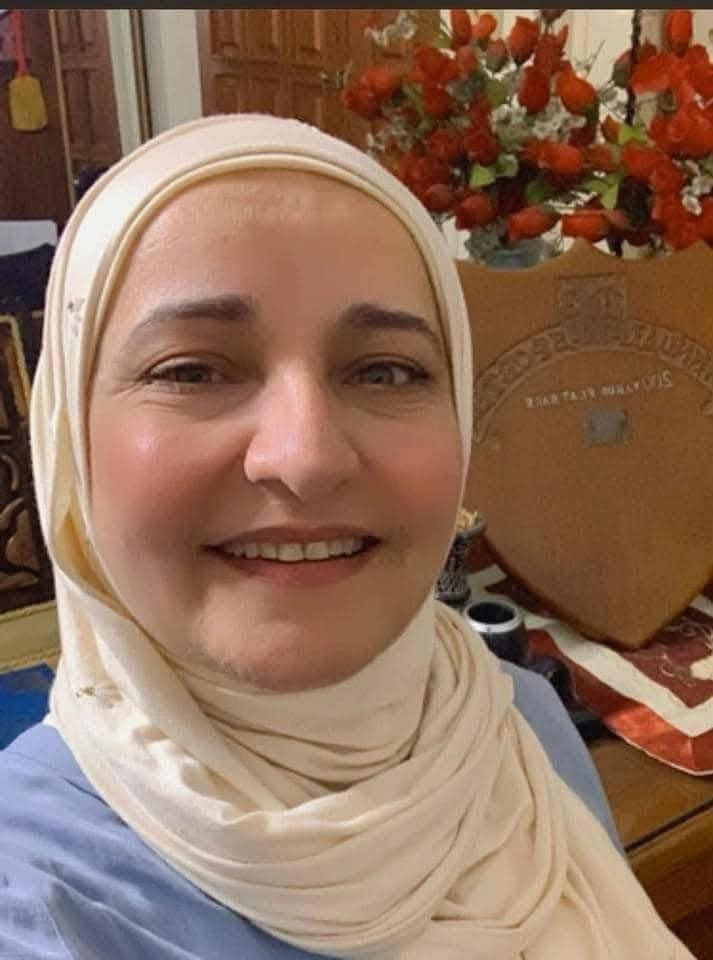
This morning is weary, exhausted by squatting on the platform of waiting.
In vain it searches for the secret of absence, and rummages in the ambiguity of words, asking the letters: Who assassinates the glimmer of longing, Who tears the bond of promise from the calendar of the exciting night? For the evening is now weary, No stars, No moon, No love, No dreams! Everyone gasps for breath in the void, And the void follows the void, Grabbing its jaws wide, Devouring hopes and joy! The question remains tormented, Lamenting at the end of the question: Does love rust? And how do the flowers of reunion die?! And why does distance sprout leaves On the branches of absence? Nothing is clear here, Except my crucified question, In the pain of lips: (Whyyyyyyyyyyyy)??!!
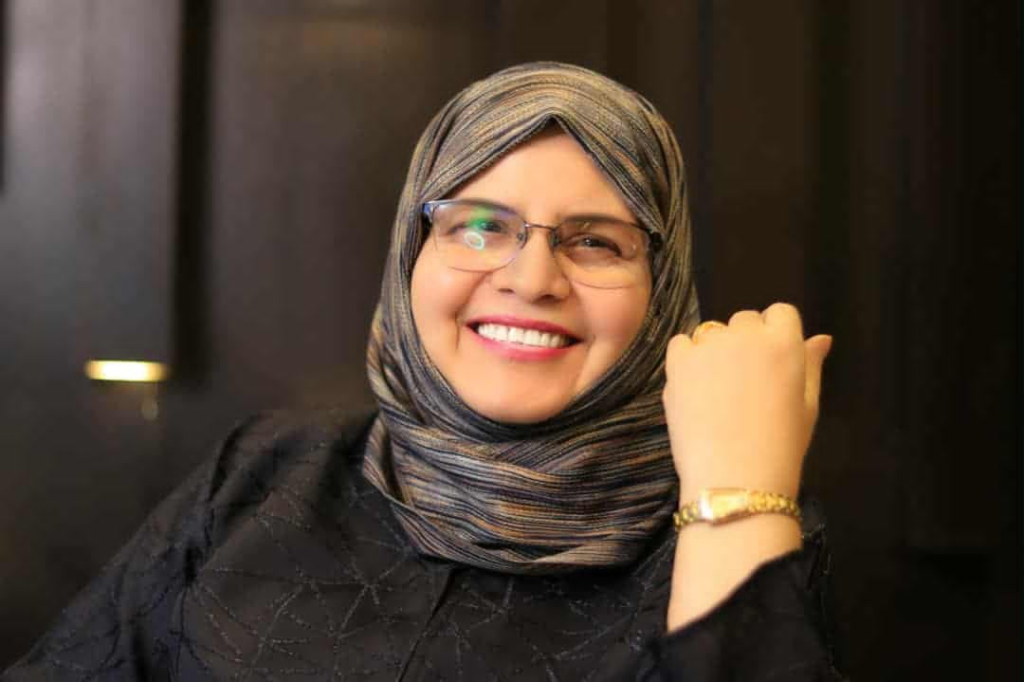
Poet/ Aisha Al-Maharabi Aden City Republic of Yemen Bachelor of Philosophy, University of Aden Married and a mother Worked in the field of teaching Participated in several Arab festivals in Egypt, Tunisia, Algeria, and Jordan Hobbies: Reading and writing in the field of poetry and literature My works have been published in several Arab and foreign newspapers, and I have had several press and radio interviews. – My poetry collection, “Master of the Evening,” was published in 2013 by the University Publishing House, Yemen. – “And the Daisy Breathed” was published in 2014 by Khalid Ibn Al-Walid Publishing House. – “How to Tame Longing” was published in 2014 by Al-Jeel Al-Jadeed Publishing House. – “Stuck Behind the Eyelids of the Homeland” was published in 2017 by Fikra Publishing House. – “Peace Be Upon You, Dawn” was published by Abrar Publishing House in 2019. – “And Madness Has Its Meaning” was published by the Poets on the Window of the World Foundation for Culture and Creativity in 2023.
THE ROLE OF ENGLISH PHILOLOGY IN MODERN LINGUISTIC AND CULTURAL STUDIES
Abstract
This article discusses the significance of English philology in the modern educational and scientific context. English philology is considered as an interdisciplinary field that studies the English language, its history, literature, and cultural development. The article highlights the importance of English philology in language learning, intercultural communication, and the formation of linguistic competence among students.
Keywords: English philology, linguistics, literature, language development, intercultural communication, education.
Introduction
English philology is one of the most important fields in modern humanities. It focuses on the comprehensive study of the English language, including its structure, history, literature, and cultural background. In today’s globalized world, English has become an international language, which increases the relevance of English philology in education and research.
1. The Subject Matter of English Philology
English philology combines several academic disciplines such as linguistics, literary studies, stylistics, and cultural studies. Linguistics examines phonetics, grammar, vocabulary, and semantics of the English language. Literary studies focus on English and American literature, their genres, themes, and historical development. Cultural studies help learners understand the social and cultural context of the language.
2. The Importance of English Philology in Education
English philology plays a key role in developing students’ language competence. It improves reading, writing, speaking, and listening skills. Moreover, studying literature enhances critical thinking, creativity, and aesthetic appreciation. English philology also prepares future teachers, translators, and researchers by providing deep theoretical and practical knowledge of the language.
3. English Philology and Intercultural Communication
One of the main goals of English philology is to promote intercultural communication. Through language and literature, students learn about traditions, values, and worldviews of English-speaking countries. This helps them communicate effectively with people from different cultural backgrounds and reduces misunderstandings in international interaction.
Conclusion
In conclusion, English philology is a vital field that contributes to linguistic education, cultural awareness, and personal development. Its interdisciplinary nature makes it essential for training qualified specialists who can use English effectively in various professional and social contexts. Therefore, the development of English philology remains an important task in modern education.
References
1. Crystal, D. (2003). The Cambridge Encyclopedia of the English Language. Cambridge University Press.2. Widdowson, H. (1996). Linguistics. Oxford University Press.3. Carter, R., & McRae, J. (2001). Language, Literature and the Learner. Pearson Education.
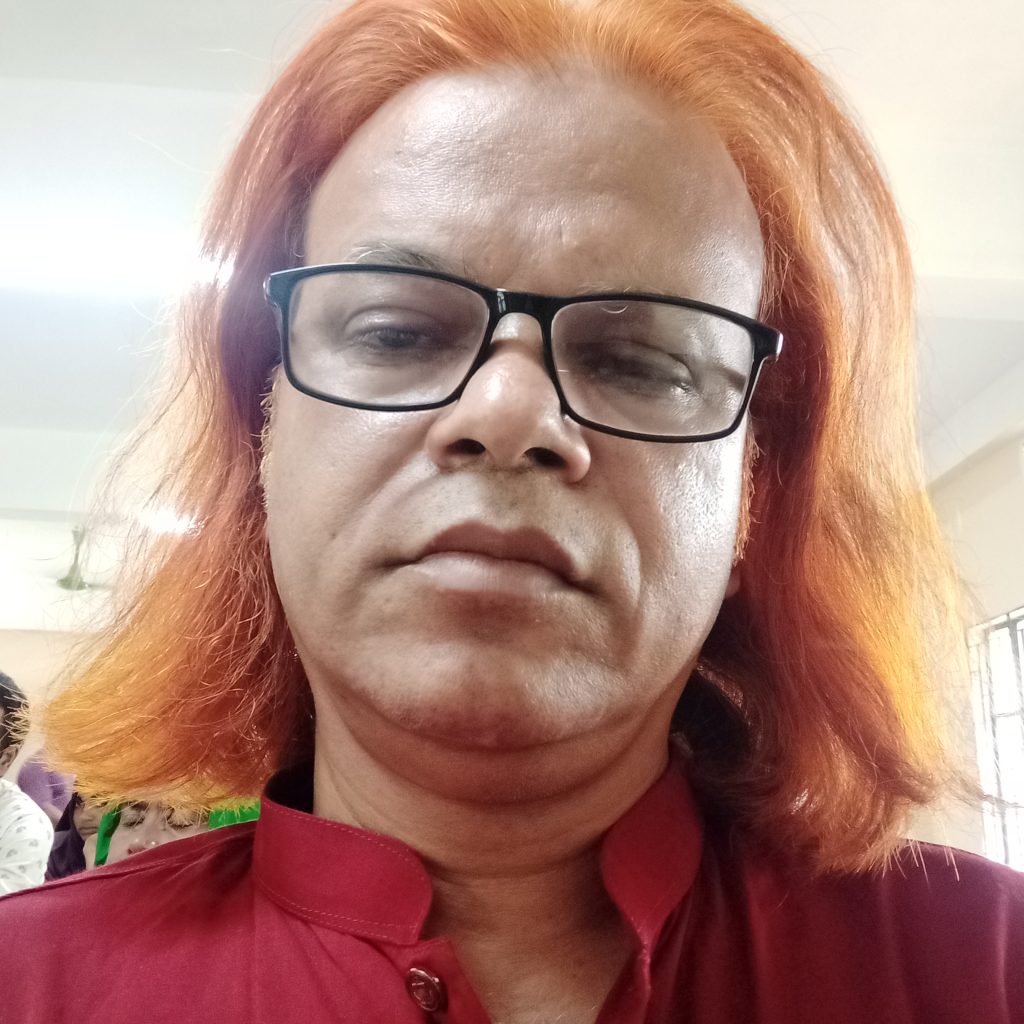
Rukhshona Kamolovna Turayeva was born on December 5, 2006, in G‘ijduvon district of Bukhara region. She graduated from Secondary School No. 8 in her district. She is currently a first-year undergraduate student at the Uzbekistan State University of World Languages. Since childhood, Turayeva has been deeply interested in poetry and literature. Her aspiration is to become a highly qualified specialist in her field and to share the valuable knowledge she acquires with future generations.
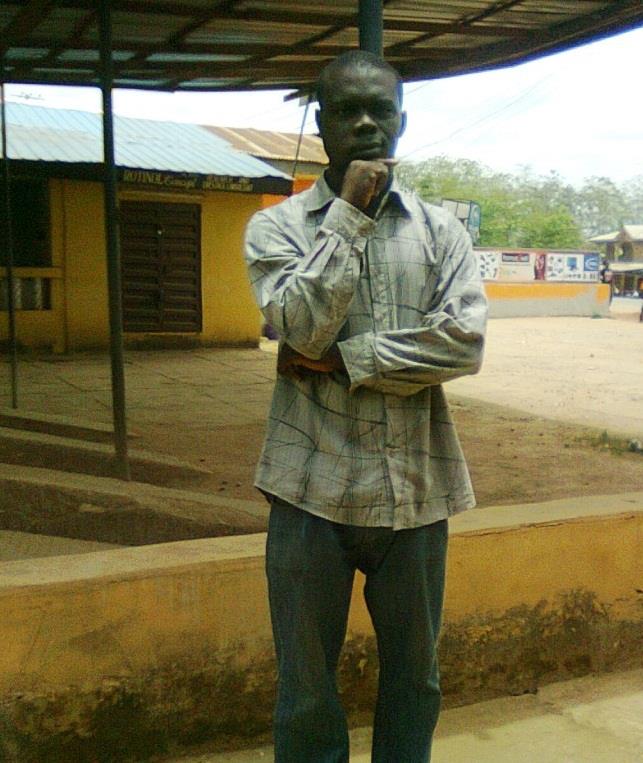
Lord Fredrick Lugard, the first colonial governor (1914-1918), amalgamated what was called the southern and northern protectorates to form the creation, the Flora Shaw’s named “Nigeria”, formerly the Royal Niger Company. The creation was valid for a hundred years (December 31 2014/January 1, 2015). Afterwards, the people who would be identified as Nigerians could decide to negotiate terms of their co-existence.
The major founding fathers of Nigeria, according to history, in the likes of Dr. Nnamdi Azikiwe, Chief Obafemi Awolowo and Alhaji Tafawa Balewa and the rest were not adults at the time Nigeria was created. Dr Nnamdi Azikiwe was born in 1904. Chief Obafemi Awolowo was born in 1912 while Alhaji Tafawa Balewa was born 1910. Therefore, they had no business being the major founding fathers of Nigeria, contrary to the historical narrative. Of course, Nigeria was (and still is) a British creation. Interestingly, they did not express their belief in the efficacy of the geographically created entity. For instance, in 1948, Chief Obafemi Awolowo, asserted Nigeria as being not a country but a geographical location separated by artificial boundaries. In the same breath, Alhaji Tafawa Balewa stated that the people in Europe—Belgium, Holland, England—are similar in cultures than the Igbo, Hausa and Yoruba, which are the three major tribes. Dr. Nnamdi Azikiwe, in 1964, who was paraded as the “Zik of Africa” and proponent of “One Nigeria”, stressed the need for Nigerians, four years after independence, to separate or go in pieces!
The major tribes have been existing for thousands of years before Nigeria was birthed. The DNA-based anthropological tests attest to this. It is a thing of concern most Nigerians today do not really know what the identities of their parents and or grand parents were, before October 1, 1960—the day Nigeria became a sovereign entity. Living former leaders such as General Yakubu Gowon (Retired), Chief Olusegun Obasanjo and Alhaji Abdul Salam Abubakar were born before Nigeria’s day of Independence which clearly identifies them as not “Nigerians”before independence. Who were they, then? That’s a question for another day!
From the inception of leadership of Dr. Nnamdi Azikiwe (with Alhaji Tafawa Balewa being Prime Minister) to the current admission of Senator Bola Ahmed Tinubu, the bones of contention depicted over the years have been reflected in terms of tribalism, religion and ethnicity, all pointing at one thing; Nigerians have not been ONE people. From the deficits of the first coup in 1966, the subsequent Nigeria-Biafra Civil War (1967-1970), the incessant tribal clashes among the major tribes in the following years, the erupted religious crises of the 80s and 90s, even in the 2000s and documented ethnic conflicts to the aggravating economic hardships, particularly from the 90s till present, the marriage known as Nigeria was, for the sake of sanity, amongst the couple’s (the Yoruba, Igbo and Hausa tribes) long due for a divorce. Without a doubt, it has never worked out in the favour of the participating tribes—it is still not working! Yet, by some proxy-relates means, which apparently defeat the strength of comprehendible political, and socio-cultural rationale, Nigeria is still existing!
How can a people who are different in culture, economic and political dynamics be “forced” to co-exist forever? The friction had long been established since independence. The history-claimed founding fathers, representatives of their tribes, brings to attention their position on the British-created Nigeria. The realistic incompatibility among the tribes got worse in subsequent years. It is amazing how the major tribes—knowing they are better existing independently—still officially co-existing as Nigerians.
What the Nigerian entity has created were generations of men and women who would develop disdain for each other and depict bad demeanors in dealing with themselves, having being fed by questionable and tweaked historical narratives and orchestrated happenings. Hence, ushering leaders who would emerge and govern the people based on how they reflect themselves. After all, a good leader is a reflection of (gotten from) a good people and a bad leader is gotten from or shows how bad a people is.
The current president was quoted as saying “I don’t believe in One Nigeria” in 1997, in an interview granted to a newspaper daily. Like his predecessor, Chief Obafemi Awolowo, Nigerian sovereignty is a mirage. But for some political aggrandizement, he became sworn-in as the president of the Federal Republic of Nigeria on May 29, 2023!
The devalued Naira, the Nigerian currency, deserves attention. On January 1, 1973, one Naira was equivalent to one British Pound. At the time, the standard of living was said to be, compared to the presently harsh economy, high. General Yakubu Gowon (Retired), the then head of state, bragged about Nigeria being so rich that its problem was how to spend money! The de-valuing of the Naira, resulting from frivolous spending by the previous administration, began. The Shagari-led regime in the late 70s was tasked with the onus of devaluing the currency, before the overthrow by Retired Major Muhammadu Buhari, who would become head of state, then Retired General Ibrahim Babagida in 1985. The Naira’s declining value was witnessed through the years. What was of a greater value than the US Dollar before 1985 is now no match to.the CFA (currency used by West African countries) and Ghanian Cedis. The Naira is presently so valueless and the cost of living is unimaginably high for an average Nigerian to afford. The current exchange rate of the US Dollar to the Naira is:
$1 is equivalent to 1610 Naira.
The high cost of living, partly resulting from the devalued Naira, projected to get worse in subsequent years, is sufficient to rationalize critically the Nigerian posterity, hundred years after its creation.
The cultural diversity, religious, socio-cultural and political differences have saliently ascertained the “oneness”, known as Nigeria, is a complete shadow of itself, when and if realistically evaluated. It becomes pertinent to recognize Nigeria’s existence, a century later, would better be history, or better yet, as the title, “There Was A Country” by the late novelist, Chinua Achebe, reads, than a living entity existing today. After a hundred years. Her existence points at this: “Divided we stand, United we fall!”
When nature’s patience is tested beyond the tolerance level, the cosmic forces burst upon humanity in vengeance. The divine forces which love peace, are not known to forgive their betrayers. -Anand
The cosmos is governed by harmony and order, while the human world is characterized by chaos. As soon as a man is born, it is like a bubble which is created by trapping wind in the thin layers of water, and so long as it stays on the body of the water, it causes ripples and disruptions, and finally loses itself to the flowing waters. Thus, the essential feature of the cosmos is harmony and human beings and their passions create ripples and cause disturbance in this reign of peace.
Harmony, the Essential Feature
There is something which likes harmony, peace, and flow and this ‘something’ does not like disruption. There are men, who by their very nature, believe in the cosmic flow. But there are men who have the audacity to prick the cosmic forces with their smartness and annoy nature’s wisdom. All the overtures of man which conflict with nature are judged on merit. This process takes time and it is during this period that men who violate harmony think that, as there is no one to cry foul, there is nothing wrong in it.
The Calculated Dog-Bark
In fact, to understand the nature of cosmic forces, let us take the example of a dog who is lying in its trance on the road. If you are passing by like a gentleman, it will ignore your presence. But if you try to assume some airs, and pass causing unnecessary disruptions and speaking loudly, the dog may take offence at your inordinate actions which disturb his peace. It will issue a calculated bark. But if he finds you are consistent in your non-sensical behaviour, and do not walk like a natural human being, the bark would become a bit shrill and fierce too. That is why there is a proverb: let sleeping dogs lie.
Now apply this logic to the cosmic forces. They are busy in their daily spin. Everything is at the right angle. If there are disruptions, it is only because men create a mess. There are no natural disasters. Every disaster has a human connection. Tempests, earthquakes, whirlwinds, storms, cloudbursts – there are natural activities, but nature is peace loving, not quarrelsome by nature. When nature’s patience is tested beyond the tolerance level, the cosmic forces burst upon humanity in vengeance.
The Dynamics of Peaceful Living
Peace is the result of leading a life which is based on faith in the cosmic wisdom. Men work hard to earn their livelihood without flirting with nature’s order. But men are ancestored by apes, and they believe in smartness, which is not to the liking of cosmic forces. All those who assert their selfish wisdom come to grief. This world is full of people who go on playing foul with nature’s rhythm, and keep building fortunes. But nature quietly registers their pranks, and in time brings them down. The divine forces which love peace, are not known to forgive their betrayers. The pain and suffering that we see in the world is the result of men trying to wage a war with nature’s order, trying to get more than is permitted, finally coming to grief. They are all over-reachers who do not believe patience, and disrupt the cosmic flow.
Everything evolves in time. But those who forced the cart in a particular direction have caused bloodshed on this earth. Gods know in which direction they want to take men. And it is best to attune ourselves to the rhythm of nature and live accordingly. The first thing is to click the ‘forget’ button. And then to unlearn what we have learnt so far and return to that pristine stage of innocence – this is what gods want and this is what we resist so powerfully, leading to pain and suffering in life and the punishment which is waiting for us, in this very world, when we over-reach ourselves.
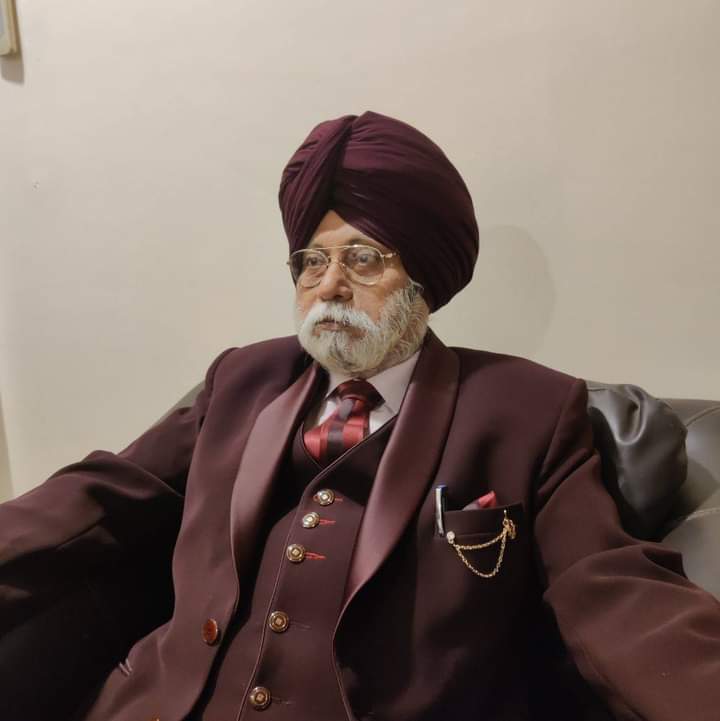
Dr. Jernail Singh Anand, with an opus of 180 plus books, is Laureate of the Seneca, Charter of Morava, Franz Kafka and Maxim Gorky awards. His name adorns the Poets’ Rock in Serbia. Anand is a towering literary figure whose work embodies a rare fusion of creativity, intellect, and moral vision. He is not only lone of the most influential voices in contemporary Indian poetry, but a global voice, challenging readers to confront the complexities of existence while offering hope through art and ethics.
Sometimes I think How is this a life Question and answer I can not understand As like a dream world A dream a life When is it starting When is it ending First people seems Later they disappearing It is as like this place is swirl for some people An inextricable a life Some are crying Suffering agony Some are laughing Lives relaxed I could not understand How is this a life.
Türkan Ergör, Sociologist, Philosopher, Writer, Poet, Art Photography Model. Türkan Ergör was born in 19 March 1975 in city Çanakkale, Turkey. She was selected International “Best Poet 2020”. She was selected International “Best Poet, Author/Writer 2021”. She was selected International “Best Poet, Writer/Author 2022”. She was awarded the FIRST PRIZE FOR THE OUTSTANDING AUTHOR IN 2022. She was awarded the 2023 “Zheng Nian Cup” “National Literary First Prize” by Beijing Awareness Literature Museum. She was awarded the “Certificate of Honor and Appreciation” and “Crimean Badge” by İSMAİL GASPRİNSKİY SCIENCE AND ART ACADEMY. She was awarded the “14k Gold Pen Award” by ESCRITORES SIN FRONTERAS ORGANIZACIÓN INTERNACIONAL.