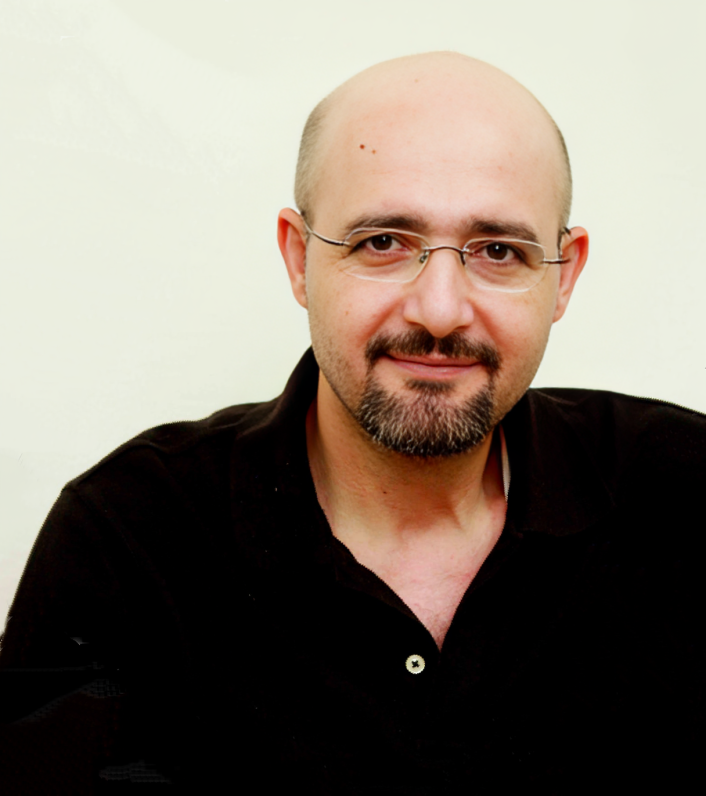
Essay from Alex S. Johnson and Kandy Fontaine

Topping From the Bottom and the Top by Kandy Fontaine (Alex S. Johnson)

I’ve spent decades in the velvet trenches of kinky erotica, writing alongside and in tribute to masters like Kate Bornstein, Thomas S. Roche, Thea Hillman, Patrick Califia, Edo van Belkom, Lucy Taylor, and Maxim Jakubowski. My work is a ritual of rupture, a glitter bomb of desire, a scream stitched in leather and lace. And if there’s one thing I’ve learned from living, loving, and leaking in this world—it’s that power is never simple. It’s never static. It’s never one-directional.

I’m a dominant. I’m genderqueer. I’m neurospicy. And I love to mix it up.

Being Queer is a high. A sacred intoxication. It’s the kind of pleasure that makes the strongest alcohol taste like ginger beer. But let’s be clear: BDSM is not unhealthy. Quite the opposite. It’s one of the most psychologically and emotionally grounded ways to explore intimacy, power, and trust.

In fact, studies have shown that BDSM practitioners tend to be healthier than the general population. A 2013 study published in the Journal of Sexual Medicine found that BDSM participants scored better on measures of psychological well-being, including lower neuroticism and higher levels of secure attachment. Another study published in the Journal of Homosexuality in 2025 replicated these findings, showing that BDSM practitioners exhibit higher emotional resilience, lower rejection sensitivity, and greater overall well-being.

So let’s kill the myth. BDSM is not abuse. It’s not pathology. It’s not a symptom. It’s a circuit. It’s a ritual. It’s a scream that listens.

What turns me on the most? Imagining a circuit where I am both the bottom and the top—not alternately, but intensely and simultaneously. I want to dominate while surrendering. I want to control while being undone. I want to bring a partner off—be they male, female, or some glorious new gender I haven’t yet encountered—and feel their climax as my own. That’s not just sex. That’s communion.

The great leaders are servants. The master is a slave to his slave. And you don’t need to read Hegel to understand it.

Responsibility and trust are essential. This is never about anger. Never about abuse. Never about taking your emotions out on someone else.

Those people? They’re not kinky. They’re criminals.

BDSM is about consent, communication, and care. It’s about knowing your partner’s boundaries better than your own. It’s about listening with your whole body. It’s about crafting a scene that’s not just erotic—but sacred.

If you want to experience pleasure so intense it makes the strongest drug seem like ginger beer, look into BDSM and D/s. Discover your own circuits. Read the ones who’ve paved the way:

  • Kate Bornstein – gender outlaw, ritualist of identity
  • Patrick Califia – fierce, fearless, and foundational
  • Thea Hillman – poet of the body and its contradictions
  • Carol Queen – sex-positive priestess of the written word
  • Susie Bright – the original voice of erotic intelligence
  • And yes, me—Kandy Fontaine, velvet insurgent, archivist of the obscene

You’re welcome. Love and 40 lashes, Alex S. Johnson / Kandy Fontaine

Sources:

  • Psychological Characteristics of BDSM Practitioners – Journal of Sexual Medicine
  • BDSM Practitioners Exhibit Higher Secure Attachment and Lower Neuroticism – Journal of Homosexuality

1bing.com2www.psypost.org

Poetry from Donia Sahab, ekphrasis of Dr. Alaa Basheer’s painting

Central Asian woman in a white headscarf and ruffled blouse.
Black and light blue pen drawing of a black bird eating grapes out of a turbaned person's head.

Corridors of Conscience

My Dialogue with the Painting of Dr. Alaa Basheer

Look into the depths of a shattered head,

The lines intertwine like thorns,

Dancing in the corridors of blue shadows,

Where silence clashes with the moan of souls.

O fading conscience,

You who have become a cloud pursued by the winds of conflict,

Do you dwell in the prisons of memories?

Or swim in the swamps of lost dreams?

Heads merge with the roots of the earth,

Turning into branches without features,

As if they are trees searching for the fruit of truth.

O you who are lost in the forests of noise,

Your lines have been colored in black and blue,

As if you scream without a voice:

“Where are you, O hidden light?”

Chains coil around the neck of the dream,

Yet the soul dances in the spaces of the unseen,

Searching for a conscience turned into the rubble of fear.

O human of today,

Do you still hear the steps of your burdened conscience?

Do you still touch the face of truth in the mirror of distortion?

The search is long like the paths of the wind,

But if you walk through the alleys of the self,

You will realize that conscience is not absent,

It is you, in your deep self, waiting.

Poem by Her Royal Highness Princess

Donia Sahab – Iraq

The Painting by the World-Renowned Visual Artist Dr. Alaa Basheer

______________________________________

أروقة الضمير

حواري مع لوحة د. علاء بشير

انظر في أعماق رأس مَهشم،

تتشابك الخطوط كالأشواك،

تتراقص في أروقة الظلال الزرقاء،

حيث يصطخب الصمت مع أنين الأرواح.

أيها الضمير المتلاشي،

يا من صرت غيمة تُطاردها رياح الصراع،

هل في سجون الذكريات تسكن؟

أم في مستنقعات الأحلام الضائعة تسبح؟

الرؤوس تتماهى مع جذور الأرض،

تتحول إلى فروع بلا ملامح،

كأنها شجر يبحث عن ثمرة الحقيقة.

يا من ضاع في غابات الضجيج،

تلوَّنت خطوطك بالسواد والزرقاء،

كأنك تصرخ بلا صوت:

“أين أنت، أيها النور الدفين؟”

القيود تلتف حول عنق الحلم،

لكن الروح ترقص في مساحات الغيب،

تفتش عن ضمير أحيل إلى ركام الخوف.

يا إنسان اليوم،

أما زلت تسمع خطوات ضميرك المثقل؟

أما زلت تلمس وجه الحقيقة في مرآة التشوه؟

البحث طويل كطرق الريح،

لكن إن سرت في أزقة النفس،

ستدرك أن الضمير ليس غائباً،

إنه أنت، في نفسك العميقة، ينتظر.

القصيدة بقلم الشاعرة الأميرة الهاشمية

دنيا صاحب – العراق

اللوحة الفنية بريشة الفنان التشكيلي العالمي د. علاء بشير

Essay from Eshmamatova Shabbona

Central Asian woman with shoulder length dark hair and a white top.

The development of Uzbek literature: historical periods, processes of formation and prospects

Abstract: The article analyzes the formation of Uzbek literature, stages of development, examples of classical and modern literature, changes and prospects that occurred during the period of independence from a scientific and literary point of view. Issues such as the sources of literature, stages of formation, high examples of classical literature, literature of the 20th century, literature of the period of independence, factors influencing the development of literature, and prospects of literature are considered.

Keywords: Uzbek literature, history, development, classical literature, modern literature, independence, literary studies, literary criticism, perspectives.

Uzbek literature is an integral part of the rich cultural heritage of the peoples of Central Asia and has a long history. During this history, our literature has undergone various socio-political and cultural changes, developing through its own directions, genres and styles. This article analyzes the stages of formation of Uzbek literature, development trends, examples of classical and modern literature, as well as the changes and prospects that have occurred in our literature during the period of independence from a scientific and literary point of view.

The roots of Uzbek literature go back to ancient times. Examples of oral literature include epics such as “Alpomish”, “Go’ro’g’li”, proverbs, riddles, legends, and tales that reflect the lifestyle, worldview, dreams, and moral values of the Uzbek people. These examples of oral literature have been passed down from generation to generation, laying the foundation for the formation of the Uzbek literary language and the development of artistic thought.

The formation of written literature mainly dates back to the 9th-12th centuries. During this period, literary works created in the Turkic language based on the Arabic alphabet, in particular, Yusuf Khos Hajib’s “Kutadgu bilig” (“Knowledge Leading to Happiness”), are considered one of the first written examples of Uzbek literature. “Kutadgu bilig” raises issues such as state administration, morality, justice, and acquiring knowledge, and provides important information about the socio-political and cultural life of that era.

Although there was some stagnation in literary life as a result of the Mongol invasion in the 13th-14th centuries, our literature rose to a new level in subsequent periods. In particular, the era of Amir Temur and the Temurids is recognized as the “golden age” of Uzbek literature. During this period

Great attention was paid to the development of culture and science, and cities such as Samarkand, Bukhara, and Herat became major cultural centers.

In the 15th century, the literary activity of Alisher Navoi opened a new page in the development of Uzbek literature. Navoi turned the Uzbek language into a literary language and demonstrated its potential. His epic poem “Khamsa” (“The Five”), the divan “Khazoyin ul-maoniy” (“The Treasury of Meanings”), and the work “Muhokamat ul-lug’atayn” (“The Discussion of Two Languages”) are considered high examples of Uzbek literature. Navoi’s works widely cover such themes as humanistic ideals, justice, enlightenment, love, friendship, and patriotism.

Uzbek literature continued to develop in the post-Navoi era. Zahiriddin Muhammad Babur’s “Boburnoma”, translations and ghazals by Muhammad Riza Ogahiy, and the works of poets such as Munis Khorezmiy, Kamil Khorezmiy, Rojiy, Nodira, and Uvaysiy enriched the treasury of Uzbek literature.

The 20th century is characterized by modernization, the emergence of new directions, genres and styles for Uzbek literature. During this period, such movements as realism, romanticism, and modernism became widespread in literature. Writers such as Fitrat, Chulpon, Abdulla Qodiriy, Oybek, Gafur Ghulom, Hamid Olimjon, Zulfiya, Mirtemir, Abdulla Oripov, and Erkin Vohidov made a great contribution to the development of Uzbek literature.

Works such as Fitrat’s “O’g’uzxon”, “True Love”, Chulpon’s “Night and Day”, Abdulla Qodiriy’s “Bygone Days”, “Mehrobdan Shayon”, Oybek’s “Kutlug’ blood”, Gafur Ghulam’s “Shum Bola”, Hamid Olimjon’s “Zaynab and Amon”, Zulfiya’s “Men Seni Sevaman”, Shukur Kholmirzayev’s “On’n-sixga kirmagan kim bor”, and Abdulla Oripov’s “O’zbekiston” are considered among the finest examples of Uzbek literature.

Although literature was under ideological pressure during the Soviet era, our writers tried to reflect the pain, hopes, and national values of the people in their works. The literary works created during this period served to enrich the spiritual world of the Uzbek people and preserve their national identity.

A new generation of young writers is emerging, trying to reflect the pressing problems of modern life, the dreams and hopes of young people, and human relationships in their works.

During the period of independence, great attention is also paid to translation work in Uzbek literature. The best examples of world literature are translated into Uzbek, which serves to enrich the spiritual world of Uzbek readers. At the same time, the best works of Uzbek literature are also translated into world languages, and efforts are being made to introduce Uzbek literature to the world.

The development of Uzbek literature is closely related to many factors. Factors such as socio-political changes, cultural renewal, technological developments, improvement of the education system, development of literary criticism, activities of publishing houses, and the rise of reading culture have a positive impact on the development of our literature.

In the context of globalization, the integration of Uzbek literature with world literature, the expansion of literary ties, and the participation of our writers in international literary forums are serving to increase the prestige of Uzbek literature.

The future of Uzbek literature is bright. The achievements made during the period of independence, the opportunities created, the emergence of a new generation of writers, and the integration of our literature with world literature inspire confidence in the further development of Uzbek literature and its rise to new heights.

In the future, Uzbek literature will continue to develop such trends as understanding national identity, deeply reflecting the spiritual world of man, highlighting the urgent problems of modern life, and keeping pace with world literature. New genres, styles, and directions will emerge in Uzbek literature, a new generation of young writers will emerge, and a unique place for Uzbek literature in world literature will be formed.

In conclusion, Uzbek literature has a long and rich history, and has developed in different directions, each of which has its own characteristics. During the period of independence, our literature has reached a new level and has great potential for further development in the future. The development of Uzbek literature is closely related to the spiritual maturity of the Uzbek people, the process of understanding their national identity. Therefore, it is the duty of each of us to pay attention to our literature, support it, encourage young writers, and improve the culture of reading.

Literary studies and criticism are important in the development of literature. Literary scholars analyze literary works from a scientific perspective, determining their artistic value, ideological direction, genre characteristics, and stylistic peculiarities. Critics, on the other hand, evaluate literary works, point out their positive and negative aspects, give advice to writers, and guide the literary process.

During the period of independence, significant changes also took place in the field of literary studies and criticism. Our literary scholars gained the opportunity to analyze literary works objectively, free from ideological pressure. Our critics, in turn, gained freedom in evaluating literary works. The development of literary studies and criticism serves the qualitative growth of our literature, the improvement of the skills of writers, and the formation of the literary taste of readers.

References:

1. History of Uzbek Literature (5 volumes) Institute of Language and Literature of the Academy of Sciences of Uzbekistan. Tashkent, 1977-1980. (The main source of Uzbek literature, a classic work of literary criticism)

2. Alisher Navoi. Khamsa Tashkent: Gafur Ghulam Literature and Art Publishing House, 1968. (Navoi’s life and work, analysis of the epic poem “Khamsa”)

3. Abdulla Qodiriy. Days gone by – Tashkent: Sharq Publishing House, 2019. (Analysis of the novel, the life and work of the writer)

4. Oybek. Kutlug’ kón Tashkent: Uzbekistan Publishing House, 2017. (Analysis of the novel, the life and work of the writer)

5. Erkin Vohidov. Selection Tashkent: Sharq Publishing House, 2016. (The poet’s life and work, analysis of his poems)

6. Abdulla Oripov. Selected Works Tashkent: Sharq Publishing House, 2018. (The poet’s life and work, analysis of his poems)

7. Zulfiya. Pages of Life Tashkent: Gafur Ghulam Literature and Art Publishing House, 1985. (The poet’s life and work, analysis of her poems)

8. Journal “Uzbek language and literature” – Academy of Sciences of Uzbekistan. (Articles on literary studies)

9. “World Literature” magazine, Writers’ Union of Uzbekistan.

(Articles on world literature, translations)

10. ZIYO.UZ website (www.ziyouz.uz) Information about Uzbek literature, the life and work of writers.

11. Wikipedia (uz.wikipedia.org) Information about Uzbek literature, the life and work of writers.

12. Kitob.uz website (www.kitob.uz) – information about Uzbek literature and books

13. Google Scholar (scholar.google.com) academic articles on literary studies. Uzbek

Synchronized Chaos September 2025: The Stream of Life, Love, and Death

When I think of ages past That have floated down the stream Of life and love and death, I feel how free it makes us To pass away.

Rabindranath Tagore

Welcome, readers, to September’s first issue: The Stream of Life, Love, and Death.

Middle aged South Asian man on a modest raft carrying boxes full of bottles pushing himself down the river with a pole. White birds in the background.
Image c/o Shivam Tyagi

Sayani Mukherjee speaks to the weight of the world’s grief, of millions of lost loves over historical time.

Ahmed Miqdad quests for love and peace in Gaza, all in vain. Yucheng Tao bears witness to genocide in Cambodia through his evocative poem where memory and grief echo off the rocks and pages of history. In his piece, self-declared pure idealism leads only to death.

Eva Petropoulou Lianou addresses the issue of domestic violence. Christopher Bernard reflects on humanity’s continual state of conflict among different groups as Patricia Doyne excoriates tolerance for school shootings and immigration enforcement violence in the United States.

Alex Johnson speaks to the need for radical creativity as resistance to the forces of death and authoritarianism. Mary Bone captures moments of human and animal growth and creation. Jacques Fleury discusses the need for humans to coexist equitably with each other and with the wide diversity of natural creatures who share our planet.

Children in pink and yellow and green inner tubes floating down a river. Rocks and trees on the banks.
Image c/o Paul Brennan

Luis Cuauhtemoc Berriozabal speaks to energy, creativity, and the need to support young people. Xudoyqulova Shahzoda highlights Uzbekistan’s efforts to empower the young, the disabled, and women. Rayhona Sobirjonova expresses her gratitude for a caring teacher. John Sheirer’s short story depicts a boy learning a mixture of love and toughness from both a father and stepfather. Bill Tope presents the story of a mother determined to overcome obstacles and keep her family together. Muhammadjonova Muzayyana praises the love and care of her devoted mother. Judge Santiago Burdon’s video presents an ironically humorous tale of a man’s adult son coming out of the closet.

Otaboyeva Zuhra shares how education can transform a young woman’s life. Madina Furkatova highlights efforts to educate and empower young women in Uzbekistan. Muhammed Suhail reflects on the indispensable contributions of women to shaping the early days and teachings of Islam. Bhekisisa Mncube reviews Nthikeng Molele’s novel Breasts, etc, a feminist story of a group of women and a man who photographs them nude. Anna Keiko shares her determination to live out her calling as a poetess, in honor of the many female trailblazers throughout history.

Rahimova Dilfuza Abdinabiyevna shares ways to heighten students’ communication competence. Boboqulova Durdona outlines ways to engage students in active learning. Sevinch Mukhammadiyeva talks up a student leadership conference she attended, “Office of the Future.” Panoyeva Jasmina O’tkirovna highlights advantages of blended classrooms and self-study combined with instruction. Nafosat Jovliyeva discusses roles for technology in language learning. Dilshoda Jurayeva urges students to learn and adopt self-discipline as a study tool. Janna Hossam discusses the problem of burnout in gifted children.

Young man on a blue kayak with a paddle navigating through rocks and white water.
Image c/o Vera Kratochvil

Abigail George speaks to finding and claiming beauty and selfhood in the face of mental illness. Tursunbayeva Shohida Baxtiyor traces the history of diagnostic methods in psychiatry. Ana Petrovic speaks to the confluence of forces and emotions rising up in the human psyche. Brian Barbeito journeys through real and surreal worlds to tend and befriend the different and the marginalized. Hua Ai speaks to the wildness still inherent in our feelings and encounters with urban nature. Joan McNerney draws on elegant nature metaphors to describe love and the transitory states of life. Mark Young speaks to growth and transformation in our bodies and the natural world. Anakha S.J. compares maintaining feelings of love to tending a flower. Mahbub Alam presents a joyful couple forgetting themselves among the beauty of nature and their blossoming romance. Jerome Berglund and Christina Chin’s tan-renga present an adorable take on modern relationships. Mesfakus Salahin’s extensive nature metaphors speak to the psychology of a lover.

Brian Barbeito reflects on a random capricious day with various encounters, positive and negative, with people and nature. Chimezie Ihekuna expresses cynicism about the hypocrisy inherent in many relationships, Raisa Anan Mustakin laments people’s growing isolation and separation from each other, and Alan Catlin processes work anxiety through dreams while out in pastoral greenery. Nageh Ahmed evokes feelings of both love and loneliness under the moonlight as Wazed Abdullah finds inner peace in lunar light. Mykyta Ryzhykh evokes efforts of love in the face of the loss of innocence. Duane Vorhees speaks to the vulnerability and unpredictability inherent in love.

Vohidova Ruxshona discusses the internal composition of Saturn and the wonder of the far-off universe. Don Bormon expresses his fascination with a constantly changing cloudy sky. Abdurrahim Is’haq’s artwork of a door shrouded in shadow and sunlight evokes mystery and wonder.

Abdulboqiyev Muhammadali turns to medicine as a subject, sharing some of the warning signs of a stroke. Eshmurodova Sevinch discusses how modern financial technology can improve the functioning of global economic systems.

Mathematics is also part of our physical universe, and Mamadaliyeva Durdona shares methods for solving systems of linear equations. Mardonova Marjona finds the beauty in each season, in change, as David Sapp revels in “relentless” natural elegance. Nikhita Nithin sways with the wind during a neighborhood festival. Nilufar Mo’ydinova offers suggestions on how to live sustainably with nature, suggesting improved environmental practices for the publishing industry.

Calm water with sunset/sunrise and silhouettes of a wooden pier, trees, and two people watching.
Photo c/o Paul Brennan

Sushant Thapa writes of finding happiness wherever he can in life as Stephen Jarrell Williams enjoys a tender moment with his wife and Mahbub Alam loses himself in the joy of nature and love. Maja Milojkovic speaks to a transcendent love, present even when the couple is apart, echoed in endless mirrorings on water’s surface. Summer Kim takes joy in transitory childhood moments and memories. Su Yun’s Chinese bilingual elementary students write joyfully about nature and play. Sharifova Saidaxon reminisces about her happy childhood as Xo’jamiyorova Gulmira remembers her elementary school days and classmates.

Dilnoza Bekmurodova reflects on how she will always hear the unmistakable call of her home. O’g’iloy Bunyodbekovna Muhammadjonova sings the praises of her radiant Uzbek homeland. Maftuna Rustamova finds comfort and peace in her heritage as Ozodbek Narzullayev joins in the reflections on Uzbekistan. Nomozaliyeva Hilolaxon analyzes how the film “Suv Yoqalab” reflects Uzbek cultural values. Maxmudjonova Begoyim considers the weight and grace of her Turkish heritage as Dr. Priyanka Neogi shares a poetically beautiful tale of the Indian flag. Eva Petropoulou interviews Greek sculptor and painter Konstantinos Fais, who is examining the myth of Hercules to revive classical civic virtue for modern Greeks.

Uzbekistan’s writers go beyond heritage to relate how the nation is currently a source of pride, as Jumaniyozova Nazokat discusses the potential for wellness tourism in Uzbekistan. Madinabonu Mamatxonova describes rapid Uzbek economic growth driven by entrepreneurship. Xurshida Abdisattorova highlights the accomplishments of an Uzbek mixed martial arts coach. Meanwhile, Shahnoza Ochildiyeva outlines what Central Asian countries, and the rest of the world, can learn from Finland.

Stylized old fashioned postcard photo of a steam train crossing a bridge over a river between two rocky mountains.
Image c/o Rudiger Schafer

J.J. Campbell explores different sides of memories: nostalgia, loss and mourning, and the quest to separate oneself from toxic or false aspects of the past. Brooks Lindberg laments the death of glaciers through a poem that grants nature a measure of agency even in melting. Jake Cosmos Aller reflects on historical revision at the Smithsonian Museum.

Grzegorz Wroblewski’s fresh installment of asemic poems evoke the aesthetic of language as a part of human culture. Ken Gosse’s ars poetica defends the power of rhyme and meter in a world of free verse. Graciela Noemi Villaverde celebrates the mysterious and poetic works of Jorge Luis Borges. Dr. Jernail S. Anand argues for the primacy of literature as a study and discipline to help us return to our humanity as Mirta Liliana Ramirez does something similar, depicting dance as an act of love to add beauty to life.

Michael Robinson shares, in his final piece after ten years of writing for Synchronized Chaos Magazine, the family and sanctuary he has found through his faith.

Concrete pathway to a lighthouse with a red door and the ocean and rocks in the distance.
Image c/o Guy Percival

Susie Gharib draws on historical mythology to explore our place in the world and our vulnerabilities as humans. Patrick Sweeney’s tiny vignettes capture distinct moments in human life: wonder, confusion, humor, or just us pondering being alive. Taylor Dibbert relates the paradox of what happens when we care too much – or too little – about money. Santiago Burdon explores human nature in his tale of a chance encounter on an airplane.

Finally, Sarvinoz Orifova reflects on the nature of hope and the power of holding on to it during challenging times.

Poetry from Jake Cosmos Aller

President of the Smithsonian

President Al Wilson

Not content with taking.

Over the Kennedy Center

As part of the MAGA movement

Culture war against the communists

Radical left-wing Marxist

Enemies of real America.

Had described that the Smithsonian.

Must reflect traditional American values.

And avoid divisive or anti-American.

Or anti-Christian propaganda.

Therefore, he decreed,

The African American Studies Museum

Must close,

The African Art Museum

Must close.

The American Indian Museum

Must close.

The Smithsonian must be color blind.

And not to mention race or gender

Slavery or the treatment of American Indians,

And the whole Chinese Exclusion Act

And internment of Japanese Americans

Which was a good thing,

Or the holocaust, for that matter.

End anti-American, Anti-Christian,

Anti-MAGA, cultural Marxism

Radical lunatic left, CRT, DEI

And WOKE programming.

Throughout the Smithsonian.

The African American museum holdings

And the American Indian Museum

And the African Art Museum

Will be sold off at an auction.

So the president decreed

MAGA baby all the way

RESTORING TRUTH IN AMERICAN HISTORY: Today, President Donald J. Trump signed an Executive Order restoring truth and sanity to American history by revitalizing key cultural institutions and reversing the spread of divisive ideology.

President Trump aims to ensure that the Smithsonian is an institution that sparks children’s imagination, celebrates American history and ingenuity, serves as a symbol to the world of American greatness, and makes America proud.

The Order directs the Vice President, who is a member of the Smithsonian Board of Regents, to work to eliminate improper, divisive, or anti-American ideology from the Smithsonian and its museums, education and research centers, and the National Zoo.

The Order directs the Administration to work with Congress to ensure that future Smithsonian appropriations: (1) prohibit funding for exhibits or programs that degrade shared American values, divide Americans by race, or promote ideologies inconsistent with Federal law; and (2) celebrate women’s achievements in the American Women’s History Museum and do not recognize men as women.

The Vice President will work with congressional leaders to appoint members to the Smithsonian Board of Regents who are committed to advancing the celebration of America’s extraordinary heritage and progress.

The Order also directs the Secretary of the Interior restore Federal parks, monuments, memorials, statues, markers, or similar properties that have been improperly removed or changed in the last five years to perpetuate a false revision of history or improperly minimize or disparage certain historical figures or events.

In preparation for the 250th anniversary of the signing of the Declaration of Independence on July 4, 2026, the Order directs the Secretary of the Interior to complete restorations and improvements to Independence Hall by that date.

COMBATING CORROSIVE IDEOLOGY: In the last decade, Americans have witnessed a concerted effort to rewrite American history and force our nation to adopt a factually baseless ideology aimed at diminishing American achievement. President Trump is fighting back by reestablishing truth in the historical narrative and restoring Federal sites dedicated to American heritage.

The prior administration pushed a divisive ideology that reconstrued America’s promotion of liberty as fundamentally flawed, infecting revered institutions like the Smithsonian and national parks with false narratives.

At Independence National Historical Park in Philadelphia, the Biden Administration sponsored training by an organization that advocates for dismantling “Western foundations” and that taught Park Rangers that their racial identity should dictate how they present history to visitors.

The Smithsonian Institution—once revered throughout the world as a symbol of American excellence—has recently promoted divisive ideology that American and Western values are harmful.

The American Art Museum currently features an exhibit that purports to address how “sculpture has been a powerful tool in promoting scientific racism” and claims that the United States has “used race to establish and maintain systems of power, privilege, and disenfranchisement.”

The National Museum of African American History and Culture has proclaimed that “hard work,” “individualism,” and “the nuclear family” are aspects of “White culture.”

The American Women’s History Museum plans to celebrate male athletes participating in women’s sports.

CELEBRATING AMERICAN GREATNESS: President Trump is committed to honoring America’s extraordinary heritage and building a sense of national pride.

President Trump signed an Executive Order on his first day in office to establish a task force to prepare for America’s 250th birthday.

This Order also protects America’s monuments from vandalism and calls for construction of the National Garden of American Heroes.

President Trump signed a memorandum ensuring Federal buildings reflect the timeless grandeur of traditional, classical architecture.

By signing this Executive Order, President Trump is ensuring that American history is celebrated accurately, fairly, and with pride—honoring the remarkable progress, liberty, and ingenuity that define our great nation.

Meanwhile, In The Real World, You Can Be Fired For Going To The Doctor

Meanwhile

 In the real world

You can be fired

For going to the doctor.

the worker’s bosses.

Can refuse to let workers  

go to the appointment.

As they are not required

To grant them leave

sick leave.

Bad for the bottom line

And they have no empathy

For workers.

Who are seen as

Merely disposable, interchangeable  

Labor units of production.

Who should be replaced

By robots

as soon as possible.

People will be given a choice.

Go to work, gravely ill.

Or go to the EER.

And six hours later

Perhaps see an overwhelmed doctor

And told me to follow up.

With your primary care doctor.

Who the hell knows.

Who that is any more?

You get the bill

10,000 dollars,

Pay up sucker!

No money?

Not my problem.

And go back to find.

You have been fired.

For leaving or not showing

Up for your shift.

Doctors visit?

That’s not my problem.

You are going to die.

So be it.

We can find other workers.

Or robots to take your place.

Loser.

President Al Wilson Reverses Course on Climate Change, From Denial to Action in the Wake of National Catastrophe

With the destruction of most of Florida—including Mar-a-Lago—
Monster storms ravaging Texas,
And Los Angeles reduced to ash
By earthquake and fire,

President Al Wilson finally decided:
Climate change is real.
It is killing people—
Especially in red states

.
The costs of rebuilding are horrific.
The costs of doing nothing?
Even worse.

His advisors, once cautious, now urgent,
Convinced him to embrace

 a rapid shift to green energy.
Solar, wind, geothermal—no longer fringe,
Now the backbone of survival.

And beyond Earth,

Plans accelerate for lunar and Martian colonies,
With NASA’s bioregenerative greenhouses already in prototype.

Underground cities, domed habitats—once sci-fi,
Now contingency plans.

Wilson must work with the world.
Not just to lead,
But to redeem.

If he fails,
And the world turns

into a hellscape man created,

History will remember him
As the worst leader

 in human memory.

But if he succeeds—
If he reverses course,
And actually solves the problem—

He could be hailed
As the savior of humanity.

Doing something to change the future
Is good politics.

Continued climate denialism
Is bad politics.

And so,
He reverses course.


MAGA Dreams Come True

President AL Wilson

Had a dream

The MAGA dream

Coming true!

This time will be different

The internet and AI

Will be used

To make sure

That MAGA rules

And Christian values

Take over.

LGBT folks

Back in the closet

Where they beyond.

Women’s rights curtailed

Minorities deported.

Media tamed

The public distracted

By the latest fake

Celebrity scandal.

The rich live very well

With robot servants

Self-driving vehicles

Great health care.

Maybe even cloned body parts

But the poor

Will barely live

But who cares about them?

MAGA, Baby

The real scandal

The taking over

Of democracy

By the oligarchs

Not talked about.

The secret camps

Filled with people

Who disappear.

Climate change
well the rich

Can live on

In walled off

underground shelters.

The rest of the public

Who cares?

And so it goes

Democracy dies

In broad daylight

MAGA baby!

John (“Jake”) Cosmos Aller is a novelist, poet, and retired U.S. Foreign Service officer who served in ten countries. Prior to joining the State Department, he taught overseas for eight years and served in the Peace Corps in Korea. He currently divides his time between Korea and the United States. His poetry blog can be found at https://theworldaccordingtocosmos.com.

Essay from Vohidova Ruxshona

The internal structure of the planet Saturn

Young Central Asian woman with earrings and a tan and green coat over a white blouse.

A second-year student in the Astronomy program at Termiz State University

Annotation:

This article explores the internal structure of Saturn, the second-largest planet in the Solar System. It examines the composition and characteristics of its core, metallic hydrogen layer, molecular hydrogen envelope, and atmospheric features. Special attention is given to the processes influencing Saturn’s internal heat, magnetic field, and rotation. The study also discusses current scientific models and data obtained from space missions, which contribute to a deeper understanding of the planet’s formation and evolution

Kalid so’z: 

Keywords: Saturn, internal structure, core composition, metallic hydrogen, planetary science, gas giants, atmosphere, magnetic field.

The Internal Structure of Saturn

Saturn is the second-largest planet in the Solar System, with a diameter of approximately 120,536 km and a mass about 95 times that of Earth. It belongs to the class of gas giants.

1. Core

Saturn is believed to have a solid core at its center.

Estimated diameter: around 25,000 km.

Composition: iron, nickel, oxygen, silicates, and ice mixtures.

Estimated temperature: ~11,700 °C.

2. Metallic Hydrogen Layer

Located above the core.

Under extreme pressure and temperature, hydrogen takes on a metallic form. The planet’s strong magnetic field is generated by movements within this layer.

3. Molecular Hydrogen Layer

Composed mainly of molecular hydrogen mixed with helium.

Temperature increases with depth.

4. Atmosphere

Main composition: 96% hydrogen, 3% helium, with traces of methane, ammonia, and other gases.

Cloud layers are divided into three main zones from top to bottom:

Ammonia ice clouds Ammonium hydrosulfide clouds

Water ice clouds

5. Heat Source

Saturn emits about 2.5 times more heat than it receives from the Sun.

This is due to the Kelvin–Helmholtz process (gravitational compression) and helium rain.

6. Research

Voyager 1 and Voyager 2 (1979–1981) provided the first comprehensive data about Saturn.

Cassini–Huygens (2004–2017) gathered highly detailed information about Saturn, its rings, and moons.

Closeup of Saturn with rings and several moons.

Saturn or Zuhal (Arabic) — one of the nine major planets of the Solar System; the sixth planet from the Sun in terms of distance. Its astronomical symbol is ♄. The average distance from the Sun is 9.58 astronomical units (1,429.3 million km). In terms of size, it ranks second after Jupiter. Due to its orbital eccentricity of 0.056, this distance decreases at perihelion and increases at aphelion. Saturn completes one full revolution around the Sun in 29 years and 167 days. Its rotation period at the equator is 10 hours 14.5 minutes, increasing toward the poles, as on Jupiter. Saturn’s average radius is 58,000 km, and at the equator it is close to 60,000 km. Its density is 0.72 g/cm³ (about 0.13 of Earth’s density), and its mass is 5.681 × 10²⁷ g (95.28 times that of Earth). It is composed mainly of hydrogen and helium. The inclination of Saturn’s equator to its orbital plane is 26°45′. Elongated dark belts along the equator and white spots can be observed on its surface.

Spectroscopic studies have shown that Saturn’s atmosphere is mainly composed of hydrogen (H₂) and methane (CH₄); later, acetylene (C₂H₂) and ethane (C₂H₆) were also discovered. Infrared observations indicate a temperature of about 95 K. Saturn emits regular radio waves and has its own magnetic field. Even at such low temperatures, methane and ammonia remain in a gaseous state in its atmosphere. Saturn was first observed by Galileo in 1610.

Saturn’s most remarkable feature is its ring system, which lies in the plane of its equator. The rings are mainly composed of three distinct concentric parts: the innermost S ring, the middle V ring, and the outer A ring. All rings are almost transparent, allowing the stars behind them to be seen. The gap between the A and V rings is called the Cassini Division. The rings are a few kilometers thick, have a diameter of about 250,000 km, and are roughly 100 million years old. As early as the beginning of the 20th century, it was established that the rings are not solid, but consist of numerous solid particles orbiting Saturn according to Kepler’s laws. Their infrared spectra are very similar to those of ice and frost.

Saturn has 22 known natural satellites. The largest among them are Mimas, Enceladus, Tethys, Dione, Rhea, Titan, Hyperion, Iapetus, Phoebe, and Janus. Titan, with a diameter of 4,850 km, is one of the largest satellites in the Solar System (larger than the Moon). Titan possesses an atmosphere composed of methane and hydrogen. Of Saturn’s moons, only Phoebe moves in a retrograde orbit relative to the others.

Saturn is the sixth planet from the Sun and the second largest in the Solar System. Along with Jupiter, Uranus, and Neptune, it belongs to the class of gas giants. It is named after the ancient Roman god Saturnus (Unicode: ♄).

Saturn is composed mainly of hydrogen, with small amounts of helium and other elements. The region near its core consists of rock and ice, surrounded by metallic hydrogen. Its outer atmosphere is generally uniform in appearance, although persistent storms sometimes occur. Winds on Saturn can reach speeds of up to 1,800 km/h, which is much faster than those on Jupiter. Saturn has a magnetosphere weaker than Earth’s but stronger than Jupiter’s.

Saturn is famous for its rings, which are made primarily of ice particles mixed with dust. Many moons orbit the planet — about sixty are currently known. Titan, Saturn’s largest moon and the second largest in the Solar System (after Ganymede), is larger than Mercury and is the only natural satellite in the Solar System known to have a dense atmosphere.

Foydalanilgan adabiyotlar:

1. Mamadazimov, M., and A. B. Narbayev. “An e-learning guide for students of the 11th grade of secondary education and secondary special, vocational education institutions.” (2018).

 2. Bahramovich N. A. STRUCTURE AND DIDACTICAL POSSIBILITIES OF THE ELECTRONIC TRAINING MANUAL ON ASTRONOMY DEVELOPED FOR PUPILS OF THE 11TH GRADES OF SECONDARY SCHOOLS BASED ON MEDIA EDUCATION //Archive of Conferences. – 2020. – Т. 5. – №. 1. – С. 40-42.

3. Narbaev A. B. Advantages of using media technology in astronomy teaching //Journal of Innovations in Pedagogy and Psychology. – №. 2. 4. Narbaev A. B. METHODS OF USING MEDIA EDUCATION AND TELECOMMUNICATION TECHNOLOGIES IN TEACHING THE TOPIC” VISUAL MOTION OF THE SUN AND STARS” //Central Asian Problems of Modern Science and Education. – 2020. – Т. 2020. – №. 1. – С. 119-125.

4. Ksanfomaliti L. V., Planeti otkritie zanovo, M., 1978; Kulikovskiy P. G., Spravochnik lyubitelya astronomii, M., 1971; Silkin B.I., V mire mnojestva lun, M., 1982; Mamatazimov M., Quyosh sistemasi haqida ocherklar, T., 1984

5. OʻzME. Birinchi jild. Toshkent, 2000-yil

Poetry from J.J. Campbell

Middle aged white man with a beard standing in a bedroom with posters on the walls
J.J. Campbell

———————————————————————————

the masters of this

listening to

a grateful dead

song stuck on

repeat

trying to

convince

myself my

father’s hate

is not my own

isn’t social media

outrage just the

latest version of

a circle jerk

go lay in the

sun and see

if the grapes

become raisins

we used to be

the masters of

this

then,

we trained

our own

replacements

now,

science fiction

is reality

i guess i should

have played

dungeons and

dragons after

all

—————————————————–

too close for comfort

let’s go dancing

on the moon

drink until the

fireworks get

too close for

comfort

steal some kisses

while there is still

time to love

i ache for your

beauty like a lost

soul that can see

home but can

never return

and with each

temptation the

ache only grows

depravity pats me

on the shoulder

and talks about

his long lost

friend, dystopia

i remember

a teenager

reading

bukowski

and thought

he had it all

figured out

he couldn’t see

all the traps

ahead

now stuck,

realizing time

is all that is left

————————————————————–

memories of fifth street

i can close my eyes

and hear a saxophone

playing like the seventeen

year old trapped inside

of me remembers chain

smoking cigarettes and

asking drunks for a sip

i would often get lost

in the stunning eyes of

some woman thirty years

older than me

it never turned out well

drunk husbands aren’t

willing to listen most

nights

the best nights i would

smoke clove cigarettes

and the saxophone would

wail like all the greats

were back in town

stay quiet

be the mystery

develop the ability

to shut the fuck up

some of the best

advice i ever got

most end of the nights

fables about death

would entertain the

younger me

now, i’m living

them out

——————————————————-

my next words

she walked in

with a frilly little

thing on

i got behind her

and whispered

now, there’s something

i would love to take off

with my teeth

she turned around

i was waiting to

be slapped

instead, she licked her

lips and asked what else

can you do with that mouth

i got her a drink and

we sat down at the bar

i knew i better choose

my next words very

carefully

——————————————————————————————–

flattery

and here comes

this model

come fuck me

heels, fuck me

eyes, an ass to

fucking die for

she’s a flirt, i’m

a poet, of course

there was fireworks

i’d love to tell her

about the suicide

poems while she’s

sitting on my face

she laughed

asked for another

ten dollars to keep

the conversation

going

i’m a glutton,

will pay for

flattery

hell, there are days

where humans don’t

even speak to me

who am i to thumb

my nose at someone

saying they like a

man that is creative

and daring and so

descriptive about

what he would do

with his tongue

in all the places

J.J. Campbell (1976 – ?) is old enough to know better. He’s been widely published over the years, most recently at The Beatnik Cowboy, The Rye Whiskey Review, Disturb the Universe Magazine, Misfit Magazine and Mad Swirl. You can find him most days betting pennies on baseball and soccer, while taking care of his disabled mother. He still has a blog, but rarely has the time to write on it. (https://evildelights.blogspot.com)